

P0101 on 2007-2011 Chevrolet Silverado: MAF Sensor Causes and Fixes
On a 2007-2011 Silverado, code P0101 is most often caused by a dirty Mass Airflow (MAF) sensor. Before replacing parts, try cleaning the sensor with dedicated MAF cleaner, a fix that costs under $15 and takes about 20 minutes. If the code persists, suspect a vacuum leak from a cracked intake hose or failed intake manifold gaskets, another common issue on this platform.
- Always try cleaning the MAF sensor with dedicated cleaner before replacing it; this is the most common and cheapest fix.
- Thoroughly inspect the entire air intake system for cracks or loose connections between the air filter and the engine.
- Use a high-quality, OEM-spec air filter (ACDelco is recommended) to avoid issues with incorrect airflow readings.
- If you also have codes P0171 and P0174, a vacuum leak after the MAF sensor is a very likely culprit.
- A scan tool that can read live data is extremely helpful for diagnosing whether the MAF sensor is truly bad or if another issue is to blame.
What's Unique About the 2007-2011 Chevrolet SILVERADO

For the GMT900 generation Silverado (2007-2011), the P0101 code is a very common issue. These trucks are sensitive to unmetered air and contamination. A frequent cause is the use of aftermarket oiled air filters, which can shed oil and contaminate the MAF sensor's delicate wire. A second, highly prevalent issue on these GM V8 engines is leaking intake manifold gaskets, which allows unmetered air to enter the engine, triggering P0101 often alongside lean codes P0171 and P0174. Additionally, on some models, particularly the 6.6L Duramax diesel, GM has noted that even non-GM paper air filters can alter airflow enough to trigger a P0101 code. It's also important to distinguish the 2007 'New Body Style' (GMT900) from the 'Classic' (GMT800) models, as parts may differ.
Diagnostic Flowchart

Tap your situation to follow the diagnostic path that matches what you're seeing on this vehicle.
Generation note: The 2007 model year is a transition year. This guide primarily covers the second generation (GMT900) Silverado, sold from 2007-2013. If you have a 2007 'Silverado Classic', you have the previous GMT800 platform, and some parts, like the intake manifold gaskets, may differ in design but are still a potential failure point.
🎬 Watch: How to replace intake manifold gaskets on GM V8s.Symptoms You May Notice
- Check Engine Light is on
- Engine runs rough or idles erratically
- Hesitation or surging during acceleration
- Stalling, especially when coming to a stop or at low speeds
- Reduced engine power and sluggish performance, may enter 'limp mode'
- Decreased fuel economy
- Black smoke from the exhaust
- Difficult starting
- Replacing the MAF sensor without first attempting to clean it.
- Replacing oxygen sensors when the root cause is a vacuum leak or MAF issue.
- Replacing the throttle body when the issue is unmetered air entering the system or a dirty MAF sensor.
- Chasing a fuel issue when the problem is air measurement.
Most Likely Causes

- Dirty or Contaminated MAF Sensor 🔴 High Probability Oil from aftermarket reusable air filters (like K&N) is a frequent contaminant. Dust and debris can also build up on the sensor element over time, insulating it and causing incorrect readings. Forum users frequently report that cleaning the MAF resolves the issue.
How to confirm: Visually inspect the MAF sensor wires inside the housing. If they appear coated in grime or oil, they need cleaning.
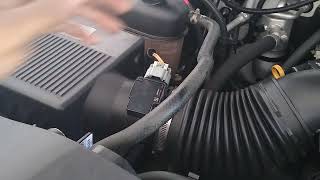
Typical fix: Remove the sensor and clean it carefully using only dedicated Mass Airflow Sensor cleaner spray. 🎬 Watch: Step-by-step guide to cleaning your MAF sensor properly. Let it dry completely before reinstalling. Do not touch the sensor wires.
Est. part cost: $10-$15 - Vacuum Leak 🟡 Medium Probability Cracked or loose intake ducting between the MAF sensor and the throttle body is common. Leaking intake manifold gaskets are a well-documented failure on these GM trucks, often causing P0101, P0171, and P0174 simultaneously. The original orange gasket seals were prone to failure and were updated to a more durable design. Any air that enters the engine *after* the MAF sensor is 'unmetered' and will cause a P0101.
How to confirm: Visually inspect all intake hoses and connections for cracks or looseness. Listen for a hissing sound at idle. A smoke test is the most effective way to find hard-to-see leaks. You can also carefully spray brake cleaner or carb cleaner around the intake manifold gasket area; if the engine RPM changes, a leak is present.
Typical fix: Replace the cracked hose or leaking intake manifold gaskets. When replacing gaskets, it is highly recommended to use the updated ACDelco parts.
Est. part cost: $20-$200 - Clogged or Incorrect Air Filter 🟡 Medium Probability A severely clogged air filter can restrict airflow and cause the MAF to report lower-than-expected values. On Duramax diesel models, some owners report that even new, non-ACDelco paper filters can cause this code. In some cases, the filter element itself can break apart and physically obstruct the MAF sensor screen.
How to confirm: Inspect the engine air filter. If it is dirty, clogged, or damaged, it needs to be replaced.
Typical fix: Replace the engine air filter with a quality part, preferably from the OEM manufacturer (ACDelco). For Duramax owners experiencing persistent issues, sticking to the OEM filter is highly advised.
Est. part cost: $20-$50 - Faulty MAF Sensor ⚪ Low Probability
How to confirm: If cleaning the sensor and confirming there are no vacuum leaks or air filter issues doesn't resolve the code, the sensor itself may have failed. Use a scan tool to monitor the MAF reading (in g/s) at idle and while driving. If the values are erratic, unresponsive, or significantly different from expected values (see Diagnosis Steps), the sensor is likely bad.
Typical fix: Replace the Mass Airflow Sensor. It is recommended to use an OEM ACDelco/Delphi part, as some aftermarket sensors can be poorly calibrated and cause the same code.
Est. part cost: $70-$260
Rare But Worth Checking
- Clogged Catalytic Converter: A restricted exhaust prevents air from flowing freely through the engine, causing a mismatch between expected and actual airflow at the MAF sensor. This usually results in a severe lack of power, especially under load, and may be accompanied by a P0300 (random misfire) code. A diagnostic video shows this exact failure on a Silverado with P0101.
- Faulty EGR Valve (Primarily Diesel): On 6.6L LMM Duramax diesel engines (2007.5-2010), an Exhaust Gas Recirculation (EGR) valve that is stuck open or not seating properly is a very common cause of P0101. It disrupts the expected airflow calculations by the ECM. This is often mentioned as a primary suspect after cleaning the MAF sensor on diesel forums.
- Wiring or Connector Issue: Damage to the wires leading to the MAF sensor or a loose/corroded connector can interrupt the signal to the ECM. Check the harness for any visible damage, and check for power, ground, and signal integrity at the connector with a multimeter. One owner on a forum found a broken wire in the harness was the ultimate cause after replacing the sensor did not fix the issue.
- Dirty Throttle Body: A throttle body plate heavily coated in carbon can stick or fail to open smoothly, disrupting airflow and potentially contributing to a P0101 code. It is good practice to clean the throttle body when servicing the MAF sensor.
Diagnosis Steps
- Read the codes: Use an OBD-II scanner to confirm P0101 and check for any other related codes like P0171, P0174, or P0300.
- Inspect the Air Filter: Check for a dirty, clogged, or damaged air filter. Ensure it is properly seated in the airbox. Replace if questionable.
- Inspect the Intake System: Visually check the entire intake tract from the air filter housing to the throttle body for any cracks, loose clamps, or disconnected hoses.
- Clean the MAF Sensor: Disconnect and remove the MAF sensor. Spray the sensing elements liberally with dedicated MAF sensor cleaner. Let it air dry completely for at least 10 minutes before reinstalling. Clear the codes and test drive.
- Monitor MAF Data: Use a scan tool with live data. At normal operating temperature and idle, the MAF sensor's output should be a stable value approximately equal to the engine's displacement in liters (e.g., a 5.3L V8 should read roughly 4.5-6.0 g/s). The reading should increase smoothly and without hesitation to 15-25 g/s or higher when holding the engine at 2500 RPM. A reading that is too low at idle often points to a vacuum leak.
- Check for Vacuum Leaks: If MAF readings are low at idle or if P0171/P0174 are present, perform a smoke test to check for vacuum leaks. Pay close attention to the intake manifold gaskets, PCV hoses, and the brake booster line.
- Test Wiring: If MAF readings are zero, erratic, or do not change with RPM, check the MAF sensor connector for proper voltage (often 12V power and 5V reference), good ground, and signal integrity using a multimeter.
- Consider Diesel-Specific Issues: For 6.6L Duramax engines, if the above steps don't find a fault, investigate the EGR valve for proper operation. A stuck EGR valve is a very common cause of P0101 on the LMM engine.
- Replace the MAF Sensor: If all other steps fail to resolve the issue, the sensor itself is likely faulty and should be replaced with a quality OEM part.
Parts You'll Likely Need

- Mass Airflow Sensor Cleaner — This is the first and most common fix. The sensor is often just dirty from oil or debris, not broken.
Trusted brands: CRC, Liqui Moly, WD-40 Specialist
Aftermarket price range: $10-$15 - Mass Airflow Sensor
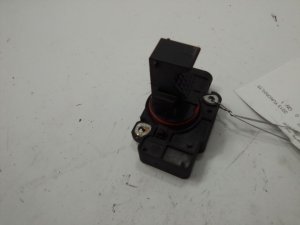
(OEM #23256991 (Supersedes 10393948))— If cleaning the sensor and checking for vacuum leaks doesn't work, the sensor itself has likely failed. The original part 10393948 has been discontinued and replaced by 23256991.
Trusted brands: ACDelco (OEM), Delphi, Denso
OEM price range: $140-$260
Aftermarket price range: $70-$150 - Engine Air Filter — A clogged or poor-quality filter can restrict airflow or even fall apart, causing the P0101 code. On Duramax models, using a non-OEM filter is a known cause of this code.
Trusted brands: ACDelco, Wix, Fram
OEM price range: $25-$40
Aftermarket price range: $15-$30 - Intake Manifold Gasket Set
(OEM #ACDelco 19256623 (example for 5.3L/6.0L))— These are a common failure point causing vacuum leaks that trigger P0101, P0171, and P0174. The updated ACDelco gaskets use a more durable teal green seal material instead of the original orange.
Trusted brands: ACDelco (OEM), Fel-Pro
OEM price range: $40-$80
Aftermarket price range: $25-$50
Related Codes That Often Appear With This One
- P0171 — System Too Lean (Bank 1) - A vacuum leak or a faulty MAF sensor causing under-reporting of airflow will lead the ECM to inject too little fuel, creating a lean condition. This code is very commonly seen with P0101 when intake manifold gaskets fail.
- P0174 — System Too Lean (Bank 2) - Same reason as P0171, but for the opposite cylinder bank on V8 engines. These codes frequently appear with P0101.
- P0300 — Random/Multiple Cylinder Misfire Detected - A severe vacuum leak, MAF issue, or a clogged catalytic converter can disrupt the air/fuel mixture enough to cause misfires across multiple cylinders.
Technical Service Bulletins (TSBs) & Recalls
- PIP4932C: This is a Preliminary Information bulletin from GM, not a formal recall or fix. It essentially advises technicians that they may encounter code P0101 and should follow the standard, published diagnostic procedures to find the root cause, rather than jumping to conclusions. It acknowledges the code's existence but does not point to a single solution.
Platform-Specific Known Issues
- The use of non-GM air filters, even paper ones, has been documented to cause skewed MAF readings and trigger a P0101 code on 6.6L Duramax diesel engines.
- Oiled aftermarket air filters (e.g., K&N) are a very common source of MAF sensor contamination on this platform, as detailed by owners in forums.
- Leaking intake manifold gaskets are a known failure point that can cause persistent P0101, P0171, and P0174 codes. The OEM fix involves replacing the original orange seals with updated teal green ones.
- On the 6.6L LMM Duramax engine (2007.5-2010), a stuck or malfunctioning EGR valve is a primary suspect for causing a P0101 code, sometimes more common than a faulty MAF sensor itself.
Mechanic-Grade Diagnostic Values

- MAF Sensor Reading (g/s) at Idle — expected: For a 5.3L V8, approximately 4.5-6.0 g/s at normal operating temperature. A general rule is g/s should be slightly more than engine displacement in liters.. Failure: A reading significantly lower than expected (e.g., <4 g/s) suggests a vacuum leak. A reading that is erratic or does not increase with RPM suggests a faulty sensor or wiring.
- MAF Sensor Reading (g/s) at 2500 RPM — expected: 15 to 25 g/s.. Failure: A slow or non-linear rise in g/s as RPMs increase indicates a dirty or failing sensor.
- MAF Sensor Signal (Hz) at Idle (Warmed Up) — expected: Approximately 3.2 KHz.. Failure: A reading of 0 Hz or a reading that does not increase with RPM points to a wiring issue or failed sensor.
- MAF Sensor Signal (Hz) at 2500 RPM — expected: Approximately 5.2 KHz.. Failure: A signal that does not increase smoothly with engine speed indicates a problem.
- MAF Connector Power Wire Voltage — expected: 10 to 12 Volts DC with key on, engine off.. Failure: No voltage indicates a wiring or fuse issue, preventing the sensor from powering on.
- MAF Connector Ground Wire Test — expected: 10 to 12 Volts DC when testing between the ground pin and the positive battery terminal.. Failure: No voltage indicates an open in the ground circuit, which will prevent the sensor from functioning.
- Long Term Fuel Trim (LTFT) at Idle — expected: Close to 0%, within +/- 10%.. Failure: High positive values (e.g., +25%) indicate the ECM is adding significant fuel, strongly suggesting a vacuum leak (unmetered air).
Scan Tool Commands That Help
- Professional Scan Tool / ECM Software: Permanent DTC Clear Procedure — If a P0101 code is stored as 'permanent', it cannot be cleared by a simple 'Clear Codes' command. The ECM must complete a specific drive cycle to verify the repair before it will clear the code. This involves a sequence of idling, city driving, and highway driving.
- GDS2 / Tech2: ECM Reprogramming/Update — In some cases, GM has released ECM software updates to widen the acceptable parameters for the MAF sensor signal, making it less likely to set a false P0101 code. A dealer or equipped independent shop may check for available updates if no physical fault is found.
Wiring & Ground Locations
- MAF Sensor Signal Wire — On the gas V8 engines, this is a Yellow wire at Pin 41 of the ECM's X1 connector.. This is the specific wire that carries the airflow data from the MAF sensor to the engine computer. Damage or corrosion on this wire or its pins will directly cause a P0101.
- G103 — Located at the left rear of the engine compartment on the cowl, above the brake booster.. This is a major ground point for the Body Control Module (BCM), Instrument Panel Cluster (IPC), and the Data Link Connector (DLC). A poor ground here can cause a wide range of bizarre electrical issues, including faulty sensor readings and communication problems with the ECM.
- MAF Connector Pins (5-wire sensor) — At the MAF sensor connector itself.. The 5 wires typically are: 12V Power, Power Ground, MAF Signal, IAT Signal, and a 5V Reference/Sensor Ground. Testing for correct voltage and ground at these pins is a critical step before replacing the sensor.
Real Owner Repair Stories
- Reddit user in r/Diesel (Chevy Silverado 2500HD (year not specified, but LMM engine implied)) — P0101 code would appear within 20 seconds of a cold start, but not during driving. No issues if driven immediately without warmup.
❌ Tried (didn't work) Cleaning the MAF sensor, Replacing the MAF sensor with a JET aftermarket part, Replacing the air filter with a new aFe Pro Dry S filter
✅ What actually fixed it The EGR valve was not seating properly. Replacing the EGR valve resolved the code and improved performance. - Snap-on Diagnostics Product Forums user (2009 Chevy 2500 6.6L Duramax) — Check engine light on, limp mode, P0101 code.
❌ Tried (didn't work) Shop 1: Replaced MAF sensor, connector, fuel filter ($800), Shop 2: Replaced MAF with a different one, repaired wiring ($600), Shop 3: Recommended engine wire harness replacement ($1200, declined), Shop 4 (Dealer): Replaced MAF with OEM part, performed ECM update ($600)
✅ What actually fixed it Replacing a 'clean-looking' but restrictive K&N air filter with a standard paper filter. The MAF reading at idle went from 21 g/s with the K&N to a correct 33 g/s with the new filter. - YouTube channel 'Fix It Rich' (Chevrolet Silverado with 4.3L V6) — P0101 code, high long-term fuel trims (+25%).
❌ Tried (didn't work) Initial diagnosis pointed towards a standard vacuum leak or MAF issue.
✅ What actually fixed it A vacuum leak was found where the plastic intake assembly seals against the intake manifold. The weight of the air filter housing caused the seal to deform and leak, which could be temporarily fixed by lifting up on the housing.
"I Checked Everything" — The Actual Cause
- A partially clogged catalytic converter was the root cause. A smoke test for intake leaks will come back clean, and fuel trims may even appear normal. However, the exhaust restriction prevents the engine from breathing properly, causing the measured airflow (MAF g/s) to be illogically low compared to what the ECM calculates it should be based on RPM and throttle position, triggering P0101.
- A hairline crack in the plastic intake manifold itself, not the gaskets. These can be extremely difficult to find with a smoke test as they may only open and leak under specific engine temperatures or vibrations, causing an intermittent P0101 that seems to have no cause.
When the Usual Fixes Don't Work
- While cleaning the MAF sensor and checking for vacuum leaks are the most common fixes, there are numerous documented cases on Duramax models where the true cause was a faulty EGR valve allowing unmetered, exhaust gas to enter the intake at the wrong time, disrupting the airflow calculation. In another well-documented case involving a Duramax that had been to four different shops which all replaced the MAF sensor, the final repair was simply replacing a restrictive aftermarket K&N air filter with a stock paper filter, which immediately corrected the g/s airflow reading at idle.
OEM Part Supersession History
Varies by engine/year→Varies— N/A
Heads up: Using non-OEM (ACDelco/Delphi) MAF sensors is a significant trap. Many repair stories involve replacing a new aftermarket sensor that did not fix the P0101 code with an OEM sensor, which then resolved the issue. Aftermarket sensors can be poorly calibrated and provide incorrect g/s or Hz readings out of the box, causing the exact code you are trying to fix.
Model Year Variations Within This Range
- 2007-2013: The 5.3L V8 was available in two main versions: the LY5 (standard) and the LMG (FlexFuel capable). While horsepower and torque are identical, the LMG uses larger fuel injectors to handle E85. This is a critical difference if diagnosing a related fuel trim issue.
- 2010-2011: In 2010, the 5.3L LMG and 4.8L L20 engines were updated with Variable Valve Timing (VVT). This adds complexity to the engine's breathing characteristics but is not a common direct cause of P0101.
Helpful Videos
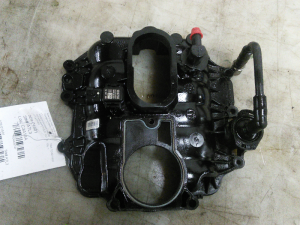
Used OEM Parts in Stock



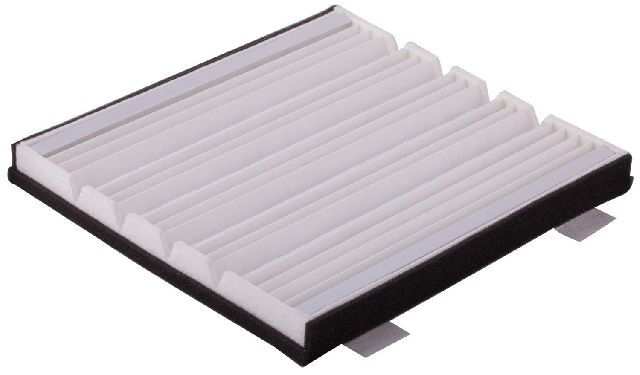
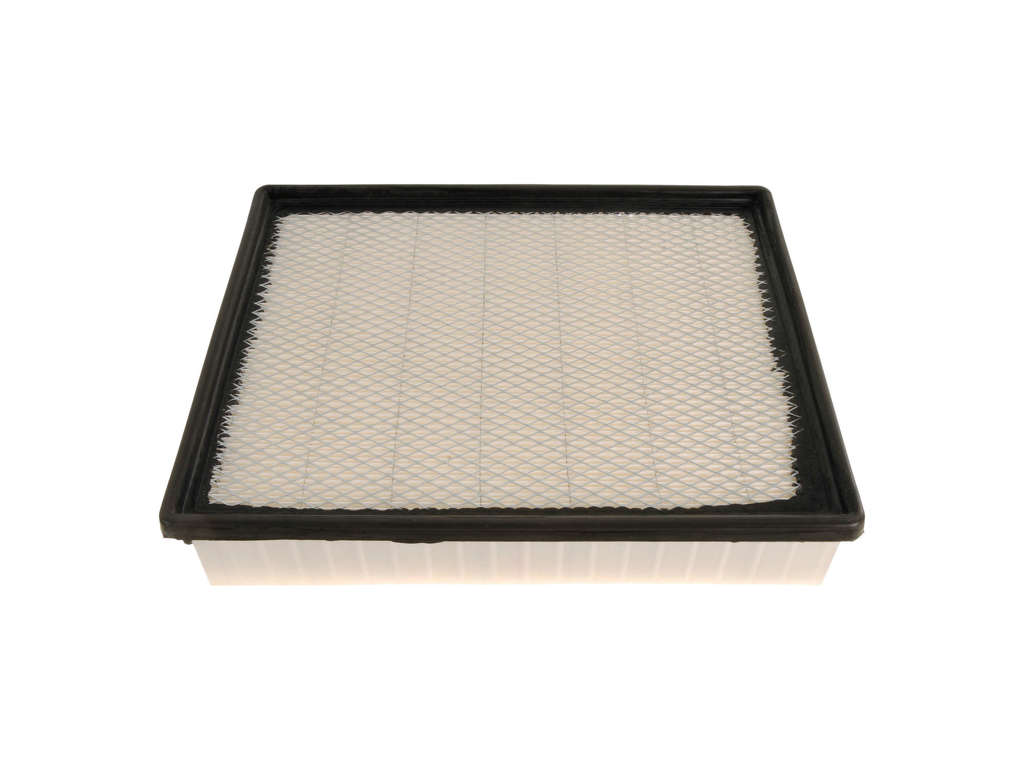
New Aftermarket Parts Available




The information in this article is provided for general reference and educational purposes only. Vehicle specifications, procedures, and part compatibility can vary by production date, trim level, and region. Always consult your vehicle's factory service manual and verify part numbers before purchasing or performing repairs. Safety-critical components such as airbags, seat belts, and braking systems should be installed by a qualified professional.
- Chevrolet SILVERADO:
- 🎬 Helpful Videos
- 🛍️ Shop This Part
- What's Unique About the 2007-2011 Chevrolet SILVERADO
- Diagnostic Flowchart
- Symptoms You May Notice
- Most Likely Causes
- Rare But Worth Checking
- Diagnosis Steps
- Parts You'll Likely Need
- Related Codes That Often Appear With This One
- Technical Service Bulletins (TSBs) & Recalls
- Platform-Specific Known Issues
- Mechanic-Grade Diagnostic Values
- Scan Tool Commands That Help
- Wiring & Ground Locations
- Real Owner Repair Stories
- "I Checked Everything" — The Actual Cause
- When the Usual Fixes Don't Work
- OEM Part Supersession History
- Model Year Variations Within This Range
- 🎟️ Get 5% Off