

P0101 on 2012-2016 Chevrolet Express: MAF Sensor Causes and Fixes
The P0101 code on a 2012-2016 Chevy Express most often points to a dirty Mass Airflow (MAF) sensor that needs cleaning or a simple vacuum leak. However, a known issue for these vans is a software glitch that requires a dealer to reprogram the Engine Control Module (ECM), as noted in GM Technical Service Bulletin PI1538. Before replacing the sensor, a thorough cleaning and inspection for intake leaks is the most effective first step.
- Start by cleaning the Mass Airflow (MAF) sensor with dedicated cleaner; this is the most common and cheapest fix.
- Thoroughly inspect the air intake hose between the air filter and the engine for cracks or loose connections, as vacuum leaks are a frequent cause.
- Be aware of Technical Service Bulletin PI1538; if cleaning the sensor and checking for leaks doesn't work, the van may need a software update from a dealer.
- Do not immediately replace the MAF sensor, as it is often misdiagnosed when the real issue is a dirty sensor, a vacuum leak, or a software glitch.
What's Unique About the 2012-2016 Chevrolet EXPRESS

For this generation of Chevrolet Express, the P0101 code has a notable cause that isn't a faulty part. General Motors issued a Technical Service Bulletin (TSB PI1538) indicating that a slight engine hesitation or sag, which sets the P0101 code, can be caused by a software issue. The official fix in this scenario is not to replace the MAF sensor, but to have an authorized dealer reprogram the Engine Control Module (ECM). This TSB also applies to its twin, the GMC Savana.
Diagnostic Flowchart
Tap your situation to follow the diagnostic path that matches what you're seeing on this vehicle.
Symptoms You May Notice
- Check Engine Light is on
- Engine hesitation or sag, especially during light acceleration. [⭐ MANUFACTURER TSB — highest authority] Bulletin #PI1538
- Rough or unstable idle, sometimes with RPM jumps and drops.
- Reduced engine power and poor acceleration, feeling sluggish.
- Decreased fuel economy.
- Difficulty starting the engine.
- Black smoke from the exhaust, indicating a rich fuel condition.
- Shifting problems or harsh shifts, as the transmission computer may receive incorrect engine load data.
- Replacing the MAF sensor when it only needs to be cleaned.
- Replacing the MAF sensor when the actual problem is a vacuum leak (e.g., a cracked intake boot).
- Replacing parts before checking for the ECM software update mentioned in TSB PI1538.
Most Likely Causes

- Dirty or Contaminated MAF Sensor 🔴 High Probability The MAF sensor's hot wire is sensitive to dirt, oil, and other debris that can get past the air filter, altering its readings. Using over-oiled aftermarket air filters is a known cause of MAF sensor contamination on GM vehicles.
How to confirm: Visually inspect the MAF sensor's sensing wire. If it appears dirty or coated, it needs cleaning. The sensor is located on the air intake tube, just after the air filter box.
Typical fix: Remove the sensor and clean it carefully using only dedicated Mass Airflow Sensor cleaner. Do not use brake or carb cleaner, as they can damage the sensor. Do not touch the delicate wire. Allow it to dry completely before reinstalling.
Est. part cost: $10-$15 for a can of MAF cleaner. - Vacuum Leak 🟡 Medium Probability Cracks in the plastic or rubber intake ducting (bellows), loose clamps, or deteriorated intake manifold gaskets allow unmetered air to enter the engine after the MAF sensor, causing a discrepancy in airflow readings. The PCV hose and brake booster hose connections are also common leak points.
How to confirm: Visually inspect all air intake hoses and connections between the MAF sensor and the engine's throttle body. Listen for a hissing sound at idle. A professional can use a smoke machine to pressurize the intake and quickly find the source of any leaks. A DIY method involves spraying carburetor cleaner near suspected leak areas; a change in engine idle indicates a leak.
Typical fix: Tighten loose clamps or replace the cracked or leaking intake hose/gasket. The intake tube itself is a common failure point.
Est. part cost: $20-$150 depending on the specific hose or gasket that failed. - Engine Control Module (ECM) Software Update Needed 🟡 Medium Probability GM issued TSB PI1538 specifically for this issue on these vehicles, indicating a software calibration problem can cause P0101. [⭐ MANUFACTURER TSB — highest authority] Bulletin #PI1538
How to confirm: If cleaning the MAF and checking for vacuum leaks does not resolve the code, the TSB is the next logical step. This must be confirmed by a GM dealer or a qualified shop with access to GM's software updates.
Typical fix: Reprogramming the Engine Control Module (ECM) with the updated software calibration.
Est. part cost: $0 (software only), but shop labor will apply, typically 1-2 hours. - Faulty MAF Sensor ⚪ Low Probability While less common than a dirty sensor, the electronic components of the MAF sensor can fail internally over time. However, many owners replace the sensor when it only needed cleaning.
How to confirm: After confirming the sensor is clean, wiring is intact, and there are no vacuum leaks, the sensor itself is the likely culprit. A scan tool can monitor the MAF sensor's output in grams/second; erratic or non-responsive readings indicate a bad sensor. For a V6/V8 engine, a reading at idle should be around 3-7 g/s.
Typical fix: Replace the MAF sensor. Using a genuine ACDelco part is highly recommended over cheap aftermarket alternatives, which can have incorrect calibrations.
Est. part cost: $70-$200 - Clogged Air Filter ⚪ Low Probability A severely clogged air filter can restrict airflow enough to cause the MAF sensor readings to be lower than expected by the ECM.
How to confirm: Visually inspect the engine air filter. If it is visibly dirty or clogged with debris, it should be replaced.
Typical fix: Replace the engine air filter.
Est. part cost: $20-$40
Rare But Worth Checking
- Clogged Catalytic Converter: A restricted exhaust can reduce the amount of air the engine can draw in, leading to an airflow reading that the ECM considers out of range. This is often accompanied by a significant loss of power, especially under load, and possibly other codes like P0420.
- Wiring Issue: A damaged wire or poor connection at the MAF sensor harness can cause an intermittent or complete loss of signal, triggering the P0101 code. A forum user noted to check for battery voltage at the pink wire and check the ground on the black/white wire.
Diagnosis Steps

- Check for other DTCs. If codes like P0106, P1101, P0171, or P0174 are present, they can provide valuable clues.
- Inspect the air intake system thoroughly. Look for any cracks, loose clamps, or disconnected hoses between the air filter housing and the throttle body. Pay close attention to the flexible intake boot.
- Inspect the engine air filter and replace it if it's dirty.
- Remove and inspect the MAF sensor. Check for any dirt or oil on the sensor element.
- Clean the MAF sensor using a dedicated MAF sensor cleaner spray. Let it air dry completely before reinstalling. Do not use other cleaners like brake or carb cleaner.
- Clear the codes and perform a test drive. If the code returns, proceed to the next steps.
- With a scan tool, monitor the MAF sensor reading (g/s) at idle and during acceleration. A typical reading for a V8 at warm idle (around 750 RPM) should be between 4-7 g/s. Compare the readings to specified values for your engine to see if the sensor is responding correctly.
- Check the wiring and connector at the MAF sensor. With the key on, engine off, verify battery voltage at the pink wire and a good ground at the black/white wire using a multimeter.
- If you have access to a smoke machine, perform a smoke test to check for hard-to-find vacuum leaks.
- If all hardware and wiring checks out, contact a GM dealer or qualified repair shop to check if your vehicle's ECM has the latest software update as per TSB PI1538.
Parts You'll Likely Need

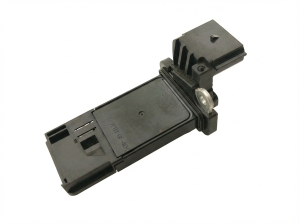
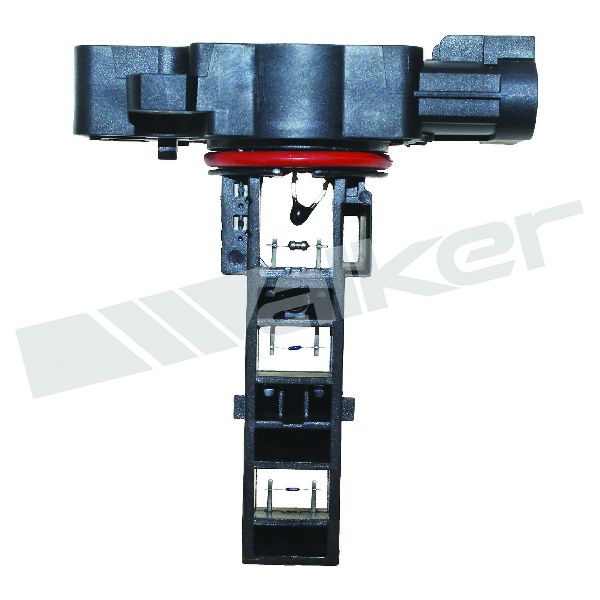
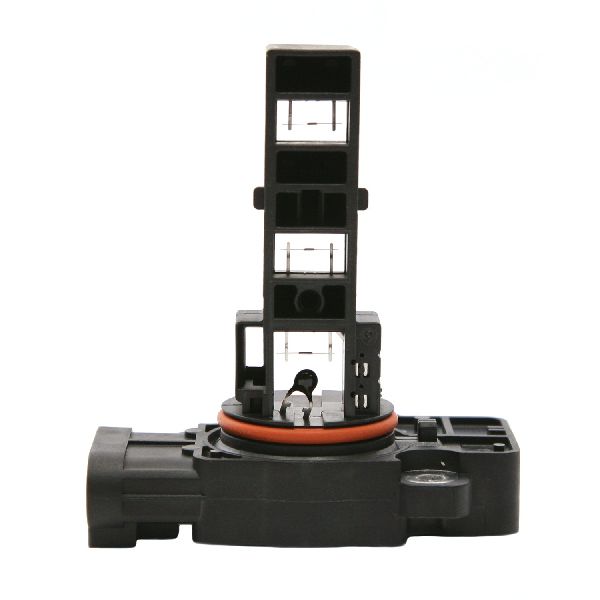
- Mass Air Flow Sensor
(OEM #23262343)— This is the sensor that directly measures airflow. It is replaced if cleaning it does not solve the problem and all other causes have been ruled out. This part number replaces older versions 20787043 and 23118170.
Trusted brands: ACDelco (GM Genuine)
OEM price range: $120-$180
Aftermarket price range: $70-$130 - Engine Air Intake Hose — The rubber/plastic duct between the MAF sensor and throttle body can crack with age, causing a significant vacuum leak that triggers the P0101 code.
Trusted brands: ACDelco, Dorman
OEM price range: $80-$150
Aftermarket price range: $40-$90 - MAF Sensor Cleaner — Often, the only thing needed is a thorough cleaning of the existing sensor's delicate wire to restore its function.
Related Codes That Often Appear With This One
- P0106 — Manifold Absolute Pressure (MAP) Sensor Performance. Both codes relate to the engine's air metering system, and a problem with one can affect the other. TSB PI1538 explicitly lists them together. [⭐ MANUFACTURER TSB — highest authority] Bulletin #PI1538
- P1101 — MAF Sensor Out of Self-Test Range. This is a manufacturer-specific code that points directly to a MAF performance issue and is also cited in TSB PI1538. [⭐ MANUFACTURER TSB — highest authority] Bulletin #PI1538
- P0171/P0174 — System Too Lean (Bank 1/Bank 2). A vacuum leak allows unmetered air into the engine, causing a lean condition that the MAF sensor cannot account for, often triggering P0101 simultaneously.
Technical Service Bulletins (TSBs) & Recalls
- Slight Hesitation and/or Sag, SES Light, DTC P0101, P0106, P0121, P1101 Set: This bulletin addresses a customer concern of a slight engine hesitation or sag. The fix is to reprogram the Engine Control Module (ECM) with updated software. It specifically notes that this is a calibration issue, not a hardware fault.
- Engine Misfires Or Runs Rough With A P0101 And/Or P0106: This bulletin provides general diagnostic guidance for technicians when a P0101 code is present, often in conjunction with misfires. It instructs technicians to follow standard service information diagnostics but points towards investigating issues that could cause both codes to set, reinforcing the link between MAF and MAP sensor readings.
Platform-Specific Known Issues
- ECM Software Calibration: The most significant vehicle-specific issue is the software problem addressed by TSB PI1538. Many owners may unnecessarily replace parts when a simple ECM reflash by a dealer is the correct and only fix. This should be considered after cleaning the MAF and checking for vacuum leaks have failed.
- Intake Duct Cracking: The flexible rubber/plastic intake duct (bellows) between the air filter box and the throttle body is a common failure point. With age and heat cycles, it can develop cracks, especially in the ribbed sections, causing a significant vacuum leak that is a primary trigger for P0101.
Mechanic-Grade Diagnostic Values
- MAF Sensor Signal (Scan Tool) — expected: Approximately equal to engine displacement at warm idle (e.g., a 6.0L engine should read ~6.0 g/s).. Failure: Reading is stuck, does not increase with RPM, or is significantly different from the engine displacement value at idle.
- MAF Sensor Signal (Multimeter) — expected: At warm idle (~680 RPM): ~3.2 KHz. At ~1500 RPM: ~4.2 KHz. At ~2500 RPM: ~5.2 KHz.. Failure: The Hertz (Hz) signal does not increase and decrease smoothly with engine RPM, or is stuck at a fixed value.
- MAF Connector Power Pin Voltage — expected: 10-12 Volts DC (Battery Voltage) with key on, engine off.. Failure: Significantly less than battery voltage indicates a wiring or fuse issue.
- MAF Connector Ground Pin Voltage Drop — expected: Less than 0.2 Volts (200mV) when testing between the ground pin and the battery negative terminal.. Failure: Voltage reading higher than 0.2V indicates high resistance or a poor ground connection.
Wiring & Ground Locations

- MAF Sensor Fuse — Underhood fuse block, position 64, labeled 'Mass Air Flow/ Canister Vent' (15A fuse for 2012 model year).. A blown fuse will cause a complete loss of power to the MAF sensor, leading to a P0101 or related code.
- MAF Sensor Connector — On the MAF sensor, located in the air intake tube just after the air filter box.. The 5-pin connector on these models provides power, ground, and signal wires for both the MAF and integrated IAT sensor. Key wires to test are the Pink wire (12V+ power) and the Black/White wire (ground).
- G101 — Located at the lower front of the engine block.. This is a primary engine ground point and is listed as the ground for the MAF sensor, ECM, and TCM. A poor connection here can cause erratic sensor readings.
- G102 — Located at the rear of the right (passenger side) cylinder head.. This ground point is cited in forums as the ground location for the MAF sensor on similar GM truck platforms. A loose or corroded connection here can cause intermittent signal issues.
- G103 — Located on the front of the passenger side cylinder head.. A critical engine ground point. A service bulletin regarding transmission issues on these vans specifically calls out ensuring G103 has a clean and tight connection as part of a broader electrical grounding check.
Model Year Variations Within This Range
- 2012-2016: While the basic function is the same, GM used various MAF sensor designs. For this era of Express van, it is typically a 5-wire sensor that integrates the Intake Air Temperature (IAT) sensor into the same housing. Older or different GM models may use a 3-wire or 4-wire sensor, so it's important to verify the correct part for the specific vehicle.
Helpful Videos


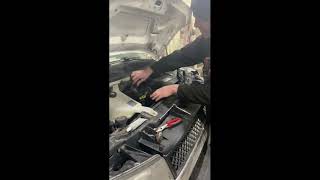
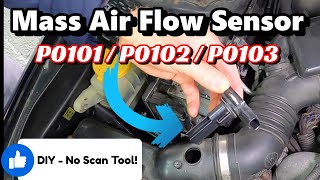
Used OEM Parts in Stock
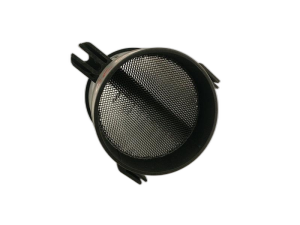

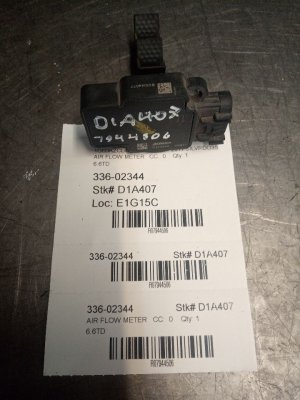
New Aftermarket Parts Available
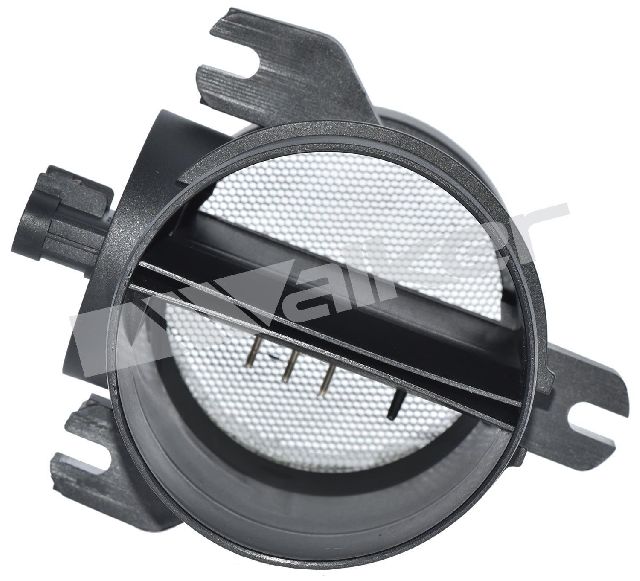
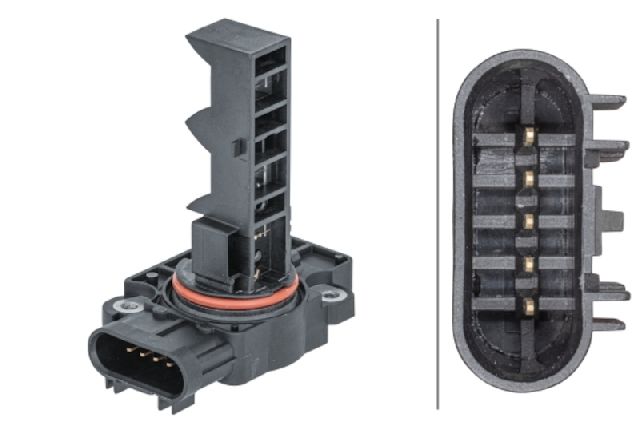


The information in this article is provided for general reference and educational purposes only. Vehicle specifications, procedures, and part compatibility can vary by production date, trim level, and region. Always consult your vehicle's factory service manual and verify part numbers before purchasing or performing repairs. Safety-critical components such as airbags, seat belts, and braking systems should be installed by a qualified professional.
- Chevrolet EXPRESS:
- 🎬 Helpful Videos
- 🛍️ Shop This Part
- What's Unique About the 2012-2016 Chevrolet EXPRESS
- Diagnostic Flowchart
- Symptoms You May Notice
- Most Likely Causes
- Rare But Worth Checking
- Diagnosis Steps
- Parts You'll Likely Need
- Related Codes That Often Appear With This One
- Technical Service Bulletins (TSBs) & Recalls
- Platform-Specific Known Issues
- Mechanic-Grade Diagnostic Values
- Wiring & Ground Locations
- Model Year Variations Within This Range
- 🎟️ Get 5% Off