

P0100 on 2016-2021 Honda Civic: MAF Sensor Circuit Malfunction Causes and Fixes
Code P0100 on a 10th generation Honda Civic most often points to a dirty or faulty Mass Air Flow (MAF) sensor. A quick cleaning with a dedicated MAF sensor spray, costing about $15, is the most common first step. If cleaning doesn't work, a replacement sensor can range from $70 for an aftermarket part to over $200 for an OEM unit. Aftermarket air intakes, especially oiled-filter types, are a very common trigger for this code on this platform.
- P0100 on a 2016-2021 Civic indicates a problem with the MAF sensor circuit, which is vital for proper engine function.
- The most common and cheapest fix is to clean the MAF sensor with a dedicated cleaner spray. Do not use other chemicals like brake cleaner.
- Before replacing any parts, inspect the air filter for dirt and the intake hose for cracks, as these are common and inexpensive related issues.
- If cleaning doesn't work, replacing the MAF sensor is the next step. Using an OEM or high-quality aftermarket brand is recommended.
- This is a DIY-friendly repair, with the MAF sensor being easily accessible on top of the engine's airbox.
What's Unique About the 2016-2021 Honda Civic
For the 2016-2021 Honda Civic, which includes both the 2.0L naturally aspirated and 1.5L turbocharged engines, the MAF sensors are quite sensitive. Owners frequently report that installing aftermarket air intakes, particularly those with oiled filters or different tubing diameters, can disrupt airflow readings and trigger this code. Additionally, a cracked or loose intake hose between the air filter and the throttle body is a known issue on Hondas that allows unmetered air to enter the system, which can also lead to a P0100 code.
Symptoms You May Notice
- Check Engine Light is on
- Rough engine idle or stalling.
- Hesitation or loss of power during acceleration.
- Reduced fuel economy.
- Difficulty starting the engine.
- Black smoke or a gasoline odor from the exhaust.
- Replacing oxygen (O2) sensors before checking the MAF sensor and intake system.
- Replacing the throttle body when the issue is a simple vacuum leak or dirty MAF sensor.
Most Likely Causes
- Dirty or Contaminated MAF Sensor 🔴 High Probability The MAF sensor's heated wire is delicate and can be easily contaminated by dirt, oil from aftermarket filters, or debris, especially if the air filter is not maintained. This is a very common issue across many modern vehicles, including the Civic.
How to confirm: Visually inspect the MAF sensor's sensing element (two small wires inside the sensor housing). If they appear dirty or coated, they need cleaning.
Typical fix: Remove the sensor and clean it carefully using only a dedicated Mass Air Flow (MAF) sensor cleaner spray. Spray the wires generously from a few inches away and allow it to air dry completely. Do not touch the wires or use other chemicals.
Est. part cost: $10-$20 for MAF cleaner spray - Faulty Mass Air Flow (MAF) Sensor 🟡 Medium Probability While cleaning often works, the sensor can fail electronically over time. If cleaning provides no improvement or the code returns quickly, the sensor itself is the next likely culprit.
How to confirm: After cleaning, if the code returns, the most practical test for a DIYer is to replace the sensor with a known-good part. A professional would test the sensor's output voltage with a multimeter against the specifications in the service manual.
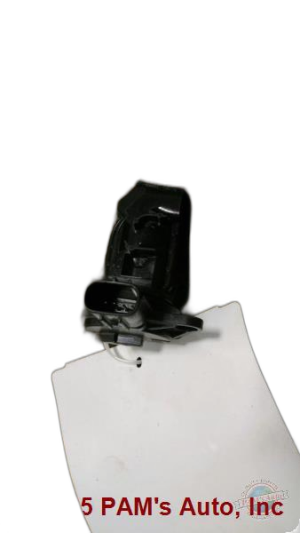
Typical fix: Replace the MAF sensor. The OEM part number for 10th gen Civics (both 1.5T and 2.0L) is 37980-5BA-A01.
Est. part cost: $70-$150 for aftermarket, $200-$300 for OEM - Vacuum Leak (Post-MAF) 🟡 Medium Probability Any air that enters the engine after the MAF sensor is 'unmetered' and will cause a conflict between what the MAF sensor reports and what the oxygen sensors report. On the Civic, this is often due to a loose clamp on the intake tube or a small crack/tear in the flexible intake hose itself.
How to confirm: With the engine running, listen for hissing sounds around the intake area. Visually inspect the entire intake path from the airbox to the throttle body for cracks or loose connections. You can also spray short bursts of brake cleaner or a propane torch (unlit) around suspected leak areas; a change in engine idle indicates a leak.
Typical fix: Tighten loose clamps or replace the cracked air intake hose.
Est. part cost: $50-$150 for a new intake hose - Damaged Wiring or Poor Connection ⚪ Low Probability Vibrations and heat can cause wiring to fray or the connector pins to become loose or corroded over time. This is less common than sensor failure but should be checked.
How to confirm: Visually inspect the MAF sensor connector and its wiring harness for any signs of damage, corrosion, or loose pins. Wiggle the connector with the engine running to see if it affects the idle. Use a multimeter to check for continuity and proper voltage at the connector.
Typical fix: Repair the damaged section of wiring or replace the connector pigtail.
Est. part cost: $15-$50 for a new connector - Clogged or Dirty Engine Air Filter ⚪ Low Probability A severely clogged air filter can restrict airflow, causing the MAF sensor to send readings that the PCM interprets as a fault. It also increases the risk of debris contaminating the sensor itself.
How to confirm: Remove and visually inspect the engine air filter. If it is visibly dirty, black, or full of debris, it needs to be replaced.
Typical fix: Replace the engine air filter.
Est. part cost: $20-$40
Rare But Worth Checking
- Aftermarket Air Intake: While a common cause, it's worth noting specifically. Many aftermarket Cold Air Intakes (CAIs) for the 10th gen Civic change the diameter of the intake tubing where the MAF sensor is housed. This alters the airflow characteristics, causing the sensor to report incorrect values even if it's perfectly clean and functional. Some intakes, like certain PRL models, offer a 'street' MAF housing to avoid this, while 'race' versions require an specific ECU tune to function without throwing codes.
- Faulty Powertrain Control Module (PCM): This is extremely rare. The PCM is the vehicle's main computer. Before suspecting a faulty PCM, all other possibilities, including the sensor, wiring, and intake system, must be exhaustively ruled out.
Diagnosis Steps
- Read the code using an OBD-II scanner to confirm P0100 is present.
- Visually inspect the MAF sensor's electrical connector and wiring for any obvious signs of damage, corrosion, or loose connections.
- Inspect the engine air filter and replace it if it is dirty or clogged.
- Inspect the air intake duct between the air filter housing and the throttle body for any cracks, tears, or loose clamps that could cause a vacuum leak.
- If an aftermarket intake is installed, check forums for similar issues with that brand. Consider reinstalling the stock airbox to see if the code disappears.
- Carefully remove the MAF sensor. Inspect the sensing element for dirt or contamination.
- If dirty, clean the sensor using only dedicated MAF sensor cleaner spray. Allow it to air dry completely before reinstalling.
- Clear the trouble code with the scanner and test drive the vehicle for 20-30 miles to see if the code returns.
- If the code returns, use a multimeter to test the voltage and ground signals at the MAF sensor connector, following the vehicle's service manual specifications.
- If wiring is confirmed to be good and cleaning did not work, the MAF sensor itself is likely faulty and should be replaced. Using an OEM sensor is highly recommended.
Parts You'll Likely Need
- Mass Air Flow (MAF) Sensor
(OEM #37980-5BA-A01)— This is the most common part to fail for this code if cleaning does not resolve the issue.
Trusted brands: Honda (Genuine OEM), Denso, Hitachi, Bosch
OEM price range: $180-$250
Aftermarket price range: $70-$150 - Mass Air Flow Sensor Cleaner — Often, the sensor is just dirty, not broken. This specialty aerosol cleaner is the first and cheapest step in fixing the problem.
Trusted brands: CRC, Liqui Moly, Gumout
Aftermarket price range: $10-$20 - Engine Air Filter
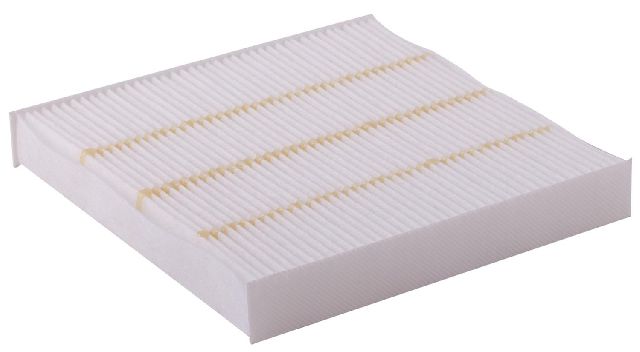
(OEM #17220-5AA-A00)— A clogged air filter can cause this code and will lead to premature failure of a new MAF sensor.
Trusted brands: Honda OEM, Fram, Wix
OEM price range: $25-$40
Aftermarket price range: $15-$30
Related Codes That Often Appear With This One
- P0101 — P0101 indicates a MAF 'Range/Performance' issue, meaning the sensor's signal is illogical for the current engine load, while P0100 indicates a circuit failure (no signal or a completely invalid one). They often appear together as the sensor begins to fail.
- P0102 — This code means 'MAF Circuit Low Input,' indicating the signal voltage is below the expected threshold. It's a more specific version of the general P0100 circuit fault.
- P0171 — This code means 'System Too Lean.' If the MAF sensor is under-reporting the amount of air entering the engine, the PCM will not inject enough fuel, leading to a lean condition. This is also a common result of a vacuum leak after the MAF sensor.
Technical Service Bulletins (TSBs) & Recalls
- TSB 19-091: Warranty Extension: A/C Condenser Leaking.
- TSB 19-037: Warranty Extension for CR-V for DTCs including P0172, related to oil dilution concerns.
Platform-Specific Known Issues
- Aftermarket Air Intakes Triggering Codes: The 10th generation Civic's ECU is sensitive to changes in airflow characteristics. Installing an aftermarket air intake, especially one with an oiled filter or a housing diameter different from stock ('Race MAF'), is a very common reason for P0100, P0101, and P0171 codes. Many owners on forums like CivicX report these issues immediately after installation. Some intake manufacturers like PRL offer a 'Street' version designed to work with the stock tune, while others may require an ECU tune.
Mechanic-Grade Diagnostic Values
- MAF Sensor Signal Voltage — expected: Approximately 1.0V at idle, rising smoothly and proportionally with RPM toward 4.0-5.0V at wide-open throttle.. Failure: Voltage is stuck low (below 0.5V for P0102), does not rise with RPM, or is erratic.
- MAF Sensor Live Data (Scan Tool) — expected: 2 to 7 grams/second (g/s) at warm idle. Should rise smoothly to 15 to 25 g/s or higher at 2500 RPM (exact value depends on engine load and displacement).. Failure: g/s reading is flat, does not correspond to throttle input, or shows a much lower peak value than expected during a throttle snap test.
- MAF Sensor Power Supply Voltage (at connector) — expected: Battery voltage (approx. 12V) on the power supply wire with Key On, Engine Off.. Failure: No voltage or significantly low voltage indicates a wiring issue, blown fuse, or problem with the power distribution.
- MAF Sensor Ground Circuit — expected: Near 0 ohms resistance between the ground pin at the connector and a known good chassis ground.. Failure: High resistance (anything over a few ohms) indicates a poor ground connection, which can cause incorrect sensor readings.
Scan Tool Commands That Help
- Honda Diagnostic System (HDS): Data List / MAF Sensor Inspection — This function is used to monitor the live data stream from the MAF sensor, including airflow in g/s and sensor voltage. It's the primary dealer-level tool to verify if the sensor's output is rational and responsive to engine speed changes. The HDS can also be used to check for related trouble codes in other modules and to clear the code after repair.
Wiring & Ground Locations
- G101 — On the thermostat housing, where the main engine harness grounds to the engine block.. G101 is the primary power and logic ground for the ECU. A loose or corroded connection here can cause a host of sensor issues, including erratic MAF sensor readings, by creating an unstable ground reference for the entire engine management system.
- MAF Sensor Connector — Plugged directly into the MAF sensor, which is mounted on the engine air filter box, just before the main intake hose.. This 4-pin or 5-pin connector provides power, ground, and signal lines to the sensor. The pins can become corroded or loose, causing a direct circuit malfunction. Wiggling this connector while the engine is running can help identify a poor connection if the idle changes.
Real Owner Repair Stories
- CivicX Forum User (2018 Honda Civic Si (1.5T)) — Check engine light with code P0100, sometimes accompanied by P0101 and P0171. Rough idle and hesitation.
❌ Tried (didn't work) Cleaning the MAF sensor multiple times., Replacing the MAF sensor with a new OEM unit., Smoke testing the intake system (no leaks found).
✅ What actually fixed it The user had an aftermarket air intake installed. After exhausting other options, they closely re-inspected the intake tube and found a hairline crack on the underside of the plastic tube, near a clamp, which was opening under vacuum. Replacing the aftermarket intake tube with a new one resolved the codes permanently. - Honda Owner Report — A report for a similar Honda platform noted that the vehicle displayed DTCs P0100, P0113, and P023D, which indicated severe air/fuel metering and boost pressure correlation failures (NHTSA ODI #11705551).
OEM Part Supersession History
37980-5BA-A01→No official supersession found.— N/A
Heads up: This part number appears to be consistent for all 2016-2021 Honda Civics (1.5T and 2.0L), as well as many other Honda models from the same era. Be aware that some aftermarket sensors, while claiming compatibility, may not have the precise calibration required by the Honda ECU, leading to persistent or new codes.
Diagnostic Flowchart
Other Known Issues on This Vehicle
Issues unrelated to this code that are worth knowing about as an owner of this generation:
- A/C Condenser Leaks 🔴 High — Very common across 2016-2021 models. The A/C system stops blowing cold air due to refrigerant leaking from tiny holes in the condenser. (Ref: Honda issued a warranty extension under TSB 19-091, extending coverage for the A/C condenser to 10 years with unlimited miles.)
- Engine Oil Dilution (1.5L Turbo Engine) 🔴 High — Common on 1.5T engines, especially in colder climates and with frequent short trips. Unburned fuel mixes with engine oil, raising the oil level and reducing its viscosity. (Ref: Honda issued software updates and a warranty extension to address the issue (e.g., TSB 19-037 for CR-V). The fix involves software changes to help the engine warm up faster.)
- Sticky Electric Power Steering (EPS) 🟠 Medium — Some owners report a 'sticky' or 'notchy' feeling in the steering, particularly with small adjustments at highway speeds. It seems to be caused by a lack of grease or displacement of grease in the steering rack's worm gear. (Ref: No widespread recall for 10th gen Civics, though a recall existed for a small number of 2017-2018 models for a different steering issue. The 'sticky' issue is well-documented by owners on forums.)
Used vs. New Parts: Buying Guide for This Vehicle
When a used part is the smart pick: A used OEM MAF sensor from a low-mileage donor vehicle can be a cost-effective alternative to a new OEM unit, especially if you suspect your sensor is faulty and want to test with a known-good part before spending on a new one. Used intake hoses or airboxes are also perfectly acceptable if they are free of cracks and damage.
Donor-vehicle mileage cap: roughly under 60000 miles for the part to have meaningful remaining life.
What to inspect on the donor part:
- For a MAF sensor, check the connector pins for any corrosion or damage.
- Ask for the VIN of the donor car to verify low mileage.
- For intake hoses, squeeze the rubber to ensure it's still pliable and not brittle or hardened.
- Visually inspect all plastic and rubber parts for hairline cracks, especially around seams and mounting points.
OEM-only on this vehicle (don't cheap out):
- Mass Air Flow (MAF) Sensor: While trusted OEM suppliers like Denso or Hitachi are good, cheap, no-name aftermarket MAF sensors are highly discouraged. The calibration is extremely sensitive, and an out-of-spec aftermarket sensor can cause more problems than it solves, even if it's brand new.
Aftermarket brands forum-validated for this vehicle:
- Denso
- Hitachi
- Bosch
- Standard Motor Products (SMP)
Brands owners have reported issues with on this vehicle:
- Unbranded, low-cost sensors from online marketplaces are a significant gamble and frequently lead to unresolved issues or different trouble codes.
Real Owner Stories
Aggregated from forums and TSBs cited above. Mileages and costs reflect what owners reported in those sources.
2016 Civic
Symptoms: A P0100 code appeared after installing a PRL intake. The code persisted even after replacing the MAF sensor.
What fixed it: The issue was not resolved in the report; the dealership advised the owner to return the car to its stock configuration before they would diagnose the problem.
Source hint: r/civic on Reddit - User experiencing P0100 after mods
2018 Civic
Symptoms: Immediately got a lean code after installing a K&N cold air intake.
What fixed it: Other owners in the thread confirmed that many aftermarket intakes skew MAF readings and that a potential solution is to use an intake specifically designed to work with the stock ECU tune, such as a 'Street' version.
Source hint: CivicX.com - Cold air intake help thread
2016 Civic LX
Symptoms: The vehicle had multiple trouble codes, including P0100.
What fixed it: The owner fixed the issue by replacing the Mass Air Flow (MAF) sensor with a new OEM part.
Source hint: r/Honda on Reddit - Multi-code diagnosis including P0100
Related OBD-II Codes
Frequently Asked Questions
I installed an aftermarket cold air intake on my 2018 Civic and now I have a P0100 code. What's the problem?
What is the OEM MAF sensor part number for my 2016-2021 Honda Civic?
Should I try cleaning the MAF sensor first, or just replace it?
My dealer won't diagnose my P0100 code because I have modifications. Is this normal?
Besides the sensor itself, what else could cause a P0100 code on my Civic?
Are there any TSBs for the P0100 code on the 10th gen Civic?
Helpful Videos
Used OEM Parts in Stock


New Aftermarket Parts Available


The information in this article is provided for general reference and educational purposes only. Vehicle specifications, procedures, and part compatibility can vary by production date, trim level, and region. Always consult your vehicle's factory service manual and verify part numbers before purchasing or performing repairs. Safety-critical components such as airbags, seat belts, and braking systems should be installed by a qualified professional.
- Honda Civic:
- 🎬 Helpful Videos
- 🛍️ Shop This Part
- What's Unique About the 2016-2021 Honda Civic
- Symptoms You May Notice
- Most Likely Causes
- Rare But Worth Checking
- Diagnosis Steps
- Parts You'll Likely Need
- Related Codes That Often Appear With This One
- Technical Service Bulletins (TSBs) & Recalls
- Platform-Specific Known Issues
- Mechanic-Grade Diagnostic Values
- Scan Tool Commands That Help
- Wiring & Ground Locations
- Real Owner Repair Stories
- OEM Part Supersession History
- Diagnostic Flowchart
- Other Known Issues on This Vehicle
- Used vs. New Parts: Buying Guide for This Vehicle
- Real Owner Stories
- 2016 Civic
- 2018 Civic
- 2016 Civic LX
- Related OBD-II Codes
- Frequently Asked Questions
- 🎟️ Get 5% Off