

P0089 on 2016-2020 Kia Sorento 2.4L: Fuel Pressure Regulator Performance Causes and Fixes
On a 2016-2020 Sorento 2.4L, code P0089 almost always means the High-Pressure Fuel Pump (HPFP) is failing. A key sign is a strong gasoline smell in the engine oil, indicating a dangerous internal leak. This is a common failure on Theta II GDI engines. Expect to pay $600-$1200 for a shop to replace it; this is not a beginner-friendly DIY job due to the fire risk from high-pressure fuel.
- P0089 on this Sorento almost always points to a failing High-Pressure Fuel Pump (HPFP).
- Before any repair, check the engine oil for a gasoline smell. This is a tell-tale sign of HPFP failure on this engine.
- Do not continue to drive the vehicle. Stalling is a major safety risk, and fuel-diluted oil can destroy the engine.
- When replacing the HPFP, it is essential to also replace the cam follower (tappet) and change the engine oil and filter.
- Check with a Kia dealer about warranty extensions for the fuel pump, but be aware that the specific program (TSB FUE067) may only apply if code P0088 is also present.
What's Unique About the 2016-2020 Kia Sorento
The Theta II GDI engine has a well-documented history of issues with its high-pressure fuel system. The mechanically-driven High-Pressure Fuel Pump (HPFP) is a known weak point across the entire Hyundai/Kia lineup from this era, making it the primary suspect for P0089. A common failure mode involves the pump's internal seals failing, which allows high-pressure gasoline to leak directly into the engine crankcase. This dilutes the engine oil, drastically reducing its lubricating properties and risking catastrophic engine damage. This specific failure is so common that smelling the oil dipstick for gasoline is a primary diagnostic step for this code on this engine.
Symptoms You May Notice
- Check Engine Light is on
- Engine hesitation or stumbling during acceleration
- Loss of power or entering 'limp mode'
- Rough or fluctuating idle
- Engine stalling, sometimes unexpectedly
- Extended cranking time to start the engine
- Strong smell of gasoline from the engine oil on the dipstick
- Decreased fuel economy
- Black smoke from the exhaust upon acceleration
- Replacing only the Fuel Rail Pressure Sensor without confirming its failure through data analysis.
- Replacing spark plugs or ignition coils, as misfires can be a symptom of the fuel pressure issue, not the root cause.
- Replacing the in-tank low-pressure pump without first verifying its pressure output is low.
Most Likely Causes
- Failing High-Pressure Fuel Pump (HPFP) 🔴 High Probability The HPFP is a widely documented high-failure part on Theta II GDI engines due to internal wear and seal failure. This issue is prevalent across many Hyundai and Kia models with this engine.
How to confirm: Use a scan tool to monitor 'Desired Fuel Rail Pressure' vs. 'Actual Fuel Rail Pressure'. If the actual pressure cannot keep up with the desired pressure, especially under load, the pump is likely faulty. A critical secondary check is to smell the engine oil on the dipstick; a strong gasoline odor points directly to a failed internal pump seal, confirming the need for replacement.
Typical fix: Replace the High-Pressure Fuel Pump and the associated cam follower (tappet). It is also critical to perform an immediate engine oil and filter change to remove the fuel-contaminated oil.
Est. part cost: $250-$500 - Worn Cam Follower (Tappet) 🟡 Medium Probability This is a mechanical wear item that acts as the interface between the camshaft and the HPFP. A worn follower cannot properly drive the pump, leading to low pressure. It is considered a consumable part that wears out over time.
How to confirm: Visual inspection is required upon removal of the High-Pressure Fuel Pump. Look for a concave or worn surface on the follower where it contacts the pump. A healthy follower should have a flat, smooth surface.
Typical fix: Replace the cam follower. This should always be done whenever the HPFP is replaced as a preventative measure to protect the new pump.
Est. part cost: $20-$40 - Faulty Fuel Rail Pressure Sensor (FRPS) ⚪ Low Probability
How to confirm: With a scan tool, observe the fuel pressure reading with the key on, engine off. The reading should be low and stable. If it's erratic, maxed out, or reads high pressure when there is none, the sensor is likely faulty. On the 2.4L engine, this sensor is located under the intake manifold, making it labor-intensive to access and a part to replace only after confirming its failure.
Typical fix: Replace the Fuel Rail Pressure Sensor.
Est. part cost: $50-$100 - Failing Low-Pressure Fuel Pump (In-Tank) ⚪ Low Probability While less common than HPFP failure, the in-tank pump can fail and starve the high-pressure system. A warranty extension (WTY033 / TSB FUE064) was issued for 2018-2019 models for potential leaks from the low-pressure pump port due to manufacturing defects.
How to confirm: Connect a fuel pressure gauge to the low-pressure line feeding the HPFP. The pressure should be stable and within the manufacturer's specification (typically 50-75 PSI) when the engine is running. If the low-side pressure is low or unstable, the in-tank pump is failing.
Typical fix: Replace the in-tank fuel pump assembly.
Est. part cost: $150-$300
Rare But Worth Checking
- Clogged fuel filter (often integrated with the in-tank pump assembly)
- Wiring issues to the fuel pumps or pressure sensor
- Leaking fuel injectors
Diagnosis Steps
- Check for other stored DTCs. Codes like P0087 or P0088 can provide more specific clues.
- Check your VIN with a Kia dealer for any open recalls or warranty extensions. Specifically mention TSB FUE067 (Warranty Extension WTY034), which covers the HPFP if code P0088 is present, and TSB FUE064 for the low-pressure pump on 2018-2019 models.
- Carefully remove the oil dipstick and smell the oil. A strong smell of gasoline is a nearly definitive sign of HPFP internal seal failure. If this is present, the HPFP and cam follower need replacement, along with an oil change.
- Connect a scan tool and monitor live data for 'Desired Fuel Rail Pressure' and 'Actual Fuel Rail Pressure'.
- At idle, the values should be very close. Rev the engine and briefly hold at 2500-3000 RPM. The actual pressure should closely follow the desired pressure. A significant lag or inability for the actual pressure to meet the desired value points to a weak HPFP or a restriction on the low-pressure side.
- If the sensor data is erratic, nonsensical (e.g., 2000 PSI with engine off), or stuck at one value, suspect the Fuel Rail Pressure Sensor. Note its difficult location under the intake manifold before committing to replacement.
- If the high-pressure system seems weak, test the low-pressure fuel pump to ensure it is supplying adequate fuel to the HPFP. Pressure should be 50-75 PSI.
- If the low-pressure side is healthy but high-pressure is low, the HPFP and its cam follower are the primary suspects and should be inspected/replaced.
Parts You'll Likely Need
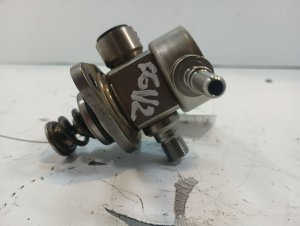
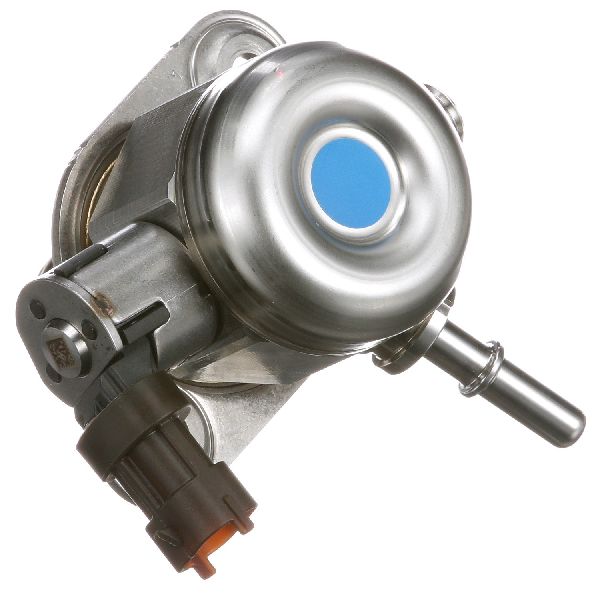
- High-Pressure Fuel Pump
(OEM #35320-2G740)— This is the most common failure point on the Theta II GDI engine that causes code P0089.
Trusted brands: Hyundai/Kia Genuine, Bosch
OEM price range: $400-$600
Aftermarket price range: $250-$450 - Fuel Pump Cam Follower (Tappet)
(OEM #35325-2G700)— This is a critical wear item that drives the HPFP. It is mandatory to replace it with the pump to prevent premature failure of the new pump.
Trusted brands: Hyundai/Kia Genuine, Standard Motor Products
OEM price range: $25-$40
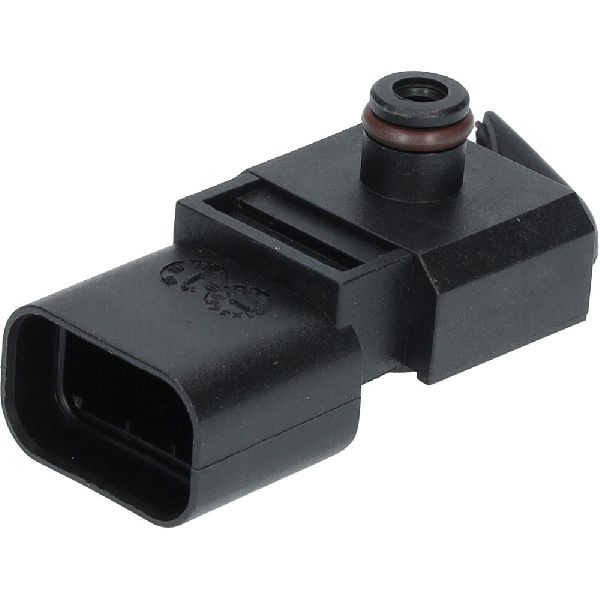
Aftermarket price range: $15-$30 - Fuel Rail Pressure Sensor
(OEM #35342-2GGA0)— A less common but possible cause. It can fail electronically and send incorrect pressure readings to the computer. Its location under the intake manifold makes it a 'last resort' replacement.
Trusted brands: Hyundai/Kia Genuine, Bosch, Delphi
OEM price range: $80-$120
Aftermarket price range: $40-$70
Related Codes That Often Appear With This One
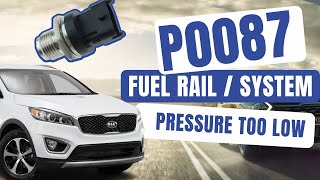
- P0087 — This code for 'Fuel Rail/System Pressure - Too Low' often accompanies or precedes P0089 as it indicates a specific type of performance failure where the pump cannot build enough pressure. 🎬 Watch: How to test and fix low fuel rail pressure
- P0088 — This code for 'Fuel Rail/System Pressure - Too High' can appear if the pump's internal regulator sticks, causing excessive pressure. This code specifically may make the vehicle eligible for a warranty extension on the HPFP.
- P0300-P0304 — Cylinder misfire codes are common secondary codes because low or erratic fuel pressure can starve the cylinders of fuel, leading to incomplete combustion.
Technical Service Bulletins (TSBs) & Recalls
- TSB FUE067 / WTY034: Extends warranty on the High-Pressure Fuel Pump to 15 years/180,000 miles for vehicles that store code P0088 (Pressure Too High).
- TSB FUE064 / WTY033: Extends warranty on the low-pressure in-tank fuel pump to 15 years/unlimited miles for 2018-2019 Sorento models due to a potential leak at the pump port.
- Recall SC147: Pertains to the inspection and potential replacement of the engine assembly on earlier models (2012-2014 Sorento) due to connecting rod bearing wear from manufacturing debris.
Platform-Specific Known Issues
- The Theta II 2.4L GDI engine is subject to multiple recalls and a massive class-action lawsuit settlement for connecting rod bearing failure, which can lead to engine seizure and fire. While P0089 is a separate issue, it's part of a pattern of known reliability problems with this engine family.
- Kia issued a warranty extension (WTY034 / TSB FUE067) for the high-pressure fuel pump, extending coverage to 15 years / 180,000 miles. However, this service campaign is specifically triggered by DTC P0088 (Fuel Pressure Too High). Your vehicle may not be covered for P0089 alone unless P0088 is also present.
- Recall SC147 was issued for earlier models (up to 2014 Sorento) for engine inspection and replacement due to manufacturing debris causing bearing wear.
Mechanic-Grade Diagnostic Values
- Low-Pressure Fuel Pump (In-Tank) Output Pressure — expected: 50-75 PSI (typically 65-75 PSI). Failure: Pressure is low, erratic, or drops under load. This starves the HPFP.
- High-Pressure Fuel Rail Pressure (at idle) — expected: 40 bar (approx. 580 PSI). Failure: Actual pressure significantly deviates from desired pressure, or is highly unstable.
- High-Pressure Fuel Rail Pressure (under load) — expected: Up to 150 bar (approx. 2175 PSI). Failure: Actual pressure cannot reach or sustain the desired pressure commanded by the ECM during acceleration.
- Fuel Rail Pressure Sensor (FRPS) Voltage — expected: 0.5 - 4.5 Volts. Failure: Voltage is stuck, erratic, or does not correspond to pressure changes. A reading of 5V or 0V indicates a circuit fault.
Scan Tool Commands That Help
- Kia GDS (Global Diagnostic System): Fuel System Test (Actuation Test) — This function allows a technician to command the fuel pressure regulator and pumps to operate, helping to isolate a faulty component from a wiring or ECM command problem. It can be used to verify if the regulator responds to commands before physically replacing parts.
Real Owner Repair Stories
- YouTube user comment (2019-2022 Kia Optima (shares Theta II GDI powertrain)) — Car was starting but would die out later.
❌ Tried (didn't work) Replacing the High-Pressure Fuel Pump (HPFP)
✅ What actually fixed it The problem was resolved by replacing the low-pressure in-tank fuel pump assembly, which also contains the integrated fuel filter. The user noted that if the car won't start at all, the HPFP is a more likely suspect, but if it starts and then dies, the low-pressure pump should be investigated.
OEM Part Supersession History
35320-2G720→35320-2G740— Manufacturing or supplier change. The parts are functionally identical.
Heads up: 35320-2G720 and 35320-2G740 are interchangeable for this application.35325-3F100→35325-2G700— Updated part design or consolidation.
Heads up: 35325-2G700 is the correct replacement roller tappet for this application.
Model Year Variations Within This Range
- 2016-2018: These pre-facelift models used a 2.4L GDI engine paired with a 6-speed automatic transmission.
- 2019-2020: The Sorento received a facelift for the 2019 model year. While the 2.4L GDI engine remained the base engine, the optional 2.0L Turbo was dropped. Higher trims with the V6 engine received a new 8-speed automatic transmission. These changes do not significantly alter the diagnosis for P0089 on the 2.4L engine but are important for overall vehicle context.
Diagnostic Flowchart
Other Known Issues on This Vehicle
Issues unrelated to this code that are worth knowing about as an owner of this generation:
- Catastrophic Engine Failure (Rod Bearing Wear) 🔴 High — Widespread, typically between 30,000-100,000 miles. Caused by manufacturing debris blocking oil passages. (Ref: Multiple recalls (e.g., SC147 for earlier models) and a class-action settlement providing a lifetime warranty on the short block for qualifying vehicles that have had the KSDS update installed.)
- Excessive Oil Consumption 🔴 High — Very common, with many owners reporting consumption of 1 quart per 1,000-2,000 miles. Often a precursor to more serious engine problems. (Ref: No specific recall, but often addressed as part of the engine failure warranty claims.)
- Carbon Buildup on Intake Valves 🟠 Medium — Inherent to all GDI engines. Typically requires cleaning every 40,000-60,000 miles to prevent performance loss and misfires.
- Vehicle Theft Vulnerability 🔴 High — Affects models without a push-button start and immobilizer. Extremely common in certain regions. (Ref: Service Campaign 976 provides a free software update to enhance anti-theft logic.)
- High-Pressure Fuel Pipe Leak 🔴 High — A recall was issued for potential leaks from the high-pressure fuel pipe, especially on vehicles that had prior engine repairs, posing a fire risk. (Ref: Recall SC172 (Hyundai #189))
Used vs. New Parts: Buying Guide for This Vehicle
When a used part is the smart pick: Given the high failure rate and critical nature of the fuel system, using used parts for this repair is generally not recommended. A used Fuel Rail Pressure Sensor (FRPS) could be a viable option if sourced from a low-mileage vehicle, but the labor to install it makes a new part more sensible. A used HPFP is a significant gamble.
Donor-vehicle mileage cap: roughly under 50000 miles for the part to have meaningful remaining life.
What to inspect on the donor part:
- For a High-Pressure Fuel Pump (HPFP), verify the exact OEM part number matches.
- Inspect the electrical connector for any signs of melting, corrosion, or damage.
- Check the pump body for any signs of fuel staining or residue, which would indicate a leak.
- Ask for the VIN of the donor vehicle to check its history for accidents or related fuel system repairs.
OEM-only on this vehicle (don't cheap out):
- High-Pressure Fuel Pump (HPFP)
- Fuel Pump Cam Follower (Tappet)
Aftermarket brands forum-validated for this vehicle:
- Bosch (Often the OEM supplier for the HPFP)
- Standard Motor Products (For the cam follower and sensors)
Brands owners have reported issues with on this vehicle:
- Unbranded, low-cost HPFPs from online marketplaces like AliExpress or Vevor. While the price is tempting (e.g., $70 vs $400+), these often use inferior internal components like cheap bearings that can fail within weeks, leading to a repeat repair.
Real Owner Stories
Aggregated from forums and TSBs cited above. Mileages and costs reflect what owners reported in those sources.
2015-2020 Kia Sorento UM
Symptoms: Low fuel rail pressure symptoms including hesitation and power loss.
What fixed it: Diagnosis and repair of the fuel rail/system pressure following technical procedures for the HPFP and in-tank pump.
Source hint: YouTube - 'KIA Diagnostics': A video titled 'Test & Fix P0087 Fuel Rail / System Pressure Too Low | KIA SORENTO UM 2015-20'
2012-2014 Kia Sorento 2.4L GDI — ~65000 miles
Symptoms: Concerns regarding engine safety, manufacturing debris, and potential for bearing wear leading to engine replacement.
What fixed it: Engine inspection and potential replacement under Recall SC147.
Source hint: BobIsTheOilGuy.com: A thread titled 'Kia 2.0T and 2.4L engine safety recall (SC147)...'
2011-2020 Kia Sportage 2.4L GDI
Symptoms: Low fuel rail system pressure and check engine light.
What fixed it: Replacement of the High-Pressure Fuel Pump (HPFP), in-tank pump, or sensor.
Source hint: YouTube - 'Electrical Car Repair LIVE': A video titled 'CODE P0087 LOW FUEL RAIL SYSTEM PRESSURE TOO LOW KIA SORENTO, KIA SPORTAGE'
Related OBD-II Codes
Frequently Asked Questions
Is the High-Pressure Fuel Pump (HPFP) on my 2016-2020 Kia Sorento covered under a warranty extension?
I have a 2018 Sorento and smell fuel near the back of the car; is there a known issue?
Why does my engine oil smell like gasoline when I check the dipstick?
Should I replace the cam follower when I replace the high-pressure fuel pump?
Where is the Fuel Rail Pressure Sensor located on the 2.4L Sorento?
Can the engine issues associated with Recall SC147 cause fuel pressure codes?
Helpful Videos


Used OEM Parts in Stock


New Aftermarket Parts Available


The information in this article is provided for general reference and educational purposes only. Vehicle specifications, procedures, and part compatibility can vary by production date, trim level, and region. Always consult your vehicle's factory service manual and verify part numbers before purchasing or performing repairs. Safety-critical components such as airbags, seat belts, and braking systems should be installed by a qualified professional.
- Kia Sorento:
- 🎬 Helpful Videos
- 🛍️ Shop This Part
- What's Unique About the 2016-2020 Kia Sorento
- Symptoms You May Notice
- Most Likely Causes
- Rare But Worth Checking
- Diagnosis Steps
- Parts You'll Likely Need
- Related Codes That Often Appear With This One
- Technical Service Bulletins (TSBs) & Recalls
- Platform-Specific Known Issues
- Mechanic-Grade Diagnostic Values
- Scan Tool Commands That Help
- Real Owner Repair Stories
- OEM Part Supersession History
- Model Year Variations Within This Range
- Diagnostic Flowchart
- Other Known Issues on This Vehicle
- Used vs. New Parts: Buying Guide for This Vehicle
- Real Owner Stories
- 2015-2020 Kia Sorento UM
- 2012-2014 Kia Sorento 2.4L GDI — ~65000 miles
- 2011-2020 Kia Sportage 2.4L GDI
- Related OBD-II Codes
- Frequently Asked Questions
- 🎟️ Get 5% Off