

P0089 on 2007-2013 GMC Sierra 1500 6.0L: Causes and Fixes for Fuel Pressure Performance
On this GMC Sierra, P0089 is most often caused by a failing Fuel Pump Driver Module (FPDM), also known as the Fuel System Control Module (FSCM), or a weak in-tank fuel pump. The FPDM is located on a frame crossmember above the spare tire and is notoriously prone to corrosion and failure. Checking this module first is the most common and cost-effective diagnostic step.
- P0089 on a 2007-2013 Sierra 6.0L almost always points to the fuel delivery system, specifically the Fuel Pump Driver Module (FPDM) or the fuel pump.
- ALWAYS inspect the FPDM, located above the spare tire, for corrosion before replacing the more expensive fuel pump.
- Using a scan tool to compare 'Desired Fuel Pressure' and 'Actual Fuel Pressure' is the most effective first step in diagnosis.
- Continued driving is risky as the engine could stall unexpectedly, creating a safety hazard.
- If replacing the FPDM, apply dielectric grease to the new connector to help protect it from future corrosion.
What's Unique About the 2007-2013 GMC Sierra 1500
These GMT900 trucks use a 'returnless' fuel system. Instead of a traditional vacuum-operated regulator on the engine, they use a Fuel Pump Driver Module (FPDM), which GM calls a Fuel System Control Module (FSCM), to precisely control the speed of the in-tank fuel pump by varying voltage. This module is notoriously prone to failure due to its mounting location on a frame crossmember above the spare tire, where it is exposed to water, salt, and debris. This leads to severe corrosion of the module's aluminum housing and its electrical connector, making FPDM failure the most common cause of P0089 on this specific platform.
Symptoms You May Notice
- Check Engine Light illuminated
- Reduced engine power or 'Limp Mode'
- Engine hesitation or stumbling during acceleration
- Rough idle
- Difficulty starting the engine (hard start), sometimes requiring long cranks
- Engine stalling, especially under load or when coming to a stop
- Noticeable decrease in fuel economy
- Black smoke from exhaust under certain conditions
- Replacing the fuel pump without first inspecting the Fuel Pump Driver Module (FPDM/FSCM). The FPDM is a more common failure point, easier to access, and a less expensive part to replace.
- Replacing the accelerator pedal assembly when a code like P2138 appears with P0089. While seemingly unrelated, wiring issues can sometimes cause multiple codes. TSB 07-06-04-019G points to a harness connector issue for P2138 that could be misdiagnosed as a pedal problem.
- Replacing the injection pump prematurely. Manufacturer Bulletin #PIP5988 advises technicians not to replace the injection pump for DTCs P0089 and P2293, but to replace the fuel rail instead.
Most Likely Causes
- Failing Fuel Pump Driver Module (FPDM/FSCM) 🔴 High Probability The module is mounted on the frame above the spare tire, making it highly susceptible to corrosion from road spray and moisture, which damages the module's internal electronics and external connector pins. The aluminum backplate often corrodes through, allowing water to destroy the circuit board.
How to confirm: Visually inspect the module and its connector for corrosion, swelling, or physical damage. Lowering the spare tire provides direct access. With a scan tool, monitor the 'Desired' vs. 'Actual' fuel pressure PIDs while commanding the pump to run. A significant discrepancy, no response, or erratic actual pressure points to the FPDM or pump.
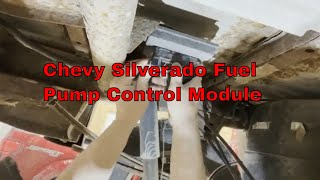
Typical fix: Replace the Fuel Pump Driver Module and clean or replace the connector pigtail if corroded. It is highly recommended to apply dielectric grease to the new connector to prevent future corrosion. Some aftermarket replacements (like Dorman 590-001) include redesigned 🎬 Watch: How to replace and relocate the Fuel Pump Control Module bushings to create an air gap between the module and the frame to mitigate future corrosion.
Est. part cost: $80-$180 - Failing In-Tank Fuel Pump 🟡 Medium Probability The fuel pump can weaken over time and fail to deliver the pressure commanded by the FPDM, especially at higher mileage (over 100k miles). It can also be overworked and fail prematurely if the FPDM is malfunctioning.
How to confirm: If the FPDM is confirmed to be good and sending correct voltage, but fuel pressure is still low or erratic, the pump is the likely cause. A fuel pressure gauge can be used to test output directly. A silent pump when commanded 'on' with a scan tool is a definitive sign of failure. Some owners report that banging on the bottom of the fuel tank may temporarily get a failing pump to work, which is a strong indicator of its failure.
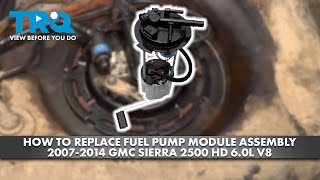
Typical fix: Replace the in-tank fuel pump module. This requires lowering the fuel tank, 🎬 See this clever shortcut: Cutting a fuel pump access panel which can be a labor-intensive job.
Est. part cost: $250-$500 - Clogged Fuel Filter ⚪ Low Probability The fuel filter on these trucks is part of the fuel pump module inside the tank and is not a separate, serviceable item. While not 'prone' to failure, if routine maintenance is neglected or poor quality fuel is used, the filter can become restricted, impeding fuel flow and causing a pressure drop.
How to confirm: This is difficult to confirm directly without measuring fuel pressure before and after the pump module. It is typically diagnosed by exclusion after ruling out the FPDM and pump motor, or discovered during a fuel pump replacement.
Typical fix: The filter is integral to the fuel pump module, so the entire module must be replaced.
Est. part cost: $250-$500
Rare But Worth Checking
- Faulty Fuel Rail Pressure Sensor: While less common than a pump or module failure, the sensor itself can fail or its connector can corrode, sending incorrect readings to the ECM. TSB 20-NA-197 discusses this issue on later models, but the principle of checking the connector for corrosion (especially blackened dielectric grease) applies here. The sensor is located on the driver-side fuel rail.
- Wiring Issues: Chafed or broken wires in the harness running along the frame rail between the ECM, FPDM, and the fuel pump can cause intermittent signal loss and trigger the code. This is more common in vehicles from rust-prone regions or where aftermarket equipment has been installed. A manufacturer service bulletin, Bulletin #PIP6061, notes that electrical connection concerns at the high pressure fuel pump can set P0089 and suggests manipulating the harness to see if the code can be duplicated.
- Shorted 5V Reference Circuit: The fuel pressure sensor shares a 5-volt reference circuit with other sensors. A short in another sensor on the same circuit (like the MAP sensor, oil pressure sensor, or A/C pressure sensor) can cause the fuel pressure sensor to read incorrectly, triggering P0089. This may be accompanied by other codes like P0641. Diagnosing this involves checking the 5V reference at the sensor with a multimeter.
- Bad FPDM Ground Wire: The Fuel Pump Driver Module requires a solid ground to the frame to operate correctly. In rust-belt trucks, the ground connection point can become corroded, creating high resistance and causing erratic FPDM operation that mimics a failed module. Always check and clean the ground connection when inspecting or replacing the FPDM.
Diagnosis Steps
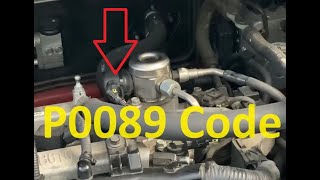
- Connect a scan tool and verify that P0089 is present. Check for any other related fuel system or communication codes, such as P069E or P0641. 🎬 Watch: Diagnosing and fixing a P0089 trouble code Manufacturer Bulletin #PIP5279A notes that P0089 may appear with a variety of other codes including P127C, P127D, P0192, P0193, P228C, P228D, and P006C.
- Using the scan tool's live data, observe the 'Desired Fuel Pressure' and 'Actual Fuel Pressure' PIDs at idle and during a brief throttle snap. Note any large discrepancies, lagging response, or erratic readings from the 'Actual' pressure.
- Lower the spare tire to gain access to the Fuel Pump Driver Module (FPDM) on the frame crossmember.
- Carefully inspect the FPDM and its electrical connector for any signs of corrosion, water intrusion, or physical damage. Pay close attention to the aluminum backplate of the module, which often corrodes and swells.
- Inspect the FPDM ground wire connection to the frame for rust and tightness. Clean and secure it as necessary.
- If corrosion is found on the FPDM or its connector, replacement of the module (and connector pigtail if necessary) is the most likely fix.
- If the FPDM appears visually okay, use the scan tool to command the fuel pump to 100% duty cycle. The 'Actual' pressure should rise to match the 'Desired' pressure (typically >65 PSI). If it fails to reach the target, the pump is weak, the filter is clogged, or there is a major leak.
- If the pump fails to run at all when commanded on, verify power and ground at the FPDM connector and the fuel pump connector to distinguish between a wiring issue and a failed pump motor.
- As a final, less common check, inspect the fuel rail pressure sensor and its connector (on the driver's side fuel rail) for damage or corrosion.
Parts You'll Likely Need
- Fuel Pump Driver Module (FSCM)
(OEM #23480529 (supersedes 20850927, 25966986))— This is the most common failure point for P0089 on this platform due to its exposed mounting location leading to corrosion.
Trusted brands: ACDelco (GM Original Equipment), Dorman (OE FIX 590-001)
OEM price range: $120-$180
Aftermarket price range: $80-$130 - In-Tank Fuel Pump Module
(OEM #ACDelco M10065)— This is the second most likely part to fail, either from age or from being overworked by a faulty FPDM.
Trusted brands: ACDelco, Delphi, Bosch
OEM price range: $350-$500
Aftermarket price range: $250-$400
Related Codes That Often Appear With This One
- P069E — This code indicates a fault with the Fuel Pump Control Module itself, often appearing alongside P0089 when the module is failing.
- P0230 — Indicates a fault in the fuel pump primary circuit, pointing towards an issue with the fuel pump, relay, or FPDM.
- P0641 — This code for 'Sensor Reference Voltage 'A' Circuit/Open' can appear if a short in the 5V reference circuit, which is shared by the fuel pressure sensor, is the root cause.
- P0087 — Indicates 'Fuel Rail/System Pressure - Too Low', a more specific code that can accompany the general performance issue of P0089.
- P228C — Often cited in manufacturer bulletins like #N252524761 alongside P0089, indicating fuel pressure regulator performance issues.
Technical Service Bulletins (TSBs) & Recalls
- 20-NA-197: While for later models, it highlights that corrosion at the fuel pressure sensor connector can cause P0089, a relevant diagnostic point. The TSB advises inspecting for blackened dielectric grease or terminal damage and replacing the connector pigtail if found.
- 07-06-04-019G: This TSB addresses DTC P2138 (Accelerator Pedal Position Sensor Correlation) which can sometimes appear with other codes. It points to water intrusion in the IP-to-body harness connector in the driver's kick panel, advising against unnecessarily replacing the pedal itself. This is useful context if multiple, seemingly unrelated codes are present.
- Bulletin #N252524761: Notes that certain vehicles may set a Malfunction Indicator Light with DTCs P228C, P0089, and/or P006C, requiring a reprogram of the Engine Control Module.
- Bulletin #PIP5988: Specifically advises technicians not to replace the injection pump for DTCs P0089 and P2293, but to replace the fuel rail instead.
Platform-Specific Known Issues
- FSCM/FPDM Corrosion is the #1 Cause: Owner forums are filled with accounts of P0089 being resolved by replacing the Fuel System Control Module located above the spare tire. One user on silveradosierra.com notes, '9 times out of 10 on these trucks, it's the FPDM. Drop the spare and look. Mine was a corroded piece of junk. Replaced it in 15 minutes and the code was gone.' This sentiment is echoed across hundreds of posts.
- Relocation and Prevention: Many owners who replace the FSCM also modify its mounting. Instead of placing the new module directly against the steel frame, they use longer bolts and spacers (or the improved bushings included with some aftermarket parts) to create an air gap. This prevents moisture from being trapped between the module's aluminum back and the steel frame, which accelerates galvanic corrosion.
Mechanic-Grade Diagnostic Values
- Static Fuel Pressure (Key On, Engine Off) — expected: 55-65 PSI. Failure: Pressure below 55 PSI can indicate a weak pump or a leak. Pressure that bleeds off rapidly can indicate a bad check valve in the pump assembly.
- Fuel Rail Pressure Sensor Signal Voltage (Engine Off) — expected: ~0.5V. Failure: Voltage significantly different from 0.5V with the engine off and pressure bled down points to a faulty sensor.
- Fuel Rail Pressure Sensor Signal Voltage (Idle) — expected: 1.2V - 1.5V. Failure: Voltage that is stuck, erratic, or does not correspond to scan tool pressure readings indicates a sensor or wiring issue.
- FPDM Ground Circuit Resistance — expected: Near 0 Ohms. Failure: High resistance (more than a few ohms) indicates a corroded or loose ground connection, which can cause erratic FPDM operation.
- FPDM Control Signal (from ECM) — expected: A GMLAN serial data message, not a simple voltage. Requires a capable scan tool to monitor.. Failure: Inability to communicate with the FPDM or loss of the data signal points to a wiring or ECM issue.
Scan Tool Commands That Help
- GDS2 (GM Global Diagnostic System 2): Fuel Pump Control / Output Control — This bidirectional command allows a technician to manually command the FPDM to run the fuel pump at specific duty cycles (e.g., 25%, 50%, 75%). It's essential for verifying if the FPDM, wiring, and pump can respond to commands and achieve target pressures, isolating the faulty component.
- GDS2 (GM Global Diagnostic System 2): Fuel Trim Reset — After replacing major fuel system components like the fuel pump or injectors, this function should be used to reset the learned fuel trim values in the ECM, allowing the system to re-learn with the new parts for optimal performance.
Wiring & Ground Locations
- FPDM/FSCM Ground — The ground wire for the Fuel Pump Driver Module typically grounds directly to the frame rail near the module's mounting location, above the spare tire.. This is a critical failure point. Corrosion at this ground connection creates high resistance, causing the FPDM to operate erratically or not at all, perfectly mimicking the symptoms of a failed module itself. It is often overlooked.
- FPDM/FSCM Connector — Located on the module itself, on the frame crossmember above the spare tire.. This connector is highly exposed to road spray, salt, and moisture, leading to severe corrosion of the pins for power, ground, and the GMLAN communication lines. A corroded connector can cause P0089 and other communication codes like P069E.
- Fuel Pump Relay (if applicable) — In the underhood fuse block. On some early or specific base models without an FPDM, a traditional relay is used.. For trucks without an FPDM, this relay is the primary control for the fuel pump. A faulty relay would cause a no-start or stalling, but could potentially fail intermittently and cause performance issues.
Real Owner Repair Stories
- GM-Trucks.com forum user (2008 GMC Sierra 1500 5.3L (LMG engine)) — No power to the fuel pump, crank no-start condition.
❌ Tried (didn't work) Searching for the Fuel Pump Driver Module (FPDM) above the spare tire and along the frame rail, as suggested by all service manuals.
✅ What actually fixed it The user discovered their specific LMG-engine truck did not have an FPDM. The issue was traced to the traditional fuel pump relay located in the underhood fuse block. The fix was diagnosing and replacing the correct relay. - NHTSA ODI #11719289 — An owner reported that their vehicle wanted to shake, and a diagnostic scan returned codes P0016, P0089, and P228D, which they noted are well-known codes for this engine type.
OEM Part Supersession History
25966986→20850927, then 20877116, now 23480529— GM frequently updates electronic modules to improve reliability, address known failure modes (like corrosion), or account for changes in microprocessor suppliers.
Heads up: While many modules are physically plug-and-play, some replacement FSCMs, even genuine ACDelco parts, may require programming/configuration to the vehicle's VIN using GM's Techline Connect software to function correctly. Failure to program a required module can result in a no-start condition.
Model Year Variations Within This Range
- 2007-2009 (primarily): Some base model trucks, particularly those with the 5.3L LMG V8 engine, may not be equipped with a Fuel Pump Driver Module (FPDM). Instead, they use a conventional fuel pump relay in the underhood fuse box. It is critical to physically verify the presence or absence of the FPDM above the spare tire before ordering parts.
Diagnostic Flowchart
Other Known Issues on This Vehicle
Issues unrelated to this code that are worth knowing about as an owner of this generation:
- Cracked Dashboard 🟠 Medium — Extremely common on 2007-2014 models, especially in warmer climates. Cracks typically appear above the passenger airbag and on the driver's side near the instrument cluster. (Ref: No recall was ever issued, despite class-action lawsuits. GM considers it a cosmetic issue.)
- Active Fuel Management (AFM) Lifter Failure 🔴 High — Common on 5.3L and some 6.2L engines, less so on the 6.0L which had more robust AFM components or none at all depending on the specific RPO code (e.g. LY6). Can occur anytime after 60,000 miles, often manifesting as a ticking noise and misfire codes (P0300). (Ref: Multiple TSBs exist regarding oil consumption and AFM issues, but no universal recall. Fix involves replacing lifters, camshaft, and sometimes disabling the AFM system.)
- Excessive Oil Consumption 🟠 Medium — Related to the AFM system and PCV design, many 5.3L V8s in this generation consume excessive oil between changes. A revised valve cover design was released to address the PCV issue. (Ref: TSBs were issued, and some vehicles fell under special warranty extensions for this issue.)
- Intermediate Steering Shaft Clunk 🟡 Low — A common issue where a clunking or popping noise is felt through the steering wheel during low-speed turns. Caused by a poor design of the intermediate steering shaft. (Ref: TSBs exist. The common fix is to replace the shaft with an updated design or lubricate the existing one, though lubrication is often a temporary fix.)
- Body Control Module (BCM) Electrical Gremlins 🟠 Medium — A failing BCM can cause a wide range of bizarre electrical issues, including battery drain, flickering lights, and gauges acting erratically.
Used vs. New Parts: Buying Guide for This Vehicle
When a used part is the smart pick: A used part makes almost no sense for this repair. The primary failure parts, the FPDM and the in-tank fuel pump, are known wear/failure items. A used FPDM from a junkyard is highly likely to have the same corrosion issue or be near failure. A used fuel pump has an unknown number of hours on it and the labor to replace it is too high to risk an early failure.
Donor-vehicle mileage cap: roughly under 20000 miles for the part to have meaningful remaining life.
What to inspect on the donor part:
- For FPDM: Must be from a dry, southern climate vehicle with zero visible corrosion on the aluminum housing or connector pins.
- For Fuel Pump: Not recommended, but if absolutely necessary, verify the donor vehicle was running and had low mileage. Listen for a strong prime when power is applied.
OEM-only on this vehicle (don't cheap out):
- While not strictly OEM-only, using a reputable brand is crucial. For the FPDM/FSCM, ACDelco (GM's OEM brand) is the safest bet for compatibility and avoiding programming issues.
Aftermarket brands forum-validated for this vehicle:
- Dorman (OE FIX 590-001 for FPDM): Known for their redesigned module that includes bushings to create an air gap, preventing the corrosion that plagues the OEM design.
- Delphi, Bosch (for Fuel Pump): These are often OEM suppliers and are widely considered reliable alternatives to the dealer part.
Brands owners have reported issues with on this vehicle:
- Unnamed, no-brand 'white box' electronic modules and fuel pumps from online marketplaces. These often have high failure rates, use inferior internal components, and can cause programming or compatibility headaches.
Real Owner Stories
Aggregated from forums and TSBs cited above. Mileages and costs reflect what owners reported in those sources.
2007-2013 GMC Sierra 1500 6.0L V8
Symptoms: The Fuel Pump Driver Module was a corroded piece of junk.
What fixed it: Replaced the Fuel Pump Driver Module (FPDM).
Cost: $80-$180
Source hint: silveradosierra.com notes in vehicle_specific_issues
2007-2013 GMC Sierra 1500 6.0L V8
Symptoms: Experienced both P0089 and P069E codes; visual inspection showed a heavily corroded module above the spare tire.
What fixed it: Replacing the Fuel Pump Driver Module (FPDM).
Source hint: https://www.silveradosierra.com/threads/p0089-and-p069e-codes-fixed.701115/
2007-2013 GMC Sierra 1500 6.0L V8 — ~115000 miles
Symptoms: Fuel pump weakened and failed to deliver commanded pressure; the pump was silent when commanded 'on' with a scan tool.
What fixed it: Replace the in-tank fuel pump module.
Source hint: common_causes: Failing In-Tank Fuel Pump
Related OBD-II Codes
Frequently Asked Questions
Where is the Fuel Pump Driver Module located on my 2007-2013 GMC Sierra 1500?
Is there a specific aftermarket part recommended to prevent the P0089 corrosion issue?
My Sierra has P0089 and P2138; does TSB 07-06-04-019G apply to me?
Can I just replace the fuel filter on my 6.0L V8 Sierra to fix P0089?
What should the fuel pressure be on my Sierra when testing with a scan tool?
Does TSB 20-NA-197 suggest any specific maintenance for the fuel system?
Are there any other manufacturer bulletins regarding P0089 for this vehicle?
Helpful Videos
Used OEM Parts in Stock


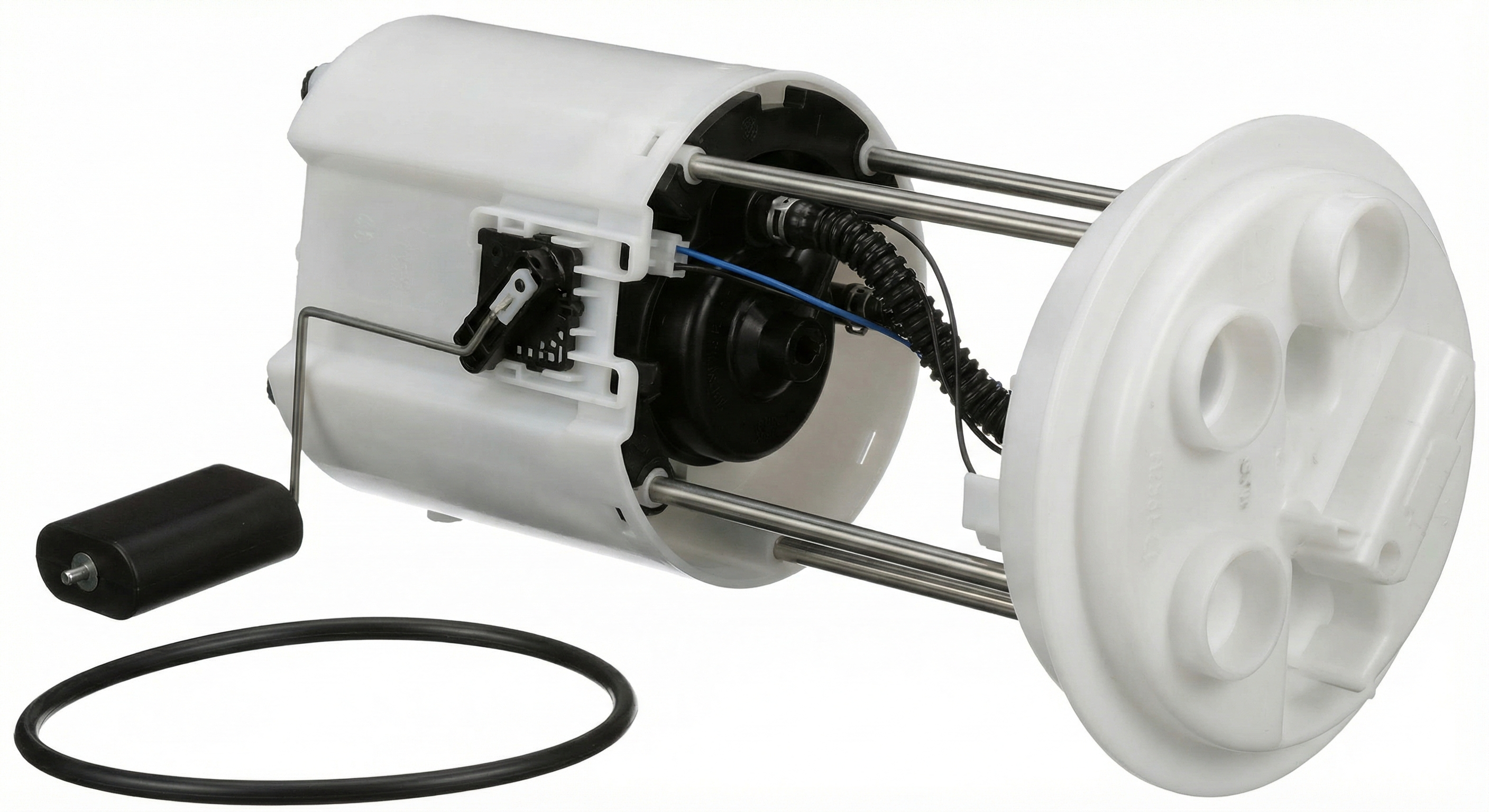

New Aftermarket Parts Available


The information in this article is provided for general reference and educational purposes only. Vehicle specifications, procedures, and part compatibility can vary by production date, trim level, and region. Always consult your vehicle's factory service manual and verify part numbers before purchasing or performing repairs. Safety-critical components such as airbags, seat belts, and braking systems should be installed by a qualified professional.
- GMC Sierra 1500:
- 🎬 Helpful Videos
- 🛍️ Shop This Part
- What's Unique About the 2007-2013 GMC Sierra 1500
- Symptoms You May Notice
- Most Likely Causes
- Rare But Worth Checking
- Diagnosis Steps
- Parts You'll Likely Need
- Related Codes That Often Appear With This One
- Technical Service Bulletins (TSBs) & Recalls
- Platform-Specific Known Issues
- Mechanic-Grade Diagnostic Values
- Scan Tool Commands That Help
- Wiring & Ground Locations
- Real Owner Repair Stories
- OEM Part Supersession History
- Model Year Variations Within This Range
- Diagnostic Flowchart
- Other Known Issues on This Vehicle
- Used vs. New Parts: Buying Guide for This Vehicle
- Real Owner Stories
- 2007-2013 GMC Sierra 1500 6.0L V8
- 2007-2013 GMC Sierra 1500 6.0L V8
- 2007-2013 GMC Sierra 1500 6.0L V8 — ~115000 miles
- Related OBD-II Codes
- Frequently Asked Questions
- 🎟️ Get 5% Off