

P0089 on 2015-2023 Ford Mustang 2.3L EcoBoost: Causes and Fixes for Fuel Pressure Issues
On a 2.3L EcoBoost Mustang, P0089 usually points to a failing high-pressure fuel pump (HPFP) or a faulty fuel rail pressure sensor. Expect to pay $200-$800 for a DIY repair, depending on which part has failed. This is a common issue for Ford's direct injection engines, and a worn HPFP plunger or camshaft lobe is a known failure pattern.
- P0089 on your EcoBoost Mustang means the fuel pressure isn't matching what the engine computer expects.
- The most likely culprit is a failing high-pressure fuel pump (HPFP), a common issue for this engine.
- A faulty fuel rail pressure sensor is the second most likely cause and is a cheaper and easier part to replace.
- Use a scan tool to watch live fuel pressure data during a test drive; if 'actual' pressure can't keep up with 'desired' pressure, the HPFP is the prime suspect.
- Do not ignore this code. It can lead to stalling, which is dangerous, and can cause expensive damage to other parts like the catalytic converter.
What's Unique About the 2015-2023 Ford Mustang
The 2.3L EcoBoost engine uses a Gasoline Direct Injection (GDI) system, which is a common rail design. This means it has two fuel pumps: a low-pressure pump in the tank and a high-pressure fuel pump (HPFP) on the engine. This dual-pump system can make diagnosis more complex, as the P0089 code can be triggered by a fault in either the low-pressure or high-pressure side of the fuel system. Failures of the HPFP, specifically the plunger and the camshaft lobe that drives it, are a known issue on EcoBoost platforms.
Symptoms You May Notice
- Check Engine Light is on
- Reduced engine power and poor acceleration, vehicle 'falls on its face' when accelerating hard.
- Engine hesitation or sputtering, especially under load between 2000-4000 RPM.
- Rough or erratic idle
- Engine stalling, sometimes without warning
- Difficulty starting the engine or extended crank times.
- Decreased fuel economy
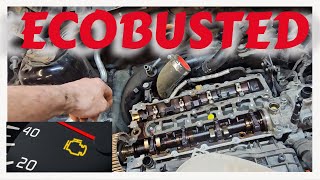
- Rattling or ticking noise from the engine bay, indicating a worn HPFP plunger/follower. 🎬 Watch: Learn more about common symptoms of a failing HPFP.
- Replacing the low-pressure fuel pump when the high-pressure fuel pump is the actual cause.
- Replacing fuel injectors when the pressure supply is the root problem.
- Replacing the fuel pressure sensor when the HPFP is mechanically failing and unable to meet pressure demands.
Most Likely Causes
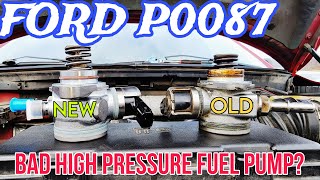
- Failing High-Pressure Fuel Pump (HPFP) 🔴 High Probability The HPFP is a known failure point on Ford's EcoBoost engines. The pump is mechanically driven by a lobe on the camshaft, and the plunger (or 'follower') that rides on this lobe can wear down, break, or seize. This prevents the pump from generating the commanded pressure, especially under load.
How to confirm: Use a scan tool to monitor desired vs. actual fuel rail pressure. If actual pressure cannot keep up with commanded pressure, especially under load, the HPFP is a likely culprit. Upon removal, visually inspect the HPFP's plunger and the camshaft lobe for scoring, wear, or catastrophic failure. A completely worn-through plunger is a common finding.
Typical fix: Replace the high-pressure fuel pump and the cam follower. If the camshaft lobe is also damaged, it will require replacement, which is a much more involved repair. In cases of severe failure, metal debris ('swarf') can contaminate the entire fuel system, requiring flushing of lines and replacement of injectors.
Est. part cost: $300-$800 - Faulty Fuel Rail Pressure Sensor 🟡 Medium Probability The sensor provides the critical feedback to the PCM. If it sends inaccurate, erratic, or stuck readings, the PCM will log a performance code because the reported pressure doesn't match what it expects based on its commands to the pump.
How to confirm: Monitor the fuel pressure reading on a scan tool. With the key on and engine off, the reading should be stable. At idle, it should also be stable. If the reading is erratic, stuck at a certain value (e.g., 4.8V), or doesn't change with engine RPM, the sensor is likely faulty. You can also test the sensor's voltage output; it should typically be between 0.5V and 4.5V and fluctuate with pressure changes.
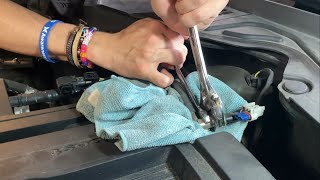
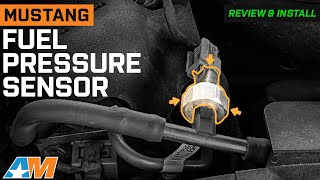
Typical fix: Replace the fuel rail pressure sensor. It is located on the high-pressure fuel rail 🎬 See this walkthrough for replacing the fuel pressure sensor. on the side of the engine.
Est. part cost: $75-$150 - Failing Low-Pressure Fuel Pump or Fuel Pump Driver Module (FPDM) ⚪ Low Probability The HPFP cannot function correctly if it isn't being supplied with adequate fuel from the in-tank low-pressure pump. A weak low-pressure pump or a faulty module controlling it can starve the high-pressure side, causing P0089, though P0087 is more common in this scenario.
How to confirm: Test the low-pressure fuel system pressure to ensure it meets specifications (typically 40-75 PSI) before it reaches the HPFP. Use a scan tool to check for FPDM-related codes or monitor its operation if possible.
Typical fix: Replace the in-tank low-pressure fuel pump assembly or the Fuel Pump Driver Module.
Est. part cost: $250-$500 - Clogged Fuel Filter ⚪ Low Probability The fuel filter is integrated into the low-pressure fuel pump assembly in the tank and is not a separate, easily serviceable item. While not a common failure, a severely clogged filter can restrict flow to the HPFP, leading to pressure performance issues.
How to confirm: Diagnosed by testing low-side fuel pressure. If pressure is low, and the pump is known to be good, a restriction is likely. This is often confirmed during the replacement of the in-tank pump assembly.
Typical fix: Replace the entire low-pressure fuel pump and filter assembly.
Est. part cost: $250-$500
Rare But Worth Checking
- Wiring or Connector Issues: Corrosion or damage to the wiring for the fuel pressure sensor or HPFP's volume control solenoid can cause intermittent and incorrect signals, triggering a P0089 code. Always inspect the harness before replacing expensive components.
- Worn Camshaft Lobe: The HPFP is mechanically driven by a lobe on the camshaft. This lobe can be scored or completely worn down by a failed pump follower, preventing a new pump from generating sufficient pressure. This is a major mechanical repair requiring camshaft replacement.
Diagnosis Steps
- Connect an OBD-II scanner and confirm P0089 is present. Check for any other related fuel system codes (e.g., P0087, P0088, P0191).
- Using a scan tool with live data capability, monitor 'Desired Fuel Rail Pressure' and 'Actual Fuel Rail Pressure'.
- With the engine idling, compare the two values. They should be very close.
- Safely test drive the vehicle while monitoring the live data. Under hard acceleration, both desired and actual pressure should rise together. If the actual pressure lags significantly behind, drops, or becomes erratic while desired pressure stays high, suspect a fuel delivery issue (likely the HPFP).
- Visually inspect the wiring and connectors for the fuel rail pressure sensor and the high-pressure fuel pump for any signs of damage, corrosion, or looseness.
- If the pressure readings are erratic, nonsensical, or stuck at a fixed value even at idle, the fuel rail pressure sensor is the primary suspect.
- If the high-pressure side seems weak, test the low-pressure fuel system to ensure it is supplying adequate pressure (e.g., 40-75 PSI) to the HPFP. A failure on the low-pressure side will starve the high-pressure pump.
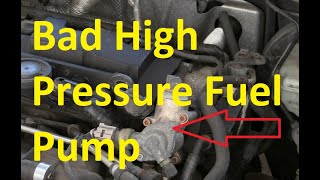
- If fuel pressure tests point towards the HPFP, remove the pump and inspect its mechanical plunger/follower and the camshaft lobe for wear, scoring, or damage. This is a critical step in diagnosing mechanical failure. 🎬 Watch: A mechanic's guide to diagnosing a bad high-pressure pump.
Parts You'll Likely Need
- High-Pressure Fuel Pump (HPFP)
(OEM #CM5250 (Motorcraft Service Part))— This is the most common failure point on EcoBoost engines that leads to a P0089 code due to mechanical wear of its plunger/follower.
Trusted brands: Motorcraft, Bosch
OEM price range: $400-$800
Aftermarket price range: $250-$500 - Fuel Rail Pressure Sensor
(OEM #EJ7Z-9F972-A (Superseded by BU5Z-9F972-B for some applications))— This sensor provides the pressure reading to the PCM. An incorrect signal directly causes this code and is a frequent point of failure.
Trusted brands: Motorcraft, Standard Motor Products
OEM price range: $100-$150
Aftermarket price range: $75-$120
Related Codes That Often Appear With This One
- P0087 — P0087 specifically indicates 'Fuel Rail/System Pressure - Too Low.' If the performance issue with the regulator (P0089) results in a consistent low-pressure state, P0087 will often appear alongside it. This is very common when the HPFP fails.
- P0088 — P0088 indicates 'Fuel Rail/System Pressure - Too High.' This can be logged with P0089 if the regulator fails in a way that causes pressure to spike above the commanded level.
- P0191 — This code relates to the 'Fuel Rail Pressure Sensor 'A' Circuit Range/Performance,' indicating a problem with the sensor's signal itself, which is a primary cause for P0089.
- P00C6 — Indicates 'Fuel Rail Pressure Too Low - Engine Cranking.' This code can appear if the fuel system cannot build adequate pressure even during startup, pointing towards a significant leak or pump failure.
Platform-Specific Known Issues
- A recall (14S27 / NHTSA ID: 14V706000) was issued for a small number of early 2015 models (built Sept 25, 2014 - Oct 9, 2014) for an improperly seated fuel pressure sensor that could cause a fuel leak, increasing fire risk.
- Owner experiences on forums frequently point to the HPFP follower wearing completely through, which then damage
Mechanic-Grade Diagnostic Values
- Low-Pressure Fuel System Pressure — expected: 50-75 PSI. Failure: Pressure below 50 PSI indicates a weak in-tank pump or clogged filter, starving the HPFP.
- High-Pressure Fuel System Pressure (at idle) — expected: Approximately 400-500 PSI. Failure: Significantly lower or erratic pressure suggests an HPFP or rail pressure sensor issue.
- High-Pressure Fuel System Pressure (under load) — expected: Can exceed 2,000 PSI, with some systems rated up to 3,626 PSI.. Failure: If 'Actual' pressure on a scan tool cannot keep up with 'Desired' pressure during acceleration, the HPFP is likely failing.
- Fuel Rail Pressure (FRP) Sensor Voltage (Key On, Engine Off) — expected: 0.5V to 4.5V range. A typical reading is around 0.5V with no pressure.. Failure: A reading below 0.5V or above 4.8V, or a value that is stuck, points to a faulty sensor or wiring short/open.
- FRP Sensor 5V Reference Voltage at Connector — expected: 4.8V to 5.2V with the sensor disconnected and key on.. Failure: 0V indicates an open or short to ground in the reference circuit from the PCM.
Scan Tool Commands That Help
- FORScan or Ford IDS: Fuel Pump Command (FPC) & Fuel Pump Driver Module (FPDM) Duty Cycle — To test the low-pressure fuel pump's operation without needing a mechanical gauge. You can command the pump on and monitor its duty cycle to see if the FPDM is responding correctly and if the pump is drawing the expected current.
- FORScan or Ford IDS: Live Data Graphing: FRP_DESIRED vs. FRP_ACTUAL — This is the most critical diagnostic step. Graphing both PIDs during a test drive under load will clearly show if the actual pressure is failing to meet the commanded pressure, which is a classic symptom of a failing HPFP.
- Ford IDS: PCM Reprogramming/Calibration Update — In some cases, particularly on other Ford models with similar engines, an outdated PCM calibration can cause false P0089 codes. Before replacing expensive hardware, checking for and applying the latest PCM software update can sometimes resolve the issue.
Wiring & Ground Locations
- C175B — This is one of the main connectors at the Powertrain Control Module (PCM), typically located in the engine bay.. The wiring for the Fuel Rail Pressure (FRP) sensor and the High-Pressure Fuel Pump's control solenoid runs through this connector. Pin 19 (YE-OG wire) is the Fuel Pump Command (FPC), and Pin 21 (VT-GN wire) is for the Fuel Pump Relay. Corrosion or a loose pin at C175B can interrupt these critical signals.
- G104 — In the engine bay, on the driver's side, near the battery.. This ground point serves the Data Link Connector (DLC). A poor ground here can cause communication issues with scan tools, making it difficult to accurately read fuel pressure data or other vital PIDs during diagnosis.
- G400 — In the trunk area, on the driver's side.. This is the primary ground location for the Fuel Pump Driver Module (FPDM). A corroded or loose G400 ground can cause the low-pressure pump to perform erratically or fail, starving the HPFP and triggering a P0089.
- Engine to Chassis Ground Strap — A braided strap connecting the engine block to the vehicle's frame, often on the driver's side.. This is a main ground path. If this strap is broken or corroded, electrical components on the engine, including sensors and the HPFP solenoid, may ground improperly through other circuits, causing erratic behavior and fault codes.
Real Owner Repair Stories
- Reddit user on r/MechanicAdvice (Ford Focus 1.6L EcoBoost (similar fuel system design)) — Check Engine Light with P0089, car enters limp mode on long drives (can't rev past 3k RPM).
❌ Tried (didn't work) Replaced the high-pressure fuel sensor.
✅ What actually fixed it The user was advised the next most likely causes were the in-tank fuel pump assembly (which includes the filter), the fuel pressure regulator, or the high-pressure fuel pump itself. This highlights the common diagnostic path of starting with the sensor and then moving to the more expensive pump components. - Reddit user on r/Mustang (2017 Mustang EcoBoost) — Crank no start, multiple fuel codes including P008A (Low Pressure Fuel System), P00C6 (Fuel Rail Pressure Too Low - Cranking), and P025A (Fuel Pump Module Control Circuit/Open).
❌ Tried (didn't work) Replacing the low-pressure fuel pump provided a temporary fix for a few days before codes returned., A mechanic disconnected and reconnected a module, which also was a temporary fix.
✅ What actually fixed it The thread did not have a final confirmed fix, but the sequence of failures (low-pressure pump replaced, problem returns) strongly points towards an underlying electrical issue, likely with the Fuel Pump Driver Module (FPDM) or its wiring/ground (G400), which is a common progression when a simple pump swap doesn't solve the problem.
OEM Part Supersession History
EJ7Z-9F972-A→BU5Z-9F972-B— The original sensor design was prone to failure. The updated part is a more robust design to improve reliability.
Heads up: The parts are physically interchangeable, but it is highly recommended to use the newer BU5Z-9F972-B part for any replacement to prevent repeat failures.
Model Year Variations Within This Range
- 2015 (Sept 25, 2014 - Oct 9, 2014 build dates): A specific batch of early 2015 models was subject to recall 14S27 for an improperly installed fuel pressure sensor that could lead to a fuel leak. While the part itself is the same, the factory installation was faulty.
- 2018-2023: Starting in 2018, the 2.3L EcoBoost engine was updated to include both port and direct injection. While the high-pressure direct injection system that causes P0089 remains fundamentally the same, the addition of a low-pressure port injection system adds some complexity to the overall fuel delivery strategy. However, the primary causes for P0089 (HPFP, FRP sensor) remain the same.
Diagnostic Flowchart
Other Known Issues on This Vehicle
Issues unrelated to this code that are worth knowing about as an owner of this generation:
- Head Gasket Failure / Coolant Intrusion 🔴 High — A well-documented issue, particularly on pre-2019 models, but can occur at any mileage (some as low as 30k-50k miles). Caused by the open-deck block design allowing coolant to leak into cylinders. (Ref: Multiple TSBs exist for similar EcoBoost engines (e.g., TSB 19-2346 for 2.0L) but no specific recall for the Mustang 2.3L head gasket. The fix is often a long block replacement with an updated design.)
- Failing EVAP Canister Purge Valve 🟠 Medium — Very common failure. Symptoms include rough idle after refueling, difficulty starting, and CEL codes like P0496, P1450, or P144C. (Ref: TSB 17-0047 addresses this issue. The updated part is FR3Z-9G297-H.)
- Low-Speed Pre-Ignition (LSPI) 🔴 High — An abnormal combustion event common to turbocharged direct-injection engines, which can cause catastrophic engine damage (e.g., cracked pistons). More of a risk than a guaranteed failure. (Ref: No specific TSB, but prevention involves using high-quality full synthetic oil meeting API SP or ILSAC GF-6 standards (designed to mitigate LSPI) and high-octane fuel.)
- Carbon Buildup on Intake Valves 🟠 Medium — Inherent to GDI engines, as fuel is injected directly into the cylinder and doesn't wash over the intake valves. Can cause misfires, rough idle, and power loss over time, typically noticeable after 50,000+ miles.
- Oil Leaks from Oil Cooler Lines 🟠 Medium — Affects 2015-2017 models. A hose can separate from the engine oil cooler tube assembly, causing a sudden and significant oil leak. (Ref: Recall 16V746000 was issued. The fix is to replace the engine oil cooler tube assembly.)
Used vs. New Parts: Buying Guide for This Vehicle
When a used part is the smart pick: A used Fuel Rail Pressure Sensor from a low-mileage donor vehicle can be a cost-effective option, as it is a simple electronic component. Used wiring harnesses or connectors can also be sourced if a specific plug is damaged.
Donor-vehicle mileage cap: roughly under 60000 miles for the part to have meaningful remaining life.
What to inspect on the donor part:
- For sensors, ensure the connector pins are clean, straight, and free of corrosion.
- For wiring, check for any signs of brittleness, cracking, or previous repairs (splices, tape).
- Avoid parts from vehicles with visible signs of engine fire, flood, or major front-end collision damage.
OEM-only on this vehicle (don't cheap out):
- High-Pressure Fuel Pump (HPFP): This is a high-precision, high-wear mechanical part. Aftermarket versions have a poor reputation for premature failure. Given the labor involved and the potential for engine damage, using an OEM Motorcraft or original supplier (Bosch) pump is strongly recommended.
Aftermarket brands forum-validated for this vehicle:
- Bosch (Often the OEM supplier for the HPFP)
- Standard Motor Products (For sensors and connectors)
- Nostrum, Livernois Motorsports (For high-performance/upgraded HPFPs, requires ECU tuning)
Brands owners have reported issues with on this vehicle:
- Unnamed, no-brand 'white box' HPFPs and sensors from online marketplaces. Forum discussions frequently mention these parts failing within weeks or months, leading to repeat repairs.
Real Owner Stories
Aggregated from forums and TSBs cited above. Mileages and costs reflect what owners reported in those sources.
2017 Ford Escape 2.3L EcoBoost
Symptoms: Low actual fuel pressure compared to desired pressure during diagnostic testing.
What fixed it: Replacement of the high-pressure fuel pump (HPFP) follower and the camshaft due to a completely destroyed follower and scored camshaft lobe.
Source hint: YouTube - Busted to Built: A detailed diagnostic video on a 2017 Ford Escape with a 2.3L EcoBoost and code P0087
Ford EcoBoost (1.6L architecture)
Symptoms: P0089 code present; replacing the pressure sensor did not resolve the issue.
What fixed it: Replacing a worn camshaft and camshaft follower.
Source hint: Reddit r/MechanicAdvice: A user with a 1.6L EcoBoost (similar architecture) with P0089
Related OBD-II Codes
Frequently Asked Questions
Is there a recall for the fuel system on my 2015 Ford Mustang 2.3L EcoBoost?
My Mustang 'falls on its face' when I accelerate hard; could this be the P0089 code?
I hear a rattling noise from the engine bay along with the P0089 code. What is that?
Can I just replace the fuel rail pressure sensor to fix P0089?
What happens if the HPFP follower wears completely through on my EcoBoost?
Is the fuel filter a serviceable part on the 2015-2023 Mustang 2.3L?
Helpful Videos
Used OEM Parts in Stock



New Aftermarket Parts Available


The information in this article is provided for general reference and educational purposes only. Vehicle specifications, procedures, and part compatibility can vary by production date, trim level, and region. Always consult your vehicle's factory service manual and verify part numbers before purchasing or performing repairs. Safety-critical components such as airbags, seat belts, and braking systems should be installed by a qualified professional.
- Ford Mustang:
- 🎬 Helpful Videos
- 🛍️ Shop This Part
- What's Unique About the 2015-2023 Ford Mustang
- Symptoms You May Notice
- Most Likely Causes
- Rare But Worth Checking
- Diagnosis Steps
- Parts You'll Likely Need
- Related Codes That Often Appear With This One
- Platform-Specific Known Issues
- Mechanic-Grade Diagnostic Values
- Scan Tool Commands That Help
- Wiring & Ground Locations
- Real Owner Repair Stories
- OEM Part Supersession History
- Model Year Variations Within This Range
- Diagnostic Flowchart
- Other Known Issues on This Vehicle
- Used vs. New Parts: Buying Guide for This Vehicle
- Real Owner Stories
- 2017 Ford Escape 2.3L EcoBoost
- Ford EcoBoost (1.6L architecture)
- Related OBD-II Codes
- Frequently Asked Questions
- 🎟️ Get 5% Off