

P0089 on 2011-2024 Ford F-150 EcoBoost: Fuel Pressure Regulator Performance Explained
On a Ford F-150 with a 2.7L or 3.5L EcoBoost engine, code P0089 almost always points to a failing High-Pressure Fuel Pump (HPFP). Symptoms include stalling, hesitation, and loss of power. Expect to pay $300-$600 for an OEM pump and plan for 1-2 hours of labor. Before replacing the HPFP, verify the low-pressure fuel system is working and check for other related codes or TSBs.
- P0089 on an EcoBoost F-150 is a serious code indicating a fuel pressure performance issue, most often caused by a failing High-Pressure Fuel Pump (HPFP).
- Symptoms include stalling, hesitation, and significant power loss. Do not ignore this code.
- Always diagnose the low-pressure fuel system first to ensure it's supplying adequate fuel to the HPFP before condemning the more expensive high-pressure pump.
- For 2021-2022 models, be aware of the major recall (25S75) for the low-pressure fuel pump, which can cause identical symptoms.
- Replacing the HPFP is a moderately difficult DIY job that requires care due to working with high-pressure fuel lines.
What's Unique About the 2011-2024 Ford F-150
Ford's EcoBoost engines use a gasoline direct injection (GDI) system that relies on extremely high fuel pressure (often over 2,000 PSI) to operate efficiently. This pressure is generated by a camshaft-driven High-Pressure Fuel Pump (HPFP). The P0089 code is very common on these engines, and experience from owners and technicians overwhelmingly points to the HPFP as the primary failure point. While other components can be at fault, the mechanical HPFP is the most frequent cause of this specific performance code.
Generation note: This guide covers the 12th (2011-2014), 13th (2015-2020), and 14th (2021-2024) generations of the Ford F-150. The High-Pressure Fuel Pump (HPFP) is a common failure item across all these generations for both the 2.7L and 3.5L EcoBoost engines. However, be aware of a major recall (21S53 / NHTSA 21V-793) on the *low-pressure* fuel pump for some 2021-2023 models, which can cause similar symptoms.
Symptoms You May Notice
- Check Engine Light is on
- Engine stalling, especially when warm or under load (a condition known as 'hot soak' stalling)
- Hesitation or stumbling during acceleration
- Noticeable loss of engine power
- Rough or unstable idle
- Difficulty starting the engine, requiring extended cranking
- Reduced fuel economy
- A strong smell of fuel from the engine bay or exhaust
- Replacing the Fuel Rail Pressure (FRP) sensor without first verifying that the low-pressure and high-pressure pumps are functioning correctly.
- Replacing only the in-tank fuel pump without confirming if the HPFP is the actual point of failure.
- Condemning the HPFP without first checking for the backward fuel jumper line described in TSB SSM 50089, especially if other engine work was recently performed.
Most Likely Causes
- Failing High-Pressure Fuel Pump (HPFP) 🔴 High Probability The HPFP is a mechanical pump driven by the camshaft. It is a known high-failure item on EcoBoost engines due to the high stress it operates under. Wear and tear on its internal components is the most common reason for P0089.
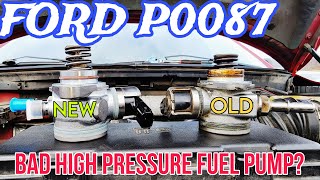
How to confirm: Use a diagnostic scan tool to monitor 'Desired Fuel Rail Pressure' vs. 'Actual Fuel Rail Pressure'. If the actual pressure cannot keep up with, or wildly deviates from, the desired pressure under load, the HPFP is the likely culprit. 🎬 Watch: How to diagnose a failing HPFP using live data. A collapsed plunger on the old pump upon removal is also a visual confirmation.
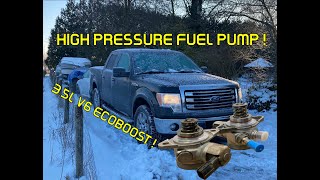
Typical fix: Replace the High-Pressure Fuel Pump. It is located on the top of the engine, typically on the passenger side valve cover. 🎬 See this step-by-step HPFP replacement walkthrough for the 3.5L.
Est. part cost: $300 - $600 for an OEM Motorcraft pump. - Faulty Fuel Rail Pressure (FRP) Sensor 🟡 Medium Probability The sensor provides the critical feedback to the PCM. If it sends inaccurate or erratic readings, the PCM will set a performance code even if the pressure is mechanically correct.
How to confirm: With the key on and engine off, the FRP sensor reading should be low and stable. If it's erratic or reads high pressure when the engine is off, the sensor is likely faulty. Compare its readings to a known good sensor if possible. A technician may also use a multimeter to check the sensor's voltage output, which should be around 0.5V with the key on, engine off.
Typical fix: Replace the Fuel Rail Pressure sensor. It is located on the high-pressure fuel rail, often at the back of the engine. 🎬 Watch: How to locate and replace the fuel rail pressure sensor.
Est. part cost: $50 - $120 - Failing In-Tank Low-Pressure Fuel Pump or Fuel Pump Driver Module (FPDM) ⚪ Low Probability The HPFP cannot generate high pressure if it isn't being supplied with adequate low pressure (typically 50-70 PSI) from the in-tank pump. A weak in-tank pump or a faulty FPDM will 'starve' the HPFP. The FPDM is mounted on the frame rail and is exposed to the elements, making it a point of failure.
How to confirm: Connect a mechanical fuel pressure gauge to the low-pressure feed line. Verify that the pressure is stable and within the manufacturer's specification (around 65 PSI is common) before diagnosing the high-pressure side. For 2021-2023 models, check if your vehicle is part of recall 21S53.
Typical fix: Replace the in-tank low-pressure fuel pump assembly or the Fuel Pump Driver Module (FPDM).
Est. part cost: $250 - $500
Rare But Worth Checking
- Incorrectly Installed Fuel Jumper Line: Ford issued a Technical Service Bulletin (SSM 50089) for 2017-2021 models where a fuel line connecting the HPFP was installed backward during a previous repair (e.g., cam phaser replacement). This line has a one-way check valve. To confirm, the Oetiker clamp on the line should be closest to the port injection rail, not the HPFP.
- Worn Camshaft Lobe or HPFP Follower: The HPFP is driven by a specific four-point lobe on the camshaft. If this lobe or the pump's follower becomes excessively worn, the pump's stroke will be reduced, leading to insufficient pressure. This is less common but possible on very high-mileage engines and is a primary failure mode on other GDI platforms like VW/Audi.
- Wiring Issues: Damaged wiring or a corroded connector at the HPFP volume control solenoid or the Fuel Rail Pressure sensor can cause intermittent signal loss, leading to a P0089 code.
Diagnosis Steps
- Connect an OBD-II scanner and verify P0089 is present. Note any other codes, especially P0087, P0171/P0174, or P00C6.
- Access live data on the scanner. Monitor 'Desired Fuel Rail Pressure' and 'Actual Fuel Rail Pressure'.
- Also monitor 'Low Side Fuel Pressure'. The low side should be stable, typically between 50-70 PSI.
- If low-side pressure is low or unstable, diagnose the in-tank fuel pump, fuel filter, and Fuel Pump Driver Module (FPDM) first. Check for recall 21S53 on 2021-2023 models.
- If low-side pressure is good, perform a test drive while monitoring the high-pressure readings. Under acceleration, the desired pressure will rise significantly. If the actual pressure lags, drops, or becomes erratic, the HPFP is the primary suspect.
- If recent engine work was performed, visually inspect the fuel jumper line per TSB SSM 50089. Ensure the Oetiker clamp is on the end closest to the port injection rail.
- If the HPFP and low-pressure pump seem to be working, inspect the wiring and connector for the Fuel Rail Pressure (FRP) sensor and the HPFP's electronic solenoid for corrosion or damage.
- If wiring is good, consider testing or replacing the FRP sensor, as it may be sending faulty data to the PCM.
- If all other components test good, the HPFP is the most likely cause of the problem and should be replaced.
Parts You'll Likely Need
- High-Pressure Fuel Pump (HPFP)
(OEM #BL3Z-9350-C (2011-16 3.5L), JT4Z-9350-B (2017+ 3.5L), JT4E-9D376-AC (2018-20 2.7L). Always verify with VIN.)— This is the most common failure point for code P0089 on EcoBoost engines.
Trusted brands: Motorcraft, Bosch
OEM price range: $300 - $600
Aftermarket price range: $150 - $400 - Fuel Rail Pressure Sensor
(OEM #BU5Z-9F972-B (Common, but verify with VIN))— This sensor provides the pressure reading to the computer. A false reading can trigger the code.
Trusted brands: Motorcraft, Bosch
OEM price range: $80 - $120
Aftermarket price range: $40 - $80 - Low-Pressure Fuel Pump Assembly — Required if the in-tank pump fails, starving the HPFP. Check for recalls on 2021-2023 models first.
Trusted brands: Motorcraft
OEM price range: $250 - $500
Aftermarket price range: $150 - $350
Related Codes That Often Appear With This One
- P0087 — This code means 'Fuel Rail/System Pressure - Too Low'. It often appears with P0089 when the HPFP is failing and cannot build enough pressure to meet the PCM's demand.
- P0171/P0174 — These are 'System Too Lean' codes for Bank 1 and Bank 2. They can be triggered when low or erratic fuel pressure from a failing pump results in an air-fuel mixture that has too much air and not enough fuel.
- P00C6 — This code for 'Fuel Rail Pressure Too Low - Engine Cranking' can appear alongside P0089, indicating the system cannot build sufficient pressure even before the engine starts, pointing towards a severe leak or pump failure.
Technical Service Bulletins (TSBs) & Recalls
- SSM 50089: Pertains to 2017-2021 models where a fuel jumper line may have been installed backward during a previous repair, causing low fuel pressure codes like P0087 and P008A.
- Recall 21S53 / NHTSA 21V-793: Covers failure of the in-tank low-pressure fuel pump on some 2021-2023 models, which can cause identical symptoms to P0089.
Platform-Specific Known Issues
- Low-Pressure Fuel Pump Recall (21S53 / NHTSA 21V-793): A recall was issued for certain 2021-2023 F-150 models due to failures in the in-tank low-pressure fuel pump. This can cause stalling and symptoms identical to a high-pressure side failure. Before replacing the expensive HPFP on these model years, ensure this recall has been addressed or that the low-pressure system is confirmed to be working correctly.
- Backward Fuel Jumper Line (TSB SSM 50089): On 2017-2021 models, a fuel line between the HPFP and port injection rail can be installed backward after service. This blocks fuel flow and causes low-pressure codes. Visually check that the metal clamp on the hose is on the end connecting to the fuel
Mechanic-Grade Diagnostic Values
- Low-Pressure Fuel System Pressure (at schrader valve or via scan tool) — expected: 50-70 PSI, stable. A common reading on a healthy system is ~65 PSI.. Failure: Pressure dropping below 50 PSI under load indicates a weak in-tank pump or FPDM issue.
- High-Pressure Fuel Rail Pressure (via scan tool) — expected: Varies widely with demand. Can be as low as 800-1,000 PSI at idle and should rise to over 2,150 PSI under load.. Failure: If 'Actual' pressure cannot reach or wildly deviates from 'Desired' pressure during a test drive, the HPFP is the primary suspect.
- Fuel Rail Pressure (FRP) Sensor Voltage (Key On, Engine Off) — expected: ~0.5 Volts. Failure: A voltage reading significantly different from 0.5V or that is erratic with the engine off points to a faulty sensor.
Scan Tool Commands That Help
- Ford IDS (Integrated Diagnostic System): Fuel System Test / Power Balance — To command specific fuel pressures and monitor the system's response in real-time. The power balance test can help identify if a single injector is leaking, which could also cause a drop in rail pressure.
Wiring & Ground Locations
- G104 (3.5L) — Rear of the right cylinder head.. This is a primary engine ground. A poor connection here can cause erratic sensor readings and affect PCM operation, potentially leading to incorrect fuel system codes.
- G105 (3.5L) — Left side of the engine block.. Another critical engine ground. Ensuring this is clean and tight is a key step in diagnosing any electronic engine control issue.
- PCM Grounds — Located on the firewall, typically one or two connection points.. The Powertrain Control Module relies on these grounds for stable operation. A faulty PCM ground can cause a wide range of phantom codes, including P0089.
- FRP Sensor Connector — At the fuel rail, often near the back of the engine.. This 3-pin connector (pigtail part number WPT-1308 for some models) is a common point for corrosion or wire damage, which can cause incorrect pressure signals to the PCM.
Real Owner Repair Stories
- Ford F150 Forum user 'Tezzy' (2018 F-150 Lariat 3.5L EcoBoost) — Erratic fuel rail pressure (jumping from 20,000 kPa to 3,000 kPa), inconsistent fuel economy, and long crank times.
❌ Tried (didn't work) Replacing spark plugs, Replacing ignition coils, Replacing an O2 sensor
✅ What actually fixed it Replacing the High-Pressure Fuel Pump (HPFP) resolved the long crank times, though the user was still monitoring the erratic pressure issue post-repair. The strong implication is the HPFP was the primary fault.
OEM Part Supersession History
JT4Z-9350-A→JT4Z-9350-B— Likely an internal revision for improved reliability or performance.
Model Year Variations Within This Range
- 2011-2016 (Gen 1 3.5L): These engines use a Direct Injection (DI) only fuel system. The HPFP is rated for up to 2,150 PSI. These engines are known for potential intake valve carbon buildup over time, which is unrelated to P0089 but a key characteristic of the generation.
- 2017-2020 (Gen 2 2.7L/3.5L): Ford introduced a dual-injection system (DI + Port Fuel Injection). This helps keep intake valves clean. The high-pressure system was upgraded, operating at pressures up to 2,400+ PSI. The HPFP and associated parts are different from Gen 1.
- 2021+: While still based on the Gen 2 architecture, these model years saw further refinements. Notably, some 2021-2023 models are subject to a recall (21S53) for the low-pressure in-tank fuel pump, which can cause identical symptoms to an HPFP failure.
Diagnostic Flowchart
Other Known Issues on This Vehicle
Issues unrelated to this code that are worth knowing about as an owner of this generation:
- 3.5L EcoBoost Timing Chain Rattle on Cold Start 🔴 High — Very common on first-generation (2011-2016) engines, typically starting around 60,000-100,000 miles. Less common but still present on second-gen engines. (Ref: TSB 18-2305 (supersedes earlier versions) recommends replacing the primary timing chain, tensioner, and all four VCT phasers.)
- Intake Valve Carbon Buildup 🟠 Medium — A universal issue for all GDI engines. Performance degradation is often noticed after 50,000-70,000 miles. 2018+ engines with dual injection (port and direct) are less susceptible.
- 10R80 10-Speed Transmission Harsh/Erratic Shifting 🔴 High — Common on 2017+ models equipped with the 10R80 transmission. Issues can appear at any mileage and include hard shifts, jerking, and delayed engagement. (Ref: Multiple software update TSBs have been released. Class action lawsuits have been filed regarding these issues.)
- 2.7L EcoBoost Oil Pan Leak 🟠 Medium — Prevalent on 2015-2019 models with the original plastic oil pan and RTV sealant. Leaks can start as early as 30,000 miles. (Ref: TSB 19-2189 advises replacing the original pan and sealant with an updated pan that uses a press-in-place gasket.)
- 2.7L EcoBoost Excessive Oil Consumption 🔴 High — Affects some 2016-2017 F-150s built between April 2016 and January 2017. Can cause rough idle and misfires. (Ref: TSB 19-2384 points to defective cylinder head valve guides and recommends cylinder head replacement.)
- Intercooler Condensation (Gen 1 3.5L) 🟠 Medium — Common on 2011-2012 models, especially in humid climates. Can cause stumbling or misfiring under hard acceleration after a long drive. (Ref: Ford addressed this with a redesigned intercooler in later models. A common DIY fix is drilling a small weep hole in the bottom of the intercooler.)
Used vs. New Parts: Buying Guide for This Vehicle
When a used part is the smart pick: For this repair, using a used part is generally not recommended for electronic sensors or the high-pressure fuel pump itself. The only potentially viable used parts would be structural components like fuel rails or lines from a low-mileage, accident-free donor vehicle.
Donor-vehicle mileage cap: roughly under 50000 miles for the part to have meaningful remaining life.
What to inspect on the donor part:
- Verify the donor vehicle was not in a front-end collision.
- Check for any signs of corrosion, especially on electrical connectors.
- If possible, get the VIN to check for service history or recalls.
OEM-only on this vehicle (don't cheap out):
- High-Pressure Fuel Pump (HPFP)
- Fuel Rail Pressure (FRP) Sensor
Aftermarket brands forum-validated for this vehicle:
- Bosch (Often the OEM supplier for Ford fuel components)
- Nostrum, Xtreme-DI (XDI), Livernois Motorsports (Considered for high-performance/upgraded applications, often more robust than stock)
Brands owners have reported issues with on this vehicle:
- No-name, unbranded parts from online marketplaces. The precision and durability required for GDI fuel system components make cheap alternatives a significant risk for premature failure.
Real Owner Stories
Aggregated from forums and TSBs cited above. Mileages and costs reflect what owners reported in those sources.
2011-2016 Ford F-150 3.5L EcoBoost — ~80000 miles
Symptoms: Rough idle until warm, suspected heavy valve deposits.
What fixed it: Manual cleaning of intake valve carbon buildup.
Source hint: f150forum.com: Thread titled 'Ecoboost intake valve build up fix???'
2017-2021 Ford F-150
Symptoms: Low fuel pressure codes appearing immediately after a previous engine repair.
What fixed it: Correcting a backward-installed fuel jumper line between the HPFP and port injection rail.
Source hint: Mustang6G.com: A forum post titled 'Ford SSM 500089 (5.0 2017-2021)- Errors P0087 and P008A'
2021-2023 Ford F-150
Symptoms: Stalling and symptoms identical to a high-pressure side failure.
What fixed it: Replacement of the in-tank low-pressure fuel pump assembly under recall.
Source hint: Recall 21S53 / NHTSA 21V-793
2011-2024 Ford F-150 EcoBoost
Symptoms: P0089 and related low-pressure codes like P0087.
What fixed it: Replacement of the High-Pressure Fuel Pump (HPFP).
Source hint: f150forum.com: Multiple threads corroborate that the HPFP is the most common fix for P0089
Related OBD-II Codes
Frequently Asked Questions
My 2022 F-150 is stalling and showing P0089; is there a recall for this?
I just had work done on my 2018 EcoBoost and now I have a P0089 code. Could it be an installation error?
How can I tell if the High-Pressure Fuel Pump (HPFP) is actually bad on my 3.5L EcoBoost?
What is 'hot soak' stalling on the F-150 EcoBoost?
Is the Fuel Rail Pressure (FRP) sensor a common failure point for this code?
Can a problem with the frame-mounted Fuel Pump Driver Module (FPDM) cause P0089?
Helpful Videos

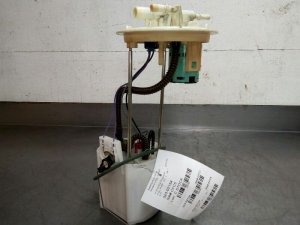
Used OEM Parts in Stock
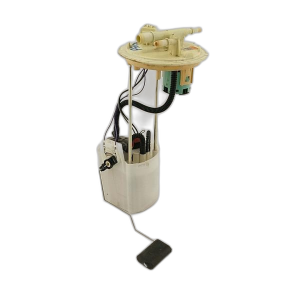

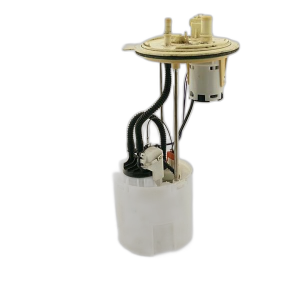


New Aftermarket Parts Available


The information in this article is provided for general reference and educational purposes only. Vehicle specifications, procedures, and part compatibility can vary by production date, trim level, and region. Always consult your vehicle's factory service manual and verify part numbers before purchasing or performing repairs. Safety-critical components such as airbags, seat belts, and braking systems should be installed by a qualified professional.
- Ford F-150:
- 🎬 Helpful Videos
- 🛍️ Shop This Part
- What's Unique About the 2011-2024 Ford F-150
- Symptoms You May Notice
- Most Likely Causes
- Rare But Worth Checking
- Diagnosis Steps
- Parts You'll Likely Need
- Related Codes That Often Appear With This One
- Technical Service Bulletins (TSBs) & Recalls
- Platform-Specific Known Issues
- Mechanic-Grade Diagnostic Values
- Scan Tool Commands That Help
- Wiring & Ground Locations
- Real Owner Repair Stories
- OEM Part Supersession History
- Model Year Variations Within This Range
- Diagnostic Flowchart
- Other Known Issues on This Vehicle
- Used vs. New Parts: Buying Guide for This Vehicle
- Real Owner Stories
- 2011-2016 Ford F-150 3.5L EcoBoost — ~80000 miles
- 2017-2021 Ford F-150
- 2021-2023 Ford F-150
- 2011-2024 Ford F-150 EcoBoost
- Related OBD-II Codes
- Frequently Asked Questions
- 🎟️ Get 5% Off