

P0089 on 2010-2017 Chevrolet Equinox 2.4L: Fuel Pressure Regulator Performance Causes and Fixes
On the 2.4L Equinox, code P0089 most often indicates a failing High-Pressure Fuel Pump (HPFP), which can cost $200-$400 for the part. Before replacing it, check for a strong gasoline smell in the engine oil, which confirms an internal pump leak. Also, be aware that stretched timing chains on this engine are a common root cause for this fuel code, often appearing with codes P0016/P0017.
- P0089 on a 2.4L Equinox is a serious fuel pressure code, most often caused by a failing High-Pressure Fuel Pump (HPFP).
- Before replacing any parts, smell the engine oil. A strong gasoline odor is a definitive sign the HPFP is leaking internally and needs immediate replacement.
- Always check for timing-related codes like P0016. A stretched timing chain is a common root cause of P0089 on this engine.
- When replacing the HPFP, you must also replace the single-use fuel feed pipe (Part No. 12608374) and change the engine oil.
- This is not a simple DIY job due to the complexity of the high-pressure fuel system and the potential for the timing chain being the actual problem.
What's Unique About the 2010-2017 Chevrolet Equinox

What's unique to the 2010-2017 Equinox with the 2.4L Ecotec engine is the direct link between the engine's timing system and the fuel system. The High-Pressure Fuel Pump (HPFP) is mechanically driven by a multi-lobe section on the intake camshaft. These engines are well-known for issues with timing chain stretching and excessive oil consumption. A stretched timing chain alters the rotational position of the camshaft, which in turn disrupts the mechanical drive of the HPFP, causing fuel pressure deviations and setting codes like P0089 and P228D, even if the pump itself hasn't failed. Therefore, a fuel pressure code on this specific vehicle requires investigating engine timing health, not just the fuel system.
Symptoms You May Notice

- Reduced engine power or 'limp mode'
- Engine stalling, especially at idle or when coming to a stop
- Hesitation or stumbling during acceleration
- Rough idle, sometimes described as 'loping' or 'lunging' in gear.
- Hard starting
- Check Engine Light illuminated
- Strong smell of gasoline in the engine oil
- Rattling noise from the engine on startup, indicating a timing chain issue.
- Replacing only the fuel rail pressure sensor without checking the HPFP or timing chain.
- Replacing the High-Pressure Fuel Pump when timing codes like P0016/P0017 are also present. The timing issue must be addressed first as it is the likely root cause.
- Replacing spark plugs or ignition coils, which are unlikely to be the root cause of a primary fuel pressure code.
Most Likely Causes


- Failing High-Pressure Fuel Pump (HPFP) 🔴 High Probability The HPFP on the 2.4L Ecotec is a known failure point. The internal seals can degrade, causing fuel to leak directly into the engine crankcase. GM issued a voluntary emission recall (43180) for 2010-2011 models for this exact issue, covering over 150,000 vehicles.
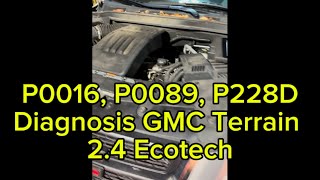
How to confirm: Check the engine oil dipstick for a strong gasoline smell. This is a definitive sign of an internal HPFP leak. A scan tool can also be used to monitor desired vs. actual fuel rail pressure; a large discrepancy or pressure that is uncontrollably high points to a pump or sensor issue. 🎬 Watch: How one mechanic finally resolved these stubborn fuel codes.
Typical fix: Replace the High-Pressure Fuel Pump, the single-use fuel feed pipe, and the cam follower (tappet). An oil change is mandatory to remove the fuel-contaminated oil.
Est. part cost: $200-$450 - Stretched Timing Chain 🟡 Medium Probability The 2.4L Ecotec engine is notorious for timing chain issues, often caused by oil consumption problems leading to low oil levels. Since the HPFP is driven by the intake camshaft, a stretched chain can disrupt the pump's mechanical operation, leading to fuel pressure deviations and setting code P0089.
How to confirm: Listen for a rattling noise from the engine, especially on a cold start. Check for other accompanying diagnostic trouble codes, specifically P0016 or P0017 (Crank/Cam Correlation), which strongly indicate a timing problem is the root cause. A mechanic can physically inspect the chain for slack by removing the valve cover.
Typical fix: This is an extensive and costly repair that involves replacing the timing chains, guides, and tensioners. It is often recommended to replace the water pump and balance shaft chain at the same time. Using high-quality OEM parts is critical, as failures of cheap aftermarket tensioners have been documented to cause a recurrence of P0089.
Est. part cost: $300-$600 - Faulty Fuel Rail Pressure Sensor ⚪ Low Probability
How to confirm: Using a scan tool, compare the fuel rail pressure reading with the key on and engine off to a known good value. If the reading is erratic, nonsensical, or stuck at a high value even when the engine is off, the sensor is likely faulty.
Typical fix: Replace the fuel rail pressure sensor.
Est. part cost: $35-$65
Rare But Worth Checking
- Failing In-Tank (Low-Pressure) Fuel Pump: If the high-pressure pump is starved of fuel from the tank, it cannot build the required pressure. Check low-side fuel pressure with a mechanical gauge (should be around 50-62 PSI) to rule this out before condemning the expensive HPFP.
- Incorrect Camshaft or Actuator Installed: Per TSB PIP5203C, if the engine, intake camshaft, or actuator was recently replaced, installing incorrect parts for the specific model year (2010 vs. 2011 design) can cause P0089 and P228D. The 2010 has a gray intake actuator, while the 2011 has a black one.
- Failed Aftermarket Timing Components: In at least one documented case, a 2015 Equinox set P0089 and P228D shortly after a timing chain replacement. The cause was found to be a failed, cheap aftermarket timing chain tensioner that came apart, causing a loss of oil pressure which affected cam phasing and HPFP operation.
Diagnosis Steps
- Check the engine oil. Pull the dipstick and smell the oil. If it has a strong odor of gasoline, the High-Pressure Fuel Pump (HPFP) has failed internally and must be replaced immediately. Do not continue to run the engine.
- Scan for other codes. The presence of timing codes like P0016/P0017 alongside P0089 points strongly toward a stretched timing chain as the root cause. Address the timing issue first.
- Connect a scan tool and monitor fuel pressure data. Observe the 'Desired Fuel Rail Pressure' and 'Actual Fuel Rail Pressure' PIDs. If the actual pressure cannot keep up with the desired pressure, or if it's stuck high (e.g., over 2000 PSI at idle), the HPFP is the primary suspect.
- If no gas is in the oil and no timing codes are present, test the low-pressure fuel system. Connect a mechanical gauge to the low-pressure line; you should see 40-65 PSI. If pressure is low, the in-tank pump may be at fault.
- Inspect the wiring and connector at the HPFP for any signs of damage or corrosion.
- If recent engine work was performed, verify the correct intake camshaft and actuator are installed per TSB PIP5203C, as 2010 and 2011 parts differ.
- If all other tests are inconclusive, the issue is most likely the HPFP itself or a developing timing chain problem.
Parts You'll Likely Need
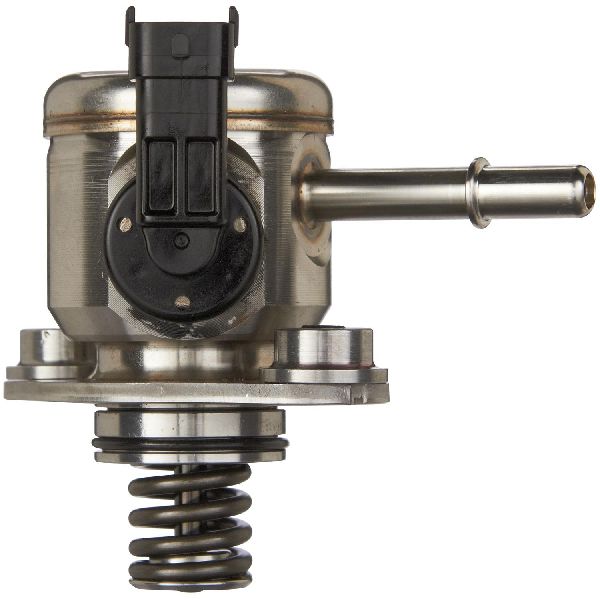
- High-Pressure Fuel Pump
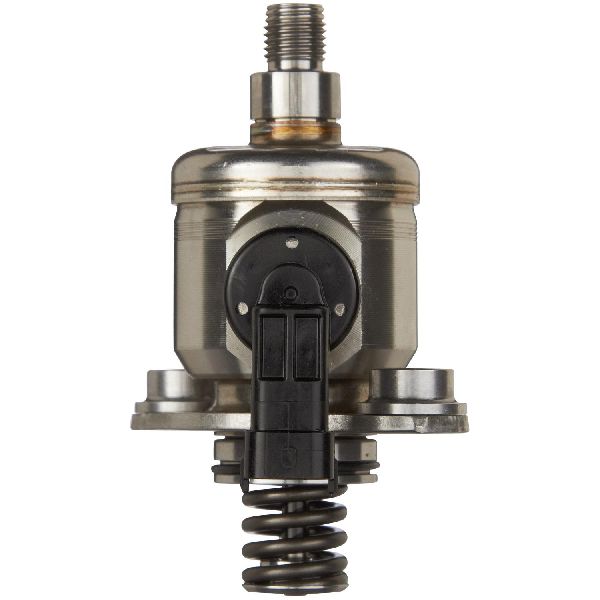
(OEM #12641847 (supersedes 12639694, 12633423, 12633115, 12608371))— This is the most common failure part for code P0089 on this engine. The internal regulator fails or the seals leak fuel into the crankcase.
Trusted brands: ACDelco, GM Genuine, Delphi
OEM price range: $280-$450
Aftermarket price range: $150-$300 - Fuel Feed Intermediate Pipe
(OEM #12608374)— This is a one-time-use, torque-to-yield part that connects the HPFP to the fuel rail. It must be replaced any time it is removed, per manufacturer service procedures and recall documents.
Trusted brands: ACDelco, GM Genuine
OEM price range: $40-$60
Aftermarket price range: $25-$40 - HPFP Cam Follower (Tappet)
(OEM #12649037 (or 12590679))— This small bucket tappet sits between the camshaft lobe and the HPFP plunger. It is a critical wear item that takes the mechanical impact and should be inspected and replaced with the HPFP to prevent premature failure of the new pump.
Trusted brands: ACDelco, GM Genuine
OEM price range: $20-$40
Aftermarket price range: $15-$30
Related Codes That Often Appear With This One
- P228D — This code for 'Fuel Pressure Regulator 1 Control Performance - High Pressure' is very commonly seen with P0089 and points to the same set of failures: the HPFP or a timing issue.
- P0016 / P0017 — 'Crankshaft/Camshaft Position Correlation' codes appearing with P0089 are a strong indicator that a stretched timing chain is the root cause affecting both engine timing and the camshaft-driven fuel pump.
- P0172 — 'System Too Rich' is often triggered when the HPFP leaks fuel into the crankcase. The fuel vapor is pulled through the PCV system into the intake, creating a rich condition the oxygen sensors detect.
Technical Service Bulletins (TSBs) & Recalls
- PIP5203C: Addresses P0089/P228D after engine or camshaft replacement, warning that installing incorrect model year parts (2010 vs. 2011) can cause these codes due to different camshaft actuator designs.
- GM Recall 43180: Voluntary emission recall to replace the high-pressure fuel pump on 2010-2011 models due to a defect causing fuel to leak into the engine oil. The official fix includes replacing the HPFP (12641847) and the fuel feed pipe (12608374).
Platform-Specific Known Issues
- GM Voluntary Emission Recall 43180 was issued for 2010-2011 Equinox models with the 2.4L engine to replace the high-pressure fuel pump due to excessive wear that could cause fuel to leak into the crankcase.
- The 2.4L Ecotec engine is widely known for timing chain stretch, which is a common underlying cause of code P0089 because the HPFP is driven by the camshaft. This is often exacerbated by oil consumption issues that starve the timing components of lubrication.
- Special Coverage Adjustment 12313 covered balance chain wear on 2010-2011 models, another indicator of the timing system's vulnerability on these engines.
Mechanic-Grade Diagnostic Values
- Low-Pressure Fuel System Pressure (Key On, Engine Off) — expected: 276-448 kPa (40-65 psi). Failure: Pressure below this range indicates a weak in-tank pump or FPCM issue.
- Low-Pressure Fuel System Pressure (Idle) — expected: 276-324 kPa (40-47 psi). Failure: Pressure outside this range at idle suggests a problem with the low-pressure side.
- High-Pressure Fuel Pump Actuator Solenoid Resistance — expected: ~10.1 Ohms. Failure: A significantly different resistance reading points to a failed solenoid on the HPFP.
- Fuel Rail Pressure Sensor Signal Voltage (Key On, Engine Off) — expected: ~0.5V. Failure: Voltage stuck high (e.g., 5.0V) or at 0V indicates a faulty sensor or wiring issue.
- High-Pressure Fuel System (at Idle) — expected: Tracks desired pressure, typically 2-4 MPa (290-580 PSI).. Failure: Actual pressure is uncontrollably high (e.g., 2000-2500 PSI), often due to incorrect camshaft parts or a failed HPFP.
- PCM Ground Circuit Resistance (at ECM connector to battery negative) — expected: < 1.0 Ohm. Failure: Resistance higher than 1.0 Ohm indicates a poor ground connection at G112, which can cause various erratic electronic faults.
Scan Tool Commands That Help
- GDS2 / Tech 2: Fuel Injector Balance Test — To determine if a single injector is leaking or restricted, which can sometimes contribute to pressure regulation issues, though less common for P0089.
- GDS2: Fuel Pressure Control — This bidirectional control allows a technician to command specific fuel pressures and observe if the HPFP and its integrated regulator respond. This is a key test to isolate a faulty pump from a sensor or timing issue.
- GDS2: Camshaft Position Actuator Solenoid Control — Crucial for diagnosing P0089 when timing issues are suspected. This command allows the technician to manually advance and retard the cam phasers to check for proper operation. A stuck intake phaser will directly affect HPFP performance.
Wiring & Ground Locations
- G112 — On the 2.4L engine, this is the location for the two main PCM ground wires, found on a stud under the alternator, just above the A/C compressor.. A poor connection at this critical ground point can cause the ECM to receive incorrect sensor data or send improper commands to the HPFP actuator, leading to fuel pressure codes and erratic behavior.
- Fuel Pump Control Module (FPCM) — Located behind the trim panel in the left rear quarter panel area of the cargo compartment.. The FPCM controls the in-tank low-pressure pump. A fault in this module, its wiring, or its associated fuse (Fuse 46 in the underhood block) can starve the HPFP, causing low-pressure conditions and triggering P0089.
- Underhood Fuse Block — Located at the left rear of the engine compartment.. Contains the 'Run/Crank' relay which powers the fuel system, as well as specific fuses for the Fuel Pump Control Module (e.g., F46) that should be checked during diagnosis.
Real Owner Repair Stories
- G Auto Repair, YouTube (2015 Chevrolet Equinox 2.4L) — P0089 and P228D would set randomly, but consistently after the engine reached full operating temperature (~215°F). No timing codes were present.
❌ Tried (didn't work) A previous shop had already performed a complete timing chain job to address the issue.
✅ What actually fixed it The technician discovered the previous timing job used cheap, low-quality aftermarket parts. The primary timing chain tensioner had physically come apart, causing a loss of oil pressure that prevented the cam phasers from operating correctly. This unstable cam timing directly affected the cam-driven HPFP, causing the fuel pressure codes. Replacing the failed components with OEM timing parts resolved the issue. - ScannerDanner Forum user 'GerryM' (2011 Chevrolet Equinox 2.4L AWD) — Intermittent P0089 and P228D codes, occurring only at idle and in gear after about 30 minutes of driving. Shifting to neutral or park, or raising RPMs, made the symptoms disappear.
❌ Tried (didn't work) A new timing chain had been recently installed., VVT solenoids were replaced., Low-pressure fuel sensor was replaced.
✅ What actually fixed it The problem was a faulty intake camshaft phaser (actuator). Despite being new, it was not functioning correctly under specific conditions (hot idle). Replacing the intake cam phaser with a new AC Delco part permanently fixed the problem.
OEM Part Supersession History
12608371, 12633115, 12633423, 12639694→12641847— Design revisions and improvements by the manufacturer.
Heads up: While all parts are for the HPFP, using the latest revision (12641847) is recommended for reliability.12633417→12635273— Revision for the Fuel Rail Pressure Sensor.
Model Year Variations Within This Range
- 2010 vs 2011: Per GM TSB PIP5203C, the intake camshaft and actuator sprocket designs are different between 2010 (LAF) and 2011 (LAF) model years. Installing the wrong year's parts during a repair will cause high fuel pressure at idle (2000-2500 PSI) and set codes P0089 and P228D. The 2010 actuator is gray, while the 2011 is black.
Diagnostic Flowchart
Used vs. New Parts: Buying Guide for This Vehicle
When a used part is the smart pick: For this specific repair, sourcing used parts is generally not recommended. The primary failure components (HPFP, timing components) are high-wear items. A used mechanical part may have significant wear and a short remaining lifespan. Body panels or simple brackets are suitable for used purchase, but not core engine or fuel system components.
Donor-vehicle mileage cap: roughly under 50000 miles for the part to have meaningful remaining life.
What to inspect on the donor part:
- If considering a used engine component, request a vehicle history report for the donor car.
- Check for evidence of regular oil changes (no sludge under the oil cap).
- Avoid parts from vehicles that show signs of a major collision or fire.
OEM-only on this vehicle (don't cheap out):
- Timing Chain Kit (Chains, Guides, Tensioners): Multiple documented cases show cheap aftermarket tensioners failing quickly, causing a repeat of P0089. Using OEM or top-tier OEM-supplier parts is critical for this job.
- High-Pressure Fuel Pump (HPFP): While some aftermarket pumps may work, many forum users and technicians report issues with aftermarket units causing other codes (like P0191) or premature failure. Sticking with GM Genuine, ACDelco, or Delphi is the safest option.
Aftermarket brands forum-validated for this vehicle:
- Delphi (For High-Pressure Fuel Pump)
Brands owners have reported issues with on this vehicle:
- Unbranded or "cheapest available" timing chain kits from online marketplaces like Amazon or eBay have been specifically identified as causing repeat failures.
Real Owner Stories
Aggregated from forums and TSBs cited above. Mileages and costs reflect what owners reported in those sources.
2014 Equinox 2.4L
Symptoms: A no-start/stall condition with codes P0016, P0089, and P228D appearing simultaneously.
What fixed it: Forum users advised that the combination of codes pointed directly to a timing system failure as the root cause, not a fuel pump issue. An owner later reported a similar cluster of codes (P0016, P0017, P0089, and P228D) in NHTSA ODI #11618668, noting the overlap between crankshaft position and high-pressure fuel issues.
Source hint: Chevy Equinox Forum: 2014 Equinox 2.4L - P0016, P0089, P228D - HELP
2015 Equinox 2.4L
Symptoms: Check engine light with codes P0089 and P228D.
What fixed it: The root cause was a failed aftermarket timing chain tensioner that had come apart, leading to a loss of oil pressure which affected cam phasing and fuel pressure control.
Source hint: YouTube: Chevrolet Equinox 2.4l P0089, p228d finally resolved
2011 GMC Terrain 2.4L
Symptoms: The vehicle presented with the full suite of timing and fuel pressure codes: P228D, P0089, P0016, and P0017.
What fixed it: It was identified that the fuel pressure codes (P0089, P228D) were symptoms caused by the primary timing chain problem indicated by the correlation codes (P0016, P0017). Similar multi-code failures involving P0014, P0089, and P0017 were documented in NHTSA ODI #11063897, where a plugged PCV system and crankshaft seal failure were also noted.
Source hint: GMTNation Forum: 2011 Terrain codes; P228D, P0089, P0016, P0017
2011 Chevy Equinox 2.4L AWD
Symptoms: Intermittent P0089 and P228D codes appeared after a timing chain job was performed.
What fixed it: The source highlights the diagnostic complexity when multiple systems could be at fault and symptoms are not constant, rather than stating a single fix.
Source hint: ScannerDanner Forum: Intermittent P0089, P228D 2011 Chevy Equinox 2.4 AWD
Documented NHTSA Reports
In addition to common forum reports, several owners have filed formal complaints regarding these specific symptoms. NHTSA ODI #11632552 describes a vehicle that appeared to be burning oil while throwing codes P0011, P0191, P228D, P0089, and P0014. Another report, NHTSA ODI #11514098, details a situation where a vehicle displayed P0016, P0017, P228D, P0089, and P0341, ultimately resulting in a recommendation for a full engine replacement.
Related OBD-II Codes
Frequently Asked Questions
My 2011 Equinox has a P0089 code. Is there a recall for the fuel pump?
Why would a timing chain issue on my 2.4L Ecotec cause a fuel pressure code like P0089?
I have codes P0089, P0016, and P0017 all at once. Is my fuel pump bad?
What is the first and most important thing I should check myself for a P0089 code on this Equinox?
If I need to replace the high-pressure fuel pump, what other parts are required?
I just had my engine repaired and now I have a P0089 code. What could have gone wrong?
Helpful Videos
Used OEM Parts in Stock


New Aftermarket Parts Available



The information in this article is provided for general reference and educational purposes only. Vehicle specifications, procedures, and part compatibility can vary by production date, trim level, and region. Always consult your vehicle's factory service manual and verify part numbers before purchasing or performing repairs. Safety-critical components such as airbags, seat belts, and braking systems should be installed by a qualified professional.
- Chevrolet Equinox:
- 🎬 Helpful Videos
- 🛍️ Shop This Part
- What's Unique About the 2010-2017 Chevrolet Equinox
- Symptoms You May Notice
- Most Likely Causes
- Rare But Worth Checking
- Diagnosis Steps
- Parts You'll Likely Need
- Related Codes That Often Appear With This One
- Technical Service Bulletins (TSBs) & Recalls
- Platform-Specific Known Issues
- Mechanic-Grade Diagnostic Values
- Scan Tool Commands That Help
- Wiring & Ground Locations
- Real Owner Repair Stories
- OEM Part Supersession History
- Model Year Variations Within This Range
- Diagnostic Flowchart
- Used vs. New Parts: Buying Guide for This Vehicle
- Real Owner Stories
- 2014 Equinox 2.4L
- 2015 Equinox 2.4L
- 2011 GMC Terrain 2.4L
- 2011 Chevy Equinox 2.4L AWD
- Documented NHTSA Reports
- Related OBD-II Codes
- Frequently Asked Questions
- 🎟️ Get 5% Off