

P0088 on 2006-2010 VW Passat: Fuel Pressure Too High Causes and Fixes
On a 2006-2010 Passat, P0088 means the fuel rail pressure is too high. The most common causes are a faulty fuel pressure sensor (G247) or a failing high-pressure fuel pump (HPFP). For 2006-2008.5 FSI engines (BPY), a worn cam follower is a high-probability cause that can also destroy the HPFP and should be inspected immediately. For later TSI engines, a stretched timing chain is also a notable cause.
- P0088 on a B6 Passat indicates fuel pressure is dangerously high.
- The most likely causes are a bad fuel pressure sensor (G247) or a failing high-pressure fuel pump (HPFP).
- If you have a 2006-2008.5 model with the FSI engine, you MUST inspect the HPFP cam follower. A worn follower is a common cause and can destroy a new pump if not replaced.
- Diagnosing with a VW-specific scan tool to read actual vs. specified fuel pressure is the first and most important step.
- Codes P1025 and P053F strongly point towards a problem with the HPFP's internal regulator.
What's Unique About the 2006-2010 Volkswagen PASSAT

The 2006-2010 Passat (B6 generation) used two different 2.0T engines, and the cause of P0088 often depends on which one you have. Early models (approx. 2006-2008.5) have the belt-driven FSI engine (code BPY), which is infamous for a small, flat-faced cam follower wearing out. This wear disrupts the pump's operation, causing pressure spikes and the P0088 code. Later models (approx. 2008.5-2010) have the chain-driven TSI engine (codes CCTA/CBFA) with a much more durable roller-style follower, making this specific failure far less common. For both engines, failure of the fuel pressure sensor or the pump's internal regulator (N276) are frequent culprits. Additionally, on the TSI engine, a stretched timing chain can cause the P0088 code by altering the timing of the HPFP's stroke, even if a P0016 (cam/crank correlation) code is not present.
🎬 See how to check your TSI engine for timing chain stretch.Diagnostic Flowchart

Tap your situation to follow the diagnostic path that matches what you're seeing on this vehicle.
Symptoms You May Notice
- Check Engine Light illuminated
- Engine hesitation or stumbling on acceleration
- Loss of power
- Rough idle
- Engine stalling
- Reduced fuel economy
- High-pitched whining noise from the engine area
- Black smoke from the exhaust
- Strong smell of raw fuel
- Replacing the in-tank low-pressure fuel pump before diagnosing the high-pressure system.
- Replacing the HPFP on an FSI engine without replacing the worn cam follower, leading to repeat failure of the new pump.
- Replacing the fuel pressure sensor (G247) when the actual cause is a stretched timing chain causing a real overpressure condition.
Most Likely Causes

- Faulty Fuel Pressure Sensor (G247) 🔴 High Probability The sensor is a known failure item on many VW/Audi direct injection engines of this era. It can fail internally and send a constant high-voltage signal to the ECM, falsely indicating high pressure even when it's normal.
How to confirm: Use a VW-specific scan tool to read fuel rail pressure with the engine off (but ignition on). The pressure should be low, around 4-7 bar (reflecting the low-pressure system). If it shows an abnormally high reading (e.g., over 100 bar), the sensor is faulty. A multimeter can also be used to check the sensor's wiring for a 5V reference, ground, and a signal wire that varies with pressure.
Typical fix: Replace the fuel pressure sensor located on the end of the fuel rail. This requires a special deep socket (e.g., 27mm or 1 1/16 inch) to access.
Est. part cost: $50-$100 - Failed High-Pressure Fuel Pump (HPFP) 🔴 High Probability The internal Fuel Pressure Regulator Valve (N276) can fail or stick, causing it to default to a state that creates excessive pressure. On FSI engines, this is often a secondary failure caused by a worn cam follower damaging the pump's plunger, leading to erratic operation.
How to confirm: If the fuel pressure sensor is confirmed to be good but live data shows actual pressure is much higher than specified pressure while running (e.g., 125 bar actual vs. 40 bar specified at idle), the HPFP is the likely cause. For FSI engines, a visual inspection of the cam follower is mandatory; if it's damaged, the pump is almost certainly compromised and must be replaced.
Typical fix: Replace the High-Pressure Fuel Pump. On FSI engines, ALWAYS replace the cam follower at the same time. 🎬 Watch: See this step-by-step HPFP cam follower replacement walkthrough. An oil change is recommended to remove any potential metal shavings.
Est. part cost: $250-$500 - Worn HPFP Cam Follower (2.0T FSI Engine Only) 🔴 High Probability The flat-tappet design on the BPY engine is a notorious wear item, considered a maintenance part by many enthusiasts. It is the sole barrier between the intake camshaft lobe and the HPFP plunger. Failure is extremely common.
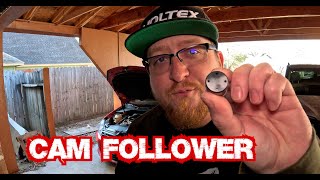
How to confirm: Remove the HPFP (three Torx bolts) and pull the thimble-shaped follower out of its bore in the cylinder head. Inspect for a hole, deep scoring, or a concave surface. A healthy follower has a smooth, flat, black surface. 🎬 Watch: A helpful guide to inspecting your FSI cam follower.
Typical fix: Replace the cam follower. If it has worn through, you must also replace the HPFP and inspect the intake camshaft lobe for damage, which may also require replacement. An oil change is mandatory to remove metal shavings.
Est. part cost: $20-$40
Rare But Worth Checking
- Stretched Timing Chain (Primarily 2.0T TSI): A stretched timing chain causes the camshaft driving the HPFP to be out of phase, leading to incorrect pump timing and pressure faults. VW TSB TT 01-20-05 explicitly links P0088 to this condition. Diagnosis involves checking camshaft adaptation values with a scan tool; if they exceed +/- 8 degrees, the timing is off. This can occur even without a P0016 code.
- Blocked Fuel Return Line: Though less common on direct injection systems which often use returnless designs, a restriction in any part of the fuel system can prevent excess pressure from being bled off, causing it to build up in the rail.
- Wiring Harness Damage: Damage to the wiring for the G247 fuel pressure sensor or N276 regulator valve can cause a short to power, sending a false high-voltage signal to the ECM and triggering P0088. This can be caused by chafing or even rodent damage.
Diagnosis Steps
- Connect a VW-specific scan tool (like VCDS) to the OBD-II port.
- Read all fault codes. Note if P1025, P0087, or P0016 are present alongside P0088.
- Monitor live data for 'Fuel Rail Pressure (specified)' and 'Fuel Rail Pressure (actual)'.
- With the engine off (ignition on), check the actual pressure reading. If it's significantly above the low-pressure spec of ~5-7 bar (e.g., reading 100+ bar), the Fuel Pressure Sensor (G247) is almost certainly faulty and should be replaced.
- If the sensor seems okay, start the engine. At idle, observe if the actual pressure is dramatically higher than the specified pressure. TSBs note that seeing pressure spike over 60 bar and up to 125 bar at idle is a strong indicator of a timing issue.
- FOR 2.0T FSI (BPY) ENGINES: Your next step is to physically inspect the HPFP cam follower. Relieve fuel pressure, disconnect the battery, remove the HPFP, and inspect the follower for wear. If it's worn, it and the HPFP must be replaced.
- FOR 2.0T TSI ENGINES: If a real over-pressure condition exists, check camshaft adaptation values (MVB group 208/209 or IDE00182/IDE00184). If the phase position exceeds +/- 8 degrees, the timing chain has likely stretched and requires replacement. If timing is within spec, the HPFP is the primary suspect due to an internal regulator (N276) failure.
- If no other cause is found, inspect the wiring harness to the fuel pressure sensor (G247) and HPFP (N276) for any signs of damage, corrosion, or short circuits.
Parts You'll Likely Need

- High-Pressure Fuel Pump (HPFP)
(OEM #06F127025M (replaces 06F127025L, 06F127025K, 06F127025J, 06F127025H))— The internal fuel pressure regulator (N276) fails, causing over-pressurization. This is a primary cause for P0088 on both FSI and TSI engines.
Trusted brands: Bosch, Hitachi, Pierburg
OEM price range: $350-$500
Aftermarket price range: $250-$400 - Fuel Pressure Sensor (on rail)
(OEM #06J906051D (also seen as 06J906051C))— This sensor fails and sends erroneously high pressure readings to the ECM, falsely triggering the P0088 code.
Trusted brands: Bosch
OEM price range: $70-$100
Aftermarket price range: $40-$70 - HPFP Cam Follower (FSI Engine Only)
(OEM #06D109309C)— This is a critical wear item on the 2.0T FSI (BPY) engine. Its failure can cause pressure spikes and will destroy the HPFP. It should be inspected regularly and replaced with the HPFP.
Trusted brands: INA, VW Genuine
OEM price range: $30-$50
Aftermarket price range: $20-$40
Related Codes That Often Appear With This One
- P1025 — This VW-specific code for 'Fuel Pressure Regulation Valve (N276) Malfunction' points directly to the regulator integrated into the HPFP. It is explicitly mentioned alongside P0088 in manufacturer technical documents as being caused by the HPFP being out of time.
- P0087 — Fuel Rail Pressure Too Low. Seeing both codes can indicate a failing HPFP or sensor that is providing erratic readings, causing pressure to swing between being too high and too low.
- P0016 — Cam/Crank Position Correlation. This code strongly suggests a stretched timing chain or incorrect timing, which is a known cause of P0088 on these engines as it directly affects the HPFP timing.
- P053F — Fuel Pressure Regulator Valve Cold Start Performance. This code is also linked with P0088 in a manufacturer TSB, suggesting a fault in the HPFP's ability to regulate pressure, especially during cold starts.
Technical Service Bulletins (TSBs) & Recalls
- TT 01 20 05_4 (also listed as 2060799): States that DTCs P053F, P0087, P0088, and P1025 may set due to the high pressure fuel pump being out of time. It instructs technicians to check camshaft adaptation values and notes that if they exceed 8 degrees, timing is off. For 2006-2007 Passats, the repair involves replacing timing chains and tensioners.
- TT011605_2045487: Titled 'ENHANCED DIAGNOSTIC ASSISTANCE FOR DTCS P0088 AND P1025', indicating this is a known issue requiring specific diagnostic steps beyond a simple component swap.
Platform-Specific Known Issues

- 2.0T FSI (BPY) Cam Follower Wear: Models from 2006-2008.5 are highly susceptible to premature wear of the flat-tappet cam follower. This is the most famous issue with this engine and is directly linked to fuel pressure problems and HPFP failure. Many owners on forums like VWVortex and PassatWorld consider it a routine maintenance item to inspect every 20,000-30,000 miles.
- 2.0T TSI (CCTA/CBFA) Timing Chain Stretch: Later models are prone to timing chain tensioner failure and chain stretch. This de-synchronizes the camshaft from the crankshaft, affecting the HPFP's mechanical timing and causing pressure to build excessively, triggering P0088.
Mechanic-Grade Diagnostic Values
- Low-Pressure Fuel System Pressure (Key On, Engine Off) — expected: 4.0 - 6.0 bar. Failure: Pressure below this range indicates a problem with the in-tank pump; pressure above this range may indicate a faulty regulator in the fuel filter flange.
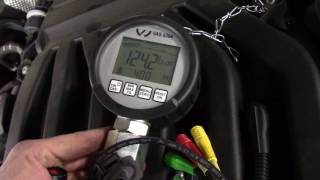
- High-Pressure Fuel System Pressure (at idle, engine warm) — expected: Approx. 40 - 50 bar (580 - 725 PSI). Failure: Sustained pressure significantly above this range (e.g., 100-125 bar) indicates a fault.
- Camshaft Phase Adaptation (TSI Engine Timing Stretch Check) — expected: Between -5.0 and +5.0 degrees at warm idle. Failure: A value outside +/- 5 degrees is a strong indicator of a stretched timing chain. Some sources cite a wider tolerance of +/- 8 degrees as the absolute limit.
- N276 Fuel Pressure Regulator Valve Resistance — expected: Approx. 1.0 - 5.0 Ohms. Failure: A reading of 0 Ohms indicates a shorted coil within the solenoid.
- VCDS Measuring Block for Camshaft Adaptation (non-UDS) — expected: MVB Groups 093, 208, 209. Failure: These blocks contain the 'Phase position bank 1 intake' value needed to check for timing chain stretch.
- VCDS Measuring Block for Fuel Pressure (non-UDS) — expected: MVB Groups 106, 140, 141. Failure: These blocks show specified vs. actual fuel rail pressure.
Scan Tool Commands That Help
- VCDS / ODIS: N276 - Fuel Pressure Regulator Valve Output Test — This is a bidirectional test used to verify the electrical function of the HPFP's internal regulator. When activated, an audible 'click' should be heard from the pump. A lack of a click suggests a failed solenoid or wiring issue, whereas a click suggests the solenoid is capable of actuating.
- VCDS: Heat Soak Fuel Pressure Test — After warming the engine to operating temperature (>80°C), shut it off and monitor fuel rail pressure in MVB 106. The pressure should rise due to heat expansion (e.g., from 50 bar to >60 bar). If the pressure drops, it indicates a leak from an injector or a check valve in the HPFP.
Wiring & Ground Locations
- G15 / 15 — Earth point on the cylinder head.. This is a primary ground point for engine sensors. A poor connection here can cause erratic readings from the G247 fuel pressure sensor or incorrect operation of the N276 regulator.
- J623 (ECM) Connector T60 — The 60-pin main connector for the Engine Control Module.. The wiring for the G247 Fuel Pressure Sensor terminates here. This is the location to perform continuity and resistance checks on the sensor harness without having to access the sensor itself.
- G652 / 652 — Main earth point for the engine and gearbox.. A compromised main engine ground can cause a host of electrical issues, including faults in the fuel pressure regulation system.
Real Owner Repair Stories
- AudiForums.com user 'VorsprungMonkeyTechnik' (Audi A4 2.0T (similar TFSI engine and system)) — CEL with codes P2293 and P0088 (Fuel Pressure Regulator Mechanical Malfunction and Fuel Pressure Too High).
❌ Tried (didn't work) The user resisted the immediate diagnosis of a bad HPFP or cam follower.
✅ What actually fixed it The user concluded the root cause was a stretched timing chain. The reasoning was that a worn cam follower typically causes low pressure (P0087), while a timing deviation would cause the HPFP to actuate early, creating a pressure spike (P0088). The plan was to replace the timing chain and tensioner. - YouTube channel 'Pine Hollow Auto Diagnostics' (2012 VW Passat 3.6L (different engine, but identical P0088 diagnostic principle)) — Check Engine Light and EPC light on, with codes P0088, P053F, and P0087.
❌ Tried (didn't work) Initial thought might be a bad sensor or HPFP.
✅ What actually fixed it The technician verified with a mechanical gauge that the pressure was indeed extremely high (125 bar at idle). He then scoped the control signal to the N276 regulator and found the ECM was commanding it to open (97% duty cycle) to try and lower the pressure. This proved the sensor, ECM, and wiring were likely good. The diagnosis concluded the cause was mechanical, with the HPFP being driven out of time by a stretched timing chain, causing it to build pressure when it shouldn't.
"I Checked Everything" — The Actual Cause
- While a smoke test is not used for this fault, a similar pattern exists: replacing the fuel pressure sensor (G247) and even the high-pressure fuel pump (HPFP) may not resolve the P0088 code. In these cases, the root cause is often mechanical timing. On TSI engines, a stretched timing chain causes the HPFP to be actuated at the wrong point in the engine's cycle, creating a real overpressure condition that the new parts cannot fix.
OEM Part Supersession History
06J906051, 06J906051B→06J906051D— Revisions by the manufacturer to improve reliability and accuracy.
Heads up: The latest revision, 06J906051D, is the recommended replacement for all earlier versions. Using older stock is not advised.
Model Year Variations Within This Range
- 2006-2008.5: These models use the belt-driven 2.0T FSI (BPY) engine. The primary unique cause for P0088 is the rapid wear of the flat-tappet cam follower (P/N 06D109309C), which is a mandatory inspection item for any high-pressure fuel fault.
- 2008.5-2010: These models use the chain-driven 2.0T TSI (CCTA/CBFA) engine. This engine uses a roller-style cam follower that is not a common failure point. However, the timing chain and tensioner are known to stretch and fail, which can be a direct cause of P0088 by altering the mechanical timing of the HPFP.
Helpful Videos
![[EN] 2.0 FSi/TFSi High pressure fuel pump cam follower replacement](https://img.youtube.com/vi/ubwZZrDEJBE/mqdefault.jpg)

Used OEM Parts in Stock



New Aftermarket Parts Available



The information in this article is provided for general reference and educational purposes only. Vehicle specifications, procedures, and part compatibility can vary by production date, trim level, and region. Always consult your vehicle's factory service manual and verify part numbers before purchasing or performing repairs. Safety-critical components such as airbags, seat belts, and braking systems should be installed by a qualified professional.
- Volkswagen PASSAT:
- 🎬 Helpful Videos
- 🛍️ Shop This Part
- What's Unique About the 2006-2010 Volkswagen PASSAT
- Diagnostic Flowchart
- Symptoms You May Notice
- Most Likely Causes
- Rare But Worth Checking
- Diagnosis Steps
- Parts You'll Likely Need
- Related Codes That Often Appear With This One
- Technical Service Bulletins (TSBs) & Recalls
- Platform-Specific Known Issues
- Mechanic-Grade Diagnostic Values
- Scan Tool Commands That Help
- Wiring & Ground Locations
- Real Owner Repair Stories
- "I Checked Everything" — The Actual Cause
- OEM Part Supersession History
- Model Year Variations Within This Range
- 🎟️ Get 5% Off