

P0088 on 2011-2020 Kia Optima: Fuel Rail/System Pressure Too High Causes and Fixes
For the 2011-2020 Kia Optima, code P0088 almost always indicates a failing high-pressure fuel pump (HPFP). A faulty fuel rail pressure sensor is another, less common possibility. When replacing the HPFP, it is critical to also replace the cam follower (tappet) and the one-time-use high-pressure fuel line. Before purchasing parts, check for any applicable recalls or warranty extensions with a Kia dealer, as some fuel system components have been covered under special programs for this exact code.
- P0088 on a 2011-2020 Kia Optima is most likely caused by a failing high-pressure fuel pump (HPFP).
- Before paying for any repairs, contact a Kia dealer with your VIN to check for open recalls (like SC172) or warranty extensions related to the fuel system.
- Do not drive the vehicle. A failing HPFP can cause stalling, creating a safety hazard, and may leak fuel into the engine oil, leading to severe engine damage.
- A faulty fuel rail pressure sensor is a possible but less common cause.
- Diagnosis involves checking live fuel pressure data with a scan tool and inspecting for a fuel smell in the engine oil.
What's Unique About the 2011-2020 Kia Optima

Kia and Hyundai GDI engines from this era are known for issues with their high-pressure fuel pumps. The primary cause is often the internal fuel control valve plunger wearing out and sticking, which causes pressure to build beyond the commanded level. Additionally, a safety recall (SC172) was issued for many of these vehicles, including the 2011-2017 Optima, because the high-pressure fuel pipe could be damaged or misaligned after an engine replacement, leading to dangerous fuel leaks. This history makes it crucial to check for open recalls or warranty extensions before starting a repair.
Generation note: This guide covers the third generation (TF, 2011-2015) and fourth generation (JF, 2016-2020) of the Kia Optima. Both generations used 2.4L GDI and 2.0L Turbo GDI engines. The most common causes, primarily the high-pressure fuel pump, are consistent across both generations. However, Safety Recall SC172 specifically mentions 2011-2014 Optima models that had a prior engine replacement. Always verify parts and TSBs with your vehicle's specific VIN.
Symptoms You May Notice
- Check Engine Light illuminated
- Engine hesitation or stumbling on acceleration
- Rough idle
- Reduced engine power or 'limp mode'
- Engine stalling, especially when coming to a stop
- Strong smell of fuel from the engine bay or in the engine oil
- Black smoke from the exhaust
- Engine oil level appears to be rising or is overfull
- Replacing the in-tank (low-pressure) fuel pump. This code points to a problem on the high-pressure side of the system, so the low-pressure pump is almost never the cause.
- Replacing fuel injectors. While high pressure can affect injectors, they are not typically the root cause of the P0088 code.
Most Likely Causes

- Failing High-Pressure Fuel Pump (HPFP) 🔴 High Probability These pumps are a known failure point on Kia/Hyundai GDI engines. The internal fuel control valve plunger can wear and stick, causing uncontrolled pressure spikes. This is the primary condition covered by Kia's warranty extension program for P0088.
How to confirm: Use a scan tool to monitor live data. 'Actual Fuel Rail Pressure' will be significantly higher than 'Desired Fuel Rail Pressure'. A strong smell of gasoline on the oil dipstick is also a critical indicator of an internal HPFP leak, as the pump seal fails and allows fuel into the crankcase.
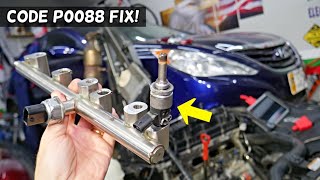
Typical fix: Replace the high-pressure fuel pump, the associated high-pressure fuel pipe (which is a one-time-use part), and the cam follower (tappet) that drives the pump. Failure to replace the tappet can lead to premature failure of the new pump. 🎬 Watch: Step-by-step guide to replacing the pump and cam follower.
Est. part cost: $400-$1200 - Faulty Fuel Rail Pressure Sensor (FRPS) 🟡 Medium Probability
How to confirm: Connect a mechanical fuel pressure gauge to the fuel rail (if possible) and compare its reading to the sensor's output on a scan tool. If the mechanical gauge shows normal pressure but the scan tool shows high pressure, the sensor is likely faulty. Also, check the sensor's voltage; a constant 5-volt reading indicates a short.
Typical fix: Replace the fuel rail pressure sensor.
Est. part cost: $80-$200 - Damaged or Leaking High-Pressure Fuel Pipe ⚪ Low Probability Recall SC172 was issued because this pipe could be damaged, misaligned, or improperly torqued during prior engine replacement services, leading to leaks. While this typically causes a leak (low pressure), an improper installation could theoretically cause a restriction.
How to confirm: Visually inspect the fuel pipe connecting the HPFP to the fuel rail for any signs of wetness or fuel smell. A dealer can check if the recall applies to your VIN and perform the inspection.
Typical fix: Replace the high-pressure fuel pipe and ensure it is torqued to the correct specification. This part must be replaced anytime it is removed or loosened.
Est. part cost: $50-$150
Rare But Worth Checking
- Wiring Harness Issues: A short in the wiring to the fuel rail pressure sensor can cause it to send an incorrect high-pressure signal to the PCM. Inspect the harness for any visible damage, especially near the top of the engine.
- Worn Cam Follower (Tappet): The small mechanical bucket (tappet) that sits between the camshaft and the HPFP can wear down. While this more commonly causes low pressure (P0087), erratic wear could contribute to inconsistent pump actuation and pressure spikes.
Diagnosis Steps
- Check for any applicable recalls or warranty extensions (like SC172 or the HPFP warranty extension) with a Kia dealer using your VIN. The warranty extension specifically requires DTC P0088 to be present for coverage.
- Use an OBD-II scanner to confirm P0088 is the active code and check for any other related codes.
- Use the scanner's live data function to observe 'Desired Fuel Rail Pressure' vs. 'Actual Fuel Rail Pressure'. If the actual pressure is significantly higher than desired, the problem is almost certainly the HPFP.
- Carefully check the engine oil dipstick for a strong gasoline smell and check if the oil level is overfull. If present, this strongly indicates a failed HPFP leaking fuel internally and the vehicle should not be driven.
- If the HPFP is confirmed as the cause, order a new HPFP, a new high-pressure fuel pipe, and a new cam follower/tappet. Do not reuse the old pipe or tappet.
- If the fuel pressure readings are suspect and do not clearly point to the HPFP, inspect the wiring harness for the Fuel Rail Pressure Sensor for any damage, corrosion, or loose connections.
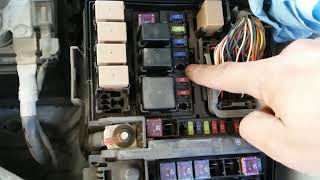
- If the wiring is okay, test the Fuel Rail Pressure Sensor. This may require comparing its reading to a mechanical gauge or testing its voltage output. 🎬 See how to diagnose fuel pressure sensor and pump codes.
Parts You'll Likely Need

- High-Pressure Fuel Pump (HPFP)
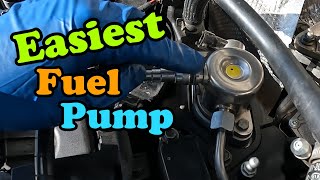
(OEM #35320-2G720 (For many 2.4L/2.0T models, often superseded by 35320-2G730) or 35320-2G740 (For later models). Verify with VIN.)— This is the most common failure point for code P0088 on these engines due to internal wear of the control valve. 🎬 Watch: Troubleshooting the P0088 high pressure code on GDI engines.
Trusted brands: Hyundai/Kia (OEM), Bosch, Delphi
OEM price range: $600-$1200
Aftermarket price range: $400-$800 - Cam Follower / Tappet
(OEM #35325-2G700 or 22226-2G003. Verify with VIN.)— This small bucket rides on the camshaft to drive the HPFP. It is a critical wear item and MUST be replaced with the HPFP to prevent damage to the new pump.
Trusted brands: Hyundai/Kia (OEM)
OEM price range: $20-$40 - High-Pressure Fuel Pipe
(OEM #Varies by engine/year. Must be looked up by VIN.)— This is a one-time-use part that should be replaced whenever the high-pressure fuel pump is replaced. It was also subject to a recall for potential leaks.
Trusted brands: Hyundai/Kia (OEM)
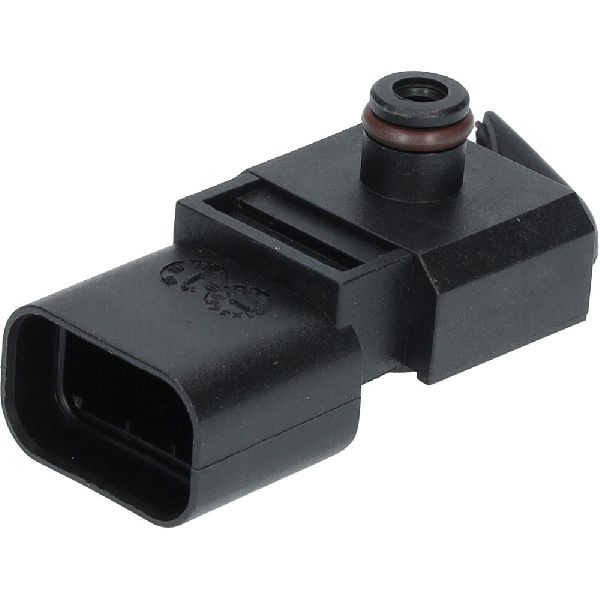
OEM price range: $50-$150 - Fuel Rail Pressure Sensor
(OEM #Varies by engine/year. Must be looked up by VIN.)— Can fail and send incorrect high-pressure readings to the computer, tricking it into setting the code.
Trusted brands: Bosch, Standard Motor Products
OEM price range: $150-$250
Aftermarket price range: $80-$150
Related Codes That Often Appear With This One
- P0087 — Although it means the opposite ('Fuel Rail Pressure Too Low'), it can sometimes appear intermittently as a failing HPFP struggles to regulate pressure, causing both spikes and drops.
- P0300-P0304 — Misfire codes can be triggered by the incorrect air/fuel mixture resulting from excessively high fuel pressure.
Technical Service Bulletins (TSBs) & Recalls
- SC172: Safety Recall Campaign - High Pressure Fuel Pump Outlet Inspection. Covers inspection and potential replacement of the high-pressure fuel pipe on 2011-2014 Optimas that had a prior engine replacement under recall SC147.
- TSB FUE067 / Warranty Campaign WTY034: References a warranty extension program (e.g., 15 years/180,000 miles) for the HPFP on certain models when DTC P0088 is present.
- Bulletin #SC281Y_TSB: This manufacturer bulletin provides specific high-pressure fuel pump replacement instructions for DTC P0088 as a subsequent repair action.
- Bulletin #WTY034_TSB_R2: This bulletin details the Warranty Extension Program (WTY034) to diagnose a Malfunction Indicator Lamp (MIL) accompanied by DTC P0088 and, if necessary, replace the high-pressure fuel pump.
Platform-Specific Known Issues
- Safety Recall SC172: Affects certain 2011-2014 Optima models that previously had an engine replaced. Addresses a potential fuel leak from the high-pressure fuel pipe, which may have been damaged or improperly torqued during the engine service.
- Warranty Extensions (e.g., WTY034): Kia has issued warranty extensions for failing high-pressure fuel pumps on various models and years that trigger code P0088. The coverage is typically extended to 15 years/150,000-180,000 miles. It is essential to check with a dealer, as coverage is contingent on the presence of DTC P0088.
Mechanic-Grade Diagnostic Values
- Fuel Rail Pressure Sensor (FRPS) Signal Voltage — expected: 0.5V to 4.5V (Varies with pressure). Failure: A constant reading of 5V or more suggests a short to power or a bad ground. A reading that does not change as engine RPMs increase is also a sign of failure.
- Low-Pressure Fuel Line Pressure (at idle) — expected: Approximately 495-520 kPa (72-75 PSI). Failure: Pressure significantly below this range could indicate a weak in-tank pump, but this is not a typical cause for P0088.
- High-Pressure Fuel System (at idle) — expected: Typically several hundred PSI (e.g., 400 PSI), rising to over 2,000 PSI under load.. Failure: Scan tool 'Actual Pressure' reading significantly and consistently higher than 'Desired Pressure' at idle and under load.
Scan Tool Commands That Help

- Kia GDS (Global Diagnostic System): Resetting adaptive values — This function should be used after replacing the high-pressure fuel pump or fuel rail pressure sensor. It clears the PCM's learned fuel trim and pressure adjustments, allowing it to re-learn operating parameters with the new component.
- Kia GDS (Global Diagnostic System): ECU Upgrade / Vehicle S/W Management — Check for any available software updates for the Engine Control Module (ECM). Some TSBs and recalls for fuel system issues require a mandatory ECU software update to improve fuel control logic after a hardware replacement.
Wiring & Ground Locations
- Fuel Rail Pressure Sensor (FRPS) Connector — Located on the fuel rail, underneath the intake manifold. Access requires removing the intake manifold.. This connector and its wiring are common points for inspection. Damage or corrosion here can cause incorrect signals to the PCM, mimicking a pressure fault. A short in the harness can cause a constant high-voltage signal, triggering P0088.
- High-Pressure Fuel Pump (HPFP) Connector — On top of the HPFP, which is mounted on the cylinder head.. This is the electrical connection for the pump's internal fuel volume/pressure control solenoid. A poor connection here could theoretically cause control issues, although it's less common than internal pump failure.
Real Owner Repair Stories
- Reddit user post (Vehicle exhibiting P0088, misfiring at 3000 RPM, and unable to accelerate past 40 MPH.) — Car went into a limp mode with misfires and a P0088 code.
❌ Tried (didn't work) The user noted the issue disappeared the next morning, which could lead some to believe it was a temporary glitch.
✅ What actually fixed it The user researched and found a recall related to the high-pressure fuel pump, indicating this was the likely root cause despite the intermittent nature of the symptom. This highlights that even if the problem seems to resolve itself, the underlying faulty component (HPFP) still needs to be addressed. - NHTSA ODI #11562645: An owner reported a P0088 code for fuel rail/system pressure too high. The report noted that a dealership representative did not perform a full diagnostic, relying only on the code reader results without checking for other defective components.
OEM Part Supersession History
35320-2G720→35320-2G730, and subsequently 35320-2G740— Revisions are common to improve reliability and address known failure modes of the original design.
Heads up: While the parts may physically interchange, using the wrong revision could lead to incorrect performance. Part number 35320-2G740 is listed for later model years (e.g., 2016+ Optima). Always use the part number specified for the vehicle's VIN to ensure compatibility with the ECU's software and fuel mapping.
Model Year Variations Within This Range
- 2011-2015 (TF Generation) vs 2016-2020 (JF Generation): While both generations use similar 2.0L and 2.4L GDI engines and suffer from HPFP failures, the specific part numbers for the HPFP changed. The earlier TF generation commonly uses HPFP PNs 35320-2G720/730, while the later JF generation is more likely to use 35320-2G740. This makes VIN verification essential when ordering parts.
Diagnostic Flowchart
Used vs. New Parts: Buying Guide for This Vehicle
When a used part is the smart pick: For this specific P0088 issue, sourcing used parts is generally not recommended for the primary components. A used Fuel Rail Pressure Sensor (FRPS) from a low-mileage vehicle could be a viable option if it is a verified OEM part. However, other components like wiring harnesses or connectors are good candidates for used parts if they are in excellent physical condition.
Donor-vehicle mileage cap: roughly under 60000 miles for the part to have meaningful remaining life.
What to inspect on the donor part:
- For a sensor, ensure the connector pins are clean, straight, and free of corrosion.
- Verify the donor vehicle was not in a front-end collision that could have damaged engine-mounted components.
- Check the vehicle history of the donor car, if possible, to avoid parts from a vehicle with a history of engine or fuel system problems.
OEM-only on this vehicle (don't cheap out):
- High-Pressure Fuel Pump (HPFP): This is a known high-failure part. A used pump has an unknown history and is very likely to fail prematurely. Aftermarket options also have a mixed reputation, making a new OEM pump the most reliable choice.
- Cam Follower / Tappet: This is an inexpensive wear item that should always be replaced new with the HPFP.
- High-Pressure Fuel Pipe: This is a one-time-use, torque-to-yield part that must be replaced new whenever it is loosened to prevent dangerous leaks.
Aftermarket brands forum-validated for this vehicle:
- Bosch (Often the OEM supplier)
- Delphi
Brands owners have reported issues with on this vehicle:
- Unbranded, low-cost pumps found on sites like eBay or Amazon. While some users report short-term success, their long-term reliability is questionable compared to OEM.
Real Owner Stories
Aggregated from forums and TSBs cited above. Mileages and costs reflect what owners reported in those sources.
2018 Kia Optima — 89345 miles
Symptoms: Check engine light with code P0088, fuel pressure was too high at 3000 RPM.
What fixed it: Replaced high pressure fuel pump assembly, gasket, and pipe.
Source hint: Golden Wrench Complete Auto Repair - Kia Archives
Kia Optima (various 2011-2020 models)
Symptoms: Check Engine Light with P0088, engine hesitation, and a strong smell of fuel in the engine oil.
What fixed it: The consensus repair is the replacement of the high-pressure fuel pump (HPFP), the cam follower (tappet), and the one-time-use high-pressure fuel line.
Source hint: kia-forums.com & optimaforums.com
Kia Stinger (shares GDI architecture)
Symptoms: Car entered limp mode and would not accelerate past 40 MPH with code P0088, but the issue disappeared the next morning.
What fixed it: This report highlights the intermittent nature of a failing HPFP, which was the eventual diagnosis.
Source hint: Reddit r/mechanic
Related OBD-II Codes
Frequently Asked Questions
Is the P0088 code on my 2011-2014 Optima covered by a recall?
My Optima has P0088. Is the high-pressure fuel pump repair covered under warranty?
I smell a strong odor of gasoline in my engine oil. Is this related to P0088?
The mechanic is replacing my high-pressure fuel pump. Are there other parts I should replace at the same time?
My car went into 'limp mode' with P0088 but seems fine the next day. Can I ignore it?
I have a P0091 code instead of P0088. Will Kia's warranty extension for the fuel pump still cover the repair?
Helpful Videos

Used OEM Parts in Stock

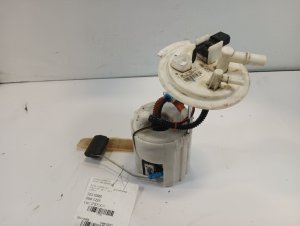


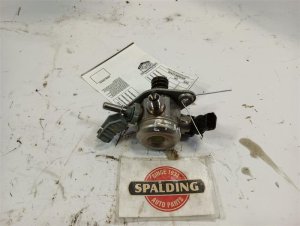
New Aftermarket Parts Available


The information in this article is provided for general reference and educational purposes only. Vehicle specifications, procedures, and part compatibility can vary by production date, trim level, and region. Always consult your vehicle's factory service manual and verify part numbers before purchasing or performing repairs. Safety-critical components such as airbags, seat belts, and braking systems should be installed by a qualified professional.
- Kia Optima:
- 🎬 Helpful Videos
- 🛍️ Shop This Part
- What's Unique About the 2011-2020 Kia Optima
- Symptoms You May Notice
- Most Likely Causes
- Rare But Worth Checking
- Diagnosis Steps
- Parts You'll Likely Need
- Related Codes That Often Appear With This One
- Technical Service Bulletins (TSBs) & Recalls
- Platform-Specific Known Issues
- Mechanic-Grade Diagnostic Values
- Scan Tool Commands That Help
- Wiring & Ground Locations
- Real Owner Repair Stories
- OEM Part Supersession History
- Model Year Variations Within This Range
- Diagnostic Flowchart
- Used vs. New Parts: Buying Guide for This Vehicle
- Real Owner Stories
- 2018 Kia Optima — 89345 miles
- Kia Optima (various 2011-2020 models)
- Kia Stinger (shares GDI architecture)
- Related OBD-II Codes
- Frequently Asked Questions
- 🎟️ Get 5% Off