

P0088 on 2020-2024 Ford Explorer 3.0L: Fuel Rail Pressure Too High Causes and Fixes
This code indicates the fuel pressure is dangerously high. On the 3.0L EcoBoost, this is often caused by a faulty high-pressure fuel pump (HPFP) or a failed fuel rail pressure sensor. A known issue on some 2020 models also involves a defective high-pressure fuel rail that could cause the code, though this was addressed separately from the more widely known Customer Satisfaction Program 20B27.
- P0088 is a serious code on your Explorer indicating dangerously high fuel pressure; stop driving immediately to prevent engine damage and fire risk.
- For 2020 models, the first step is to check if your vehicle is covered under Ford's Customer Satisfaction Program 20B27 for a defective high-pressure fuel rail.
- Outside of the specific 2020 rail issue, the most likely causes are a failed high-pressure fuel pump (HPFP) or a faulty fuel rail pressure sensor.
- Diagnosis requires a professional scan tool to compare desired versus actual fuel pressure and should be performed by a qualified technician due to the extreme danger of working with high-pressure fuel systems.
What's Unique About the 2020-2024 Ford Explorer
The 3.0L EcoBoost is a high-performance, twin-turbocharged direct-injection engine where precise fuel pressure is critical. For some 2020 models, a manufacturing defect in the high-pressure fuel rail could cause an internal orifice to dislodge, damaging the pressure control valve and triggering a P0088 code. While this specific issue was not covered by the widely circulated Customer Satisfaction Program 20B27 (which addressed a different issue), it is a key vehicle-specific consideration for early-production sixth-generation Explorers and should be investigated by a dealer.
Symptoms You May Notice
- Check Engine Light is on.
- Reduced engine power or entering 'limp mode'.
- Rough or erratic idle.
- Engine hesitation or stalling.
- Hard starting.
- Noticeable decrease in fuel economy.
- Strong smell of gasoline from the engine bay or exhaust.
- Black smoke from the exhaust.
- Replacing the in-tank low-pressure fuel pump, which is not the cause for a high-pressure code like P0088.
- Replacing fuel injectors without confirming they are the root cause of the pressure issue.
Most Likely Causes
- Defective High-Pressure Fuel Rail 🔴 High Probability A specific batch of 2020 models was manufactured with a high-pressure fuel rail where an internal orifice could dislodge and cause a P0088 code. This is a known, albeit not universally recalled, issue.
How to confirm: A Ford dealer must check the vehicle's VIN against internal service messages and bulletins related to fuel rail failures on 2020 models. This is separate from the more common CSP 20B27.
Typical fix: Replacement of the left-hand side high-pressure fuel rail assembly.
Est. part cost: $0 if covered by a warranty or service program, otherwise $300-$500. - Failed High-Pressure Fuel Pump (HPFP) 🟡 Medium Probability The HPFP is a mechanical component driven by the camshaft that can fail internally, causing it to over-pressurize the system. This is a common failure point on many GDI engines.
How to confirm: Requires a diagnostic scan tool to monitor desired vs. actual fuel rail pressure. If actual pressure is consistently and significantly higher than desired, and the sensor reading is verified as accurate, the pump is the likely cause.
Typical fix: Replacement of the high-pressure fuel pump and the one-time-use high-pressure fuel line.
Est. part cost: $300-$800 - Faulty Fuel Rail Pressure Sensor 🟡 Medium Probability The sensor can fail and send an inaccurately high voltage signal to the PCM, tricking the computer into thinking the pressure is too high when it is not.
How to confirm: With the key on but the engine off, use a scan tool to read live data for fuel rail pressure. The reading should be close to 0 PSI. If it shows a significant pressure reading (e.g., hundreds or thousands of PSI), the sensor is almost certainly faulty or its wiring is shorted. This check should be performed before more invasive testing.
Typical fix: Replacement of the fuel rail pressure sensor.
Est. part cost: $50-$150
Rare But Worth Checking
- Wiring Issues: Damage to the wiring harness for the fuel rail pressure sensor, often from rodents, can cause a short to voltage, sending a false high-pressure signal to the PCM.
- Blocked Fuel Return Line: Although less common on modern returnless systems, a restriction in any pressure-relief or return path can cause pressure to build up.
- Faulty Powertrain Control Module (PCM): A rare but possible cause is an internal failure of the PCM, causing it to misinterpret sensor data or command excessive pressure. This should only be considered after all other possibilities have been exhausted.
Diagnosis Steps
- Connect a professional OBD-II scan tool to confirm the P0088 code and check for any other related codes.
- Check your vehicle's VIN with a Ford dealer for any open recalls or service bulletins, specifically mentioning the rear axle bolt recall, transmission TSBs, and any notices regarding the high-pressure fuel rail for 2020 models.
- With the Key On, Engine Off (KOEO), use the scan tool to monitor live data for 'Actual Fuel Rail Pressure'. If the pressure reads significantly above 0 PSI, the Fuel Rail Pressure Sensor is likely faulty or has a wiring short.
- If the KOEO test is inconclusive, start the engine and monitor 'Desired Fuel Rail Pressure' vs. 'Actual Fuel Rail Pressure'. Observe if the actual pressure is significantly and consistently higher than the desired pressure.
- Visually inspect the wiring harness and connector for the fuel rail pressure sensor for any signs of damage, corrosion, or rodent activity.
- If the sensor is confirmed to be reading correctly and the pressure is indeed too high, the high-pressure fuel pump (HPFP) is the next likely suspect.
- If the vehicle is a 2020 model, the defective fuel rail issue is a strong possibility and should be investigated by a dealer.
- Due to the high pressures and specialized procedures involved, replacement of the HPFP or fuel rail should be performed by a qualified technician.
Parts You'll Likely Need
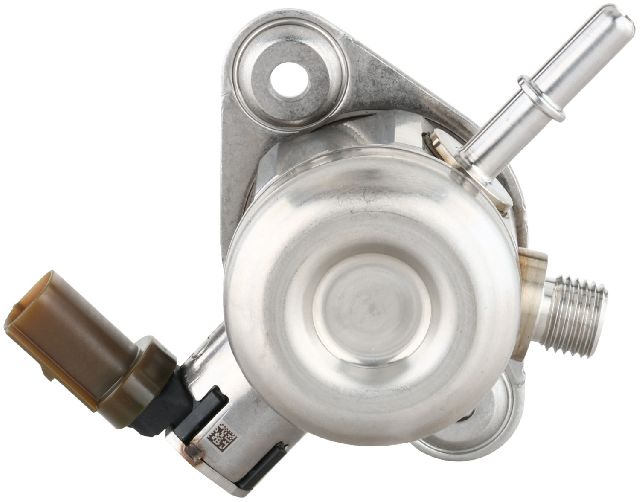
- High-Pressure Fuel Pump (HPFP) — A mechanical failure within the pump is a common cause of over-pressurization in the GDI system.
Trusted brands: Motorcraft, Bosch
OEM price range: $500-$800
Aftermarket price range: $300-$600 - Fuel Rail Pressure Sensor
(OEM #BU5Z-9F972-B)— This sensor can fail and send incorrect high-pressure readings to the computer, falsely triggering the code. A failed sensor is a very common cause.
Trusted brands: Motorcraft, Bosch, Delphi, Standard Motor Products
OEM price range: $65-$100
Aftermarket price range: $25-$80 - High-Pressure Fuel Rail — Specifically for 2020 models, a manufacturing defect could cause this part to fail and trigger P0088. This is a vehicle-specific issue that a dealer must verify.
Trusted brands: Motorcraft
OEM price range: $300-$500
Aftermarket price range: N/A
Related Codes That Often Appear With This One
- P0087 — P0087 (Fuel Rail/System Pressure - Too Low) can sometimes appear intermittently with P0088 if the high-pressure fuel pump is failing erratically.
- P0172 — P0172 (System Too Rich Bank 1) can occur because the excessively high fuel pressure forces too much fuel into the cylinders, creating a rich running condition.
Technical Service Bulletins (TSBs) & Recalls
- Customer Satisfaction Program 20B27: While not directly for the P0088 fuel rail issue, this program involved a PCM reflash for certain vehicles to prevent torque converter overheating. It is often confused with the fuel rail problem.
- Recall 22S27 / 23S55: A critical safety recall for 2020-2022 models to replace a rear axle mounting bolt that can fracture, leading to a loss of power or vehicle rollaway.
- TSB 20-2305: Addresses a harsh 7-6 downshift in the 10R60 transmission on some 2020 models.
- Manufacturer Bulletin #20B41: Notes that if the fuel orifice becomes dislodged, it can travel down and damage the pressure control valve pintle, resulting in DTC P0088.
- Manufacturer Bulletin #SSM 49185: States that certain engines may exhibit an illuminated MIL with DTC P0088 due to the pressure control valve in the left fuel rail, requiring replacement of the rail and valve.
Platform-Specific Known Issues
- Manufacturing Defect in High-Pressure Fuel Rail: Affects some 2020 Explorer models. A potential defect in the high-pressure fuel rail could cause an internal component to dislodge, leading to DTC P0088 and a reduction in power.
Mechanic-Grade Diagnostic Values
- Fuel Rail Pressure (FRP) Sensor Signal Voltage (Key On, Engine Off) — expected: ~0.5 V. Failure: A reading near 5.0V suggests a short to power or an open circuit. A reading near 0V suggests a short to ground.
- Fuel Rail Pressure (FRP) Sensor Signal Voltage (Engine at Idle) — expected: ~1.2V to 1.5V. Failure: A static voltage reading (e.g., stuck at 4.8V) that does not change with engine state indicates a failed sensor.
- Fuel Rail Pressure (FRP) Sensor Reference Voltage — expected: 5.0 V. Failure: Absence of 5V from the PCM to the sensor indicates a wiring or PCM issue.
- High-Pressure Fuel System Pressure Range — expected: 65 to 2150 PSI (4.5 to 148 bar), depending on demand.. Failure: Pressure consistently exceeding the PCM's commanded pressure indicates a fault.
OEM Part Supersession History
P2GZ-9F972-A→P2GZ-9F972-C— Part revision or supplier change. Functionality remains the same.
Model Year Variations Within This Range
- 2020: The 3.0L EcoBoost V6 replaced the previous 3.5L V6 as the top engine option. Early 2020 models are specifically noted for a potential high-pressure fuel rail manufacturing defect.
- 2021-2024: After its major refresh in 2020, the Explorer platform saw only minor updates in these model years, with no significant changes to the 3.0L EcoBoost powertrain that would affect the diagnosis of P0088.
Diagnostic Flowchart
Other Known Issues on This Vehicle
Issues unrelated to this code that are worth knowing about as an owner of this generation:
- Rear Axle Mounting Bolt Fracture 🔴 High — Widespread enough to trigger multiple recalls (NHTSA #22V255, 23V-675) affecting over 238,000 2020-2022 models. Can occur during vehicle acceleration. (Ref: Recall 22S27 / 23S55)
- 10R60 Transmission Harsh/Delayed Shifting 🟠 Medium — Common on 2020 models in particular. Symptoms include harsh 7-6 downshifts, delayed reverse engagement, or other erratic shift behavior. (Ref: TSB 20-2305, TSB 22-2102, TSB 23-2176)
- Initial Production Quality Control Problems 🟡 Low — Particularly noted on the 2020 model year. Owners report issues like interior rattles, panel fitment gaps, exhaust leaks, and various electronic glitches.
- Leaking Front Axle Boots 🟠 Medium — A commonly reported issue on forums for the 2020 model year, where the front axle shaft boots leak grease, requiring axle replacement.
Used vs. New Parts: Buying Guide for This Vehicle
When a used part is the smart pick: For this specific repair, using used parts is generally not recommended due to the high-pressure nature and precision required of the components. A used Fuel Rail Pressure Sensor might be considered if it's from a very low-mileage donor and can be tested, but the risk often outweighs the savings.
Donor-vehicle mileage cap: roughly under 30000 miles for the part to have meaningful remaining life.
What to inspect on the donor part:
- Verify the donor vehicle was not in a major front-end collision.
- Check for any signs of fire or fuel leaks around the engine bay.
- If possible, get the VIN to check the donor's service history for related repairs.
OEM-only on this vehicle (don't cheap out):
- High-Pressure Fuel Pump (HPFP)
- High-Pressure Fuel Rail
Aftermarket brands forum-validated for this vehicle:
- Bosch (often the OEM supplier for fuel components)
Brands owners have reported issues with on this vehicle:
- Unbranded, 'white box' sensors or pumps from online marketplaces should be avoided as their calibration and reliability are questionable for a critical high-pressure fuel system.
Real Owner Stories
Aggregated from forums and TSBs cited above. Mileages and costs reflect what owners reported in those sources.
2020 Explorer ST 3.0L EcoBoost — 35000 miles
Symptoms: Powertrain problems, axle leaks, and exhaust leaks.
What fixed it: The owner reported a 'hassle and work done' regarding multiple powertrain issues on the vehicle.
Source hint: https://www.explorerforum.com/threads/2020-explorer-st-lots-of-hassle-and-work-done-at-35k-miles-any-success-stories-welcome.499649/
2020 Explorer ST 3.0L EcoBoost
Symptoms: Sudden loss of power and entering limp mode, though sometimes no codes are immediately present.
What fixed it: Discussion points toward potential throttle body issues or fuel system failures causing the power loss.
Source hint: https://www.explorerst.org/threads/loss-of-power-but-no-codes.2370/
2020 Explorer 3.0L EcoBoost
Symptoms: DTC P0088 and a reduction in engine power.
What fixed it: Replacement of the left-hand side high-pressure fuel rail assembly due to a dislodged internal orifice.
Source hint: vehicle_specific_issues: Manufacturing Defect in High-Pressure Fuel Rail
Ford Owner Report — NHTSA ODI #11515513
Symptoms: While driving approximately 50-55 MPH, a winding sound was detected and code P0088 was displayed.
What fixed it: The vehicle was towed to a local dealer for diagnosis after the high-pressure code appeared.
Ford Owner Report — NHTSA ODI #10721001
Symptoms: The vehicle experienced a lack of power and the owner pulled engine codes to find P0088 (Fuel Rail Pressure Too High).
What fixed it: The owner identified a known manufacturer defect related to TSB 11-4-22 regarding the P0088 code.
Related OBD-II Codes
Frequently Asked Questions
Is the P0088 code on my 2020 Explorer related to the Customer Satisfaction Program 20B27?
My 2020 Explorer 3.0L has a P0088 code and lost power; is there a specific manufacturing defect I should mention to the dealer?
Can the rear axle bolt recall (22S27) cause a P0088 high fuel pressure code?
I have a Lincoln Aviator with the 3.0L EcoBoost; could I have the same P0088 issue as the Explorer?
Should I use an aftermarket fuel rail pressure sensor to fix this code?
Is there a TSB for the shifting issues I'm having along with the P0088 code?
Helpful Videos
Used OEM Parts in Stock


New Aftermarket Parts Available


The information in this article is provided for general reference and educational purposes only. Vehicle specifications, procedures, and part compatibility can vary by production date, trim level, and region. Always consult your vehicle's factory service manual and verify part numbers before purchasing or performing repairs. Safety-critical components such as airbags, seat belts, and braking systems should be installed by a qualified professional.
- Ford Explorer:
- 🎬 Helpful Videos
- 🛍️ Shop This Part
- What's Unique About the 2020-2024 Ford Explorer
- Symptoms You May Notice
- Most Likely Causes
- Rare But Worth Checking
- Diagnosis Steps
- Parts You'll Likely Need
- Related Codes That Often Appear With This One
- Technical Service Bulletins (TSBs) & Recalls
- Platform-Specific Known Issues
- Mechanic-Grade Diagnostic Values
- OEM Part Supersession History
- Model Year Variations Within This Range
- Diagnostic Flowchart
- Other Known Issues on This Vehicle
- Used vs. New Parts: Buying Guide for This Vehicle
- Real Owner Stories
- 2020 Explorer ST 3.0L EcoBoost — 35000 miles
- 2020 Explorer ST 3.0L EcoBoost
- 2020 Explorer 3.0L EcoBoost
- Ford Owner Report — NHTSA ODI #11515513
- Ford Owner Report — NHTSA ODI #10721001
- Related OBD-II Codes
- Frequently Asked Questions
- 🎟️ Get 5% Off