

P0088 on 2013-2016 Ford Escape 2.0L: High Fuel Rail Pressure Causes & Fixes
P0088 on a 2.0L EcoBoost Escape most often means the high-pressure fuel pump (HPFP) is failing or the fuel rail pressure sensor (FRPS) is faulty. Expect to pay $300-$700 for a new HPFP and $50-$150 for a sensor. The HPFP is the most common culprit.
- P0088 on your Escape indicates dangerously high pressure in the direct injection fuel system.
- The most common causes are a failed High-Pressure Fuel Pump (HPFP) or a faulty Fuel Rail Pressure Sensor (FRPS).
- Do not drive the vehicle extensively. The rich fuel mixture can cause stalling, poor performance, and damage to other engine components.
- When replacing the HPFP, it is essential to also replace the inexpensive camshaft follower it rides on to prevent premature failure of the new pump.
- Diagnosis involves using a scan tool to compare desired vs. actual fuel pressure; this is the key step to determine if the fault is mechanical (pump) or electrical (sensor/wiring).
What's Unique About the 2013-2016 Ford Escape
The 2.0L EcoBoost is a Gasoline Direct Injection (GDI) engine, which uses two fuel pumps: a low-pressure pump in the tank and a high-pressure fuel pump (HPFP) driven by the camshaft. This high-pressure system, operating at up to 2,000+ PSI, is sophisticated and its components are known failure points. Unlike simpler port-injection systems, P0088 on this engine almost always points directly to a problem with the HPFP, its associated cam follower, or the fuel rail pressure sensor, rather than a simple fuel filter or return line issue.
Symptoms You May Notice
- Check Engine Light is on
- Reduced engine power and poor acceleration (Limp Mode)
- Engine may hesitate, sputter, or stall, especially under load
- Rough or inconsistent idle
- Hard starting or no start condition
- Decreased fuel economy
- Strong smell of raw fuel or black smoke from the exhaust
- Replacing the in-tank low-pressure fuel pump. This pump is responsible for getting fuel to the engine, but the P0088 code specifically relates to the high-pressure side of the system, which is managed by the HPFP.
- Replacing fuel injectors. While high pressure can affect injectors, they are not the cause of the P0088 code itself.
Most Likely Causes
- Failed High-Pressure Fuel Pump (HPFP) 🔴 High Probability The HPFP is a mechanical pump driven by the camshaft. The internal components or the cam follower it rides on can wear out. A failure can cause the pump to get stuck, producing excessive pressure. This is a common failure point on GDI engines like the 2.0L EcoBoost.
How to confirm: Use an OBD-II scan tool with live data (like FORScan) to monitor 'Fuel Rail Pressure (Desired)' vs. 'Fuel Rail Pressure (Actual)'. If the actual pressure is significantly higher than desired, and does not respond to engine load changes, the pump or its internal volume control valve is likely at fault. A physical inspection may reveal a worn cam follower.
Typical fix: Replace the high-pressure fuel pump and the camshaft follower tappet. It is critical to replace the follower at the same time, as a worn follower can quickly destroy a new pump.
Est. part cost: $300-$700 - Faulty Fuel Rail Pressure Sensor (FRPS) 🟡 Medium Probability The sensor sends a voltage signal to the ECM corresponding to fuel pressure. If the sensor fails, it can send an erroneously high voltage signal, tricking the ECM into thinking the pressure is too high when it's actually normal. This can sometimes cause a no-start condition.
How to confirm: With the engine off and key on, the fuel rail pressure reading on a scan tool should be near zero (or atmospheric pressure). If it shows a high pressure reading without the engine running, the sensor is likely bad. You can also unplug the sensor; if the engine then starts (it will run on default values), it points to a faulty sensor.
Typical fix: Replace the fuel rail pressure sensor. On the 2.0L Escape, it is located on the high-pressure fuel rail, accessible after removing the engine cover.
Est. part cost: $50-$150 - Wiring Issues ⚪ Low Probability The wiring harness to the fuel rail pressure sensor or the HPFP's volume control valve can become damaged from heat, vibration, or chafing. A recall (14S17) was issued for 2013-2014 Escapes for engine wiring harness splices that could provide incorrect signals.
How to confirm: Visually inspect the wiring harness for any signs of damage, chafing, or melting. Use a multimeter to check for a short to power on the signal wire if the sensor reads max voltage constantly. Check for recall completion.
Typical fix: Repair or replace the damaged section of the wiring harness. If related to a recall, the dealer performs the fix.
Est. part cost: $10-$100
Rare But Worth Checking
- Faulty Powertrain Control Module (PCM): A software glitch or internal PCM failure can cause it to misinterpret sensor data. This is very rare and should only be considered after all other possibilities have been exhausted. Sometimes a PCM re-flash from the dealer can resolve this.
- Restricted Fuel Return Line: While less common on modern returnless systems, a kink or blockage in a fuel line could theoretically cause pressure to build. This is a very low probability cause.
Diagnosis Steps
- Connect an OBD-II scanner and confirm P0088 is the primary code. Note any other codes present.
- View live data for 'Fuel Rail Pressure (Desired)' and 'Fuel Rail Pressure (Actual)'.
- With the engine running at idle, observe the pressure readings. If 'Actual' is significantly higher than 'Desired', suspect the HPFP or its control.
- Turn the engine off. After letting the pressure bleed down, turn the key to the 'On' position without starting the engine. The 'Actual' pressure should be very low (near 0 PSI). If it reads high, the Fuel Rail Pressure Sensor (FRPS) is likely faulty.
- If the sensor seems to be reading correctly, visually inspect the wiring harness for the FRPS and HPFP for any signs of damage or corrosion. Check for completion of recall 14S17 for 2013-2014 models.
- If the wiring is intact and the sensor tests good, the most likely culprit is the High-Pressure Fuel Pump (HPFP).
- Before replacing the HPFP, it is highly recommended to remove it and inspect the camshaft follower (tappet) it rides on. If the follower is worn or damaged, it MUST be replaced with the pump.
Parts You'll Likely Need
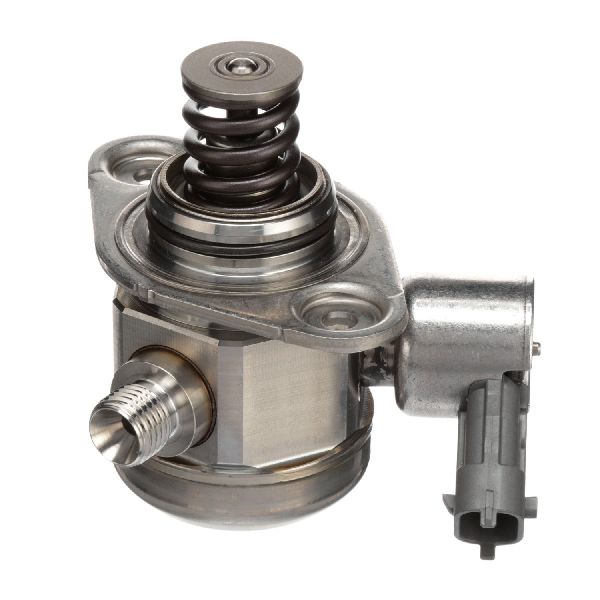
- High-Pressure Fuel Pump (HPFP)
(OEM #BU5Z-9350-B (or superseding part))— This is the most common mechanical failure point that causes sustained high fuel pressure on the 2.0L EcoBoost engine.
Trusted brands: Motorcraft, Bosch, Carter
OEM price range: $400-$700
Aftermarket price range: $250-$500 - Fuel Rail Pressure Sensor (FRPS)
(OEM #CM5250 (Motorcraft Service #), BU5Z-9F972-B)— This sensor can fail and send incorrect high-pressure readings to the computer, triggering the code even if the mechanical pressure is normal.
Trusted brands: Motorcraft, Standard Motor Products, Bosch
OEM price range: $80-$150
Aftermarket price range: $40-$90 - Camshaft Follower / Tappet
(OEM #AA5Z-9C587-A (Check VIN for specific fitment))— This small part sits between the camshaft and the HPFP. It is a known wear item, and its failure can damage the HPFP. It should always be replaced when replacing the HPFP.
Trusted brands: Motorcraft
OEM price range: $20-$40
Aftermarket price range: $15-$30
Related Codes That Often Appear With This One
- P0087 — This code means 'Fuel Rail Pressure Too Low'. Seeing it alongside P0088 can indicate an erratic HPFP or sensor that is failing and providing fluctuating, out-of-range readings.
- P018C — This code relates to the 'Fuel Pressure Sensor 'B' Circuit Low'. Some Ford vehicles have multiple pressure sensors, and a fault in the system can trigger codes for related sensors.
- P0300-P0304 — These are random or specific cylinder misfire codes. An excessively rich condition from high fuel pressure can foul spark plugs and lead to misfires.
Technical Service Bulletins (TSBs) & Recalls
- TSB #SSM 49185: Although for a different model, it establishes a pattern of P0088 being caused by a faulty pressure control valve in the fuel rail on Ford vehicles.
- TSB #20B41: Also for a different model, this TSB links P0088 to internal mechanical failure of a high-pressure fuel system component.
Platform-Specific Known Issues
- A user on the Ford Escape Forum reported getting P0088 along with a no-start condition. The issue was traced back to a faulty fuel rail pressure sensor. Replacing the sensor resolved the problem.
- A Reddit user with a Ford Fusion (shared platform) experienced P0088 with poor fuel economy. The discussion pointed towards either a faulty sensor providing incorrect data or a failing HPFP causing an actual over-pressurization issue.
- A Ford Truck Enthusiasts forum member with a different Ford model experienced recurring P0088 and limp mode, highlighting the frustrating diagnostic process that can sometimes occur with this code.
Mechanic-Grade Diagnostic Values
- Fuel Rail Pressure Sensor (FRPS) Signal Wire Voltage — expected: Approximately 0.5V with key on, engine off (KOEO). Should rise with engine running, e.g., ~1.3V at idle and up to ~3.8V under acceleration.. Failure: A constant reading of 5.0V indicates a short to power. A reading that does not change with engine RPM or load, or reads high pressure with the engine off, points to a faulty sensor.
- Fuel Rail Pressure Sensor (FRPS) Reference Voltage — expected: A steady 5.0 Volts on the reference wire with the key on, engine off (KOEO).. Failure: Voltage significantly lower or higher than 5.0V indicates a wiring or PCM issue, not necessarily a bad sensor.
- High-Pressure Fuel System Pressure (Actual) — expected: At idle, typically 400-800 PSI. Under load, can exceed 2,000 PSI. OEM systems are often rated for 150 bar (approx. 2150 PSI).. Failure: Sustained pressure significantly above the 'Desired' value on a scan tool, or pressure that does not decrease when engine load is removed.
Scan Tool Commands That Help
- FORScan / Ford IDS: Fuel Rail Pressure (FRP), Desired Fuel Rail Pressure (FRP_DES) — These live data PIDs are essential for diagnosing P0088. Comparing the actual pressure (FRP) to the pressure commanded by the PCM (FRP_DES) is the primary diagnostic step. A large discrepancy where actual is much higher than desired points towards a mechanical pump or regulator issue, while erratic or illogical readings can point to a sensor or wiring fault.
Wiring & Ground Locations
- G203 — Located behind the left side of the dashboard.. This is a common ground point for multiple components in the driver's side dash area. While not directly tied to the engine sensors in all diagrams, a poor ground here can cause erratic behavior in modules that interpret sensor data. It's a relevant check if multiple, seemingly unrelated electrical faults are present with P0088.
- FRPS Connector — On the high-pressure fuel rail, visible after removing the engine cover. It is a 3-wire connector.. This is the primary connection to test for voltage and signal from the Fuel Rail Pressure Sensor. The three pins are typically 5V reference, ground, and signal return. Damage or corrosion here is a direct cause of incorrect pressure readings.
Real Owner Repair Stories
- 2CarPros Forum (2013 Ford Escape 2.0L, 125,000 miles) — Engine cranks but will not start. Codes P0088 (Fuel Rail Pressure Too High) and P0113 (IAT Sensor Circuit High) were present.
❌ Tried (didn't work) The user was in the initial diagnostic phase.
✅ What actually fixed it A contributor identified that a shorted fuel rail pressure sensor is a known cause for a no-start condition with P0088 and provided diagrams for replacement. While the original poster did not confirm the final fix, this is a direct, expert-recommended solution to the exact symptoms.
OEM Part Supersession History
BU5Z-9F972-A, CM5226→BU5Z-9F972-B (Motorcraft CM5250)— Standard part revision and improvement over the vehicle's lifecycle.
Heads up: The -B revision is the current replacement for the -A part and is fully compatible. A further revision to BU5A-9F972-CA has also been noted, but BU5Z-9F972-B remains the common service part.
Model Year Variations Within This Range
- 2013-2016: The 2013-2014 models were subject to recall 14S17 for potential engine wiring harness splice issues which could cause incorrect signals. While not exclusively for the fuel pressure circuit, it's a known electrical vulnerability on earlier models in this range.
- 2016: For the 2016 model year, Ford began rolling out its Sync 3 infotainment system, replacing the older MyFord Touch system. This has no direct impact on the P0088 code but represents a significant electronic change within the vehicle that is useful for general identification.
Diagnostic Flowchart
Other Known Issues on This Vehicle
Issues unrelated to this code that are worth knowing about as an owner of this generation:
- 2.0L EcoBoost Coolant Intrusion 🔴 High — More common on 2017-2019 models but can affect earlier years. A defect in the engine block casting allows coolant to leak into the cylinders, causing misfires and eventual engine failure. (Ref: TSB 19-2346 (supersedes several others))
- 6F35 Transmission Failures 🟠 Medium — Widespread complaints across the 2013-2019 generation. Symptoms include shuddering, harsh shifts, slipping, and complete failure, often before 100,000 miles. (Ref: Multiple TSBs exist for software updates, but mechanical failures are common.)
- Shift Cable Bushing Failure 🔴 High — Common across many Ford models of this era. The bushing degrades, causing the shifter cable to detach from the transmission. This can lead to the vehicle rolling away unexpectedly after being placed in 'Park'. (Ref: Recall 18V471000)
- Door Latch Failures 🔴 High — A widespread issue where door latch components break, preventing the door from closing securely or causing it to open while driving. (Ref: Multiple recalls, including 20V177000.)
- Engine Wiring Harness Splice Failure 🟠 Medium — Affects 2013-2014 models with the 2.0L engine. Insufficient compression in splices for the MAP sensor can cause incorrect signals to the PCM, leading to stalling or hesitation. (Ref: Recall 14S17)
Used vs. New Parts: Buying Guide for This Vehicle
When a used part is the smart pick: For this repair, using used parts is generally not recommended for the core components. A used wiring harness connector pigtail from a junkyard can be a cost-effective fix if only the connector is damaged. However, the primary failure parts (HPFP and FRPS) are high-wear or sensitive electronic items.
Donor-vehicle mileage cap: roughly under 50000 miles for the part to have meaningful remaining life.
What to inspect on the donor part:
- For a wiring pigtail, ensure the plastic is not brittle and the locking tab is intact.
- Check for any signs of corrosion on the metal pins inside the connector.
- Ensure at least 6 inches of wire is available for splicing.
OEM-only on this vehicle (don't cheap out):
- High-Pressure Fuel Pump (HPFP)
- Camshaft Follower / Tappet
Aftermarket brands forum-validated for this vehicle:
- Bosch (Often the OEM supplier for fuel components)
- Standard Motor Products (For sensors)
Brands owners have reported issues with on this vehicle:
- No-name, unbranded sensors and pumps from online marketplaces. Failure of these components can have severe consequences, and quality control is often poor.
Real Owner Stories
Aggregated from forums and TSBs cited above. Mileages and costs reflect what owners reported in those sources.
2013 Ford Escape 2.0L EcoBoost
Symptoms: Engine cranks but does not start; OBD-II code P0088 present.
What fixed it: Replacing the fuel rail pressure sensor (FRPS) after identifying it was likely shorted.
Source hint: 2carpros.com thread titled 'Engine Cranks but does not start, code P0088 Fuel Rail/System Pressure, too high?'
2013-2016 Ford Fusion 2.0L EcoBoost
Symptoms: P0088 code accompanied by poor fuel economy.
What fixed it: Diagnostic discussion focused on determining if the sensor was providing incorrect data or if the HPFP was causing actual over-pressurization.
Source hint: Reddit r/fordfusion post 'P0088 : r/fordfusion'
2013-2014 Ford Escape 2.0L EcoBoost
Symptoms: Incorrect signals sent to the ECM due to engine wiring harness splice failures.
What fixed it: Dealer repair of the wiring harness splices under recall 14S17.
Source hint: Recall 14S17 cited in common_causes and known_issues
Related OBD-II Codes
Frequently Asked Questions
Is there a recall for the wiring issues causing P0088 on my 2013 Ford Escape 2.0L?
Can I just replace the High-Pressure Fuel Pump (HPFP) myself to fix this code?
My 2014 Escape won't start and shows P0088; could it be the sensor instead of the expensive pump?
Does the 2013-2016 Ford Escape share this P0088 issue with other models?
What live data should I monitor on my scan tool to diagnose P0088 on my Escape?
Are there any other major engine issues I should look out for while fixing P0088 on my 2.0L EcoBoost?
Helpful Videos
Used OEM Parts in Stock



New Aftermarket Parts Available

The information in this article is provided for general reference and educational purposes only. Vehicle specifications, procedures, and part compatibility can vary by production date, trim level, and region. Always consult your vehicle's factory service manual and verify part numbers before purchasing or performing repairs. Safety-critical components such as airbags, seat belts, and braking systems should be installed by a qualified professional.
- Ford Escape:
- 🎬 Helpful Videos
- 🛍️ Shop This Part
- What's Unique About the 2013-2016 Ford Escape
- Symptoms You May Notice
- Most Likely Causes
- Rare But Worth Checking
- Diagnosis Steps
- Parts You'll Likely Need
- Related Codes That Often Appear With This One
- Technical Service Bulletins (TSBs) & Recalls
- Platform-Specific Known Issues
- Mechanic-Grade Diagnostic Values
- Scan Tool Commands That Help
- Wiring & Ground Locations
- Real Owner Repair Stories
- OEM Part Supersession History
- Model Year Variations Within This Range
- Diagnostic Flowchart
- Other Known Issues on This Vehicle
- Used vs. New Parts: Buying Guide for This Vehicle
- Real Owner Stories
- 2013 Ford Escape 2.0L EcoBoost
- 2013-2016 Ford Fusion 2.0L EcoBoost
- 2013-2014 Ford Escape 2.0L EcoBoost
- Related OBD-II Codes
- Frequently Asked Questions
- 🎟️ Get 5% Off