

P0088 on 2010-2015 Chevrolet Camaro 3.6L: Fuel Rail Pressure Too High Causes and Fixes
On the 3.6L V6 Camaro, code P0088 almost always points to a failed high-pressure fuel pump (HPFP) or a bad fuel rail pressure sensor. A strong gasoline smell in the engine oil is a key sign the HPFP has failed and needs immediate replacement to prevent engine damage. A scan tool showing actual fuel pressure significantly higher than desired pressure is the primary diagnostic indicator.
- P0088 on your Camaro indicates a serious and potentially engine-damaging condition that should not be ignored.
- Before buying any parts, pull the oil dipstick and smell for gasoline. This is a free check that can definitively diagnose a failed High-Pressure Fuel Pump (HPFP).
- The two most likely causes are a failed HPFP or a bad fuel rail pressure sensor.
- Due to the extreme pressures and fire risk, this repair is best left to experienced DIYers or a professional shop.
- If you replace the HPFP, you MUST also replace the single-use high-pressure fuel line and change the engine oil.
What's Unique About the 2010-2015 Chevrolet Camaro

The 3.6L V6 engines (LLT and LFX) in this generation of Camaro use a direct injection system that operates at very high pressures, ranging from 2 to 15 MPa (290 to 2176 psi). The high-pressure fuel pump (HPFP) is a known failure point on this platform. Unlike many port-injected cars, a failure here can lead to fuel leaking directly into the engine crankcase through a compromised internal seal, severely contaminating the oil and risking catastrophic engine failure if not addressed immediately. Therefore, diagnosing this code correctly and checking for fuel-contaminated oil is critical.
Symptoms You May Notice
- Check Engine Light is on
- Engine enters reduced power or 'limp mode'
- Vehicle is difficult to start or fails to start
- Hesitation, stumbling, or juddering during acceleration
- Rough or unstable idle
- Strong smell of raw gasoline, especially from the engine bay or in the engine oil
- Noticeable decrease in fuel economy
- Black smoke from the exhaust
- High-pitched whining noise from the engine bay
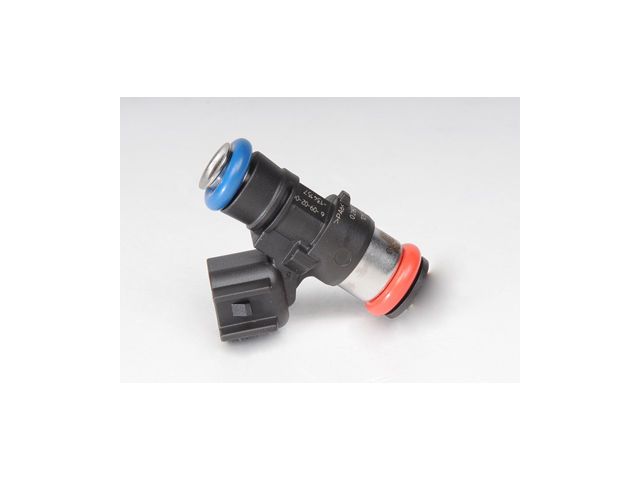
- Replacing fuel injectors when they are not the root cause. While high pressure can damage injectors, the cause of the pressure issue must be fixed first.
- Replacing the in-tank (low pressure) fuel pump. P0088 specifically relates to the high-pressure side of the system, although a low-side issue can sometimes contribute to erratic high-side behavior.
Most Likely Causes

- Failed High-Pressure Fuel Pump (HPFP) 🔴 High Probability The HPFP is a known wear item on the GM 3.6L direct injection engines. The internal pressure regulator can fail, or the internal seals can rupture, leaking fuel into the crankcase.
How to confirm: The most critical check is to pull the engine oil dipstick and smell it for gasoline. A strong fuel smell confirms an internal HPFP seal has failed. A scan tool can also show 'Actual Fuel Rail Pressure' far exceeding 'Desired Fuel Rail Pressure' at idle and under load. At idle, pressure should be around 3.5–5.5 MPa (508–798 psi).
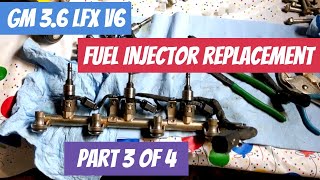
Typical fix: Replace the high-pressure fuel pump, the single-use high-pressure fuel line, and perform an engine oil and filter change to remove contaminated oil. 🎬 Watch this step-by-step guide to replacing the high-pressure fuel pump.
Est. part cost: $300-$600 - Faulty Fuel Rail Pressure Sensor 🟡 Medium Probability The sensor can fail electronically, sending an incorrect high-pressure signal to the ECM even if the actual pressure is normal.
How to confirm: Use a scan tool to monitor the fuel rail pressure reading with the engine off but ignition on. If the reading is maxed out or irrational (e.g., showing high pressure with zero actual pressure), the sensor is likely faulty. You can also compare the scan tool reading to a mechanical gauge; a significant difference points to a bad sensor.
Typical fix: Replace the fuel rail pressure sensor located on the fuel rail.
Est. part cost: $50-$150 - Wiring Harness Issue ⚪ Low Probability
How to confirm: Visually inspect the wiring and connector for the fuel rail pressure sensor. Look for any signs of damage, corrosion, chafing, or rodent activity. A short in the signal wire can cause a constant high reading.
Typical fix: Repair the damaged section of the wiring harness or replace the connector pigtail.
Est. part cost: $20-$50
Rare But Worth Checking
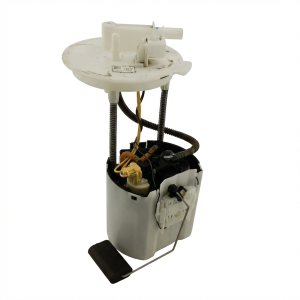
- Faulty In-Tank Fuel Pump: While rare, an issue with the low-pressure pump in the fuel tank could potentially cause erratic behavior in the high-pressure system, though it more commonly causes low-pressure codes (P0087). A failing low-side pump can sometimes cause the HPFP to work incorrectly.
- Fuel Contamination: GM Technical Service Bulletin #PIP5151F identifies fuel contamination (e.g., water, debris, or incorrect fuel type) as a potential cause for P0088 on some gasoline models, which can damage the HPFP or sensor. This bulletin notes that technicians may find P0088 alongside symptoms like hard starting, no starting, or rough running.
- Powertrain Control Module (PCM) Fault: This is extremely unlikely, but a software glitch or internal hardware failure in the engine computer could theoretically cause a false P0088 code. This should only be considered after all other possibilities have been exhausted.
Diagnosis Steps
- Connect an OBD-II scanner and confirm P0088 is present. Check for any other codes like P0087 or P0191.
- Monitor live data for 'Desired Fuel Rail Pressure' and 'Actual Fuel Rail Pressure'. Note the difference at idle and during a brief, gentle rev. A large, persistent positive deviation points to 🎬 Watch this professional diagnosis and repair of the P0088 code. a mechanical overpressure issue (likely HPFP).
- Turn the engine off. Pull the engine oil dipstick and smell it for a strong gasoline odor. If fuel is present, the High-Pressure Fuel Pump (HPFP) has failed internally. Do not start the engine again until it is replaced.
- If no fuel is in the oil, perform a sensor check. With the engine off and ignition on, observe the 'Actual Fuel Rail Pressure' reading. It should be low (near ambient pressure). If it reads high or is maxed out, the sensor or its wiring is faulty.
- If the sensor appears to be reading rationally, inspect the wiring harness and connector for the fuel rail pressure sensor for any visible damage or corrosion.
- If the wiring is intact and the pressure readings appear to be genuinely high (actual pressure is consistently much higher than desired), and no fuel is in the oil, the HPFP's internal regulator has likely failed. The HPFP assembly needs to be replaced.
Parts You'll Likely Need

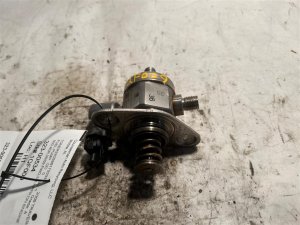
- High-Pressure Fuel Pump
(OEM #12641847 (also appears as ACDelco HPM1007))— This is the most common cause of P0088 on the 3.6L V6, either due to a failed internal regulator or a ruptured seal leaking fuel into the crankcase.
Trusted brands: ACDelco, Bosch
OEM price range: $400-$550
Aftermarket price range: $250-$400 - Fuel Rail Pressure Sensor
(OEM #12621292)— The sensor can fail and send incorrect high-pressure readings to the ECM, triggering the code even if the mechanical parts are fine.
Trusted brands: ACDelco, Bosch, Standard Motor Products
OEM price range: $80-$120
Aftermarket price range: $40-$80 - High-Pressure Fuel Pipe (Pump to Rail)
(OEM #12639208)— This is a single-use, torque-to-yield part that must be replaced any time the high-pressure fuel pump is removed or replaced to ensure a safe, leak-free seal.
Trusted brands: ACDelco
OEM price range: $30-$50
Related Codes That Often Appear With This One
- P0087 — Fuel Rail/System Pressure - Too Low. If the high-pressure pump or its regulator is failing erratically, it can cause pressure to swing from too high (P0088) to too low (P0087), often pointing towards a failing HPFP.
- P0191 — Fuel Rail Pressure Sensor Circuit Range/Performance. This code is a strong indicator that the sensor itself or its circuit is the problem, as it means the signal is irrational or stuck. It frequently accompanies P0088 when the sensor is the root cause.
- P0300-P0306 — Random or specific cylinder misfire codes can be triggered by incorrect fuel pressure causing poor combustion, either too rich from high pressure or from injector damage.
Technical Service Bulletins (TSBs) & Recalls
- 07-06-04-025H: Information on SIDI Engine High Pressure Fuel Pump and Injector Noise - This TSB clarifies that ticking sounds are a normal characteristic of the direct injection system and not a reason to replace components.
- PIP5151F: Mentions that fuel contamination can be a cause for P0088 on gasoline models, requiring a full system inspection. This bulletin notes that if contamination is found, the complete fuel system will need to be cleaned or replaced.
Platform-Specific Known Issues
- A known issue on GM 3.6L SIDI engines is the failure of the high-pressure fuel pump, which can lead to fuel contaminating the engine oil. This is a severe condition that requires immediate attention.
- GM issued a technical service bulletin (07-06-04-025H) to inform technicians that a ticking noise from the HPFP and injectors is normal for this direct-injection system and is not, by itself, a sign of a fault.
Mechanic-Grade Diagnostic Values

- Low-Pressure Fuel System (In-tank pump) — expected: 40-65 PSI (276-448 kPa) with Key On, Engine Off (KOEO). 40-47 PSI (276-324 kPa) with engine running at idle.. Failure: Pressure below 40 PSI indicates a weak in-tank pump or clogged filter, which can starve the HPFP and cause erratic high-side behavior.
- Fuel Rail Pressure Sensor (FRPS) Signal Voltage — expected: 0.5V to 4.5V. Voltage is proportional to pressure; it should be low (~0.5V) with KOEO and rise with engine running.. Failure: A voltage reading that is stuck high (e.g., 4.8V or 5.0V) regardless of engine state, or does not fluctuate at all, points to a failed sensor or a short in the signal wire.
- FRPS Connector Pinout Test (Connector unplugged, KOEO) — expected: A 3-pin connector should show: ~5.0V on the reference wire, 0V (good continuity to ground) on the ground wire, and 0V on the signal wire.. Failure: Absence of the 5V reference or a bad ground indicates a problem in the wiring harness or the ECM, not the sensor itself.
Scan Tool Commands That Help
- GDS2 (GM Global Diagnostic System): Fuel Pump Relay Command — Use this to manually activate the low-pressure in-tank fuel pump with the engine off. This allows for an isolated test of the low-pressure side with a mechanical gauge to confirm it meets the 40-65 PSI spec.
- GDS2 (GM Global Diagnostic System): Fuel Injector Balance Test — While not a direct test for P0088, if the vehicle also has misfire codes, this test can identify leaking injectors that might be contributing to fuel control problems. It measures the pressure drop in the rail as each injector fires.
- GDS2 (GM Global Diagnostic System): Module Setup / Reset Functions — After replacing a major component like the Fuel Pump Control Module (FPCM) or the ECM, a setup or reset function may be required to ensure the new module communicates correctly with the rest of the vehicle's systems.
Wiring & Ground Locations
- Fuel Rail Pressure Sensor (FRPS) Connector — On the driver's side fuel rail, located underneath the upper intake manifold. Access requires removing the manifold.. This is the primary sensor for the P0088 code. The connector and its wiring are common points of failure due to heat and vibration. A visual inspection for damage or corrosion is critical.
- Engine Block Grounds (e.g., G103, G105) — Bolted directly to the cylinder heads and engine block. A common location on GM V6 engines is on the rear or side of the cylinder heads.. The ECM and all its sensors, including the FRPS, rely on these grounds for accurate voltage readings. A loose, corroded, or oil-soaked ground can create a floating voltage, causing the FRPS to send an erroneously high signal to the ECM.
Model Year Variations Within This Range
- 2010-2011 vs 2012-2015: The 2010-2011 models use the LLT 3.6L V6, while 2012-2015 models use the updated LFX 3.6L V6. While the P0088 diagnosis is similar, some parts, particularly fuel injectors, are not interchangeable and have different electrical resistance values. Always verify parts using the VIN, paying attention to the 8th digit ('D' for LLT, '3' for LFX).
Diagnostic Flowchart
Other Known Issues on This Vehicle
Issues unrelated to this code that are worth knowing about as an owner of this generation:
- Premature Timing Chain Stretch (LLT Engine) 🔴 High — Common on 2010-2012 models, especially those with extended oil change intervals. Can occur as early as 60,000 miles. Triggers codes P0008, P0009, P0017. (Ref: TSB #12-06-01-009F)
- Intake Valve Carbon Buildup 🟠 Medium — A common issue for all direct injection (SIDI) engines, including the LLT and LFX. Becomes noticeable after 60,000-100,000 miles, causing rough idle, misfires, and reduced performance.
- Excessive Oil Consumption 🟠 Medium — Some 3.6L engines can consume oil at a rate higher than 1 quart per 2,000 miles due to PCV system issues or piston ring deposits, particularly under high-speed operation. (Ref: 10-06-01-008L)
- Key Stuck in Ignition 🟡 Low — Common on automatic transmission models. A faulty shifter interlock solenoid or a weak battery can prevent the key from being removed from the ignition.
- Water Pump Failure 🟠 Medium — The water pump on the 3.6L V6 is a known failure point, often leading to coolant leaks. Lifespan can vary, but failures around 80,000-120,000 miles are reported.
Used vs. New Parts: Buying Guide for This Vehicle
When a used part is the smart pick: For this repair, used parts are generally not recommended. A used Fuel Rail Pressure Sensor from a verified low-mileage vehicle is a possibility, but the low cost of a new part makes it a questionable value. Used wiring harness pigtails are a viable option if the connector is damaged.
Donor-vehicle mileage cap: roughly under 40000 miles for the part to have meaningful remaining life.
What to inspect on the donor part:
- For a sensor, ensure the donor vehicle had no fuel-related trouble codes.
- Check the connector for any signs of corrosion, melted plastic, or brittle wiring.
- Avoid parts from vehicles that show signs of sitting for long periods or have significant engine bay corrosion.
OEM-only on this vehicle (don't cheap out):
- High-Pressure Fuel Pump (HPFP): This is a critical, high-failure component. Used pumps carry a very high risk of premature failure or being faulty upon installation. Aftermarket quality is inconsistent, making OEM (ACDelco, Bosch) the safest choice to avoid repeat labor.
- High-Pressure Fuel Pipe: This is a one-time-use, torque-to-yield part and MUST be purchased new (OEM) any time it is disconnected to prevent dangerous high-pressure leaks.
Aftermarket brands forum-validated for this vehicle:
- ACDelco (OEM)
- Bosch (Often the OEM manufacturer)
Brands owners have reported issues with on this vehicle:
- Unbranded, 'white-box' parts from online marketplaces are a significant gamble for a component as critical as the HPFP.
Real Owner Stories
Aggregated from forums and TSBs cited above. Mileages and costs reflect what owners reported in those sources.
2010-2015 Chevrolet Camaro 3.6L V6
Symptoms: The Check Engine Light was accompanied by the engine entering a reduced power 'limp mode.' There was also a strong smell of raw gasoline coming from the engine bay and the engine oil.
What fixed it: Replacement of the high-pressure fuel pump (HPFP), the single-use high-pressure fuel line, and an engine oil and filter change to remove fuel-contaminated oil.
Source hint: camaro5.com forum discussions regarding HPFP failure and fuel in oil
Related OBD-II Codes
Frequently Asked Questions
I hear a constant ticking noise coming from the engine of my 2012 Camaro LFX. Is this a sign that my high-pressure fuel pump is failing and causing the P0088 code?
Can a P0088 code on my 3.6L Camaro be related to fuel getting into my engine oil?
What should I check first on my 2010-2015 Camaro if I get a P0088 code?
Are there any specific GM bulletins regarding fuel contamination and P0088?
What are the normal fuel pressure readings for the 3.6L V6 at idle?
Can I use a used high-pressure fuel pump from a salvage yard to fix this?
Helpful Videos
Used OEM Parts in Stock


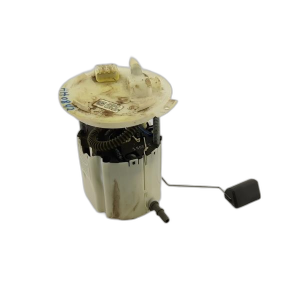
New Aftermarket Parts Available


The information in this article is provided for general reference and educational purposes only. Vehicle specifications, procedures, and part compatibility can vary by production date, trim level, and region. Always consult your vehicle's factory service manual and verify part numbers before purchasing or performing repairs. Safety-critical components such as airbags, seat belts, and braking systems should be installed by a qualified professional.
- Chevrolet Camaro:
- 🎬 Helpful Videos
- 🛍️ Shop This Part
- What's Unique About the 2010-2015 Chevrolet Camaro
- Symptoms You May Notice
- Most Likely Causes
- Rare But Worth Checking
- Diagnosis Steps
- Parts You'll Likely Need
- Related Codes That Often Appear With This One
- Technical Service Bulletins (TSBs) & Recalls
- Platform-Specific Known Issues
- Mechanic-Grade Diagnostic Values
- Scan Tool Commands That Help
- Wiring & Ground Locations
- Model Year Variations Within This Range
- Diagnostic Flowchart
- Other Known Issues on This Vehicle
- Used vs. New Parts: Buying Guide for This Vehicle
- Real Owner Stories
- 2010-2015 Chevrolet Camaro 3.6L V6
- Related OBD-II Codes
- Frequently Asked Questions
- 🎟️ Get 5% Off