

P0088 on 2007-2013 BMW 3 Series (N54/N55): Fuel Pressure Too High Causes & Fixes
On a 2007-2013 BMW 335i, code P0088 is most often caused by a faulty fuel rail pressure sensor giving a false high reading. The second most likely cause is a failing High-Pressure Fuel Pump (HPFP). Expect to pay $100-$200 for a sensor replacement (DIY-friendly) or over $1,000 for an HPFP replacement at a shop. Always diagnose the sensor first before condemning the expensive pump.
- P0088 means fuel pressure is too high in the high-pressure fuel rail.
- On a BMW 335i (N54/N55), suspect the fuel rail pressure sensor first. It's the most common cause and cheapest fix.
- Use a scan tool to compare 'requested' vs. 'actual' fuel pressure to determine if the fault is likely electrical (sensor) or mechanical (HPFP).
- Do not immediately replace the expensive High-Pressure Fuel Pump (HPFP) without ruling out the sensor and its wiring.
- Driving with this code can cause stalling and potential long-term engine damage, so address it promptly.
What's Unique About the 2007-2013 BMW 3 Series
The N54 and early N55 engines are famous for their high-pressure fuel system challenges. While the High-Pressure Fuel Pump (HPFP) is notoriously known for failures that cause *low* fuel pressure (P0087), its internal pressure control valve can also fail and cause the opposite problem—excessively high pressure. More commonly, however, the fuel rail pressure sensor itself fails, sending an incorrect high-voltage signal. Because of the HPFP's reputation, it's often misdiagnosed as the cause when the sensor is the real, and much cheaper, culprit. Always test the sensor before replacing the pump.
Generation note: This guide covers the E90 (Sedan), E91 (Wagon), E92 (Coupe), and E93 (Convertible) generation of the BMW 3 Series. The N54 engine (twin-turbo) was used from 2007-2010 in the 335i, and the N55 engine (single-turbo) was used from 2011-2013. Both engines use a similar high-pressure direct injection setup, and the causes for P0088 are largely the same. Early N55 engines (2011 and some early 2012 models) used an N54-style HPFP, sharing the same failure modes.
Symptoms You May Notice
- Check Engine Light and/or 'Engine Malfunction' warning on the iDrive screen.
- Vehicle enters 'limp mode' with drastically reduced engine power, especially under acceleration.
- Hesitation or sputtering during acceleration.
- Rough or unstable idle.
- Engine stalling, sometimes after a clicking noise or at a stop.
- Hard starting or long crank times.
- Noticeable decrease in fuel economy.
- Black smoke from the exhaust due to a rich fuel mixture.
- Replacing the High-Pressure Fuel Pump (HPFP) immediately. This is the most common and expensive mistake. A faulty sensor is more likely to cause P0088 and is much cheaper to replace. Always diagnose the sensor and wiring first.
- Ignoring DME software errors. Per TSB SIB 12 11 10, certain high-pressure faults (2FBE, 11A301, 2BEC) can be stored after the engine is shut off due to a software glitch. Replacing hardware for these specific, isolated codes is unnecessary.
Most Likely Causes
- Faulty Fuel Rail Pressure Sensor 🔴 High Probability The sensor is exposed to constant heat and pressure cycles at the back of the fuel rail. It can fail electronically, sending a false, maxed-out voltage signal to the DME, even when the actual pressure is low.
How to confirm: Use a BMW-capable scan tool to monitor live data. With the ignition on but the engine off, check the fuel rail pressure reading. If it shows a very high or maxed-out value (e.g., over 2000 PSI or 120+ bar) when the actual pressure should be near zero, the sensor is bad. A sensor that is 'stuck' on one value and doesn't fluctuate at all during idle is also a strong indicator of failure. A signal wire voltage stuck at ~5.0V is a definitive sign of a failed sensor or shorted wire.
Typical fix: Replace the fuel rail pressure sensor. It is located on the end of the high-pressure fuel rail. The job can be done without removing the intake manifold, but care must be taken to safely depressurize the rail first.
Est. part cost: $80-$150 - Failing High-Pressure Fuel Pump (HPFP) 🟡 Medium Probability The HPFP is a well-documented weak point on N54 and early N55 engines. While most failures result in low pressure, the internal mechanism that regulates fuel volume (fuel control valve) can stick or fail, causing the pump to deliver excessive pressure to the rail.
How to confirm: After confirming the fuel rail pressure sensor is working correctly, use a scan tool to log 'requested' vs. 'actual' fuel rail pressure while driving. If the actual pressure consistently and significantly exceeds the requested pressure, the HPFP's internal regulator is likely at fault. This diagnosis should only be made after ruling out the sensor.
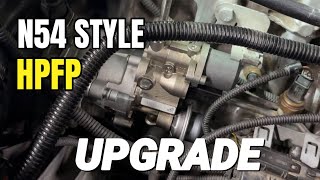
Typical fix: Replace the High-Pressure Fuel Pump. This is an involved repair that typically requires removing the intake manifold. 🎬 Watch: Step-by-step guide to replacing the N54-style high-pressure fuel pump. Using a Genuine BMW or OEM-remanufactured pump is highly recommended, as some owners report issues with aftermarket units.
Est. part cost: $500-$1200 - Wiring Harness Issue ⚪ Low Probability The engine cover and intake manifold area can provide a warm home for rodents, who may chew through the wiring for the fuel rail pressure sensor. This can cause a short circuit to power, resulting in a false high-pressure signal.
How to confirm: Visually inspect the wiring harness leading to the fuel rail pressure sensor for any signs of damage, fraying, or chewing. Use a multimeter to test for a short to power on the sensor's signal wire. A constant ~5V reading on the signal wire with the sensor unplugged points to a short.
Typical fix: Repair the damaged section of the wiring harness and protect it with automotive-grade tape or conduit.
Est. part cost: $10-$50
Rare But Worth Checking
- Faulty Engine Control Module (ECM/DME): This is extremely rare. Before condemning the DME, check for specific software-related faults. BMW TSB SIB 12 11 10 notes that faults like 2FBE, 11A301, and 2BEC can be stored erroneously by the DME software without any actual hardware failure. If these codes are present alone, the fix is to clear the codes and potentially update the DME software, not replace parts. A true hardware failure of the DME should only be considered after all other possibilities are exhausted.
- Blocked Fuel Return Line: While less common on this specific platform's high-pressure side, a restriction in a fuel return line could theoretically cause pressure to build up in the system. This is a very low probability cause for this code.
Diagnosis Steps
- Connect a BMW-capable OBD-II scanner (e.g., with ISTA or a robust aftermarket tool).
- Read and record all stored fault codes, paying close attention to BMW-specific codes alongside P0088.
- Access the live data stream. With the Ignition ON, Engine OFF, monitor 'Fuel Rail Pressure (Actual)'. If the value is high (e.g., >100 PSI), the sensor is faulty or its wiring is shorted. It should read close to ambient pressure.
- With KOEO, backprobe the fuel rail pressure sensor's signal wire. A reading of ~0.5V to 1.7V is normal. A reading stuck at ~5V indicates a bad sensor or a short to power.
- Start the engine and let it idle. Monitor 'Fuel Rail Pressure (Actual)' and 'Fuel Rail Pressure (Set/Requested)'.
- Observe the actual pressure. Is it tracking the requested pressure, or is it significantly higher? Is the reading stable or erratic? A reading that is stuck on one value is a sign of a bad sensor.
- If the sensor reading is suspect, disconnect its electrical connector. Inspect the connector and wiring for damage, corrosion, or signs of rodent activity.
- To safely replace the sensor, first depressurize the fuel system. The recommended method is to remove the fuse for the in-tank low-pressure fuel pump and run the engine until it stalls. Alternatively, a rag can be carefully used to catch fuel spray when loosening the sensor on a cold engine, but this carries a fire risk.
- If the sensor and wiring are confirmed to be good, but the actual pressure remains far above the requested pressure during operation, the High-Pressure Fuel Pump (HPFP) is the primary suspect.
Parts You'll Likely Need
- Fuel Rail Pressure Sensor
(OEM #13537620946)— This is the most frequent failure point for a P0088 code on this platform. It fails electronically and sends false high readings. It is a relatively simple and inexpensive part to replace.
Trusted brands: Bosch (OEM), Genuine BMW
OEM price range: $150-$200
Aftermarket price range: $80-$120 - High-Pressure Fuel Pump (HPFP)
(OEM #13517616170 (latest revision))— The second most likely cause. The pump's internal regulator can fail, causing it to over-pressurize the fuel rail. This is a well-documented failure item on N54/N55 engines. Previous revisions include: 13517616446, 13517613933, 13517594943.
Trusted brands: Genuine BMW, Bosch (OEM)
OEM price range: $800-$1200
Aftermarket price range: $500-$800
Related Codes That Often Appear With This One
- P0087 — Fuel Rail/System Pressure - Too Low. While opposite, seeing both P0087 and P0088 intermittently can point to a highly erratic HPFP or a failing sensor that is fluctuating wildly between open and shorted states.
- 29F2 — This is a BMW-specific code for 'Fuel High Pressure System, Fuel Pressure'. It is often the manufacturer-specific equivalent that accompanies the generic P0088.
- 2FBE, 11A301, 2BEC — These are BMW-specific codes for 'Fuel high pressure after engine stop'. According to TSB SIB 12 11 10, if these appear alone, they are likely due to a DME software error and should be cleared without component replacement.
Technical Service Bulletins (TSBs) & Recalls
- BMW SIB 12 11 10: Addresses erroneous high fuel pressure faults (2FBE, 11A301, 2BEC) stored after engine stop on N54 and N55 engines. It advises against replacing components if these are the only faults present, as it's a DME software issue.
Platform-Specific Known Issues
- The High-Pressure Fuel Pump (HPFP) on N54 and early N55 engines was subject to multiple recalls and a warranty extension (e.g., 10 years/120,000 miles), primarily for low-pressure failures (P0087), but it highlights the component's overall lack of reliability.
- Owner experiences strongly suggest that for critical components like the HPFP, using Genuine BMW or OEM parts is crucial for a lasting repair. A Reddit user with code 29F2 warned 'Don't buy a $200 pump off amazon, didn't work for me'.
Mechanic-Grade Diagnostic Values
- High-Pressure Fuel Rail Sensor Signal Voltage (KOEO) — expected: ~0.5V to 1.7V. Failure: A value stuck at or near 5.0V indicates a short to power or an internally shorted sensor. A value of 0V indicates an open circuit or loss of 5V reference.
- Low-Pressure Fuel System Pressure (via ISTA activation) — expected: Must reach at least 4.75 bar (68.9 PSI) within 20 seconds of pump activation.. Failure: Failure to reach this pressure indicates a weak low-pressure fuel pump (LPFP) or a faulty EKP control module.
- High-Pressure Fuel System Pressure (at idle) — expected: ~700-1300 PSI (approx. 50-90 bar), depending on engine temp and specific system.. Failure: Pressure significantly and consistently exceeding the DME's requested value after the sensor is confirmed good.
Hidden / Shadow Codes Worth Checking
- 29F2: Fuel high-pressure system, fuel pressure. This is the most common BMW-specific code that directly corresponds to a fuel pressure plausibility issue, either too high (P0088) or too low (P0087). (see via BMW-capable scan tools like ISTA, INPA, or advanced aftermarket tools (MHD, ProTool, etc.).)
- 11A401 / 11B401: Fuel high pressure during/after injection release: Pressure too low. These are often stored as shadow (inactive) codes and typically point to a failing HPFP or leaky injectors causing pressure to bleed off, resulting in long cranks. While they indicate low pressure, their presence helps build a case against the overall health of the HPFP. (see via Advanced BMW-capable scan tools that can read shadow fault memory.)
Scan Tool Commands That Help
- ISTA: Test Plan B1214_DI KDR - Fuel Pressure Control — This is the official, guided diagnostic procedure for any fuel pressure plausibility faults. It walks the technician through a series of checks to isolate the root cause of codes like P0088/29F2.
- ISTA: Call Up ECU Functions > Diagnostic Query > Low pressure fuel pump with activation — This command manually runs the in-tank low-pressure fuel pump for a set time. It is used to verify the health of the LPFP and its control module (EKPS) by checking if it can build and hold adequate pressure (~5 bar) to supply the HPFP.
- ISTA / ProTool / MHD: Reset Adaptations > High pressure fuel system — This function should be performed after replacing any major fuel system component like the HPFP or rail pressure sensor. It clears the learned values in the DME, allowing it to adapt to the new component's performance characteristics.
Wiring & Ground Locations
- Fuel Rail Pressure Sensor Connector — On the end of the high-pressure fuel rail, towards the firewall, underneath the intake manifold.. This 3-pin connector provides power, ground, and signal for the sensor. Corrosion or damage here can cause incorrect readings. It contains a 5V reference, a DME ground, and the signal wire. A short between the 5V reference and signal wire will cause a constant high reading, triggering P0088.
- X6454 — A main ground distribution stud on the cylinder head, near the firewall and the DME electronics box (E-box).. Multiple DME grounds and the fuel injector relay ground connect at this single point. A loose or corroded nut here can cause intermittent and difficult-to-diagnose electrical issues across the entire engine management system, including sensor signal faults that could potentially trigger a P0088.
- EKPS Module — The fuel pump control module is typically located under the rear seat cushion on the right (passenger) side, on top of the fuel tank access panel.. This module controls the low-pressure fuel pump. If it overheats or fails, it can cut power to the LPFP, starving the HPFP of fuel. While this usually causes low-pressure codes, erratic behavior could contribute to pressure instability.
Real Owner Repair Stories
- e90post.com forum user (2009 BMW 135i (N54) with JB4 tune) — Half engine light (limp mode) and codes 29E2 and 29F2 (fuel pressure plausibility) only at wide-open-throttle in higher gears (4th and up).
❌ Tried (didn't work) Initial thoughts were faulty injectors, spark plugs, or the HPFP itself.
✅ What actually fixed it The issue was resolved by adjusting a setting within the JB4 tune. The 'Fuel Open Loop' (FOL) value was lowered from 94 to 70 using the steering wheel controls. This indicates the tune was too aggressive for the fuel system's capability, causing the DME to see a pressure deviation and throw the code. No hardware was replaced. - Bimmerpost forum user (BMW E60 N54) — Car would intermittently die, often at a stop or in a drive-through. It would not crank for 5-25 minutes, then would magically start and drive fine for a while before repeating the issue. Fuel pump related codes were stored (2AAE, 2FCA).
❌ Tried (didn't work) The low-pressure fuel pump (in-tank) was replaced, but the problem returned the same day.
✅ What actually fixed it The symptoms pointed towards an overheating EKP (fuel pump control module). The module would get hot, shut down, and cut power to the fuel pump. After it cooled off for a few minutes, it would function again. The intermittent nature and recovery after a cool-down period were the key diagnostic clues.
OEM Part Supersession History
Multiple older revisions (e.g., 13517594943, 13517613933)→13517616170— Numerous revisions were made by BMW to address the high failure rate of the original HPFP designs. The latest part number represents the most reliable version available.
Heads up: The HPFP used on the N54 and early N55 (through 2011/early 2012) is NOT compatible with the pump used on later N55 engines (from early 2012 onward). The DME and wiring also changed, making a swap between the two styles impossible without extensive modification.
Model Year Variations Within This Range
- 2011-2012: A transition occurred in the N55 engine's fuel system. 2011 and some very early 2012 models used the N54-style HPFP (PN ending in 170). From early 2012 onwards, a new HPFP design was implemented which is not backward compatible. This is a critical distinction when ordering a replacement pump for an N55.
- 2011-2013: While N54 engines consistently included a low-pressure fuel sensor, its inclusion on N55 engines was inconsistent. Some early N55s have it, while many later ones do not. The absence of this sensor removes one data point for diagnosing the low-pressure side of the fuel system.
Diagnostic Flowchart
Real Owner Stories
Aggregated from forums and TSBs cited above. Mileages and costs reflect what owners reported in those sources.
BMW 135i (N54/N55)
Symptoms: Received a P0088 code after a dealership installed a new fuel pump and sensor.
What fixed it: The issue was ultimately resolved only after removing the replacement parts and installing a 'genuine bmw fuel pump'.
Source hint: Reddit r/BMW thread titled 'P0088 Code 135i'
BMW N54 Engine
Symptoms: Experienced an 'engine malfunction' warning on the iDrive screen, limp mode, and engine stalling.
What fixed it: Diagnosed as a failing high-pressure fuel pump (HPFP) by other forum members based on the specific failure patterns of the N54.
Source hint: 5post.com forum thread titled 'n54 engine malfuction! limp mode!! please help!!!'
BMW N54/N55
Symptoms: Experienced fuel pressure issues (code 29F2) and attempted to fix it with a cheap aftermarket pump, which did not work.
What fixed it: Advised using only Genuine BMW or OEM parts for the HPFP replacement, warning others not to buy cheap aftermarket alternatives.
Cost: $200
Source hint: Reddit user cited in article context regarding code 29F2
Related OBD-II Codes
Frequently Asked Questions
Does BMW SIB 12 11 10 apply to my N54/N55 engine for code P0088?
Is the High-Pressure Fuel Pump (HPFP) covered under warranty for the 2007-2013 BMW 3 Series?
Can I use an aftermarket High-Pressure Fuel Pump to fix P0088 on my 335i?
How do I safely depressurize the fuel system before replacing the fuel rail pressure sensor?
What voltage should the fuel rail pressure sensor signal wire read on my N54/N55?
Why does my iDrive screen show an 'Engine Malfunction' warning with this code?
Helpful Videos
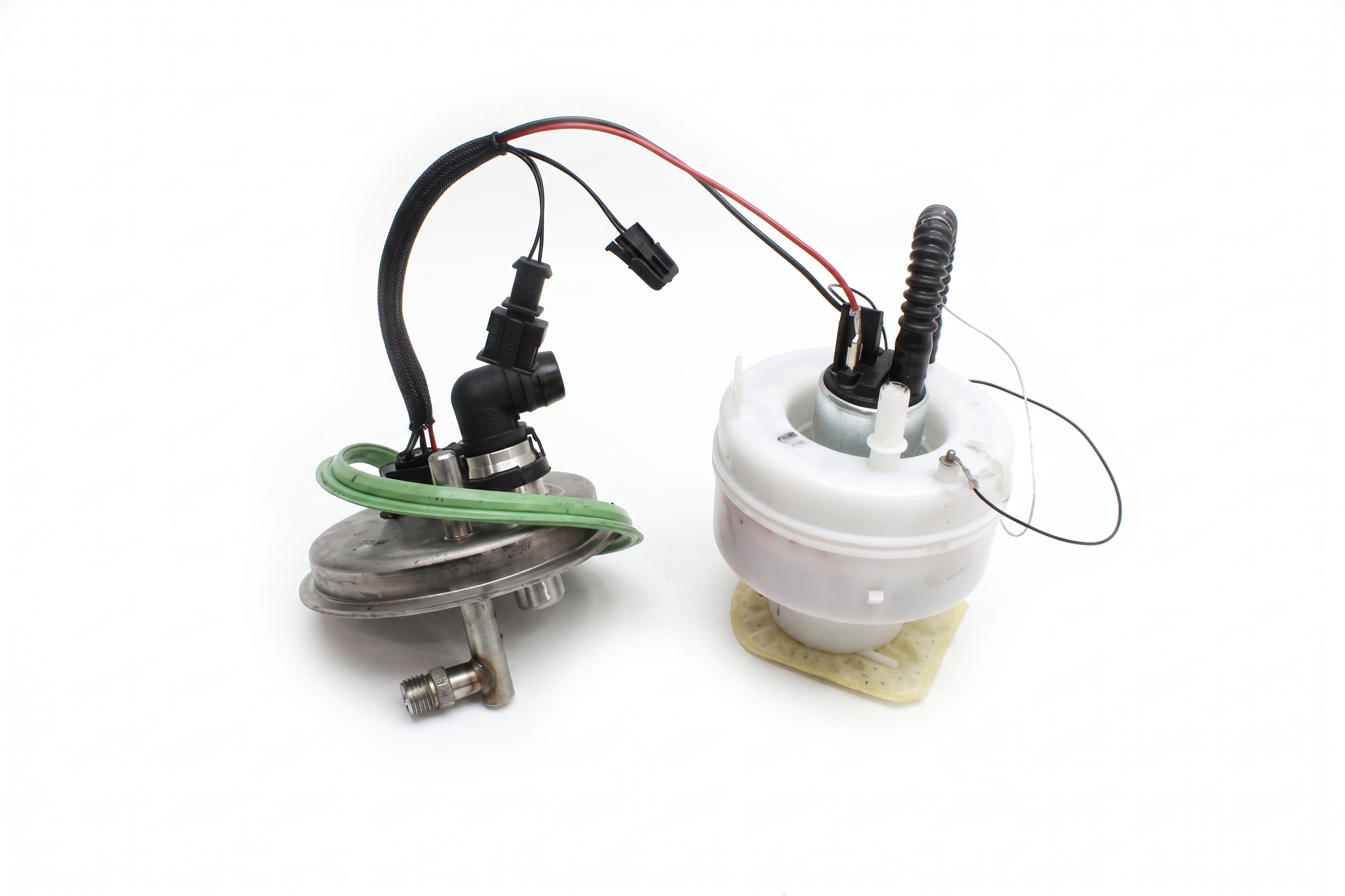
Used OEM Parts in Stock




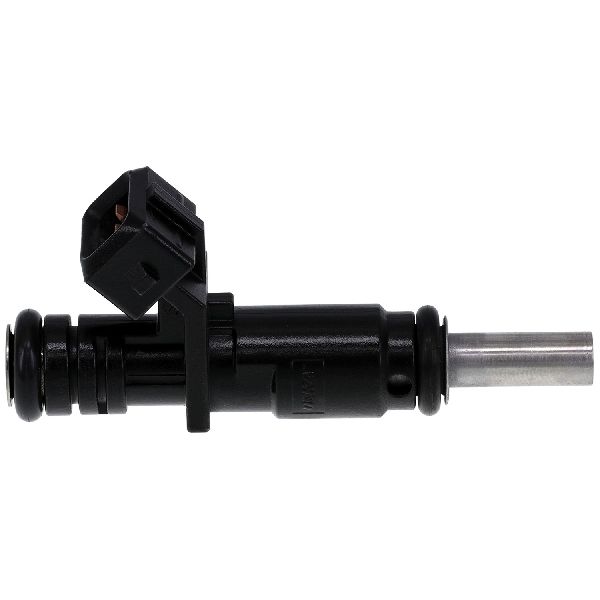
New Aftermarket Parts Available

The information in this article is provided for general reference and educational purposes only. Vehicle specifications, procedures, and part compatibility can vary by production date, trim level, and region. Always consult your vehicle's factory service manual and verify part numbers before purchasing or performing repairs. Safety-critical components such as airbags, seat belts, and braking systems should be installed by a qualified professional.
- BMW 3 Series:
- 🎬 Helpful Videos
- 🛍️ Shop This Part
- What's Unique About the 2007-2013 BMW 3 Series
- Symptoms You May Notice
- Most Likely Causes
- Rare But Worth Checking
- Diagnosis Steps
- Parts You'll Likely Need
- Related Codes That Often Appear With This One
- Technical Service Bulletins (TSBs) & Recalls
- Platform-Specific Known Issues
- Mechanic-Grade Diagnostic Values
- Hidden / Shadow Codes Worth Checking
- Scan Tool Commands That Help
- Wiring & Ground Locations
- Real Owner Repair Stories
- OEM Part Supersession History
- Model Year Variations Within This Range
- Diagnostic Flowchart
- Real Owner Stories
- BMW 135i (N54/N55)
- BMW N54 Engine
- BMW N54/N55
- Related OBD-II Codes
- Frequently Asked Questions
- 🎟️ Get 5% Off