

P0087 on 2015-2018 Porsche Macan: Fuel Pressure Too Low Causes and Fixes
On a 2015-2018 Porsche Macan, code P0087 is most often caused by a failing High-Pressure Fuel Pump (HPFP), which is a known issue on these direct-injection engines. Less common but related failures include a worn cam follower or, more rarely, the bolts for the HPFP backing out. This repair can be costly, often exceeding $1,500 at a shop. Less common causes include a weak in-tank low-pressure fuel pump or a cracked fuel filter flange, which is covered by a recall.
- P0087 on a V6 Macan points to a serious fuel delivery problem, most commonly the High-Pressure Fuel Pump (HPFP).
- Before starting any repairs, check if your vehicle has an open safety recall for the fuel system, as this could be the root cause and would be fixed for free by a dealer.
- Symptoms like engine hesitation, stalling, and a fuel smell should be taken seriously. Avoid driving the vehicle to prevent potential engine damage or a safety incident.
- When replacing the HPFP, it is crucial to also inspect and likely replace the cam follower to prevent a repeat failure.
- This is not a beginner-friendly DIY repair due to the high pressures involved and the need for accurate diagnosis.
What's Unique About the 2015-2018 Porsche Macan

The V6 engines in the Macan S, GTS, and Turbo models are sophisticated direct-injection units. While powerful, they place immense stress on the High-Pressure Fuel Pump (HPFP), which is mechanically driven by the camshaft. This design makes the HPFP and its cam follower common failure points leading to code P0087. A particularly unique and documented failure on this platform involves the HPFP mounting bolts shearing or backing out, causing a catastrophic failure of the pump and a major fuel leak. Additionally, this specific generation of Macan has been subject to multiple safety recalls (AH06 and ALA2) for leaking fuel pump flanges and lines, indicating a systemic vulnerability in the overall fuel delivery system.
Symptoms You May Notice
- Check Engine Light is on, sometimes with a flashing glow plug light on diesel models.
- Reduced engine power and acceleration, sometimes referred to as "limp mode", often triggered above 40 MPH.
- Engine hesitation or stumbling, especially when accelerating between 2,000 and 4,000 RPM or going uphill.
- Rough or unstable idle.
- Engine stalling and/or difficulty starting (long crank).
- Noticeable fuel smell around the vehicle, which could indicate a leak related to a recall or a failed HPFP.
- Replacing only the fuel pressure sensor without verifying fuel pressure with a mechanical gauge.
- Replacing the low-pressure fuel pump when the high-pressure pump is actually at fault.
- Replacing a fuel injector when the root cause is the HPFP, as one owner on a Carly forum experienced after spending €1000 on an injector with no resolution.
Most Likely Causes

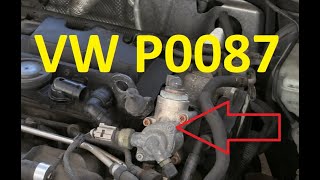
- High-Pressure Fuel Pump (HPFP) Failure 🔴 High Probability The HPFP is a known failure point on many direct-injection VAG engines, including the Porsche V6. It operates under extreme pressure and mechanical stress, leading to internal wear over time. In some cases, the bolts securing the pump can shear or back out, causing a sudden and catastrophic failure. A Reddit user with a 2016 Macan S described this exact scenario, where loose bolts led to the cam follower destroying the valve cover.
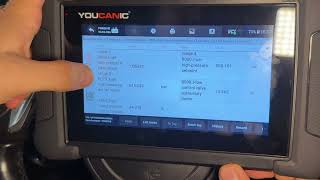
How to confirm: A technician will monitor fuel pressure data with a scan tool, comparing requested vs. actual rail pressure under load. 🎬 Watch: How to check fuel pressure using an OBD-II scanner. A significant deviation where actual pressure cannot meet the requested target points to a failing HPFP. A visual inspection may reveal fuel leaks around the pump. A critical check is to inspect the engine oil for a raw fuel smell, which indicates a failed internal seal in the pump.
Typical fix: Replace the High-Pressure Fuel Pump and the single-use fuel line connecting it to the rail. It is highly recommended to also replace the cam follower and mounting bolts at the same time.
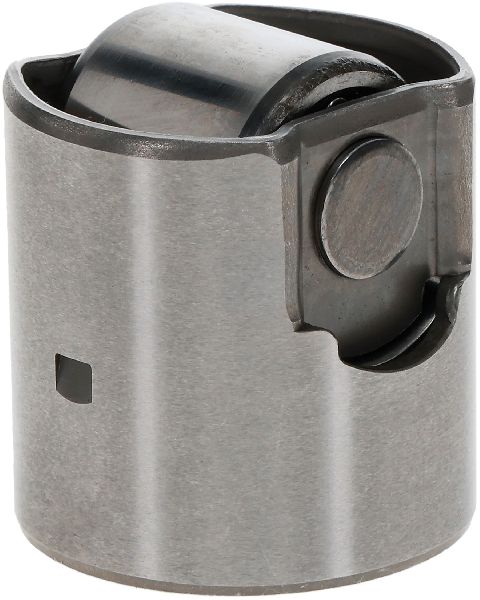
Est. part cost: $400-$900 - Worn Cam Follower 🟡 Medium Probability The cam follower is a small 'tappet' that sits between the camshaft and the HPFP plunger. It is designed as a wear item to protect the more expensive camshaft lobe. As it wears down, the HPFP's piston can't travel its full stroke, reducing its ability to build pressure. If it fails completely, it can cause catastrophic engine damage.
How to confirm: The HPFP must be removed to visually inspect the cam follower. If it is visibly dished, scored, or worn through, it needs replacement. The camshaft lobe that drives the pump should also be inspected for any scoring or abnormal wear at this time.
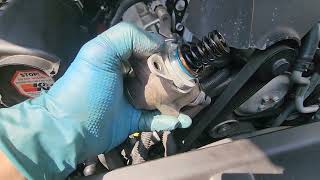
Typical fix: Replace the cam follower. This is often done preventatively whenever the HPFP is replaced. The OEM part number is 9A710931100. 🎬 See this walkthrough for replacing the high pressure fuel pump.
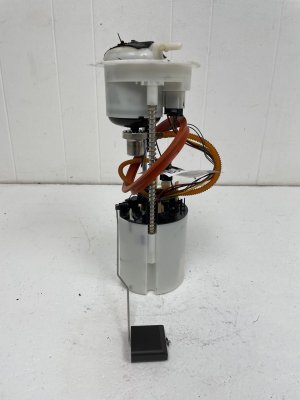
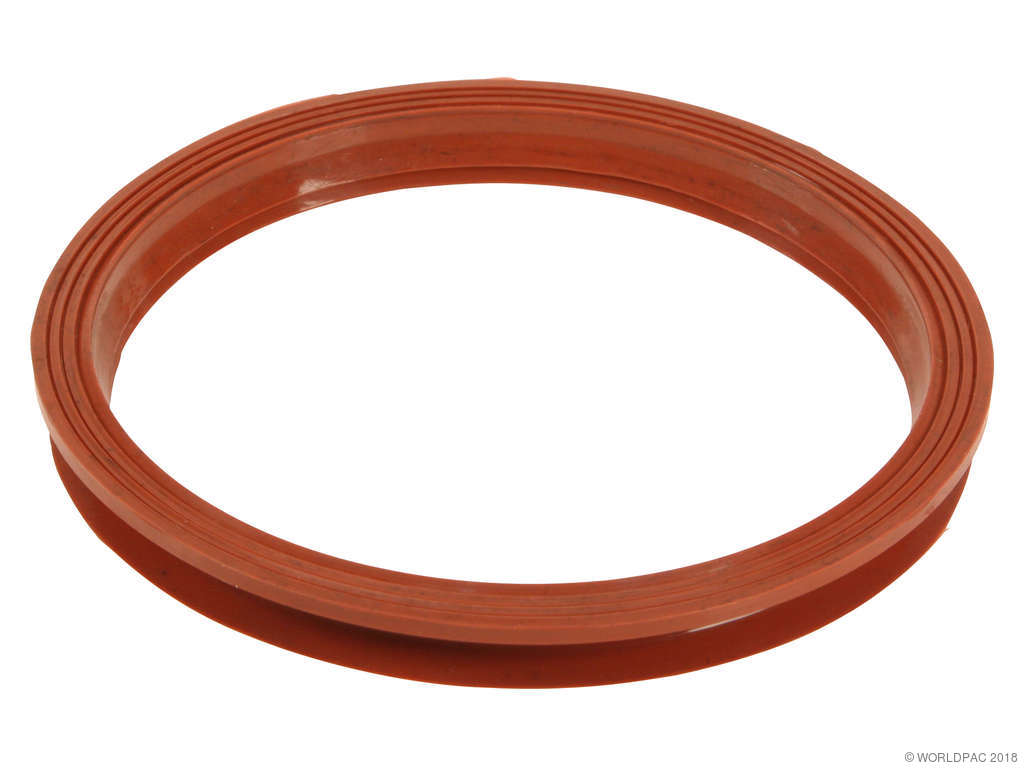
Est. part cost: $50-$100 - Failing Low-Pressure Fuel Pump (LPFP) or Cracked Flange 🟡 Medium Probability The in-tank LPFP must supply the HPFP with a steady volume of fuel. If the LPFP is weak, it starves the HPFP, causing high-pressure targets to be missed. More specific to the Macan, Porsche issued safety recalls (NHTSA 17V-289 / Porsche AH06 and NHTSA 20V-077 / Porsche ALA2) for 2015-2018 models because the fuel pump's filter flange could develop hairline cracks, causing a fuel leak and pressure loss.
How to confirm: Check the vehicle's VIN against Porsche's recall database. A visual inspection of the fuel pump flange (located under the rear seat) may show signs of cracking or fuel residue. A technician can test the low-pressure fuel system's pressure and volume to see if it meets specifications (typically 45-55 PSI). A whining noise from the fuel tank area is a common symptom of a failing LPFP.
Typical fix: Perform the recall service, which involves inspecting the flange and either replacing it or applying a protective film. If not recall-related, replace the in-tank low-pressure fuel pump module (OEM Part # 95B919051).
Est. part cost: $70-$600 - Clogged Fuel Filter ⚪ Low Probability While a standard maintenance item, a severely clogged 🎬 Watch: Common causes and fixes for the P0087 fault code. fuel filter can restrict flow enough to starve the HPFP. This is often a first-step diagnostic for owners experiencing P0087, as it's relatively inexpensive to replace.
How to confirm: If the service history of the fuel filter is unknown or overdue, it's a logical first replacement. Some owners on forums have noted that replacing the filter did not solve the P0087 code, which ultimately pointed to the HPFP.
Typical fix: Replace the fuel filter.
Est. part cost: $70-$150
Rare But Worth Checking
- Faulty Fuel Pressure Sensor: While less common than pump failure, the sensor that reads the rail pressure can fail and send incorrect low-pressure signals to the ECM. This can be diagnosed by comparing the sensor's live data reading on a scan tool to a mechanical gauge connected to the system.
- Leaking Fuel Injector: A fuel injector that is stuck open can cause a drop in rail pressure. This would typically be accompanied by other codes, such as a cylinder-specific misfire code (e.g., P0301-P0306) and a rich running condition.
Diagnosis Steps

- Use an OBD-II scanner to confirm P0087 is the primary code and check for any other related codes.
- Check the vehicle's VIN for open recalls related to the fuel system, specifically Porsche campaigns AH06 (NHTSA 17V-289) and ALA2 (NHTSA 20V-077).
- Inspect the engine oil dipstick and oil cap for a strong smell of raw gasoline. If present, this strongly suggests a failed internal seal on the HPFP. Do not run the engine further and prepare to replace the HPFP and change the oil.
- Connect a fuel pressure gauge to the low-pressure system to verify the in-tank pump is delivering the correct pressure (spec is ~45-55 PSI at idle). Compare this mechanical reading to the low-pressure sensor data on your scan tool.
- If the low-pressure system is healthy, the focus shifts to the high-pressure side. Using a capable scan tool, monitor the 'Fuel Rail Pressure (actual)' vs. 'Fuel Rail Pressure (specified)' while driving under load. A significant deviation where actual pressure lags behind specified pressure points to a high-pressure problem. At idle, a healthy system should show around 1740 PSI.
- Visually inspect the HPFP for any signs of fuel leakage or, in extreme cases, loose or sheared mounting bolts.
- Remove the High-Pressure Fuel Pump (HPFP) from the engine.
- Inspect the cam follower (tappet) for wear (dishing, scoring, cracks). This is a critical step.
- Inspect the camshaft lobe that drives the pump for any scoring or abnormal wear.
- Based on findings, replace the HPFP, cam follower, and/or LPFP as needed. Always use new single-use fuel lines and mounting bolts when replacing the HPFP.
Parts You'll Likely Need

- High-Pressure Fuel Pump (HPFP)
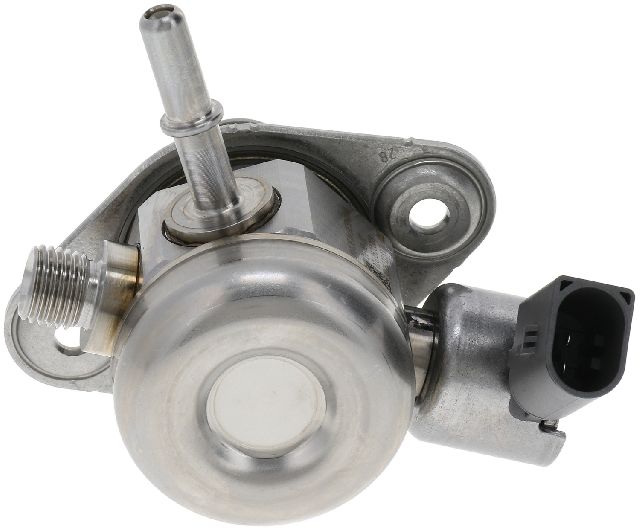
(OEM #94611031562 (supersedes 94611031561, 94611031560))— This is the most probable cause of P0087 on the Macan's direct-injection V6 engines due to the high stress it endures. The V6 engines use two of these pumps.
Trusted brands: Bosch, Hitachi, Genuine Porsche
OEM price range: $600-$900
Aftermarket price range: $250-$700 - HPFP Cam Follower
(OEM #9A710931100)— This is a critical wear item that protects the camshaft from the HPFP. It should always be replaced with the HPFP. Failure can lead to catastrophic engine damage.
Trusted brands: INA, Genuine Porsche
OEM price range: $50-$100
Aftermarket price range: $30-$60 - Low-Pressure Fuel Pump (In-tank)
(OEM #95B919051)— Can fail and starve the high-pressure system. Also, the flange is subject to a recall for cracking and leaks.
Trusted brands: VDO, Genuine Porsche
OEM price range: $400-$600
Aftermarket price range: $200-$350
Related Codes That Often Appear With This One
- P0300-P0306 — Random or cylinder-specific misfire codes can occur because the low fuel pressure leads to a lean air/fuel mixture and incomplete combustion.
- P0088 — Fuel Rail/System Pressure - Too High. Occasionally, a failing fuel pressure regulator or a faulty HPFP can cause erratic pressure spikes and drops, leading to both P0087 and P0088 codes being stored at different times.
- P020300 — A user on Rennlist reported that after replacing a fuel filter for a P0087 code, the code cleared but was replaced by P020300 (Cylinder 3 Injector Circuit Malfunction), indicating that fuel pressure issues can sometimes mask or lead to injector-specific faults.
Technical Service Bulletins (TSBs) & Recalls

- NHTSA 17V-289 / Porsche Recall AH06 - Repairing Filter Flange of the Fuel Pump.
- Porsche Recall ALA2 - Fuel Pump Flange Inspection/Replacement.
Platform-Specific Known Issues
- Recall AH06 (NHTSA 17V-289): Affects 2015-2017 models for potential hairline cracks on the fuel pump filter flange, which can cause fuel leaks and pressure loss.
- Recall ALA2: Affects 2015-2018 models where the fuel pump service cover could contact and crack the fuel pump flange.
- Low-Pressure Fuel Line Recall: Some 2015 Macan S and Turbo models were recalled for a possible leak in the low-pressure fuel line in the engine bay.
Mechanic-Grade Diagnostic Values
- Low-Pressure Fuel System Pressure at Idle — expected: 45 to 55 PSI. Failure: Pressure below this range indicates a problem with the in-tank pump or filter. Pressure should also hold steady after engine shutoff.
- High-Pressure Fuel Rail Pressure at Idle (Live Data) — expected: Approximately 1740 PSI (120 bar). Failure: Significantly lower pressure, or pressure that does not rise quickly with RPM, points to a failing HPFP or worn cam follower.
- Fuel Pressure Sensor Voltage (General) — expected: Typically 0.5V at low pressure and 4.5V at high pressure.. Failure: Voltage that is stuck, erratic, or does not correspond to mechanically measured pressure suggests a faulty sensor or wiring.
- Low-Pressure Fuel Sensor Tightening Torque — expected: 20 Nm (15 ftlb.). Failure: N/A - This is a service specification, not a diagnostic value. Incorrect torque can lead to leaks or damage.
Hidden / Shadow Codes Worth Checking
- 16471/P0087/000135: This is the VAG-specific fault code format for 'Fuel Rail/System Pressure: Too Low' that may be displayed on advanced scanners like VCDS or PIWIS. (see via VAG-COM (VCDS), PIWIS, or other professional European vehicle scanners.)
Scan Tool Commands That Help
- PIWIS (Porsche Dealer Tool): No HPFP Adaptation Reset — This is a critical piece of information for technicians. Unlike some other brands or even other Porsche engines, a Rennlist user with PIWIS confirmed there is no specific adaptation or learning procedure to run after replacing the High-Pressure Fuel Pump on the Macan V6. The system is self-adapting.
- PIWIS (Porsche Dealer Tool): Fuel System Short Tests (Idle, Low, High Load) — These guided function tests can be used to command the fuel system to specific states and observe the actual pressure response, helping to isolate whether the low or high-pressure side is failing to meet demand under specific load conditions.
Wiring & Ground Locations
- Low-Pressure Fuel Line & Sensor (G410) — In the engine compartment. Access requires removing the main plastic engine design cover and the rear section of the trim panel at the front right of the engine bay.. This is the physical location for testing the low-pressure feed to the HPFPs. A leak in this line was subject to recall AF06, and the sensor (VAG ID: G410) provides the low-pressure reading to the ECM.
Real Owner Repair Stories
- Reddit user post in r/PorscheMacan (2016 Porsche Macan S, approx. 82,000 miles) — Symptoms of high-pressure fuel pump failure.
✅ What actually fixed it The shop discovered the bolts on the HPFP had come loose, which 'sent the cam follower through the valve cover, cracking the whole part.' The final repair involved a new HPFP assembly, a new valve cover, and gaskets, with a total cost between $1,400 and $1,800. - Reddit user post in r/Porsche (2017 Porsche Macan S, 67,000 miles) — Heavy fuel smell, Check Engine Light, smoke/vapor from under the hood.
✅ What actually fixed it The owner discovered the Torx bolts holding the HPFP had sheared off and were gone, and a piece of the pump gasket/flange was missing, causing a major fuel leak. The fix was replacing the HPFP with a new kit. - NHTSA ODI #11443174 — An owner of a related Porsche model reported a sudden failure on the roadway requiring a tow; diagnostic codes included P0087 (Fuel rail system pressure too low - short to plus) alongside misfire codes P0301 and P0302.
"I Checked Everything" — The Actual Cause
- A Rennlist user with a 3.6L engine (similar architecture) experienced a long crank time with no fault codes, and their PIWIS scanner showed that both low and high fuel pressures were fine and tracking the setpoints. Despite the 'clean' diagnostic data, they proactively replaced the HPFP, cam follower, and pressure sensor, which completely solved the long-crank issue. This indicates a mechanical wear issue was present that was not severe enough to consistently trip a code or show up during a static data check.
OEM Part Supersession History
06H906051G→06H906051J— This is the part number for the low-pressure fuel sensor (G410). Part numbers are frequently superseded for revisions or manufacturer changes.TSB 2027458/01-11-19 (VW)→Improved Fuel Pressure Sensor (G410)— A Technical Service Bulletin was issued for related 2.0L TFSI VAG engines for an improved fuel pressure sensor. While not specific to the Macan V6, it indicates a history of sensor issues within the VAG family that could be relevant.
Diagnostic Flowchart
Real Owner Stories
Aggregated from forums and TSBs cited above. Mileages and costs reflect what owners reported in those sources.
2016 Porsche Macan S — 82000 miles
Symptoms: Loose HPFP mounting bolts led to the cam follower being sent completely through the valve cover.
What fixed it: Replaced the High-Pressure Fuel Pump, cam follower, and valve cover at an independent shop.
Cost: $1400-$1800
Source hint: Reddit: 2016 Macan S HPFP Failure Cost
2017 Porsche Macan S
Symptoms: Catastrophic HPFP failure where the mounting bolts sheared off entirely, causing a massive fuel leak and smoke billowing from the engine bay.
What fixed it: Replaced the High-Pressure Fuel Pump and mounting hardware.
Source hint: Reddit: 2017 Macan S High Pressure Fuel Pump??!
Porsche Cayenne Diesel
Symptoms: Vehicle went into limp mode with a P0087 code.
What fixed it: Diagnosed as an injector issue after initially attempting a fuel filter change.
Source hint: Rennlist: P0087 Fuel High Pressure too low
Porsche Owner Report (NHTSA ODI #11443174)
Symptoms: The vehicle experienced a sudden failure on the roadway and required a tow. Diagnostic scan revealed error code 2838-P0087 (Fuel rail system pressure too low - short to plus) along with cylinder misfire codes P0301 and P0302.
What fixed it: Towed to dealer for diagnostic and repair of the high-pressure fuel system.
Source hint: NHTSA ODI #11443174
Related OBD-II Codes
Frequently Asked Questions
Does my 2015-2018 Porsche Macan have any recalls related to the P0087 code?
I smell raw gas in my engine oil. Is this related to P0087?
Should I replace the cam follower when replacing the HPFP on my Macan V6?
My 2016 Macan S has a P0087 code and I smell fuel under the hood. What could it be?
What should the fuel pressure readings be on my Macan to diagnose P0087?
Will replacing the fuel filter fix the P0087 code on my Macan?
Helpful Videos

Used OEM Parts in Stock


New Aftermarket Parts Available



The information in this article is provided for general reference and educational purposes only. Vehicle specifications, procedures, and part compatibility can vary by production date, trim level, and region. Always consult your vehicle's factory service manual and verify part numbers before purchasing or performing repairs. Safety-critical components such as airbags, seat belts, and braking systems should be installed by a qualified professional.
- Porsche Macan:
- 🎬 Helpful Videos
- 🛍️ Shop This Part
- What's Unique About the 2015-2018 Porsche Macan
- Symptoms You May Notice
- Most Likely Causes
- Rare But Worth Checking
- Diagnosis Steps
- Parts You'll Likely Need
- Related Codes That Often Appear With This One
- Technical Service Bulletins (TSBs) & Recalls
- Platform-Specific Known Issues
- Mechanic-Grade Diagnostic Values
- Hidden / Shadow Codes Worth Checking
- Scan Tool Commands That Help
- Wiring & Ground Locations
- Real Owner Repair Stories
- "I Checked Everything" — The Actual Cause
- OEM Part Supersession History
- Diagnostic Flowchart
- Real Owner Stories
- 2016 Porsche Macan S — 82000 miles
- 2017 Porsche Macan S
- Porsche Cayenne Diesel
- Porsche Owner Report (NHTSA ODI #11443174)
- Related OBD-II Codes
- Frequently Asked Questions
- 🎟️ Get 5% Off