

P0087 on 2022-2026 Jeep Compass: Low Fuel Pressure Causes & Fixes
For a 2022-2026 Jeep Compass, code P0087 often points to a faulty high-pressure fuel pump (HPFP) on the 1.3L engine or a failing in-tank low-pressure pump. A software issue requiring a PCM update is also a known cause for the 1.3L. A dealer visit is recommended for diagnosis, as TSBs address these specific possibilities.
- P0087 on a 2022-2026 Compass is a serious code that indicates dangerously low fuel pressure.
- Do not immediately replace parts. The first step should be to check with a dealer for any required PCM software updates as per TSB #1810623.
- The most common hardware failures are the high-pressure fuel pump (HPFP) and the in-tank (low-pressure) fuel pump.
- This code is often accompanied by misfire codes (P030x) due to the engine running lean.
- Due to the complexity and safety risks of high-pressure fuel systems, professional diagnosis is strongly recommended.
What's Unique About the 2022-2026 Jeep COMPASS
The 2022-2026 Jeep Compass uses modern turbocharged direct-injection engines (both 1.3L and 2.0L). These systems operate under very high fuel pressure and are sensitive to disruptions. Jeep has issued several Technical Service Bulletins (TSBs) for this specific code. For the 1.3L engine, TSBs point to a software glitch requiring a PCM reflash (TSB 18-106-23) or a failing high-pressure fuel pump (HPFP). For the 2.0L engine, issues with the in-tank low-pressure pump are a more common cause of P0087. This makes dealer-level diagnostics particularly important to avoid replacing unnecessary parts.
Diagnostic Flowchart
Tap your situation to follow the diagnostic path that matches what you're seeing on this vehicle.
Symptoms You May Notice
- Check Engine Light is on
- Engine hesitates, sputters, or bogs down, especially during acceleration.
- Reduced engine power or entering "limp mode" (limited RPMs).
- Engine stalls, sometimes unexpectedly while driving or turning.
- Difficulty starting the engine or extended cranking time.
- Rough or unstable idle.
- Loud whining or humming noise from the rear of the vehicle, near the fuel tank (indicates a failing low-pressure pump).
- Replacing the fuel pressure sensor when the high-pressure fuel pump (HPFP) is actually at fault.
- Replacing the high-pressure fuel pump (HPFP) when the in-tank low-pressure pump is the actual weak point.
- Replacing fuel pumps when the actual issue is a software glitch that requires a PCM reflash (specifically on the 1.3L engine).
Most Likely Causes
- Failing High-Pressure Fuel Pump (HPFP) 🔴 High Probability A specific TSB was issued for the 2022-2024 Compass with the 1.3L Turbo engine for HPFP failure causing P0087, P0088, or P0089. High-pressure pumps are a common failure point in many direct-injection engines due to the high stress they operate under.
How to confirm: A technician monitors fuel rail pressure with a scan tool. If the actual pressure fails to meet the desired pressure under load, and the low-pressure system is confirmed to be working, the HPFP is suspect. The TSB provides a specific diagnostic path.
Typical fix: Replacement of the high-pressure fuel pump.
Est. part cost: $400-$800 - PCM Software Calibration Issue (1.3L Engine) 🔴 High Probability TSB #18-106-23 explicitly states that for some 2022 Compass models with the 1.3L engine, a PCM reprogram is the required fix for P0087. This suggests the original software's logic for monitoring fuel pressure was too sensitive.
How to confirm: A Jeep dealership or a qualified shop with access to OEM software (wiTECH) can check your VIN against TSB #18-106-23 to see if the update is needed.
Typical fix: Reprogramming the Powertrain Control Module (PCM) with the latest manufacturer software.
Est. part cost: $0-$250 - Failing In-Tank (Low-Pressure) Fuel Pump 🟡 Medium Probability The high-pressure pump can't do its job if it isn't supplied with enough fuel from the in-tank pump. A weak in-tank pump will starve the HPFP, causing P0087. This is a documented issue on the 2.0L engine shared with the Dodge Hornet and Alfa Romeo Tonale. Forum discussions show owners replacing other components first, only to find this was the root cause.
How to confirm: Test the low-pressure fuel system pressure at the inlet of the high-pressure pump. It should meet the manufacturer's specification (typically 58-64 PSI). A loud whine from the tank is a strong audible clue.
Typical fix: Replace the in-tank fuel pump module.
Est. part cost: $250-$500 - Faulty Fuel Rail Pressure Sensor 🟡 Medium Probability The sensor provides the data that triggers the code. It can fail by sending inaccurate low-pressure readings to the PCM, even if the pressure is normal. However, this is often misdiagnosed when the pump is the real issue. 🎬 Watch: Common causes and fixes for the P0087 code
How to confirm: Compare the sensor's reading on a scan tool with a reading from a mechanical pressure gauge. If the readings differ significantly, the sensor is likely faulty. This is difficult on high-pressure rails and often not feasible for DIY. 🎬 See expert advice on fixing low fuel rail pressure
Typical fix: Replace the fuel rail pressure sensor.
Est. part cost: $70-$150 - Clogged Fuel Filter or Restricted Fuel Line ⚪ Low Probability While less common on newer vehicles, a clogged filter can restrict flow to the high-pressure pump. The main fuel filter is integrated with the in-tank fuel pump module on these models and is considered non-serviceable separately.
How to confirm: Diagnosed by testing fuel pressure and volume from the low-pressure pump. A significant drop from the pump outlet to the HPFP inlet suggests a restriction.
Typical fix: Replace the in-tank fuel pump assembly/module which contains the filter.
Est. part cost: $250-$500
Rare But Worth Checking
- Leaking Fuel Injector(s): A TSB for the 1.3L engine mentions that P0087 can be caused by leaking fuel injectors, which would cause a drop in rail pressure. This would often be accompanied by misfire codes (P0300-P0304).
Diagnosis Steps
- Check for Technical Service Bulletins (TSBs). For the 1.3L engine, check for TSB #18-106-23 (PCM update) and the HPFP TSB. For the 2.0L, be aware of platform-mate issues with the low-pressure pump.
- Connect an OBD-II scanner to view live data. Monitor "Desired Fuel Rail Pressure" and "Actual Fuel Rail Pressure" PIDs while driving under load.
- If actual pressure is significantly lower than desired, 🎬 Watch this video to understand and fix fuel pressure problems a real pressure loss is occurring.
- Listen for a loud whine from the fuel tank area, which strongly suggests a failing low-pressure pump.
- If a TSB for a software update applies to your VIN, this should be the first step.
- Test the low-pressure fuel system. Ensure the in-tank pump is providing adequate pressure (typically 59 psi ± 5 psi) to the high-pressure pump.
- If the low-pressure side is healthy, the problem is more likely with the high-pressure fuel pump (especially on 1.3L), the fuel rail pressure sensor, or a leaking injector.
- Inspect for any visible fuel leaks in the engine bay, particularly around the high-pressure fuel pump and fuel rail.
Parts You'll Likely Need
- High-Pressure Fuel Pump (1.3L Engine)
(OEM #K68637277AA)— This is a known failure point on the 1.3L engine, specifically addressed by a TSB.
Trusted brands: Mopar
OEM price range: $1075
Aftermarket price range: $400-$700 - In-Tank Fuel Pump Module (2.0L Engine)
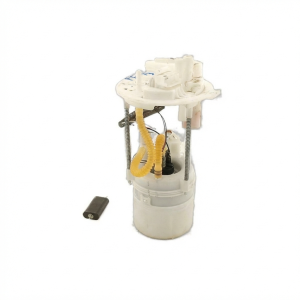
(OEM #68437981AA)— The low-pressure pump feeds the high-pressure pump. If it weakens, it can cause P0087. This is a common failure point on the 2.0L engine platform.
Trusted brands: Mopar, Denso
OEM price range: $400-$600
Aftermarket price range: $250-$450 - Fuel Rail Pressure Sensor
(OEM #4752889AB)— This sensor reports the pressure to the PCM and can fail, sending incorrect data and triggering the code. It is used on multiple Stellantis engines including the 1.3L Turbo.
Trusted brands: Mopar, Bosch, Delphi
OEM price range: $70-$102
Aftermarket price range: $40-$80
Related Codes That Often Appear With This One
- P0088 — This code for "Fuel Rail Pressure Too High" can appear alongside P0087, as mentioned in TSB #1810623 and another TSB for the 1.3L HPFP, indicating erratic fuel pressure regulation.
- P0300, P0301, P0302, etc. — These are cylinder misfire codes. Insufficient fuel pressure leads to a lean air-fuel mixture, which causes misfires. TSB #14-009-25 REV. D directly links P0087 with these codes.
- P0089 — This code for "Fuel Pressure Regulator Performance" is also listed in the TSB for HPFP failure on the 1.3L engine, pointing to the same root cause.
Technical Service Bulletins (TSBs) & Recalls
- Bulletin #1810623: For some 2022 Compass models with the 1.3L engine, this TSB involves reprogramming the PCM to correct logic that could falsely trigger P0087 or P0088.
- Bulletin #14-009-25 REV. D: Links P0087 with multiple cylinder misfire codes (P0300, P0301, etc.), indicating insufficient fuel pressure is causing a lean condition and misfires.
- Unnamed TSB for 1.3L HPFP: A TSB addresses high-pressure fuel pump failure on 1.3L engines, causing P0087, P0088, and P0089.
Platform-Specific Known Issues
- For the 1.3L engine, a PCM software update (TSB #18-106-23) may be the first and only required fix.
- The high-pressure fuel pump is a known failure item on the 1.3L engine, specifically addressed in a TSB for vehicles built on or before September 16, 2024.
- For the 2.0L engine, the in-tank (low-pressure) fuel pump is a more likely culprit, an issue it shares with its platform-mates, the Dodge Hornet and Alfa Romeo Tonale.
Mechanic-Grade Diagnostic Values
- Low-Pressure Fuel System Pressure — expected: 407 KPa ± 34 KPa (59 psi ± 5 psi). Failure: Pressure is significantly below 54 psi when measured at the fuel rail (with HPFP disabled) or at the HPFP inlet.
- Fuel Rail Pressure Sensor Voltage (Key On, Engine Off) — expected: Approximately 0.5V. Failure: Voltage is stuck at 0V, 5V, or does not change when pressure should be changing.
- Fuel Rail Pressure Sensor Voltage (Engine Idling) — expected: Approximately 1.3V - 1.7V. Failure: Voltage is significantly outside this range at idle, suggesting the sensor is misreading the stable idle pressure.
Scan Tool Commands That Help
- wiTECH or equivalent professional scan tool: Fuel Pump Relay Actuation / Fuel Pump Control ON (100%) — This command forces the in-tank (low-pressure) fuel pump to run continuously, allowing a technician to safely measure its maximum pressure and listen for abnormal noises without the engine running.
- wiTECH or equivalent professional scan tool: Fuel Injector Kill / Cylinder Power Balance — While not a direct test for P0087, if a leaking injector is suspected (as noted in TSB #14-009-25), this function can help identify which cylinder's injector is faulty by deactivating them one by one and observing changes in fuel pressure or engine smoothness.
OEM Part Supersession History
68368228AA, 68368228AB→68368228AD— Part revision and improvement by the manufacturer.
Heads up: This part is for the older 2.4L engine and should not be confused with the pump for the 2.0L Turbo (68437981AA).
Model Year Variations Within This Range
- 2023-2026: The in-tank fuel pump module for the 2.0L Turbo engine is part number 68437981AA, which is shared with the Dodge Hornet. This part is distinct from the pumps used in earlier Compass models with the 2.4L or 1.3L engines.
Helpful Videos

We Have This Part in Stock



The information in this article is provided for general reference and educational purposes only. Vehicle specifications, procedures, and part compatibility can vary by production date, trim level, and region. Always consult your vehicle's factory service manual and verify part numbers before purchasing or performing repairs. Safety-critical components such as airbags, seat belts, and braking systems should be installed by a qualified professional.
- Jeep COMPASS:
- 🎬 Helpful Videos
- 🛍️ Shop This Part
- What's Unique About the 2022-2026 Jeep COMPASS
- Diagnostic Flowchart
- Symptoms You May Notice
- Most Likely Causes
- Rare But Worth Checking
- Diagnosis Steps
- Parts You'll Likely Need
- Related Codes That Often Appear With This One
- Technical Service Bulletins (TSBs) & Recalls
- Platform-Specific Known Issues
- Mechanic-Grade Diagnostic Values
- Scan Tool Commands That Help
- OEM Part Supersession History
- Model Year Variations Within This Range
- 🎟️ Get 5% Off