

P0087 on 2015-2022 GMC Canyon 3.6L: Causes for Low Fuel Rail Pressure
On a 2015-2022 GMC Canyon with the 3.6L V6, code P0087 is most often caused by a failing high-pressure fuel pump (HPFP) or a weak in-tank low-pressure fuel pump. A key diagnostic step is to check the engine oil for a fuel smell, which strongly points to a bad HPFP leaking internally. Other possibilities include a corroded fuel pressure sensor connector or, less commonly, a clogged in-tank fuel filter.
- P0087 on the 3.6L Canyon is a serious code that makes the vehicle unsafe to drive due to the risk of stalling.
- The two most likely causes are a failed High-Pressure Fuel Pump (HPFP) or a failed in-tank low-pressure fuel pump.
- A strong smell of gasoline in the engine oil is a tell-tale sign of a failed HPFP.
- GM has issued a TSB (#18-NA-103) for the in-tank pump failing in cold weather and a recall (#18268) for faulty HPFPs on certain model years.
- Proper diagnosis with a scan tool that can read both low and high-pressure fuel systems is essential to avoid replacing the wrong part.
What's Unique About the 2015-2022 GMC Canyon
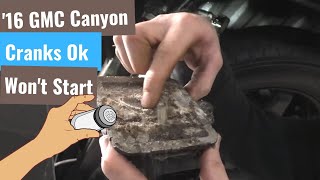
The 3.6L V6 (both LFX and LGZ versions) in the Canyon is notorious for two specific P0087 failure points. The first is the high-pressure fuel pump (HPFP), which is a common failure item across many GM models using this engine, often confirmed by a gasoline smell in the engine oil. The second is the in-tank low-pressure pump, which GM has acknowledged can fail in cold weather (below 20°F / -6°C) per TSB 18-NA-103, causing a no-start condition and setting this code. 🎬 Watch: Diagnosing a Canyon that cranks but won't start. Because there are two common but distinct failure points, proper diagnosis with a scan tool that can read both low-side and high-side pressure is critical to avoid replacing the wrong expensive pump. A third common issue is corrosion at the fuel pressure sensor connector, addressed by TSB 20-NA-197.
Generation note: This guide covers the second generation of the GMC Canyon (2015-2022). This period includes two versions of the 3.6L V6 engine: the LFX (2015-2016) and the updated LGZ (2017-2022). While part numbers for the high-pressure fuel pump may differ, the common causes and diagnostic procedures for P0087 are largely the same for both engines. The LGZ engine is generally considered to have an improved timing chain design over the LFX.
Symptoms You May Notice
- Check Engine Light is on
- Reduced Engine Power message displayed
- Engine hesitation or stumbling, especially during acceleration
- Hard starting or extended cranking time
- Rough or rolling idle
- Engine stalling unexpectedly
- Strong smell of gasoline in the engine oil on the dipstick
- Loud whining noise from the fuel tank, especially in cold weather (indicates in-tank pump issue)
- Replacing the in-tank fuel pump when the high-pressure fuel pump was the actual cause, or vice-versa. This happens when diagnosis is attempted without a scan tool that can monitor both low-side and high-side pressure readings independently.
- Replacing a fuel pump when the actual issue was a corroded electrical connector at the fuel rail pressure sensor, as outlined in TSB #20-NA-197.
Most Likely Causes
- Failing High-Pressure Fuel Pump (HPFP) 🔴 High Probability The HPFP on the 3.6L V6 is a known failure point across multiple GM platforms. A safety recall (GM #18268 / NHTSA #18V358) was issued for some 2016-2018 models due to improperly welded pumps that could crack and leak fuel. Internal seal failure is also common, leading to fuel-in-oil contamination.
How to confirm: Use a scan tool to monitor desired vs. actual fuel rail pressure; if actual pressure drops significantly under load while low-side pressure remains stable, the HPFP is suspect. The most definitive sign is smelling gasoline in the engine oil, which indicates the pump's internal seal has failed and is leaking fuel into the crankcase.
Typical fix: Replace the high-pressure fuel pump, its gasket, and the single-use high-pressure fuel line. 🎬 See these helpful tips for removing the high-pressure pump. An oil change is mandatory if the oil is contaminated with fuel.
Est. part cost: $200-$500 - Failing In-Tank (Low-Pressure) Fuel Pump 🔴 High Probability GM issued Technical Service Bulletin (TSB) #18-NA-103 for this pump failing, especially in temperatures below 20°F (-6°C), causing a no-start or stall and setting code P0087. Owners report the issue can sometimes be temporarily resolved by moving the truck into a heated garage, confirming the temperature-related failure.
How to confirm: Use a scan tool to monitor low-side fuel pressure. If the pressure is below specification (typically should be stable around 40-75 PSI) or is erratic, the in-tank pump is likely at fault. The issue may only appear during cold starts or in cold weather.
Typical fix: Replace the entire in-tank fuel pump module. 🎬 Watch: Step-by-step tutorial for replacing the in-tank fuel pump. The fuel filter is integrated into this module and is not serviced separately.
Est. part cost: $150-$350 - Corroded Fuel Rail Pressure Sensor Connector 🟡 Medium Probability GM TSB #20-NA-197 addresses this specific issue for 2016-2021 models. The sensor connector, located near the firewall, is susceptible to moisture and fretting corrosion, which can cause erratic signals that the ECM interprets as low pressure.
How to confirm: Visually inspect the fuel pressure sensor's electrical connector for any green or white corrosion or backed-out pins. The TSB recommends gently dragging a terminal test tool across the pins to check for fretting corrosion, which may not be visible.
Typical fix: Clean the connector and pins, apply dielectric grease, and ensure a secure connection. If corrosion is severe or the terminals have lost tension, the connector pigtail must be replaced.
Est. part cost: $20-$60 for a new pigtail connector
Rare But Worth Checking
- Clogged Fuel Filter: The fuel filter is part of the in-tank fuel pump module. While a clog can cause P0087, it's less common than outright pump failure. A clog necessitates replacing the entire fuel pump module.
- Fuel Contamination: Per TSB #PIP5151F, water, debris, or incorrect fuel (like E85) can cause low fuel pressure and trigger P0087. If contamination is found, the entire fuel system may require cleaning.
- Worn Camshaft Lobe: The HPFP is driven by a dedicated lobe on the camshaft. Excessive wear on this lobe can reduce the pump's stroke, leading to insufficient pressure. This is a rare mechanical failure but possible at higher mileage and should be inspected when replacing the HPFP.
Diagnosis Steps
- Connect an OBD-II scanner and confirm P0087 is present. Check for any other related codes and review freeze frame data.
- Using a scan tool with live data, monitor 'Low Side Fuel Pressure' (in-tank pump) and both 'Fuel Rail Pressure' and 'Desired Fuel Rail Pressure' (high-pressure pump) at idle and during a brief test drive (if safe).
- Check the engine oil dipstick for a strong smell of gasoline. If fuel is present, the High-Pressure Fuel Pump (HPFP) has failed and is the primary suspect. The oil must be changed along with the pump.
- If there is no fuel in the oil, evaluate the fuel pressure readings. Low-side pressure should be stable and within 40-75 PSI. If it's low or erratic, suspect the in-tank pump, especially if the ambient temperature is low.
- If low-side pressure is stable and within spec, but the 'Fuel Rail Pressure' cannot meet the 'Desired Fuel Rail Pressure' under acceleration (e.g., drops significantly while desired pressure is 2000+ PSI), suspect the HPFP.
- Inspect the fuel rail pressure sensor electrical connector for corrosion, per TSB #20-NA-197. Check for moisture, green/white powder, or loose terminals.
- Check the vehicle's VIN against GM Recall #18268 (NHTSA #18V358) to see if it was affected by the faulty HPFP weld issue.
- If all pumps and sensors appear to be functioning, consider the possibility of a restricted fuel line or, in rare high-mileage cases, a worn camshaft lobe for the HPFP.
Parts You'll Likely Need
- High-Pressure Fuel Pump (HPFP)
(OEM #12691088 (Supersedes 12673750, 12673141, 12647366, 12733944))— This is a very common failure point on the 3.6L V6 engine that directly causes low high-side fuel pressure and can contaminate the engine oil.
Trusted brands: ACDelco, Bosch, GM Genuine
OEM price range: $300-$500
Aftermarket price range: $200-$400 - In-Tank Fuel Pump Module Assembly
(OEM #13552980 (Verify by VIN))— This low-pressure pump is known to fail, especially in cold weather as documented in TSB #18-NA-103, leading to fuel starvation for the HPFP.
Trusted brands: ACDelco, Delphi
OEM price range: $250-$400
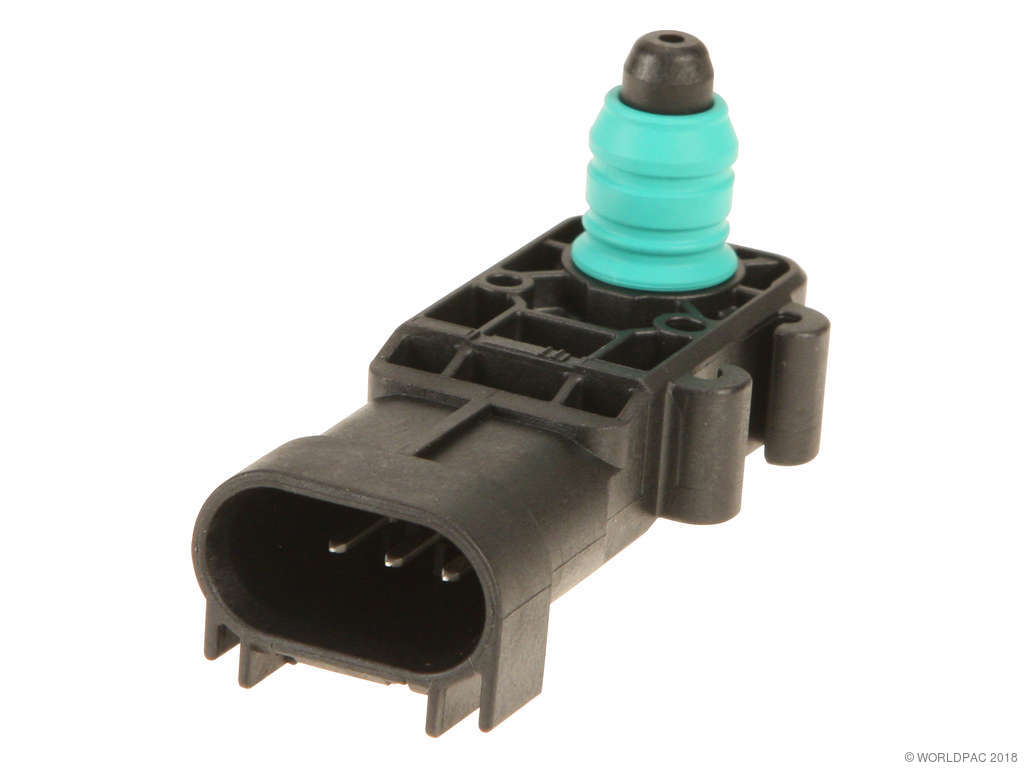
Aftermarket price range: $150-$250 - Fuel Rail Pressure Sensor
(OEM #12673322 (Verify by VIN))— Though less common than pump failure, the sensor can fail or its connector can corrode (per TSB #20-NA-197), sending false low-pressure signals to the ECM.
Trusted brands: ACDelco, Bosch
OEM price range: $50-$100
Aftermarket price range: $30-$70 - Fuel Pump Control Module (FPCM)
(OEM #13537053 (Verify by VIN))— This module controls the voltage to the in-tank pump. Corrosion is a common failure mode due to its location on the frame rail, leading to a no-start or low fuel pressure.
Trusted brands: ACDelco, Dorman
OEM price range: $80-$150
Aftermarket price range: $50-$100
Related Codes That Often Appear With This One
- P0191 — This code for 'Fuel Rail Pressure Sensor Circuit Range/Performance' often appears with P0087, especially when the issue is related to a faulty sensor or corroded connector, as noted in TSB #20-NA-197.
- P0088 — This code for 'Fuel Rail Pressure Too High' can appear alongside P0087 if a failing component (like the pressure sensor or HPFP) is causing wild, erratic pressure swings.
- P018B — This is another fuel pressure sensor code that TSB #18-NA-103 lists as potentially appearing with P0087 during cold-weather in-tank pump failures.
- P2635 — This code for 'Fuel Pump 'A' Flow Performance' points directly to the low-pressure side and is often set in conjunction with P0087 when the in-tank pump is failing, as mentioned in TSB #18-NA-103.
Technical Service Bulletins (TSBs) & Recalls
- GM #18268 / NHTSA #18V358: Safety recall for improperly welded high-pressure fuel pumps on 2016-2018 models that could crack, leak fuel, and cause a fire.
- TSB #18-NA-103: Addresses the in-tank (low-pressure) fuel pump failing in cold temperatures, causing a stall or no-start with code P0087.
- TSB #20-NA-197: Details a procedure for inspecting and repairing corrosion at the fuel pressure sensor electrical connector, which can cause P0087 and other codes.
- TSB #PIP5151F: Discusses how fuel system contamination can lead to various fuel pressure codes, including P0087.
Platform-Specific Known Issues
- Cold Weather No-Start: A very common complaint is a crank-no-start condition or stalling immediately after starting in temperatures below 20°F. This is almost always caused by the in-tank fuel pump failing, as described in TSB 18-NA-103.
- Fuel in Oil: Owners on forums frequently report discovering engine oil that smells strongly of gasoline. This is a tell-tale sign of HPFP internal seal failure on the 3.6L V6 and requires immediate attention to avoid engine damage.
Mechanic-Grade Diagnostic Values
- Low-Pressure Fuel System Pressure (In-tank pump) — expected: 40-75 PSI at idle.. Failure: Pressure is consistently below 40 PSI, is erratic, or drops out completely.
- High-Pressure Fuel System Pressure (HPFP) — expected: 500-600 PSI at idle; 2,000-2,800 PSI under load (LGZ engine).. Failure: Scan tool 'Actual' pressure fails to meet 'Desired' pressure during acceleration.
- Fuel Rail Pressure Sensor Signal Voltage (Key On, Engine Off) — expected: 1.5V to 1.8V on the signal wire.. Failure: Voltage is 0V, 5V, or significantly outside the expected range, indicating a sensor or wiring fault.
- Fuel Rail Pressure Sensor Reference Voltage — expected: 5.0V.. Failure: Voltage is missing or low, indicating a problem with the ECM or wiring.
Hidden / Shadow Codes Worth Checking
- U0109: 'Lost Communication with Fuel Pump Control Module'. While not a shadow code, its presence alongside P0087 strongly points to a failure of the FPCM or its wiring, rather than the pump itself. (see via Standard OBD-II scanner.)
Scan Tool Commands That Help
- GDS2 / Tech2: Fuel Pump Driver / Control Module Test — This bidirectional command directly activates the low-pressure in-tank fuel pump circuit. It helps isolate a fault between the control side (ECM/FPCM) and the mechanical pump itself. If the pump runs with this command, the pump is likely good.
- GDS2 / Tech2: Live Data Graphing: Desired vs. Actual Fuel Rail Pressure — This is the primary diagnostic screen for P0087. Graphing both values allows a technician to see the exact moment the actual pressure deviates from the ECM's command, especially under load, to confirm a performance deficit of the HPFP.
- GDS2: Command Max Rail Pressure at Idle — This function tests the health of the high-pressure pump. A healthy pump should be able to achieve maximum commanded pressure even at idle. If it cannot, and the low-pressure supply is confirmed good, the HPFP is likely weak.
Wiring & Ground Locations
- Fuel Pump Control Module (FPCM) — On the left (driver's side) rear outer frame rail, located between the front and rear doors, often behind a cover.. This module controls the in-tank fuel pump. Its location makes it highly susceptible to corrosion from road salt and moisture, which can cause it to fail and cut power to the low-pressure pump, directly causing a P0087 code and often a U0109.
- Fuel Rail Pressure Sensor Connector — On the high-pressure fuel rail, near the firewall at the back of the engine.. As outlined in TSB 20-NA-197, this connector is prone to fretting corrosion, which creates a poor connection and causes the ECM to receive an incorrect low-pressure signal, triggering P0087 and other related codes.
Real Owner Repair Stories
- South Main Auto Repair (YouTube) (2016 GMC Canyon, engine not specified but behavior is consistent with 3.6L fuel system.) — Crank, no start. No fuel pressure.
❌ Tried (didn't work) Initial scan showed code P12A6 (Fuel Pump Driver Control Module Enable Circuit Performance). Scan tool bidirectional tests of the fuel pump circuit passed, suggesting the wiring was okay.
✅ What actually fixed it The Fuel Pump Control Module (FPCM) located on the frame rail was found to be extremely corroded ('crusty'). Replacing the FPCM restored power to the in-tank fuel pump and fixed the no-start condition. The new module was plug-and-play with no programming required for this model.
OEM Part Supersession History
12647366, 12673141, 12673750, 12733944→12691088— Standard part evolution by GM to improve reliability or manufacturing.
Model Year Variations Within This Range
- 2015-2016 (LFX Engine): Uses a different High-Pressure Fuel Pump and potentially different fuel injector part numbers compared to the 2017+ LGZ engine. While the failure modes are the same, part numbers must be verified by VIN.
- 2017-2022 (LGZ Engine): Features an updated 3.6L V6 (LGZ). The high-pressure fuel system can operate at slightly higher pressures (up to 2,800 PSI). Part numbers for the HPFP and injectors are specific to this engine version.
- 2016-2021: These model years are specifically called out in TSB #20-NA-197 regarding potential corrosion at the fuel rail pressure sensor connector.
Diagnostic Flowchart
Other Known Issues on This Vehicle
Issues unrelated to this code that are worth knowing about as an owner of this generation:
- 8-Speed Transmission Shudder (TCC Shudder) 🔴 High — Very common on 2017-2019 models with the 8L45 transmission. Can occur at various mileages. (Ref: TSB #18-NA-355 recommends a specific transmission fluid flush with an updated fluid (Mobil 1 Synthetic LV ATF HP).)
- Premature Timing Chain Stretch (LFX Engine) 🔴 High — A well-known issue on the earlier LFX (2015-2016) engines, typically appearing between 70,000 and 120,000 miles. Less common on the updated LGZ engine.
- Carbon Buildup on Intake Valves 🟠 Medium — Inherent to all direct-injection engines, including the LFX/LGZ. Becomes noticeable after 80,000-100,000 miles, causing potential misfires or reduced performance.
- Thermostat and Coolant Temperature Sensor Failure 🟠 Medium — A frequently reported issue on the LGZ engine, causing check engine lights and incorrect temperature readings.
- Active Fuel Management (AFM) Lifter Failure 🟠 Medium — Can cause misfires, particularly on specific cylinders like #2 and #5. TSB #21-NA-036 addresses a related oil control valve solenoid that can fail and lead to misfires. (Ref: TSB #21-NA-036)
Used vs. New Parts: Buying Guide for This Vehicle
When a used part is the smart pick: A used Fuel Pump Control Module (FPCM) can be a viable option, especially if sourced from a dry, non-salt-belt region to minimize the risk of corrosion. Connectors and wiring pigtails are also excellent candidates for used parts. A used HPFP can be considered if from a low-mileage, collision-damaged vehicle, but it carries risk.
Donor-vehicle mileage cap: roughly under 75000 miles for the part to have meaningful remaining life.
What to inspect on the donor part:
- For HPFP: Inspect the roller tappet at the bottom for scoring or wear. Check the electrical connector for damage. Avoid pumps showing signs of external fuel leaks (staining).
- For FPCM: Inspect the casing for swelling or cracks. Check connector pins for any green or white corrosion. Ensure the donor vehicle is from a rust-free climate.
- For In-Tank Pump: This is risky. Only consider from a very low-mileage vehicle, as pump life is finite.
OEM-only on this vehicle (don't cheap out):
- High-Pressure Fuel Pump (HPFP): While some aftermarket brands exist, the OEM ACDelco/GM Genuine pump has the most proven track record. Given the labor to replace it, using a questionable aftermarket part is a significant risk.
- Fuel Rail Pressure Sensor: OEM (ACDelco/Bosch) is strongly recommended to ensure accurate readings and avoid chasing phantom issues.
Aftermarket brands forum-validated for this vehicle:
- ACDelco (often the OEM supplier)
- Bosch (often the OEM supplier for sensors and pumps)
- Delphi (reputable for in-tank fuel pumps)
Brands owners have reported issues with on this vehicle:
- Unbranded, no-name HPFPs from online marketplaces should be avoided. The failure rate is high, and the potential for engine damage from a catastrophic failure or fuel leak is not worth the initial savings.
Real Owner Stories
Aggregated from forums and TSBs cited above. Mileages and costs reflect what owners reported in those sources.
2016-2018 GMC Canyon 3.6L V6
Symptoms: The high-pressure fuel pump was improperly welded, leading to cracks and potential fuel leaks.
What fixed it: Replacement of the high-pressure fuel pump under GM Recall #18268 / NHTSA #18V358.
Source hint: GM #18268 / NHTSA #18V358
2017 GMC Canyon 3.6L V6 — ~85000 miles
Symptoms: Crank-no-start condition and stalling immediately after starting when temperatures dropped below 20°F.
What fixed it: Replacement of the in-tank fuel pump module as per TSB #18-NA-103.
Source hint: TSB #18-NA-103
2019 GMC Canyon 3.6L V6
Symptoms: Check engine light with P0087 and erratic fuel pressure readings caused by moisture and fretting corrosion at the sensor connector near the firewall.
What fixed it: Cleaning the connector pins and applying dielectric grease, or replacing the pigtail connector if terminals lost tension.
Source hint: TSB #20-NA-197
2016 GMC Canyon 3.6L V6 — ~95000 miles
Symptoms: Strong smell of gasoline on the oil dipstick and reduced engine power message.
What fixed it: Replacement of the High-Pressure Fuel Pump (HPFP), the single-use high-pressure fuel line, and a mandatory oil change.
Source hint: ColoradoFans.com Forum Discussions
Related OBD-II Codes
Frequently Asked Questions
My 2017 GMC Canyon is hesitating and showing 'Reduced Engine Power.' Is there a recall for the fuel pump?
My Canyon won't start when it's below 20°F, but starts fine in a heated garage. What is the cause?
I smell gasoline when I check my oil dipstick on my 3.6L V6. Is this related to P0087?
Does TSB #20-NA-197 apply to my 2021 GMC Canyon?
If I replace my High-Pressure Fuel Pump, do I need to change the oil?
Can I just replace the fuel filter to fix P0087 on my 2015-2022 Canyon?
Helpful Videos

Used OEM Parts in Stock


New Aftermarket Parts Available


The information in this article is provided for general reference and educational purposes only. Vehicle specifications, procedures, and part compatibility can vary by production date, trim level, and region. Always consult your vehicle's factory service manual and verify part numbers before purchasing or performing repairs. Safety-critical components such as airbags, seat belts, and braking systems should be installed by a qualified professional.
- GMC Canyon:
- 🎬 Helpful Videos
- 🛍️ Shop This Part
- What's Unique About the 2015-2022 GMC Canyon
- Symptoms You May Notice
- Most Likely Causes
- Rare But Worth Checking
- Diagnosis Steps
- Parts You'll Likely Need
- Related Codes That Often Appear With This One
- Technical Service Bulletins (TSBs) & Recalls
- Platform-Specific Known Issues
- Mechanic-Grade Diagnostic Values
- Hidden / Shadow Codes Worth Checking
- Scan Tool Commands That Help
- Wiring & Ground Locations
- Real Owner Repair Stories
- OEM Part Supersession History
- Model Year Variations Within This Range
- Diagnostic Flowchart
- Other Known Issues on This Vehicle
- Used vs. New Parts: Buying Guide for This Vehicle
- Real Owner Stories
- 2016-2018 GMC Canyon 3.6L V6
- 2017 GMC Canyon 3.6L V6 — ~85000 miles
- 2019 GMC Canyon 3.6L V6
- 2016 GMC Canyon 3.6L V6 — ~95000 miles
- Related OBD-II Codes
- Frequently Asked Questions
- 🎟️ Get 5% Off