

P0087 on 2012-2014 Ford Edge 2.0L EcoBoost: Low Fuel Rail Pressure Causes and Fixes
On a 2012-2014 Ford Edge with the 2.0L EcoBoost engine, code P0087 is most often caused by a failing high-pressure fuel pump (HPFP). Other potential causes include a faulty fuel rail pressure sensor or a weak in-tank low-pressure pump. Expect to replace the HPFP and its cam follower, costing between $300 and $700+ for parts. DIY difficulty is high due to the high-pressure fuel system and the need for specialized tools.
- P0087 on your Edge almost always points to a failure in the high-pressure fuel system.
- The most likely cause is a failed High-Pressure Fuel Pump (HPFP), but you should always test the fuel rail pressure sensor first to avoid a costly misdiagnosis.
- Whenever you replace the HPFP, you MUST also replace the inexpensive cam follower (tappet) to prevent a repeat failure and protect your engine's camshaft.
- Do not drive the vehicle. A sudden stall in traffic is a significant risk.
- Check for safety recall 13S13, which involves a fuel line that can crack and leak, posing a fire hazard.
What's Unique About the 2012-2014 Ford Edge
The 2.0L EcoBoost engine, like other GDI engines, has two fuel pumps: a low-pressure pump in the tank and a high-pressure fuel pump (HPFP) driven by the camshaft. Code P0087 on this platform almost always points to a problem with the high-pressure side. The mechanical HPFP and its cam follower are known failure points, often leading to a sudden and severe loss of power under acceleration as the pump can no longer meet the fuel demand commanded by the computer. Unlike some other EcoBoost platforms where a low-pressure sensor is the primary culprit, on the Edge, the HPFP itself is a more frequent cause.
Symptoms You May Notice
- Severe loss of power, especially during acceleration or when climbing hills
- Engine hesitation or sputtering
- Long crank time (engine turns over for a while before starting)
- Rough or unstable idle
- Engine stalling, sometimes unexpectedly
- Check Engine Light illuminated
- Wrench light may appear on the dashboard 🎬 Watch an expert explain the common causes for code P0087.
- Replacing the High-Pressure Fuel Pump (HPFP) when only the Fuel Rail Pressure Sensor is bad. Always test the sensor's readings first, as it is a much cheaper and easier repair.
- Replacing only the HPFP without replacing the worn cam follower. A worn follower will quickly damage a new pump.
- Assuming the HPFP is bad when the low-pressure fuel pump is failing to supply it with enough fuel. Always verify low-side pressure before condemning the expensive high-pressure pump.
Most Likely Causes
- Failing High-Pressure Fuel Pump (HPFP) 🔴 High Probability The HPFP is a mechanical pump that is a common failure point on this engine platform, leading directly to low pressure under load. Mechanical wear over time is the primary reason for failure.
How to confirm: Use a scan tool to monitor 'Desired Fuel Rail Pressure' vs. 'Actual Fuel Rail Pressure'. During a test drive, accelerate moderately. If 'Actual' pressure fails to rise with 'Desired' pressure and instead drops, the HPFP is the primary suspect. Also, check the engine oil for a strong smell of gasoline, which indicates a failed internal seal in the pump is leaking fuel into the crankcase.
Typical fix: Replace the high-pressure fuel pump. It is critical to also replace the cam follower (tappet) at the same time.
Est. part cost: $250-$600 - Worn HPFP Cam Follower (Tappet) 🔴 High Probability The cam follower is a small metal bucket that rides on the camshaft lobe to drive the HPFP. It is a known wear item. If it wears through, it can no longer effectively drive the pump and can cause catastrophic damage to the camshaft.
How to confirm: Physical inspection is required. After removing the HPFP, the cam follower can be pulled out and inspected for wear on its contact surface. Any visible indentation, scoring, or wear through the black coating means it has failed.
Typical fix: Replace the cam follower. This part is inexpensive and should always be replaced whenever the HPFP is serviced to prevent a repeat failure.
Est. part cost: $20-$50 - Faulty Fuel Rail Pressure Sensor 🟡 Medium Probability The sensor provides the pressure reading to the PCM. If it fails and reads artificially low, it will trigger P0087 even if the pump is working correctly. While less common than the pump itself on this model, it's a known failure point across the EcoBoost family.
How to confirm: With the key on but the engine off, use a scan tool to read the fuel rail pressure. If the sensor shows a reading that is not near zero (or shows an erratic value), it is likely faulty. Comparing its reading to a mechanical gauge (if a port is available) is the definitive test.
Typical fix: Replace the fuel rail pressure sensor. 🎬 See how to replace the high and low pressure sensors.
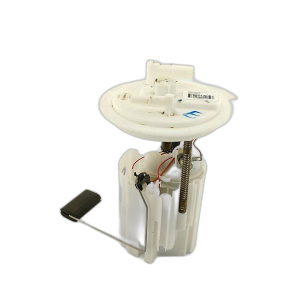
Est. part cost: $50-$150 - Failing Low-Pressure Fuel Pump or Driver Module (FPDM) ⚪ Low Probability The in-tank low-pressure pump supplies fuel to the HPFP. If its volume is insufficient, the HPFP will be starved and cannot generate high pressure. The FPDM on 2011-2014 models is mounted on the frame rail where it is exposed to corrosion.
How to confirm: Test the low-pressure fuel system pressure at the feed line to the HPFP. It should meet the manufacturer's specification (typically 40-85 PSI). If pressure is low, diagnose the in-tank pump, filter, and FPDM. A failing low-pressure sensor can also mimic this, so check its reading on a scan tool; on some Fords, a failed sensor gets stuck at a specific value like 109 PSI.
Typical fix: Replace the in-tank fuel pump assembly or the Fuel Pump Driver Module.
Est. part cost: $200-$400
Rare But Worth Checking
- Damaged Camshaft Lobe: If the HPFP cam follower wears completely through, the HPFP's piston can ride directly on the camshaft lobe, destroying it. If you find a destroyed follower, you must inspect the camshaft for damage, as replacing only the pump and follower will result in another quick failure.
- Leaking Fuel Injector: An injector stuck open can cause a constant loss of pressure in the fuel rail. This would typically be accompanied by other codes, like a rich condition or misfire on a specific cylinder.
- Cracked Fuel Line Pulse Damper: Safety Recall 13S13 was issued for a fuel line pulse damper that could crack and leak fuel. A significant leak could potentially cause a pressure drop sufficient to trigger P0087, though a fuel smell would be the more prominent symptom.
- Failed Diverter Valve: In some EcoBoost applications, a failed diverter valve has been reported to cause a P0087 code and loss of acceleration during rapid attempts to speed up, as noted in NHTSA ODI #11633930.
Diagnosis Steps
- Check for Recalls: Verify if your vehicle has had Safety Recall 13S13 performed. This recall replaced a fuel line with a pulse damper prone to cracking and leaking. A fuel leak is a fire hazard and can cause a pressure drop.
- Scan for Codes: Read all codes from the PCM. Note any other codes that are present, especially misfire (P030x) or other fuel system codes.
- Live Data Analysis: Using a capable scan tool, monitor 'Desired Fuel Rail Pressure' and 'Actual Fuel Rail Pressure'. Also monitor 'Low Side Fuel Pressure' if available.
- Key On, Engine Off (KOEO) Test: Turn the ignition on without starting the engine. The 'Actual Fuel Rail Pressure' should be low and stable. If it reads high, is erratic, or doesn't match the low-side pressure reading, the fuel rail pressure sensor is likely faulty.
- Dynamic Test (Test Drive): Safely accelerate the vehicle while monitoring the live data. If 'Actual' pressure drops significantly as 'Desired' pressure climbs, a mechanical fuel delivery issue (HPFP, follower, or low-pressure supply) is likely.
- Check Engine Oil: Carefully smell the engine oil on the dipstick. A strong odor of raw gasoline is a tell-tale sign that the HPFP has failed internally and is leaking fuel into the crankcase.
- Low-Pressure System Test: If the HPFP seems starved, test the fuel pressure from the in-tank pump to ensure it's delivering adequate fuel (typically 40-85 PSI) to the engine.
- HPFP and Follower Inspection: If all signs point to the HPFP, relieve the fuel system pressure, then remove the pump. Carefully inspect the pump's plunger and, most importantly, the cam follower for any signs of wear, scoring, or damage. Also, inspect the camshaft lobe for scoring or damage through the follower bore.
Parts You'll Likely Need
- High-Pressure Fuel Pump (HPFP)
(OEM #Motorcraft CM5250 (AG9Z-9350-B))— This is the most common component to fail and directly cause the P0087 code on the 2.0L EcoBoost engine.
Trusted brands: Motorcraft, Bosch
OEM price range: $400-$600
Aftermarket price range: $250-$450 - HPFP Cam Follower / Tappet
(OEM #Motorcraft 8W9Z-6C287-A)— This is a critical wear item that drives the HPFP. It should always be replaced with the pump to prevent premature failure of the new pump and potential camshaft damage.
Trusted brands: Motorcraft, INA
OEM price range: $20-$50
Aftermarket price range: $15-$40
Related Codes That Often Appear With This One
- P00C6 — This code also relates to low fuel rail pressure and is often triggered by the same set of causes, particularly a failing HPFP.
- P030x (e.g., P0301, P0302) — Cylinder-specific misfire codes can occur because the low fuel pressure leads to a lean air/fuel mixture, preventing proper combustion.
- P0193 — This code for "Fuel Rail Pressure Sensor 'A' Circuit High" can sometimes appear if the sensor is failing erratically, though P0087 is more common for a low-pressure failure scenario.
- P064A / P027A — These codes may appear alongside P0087 if there is an electrical failure in the fuel pump control module circuit, such as a melted connector pin (NHTSA ODI #11568117).
Technical Service Bulletins (TSBs) & Recalls
- Safety Recall 13S13: Supersedes recall 12S40. Addresses a fuel line pulse damper that could crack, causing a fuel leak and potential fire hazard. The fix is to replace the fuel line with a revised part that does not have the pulse damper.
- TSB SSM 48397: While specifically for the Fusion, it is relevant to the EcoBoost family. It addresses a biased or failed Low-Pressure Fuel Sensor (FLP) causing P0087, stalling, and lack of power, highlighting that sensors can be a key failure point.
Platform-Specific Known Issues
- Recall 13S13 / NHTSA 14V002000: Affects 2012-2013 Edge models with the 2.0L engine. The fuel line pulse damper housing can crack, leading to a fuel leak and fire risk. The fix involves replacing the fuel line.
- Recall 14S30 / NHTSA 15V005000: Affects a small batch of 2014 Edge models where the in-tank fuel pump could seize due to a manufacturing defect, causing the engine to stall.
- High Pressure Pump Camshaft Wear: On similar GDI platforms, the high pressure pump has been known to grind into the top of the camshaft lobe, causing fuel rail failure and codes P0087 and P219A (NHTSA ODI #11360172).
Mechanic-Grade Diagnostic Values
- High-Pressure Fuel Rail Pressure Sensor Voltage to Pressure Conversion — expected: 0.5V ≈ 0 psi; 1.5V ≈ 943 psi; 2.5V ≈ 1885 psi; 3.5V ≈ 2828 psi; 4.5V ≈ 3771 psi.. Failure: Voltage that is stuck, erratic, or does not correlate with scan tool 'Desired Pressure' readings under load.
- Low-Pressure Fuel System Pressure (at HPFP inlet) — expected: 40-85 PSI at idle.. Failure: Pressure consistently below 40 PSI indicates a problem with the in-tank pump, its filter, or the Fuel Pump Driver Module (FPDM).
- High-Pressure Fuel Rail Pressure (Scan Tool Live Data) — expected: Actual pressure should closely track desired pressure. At idle, it may be a few hundred PSI, but under heavy acceleration, desired pressure can exceed 2,000 PSI.. Failure: During a wide-open throttle pull, if 'Actual' pressure fails to rise with 'Desired' pressure and instead drops or plateaus, it strongly indicates a failing HPFP or worn follower.
Scan Tool Commands That Help
- Ford IDS (or equivalent high-end scanner): Module Communication Test / Bidirectional control of Fuel Pump Driver Module — Use this to command the low-pressure fuel pump on and off to verify the FPDM and its wiring are functional. This helps isolate a low-pressure supply issue before condemning the in-tank pump itself.
- Ford IDS (or equivalent high-end scanner): PCM/KAM Reset — After replacing a major fuel system component like the HPFP or a sensor, resetting the Powertrain Control Module and its Keep Alive Memory can clear learned fuel trim adaptations and allow the system to re-learn with the new parts.
Wiring & Ground Locations
- G104 / G105 — Located in the left front of the engine compartment, often near the battery junction box or under the battery tray.. These are primary engine compartment ground points. A corroded or loose connection here can cause erratic voltage for the PCM and fuel system sensors, leading to incorrect readings and false codes.
- Powertrain Control Module (PCM) — Located in the right rear of the engine compartment, near the firewall.. This is the brain that controls the fuel system. All sensor signals and pump commands terminate here. In rare cases, pushed or corroded pins at the PCM connector can be the root cause of P0087.
- Fuel Pump Driver Module (FPDM) — On 2011-2014 models, it is typically mounted on the frame rail. On similar platforms, it can also be found in the trunk behind the rear seat trim.. This module controls the in-tank low-pressure pump. Its exposed location on the frame makes it susceptible to corrosion and failure, which will starve the HPFP of fuel. A melted pin in connector C1035A can also cause poor connections for this module (NHTSA ODI #11568117).
- Low-Pressure Fuel Sensor — On the fuel supply line leading to the high-pressure pump, located on the driver's side of the engine, often near the firewall.. This sensor provides the low-side pressure feedback. A faulty sensor can trick the PCM into thinking there is a pressure issue when there isn't one. Its location is key for testing and replacement.
Real Owner Repair Stories
- Diagnostic Case Study Video (Ford EcoBoost (specific model not stated, but identical failure mode)) — No power on acceleration, P0087 code. Scan tool showed desired fuel pressure spiking while actual pressure stayed low.
✅ What actually fixed it The HPFP follower had worn completely through, and the HPFP plunger was riding directly on the camshaft lobe, destroying the lobe. The final fix required replacing the HPFP, the follower, AND the exhaust camshaft. - Ford Focus ST Forum (similar 2.0L EcoBoost engine) (Ford Fusion with 2.0L EcoBoost) — Long crank time, poor acceleration, P0087.
❌ Tried (didn't work) Replaced low-pressure fuel sensor, Replaced high-pressure fuel sensor, Replaced high-pressure fuel pump (with a used part)
✅ What actually fixed it The vehicle had been in a previous accident. A technician removed the PCM connector and found two pins were pushed out of the socket. After reseating the pins, fuel pressure returned to normal and the code was resolved. - Reddit r/FocusST (similar 2.0L EcoBoost engine) (2015 Ford Focus ST) — Car falls on its face at 3500 RPM, loss of power, P0087.
❌ Tried (didn't work) Initial diagnosis pointed towards HPFP or sensors.
✅ What actually fixed it The user found a disconnected PCV valve hose on the back of the intake manifold. Reconnecting the hose and performing a PCM/KAM reset resolved the P0087 code. - NHTSA ODI #11543739 — An owner reported the car stalling while in motion with no prior warning. After letting the car sit for a few hours, it would start and be operational again, despite the P0087 code being stored.
"I Checked Everything" — The Actual Cause
- A smoke test is not a primary diagnostic for P0087, but in cases where all standard fuel pressure tests pass, the root cause can be electrical or even vacuum-related. A documented case on a similar engine showed that after replacing all major fuel components, the actual cause was two backed-out pins at the main PCM connector, which a visual inspection of the harness would find.
- Another owner found the cause to be a disconnected PCV hose on the intake manifold. This is a massive vacuum leak that can disrupt engine operation enough to trigger various codes, but it would not be found by testing fuel pressure components.
OEM Part Supersession History
AG9Z-9350-AA→AG9Z-9350-B— Standard part revision and consolidation by Ford.
Diagnostic Flowchart
Other Known Issues on This Vehicle
Issues unrelated to this code that are worth knowing about as an owner of this generation:
- 2.0L EcoBoost Coolant Intrusion 🔴 High — More common on the 2015+ 'Gen 2' version of the engine, but can occur. A crack can form in the open-deck engine block between cylinders, leading to coolant leaking into the combustion chamber. (Ref: TSB 19-2346 (and its successors like 22-2229) applies to 2015-2018 Edge, but the underlying design issue is relevant.)
- Power Transfer Unit (PTU) Failure (AWD Models) 🔴 High — Common across all first-gen Edge AWD models. The PTU fluid is considered 'lifetime' by Ford, but it gets cooked by the adjacent exhaust, leading to lubrication breakdown and gear failure, often before 100,000 miles. (Ref: null)
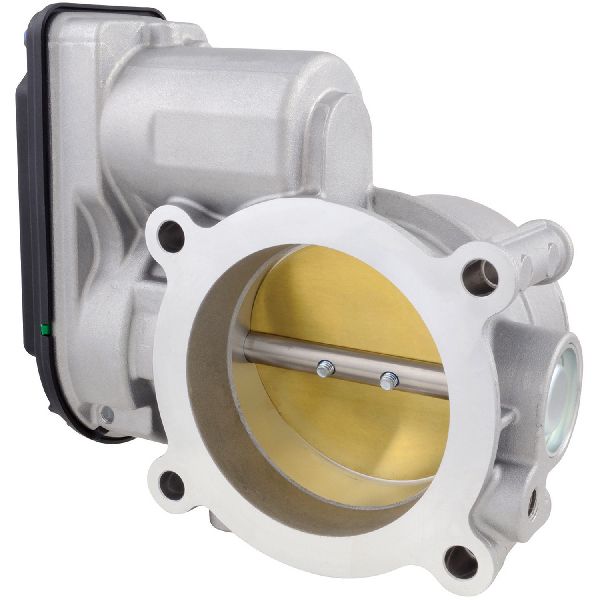
- Electronic Throttle Body (ETB) Failure 🟠 Medium — A widespread issue on many Ford models of this era. The internal electronics of the throttle body fail, causing the vehicle to enter 'limp mode' with a sudden loss of acceleration. (Ref: Multiple TSBs and customer satisfaction programs existed for other models, confirming a known issue with the part design.)
- Half-Shaft Disengagement 🔴 High — Less common, but a critical safety issue. An improperly installed circlip could allow a drive axle half-shaft to disengage, causing a complete loss of motive power. (Ref: Safety Recall 14S10)
Used vs. New Parts: Buying Guide for This Vehicle
When a used part is the smart pick: A used part may be a cost-effective choice for electronic modules like the Fuel Pump Driver Module (FPDM) or potentially sensors, provided they come from a low-mileage, accident-free donor vehicle.
Donor-vehicle mileage cap: roughly under 75000 miles for the part to have meaningful remaining life.
What to inspect on the donor part:
- Check electrical connectors for any signs of corrosion, melting, or bent pins.
- Inspect the part for any physical damage, cracks, or signs of being tampered with.
- If possible, get the VIN of the donor car to verify its history and mileage.
OEM-only on this vehicle (don't cheap out):
- High-Pressure Fuel Pump (HPFP)
- HPFP Cam Follower (Tappet)
Aftermarket brands forum-validated for this vehicle:
- Bosch (Often the original equipment manufacturer for the HPFP)
Real Owner Stories
Aggregated from forums and TSBs cited above. Mileages and costs reflect what owners reported in those sources.
2013 Ford Escape 2.0L EcoBoost
Symptoms: The owner noted that the low-pressure fuel sensor can be a cause for P0087, not just the high-pressure pump.
What fixed it: Diagnosis of the low-pressure fuel sensor as the source of the fuel rail pressure issue.
Source hint: Ford F150 Forum - ecoboost fuel rail/system pressure too low p0087 after launch
2012-2013 Ford Edge 2.0L EcoBoost
Symptoms: Potential fuel leak due to a cracked pulse damper housing.
What fixed it: Replacement of the fuel line with a revised part under Safety Recall 13S13.
Source hint: Safety Recall 13S13 / NHTSA 14V002000
2014 Ford Edge 2.0L EcoBoost
Symptoms: Engine stalling due to a seized in-tank fuel pump.
What fixed it: Replacement of the in-tank fuel pump assembly.
Source hint: Recall 14S30 / NHTSA 15V005000
2013-2016 Ford Fusion 2.0L EcoBoost
Symptoms: Stalling, lack of power, and P0087 code.
What fixed it: Replacement of a biased or failed Low-Pressure Fuel Sensor (FLP).
Source hint: TSB SSM 48397
NHTSA ODI #11318285
Symptoms: The check engine light came on and when the car was about to die, the low oil light would also illuminate.
What fixed it: While diagnostics showed a P0087 error, a dealership test confirmed the issue was a defective fuel rail sensor.
Related OBD-II Codes
Frequently Asked Questions
Is there a recall for fuel leaks on the 2012-2013 Ford Edge 2.0L EcoBoost?
My 2014 Edge stalled and won't restart; could this be the in-tank pump?
Why does my oil smell like gasoline along with the P0087 code?
Should I replace the cam follower when I install a new high-pressure fuel pump?
Can a sensor cause a P0087 even if the pump is actually working?
Where is the Fuel Pump Driver Module (FPDM) located on the 2012-2014 Edge?
Helpful Videos

Used OEM Parts in Stock


New Aftermarket Parts Available


The information in this article is provided for general reference and educational purposes only. Vehicle specifications, procedures, and part compatibility can vary by production date, trim level, and region. Always consult your vehicle's factory service manual and verify part numbers before purchasing or performing repairs. Safety-critical components such as airbags, seat belts, and braking systems should be installed by a qualified professional.
- Ford Edge:
- 🎬 Helpful Videos
- 🛍️ Shop This Part
- What's Unique About the 2012-2014 Ford Edge
- Symptoms You May Notice
- Most Likely Causes
- Rare But Worth Checking
- Diagnosis Steps
- Parts You'll Likely Need
- Related Codes That Often Appear With This One
- Technical Service Bulletins (TSBs) & Recalls
- Platform-Specific Known Issues
- Mechanic-Grade Diagnostic Values
- Scan Tool Commands That Help
- Wiring & Ground Locations
- Real Owner Repair Stories
- "I Checked Everything" — The Actual Cause
- OEM Part Supersession History
- Diagnostic Flowchart
- Other Known Issues on This Vehicle
- Used vs. New Parts: Buying Guide for This Vehicle
- Real Owner Stories
- 2013 Ford Escape 2.0L EcoBoost
- 2012-2013 Ford Edge 2.0L EcoBoost
- 2014 Ford Edge 2.0L EcoBoost
- 2013-2016 Ford Fusion 2.0L EcoBoost
- NHTSA ODI #11318285
- Related OBD-II Codes
- Frequently Asked Questions
- 🎟️ Get 5% Off