

P0087 on 2013-2019 Chevrolet Silverado 3500: Low Fuel Pressure Causes and Fixes
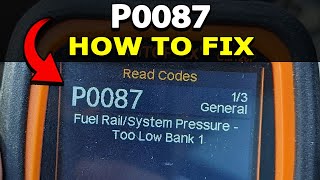
P0087 on a Silverado 3500 means fuel pressure is too low. For Duramax diesels, this often points to a clogged fuel filter, a failing high-pressure CP4 pump, or a bad fuel pressure regulator. For gas engines, suspect a weak in-tank fuel pump or a clogged filter. A thorough diagnosis is critical before replacing expensive parts, especially on Duramax models where a CP4 failure can be catastrophic.
- P0087 indicates a serious low fuel pressure condition that makes the vehicle unsafe to drive.
- For any engine, start your diagnosis by replacing the fuel filter(s); it's the most common and inexpensive fix.
- On a Duramax diesel, this code is a major red flag for a potential high-pressure CP4 pump failure. Check for metal shavings in the fuel filter immediately.
- Do not replace expensive components like injectors or pumps without performing a thorough diagnosis using a scan tool and/or fuel pressure gauges.
- Multiple Technical Service Bulletins (TSBs) exist for this code, pointing to known issues with fuel contamination and pump failures in cold weather.
What's Unique About the 2013-2019 Chevrolet SILVERADO 3500

For the 2013-2019 Silverado 3500, this code is particularly serious on trucks equipped with the 6.6L Duramax diesel. The LML engine (2013-2016) uses a Bosch CP4.2 high-pressure injection pump which is notoriously prone to failure. When it fails, it can send metal shavings throughout the entire fuel system, leading to catastrophic and expensive repairs. This issue was so widespread it led to a class-action lawsuit. The L5P engine (2017-2019) replaced the CP4.2 with a more robust Denso HP4 pump, but can still suffer from P0087 due to other causes like faulty regulators or lift pumps. For gasoline engines, the issues are more typical, often related to the in-tank pump or fuel contamination as noted in manufacturer bulletins.
Diagnostic Flowchart

Tap your situation to follow the diagnostic path that matches what you're seeing on this vehicle.
Generation note: The 2013 model year is the last of the GMT900 generation, while 2014-2019 models are the K2XX generation. The Duramax engine also changed from the LML (2011-2016) to the L5P (2017-2019). While the causes are similar, the LML's use of the failure-prone Bosch CP4.2 injection pump makes this code a high-priority issue. The L5P uses a more reliable Denso HP4 pump but is not immune to pressure issues. The gasoline engine is typically the 6.0L Vortec, which has a less complex fuel system.
Symptoms You May Notice

- Check Engine Light is on
- Loss of engine power, especially under load or acceleration.
- Engine stalling or shutting off while driving.
- Hard starting or no-start condition. [Bulletin #16-NA-102, Bulletin #PIP5151F, 20]
- Rough or surging idle.
- Vehicle enters 'limp mode', limiting RPM and speed.
- "Change Fuel Filter" message appearing on the driver information center.
- Replacing fuel injectors immediately. While injectors can have excessive return flow that lowers rail pressure, they are extremely expensive. Always diagnose the fuel supply (filters, pumps, regulator) first before condemning the injectors.
Most Likely Causes

- Clogged Fuel Filter(s) 🔴 High Probability Diesel fuel is more susceptible to contamination and gelling in cold weather. A dirty filter is the most common and cheapest-to-fix cause of fuel restriction and should always be the first step in diagnosis.
How to confirm: Replace the fuel filter. It's routine maintenance and the most likely cause. Inspect the old filter media by cutting it open and checking for metallic flakes (looks like glitter), a tell-tale sign of CP4 pump failure.
Typical fix: Replace the fuel filter. The LML Duramax (2013-2016) uses one primary filter.
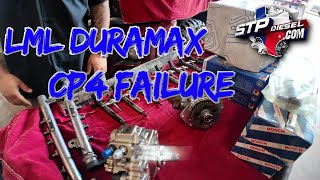
Est. part cost: $40-$100 - Failing High-Pressure Fuel Pump (CP4 - LML Duramax) 🔴 High Probability The Bosch CP4.2 injection pump used on 2011-2016 LML Duramax engines is known for premature failure, often attributed to a lack of lubrication from modern ULSD fuel and vulnerability to air intrusion. This failure contaminates the entire fuel system with metal debris.
How to confirm: Check the fuel filter housing and the fuel pressure regulator's inlet screen for metallic flakes. Use a scan tool to monitor desired vs. actual fuel rail pressure; if the actual pressure cannot keep up with the desired pressure under load, the pump is a likely suspect.
Typical fix: Requires a complete fuel system replacement, including the CP4 pump, fuel injectors, fuel rails, and all fuel lines, followed by flushing the system. This is often called a "CP4 disaster" repair.
Est. part cost: $2000-$5000+ - Failing In-Tank Fuel Pump (Lift Pump) 🟡 Medium Probability The in-tank pump (or lift pump) supplies fuel to the engine-mounted high-pressure pump. TSB #18NA103 specifically notes failures of this pump in cold temperatures on GM trucks, causing P0087.
How to confirm: Test the low-side fuel pressure. On a stock system without an aftermarket lift pump, you should see 5-8 inches of vacuum at the test port near the alternator under full load. If vacuum is excessive, there's a restriction. If you have an aftermarket lift pump, pressure should be a steady 8-10 PSI.
Typical fix: Replace the in-tank fuel pump module.
Est. part cost: $250-$600 - Faulty Fuel Pressure Regulator 🟡 Medium Probability The regulator (also called MPROP or FPR) on the high-pressure pump can stick or fail electronically, causing erratic fuel pressure and triggering P0087 or P0089.
How to confirm: Use a scan tool to command different fuel pressures and watch the regulator's response. Unplugging it should cause rail pressure to spike to its maximum mechanical limit (use caution). Inspect the regulator's inlet screen for debris.
Typical fix: Replace the fuel pressure regulator on the high-pressure pump.
Est. part cost: $100-$250 - Fuel System Contamination ⚪ Low Probability TSBs #16-NA-102 and #PIP5151F highlight that debris or water in the fuel system can cause P0087 and require extensive cleaning and component replacement. This is especially true for gasoline engines.
How to confirm: Inspect the fuel tank and fuel filter housing for debris, water, or other contaminants.
Typical fix: May require dropping and cleaning the fuel tank and replacing all fuel filters and contaminated components.
Est. part cost: $100-$1000+
Rare But Worth Checking
- Leaking Fuel Pressure Relief Valve: On Duramax models, a spring-loaded relief valve on the fuel rail can weaken and bleed off pressure under heavy load, causing P0087. Many owners replace it with a solid 'race plug' as a preventative measure or fix.
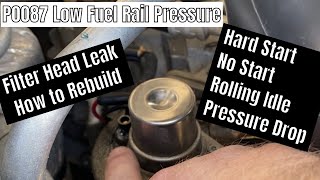
- Air in Fuel Lines: A cracked fuel filter housing (filter head) or degraded O-rings can allow the system to suck in air, causing a loss of pressure, hard starts, and stalling. Collapsed or kinked rubber fuel lines, particularly the one near the driver's side valve cover, are also a known issue.
- Faulty Fuel Rail Pressure Sensor: Less common than a pump or filter issue, but the sensor itself can fail and send incorrect low-pressure readings to the ECM. This is confirmed by comparing scan tool data to a reading from a mechanical gauge.
Diagnosis Steps
- Check for other DTCs that could provide more clues.
- Replace the fuel filter(s). This is the cheapest and most common fix. Cut open the old filter and inspect the media for metal shavings (a sign of CP4 failure on LML Duramax).
- Connect a scan tool and monitor 'Desired Fuel Rail Pressure' vs. 'Actual Fuel Rail Pressure' at idle and while driving under load. At idle, they should both be ~4,000-6,000 PSI. Under load, a significant difference (e.g., actual pressure falling 2,000+ PSI short of desired) points to a supply problem.
- If possible, connect a vacuum gauge to the test port on the fuel filter housing. On a stock system, you should see 5-8 inches of vacuum under full load. More than that indicates a restriction between the tank and the pump.
- Inspect the fuel filter housing and fuel lines for any signs of cracks, leaks, or loose fittings that could introduce air into the system. Pay close attention to the rubber hose near the driver's side valve cover, which is known to collapse.
- For LML Duramax engines, if metal debris is found, assume the CP4 pump has failed and the entire fuel system is contaminated. Professional service is required for a complete system replacement.
- If no supply issue is found, test the fuel pressure regulator and fuel rail pressure sensor for proper electrical function.
Parts You'll Likely Need
- Fuel Filter (LML Engine, 2013-2016)
(OEM #ACDelco TP3018 / GM 12664429 / GM 19420323)— This is the most common cause of fuel restriction and should be the first part replaced during diagnosis.
Trusted brands: ACDelco
Related Codes That Often Appear With This One
- P0191 — Stands for 'Fuel Rail Pressure Sensor Circuit Range/Performance'. It often appears with P0087 because the sensor is detecting erratic or out-of-range pressure caused by the same underlying fuel delivery issue.
- P0088 — Stands for 'Fuel Rail/System Pressure - Too High'. It can appear alongside P0087 if the fuel pressure regulator is failing and causing erratic pressure spikes and drops.
- P2635 — Stands for 'Fuel Pump 'A' Low Flow/Performance'. This code points more directly to a problem with the low-pressure in-tank fuel pump, as cited in TSB #18NA103.
Technical Service Bulletins (TSBs) & Recalls
- 18NA103: Notes failure of the in-tank fuel pump in cold temperatures, causing start/stall, no start, and DTCs including P0087.
- 16-NA-102: Provides a procedure to inspect and replace fuel components due to contamination causing hard/no start and DTCs including P0087.
- PIP5151F: Addresses diagnosis for hard start, no start, or low fuel pressure due to fuel system contamination, which may set P0087.
- PIP4949E: General diagnostic information for hard start or no start conditions that may be associated with code P0087.
- PIT5212B: Mentions P0087 in a list of codes that may appear and requires a scan tool software update for proper diagnosis.
Platform-Specific Known Issues
- Bosch CP4.2 High-Pressure Fuel Pump Failure (2013-2016 LML): The most significant issue for this vehicle range is the failure of the Bosch CP4.2 pump. It is prone to internal disintegration, which sends metal fragments throughout the entire fuel system, destroying the pump, injectors, rails, and lines. This results in a repair that can cost over $8,000. The failure is so common that it prompted a class-action lawsuit against GM, which resulted in a settlement for owners in specific states who incurred repair costs.
Mechanic-Grade Diagnostic Values
- Duramax High-Pressure Fuel Rail (Idle) — expected: ~4,000 - 6,000 PSI. Failure: Significantly lower than desired pressure, or erratic readings.
- Duramax High-Pressure Fuel Rail (Wide Open Throttle) — expected: ~23,000 - 29,000 PSI (depending on engine and tune). Failure: Actual pressure falls more than 2,000 PSI short of desired pressure under load.
- L5P Duramax Low-Pressure Lift Pump — expected: 60 PSI (steady). Failure: Pressure is low, dropping, or erratic.
- 6.0L Vortec (Gas) Fuel Pressure (Key On, Engine Off) — expected: 55 - 62 PSI. Failure: Pressure below 55 PSI indicates a weak pump, clogged filter, or faulty regulator.
- Duramax Fuel Rail Pressure Sensor Signal Voltage — expected: 0.5V - 4.8V. Failure: Voltage is stuck high or low, or does not correlate with pressure changes.
- Duramax Fuel Pressure Regulator Solenoid Resistance — expected: ~2.7 - 3.0 Ohms. Failure: Significantly higher or lower resistance, or an open circuit.
- Duramax High-Pressure Pump Suction Test (cranking) — expected: At least 12 inches of Hg vacuum. Failure: Less vacuum indicates a weak high-pressure pump or a significant air leak on the suction side.
Scan Tool Commands That Help
- GDS2 / Tech 2 / Professional Scan Tool: Fuel Pressure Control / Fuel Rail Pressure Test — To test the fuel pressure regulator's (FPR) ability to respond. The technician can command the pressure up or down while the engine is running to see if the actual pressure follows the desired pressure. A non-responsive or slow-to-respond FPR is likely faulty.
- GDS2 / Professional Scan Tool: Fuel Pump Relay Command — To verify the integrity of the low-pressure fuel pump circuit. A technician can command the in-tank fuel pump on and off to confirm the relay, wiring, and pump motor are functioning without needing to start the engine. This helps isolate a no-start condition.
- GDS2 / Professional Scan Tool: Injector Balance Rates — To check for a failing injector that could be causing a drop in rail pressure due to excessive fuel return. Rates outside of +4 to -6.9 indicate a potential problem with that cylinder's injector.
Wiring & Ground Locations
- Fuel Line Chafe/Collapse Point — The rubber section of the fuel supply line located near the driver's side valve cover.. This specific hose is notorious for becoming soft, collapsing internally under suction from the high-pressure pump, and restricting fuel flow, directly causing a P0087 code under load. It's often missed because it may not look collapsed when the engine is off.
- Fuel Rail Pressure Sensor (LML) — On the passenger side fuel rail.. This is the sensor providing the primary reading for the P0087 code. Knowing its location is critical for inspection of the connector and wiring harness for damage or corrosion.
- Fuel Rail Pressure Sensor (L5P) — On the passenger side fuel rail, located underneath the EGR cooler.. Its location on the L5P makes it more difficult to access for inspection or replacement compared to the LML. A faulty sensor or damaged connector here can trigger the code.
- Fuel Pressure Relief Valve (FPRV) — On the rear of the driver's side fuel rail, often located under the glow plug control module on LML engines.. This valve can leak pressure from the rail. Its location is important for performing a 'bottle test' to check for leakage or for replacing it with a 'race plug'.
Real Owner Repair Stories
- YouTube video by 'Held The Flashlight For Dad' (Duramax Diesel (year not specified, but LLY/LBZ/LMM generation)) — Recurring P0087 code, especially when towing or under heavy load, causing limp mode.
❌ Tried (didn't work) Replacing fuel filter, Installing a fuel pressure relief valve 'race plug'
✅ What actually fixed it The final fix was replacing a section of the rubber fuel line on the engine that had become soft and was collapsing internally under suction, restricting fuel flow. The owner cut out the factory crimped section and replaced it with new fuel hose and clamps. - YouTube video by 'P0087 Low Fuel Rail Pressure' (2006 GMC Duramax (LBZ)) — P0087 code, hard start/no-start, rolling idle, limp mode.
❌ Tried (didn't work) Initial diagnosis pointed towards fuel pressure relief valve or regulator.
✅ What actually fixed it The owner noticed the fuel filter head was leaking and allowing air to be sucked into the system. The problem was resolved by disassembling the fuel filter head assembly and rebuilding it with a new set of O-rings to stop the air leak. - DuramaxDiesels.com forum thread (LMM Duramax) — Fuel filter life dropping from 100% to 0% very quickly, intermittent P0087 code.
❌ Tried (didn't work) Replacing the fuel filter.
✅ What actually fixed it The user identified a collapsed rubber fuel line by the driver's side valve cover. The forum confirmed this is a common issue, and the fix is to replace the soft sections of the fuel line that are prone to collapsing under vacuum.
"I Checked Everything" — The Actual Cause
- A common scenario for P0087 on Duramax engines is a suction-side air leak or restriction that standard pressure tests will not find. The high-pressure pump creates a strong vacuum on the supply line from the tank. A tiny crack in the fuel filter head or a soft, collapsing rubber fuel line will not leak fuel outwards (as it's under vacuum), but will allow air to be sucked in or will restrict flow. This starves the high-pressure pump and triggers P0087, especially under load. Mechanics often find this only after replacing multiple other components, by either finding a physically collapsed hose or by rebuilding the fuel filter head assembly.
OEM Part Supersession History
GM 12664429 / ACDelco TP3018→GM 19431541— Standard part update/revision for the LML Duramax fuel filter.Bosch 0 281 006 313→GM 12651990— OEM part number for the LML Duramax fuel rail pressure sensor.
Heads up: These part numbers are often used interchangeably for the 2011-2016 LML engine.N/A→GM 12686809— This is the OEM part number for the fuel rail pressure sensor specific to the 2017-2023 L5P Duramax engine.
Heads up: Not compatible with LML engines.
Model Year Variations Within This Range
- 2013-2016 (LML Engine): Uses the Bosch CP4.2 high-pressure pump, which is a common failure point. The fuel system operates purely on suction from the CP4.2 to the tank, making it very sensitive to air leaks or restrictions. The fuel pressure relief valve is on the driver's side rail.
- 2017-2019 (L5P Engine): Uses a more robust Denso HP4 high-pressure pump and features a factory low-pressure lift pump in the tank that supplies a constant ~60 PSI to the high-pressure pump. This makes the system less sensitive to suction-side restrictions but adds the lift pump as a potential failure point.
- 2013-2019 (6.0L Vortec Gas Engine): Operates on a much lower pressure system (55-62 PSI). P0087 is almost always caused by a failing in-tank fuel pump, a clogged in-line fuel filter (on applicable years), or a faulty rail-mounted regulator. Diagnosis is significantly simpler than on diesel models.
Helpful Videos
Used OEM Parts in Stock


New Aftermarket Parts Available


The information in this article is provided for general reference and educational purposes only. Vehicle specifications, procedures, and part compatibility can vary by production date, trim level, and region. Always consult your vehicle's factory service manual and verify part numbers before purchasing or performing repairs. Safety-critical components such as airbags, seat belts, and braking systems should be installed by a qualified professional.
- Chevrolet SILVERADO 3500:
- 🎬 Helpful Videos
- 🛍️ Shop This Part
- What's Unique About the 2013-2019 Chevrolet SILVERADO 3500
- Diagnostic Flowchart
- Symptoms You May Notice
- Most Likely Causes
- Rare But Worth Checking
- Diagnosis Steps
- Parts You'll Likely Need
- Related Codes That Often Appear With This One
- Technical Service Bulletins (TSBs) & Recalls
- Platform-Specific Known Issues
- Mechanic-Grade Diagnostic Values
- Scan Tool Commands That Help
- Wiring & Ground Locations
- Real Owner Repair Stories
- "I Checked Everything" — The Actual Cause
- OEM Part Supersession History
- Model Year Variations Within This Range
- 🎟️ Get 5% Off