

P0087 on 2015-2019 Chevrolet Express Duramax: Low Fuel Pressure Causes & Fixes
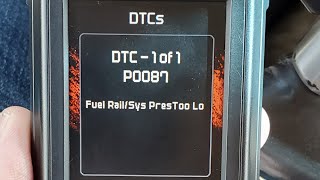
P0087 on a Duramax-powered Express van means the fuel rail pressure is too low. The most common causes are a clogged fuel filter, air in the fuel lines, or a failing high-pressure fuel pump (HPFP). Always start by replacing the fuel filter. If that doesn't work, a full fuel system diagnosis is needed, as HPFP failure (especially the CP4 pump in 6.6L LML engines) is a known, costly issue that can contaminate the entire fuel system.
- P0087 indicates a critical drop in fuel pressure that makes the vehicle unsafe to drive due to the risk of stalling.
- Always start your diagnosis by replacing the fuel filter; it's the cheapest and most common fix.
- Be aware of the potential for a catastrophic high-pressure fuel pump (HPFP) failure, especially on 6.6L LML engines. Finding metal shavings in the fuel system is a sign of this and requires a complete fuel system overhaul.
- Air leaks in the fuel lines or filter housing are another common cause and should be investigated before condemning expensive pumps or injectors.
- Due to the complexity and high pressures involved, professional diagnosis is strongly recommended if a new fuel filter does not solve the issue.
What's Unique About the 2015-2019 Chevrolet Express
For the Duramax engines in this generation of Express vans (primarily the 6.6L LML/LGH or the 2.8L LWN), code P0087 is a serious warning. The factory fuel system on the 6.6L engines relies on the high-pressure pump to pull fuel from the tank under a vacuum, which can strain the system and make it prone to air leaks. More critically, the 2015-2016 6.6L LML engines use a Bosch CP4 high-pressure fuel pump, which is notorious for failing catastrophically. When it fails, it sends metallic debris throughout the entire fuel system, requiring a multi-thousand dollar repair that includes replacing the pump, injectors, rails, and lines. Several GM Technical Service Bulletins (TSBs), such as #16-NA-102 and #PIP5151F, specifically address this failure mode and the resulting fuel system contamination.
Symptoms You May Notice
- Significant loss of power, especially under acceleration or when towing.
- Engine may enter 'limp mode' with reduced RPM and speed.
- Engine runs rough, hesitates, or surges.
- Difficulty starting or engine stalls unexpectedly.
- Check Engine Light is illuminated.
- Slightly fluctuating or rolling idle.
- A "hard start" or "no start" condition, as noted in TSB Bulletin #PIP4949E.
- Replacing the fuel rail pressure sensor. While possible for it to fail, it's more common for the sensor to be accurately reporting a real pressure problem. Always test pressure with a mechanical gauge or compare scan tool data before replacing the sensor.
- Replacing the fuel pressure relief valve (FPRV). A failing FPRV that opens prematurely will typically cause low pressure issues consistently, not just under heavy load. While it can fail, it's less common than other causes.
Most Likely Causes
- Clogged or Restricted Fuel Filter 🔴 High Probability Diesel fuel systems are sensitive to contaminants, and filters are a primary wear item. It's the first and cheapest thing to check and a very common trigger for P0087.
How to confirm: Check the fuel filter life monitor if equipped. The easiest confirmation is to replace the filter as a first step. When removing the old filter, pour its contents into a clean container and inspect for water, debris, or metallic shavings. The presence of metal indicates a failing HPFP.
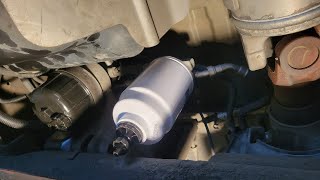
Typical fix: Replace the fuel filter with a high-quality OEM or equivalent part. 🎬 Watch: How to replace the fuel filter on a Chevy Express. If metal is found, the entire fuel system needs inspection and likely replacement.
Est. part cost: $20-$70 - Failing High-Pressure Fuel Pump (HPFP) 🔴 High Probability The Bosch CP4 pump used in 2015-2016 6.6L LML Duramax engines has a well-documented high failure rate. When it fails, it often disintegrates internally, sending metal shavings through the entire fuel system. TSBs #PIP5151F and #16-NA-102 specifically address this issue and the required, extensive cleaning procedure. TSB Bulletin #16-NA-102 provides a procedure to inspect and replace components when P0087 is set due to the fuel system being contaminated with debris.
How to confirm: A technician can check the fuel pressure regulator screen for magnetic metal particles, as detailed in TSB #16-NA-102. 🎬 Watch: How to diagnose if your CP4 fuel pump is failing. Monitoring desired vs. actual fuel rail pressure with a scan tool will show a significant lag where actual pressure cannot meet desired pressure under load. Finding metal shavings in the fuel filter is a strong indicator.
Typical fix: This is a major repair. It requires replacing the HPFP, all eight fuel injectors, both fuel rails, and flushing or replacing all fuel lines and the fuel tank to remove contamination. The cost can range from $9,000 to $13,000 at a professional shop.
Est. part cost: $2000-$5000+ - Air in the Fuel System 🟡 Medium Probability The factory fuel system on LML engines operates under a vacuum, making it susceptible to sucking in air through aging O-rings, cracked fuel lines, or a leaky fuel filter housing. The fuel filter head assembly is a common source of air leaks, often noticeable by a primer button that won't stay firm or shows bubbles when pressed.
How to confirm: Visually inspect fuel lines for cracks, especially the soft lines near the driver's side valve cover. Press the fuel filter primer pump; if it's soft and bubbles appear around it, the housing is leaking air. A technician can install a clear line on the suction side of the system to watch for air bubbles while the engine is running. A vacuum gauge on the test port should show 5-8 inches of vacuum under full load; more indicates a restriction.
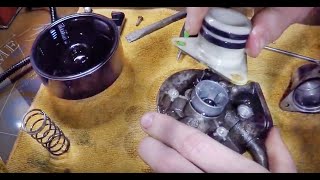
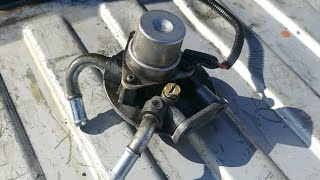
Typical fix: Replace the leaking component. This often involves rebuilding the fuel filter head with a new seal kit 🎬 See this walkthrough on rebuilding a Duramax fuel filter head. or replacing the entire assembly. Some owners install an aftermarket lift pump to convert the system from vacuum to positive pressure, which helps prevent future air intrusion.
Est. part cost: $50-$300 - Failing Fuel Pressure Regulator ⚪ Low Probability The regulator (also called the MPROP or FPR) on the high-pressure pump can fail or stick, causing erratic pressure control. However, it's more often contaminated by debris from a failing HPFP than failing on its own.
How to confirm: A scan tool can command specific pressures to test the regulator's response. Unplugging it should cause rail pressure to spike. Visual inspection upon removal may show debris on the screen, which is a strong sign of HPFP failure.
Typical fix: Replace the fuel pressure regulator on the high-pressure pump. If debris is present, the entire fuel system must be addressed to prevent repeat failure.
Est. part cost: $150-$300
Rare But Worth Checking
- Failing In-Tank Lift Pump: While the HPFP is the primary suspect, the low-pressure lift pump in the tank can also fail, starving the high-pressure pump. TSB #18-NA-103 notes this can be an issue in very cold weather (below 20°F / -6°C), causing stalling and P0087. TSB Bulletin #18NA103 specifically mentions that at temperatures below -6C or 20F, the tank fuel pump may cause a start and stall, no start, or loss of power.
- Leaking Fuel Injectors: As injectors wear, they can return too much fuel back to the tank instead of spraying it into the cylinder. This 'leaks' pressure from the rail. An injector return rate test, which measures the amount of fuel returned from each injector in a set time, can identify a bad injector. Per GM procedure, the maximum allowable leakage for one LML injector is 3 ml in 15 seconds at idle.
- Fuel Contamination (Water, DEF): Contamination of the diesel fuel with water or Diesel Exhaust Fluid (DEF) can cause immediate damage to the high-pressure fuel system components and trigger P0087. GM has issued bulletin #PIP5151F with pictures showing what DEF and rust contamination look like on the fuel pressure regulator. TSB Bulletin #PIP5151F warns that if contamination is found, the complete fuel system will need replacement.
- Collapsed Fuel Lines: The soft rubber fuel lines, particularly the supply line from the frame to the engine, can soften and collapse internally under the vacuum of the fuel system, especially when hot. This restricts fuel flow and causes P0087 under load. A GM service bulletin suggests upgrading this hose to a more rigid Parker brand hose.
Diagnosis Steps
- Check for other stored DTCs to get a more complete picture of the fault. TSB Bulletin #PIP4949E notes that technicians may find P0087 alongside P0088, P0191, or P128E during diagnosis.
- Replace the fuel filter. This is the most common and inexpensive first step. Carefully inspect the old filter's contents for metal shavings.
- Using a capable scan tool, monitor 'Desired Fuel Rail Pressure' vs. 'Actual Fuel Rail Pressure' at idle and while driving under load. A significant difference where 'Actual' cannot keep up with 'Desired' confirms a performance issue.
- Inspect the fuel system for air leaks. Check the fuel filter housing primer for softness or visible leaks. Inspect soft fuel lines for cracks or collapse. Consider installing a clear hose before the HPFP to visually check for air bubbles.
- Test the low-pressure fuel system (lift pump) to ensure it is providing adequate supply pressure to the high-pressure pump, especially in cold weather as suggested by TSB Bulletin #18NA103.
Parts You'll Likely Need
- Fuel Filter
(OEM #ACDelco TP3018 (for 6.6L LML))— This is the most frequent cause of fuel restriction and should always be the first part replaced when diagnosing P0087.
Trusted brands: ACDelco, Wix, Bosch, Donaldson
OEM price range: $40-$70
Aftermarket price range: $20-$50 - High-Pressure Fuel Pump (HPFP)
(OEM #Bosch 0986437421 (Reman) or 0445010817 (New) for 6.6L LML CP4.2)— For 2015-2016 6.6L Duramax LML engines, the Bosch CP4 pump is a common failure point that causes P0087 and requires a full fuel system replacement due to metal contamination.
Trusted brands: Bosch (OEM)
OEM price range: $600-$900 (pump only)
Aftermarket price range: N/A - Fuel Filter Head Assembly (or Rebuild Kit) — The filter head is a common source of air leaks into the fuel system, causing a loss of prime and low fuel pressure. A rebuild kit with new O-rings is a cost-effective fix.
Trusted brands: ACDelco, Dorman, Merchant Automotive
OEM price range: $150-$250 (Assembly)
Aftermarket price range: $20-$40 (Rebuild Kit)
Related Codes That Often Appear With This One
- P0088 — Stands for 'Fuel Rail/System Pressure - Too High'. It can appear with P0087 if a failing component like a fuel pressure regulator is causing erratic and uncontrolled pressure spikes and drops. It is cited in TSB Bulletin #16-NA-102.
- P0191 — Stands for 'Fuel Rail Pressure Sensor Circuit Range/Performance'. This code often accompanies P0087 because the ECM sees a pressure reading that is illogical or doesn't match the expected value, which is a direct result of the low pressure condition. It is cited in TSBs #PIP5151F and #16-NA-102.
- P2635 — Stands for 'Fuel Pump 'A' Flow/Performance'. This points to a problem with the low-pressure (in-tank) pump's ability to deliver fuel, which is a direct cause of the high-pressure system being starved. TSB #18-NA-103 links this code with P0087 in cold weather conditions.
- P128E — This is a GM-specific code that can be set along with P0087/P0088 and indicates a fuel rail pressure performance issue, often related to contamination or pump failure as noted in TSB #16-NA-102.
Technical Service Bulletins (TSBs) & Recalls
- 16-NA-102: The primary TSB for P0087 on LML Duramax engines. It details the full diagnostic procedure, which involves inspecting the fuel pressure regulator for magnetic metal debris. If found, it mandates the replacement of the entire high-pressure fuel system (pump, rails, injectors, lines) and thorough cleaning of the low-pressure system, including the tank.
- PIP5151F: A preliminary information bulletin that shows visual examples of fuel system contamination from sources like water (rust) and Diesel Exhaust Fluid (DEF). It warns that if such contamination is found, the entire fuel system must be cleaned and flushed to prevent repeat failures. It covers codes P0087, P0088, P0191, and P128E.
- 18-NA-103: Addresses customer complaints of no-start, stalling, or loss of power in cold ambient temperatures (below 20°F / -6°C). It points to a failing in-tank low-pressure fuel pump or gelled diesel fuel as the cause for P0087 and related codes.
- PIP4949E: This communication provides information regarding vehicles experiencing a hard start or no start condition, where technicians may find DTCs P0087, P0088, P0191, or P128E set.
Platform-Specific Known Issues
- The LML CP4 Catastrophic Failure: The single most significant issue for the 2015-2016 Express with the 6.6L LML engine is the failure of the Bosch CP4.2 high-pressure fuel pump. Unlike a simple component failure, the pump disintegrates internally, sending metal fragments throughout the high and low-pressure fuel systems. This requires a complete system replacement, often costing over $10,000. The first sign is often a P0087 code under load, and confirmation is finding metallic glitter in the fuel filter or on the fuel pressure regulator's screen.
- Cold Weather Stalling (All Duramax): As documented in TSB #18-NA-103, the Express vans are susceptible to stalling and setting a P0087 code in very cold weather. This is often caused by the in-tank low-pressure pump struggling or failing, or by the diesel fuel beginning to gel. This is a distinct issue from the CP4 failure and is more related to the low-pressure supply side.
Mechanic-Grade Diagnostic Values
- Desired vs. Actual Fuel Rail Pressure (Scan Tool) — expected: At hot idle, both should be approximately 4,000-6,000 PSI. Under Wide Open Throttle (WOT), desired pressure for an LML is ~29,000-30,000 PSI.. Failure: If 'Actual' pressure falls more than 2,000 PSI below 'Desired' pressure under load, it indicates a fuel delivery problem.
- Fuel Rail Pressure Sensor (FRPS) Voltage — expected: The sensor operates on a 5V reference circuit. The signal wire should output a voltage between 0.5V (low pressure) and 4.8V (high pressure). For LBZ/LMM/LML engines, Key-On-Engine-Off (KOEO) should read 0 PSI, corresponding to approximately 0.5V.. Failure: A voltage reading that is stuck, erratic, or does not correspond to pressure changes indicates a faulty sensor or wiring issue. A short to ground will result in 0V.
- Fuel Injector Return Rate (LML Engine) — expected: The maximum allowable leakage for one injector is 3 ml over a 15-second test period at idle. Some sources state a general spec of less than 4-5ml per injector.. Failure: Exceeding this volume indicates excessive internal leakage in the injector, which bleeds off rail pressure. If one injector is bad, others are likely worn as well.
- Low-Pressure Side Vacuum Test — expected: Using a vacuum gauge on the test port near the filter housing, the system should pull between 5 to 8 inches of vacuum (Hg) under full load.. Failure: Vacuum readings higher than 8-10 inches Hg indicate a restriction on the supply side, such as a clogged fuel filter, collapsed fuel line, or iced-over pickup screen in the tank.
- Injector Balance Rates (LML Engine) — expected: At hot idle in Park or Neutral, balance rates should be within ±2.5 mm³/sec.. Failure: A consistent positive number (e.g., +3.0) means the ECM is adding fuel to compensate for a weak cylinder (low compression or clogged nozzle). A consistent negative number (e.g., -3.0) means the ECM is removing fuel due to a leaking injector.
Scan Tool Commands That Help
- GDS2 / Tech2: Fuel System Test / Fuel Pressure Control — This function allows a technician to command specific fuel rail pressures while the engine is running and observe the system's response. For example, commanding max rail pressure at idle can help test the high-pressure pump's ability to build pressure without putting the vehicle under a physical load. Failure to reach the commanded pressure can indicate a weak pump or a significant leak.
- GDS2 / Tech2: Injector Return Flow Test — While this is primarily a physical test, the scan tool is used to enable the test conditions and monitor engine parameters. It's used when leaking injectors are suspected of causing P0087 by bleeding off rail pressure.
- GDS2 / Tech2: Fuel Pump Driver Module Duty Cycle — This allows monitoring of the command signal being sent to the in-tank (low pressure) fuel pump. It helps determine if the ECM is commanding the pump to work and if the pump is responding, which is useful for diagnosing low-pressure supply issues before the HPFP.
Wiring & Ground Locations
- G103 / G104 — G103 is located on the front of the passenger side cylinder head. G104 is located on the rear of the driver's side cylinder head.. These are primary engine-to-chassis grounds. A poor connection at these points can cause erratic behavior from the ECM and various sensors, including the fuel rail pressure sensor and fuel pressure regulator, potentially leading to false P0087 codes or incorrect diagnostic readings.
- Fuel Rail Pressure Sensor Connector — Screwed into one of the fuel rails, typically the driver's side on a Duramax.. The connector itself can be a point of failure. GM TSB #20-NA-197 notes that corrosion or damaged terminals within this connector can cause P0087 and other related codes. The ECM relies on a clean signal from this sensor; any resistance or short here will corrupt the pressure reading.
- ECM Connector X1 — One of the main connectors at the Engine Control Module (ECM).. The fuel rail pressure sensor signal, reference voltage, and ground wires all terminate at the ECM. A specific pinout diagram is required to test for continuity and voltage directly at the ECM, bypassing the vehicle harness to isolate a wiring fault from a sensor or ECM fault.
Real Owner Repair Stories
- duramaxforum.com user post (2008 Duramax LMM (similar vacuum-fed fuel system to LML)) — P0087 code, fuel filter life dropping from 100% to 0% very quickly, especially under load. Desired rail pressure would not keep up with actual pressure above 20,000 PSI.
❌ Tried (didn't work) Replacing the fuel filter., Squeezing the visible collapsed portion of the fuel line back into shape.
✅ What actually fixed it The user identified that the soft fuel lines were collapsing under vacuum. The final fix, recommended by others in the thread, was to replace the soft sections of the fuel supply line, particularly the sections near the engine and transmission, with a more rigid type of hose (like a Parker hydraulic hose) as suggested in a GM service bulletin. - DuramaxDiesels.com user post (2005 Duramax LLY) — P1093 (equivalent to P0087 on newer models) under load at highway speeds. Scan tool could not command more than 13,500 PSI when 25,000 PSI was requested.
❌ Tried (didn't work) Replacing fuel filter and housing assembly., Replacing the fuel pressure relief valve., Replacing rubber fuel hoses., Injector return rate test (all injectors passed with less than 2ml return).
✅ What actually fixed it After injectors tested good, diagnosis pointed to the CP3 high-pressure pump. The pump's own return rate was tested and found to be excessive (over 20ml in 15 seconds of cranking), indicating internal failure. The final fix was replacing the high-pressure fuel pump (CP3).
Model Year Variations Within This Range
- 2015-2016: These vans used the 6.6L LML Duramax engine, which is equipped with the Bosch CP4.2 high-pressure fuel pump. This pump is the primary suspect for P0087 in these years due to its high rate of catastrophic failure.
- 2017-2019: The Express van received the 6.6L LGH Duramax starting in 2017. While based on the LML, the LGH in the van application is significantly de-rated to 260 hp and 525 lb-ft of torque and is paired with a GM 6L90E automatic transmission, not the Allison. Critically, the LGH uses a more reliable Denso HP4 high-pressure fuel pump, making a catastrophic pump failure less likely than on the LML, though not impossible. Diagnosis on these years may focus more on restrictions, air leaks, or injector issues.
- 2017-2019: The 2.8L LWN 4-cylinder Duramax was also an option. This is a completely different engine platform with its own Bosch fuel system (injectors, pump, rails). While it can also suffer from P0087, the specific components, diagnostic values, and common failure points are unique to the LWN and not shared with the 6.6L V8s.
Diagnostic Flowchart
Real Owner Stories
Aggregated from forums and TSBs cited above. Mileages and costs reflect what owners reported in those sources.
Chevrolet Express Duramax
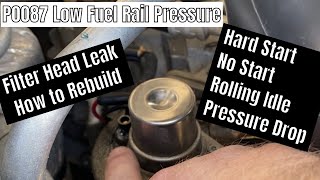
Symptoms: Hard start and no start conditions accompanied by a P0087 Low Fuel Rail Pressure code.
What fixed it: Diagnosed an air leak at the fuel filter head and performed a complete fuel filter head rebuild.
Source hint: YouTube video titled 'P0087 Low Fuel Rail Pressure; Duramax Hard Start/No Start; Fuel Filter Head Rebuild'
Chevrolet Express Duramax
Symptoms: P0087 Fuel Pressure Code triggered by vacuum-related fuel supply issues.
What fixed it: Replaced the fuel filter, repaired the filter head to stop an air leak, and installed an aftermarket lift pump to convert the system to positive pressure.
Source hint: Injected Motorsports LLC blog post 'Duramax P0087 Fuel Pressure Code'
Chevrolet Express Duramax
Symptoms: P0087 Fuel pres to Low code.
What fixed it: Performed the official GM injector return rate test procedure to diagnose high return rates versus a weak high-pressure pump.
Source hint: EFILive Forum thread 'P0087 Fuel pres to Low Anyone have this issue?'
2015-2016 Chevrolet Express 6.6L LML
Symptoms: P0087 code under load, followed by finding metallic glitter in the fuel filter and on the fuel pressure regulator's screen.
What fixed it: Complete high and low-pressure fuel system replacement (HPFP, all eight fuel injectors, both fuel rails, and flushing/replacing all fuel lines and the fuel tank) due to Bosch CP4.2 internal disintegration.
Cost: $9000-$13000
Source hint: Vehicle Specific Issues: The LML CP4 Catastrophic Failure
Related OBD-II Codes
Frequently Asked Questions
Does TSB #16-NA-102 apply to my 2015-2016 Chevrolet Express 6.6L LML Duramax?
Why does my Express van stall and throw a P0087 code only in very cold weather?
I found metal shavings in my fuel filter. What does this mean for my LML engine?
Can a simple air leak cause a P0087 on my Chevrolet Express?
What codes are covered under TSB #PIP5151F regarding fuel system contamination?
Is there a permanent fix for the vacuum-related air leaks on the Duramax fuel system?
Helpful Videos
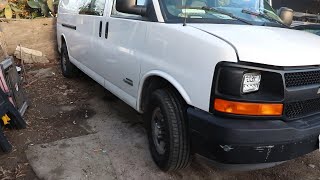
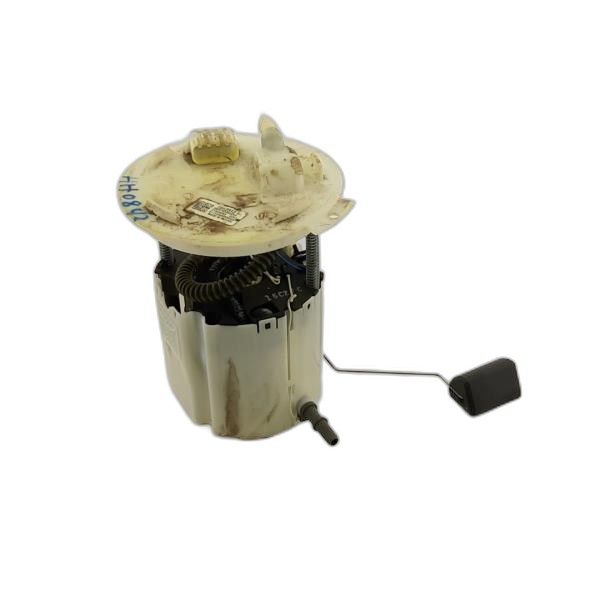
Used OEM Parts in Stock

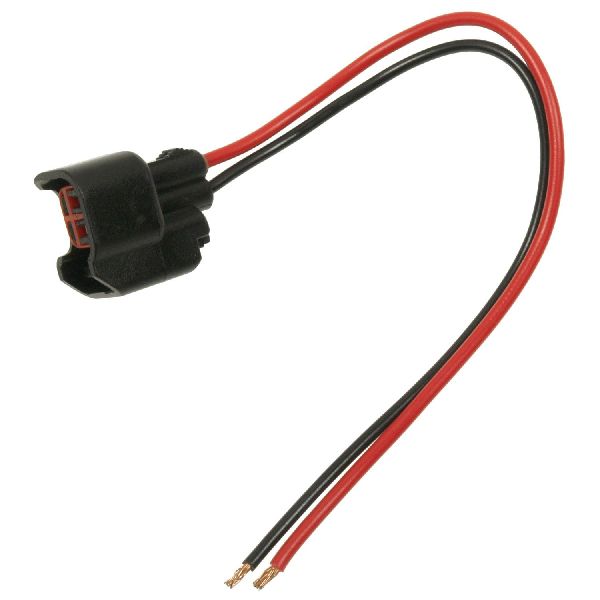
New Aftermarket Parts Available


The information in this article is provided for general reference and educational purposes only. Vehicle specifications, procedures, and part compatibility can vary by production date, trim level, and region. Always consult your vehicle's factory service manual and verify part numbers before purchasing or performing repairs. Safety-critical components such as airbags, seat belts, and braking systems should be installed by a qualified professional.
- Chevrolet Express:
- 🎬 Helpful Videos
- 🛍️ Shop This Part
- What's Unique About the 2015-2019 Chevrolet Express
- Symptoms You May Notice
- Most Likely Causes
- Rare But Worth Checking
- Diagnosis Steps
- Parts You'll Likely Need
- Related Codes That Often Appear With This One
- Technical Service Bulletins (TSBs) & Recalls
- Platform-Specific Known Issues
- Mechanic-Grade Diagnostic Values
- Scan Tool Commands That Help
- Wiring & Ground Locations
- Real Owner Repair Stories
- Model Year Variations Within This Range
- Diagnostic Flowchart
- Real Owner Stories
- Chevrolet Express Duramax
- Chevrolet Express Duramax
- Chevrolet Express Duramax
- 2015-2016 Chevrolet Express 6.6L LML
- Related OBD-II Codes
- Frequently Asked Questions
- 🎟️ Get 5% Off