

P0087 on 2009-2017 Buick Enclave 3.6L: Fuel Pressure Too Low Causes and Fixes
On a 2009-2017 Buick Enclave, code P0087 almost always means the high-pressure fuel pump (HPFP) is failing. This is a very common problem on the GM 3.6L direct-injection engine. A critical and definitive sign is a strong gasoline smell in the engine oil, which indicates the pump's internal seals have failed. Expect to pay $300-$600 for the part, with 2-4 hours of labor for replacement. This issue is shared with its platform mates: the Chevrolet Traverse, GMC Acadia, and Saturn Outlook.
- P0087 on your Enclave almost always points to a failing high-pressure fuel pump (HPFP).
- Before buying any parts, check your engine oil for a gasoline smell. If present, the HPFP has failed and the repair is critical.
- The engine in your Enclave is either an LLT (2009-2011) or LFX (2012-2017). They use different, incompatible high-pressure fuel pumps. Verify your engine type before ordering.
- Due to the risk of engine damage and the complexity of the repair, professional service is strongly recommended.
What's Unique About the 2009-2017 Buick Enclave
The 3.6L V6 engine (both LLT and LFX versions) used in the first-generation Buick Enclave and its sister vehicles is notorious for premature failure of the camshaft-driven high-pressure fuel pump (HPFP). Unlike many other vehicles, a very common and dangerous failure mode for this pump is for its internal seals to rupture. This allows raw gasoline to leak directly into the engine crankcase, contaminating the oil. This fuel dilution thins the oil, drastically reducing its lubricating properties and leading to accelerated wear on critical engine components like timing chains and bearings, which can cause catastrophic engine damage if not addressed immediately.
Generation note: The 2009-2017 model years cover the entire first generation of the Buick Enclave but include two different engines: the 3.6L LLT (2009-2011) and the 3.6L LFX (2012-2017). The high-pressure fuel pump is a common failure on both, but they use different, electronically incompatible parts. It is crucial to order the correct pump for your specific engine. The LFX engine, introduced in 2012, is generally considered more reliable than the earlier LLT, particularly regarding timing chain issues, though the HPFP remains a weak point.
Symptoms You May Notice
- Reduced engine power or 'limp mode'
- Hesitation or stumbling during acceleration
- Rough or unstable idle
- Stalling, especially when coming to a stop or under load
- Hard starting or long crank times
- Check Engine Light illuminated
- Strong smell of gasoline from the engine oil dipstick or oil fill cap
- Noticeable drop in fuel economy
- Replacing only the fuel rail pressure sensor without checking for a failing HPFP. If the pump is weak, a new sensor will not solve the underlying pressure issue.
- Replacing the in-tank fuel pump without first confirming the high-pressure pump is healthy and not leaking fuel into the oil.
- Assuming the HPFP is bad without first testing the low-pressure fuel system. The HPFP cannot generate high pressure if it is not being supplied with adequate low pressure fuel.
Most Likely Causes
- Failing High-Pressure Fuel Pump (HPFP) 🔴 High Probability The HPFP is a well-documented, common failure item on the GM 3.6L direct-injection engine platform (LLT and LFX). Internal seals are known to fail, leading to low pressure and fuel contamination of the oil. This is the most frequent cause of P0087 on these vehicles.
How to confirm: The most critical check is to smell the engine oil on the dipstick. A strong gasoline odor is a definitive sign of HPFP failure. A technician will also use a scan tool to monitor 'Desired Fuel Rail Pressure' vs. 'Actual Fuel Rail Pressure'. If the actual pressure cannot keep up with the desired pressure under load (e.g., during a test drive with hard acceleration), the pump is weak.
Typical fix: Replace the high-pressure fuel pump, the single-use high-pressure fuel line, and associated gaskets. An immediate engine oil and filter change is mandatory if fuel contamination is present. Some owners on forums like 'enclaveforum.net' recommend a second oil change after 500-1000 miles to flush out any residual gasoline.
Est. part cost: $250-$600 - Weak In-Tank Low-Pressure Fuel Pump 🟡 Medium Probability
How to confirm: Test the low-side fuel pressure at the supply line to the HPFP. It should be stable and within the manufacturer's specification (typically 50-100 PSI on this platform). If the pressure is low or erratic, the in-tank pump is likely failing. This test must be done first to rule out a supply issue to the HPFP.
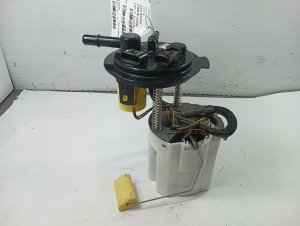
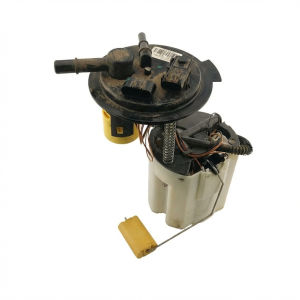
Typical fix: Replace the in-tank fuel pump module. This is located inside the fuel tank.
Est. part cost: $200-$400 - Faulty Fuel Rail Pressure Sensor (FRPS) ⚪ Low Probability The sensor itself can fail, but more commonly, the electrical connector to the sensor can develop corrosion, leading to incorrect readings.
How to confirm: With the key on and engine off, the sensor should report a low, stable pressure. If it reads zero, a very high number, or is erratic, the sensor or its wiring is likely faulty. Inspect the connector for corrosion or damage, a known issue referenced in TSB 20-NA-197. The TSB suggests cleaning the terminals and applying dielectric grease.
Typical fix: First, attempt to clean the connector and apply dielectric grease as per TSB 20-NA-197. If the issue persists, replace the fuel rail pressure sensor. This requires removing the intake manifold.
Est. part cost: $50-$120 - Clogged Fuel Filter ⚪ Low Probability
How to confirm: A low-pressure fuel system test will show low pressure if the filter is clogged. The fuel filter is integrated into the in-tank fuel pump module and is not serviced separately on this vehicle.
Typical fix: Replace the entire in-tank fuel pump module.
Est. part cost: $200-$400
Rare But Worth Checking
- Worn Camshaft Lobe: The HPFP is driven by a dedicated three-sided (tri-lobe) lobe on the camshaft. In very high-mileage cases, or if the engine was run with heavily fuel-contaminated oil, this lobe can wear down. This reduces the pump's stroke and its ability to generate pressure. This is difficult to diagnose without inspecting the camshaft and is usually considered after a new HPFP fails to resolve the issue.
- Damaged HPFP Cam Follower: Between the camshaft lobe and the HPFP's plunger is a small component called a cam follower or 'lifter'. If this part becomes worn or damaged, it can also reduce the pump's effectiveness. It should always be inspected and typically replaced along with the HPFP.
Diagnosis Steps
- Check for other stored DTCs that may provide more clues (e.g., P0191, P0089, P030x).
- CRITICAL STEP: Turn the engine off. Remove the oil fill cap and the oil dipstick. Carefully smell for a strong gasoline odor. If gas is detected in the oil, the HPFP has failed and must be replaced. Do not start the engine again until it is repaired.
- If no fuel is in the oil, connect a scan tool and monitor 'Desired Fuel Rail Pressure' and 'Actual Fuel Rail Pressure' data PIDs.
- With the engine idling, the values should be very close. Briefly rev the engine in park/neutral. The actual pressure should track the desired pressure with minimal delay.
- Perform a loaded test drive (if safe). Under hard acceleration, monitor if the 'Actual' pressure can meet the 'Desired' pressure. If it lags significantly, drops, or cannot meet the commanded pressure, suspect a fuel delivery issue.
- Connect a fuel pressure gauge to the low-pressure feed line to test the in-tank pump. Verify pressure is stable and within spec (typically 50-100 PSI). If low, the in-tank pump or its module is the issue.
- If low-pressure is good but high-pressure is low, the HPFP is the primary suspect.
- If scan tool data for the pressure sensor seems erratic or stuck (e.g., reading 2000 PSI with the engine off), inspect the sensor connector for corrosion or damage per TSB 20-NA-197 before condemning the sensor itself.
Parts You'll Likely Need
- High-Pressure Fuel Pump (for 2009-2011 LLT Engine)
(OEM #12641847)— This is the most common failure part for P0087 on the earlier 3.6L LLT engine. This part number supersedes several previous versions including 12608371, 12633115, 12633423, and 12639694.
Trusted brands: ACDelco (GM Genuine), Bosch, Delphi
OEM price range: $350-$550
Aftermarket price range: $250-$400 - High-Pressure Fuel Pump (for 2012-2017 LFX Engine)
(OEM #12691016)— This is the most common failure part for P0087 on the later 3.6L LFX engine. This part number supersedes 12622475, 12641740, and 12677329, and others.
Trusted brands: ACDelco (GM Genuine), Bosch
OEM price range: $300-$500
Aftermarket price range: $200-$350 - In-Tank Fuel Pump Module Assembly — If the low-pressure system test fails, this entire module, which includes the low-pressure pump and integrated fuel filter, needs to be replaced.
Related Codes That Often Appear With This One
- P0191 — This code for 'Fuel Rail Pressure Sensor Circuit Range/Performance' often appears with P0087 as it indicates the pressure reading is not what the ECM expects, which is a direct result of the HPFP failing or a faulty sensor.
- P0089 — 'Fuel Pressure Regulator Performance' is another code that points directly to the HPFP's inability to maintain stable pressure, as the regulator is integrated into the pump.
- P0300-P0306 — Random or specific cylinder misfire codes can be triggered because the low fuel pressure creates a lean air/fuel mixture that fails to ignite properly.
Technical Service Bulletins (TSBs) & Recalls
- TSB 20-NA-197: Addresses MIL illumination with P0087 and other fuel pressure codes due to corrosion in the fuel rail pressure sensor connector. Recommends inspecting, cleaning, and applying dielectric grease to the connector terminals.
- Special Coverage 11340C: While for timing chains, it's relevant as it addresses a key component often damaged by the fuel-in-oil condition resulting from a P0087-related HPFP failure. It extended warranty coverage for premature timing chain wear on some 2009 models.
Platform-Specific Known Issues
- A known failure of the high-pressure fuel pump involves its internal diaphragm rupturing, which leaks gasoline directly into the crankcase. This contaminates the engine oil, drastically reducing its viscosity and lubricating properties, which can quickly lead to other major engine failures like stretched timing chains.
- Forum discussions on enclaveforum.net and traverseforum.com are filled with owner stories detailing the P0087 code, often accompanied by the classic fuel-in-oil symptom, confirming the HPFP as the root cause. Many users stress the importance of checking the oil for a gas smell as the very first diagnostic step.
Mechanic-Grade Diagnostic Values
- Low-Pressure Fuel System (In-Tank Pump) — expected: 345-690 kPa (50-100 psi) when commanded ON with a scan tool (engine off).. Failure: Pressure below 345 kPa (50 psi) indicates a weak in-tank pump, clogged filter, or supply line issue.
- High-Pressure Fuel Pump (HPFP) Solenoid Resistance — expected: 0.35-0.6 ohms at 20°C (68°F) between the two terminals of the pump's electrical connector.. Failure: Resistance below 0.3 ohms or above 0.6 ohms indicates a faulty internal solenoid, requiring HPFP replacement.
- Fuel Rail Pressure Sensor (FRPS) Signal Voltage — expected: Approximately 0.5V with Key On, Engine Off (KOEO). At idle, voltage should be around 1.2V - 1.5V. During snap acceleration, it should jump towards 3.5V - 3.8V.. Failure: Voltage stuck at 0V, 5V, or a value that doesn't change with engine load suggests a failed sensor or wiring issue.
- Low-Side Fuel Pressure (at idle) — expected: 300-400 kPa (43-58 psi) at normal operating temperature.. Failure: Pressure significantly below this range at idle points to a problem with the in-tank fuel pump or the Fuel Pump Control Module (FPCM).
Scan Tool Commands That Help
- GDS2 (GM Techline): Fuel Pressure Regulator Command — This bidirectional control allows a technician to command the high-pressure fuel pump's regulator ON and OFF to verify the control circuit is functioning. It's used to isolate a problem between the ECM, wiring, and the HPFP itself.
- GDS2 (GM Techline): Fuel Pump On/Off — This command activates the in-tank low-pressure fuel pump without the engine running. It is essential for testing the low-pressure side of the system to ensure it can deliver the required 50-100 PSI to the HPFP.
Wiring & Ground Locations
- G305 — Located on the vehicle frame near the battery.. This is a primary ground point for various engine compartment components. A loose or corroded G305 ground can cause intermittent electrical issues for modules and sensors in the fuel system, leading to erratic pressure readings and potentially triggering a P0087 code.
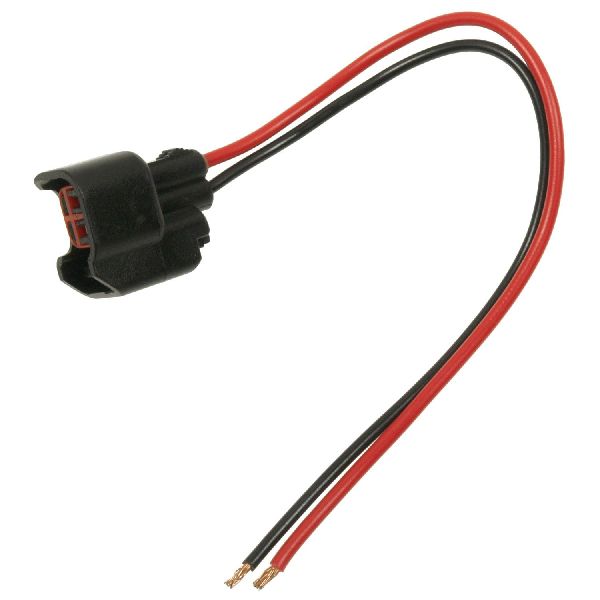
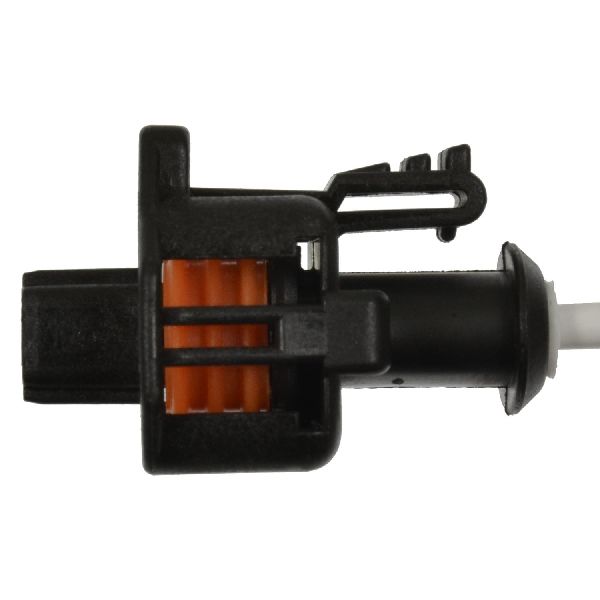
- Fuel Rail Pressure Sensor Connector — On the fuel rail, under the upper intake manifold. It is a 3-wire connector.. This connector is cited in GM TSB 20-NA-197 for potential corrosion. The three pins are typically 5V reference, ground, and signal. Testing voltage at these pins is a key diagnostic step. A bad connection here will send incorrect pressure data to the ECM.
Real Owner Repair Stories
- Reddit user in r/VelosterN (Hyundai, but same code and component) (Hyundai Veloster N) — P0087 code triggered.
❌ Tried (didn't work) Dealership recommended replacing the fuel pressure sensor for $1,000 first.
✅ What actually fixed it The owner insisted on replacing only the High-Pressure Fuel Pump (HPFP), which resolved the P0087 code. This supports the common knowledge that the HPFP itself is the most frequent cause, not the sensor.
Model Year Variations Within This Range
- 2009-2011 vs 2012-2017: The LLT engine (2009-2011) and LFX engine (2012-2017) use different, electronically incompatible High-Pressure Fuel Pumps. The LLT pump is OEM part number 12641847 (and its predecessors), while the LFX pump is OEM part number 12691016 (and its predecessors). It is critical to order the correct part for the specific engine.
Diagnostic Flowchart
Other Known Issues on This Vehicle
Issues unrelated to this code that are worth knowing about as an owner of this generation:
- Premature Timing Chain Stretch (LLT Engine) 🔴 High — Very common on 2009-2011 LLT engines, often appearing between 40,000-120,000 miles. Can lead to catastrophic engine failure. Triggers codes like P0008, P0017. (Ref: Special Coverage Adjustment 11340C extended warranty for some 2009 models.)
- 3-5-R Wave Plate Failure (6T75 Transmission) 🔴 High — Common on earlier models (especially 2008-2010), causing loss of 3rd, 5th, and Reverse gears. Often requires a full transmission rebuild. (Ref: Special Coverage 14404B extended warranty to 10 years/120,000 miles for this failure on some 2009 models.)
- Power Steering Pump Failure / Rack Leaks 🟠 Medium — Widespread reports of power steering pump whining/failure and subsequent leaks from the steering rack seals, particularly on 2009-2012 models. (Ref: Special Coverage 14329B provided extended warranty coverage for the power steering pump on affected vehicles.)
- Excessive Oil Consumption 🟠 Medium — Both LLT and LFX engines are known to consume oil, with GM considering up to 1 quart per 2,000 miles as 'normal'. This can lead to low oil levels that accelerate timing chain wear.
- Water Pump Failure 🟠 Medium — The water pump, located behind the timing cover, is a common failure item. Leaks can be internal (into the oil pan) or external. Replacement is labor-intensive.
- Ignition Coil Failure 🟡 Low — Failure of one or more ignition coils is a common cause of misfires (P030x codes). They are located under the intake manifold, making replacement more involved than on many other vehicles.
Used vs. New Parts: Buying Guide for This Vehicle
When a used part is the smart pick: For this specific P0087 issue on the Enclave, using a used part is generally NOT recommended for the core failure components. The High-Pressure Fuel Pump (HPFP) is a known high-failure-rate item, and a used pump carries a significant risk of failing again shortly after installation. A used Fuel Rail Pressure Sensor could be a viable option if sourced from a low-mileage vehicle, but given its relatively low cost new, it's often not worth the risk.
Donor-vehicle mileage cap: roughly under 40000 miles for the part to have meaningful remaining life.
What to inspect on the donor part:
- For any electronic part (sensor, module), verify the donor vehicle had no flood or fire damage.
- Check for a clean CarFax/vehicle history to avoid parts from a poorly maintained vehicle.
- If considering a used HPFP against advice, visually inspect the cam follower contact point for any scoring or excessive wear.
OEM-only on this vehicle (don't cheap out):
- High-Pressure Fuel Pump (HPFP)
Aftermarket brands forum-validated for this vehicle:
- Bosch (Often the OEM supplier for the HPFP)
- ACDelco (GM's official parts brand)
- Delphi
Brands owners have reported issues with on this vehicle:
- No-name, unbranded parts from online marketplaces are highly discouraged for this critical, high-pressure component.
Real Owner Stories
Aggregated from forums and TSBs cited above. Mileages and costs reflect what owners reported in those sources.
2009 Buick Enclave 3.6L LLT — ~80000 miles
Symptoms: Check Engine Light illuminated with P0087; members consistently pointed to the fuel-in-oil smell as the primary indicator.
What fixed it: Replace the high-pressure fuel pump (HPFP) and the single-use high-pressure fuel line, followed by an oil change.
Source hint: enclaveforum.net
2010-2017 Buick Enclave 3.6L LFX
Symptoms: MIL illumination with P0087 and other fuel pressure codes due to corrosion in the fuel rail pressure sensor connector.
What fixed it: Inspecting, cleaning, and applying dielectric grease to the connector terminals per TSB 20-NA-197.
Source hint: TSB 20-NA-197
Related OBD-II Codes
Frequently Asked Questions
Why does my 2009-2017 Buick Enclave oil smell like gasoline when the P0087 code is present?
Is there a TSB for fuel pressure sensor issues on the Buick Enclave?
Does the P0087 code relate to the timing chain issues covered under Special Coverage 11340C?
Can I just replace the fuel filter to fix P0087 on my 3.6L Enclave?
What is the difference between the 'Desired' and 'Actual' fuel pressure on my scan tool?
Should I change my oil after fixing the P0087 code?
Helpful Videos
Used OEM Parts in Stock
New Aftermarket Parts Available


The information in this article is provided for general reference and educational purposes only. Vehicle specifications, procedures, and part compatibility can vary by production date, trim level, and region. Always consult your vehicle's factory service manual and verify part numbers before purchasing or performing repairs. Safety-critical components such as airbags, seat belts, and braking systems should be installed by a qualified professional.
- Buick Enclave:
- 🎬 Helpful Videos
- 🛍️ Shop This Part
- What's Unique About the 2009-2017 Buick Enclave
- Symptoms You May Notice
- Most Likely Causes
- Rare But Worth Checking
- Diagnosis Steps
- Parts You'll Likely Need
- Related Codes That Often Appear With This One
- Technical Service Bulletins (TSBs) & Recalls
- Platform-Specific Known Issues
- Mechanic-Grade Diagnostic Values
- Scan Tool Commands That Help
- Wiring & Ground Locations
- Real Owner Repair Stories
- Model Year Variations Within This Range
- Diagnostic Flowchart
- Other Known Issues on This Vehicle
- Used vs. New Parts: Buying Guide for This Vehicle
- Real Owner Stories
- 2009 Buick Enclave 3.6L LLT — ~80000 miles
- 2010-2017 Buick Enclave 3.6L LFX
- Related OBD-II Codes
- Frequently Asked Questions
- 🎟️ Get 5% Off