

P0087 on 2009-2016 Audi A4/A5/Q7 2.0L TFSI: Low Fuel Rail Pressure Causes and Fixes
On 2009-2012 models (B8 generation), P0087 is almost always caused by a worn-out HPFP cam follower, a cheap part that can cause expensive camshaft damage if ignored. On 2013-2016 models (B8.5 generation), which use an updated roller follower, the cause is more likely the High-Pressure Fuel Pump (HPFP) itself. Immediate inspection is required, starting with checking the oil for a fuel smell.
- For a 2009-2012 Audi with a 2.0T engine and code P0087, you must inspect the HPFP cam follower immediately. It is the most likely cause.
- For 2013-2016 models, the HPFP itself is a more likely culprit than the cam follower, but the low-pressure fuel pump should also be checked.
- Do not drive the vehicle. Stalling is a safety risk, and you can cause severe, expensive engine damage if the cam follower fails completely.
- Always use a scan tool to compare requested vs. actual fuel rail pressure to confirm a real pressure drop before replacing expensive parts.
- Do not replace the HPFP without first checking the cam follower (especially on B8 models); a bad follower will destroy a new pump.
What's Unique About the 2009-2016 Audi A4/A5/Q7

The 2.0L TFSI engine (EA888 Gen 2) used in this era has a well-documented weakness related to this code, but the primary cause differs by model year. Early models (2009-2012, B8 generation, primarily CAEB engine code) use a flat-tappet 'cam follower' for the high-pressure fuel pump that is a known, frequent wear item. Failure is so common that it should be the first suspect. Later models (2013-2016, B8.5 generation) were updated with a more durable roller-style follower, making the HPFP itself a more likely culprit when this code appears.
Generation note: This range covers the Audi B8 generation (2009-2012) and its facelift, the B8.5 (2013-2016) for the A4 and A5. The primary difference regarding this code is the upgrade from a failure-prone flat cam follower in the B8 to a more robust roller-style follower in the B8.5. The Q7 received the 2.0T engine late in its first generation and more commonly in its second generation (starting 2016), but the engine-specific issues remain relevant.
Symptoms You May Notice
- Significant loss of power, especially during acceleration or at higher RPMs.
- Engine hesitation, stuttering, or bucking.
- Engine enters 'limp mode' with reduced power and an illuminated EPC light.
- Engine stalls, especially under load or when coming to a stop.
- Rough or unstable idle.
- Hard starting or extended cranking time.
- Illuminated Check Engine Light (MIL).
- Strong smell of gasoline in the engine oil, indicating a failed HPFP seal.
- Replacing the High-Pressure Fuel Pump (HPFP) on a 2009-2012 model without first inspecting the cam follower. A worn follower will quickly destroy a brand new pump.
- Replacing fuel system components without checking the engine oil for a strong fuel smell. Fuel in the oil is a definitive sign of a failed HPFP seal and must be addressed first.
Most Likely Causes

- Worn High-Pressure Fuel Pump (HPFP) Cam Follower 🔴 High Probability This is the number one cause for 2009-2012 (B8) models with the EA888 Gen 2 engine. The original flat-tappet follower is a consumable part that wears down, losing its ability to drive the HPFP. It is considered a routine maintenance item by enthusiasts, with replacement recommended every 30,000-40,000 miles.
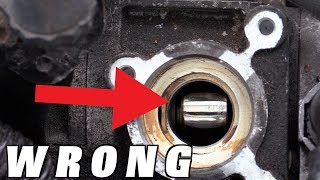
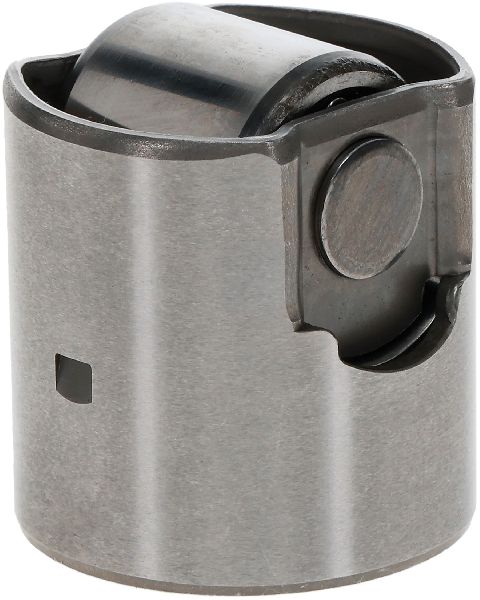
How to confirm: Remove the HPFP from the cylinder head (typically three Torx T30 bolts and a fuel line banjo bolt). The thimble-shaped cam follower can then be pulled out of its bore. Inspect the contact surface for wear. Any visible scoring, a concave shape, or a complete hole means it has failed. Even if the black coating is just worn off in the center, it's best to replace it.
Typical fix: Replace the cam follower (Part No. 06H109311B). If it has worn completely through, the HPFP and the intake camshaft must also be inspected for damage and likely replaced.
Est. part cost: $40-$60 - Failed High-Pressure Fuel Pump (HPFP) 🔴 High Probability This is a primary cause on 2013-2016 (B8.5) models which have a more robust cam follower. On earlier models, the HPFP often fails as collateral damage when the cam follower is breached, or its internal seals fail, leaking fuel into the crankcase.
How to confirm: First, check the engine oil for a strong gasoline smell. If fuel is present, the HPFP has failed internally. If not, and after confirming the cam follower and low-pressure system are good, use a diagnostic tool (like VCDS) to monitor requested vs. actual fuel rail pressure (Measuring Block 106). If actual pressure consistently fails to meet the requested value under load, the HPFP is likely faulty.
Typical fix: Replace the High-Pressure Fuel Pump. It is critical to also replace the cam follower at the same time, even on B8.5 models.
Est. part cost: $300-$600 - Failing Low-Pressure Fuel Pump (LPFP) or Control Module (J538) 🟡 Medium Probability The in-tank LPFP is responsible for feeding the HPFP. If it weakens or its control module (J538) fails, it cannot supply enough fuel volume for the HPFP to pressurize, leading to P0087. The control module is known to fail on these platforms.
How to confirm: Use a scan tool to monitor the low-pressure fuel system duty cycle (VCDS Block 103). A value fluctuating wildly or consistently above 60-70% can indicate a failing pump. A dedicated fuel pressure gauge should be connected to the low-pressure line to verify it meets specification (typically 4.0 to 6.0 bar or ~58-87 PSI).
Typical fix: Replace the in-tank low-pressure fuel pump assembly or the fuel pump control module (J538), which is often located under the rear seat.
Est. part cost: $200-$400 - Faulty Fuel Rail Pressure Sensor (G247/G410) ⚪ Low Probability While less common than pump or follower failure, the sensors that read rail pressure can fail and send incorrect low readings to the ECM. Audi has issued TSB 01-14-01 (also listed as 2027306) for diagnosing the high-pressure sensor (G247) and TSB 2027458 for an improved low-pressure sensor (G410).
How to confirm: Compare the sensor's pressure reading on a scan tool to a known-good mechanical gauge. Per TSB 01-14-01, if the discrepancy is greater than 500 kPa (5 bar), the sensor or its wiring is suspect. The low-pressure sensor (G410) part number is often 06E906051K.
Typical fix: Replace the faulty fuel pressure sensor.
Est. part cost: $70-$150
Rare But Worth Checking
- Worn Intake Camshaft Lobe: This is usually a direct consequence of a completely failed cam follower on B8 models. The follower wears through, and the HPFP piston grinds directly on the camshaft lobe, destroying it. If you find a destroyed follower, you must inspect the cam lobe for scoring or a worn profile.
- Clogged Fuel Filter: A severely clogged fuel filter can restrict flow to the HPFP. It's a simple maintenance item that is often overlooked. If its age is unknown, it's worth replacing as part of the diagnosis, especially if low-pressure system performance is suspect.
- Leaking Fuel Injector(s): A fuel injector that is stuck open or leaking excessively can cause a drop in rail pressure. This can often be identified by checking fuel trim values, looking for specific cylinder misfire codes, or performing an injector leak-down test.
Diagnosis Steps

- Check Model Year & Engine Code: Identify if the vehicle is a 2009-2012 (B8, likely CAEB engine) or 2013-2016 (B8.5), as this heavily influences the most likely cause.
- Scan for Codes: Use an OBD-II scanner (VCDS is preferred) to confirm P0087 and check for any other related codes like P2293 or misfires.
- Smell the Oil: Before any disassembly, remove the oil filler cap or dipstick and check for a strong smell of gasoline. If present, the HPFP has failed internally and is leaking fuel into the crankcase. The pump must be replaced.
- (2009-2012 Models) Inspect the HPFP Cam Follower: This is the most critical first mechanical check for B8 models. Relieve fuel pressure, then remove the HPFP (three T30 Torx bolts). Visually inspect the follower for wear or a hole. If it is damaged, also inspect the camshaft lobe and the tip of the HPFP piston.
- Monitor Fuel Pressure with a Scan Tool: Use a tool like VCDS to log 'Requested' vs. 'Actual' fuel rail pressure (e.g., Measuring Block 106). A large deficit in actual pressure, especially under acceleration, confirms a fuel delivery problem.
- Check Low-Pressure System: Verify the in-tank fuel pump is working correctly. Check low-side pressure with a mechanical gauge (should be ~4-6 bar / 58-87 PSI). Monitor the LPFP duty cycle with a scan tool; sustained high values or wild fluctuations suggest a problem.
- Inspect the Fuel Rail Pressure Sensor (G247/G410): If fuel pressures seem erratic or the sensor reading is suspect, test the sensor and its wiring per Audi TSB 01-14-01. A significant difference between the scan tool reading and a mechanical gauge points to a bad sensor.
- Check Fuel Filter: If its service history is unknown, replace the main fuel filter to eliminate it as a source of restriction.
Parts You'll Likely Need

- HPFP Cam Follower (Tappet)
(OEM #06H109311B)— The most common failure point on 2009-2012 2.0T engines causing P0087
Related Codes That Often Appear With This One
- P0300-P0304 — Random or specific cylinder misfire codes can occur because the low fuel pressure prevents proper atomization and combustion, leading to a lean condition.
- P2293 — Fuel Pressure Regulator 2 Performance. This code is also related to the high-pressure fuel system and often points to the same set of components (HPFP, sensor, follower).
- P1093 — Bank 1, Fuel Measuring System 2 Malfunction. This is another code that points directly to an issue with the high-pressure fuel system's ability to meter fuel correctly, often appearing alongside P0087.
Technical Service Bulletins (TSBs) & Recalls
- TSB 01-14-01 (also 2027306/4): Details the diagnostic procedure for testing the G247 high-pressure fuel sensor.
- TSB 2027458 / 01-11-19: Mentions an improved G410 low-pressure fuel sensor for some 2.0T engines.
- TSB 2015153: Addresses worn intake camshafts on some VW models, which is a related failure.
Mechanic-Grade Diagnostic Values
- Low-Pressure Fuel System (LPFP) Pressure — expected: 4.0 to 7.0 bar (58 to 101 PSI), requested on demand by the ECM.. Failure: Pressure is significantly below 4.0 bar, or is stuck at a high value (e.g., 11 bar) with a 0% pump duty cycle, indicating a sensor or controller fault.
- High-Pressure Fuel Rail at Idle (Warm Engine) — expected: Approx. 40 bar (580 PSI).. Failure: Actual pressure is significantly and consistently below requested pressure.
- High-Pressure Fuel Rail Under Load — expected: Actual pressure should track requested pressure up to 150 bar (2175 PSI) or higher.. Failure: Actual pressure fails to rise with requested pressure, or drops off sharply during acceleration.
- HPFP Solenoid (N276) Resistance — expected: Between 1.5 Ω and 11 Ω.. Failure: A reading outside this range indicates a faulty solenoid. A very low reading (e.g., 1.2 Ω) can be a sign of an internal short.
- LPFP Control Module (J538) Duty Cycle (VCDS Block 103) — expected: Should fluctuate but generally stay below 60%.. Failure: A value consistently above 60-70% or fluctuating wildly from 35% to 95% suggests the LPFP is failing or there is a restriction.
Scan Tool Commands That Help

- VCDS (VAG-COM): Log Measuring Blocks 103 (LPFP), 106 (HPFP), and 230/140 (Rail Pressure) — This is the primary method for diagnosing P0087. Logging requested vs. actual pressure for both the low and high-pressure systems while driving under load is essential to determine which part of the system is failing.
- VCDS (VAG-COM): Output Test for HPFP Regulating Valve (N276) — This test actuates the solenoid on the HPFP. You should hear an audible click. A faint or no click, especially when the engine is warm, can indicate a failing solenoid. This can be correlated with voltage and resistance tests.
- VCDS (VAG-COM) or OBDeleven: Activate In-Tank Fuel Pump — On B8.5 models with a three-phase pump motor, you cannot simply apply 12V to test the pump. A scan tool must be used to command the fuel pump controller (J538) to run the pump, which is necessary for testing low-side pressure or draining the tank.
Wiring & Ground Locations
- J538 Fuel Pump Control Module — Typically located under the rear seat, near the fuel tank access panel. On some models, it may be on the driver's rear side.. This module controls the in-tank low-pressure fuel pump. Failure of the module, its wiring, or its ground can starve the HPFP of fuel, causing P0087. It is a common point of failure.
- J538 Power Fuse — Fuse 3 in the middle column of the fuse block located on the driver's side end of the dashboard.. This fuse supplies 12V power to the fuel pump control module. A blown fuse will disable the low-pressure fuel pump entirely, leading to a no-start condition and P0087.
- HPFP Solenoid (N276) Connector — The 2-pin electrical connector on the High-Pressure Fuel Pump itself, mounted on the engine.. This is where voltage and resistance measurements for the HPFP's control solenoid are taken. Poor connection or wire damage here can cause erratic HPFP operation.
Real Owner Repair Stories
- YouTube user SP88 (Audi A3 2.0 TFSI (platform-mate with similar engine)) — P0087, hesitation, holding back on acceleration.
❌ Tried (didn't work) The previous owner had already replaced the High-Pressure Fuel Pump (HPFP) and the cam follower, but the problem persisted.
✅ What actually fixed it The intake camshaft lobe that drives the HPFP was visibly worn down. Replacing the intake camshaft resolved the low fuel pressure and cleared the P0087 code. - Ross-Tech Forums user (2015 Audi A3 2.0T (EA888 Gen3)) — Intermittent P0087, bucking/jolt at low RPM when warm.
❌ Tried (didn't work) Replaced HPFP with a new Hitachi unit., Replaced cam follower with a new Hitachi unit.
✅ What actually fixed it The user diagnosed a faulty low-pressure fuel sensor (G410) that was getting 'pinned' at 11 bar, sending an incorrect reading to the ECU and causing the LPFP duty cycle to drop to 0%. This starved the new HPFP of fuel. The final fix was replacing the G410 low-pressure sensor.
OEM Part Supersession History
06H109311B→06L109311— Part revision and update. The 06H... number is associated with the earlier flat tappet follower, while 06L109311 is the later, more durable roller-style follower used in B8.5 and later generations.
Heads up: While the parts may physically fit, the B8 engines are designed for the flat tappet. The primary upgrade path is using a high-quality, coated version of the original flat tappet (06H109311B) and treating it as a wear item.
Model Year Variations Within This Range
- 2009-2012 (B8 Generation): Uses a flat tappet cam follower (P/N 06H109311B) which is a major failure point and the primary cause of P0087. The low-pressure fuel pump is a traditional single-phase DC motor.
- 2013-2016 (B8.5 Generation): Upgraded to a more durable roller-style cam follower (P/N 06L109311), making follower failure much less common. The in-tank low-pressure fuel pump was changed to a three-phase motor that requires a scan tool to activate for testing, as it cannot be jumped with 12V directly.
Diagnostic Flowchart
Other Known Issues on This Vehicle
Issues unrelated to this code that are worth knowing about as an owner of this generation:
- Excessive Oil Consumption 🔴 High — Extremely common on 2009-2011.5 models (CAEB engine code). Caused by faulty piston rings. Less common on later models. (Ref: Subject of a class-action lawsuit. Audi addressed some vehicles with new piston rings and a PCV update.)
- Timing Chain Tensioner Failure 🔴 High — Common across all B8 models. The original tensioner design can fail without warning, leading to jumped timing and catastrophic engine damage. An updated tensioner is available. (Ref: Multiple TSBs exist. It is a well-known preventative maintenance item.)
- Water Pump & Thermostat Housing Failure 🟠 Medium — The plastic housing is prone to cracking and leaking coolant, typically after 60,000-90,000 miles. Often fails by leaking slowly before causing overheating. (Ref: TSB CRP 050816 discusses the high failure rate.)
- PCV Valve Failure 🟠 Medium — The diaphragm in the PCV (oil separator) can tear, causing a large vacuum leak, rough idle, lean codes, and high oil consumption. It is a common failure item. (Ref: Mentioned in TSBs related to oil consumption and lean codes.)
- Intake Valve Carbon Buildup 🟠 Medium — As a direct-injection engine, fuel does not wash over the intake valves. This leads to significant carbon buildup over 50,000-80,000 miles, causing misfires, hesitation, and reduced power, especially on cold starts.
Used vs. New Parts: Buying Guide for This Vehicle
When a used part is the smart pick: Used parts are generally not recommended for this repair due to the critical nature and high wear of the components. A used intake camshaft could be considered if it comes from a very low-mileage vehicle and is thoroughly inspected for any lobe wear, but the risk is high.
Donor-vehicle mileage cap: roughly under 40000 miles for the part to have meaningful remaining life.
What to inspect on the donor part:
- For a camshaft: Verify the donor vehicle did not suffer a catastrophic cam follower failure. Inspect the HPFP drive lobe with a micrometer for any deviation from spec. Look for any scoring or discoloration.
- For electronic modules (J538): Ensure the part number is an exact match and there is no water damage or corrosion on the pins.
OEM-only on this vehicle (don't cheap out):
- High-Pressure Fuel Pump (HPFP)
- HPFP Cam Follower
- Fuel Pressure Sensors (G247/G410)
Aftermarket brands forum-validated for this vehicle:
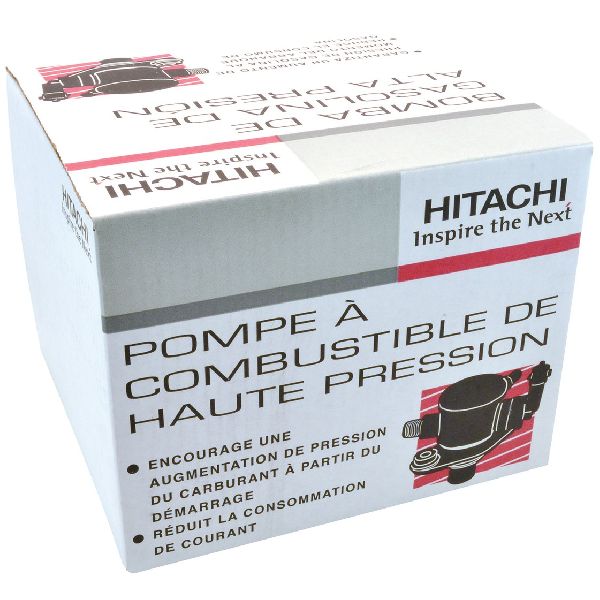
- HPFP: Hitachi (often the OEM supplier)
- Cam Follower: INA (OEM supplier)
- LPFP: VDO, Pierburg
- Upgraded HPFP Internals (for tuned cars): Autotech, Integrated Engineering (IE), 034Motorsport
Brands owners have reported issues with on this vehicle:
- Unbranded, no-name HPFPs and sensors from online marketplaces. The tolerances and electronic components are too critical for generic parts.
Real Owner Stories
Aggregated from forums and TSBs cited above. Mileages and costs reflect what owners reported in those sources.
2015 Audi S4 (B8.5)
Symptoms: Vehicle showing P0087 Fuel Rail/System Pressure - Too Low.
What fixed it: Replacement of the High-Pressure Fuel Pump (HPFP).
Source hint: Audizine Forum: B8.5 S5 showing P0087
2009-2012 Audi A4 2.0T
Symptoms: Worst-case scenario involving fuel pressure issues where the cam follower had worn through completely.
What fixed it: Replacement of the worn cam follower and the intake camshaft due to damage to the camshaft lobe.
Source hint: YouTube: Audi A3 2.0T P0087 Fuel Pressure Issue FIXED!
Audi A8 (D3 Platform)
Symptoms: Owner used VCDS to graph requested vs. actual fuel pressure, identifying a lag that triggered the code.
What fixed it: Diagnostic pointed towards a fuel filter or low-pressure pump issue.
Source hint: AudiWorld Forums: P0087 Fuel rail/System Pressure too low
Related OBD-II Codes
Frequently Asked Questions
I have a 2010 Audi A4 (B8). What is the most likely cause for my P0087 code?
My 2014 Audi A4 is throwing P0087. Is the cam follower still the main suspect?
Is there a specific TSB for diagnosing the fuel pressure sensor on my Audi?
How can I tell if my High-Pressure Fuel Pump (HPFP) has failed internally without taking it apart?
What part number should I look for if I need to replace the cam follower on my 2.0L TFSI?
Can a problem with the rear seat area cause a P0087 fuel pressure code?
Helpful Videos
Used OEM Parts in Stock


New Aftermarket Parts Available


The information in this article is provided for general reference and educational purposes only. Vehicle specifications, procedures, and part compatibility can vary by production date, trim level, and region. Always consult your vehicle's factory service manual and verify part numbers before purchasing or performing repairs. Safety-critical components such as airbags, seat belts, and braking systems should be installed by a qualified professional.
- Audi A4/A5/Q7:
- 🎬 Helpful Videos
- 🛍️ Shop This Part
- What's Unique About the 2009-2016 Audi A4/A5/Q7
- Symptoms You May Notice
- Most Likely Causes
- Rare But Worth Checking
- Diagnosis Steps
- Parts You'll Likely Need
- Related Codes That Often Appear With This One
- Technical Service Bulletins (TSBs) & Recalls
- Mechanic-Grade Diagnostic Values
- Scan Tool Commands That Help
- Wiring & Ground Locations
- Real Owner Repair Stories
- OEM Part Supersession History
- Model Year Variations Within This Range
- Diagnostic Flowchart
- Other Known Issues on This Vehicle
- Used vs. New Parts: Buying Guide for This Vehicle
- Real Owner Stories
- 2015 Audi S4 (B8.5)
- 2009-2012 Audi A4 2.0T
- Audi A8 (D3 Platform)
- Related OBD-II Codes
- Frequently Asked Questions
- 🎟️ Get 5% Off