

P0070 on 2013-2020 Ford Fusion 1.5L: Ambient Air Temperature Sensor Circuit Causes and Fixes
On a 2013-2020 Ford Fusion, code P0070 is most often caused by a failed Ambient Air Temperature (AAT) sensor or its wiring, located behind the front lower grille. This will cause the A/C to stop working correctly and the dash display to show an incorrect temperature like -40°F. A new sensor is the usual fix, costing around $20-$50 for the part, and is a simple DIY replacement.
- P0070 on a Ford Fusion almost always points to the Ambient Air Temperature (AAT) sensor or its wiring.
- The main symptoms will be a Check Engine Light and a non-functional automatic A/C system.
- The sensor is located behind the lower front grille and is easy to access and replace, making it a great DIY fix.
- Before buying a new sensor, always perform a quick visual inspection of the wiring and connector for obvious damage, as this is also a common failure point.
- A new sensor costs between $20 and $50 and can typically be replaced in under 20 minutes.
What's Unique About the 2013-2020 Ford Fusion
For the second-generation Ford Fusion (2013-2020), the AAT sensor is placed in a vulnerable position behind the lower front grille. This location makes it highly susceptible to damage from road debris, minor parking lot bumps, and corrosion from road salt in winter climates, which often leads to sensor failure or damaged wiring. Unlike some other Ford models like the Focus which may have the sensor in the passenger mirror, the Fusion's is always at the front bumper. Some owners report issues immediately after removing the front bumper for other service, indicating the connector or wiring is easily disturbed.
Symptoms You May Notice
- Check Engine Light is on
- Automatic climate control system not working properly (e.g., A/C won't get cold or blows hot air)
- Outside temperature display on the dashboard is incorrect, often showing a default value like -40°F or 50°F
- In some cases, after disconnecting and reconnecting the sensor (like during bumper removal), it may take 20-30 minutes of driving for the sensor to begin reading properly again.
- Replacing A/C system components like the compressor or pressure switches before diagnosing the P0070 code. The A/C system is often disabled by the PCM as a direct result of this sensor fault.
- Assuming the sensor is bad when the issue is just a poor connection. Some owners report that after disconnecting and reconnecting the sensor, it took several drive cycles for the reading to return to normal.
Most Likely Causes
- Failed Ambient Air Temperature (AAT) Sensor 🔴 High Probability The sensor is located in the front lower grille area, making it vulnerable to moisture, road salt, and physical damage from debris or minor impacts. The plastic can become brittle over time, and internal failure is common.
How to confirm: After visually inspecting wiring, test the sensor. Disconnect it and measure its resistance with a multimeter. The resistance should change when heating (e.g., with a hairdryer) or cooling the sensor. If resistance is infinite (open circuit), zero (shorted), or doesn't change, the sensor is bad.
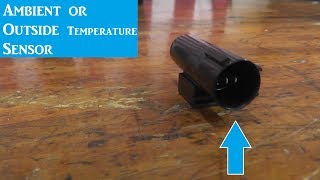
Typical fix: Replace the Ambient Air Temperature sensor. It typically unclips or twists out of its bracket in the lower grille. This is a very common DIY repair. 🎬 Watch: Step-by-step guide to replacing the Fusion AAT sensor
Est. part cost: $20-$50 - Damaged Wiring or Connector 🟡 Medium Probability The same vulnerability that affects the sensor can damage its thin wires or the plastic connector. Corrosion from road salt and water is a primary culprit, causing green or white buildup on the connector pins. Wires can also be stretched or broken during minor front-end impacts or bumper removal.
How to confirm: Visually inspect the wires leading to the sensor for any breaks, chafing, or corrosion. Unplug the connector and check the pins inside for green/white powder or physical damage. Ensure the connector is securely plugged in.
Typical fix: If the connector is corroded, it can often be cleaned with an electrical contact cleaner. If it is physically damaged or the wires are broken at the connector, replace it with a new pigtail connector. If the wire is broken further up, repair the circuit by splicing the wire. 🎬 Watch: How to properly install a new pigtail connector
Est. part cost: $15-$30 for a pigtail connector
Rare But Worth Checking
- Powertrain Control Module (PCM) Fault: This is extremely rare. All other possibilities, especially sensor and wiring issues, should be exhaustively ruled out before considering the PCM as the cause.
Diagnosis Steps
- Read the code with an OBD-II scanner to confirm P0070 is present.
- Observe the outside temperature reading on the dashboard. A reading of -40°F, 50°F, or another obviously incorrect static value strongly suggests an AAT sensor circuit fault.
- Locate the AAT sensor. On the 2013-2020 Fusion, it is behind the lower front grille, typically clipped into a bracket and accessible from the front of the car.
- Visually inspect the sensor and its connector for physical damage, corrosion, or loose wires. Look for green or white powder on the connector pins.
- Disconnect the sensor and inspect the connector pins for corrosion or damage. Ensure the connector is fully seated when reconnected. Sometimes just unplugging and replugging it can restore the connection.
- If the visual inspection is inconclusive, test the sensor. With a multimeter set to measure resistance (Ohms), connect the leads to the two pins on the sensor. You should get a reading that corresponds to the ambient temperature (a service manual or online chart can provide specifics).
- Gently heat the sensor tip with a hairdryer. The resistance value should decrease smoothly. If it doesn't change, or if the initial reading was open-circuit (OL) or zero, the sensor is faulty and needs replacement. 🎬 See how to test sensor resistance and fix A/C issues
- If the sensor tests good, the problem is likely in the wiring. Check for voltage and ground at the connector with the key on. One wire should have a 5-volt reference from the PCM, and the other should be a ground.
- If wiring and sensor are confirmed good, the issue could be a faulty PCM, but this is highly unlikely and should be the last resort.
Parts You'll Likely Need
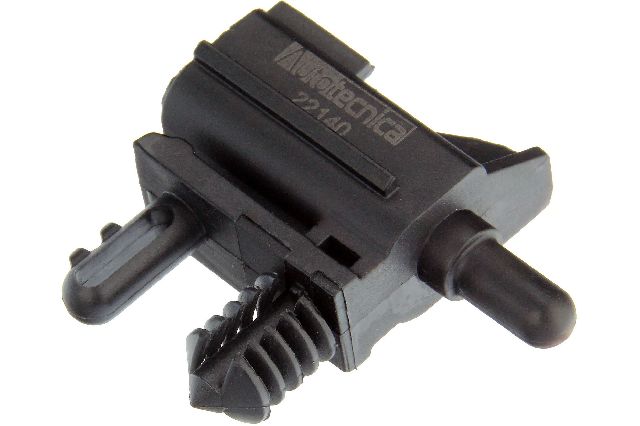
- Ambient Air Temperature Sensor
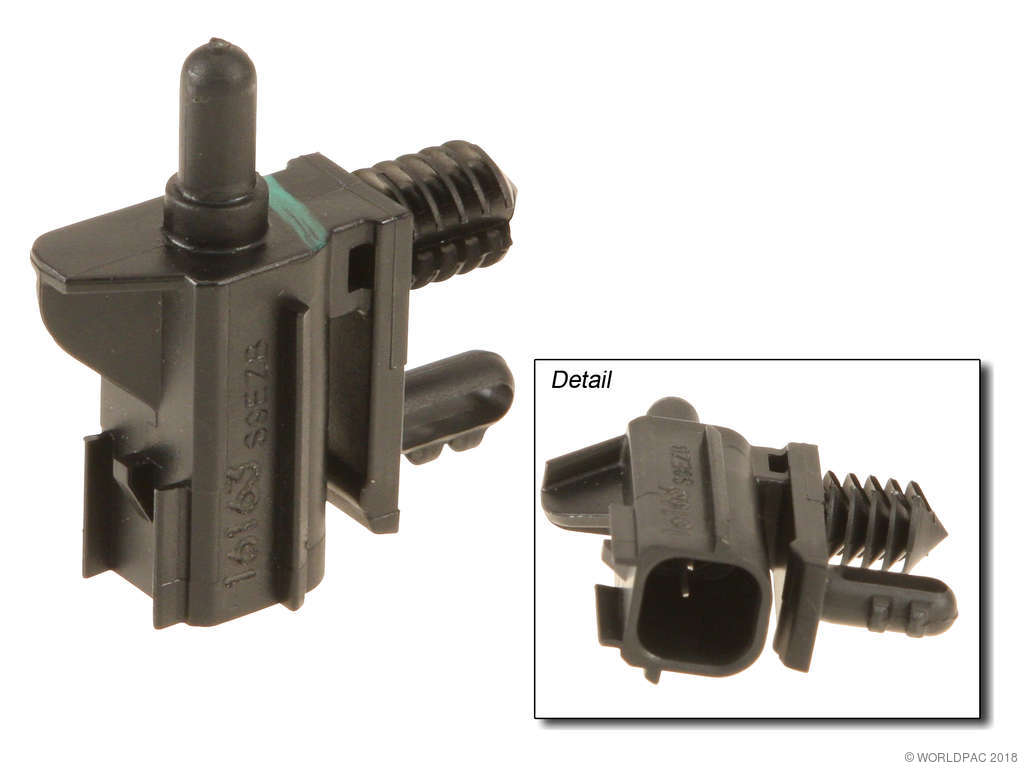
(OEM #AU5Z-12A647-B)— This is the most common failure point for this code due to its exposed location and susceptibility to moisture and debris.
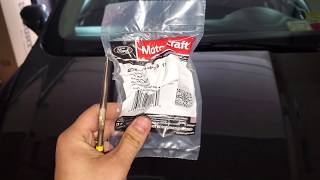
Trusted brands: Motorcraft (also sold as DY-1160), Standard Motor Products, Dorman, NTK
OEM price range: $30-$50
Aftermarket price range: $15-$35 - Ambient Air Temperature Sensor Connector Pigtail
(OEM #WPT-1047 (Motorcraft))— If the connector itself is corroded, cracked, or has broken wires, replacing the sensor alone will not fix the issue. Corrosion is common due to its location.
Trusted brands: Dorman, Motorcraft, Standard Motor Products
OEM price range: $25-$40
Aftermarket price range: $15-$30
Related Codes That Often Appear With This One
- P0071 — P0071 indicates a 'Sensor Range/Performance' issue, which is a more specific version of the general circuit fault P0070. They both point to the same sensor and circuit.
- P0072 — P0072 indicates the sensor circuit input is low (short to ground), which is a specific type of electrical failure within the same circuit that causes P0070.
- P0073 — P0073 indicates the sensor circuit input is high (open circuit), which is a specific type of electrical failure within the same circuit that causes P0070.
Platform-Specific Known Issues
- Delayed Reading After Reconnection: Some owners on forums have noted that after disconnecting the battery or the sensor itself (e.g., for bumper removal), the temperature display will read a default 50°F and the A/C will not work. It can take up to 30 minutes of continuous driving for the PCM to re-learn and display the correct temperature.
Mechanic-Grade Diagnostic Values
- AAT Sensor Resistance vs. Temperature — expected: The sensor is a thermistor; resistance decreases as temperature increases. A typical Ford sensor will have approximate values: -10°C (14°F) = ~11,800 Ohms; 10°C (50°F) = ~6,100 Ohms; 25°C (77°F) = ~4,700 Ohms; 30°C (86°F) = ~3,780 Ohms.. Failure: An infinite resistance (Open Loop) reading or a zero/near-zero resistance (shorted) reading indicates a failed sensor. A reading that does not change when the sensor is heated or cooled also indicates failure.
- AAT Sensor Circuit Voltage at PCM — expected: The PCM expects a voltage between 0.51V and 4.93V. This voltage corresponds to the temperature reading after being processed from the sensor's resistance.. Failure: A voltage below 0.51V will trigger a P0072 (Circuit Low) code. A voltage above 4.93V will trigger a P0073 (Circuit High) code. P0070 is a general circuit malfunction that can be caused by values outside this range or other circuit integrity issues.
Wiring & Ground Locations
- AAT Sensor Circuit — The circuit runs from the AAT sensor connector behind the lower front grille, through the main engine harness, to a connector on the Powertrain Control Module (PCM) located in the engine bay.. This is not a chassis-grounded circuit. It uses a dedicated 5V reference wire and a signal return wire that both go directly to the PCM. Technicians must not test for ground continuity to the vehicle's chassis; continuity must be checked end-to-end from the connector to the corresponding pins at the PCM.
Real Owner Repair Stories
- Compilation of multiple forum threads (2015 Ford Fusion, 1.5L) — Check engine light on with code P0070. A/C blowing warm air. Outside temperature display stuck at -40°F.
❌ Tried (didn't work) Replaced the AAT sensor with a new Motorcraft part. Cleared codes, but P0070 returned immediately and symptoms persisted.
✅ What actually fixed it The owner removed the front bumper cover to inspect the wiring harness. About a foot back from the sensor connector, the wires entered a larger loom. Inside this loom, the insulation on one of the two AAT sensor wires was found to be chafed and broken from rubbing against a plastic bracket. The wire was repaired using a butt connector and heat shrink tubing. After the repair, codes were cleared and did not return, and the A/C and temperature display functioned correctly.
OEM Part Supersession History
FC4Z-12A647-A, DY-1345→AU5Z-12A647-B— Standard part revision and consolidation across multiple vehicle lines.
Diagnostic Flowchart
Other Known Issues on This Vehicle
Issues unrelated to this code that are worth knowing about as an owner of this generation:
- 1.5L EcoBoost Coolant Intrusion 🔴 High — A known design flaw in engines built before mid-2019 can cause coolant to leak into the cylinders, often noticeable around 70k-110k miles. Symptoms include coolant loss, white exhaust smoke, and misfires. The only permanent fix is a redesigned engine block. (Ref: While TSB 19-2346 specifically addresses the 2.0L engine, the issue is widely documented for the 1.5L as well.)
- Shifter Cable Bushing Failure 🔴 High — The bushing that attaches the shifter cable to the transmission can degrade and detach, causing the vehicle to not be in the gear selected by the driver (e.g., showing 'Park' but actually in Neutral), creating a rollaway risk. Affects 2013-2016 models. (Ref: Ford Safety Recall 18S20 and a later expanded recall (22S43) were issued to replace the bushing and add a protective cap.)
- Steering Gear Motor Bolt Corrosion 🟠 Medium — In regions that use road salt, the bolts holding the electric power steering motor can corrode and fracture, leading to a sudden loss of power steering assist. This primarily affects 2013-2016 models. (Ref: Ford Safety Recall 19S26 (also referenced as 15R01/15S14) was issued for vehicles in specific 'salt belt' states to replace the bolts and apply a wax sealer.)
Used vs. New Parts: Buying Guide for This Vehicle
When a used part is the smart pick: For the connector pigtail ONLY. If the original connector is damaged or corroded, a pigtail cut from a donor vehicle at a junkyard is a cost-effective and reliable repair, as long as you leave enough wire to splice.
Donor-vehicle mileage cap: roughly under 150000 miles for the part to have meaningful remaining life.
What to inspect on the donor part:
- For a pigtail, inspect for any brittleness or cracking in the wire insulation.
- Ensure the plastic locking tab on the connector is intact and functional.
- Check the connector pins for any signs of green or white corrosion.
- Cut the pigtail from the donor harness with at least 6 inches of wire to make splicing easier.
Aftermarket brands forum-validated for this vehicle:
- For the sensor itself: Motorcraft (OEM), Standard Motor Products (SMP), NTK, Dorman.
- For the pigtail/kit: Standard Motor Products (AX352K kit), Dorman.
Brands owners have reported issues with on this vehicle:
- Unnamed, no-brand sensors from online marketplaces should be avoided, as their internal thermistors may not be calibrated correctly, leading to inaccurate temperature readings even if they clear the code.
Real Owner Stories
Aggregated from forums and TSBs cited above. Mileages and costs reflect what owners reported in those sources.
2013-2020 Ford Fusion
Symptoms: After removing the front bumper, the outside temperature display was stuck reading 50°F and the air conditioning would not work.
What fixed it: The issue resolved on its own after 20-30 minutes of continuous driving, which allowed the car's computer to re-learn the sensor's signal. No parts were replaced.
Source hint: Reddit r/fordfusion
2013-2020 Ford Fusion
Symptoms: The ambient air temperature sensor was not working and throwing a code after the vehicle was in an accident.
What fixed it: The problem was traced to wiring damage hidden inside the harness loom. The circuit was repaired by splicing the broken wire with butt splice connectors.
Source hint: Reddit r/fordfusion
2010 Ford Fusion
Symptoms: The vehicle was experiencing strange electrical issues, including the audio speakers cutting out intermittently.
What fixed it: The seemingly unrelated electrical problems were traced back to and resolved by fixing a fault in the ambient air temperature sensor circuit.
Source hint: Ford Fusion Forum
Related OBD-II Codes
Frequently Asked Questions
My 2016 Fusion's A/C is blowing hot air and the dashboard says it's -40°F outside. Is this related to the P0070 code?
I just removed the front bumper on my Fusion and now the temperature is stuck at 50°F. Is the sensor broken?
Where exactly is the ambient air temperature sensor located on a 2013-2020 Ford Fusion?
I found green powder on the sensor's electrical connector. What does that mean and how do I fix it?
Is the temperature sensor on my Ford Fusion the same one used in a Lincoln MKZ?
How can I test the AAT sensor myself to see if it's bad?
Helpful Videos

We Have This Part in Stock


The information in this article is provided for general reference and educational purposes only. Vehicle specifications, procedures, and part compatibility can vary by production date, trim level, and region. Always consult your vehicle's factory service manual and verify part numbers before purchasing or performing repairs. Safety-critical components such as airbags, seat belts, and braking systems should be installed by a qualified professional.
- Ford Fusion:
- 🎬 Helpful Videos
- 🛍️ Shop This Part
- What's Unique About the 2013-2020 Ford Fusion
- Symptoms You May Notice
- Most Likely Causes
- Rare But Worth Checking
- Diagnosis Steps
- Parts You'll Likely Need
- Related Codes That Often Appear With This One
- Platform-Specific Known Issues
- Mechanic-Grade Diagnostic Values
- Wiring & Ground Locations
- Real Owner Repair Stories
- OEM Part Supersession History
- Diagnostic Flowchart
- Other Known Issues on This Vehicle
- Used vs. New Parts: Buying Guide for This Vehicle
- Real Owner Stories
- 2013-2020 Ford Fusion
- 2013-2020 Ford Fusion
- 2010 Ford Fusion
- Related OBD-II Codes
- Frequently Asked Questions
- 🎟️ Get 5% Off