

P0068 on 2008-2013 Cadillac CTS 3.6L: MAP/MAF Throttle Position Correlation Fixes
On a 2008-2013 Cadillac CTS 3.6L, code P0068 is most often caused by a dirty throttle body or a vacuum leak. Cleaning the throttle body and inspecting intake hoses, especially the PCV and brake booster lines, is the most common and effective fix, often costing under $20 in materials.
- P0068 points to a mismatch between airflow sensors, not necessarily a broken sensor.
- Do not replace any sensors until you have thoroughly inspected for vacuum leaks and cleaned the throttle body.
- The most likely fixes are cleaning the throttle body and/or replacing a cracked vacuum hose.
- After servicing the throttle body, an idle relearn procedure may be needed to restore smooth operation.
- The vehicle may enter a 'Reduced Engine Power' mode, so address this code promptly for safety.
What's Unique About the 2008-2013 Cadillac CTS
For the 3.6L V6 engine in the second-generation CTS, this code is frequently a physical problem rather than a failed sensor. These direct-injection engines (LLT and LFX) are highly susceptible to carbon buildup on the throttle body because fuel is injected directly into the cylinder, meaning it doesn't wash over and clean the intake path. This buildup restricts airflow and causes the sensor mismatch. Additionally, specific vacuum hoses, like the one for the power brake booster (GM Part No. 20919372), have been identified by owners as a common point of failure, becoming soft and slipping off the intake manifold, leading to the unmetered air leaks that trigger this code.
Symptoms You May Notice
- Check Engine Light is on
- Vehicle enters 'Reduced Engine Power' mode
- Service Stabilitrak message may appear
- Rough, unstable, or surging idle
- Hesitation or stumbling during acceleration
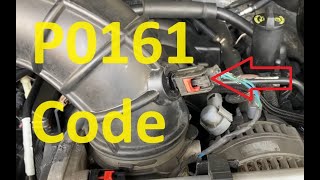
- Possible stalling at stops 🎬 Watch this CTS stalling and running rough due to P0068.
- Increased fuel consumption
- Hard brake pedal on startup, especially on a cold start, can indicate a vacuum leak in the brake booster circuit
- Replacing the MAF or MAP sensor before checking for vacuum leaks or cleaning the throttle body. The code indicates a *correlation* problem, which is more often caused by a physical issue (leak or blockage) than a failed sensor.
Most Likely Causes
- Dirty or Carbon-Clogged Throttle Body 🔴 High Probability Direct-injection engines (LLT, LFX) don't have fuel washing over the throttle plate, allowing oil vapor from the PCV system to bake on as carbon. TSB PIP4578B specifically calls this out as a cause for P0068 on high-mileage vehicles.
How to confirm: Remove the intake duct from the throttle body and visually inspect for a thick black ring of carbon buildup around the throttle plate and bore.
Typical fix: Thoroughly clean the throttle body with a dedicated throttle body cleaner and a soft brush. An idle relearn procedure is required afterward for the ECM to adapt to the clean throttle body.
Est. part cost: $10-$20 for cleaner - Vacuum Leak 🟡 Medium Probability Rubber and plastic hoses in the engine bay become brittle or soft over time with heat and age. The PCV system hoses and the brake booster hose are common failure points. A cracked PCV tube was the confirmed fix in one owner's case with P0068 and P0101.
How to confirm: Perform a visual inspection of all vacuum lines connected to the intake manifold. A professional smoke test is the most effective way to find hidden leaks. Listen for a hissing sound at idle. The brake booster hose connection at the back of the intake can become oil-saturated and slip off.
Typical fix: Replace the cracked or broken vacuum hose or gasket. The brake booster vacuum hose (ACDelco Part No. 20919372) is a known weak point on this platform.
Est. part cost: $15-$100 depending on the hose - Dirty or Faulty Mass Airflow (MAF) Sensor ⚪ Low Probability The MAF sensor's delicate wires can become contaminated with dirt or oil, especially if an aftermarket oiled air filter is used, causing it to under-report airflow. This is less common than a dirty throttle body but a frequent misdiagnosis.
How to confirm: Inspect the sensor wires inside the MAF housing. If they appear dirty, cleaning is a valid first step. A faulty sensor can be confirmed by monitoring its output (grams/second) with a scan tool. A healthy 3.6L engine should read approximately 3.6-4.5 g/s at a stable, warm idle.
Typical fix: Clean the sensor using only dedicated MAF sensor cleaner. If cleaning doesn't work, replace the sensor.
Est. part cost: $10 for cleaner, $80-$150 for a new sensor - Faulty Throttle Body Assembly ⚪ Low Probability The integrated Throttle Position Sensor (TPS) can fail electronically, sending incorrect data to the ECM even if the throttle plate is clean and moving freely.
How to confirm: With the key on and engine off, use a scan tool to monitor the throttle position percentage. It should read 0-1% at rest and move smoothly to 100% as the pedal is pressed. A high reading at rest (e.g., a 2013 CTS with P0068 showed 30% at rest) points to a faulty sensor.
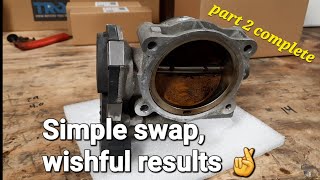
Typical fix: The TPS is integrated into the throttle body, so the entire assembly must be replaced. The ACDelco OEM part number is 12670981 🎬 See this walkthrough on how to install a new throttle body. for LFX engines (2012-2013).
Est. part cost: $150-$300
Rare But Worth Checking
- Faulty Manifold Absolute Pressure (MAP) Sensor: While less common, a MAP sensor that is failing, clogged with carbon, or providing erratic readings can contribute to this correlation code. It's worth checking its live data on a scan tool if other causes are ruled out.
- Loose Intake Manifold Bolts: GM Technical Service Bulletin (PIP5529B) for related platforms and engines notes that loose intake manifold bolts can cause a significant vacuum leak, triggering P0068 along with other codes like P0101 and P0171. The fix is to re-torque the bolts to 89 lb-in with threadlocker.
Diagnosis Steps
- Read Freeze Frame Data: Use a scan tool to see the engine conditions (RPM, load, etc.) when the code was set. Note any other codes present, as they provide critical clues (e.g., P0171 points to a vacuum leak).
- Visual Inspection: Check the air intake system from the air filter to the throttle body for any loose clamps, disconnected hoses, or obvious cracks. A disconnected PCV or brake booster hose is a common culprit.
- Inspect for Vacuum Leaks: Pay close attention to PCV hoses and the brake booster hose connection at the intake manifold. A professional smoke test is the most reliable method to find leaks. Per TSB PIP5529B, also check the torque on the intake manifold bolts (89 lb-in).
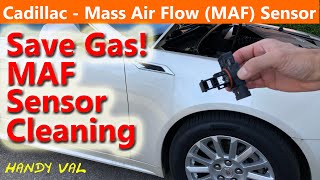
- Clean the Mass Airflow (MAF) Sensor: Disconnect and remove the MAF sensor. Spray it generously with dedicated MAF sensor cleaner and let it dry completely before reinstalling. Do not touch the sensor elements. 🎬 Watch how to properly clean your MAF sensor to improve idle.
- Inspect and Clean the Throttle Body: Remove the intake duct and inspect the throttle body for carbon buildup. If dirty, clean it thoroughly with throttle body cleaner and a soft cloth or brush. Manually move the plate to clean all surfaces.
- Perform Idle Relearn Procedure: After cleaning or replacing the throttle body, an idle relearn is necessary. A common manual method is: 1) Ignition ON (engine off) for 3 min. 2) Ignition OFF for 1 min. 3) Start engine, idle in Park for 3 min. 4) Ignition OFF for 1 min. 5) Restart.
- Analyze Live Sensor Data: If the code returns, use a scan tool to monitor live data from the MAP, MAF, and TPS sensors. A high TPS reading at idle (should be ~0-1%, not 30% as seen in one case) or a MAF reading far from the 3.6-4.5 g/s target at idle points to a specific faulty component.
Parts You'll Likely Need
- Throttle Body Assembly
(OEM #12670981 (for 2012-2013 LFX))— Replaced if the integrated throttle position sensor has failed (confirmed via scan tool) or if the unit is physically damaged.
Trusted brands: ACDelco, Bosch
OEM price range: $250-$350
Aftermarket price range: $150-$250 - Power Brake Booster Vacuum Hose
(OEM #20919372)— This specific hose is a known failure point. It can become oil-saturated and soft where it connects to the intake manifold, causing a significant vacuum leak.
Trusted brands: ACDelco (GM Genuine)
OEM price range: $40-$60
Aftermarket price range: $25-$40 - Mass Airflow (MAF) Sensor — Replaced if cleaning does not resolve incorrect airflow readings and it is confirmed faulty via scan tool data.
Trusted brands: ACDelco, Denso, Delphi
OEM price range: $120-$200
Aftermarket price range: $70-$130 - Manifold Absolute Pressure (MAP) Sensor
(OEM #12594942)— Replaced if it fails to report correct intake manifold pressure readings after all other causes are ruled out.
Related Codes That Often Appear With This One
- P0101 — Mass Airflow (MAF) Circuit Range/Performance. This code is often set alongside P0068 because a vacuum leak or dirty sensor directly affects MAF performance.
- P0121 — Throttle Position Sensor (TPS) Performance. This code can appear with P0068 because a dirty, sticking throttle body directly affects the TPS readings.
- P2176 — Minimum Throttle Position Not Learned. This code can be set when the ECM can't learn the closed position of the throttle, often because of carbon buildup preventing it from closing fully. TSB PIP4578B links this to throttle body issues.
- P0171 — System Too Lean (Bank 1). This code is a strong indicator of a vacuum leak, which is a primary cause of P0068. The unmetered air creates a lean condition.
Technical Service Bulletins (TSBs) & Recalls
- Stall Hesitation P0068 P0101 P0106 P0131 P0137 P0171 P0324 P0326 P0331 P0506: This TSB addresses a wide range of codes, including P0068, that can be caused by loose intake manifold bolts. The bulletin notes this can cause a vacuum leak that may not be found with a smoke test. The fix is to remove, apply medium strength threadlocker to, and re-torque the intake manifold bolts to 89 lb-in (10 Nm).
- Idle Surge, Reduced Engine Power, and various DTCs: This TSB mentions P0068 in a group of codes that can be set on high-mileage vehicles due to carbon buildup in the throttle body. It emphasizes that cleaning the throttle body must be followed by an idle learn reset procedure to be effective.
Platform-Specific Known Issues
- A known issue on some CTS models is a faulty throttle position sensor that reads a high percentage (e.g., 30%) at rest, which requires replacing the entire throttle body assembly.
- The power brake booster vacuum hose has been identified by owners as a common source of vacuum leaks that can trigger P0068.
Mechanic-Grade Diagnostic Values
- Mass Air Flow (MAF) Sensor Reading at warm idle — expected: 4.2 to 4.8 g/s. Failure: Readings significantly outside this range, or readings that do not increase smoothly with RPM, suggest a dirty/faulty sensor or a vacuum leak.
- MAP Sensor Voltage (Key On, Engine Off) — expected: ~4.5V to 5.0V (corresponds to barometric pressure). Failure: Voltage is low or does not match the expected value for the current altitude.
- MAP Sensor Voltage (Engine at warm idle) — expected: 1.0V to 1.5V (high vacuum). Failure: Voltage remains high (close to the KOEO reading) or does not change when the throttle is snapped, indicating a vacuum leak or sensor problem.
- Throttle Position Sensor (TPS) Percentage at rest (Key On, Engine Off) — expected: ~0-1%. Failure: A reading significantly higher than 1% at rest (e.g., 30% as seen in one documented case) indicates a faulty throttle body assembly that requires replacement, not just cleaning.
- MAP Sensor Ground Circuit Resistance — expected: Less than 5 Ohms. Failure: Resistance higher than 5 Ohms between the ground circuit terminal at the sensor connector and a known good chassis or battery ground indicates a wiring issue.
Scan Tool Commands That Help
- GDS2 / Professional Scan Tool: Idle Learn Procedure / Throttle Relearn — This is required after replacing or thoroughly cleaning the throttle body. The procedure requires specific conditions, such as engine coolant and intake air temperatures being between 5-60°C (41-140°F), and must be followed to prevent idle issues and recurring codes like P2176 or P0068.
- Graphing Scan Tool: Graph MAF and TPS Data Simultaneously — When diagnosing a drivability issue related to P0068, plotting the MAF sensor output (g/s) and the TPS sensor output (%) on the same graph during a throttle sweep should show two parallel rising lines. A MAF signal that lags, drops out, or doesn't rise linearly with the TPS indicates a problem with the MAF sensor or an air leak.
Wiring & Ground Locations
- G101 — Located at the lower front of the engine block.. This is a primary ground point for the Engine Control Module (ECM) and the Mass Air Flow (MAF) sensor. A loose or corroded connection here can cause erratic sensor readings and trigger correlation faults like P0068.
- G103 / G104 — Located on the rear of the cylinder heads or on the cowl above the brake booster.. These are additional primary engine and ECM ground points. A poor connection can cause unstable voltage for multiple sensors, including the TPS, leading to false codes.
- K20 ECM Connectors (LFX Engine) — The ECM is located in the left front of the engine compartment. It has three main harness connectors: X1 (Blue), X2 (Black), and X3 (Gray).. For advanced electrical diagnosis, knowing these connector identifiers is essential to test sensor signal, reference voltage, and ground wires directly at the ECM, which helps isolate a wiring harness fault from a faulty component.
- Throttle Body Connector — On the throttle body at the front center of the engine.. This 6-pin connector provides power, ground, and signal lines for the integrated throttle position sensors. Corrosion or damage to these pins or wires can directly cause P0068 and related TPS codes.
Real Owner Repair Stories
- cadillacforums.com user (2008 Cadillac CTS) — Check engine light with code P0068, rough idle.
✅ What actually fixed it The user found a small vacuum hose that runs from the air intake tube (just before the throttle body) to the top of the engine was completely disconnected. Reconnecting the hose and clearing the code resolved the issue instantly. - YouTube channel 'Jabo The Mechanic' (2013 Cadillac CTS 3.6L) — Start and stall, rough running, check engine light with codes P0068, P0101, and P0106.
❌ Tried (didn't work) Initial scan showed MAP and MAF sensors were reading within spec with the key on, engine off.
✅ What actually fixed it The technician noticed the throttle position on the scan tool read 30% with the key on and engine off. This indicated a failed internal sensor, not just carbon buildup. Replacing the entire throttle body assembly fixed the problem.
"I Checked Everything" — The Actual Cause
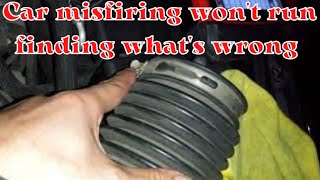
- A common scenario for the 3.6L V6 is a torn or cracked flexible air intake duct, located between the MAF sensor and the throttle body. A technician performing a smoke test by introducing smoke into the intake manifold will not find this leak, as it occurs 'upstream' of the test point. This unmetered air is a direct cause of P0068 because the MAF sensor isn't measuring it, but the engine is consuming it. A careful physical inspection of this duct, especially in the ribbed sections, is required.
OEM Part Supersession History
12594942 (also 12591290, 93192107)→12644228 or 55573248— Updated design for the MAP sensor used across many GM vehicles.
Heads up: Parts 12644228 and 55573248 are widely listed as compatible and interchangeable for this application.N/A→12631186 or 12616668— Common replacement throttle body part numbers for the 2008-2011 LLT engine, which was subject to a Special Coverage Adjustment (14582A) for TPS failures.
Heads up: The throttle body for the LLT engine (2008-2011) is different from the LFX engine (2012-2013, PN 12670981). Using the wrong part can cause idle control or communication errors.
Model Year Variations Within This Range
- 2008-2011 (LLT) vs 2012-2013 (LFX): The LLT engine uses a Bosch Engine Control Module (ECM), while the LFX engine uses a Delphi ECM. This is a critical difference for electrical diagnostics, software updates, and scan tool communication. Additionally, the LFX features an integrated exhaust manifold design, meaning some exhaust and intake components are not interchangeable between the two engines.
Diagnostic Flowchart
Used vs. New Parts: Buying Guide for This Vehicle
When a used part is the smart pick: For this repair, a used OEM throttle body from a reputable salvage yard can be a smart choice. They are often more reliable than new, non-OEM aftermarket units. Other electronic sensors (MAF, MAP) can also be sourced used, but carry a higher risk than a mechanical part.
Donor-vehicle mileage cap: roughly under 80000 miles for the part to have meaningful remaining life.
What to inspect on the donor part:
- For a throttle body, check that the throttle plate moves smoothly without sticking.
- Inspect the bore for deep scratches or scoring.
- Ensure all electrical connectors are intact with no broken clips or corroded pins.
- Ask for the donor vehicle's mileage if possible.
OEM-only on this vehicle (don't cheap out):
- Rubber hoses, such as the Power Brake Booster Vacuum Hose (20919372). Used rubber parts have already been subjected to heat and age, making them likely to fail soon after installation.
Aftermarket brands forum-validated for this vehicle:
- ACDelco (OEM)
- Bosch
- Delphi
- Denso
- NTK
Real Owner Stories
Aggregated from forums and TSBs cited above. Mileages and costs reflect what owners reported in those sources.
2013 Cadillac CTS 3.6L
Symptoms: P0068, start stall, runs rough.
What fixed it: Diagnosis with a scan tool showed the throttle position sensor was reading 30% with the key on and engine off, indicating a faulty sensor. The fix is to replace the entire throttle body assembly.
Source hint: YouTube: 'Jabo The Mechanic' - cadillac cts p0068 start stall runs rough
2008 Cadillac CTS 3.6L
Symptoms: P0068 and a rough idle.
What fixed it: A small vacuum hose running from the air intake tube to the top of the engine was found to be completely disconnected. Reconnecting the hose resolved the issue instantly.
Source hint: Cadillacforums.com: 2008 CTS with P0068 and rough idle
High-mileage Cadillac CTS 3.6L — ~115000 miles
Symptoms: Idle Surge, Reduced Engine Power, and DTC P0068.
What fixed it: Thoroughly cleaning the carbon buildup from the throttle body, followed by performing an idle learn reset procedure.
Source hint: TSB PIP4578B
2017 Chevrolet Traverse 3.6L
Symptoms: P0068 and P0101, reduced power mode, and sluggish acceleration.
What fixed it: The confirmed fix was replacing a cracked PCV tube, which was causing a significant vacuum leak.
Source hint: Reddit r/AskAMechanic: P0101 & P0068 engine codes on 2017 Chevy Traverse 3.6L
Related OBD-II Codes
Frequently Asked Questions
My 2011 CTS is in 'Reduced Engine Power' mode with code P0068. What's the most likely cause?
I cleaned my throttle body, but the rough idle and P0068 code came back. What did I miss?
Are there any TSBs for P0068 on the Cadillac CTS?
My mechanic says the whole throttle body needs to be replaced. Is this possible or are they just upselling me?
I suspect a vacuum leak. Are there any common failure points on the 3.6L engine?
I have a P0171 code along with P0068. Does that help narrow down the problem?
Helpful Videos
Used OEM Parts in Stock
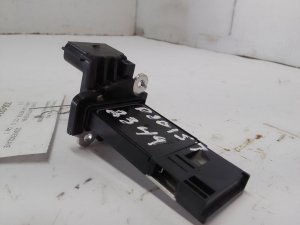
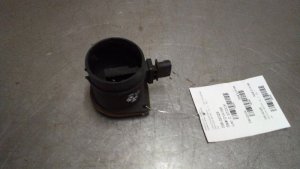

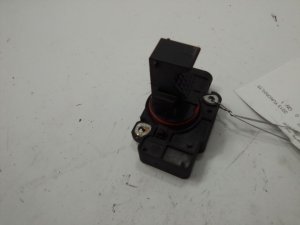


New Aftermarket Parts Available


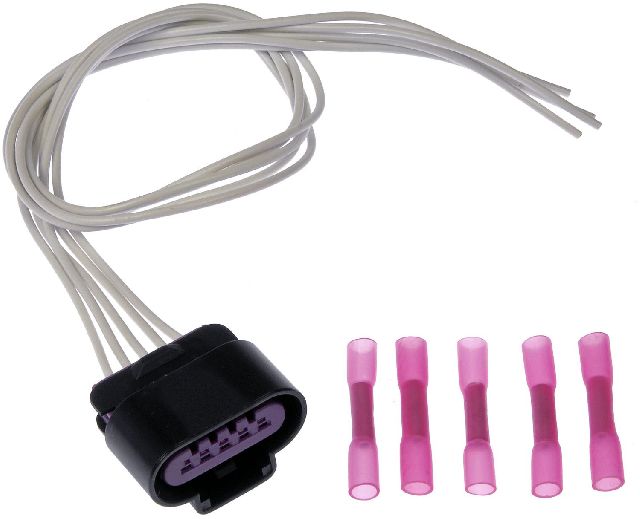


The information in this article is provided for general reference and educational purposes only. Vehicle specifications, procedures, and part compatibility can vary by production date, trim level, and region. Always consult your vehicle's factory service manual and verify part numbers before purchasing or performing repairs. Safety-critical components such as airbags, seat belts, and braking systems should be installed by a qualified professional.
- Cadillac CTS:
- 🎬 Helpful Videos
- 🛍️ Shop This Part
- What's Unique About the 2008-2013 Cadillac CTS
- Symptoms You May Notice
- Most Likely Causes
- Rare But Worth Checking
- Diagnosis Steps
- Parts You'll Likely Need
- Related Codes That Often Appear With This One
- Technical Service Bulletins (TSBs) & Recalls
- Platform-Specific Known Issues
- Mechanic-Grade Diagnostic Values
- Scan Tool Commands That Help
- Wiring & Ground Locations
- Real Owner Repair Stories
- "I Checked Everything" — The Actual Cause
- OEM Part Supersession History
- Model Year Variations Within This Range
- Diagnostic Flowchart
- Used vs. New Parts: Buying Guide for This Vehicle
- Real Owner Stories
- 2013 Cadillac CTS 3.6L
- 2008 Cadillac CTS 3.6L
- High-mileage Cadillac CTS 3.6L — ~115000 miles
- 2017 Chevrolet Traverse 3.6L
- Related OBD-II Codes
- Frequently Asked Questions
- 🎟️ Get 5% Off