

P0037 on 2017-2022 Kia Sportage 2.0L: Causes and Fixes for O2 Sensor Heater Fault
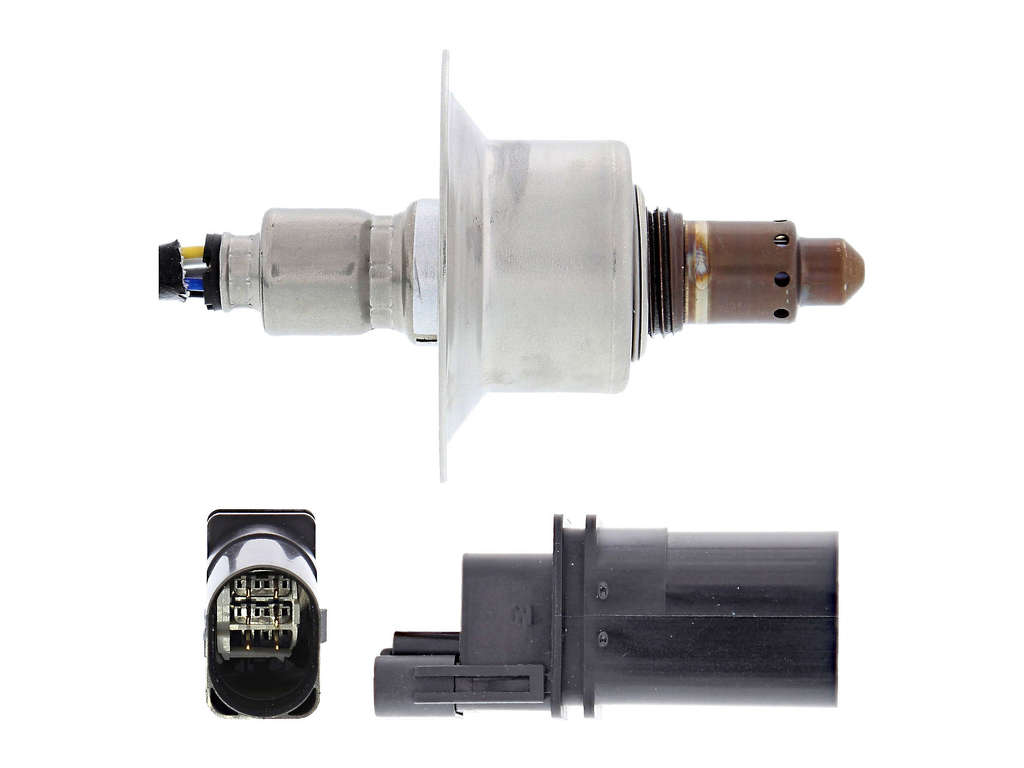
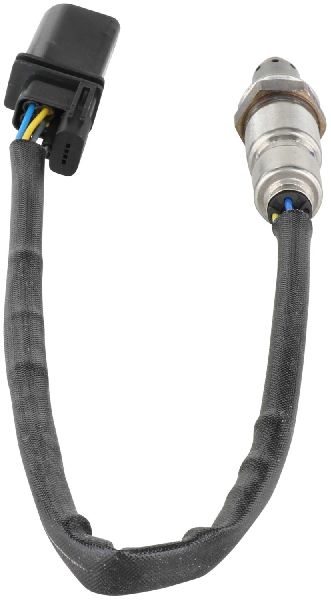
On a 2017-2022 Sportage 2.0L, P0037 almost always means the downstream oxygen sensor (Bank 1, Sensor 2) has failed. The internal heater burns out. Expect to pay $50-$100 for an aftermarket sensor and about an hour to replace it. It's a DIY-friendly fix. Before replacing, check the 'SENSOR 1' 15A fuse in the engine bay fuse box and inspect wiring for melting.
- P0037 almost always points to a failed downstream (post-catalytic converter) oxygen sensor.
- The repair is straightforward and DIY-friendly with the right tools, primarily a 22mm O2 sensor socket.
- Before buying a new sensor, always perform a quick visual check of the wiring for melting and check the related 15A 'SENSOR 1' fuse in the engine bay.
- Driving with the code is safe for the short term, but it will cause an automatic failure on an emissions test.
What's Unique About the 2017-2022 Kia Sportage
For the fourth-generation Kia Sportage with the Nu 2.0L GDI engine, the P0037 code is a very common and straightforward issue. It's not typically linked to the more severe engine issues (like oil consumption or bearing failure) that have prompted recalls and TSBs for this engine family. The failure is almost always isolated to the wear-and-tear of the oxygen sensor's heating element, a common occurrence across many Hyundai and Kia models sharing this powertrain, including its direct platform-mate, the Hyundai Tucson.
Symptoms You May Notice
- Check Engine Light is on
- Failing a vehicle emissions test
- Slightly reduced fuel economy (though may not be noticeable)
- In rare cases, a rough idle on cold starts or hesitation
- Replacing the upstream (Bank 1, Sensor 1) oxygen sensor. P0037 is specific to the downstream (Sensor 2) sensor.
- Replacing the catalytic converter. This code indicates an electrical fault with the sensor's heater, not a performance issue with the converter itself (which would typically set a P0420 code).
Most Likely Causes
- Failed Downstream Oxygen Sensor (Bank 1, Sensor 2) 🔴 High Probability The internal heating element is a common wear-and-tear component that fails after thousands of heat cycles. This is the most frequent cause for this code on most vehicles, including the Sportage, with failures often reported between 80,000 and 120,000 miles.
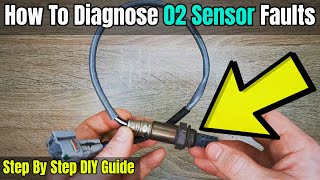
How to confirm: After checking the fuse and wiring, disconnect the sensor and test the resistance of the heater circuit terminals (usually the two same-colored wires) with a multimeter. A healthy sensor should have a resistance between 3.3 and 15 ohms. An infinite resistance reading (OL) confirms the internal heater is burned out and the sensor must be replaced.
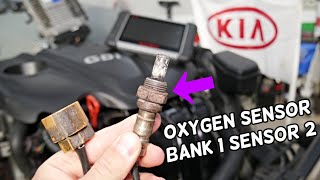
Typical fix: Replace the downstream (post-catalytic converter) oxygen sensor. Using penetrating oil on the threads and a specialized 22mm O2 sensor socket is highly recommended 🎬 Watch: How to locate and replace the downstream oxygen sensor as the sensor is often seized in the exhaust pipe.
Est. part cost: $50-$200 - Damaged Wiring or Connector 🟡 Medium Probability The sensor harness is routed under the vehicle near the hot exhaust, making it susceptible to melting, corrosion, or damage from road debris if retaining clips break.
How to confirm: Visually inspect the entire wiring harness from the sensor to the main connector where it enters the vehicle body. Look for melted plastic, frayed or broken wires, and corroded pins in the connector. Perform a continuity test on the heater circuit wires if damage is suspected.
Typical fix: Repair the damaged section of wire or replace the connector pigtail. Use heat-shrink tubing for durable, moisture-resistant repairs.
Est. part cost: $10-$30 - Blown Fuse ⚪ Low Probability
How to confirm: Check the vehicle's fuse boxes. For this model, the relevant fuse is typically a 15A fuse labeled 'SENSOR 1' or similar in the engine compartment fuse box. Visually inspect if the fuse is blown.
Typical fix: Replace the blown fuse. If the new fuse blows immediately, it indicates a short circuit in the wiring or a shorted sensor that must be located and repaired.
Est. part cost: $1-$5
Rare But Worth Checking
- Faulty Engine Control Module (ECM): This is extremely rare. The driver circuit within the ECM that powers the heater can fail, but this should only be considered after the sensor, wiring, and fuses have been thoroughly tested and proven to be good.
Diagnosis Steps
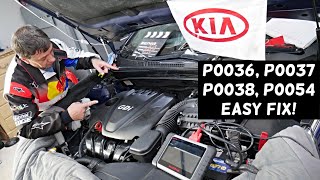
- Read codes with an OBD-II scanner to confirm P0037 is the primary code. Note any other codes like P0036 or P0038. 🎬 Watch: Overview of Kia O2 sensor codes P0036 through P0054
- Perform a visual inspection of the downstream (post-catalytic converter) O2 sensor, its connector, and wiring. Look for any signs of melting, chafing, corrosion, or physical damage.
- Check the 15A fuse for the O2 sensor heater circuit, often labeled 'SENSOR 1', in the engine bay fuse panel. Replace if blown.
- If the fuse and wiring appear intact, disconnect the sensor.
- Use a multimeter to test the resistance of the heater circuit on the sensor side of the connector (typically between two same-colored wires). A healthy sensor usually has a resistance of 3.3-15 ohms. An open circuit (infinite resistance) indicates a failed heater element.
- If the sensor tests good, use the multimeter to check for 12V power and a good ground on the vehicle-side of the harness connector with the key on, engine off.
- If power or ground is missing, the issue is in the vehicle's wiring harness or, rarely, the ECM.
Parts You'll Likely Need
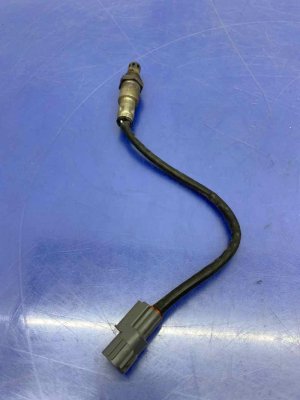
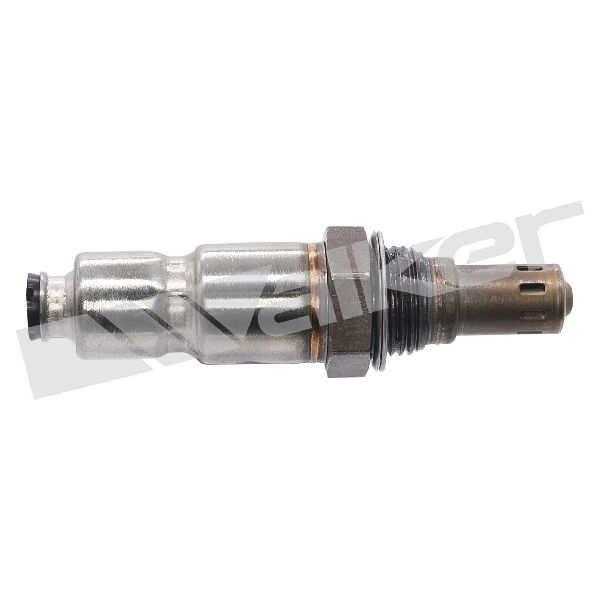
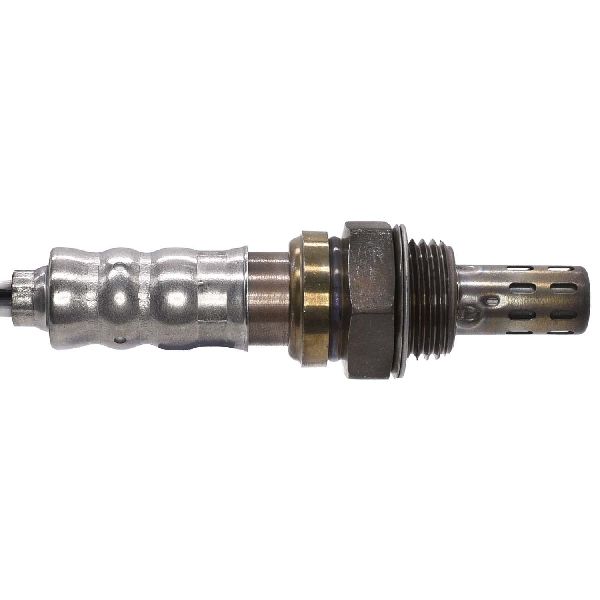
- Downstream Oxygen Sensor (Bank 1, Sensor 2)
(OEM #39210-2ECC0)— This is the component that contains the heating element that most commonly fails, triggering the P0037 code.
Trusted brands: Kia (OEM), NGK/NTK (Often the OEM supplier), Denso, Bosch, Walker Products
OEM price range: $135-$200
Aftermarket price range: $50-$100 - Oxygen Sensor Socket — A specialized 22mm (7/8") socket with a slot for the wire is often required to remove and install the oxygen sensor, which can be difficult to access and remove with standard tools.
Trusted brands: Lisle, OEMTOOLS, GearWrench
Aftermarket price range: $10-$25
Related Codes That Often Appear With This One
- P0036 — This code is for a general fault in the same heater circuit. P0037 (Circuit Low) is a more specific version, and they often point to the exact same failed sensor.
- P0038 — This code indicates a 'Circuit High' condition in the same heater circuit. Seeing it could point towards a short to power in the wiring rather than a failed sensor element.
- P0054 — This code is for 'HO2S Heater Resistance' and directly relates to the same component's internal heater failing.
Technical Service Bulletins (TSBs) & Recalls
- TSB ENG222: Addresses excessive oil consumption on Nu, Gamma, and Theta engines. It outlines a procedure for dealers to measure oil consumption and perform a combustion chamber cleaning. If consumption is over 1qt/1,000 miles, further repairs may be warranted.
- Product Improvement Campaign PI2002B: Provides a software update to the ECU to install the Knock Sensor Detection System (KSDS) for Nu 2.0L GDI engines to protect against engine failure from excessive connecting rod bearing wear.
Platform-Specific Known Issues
- While not directly causing P0037, the Nu 2.0L GDI engine has known issues with oil consumption and engine bearing failure, addressed by Kia's Knock Sensor Detection System (KSDS) software update (e.g., PI2002B) and warranty extensions. These are separate, more severe issues an owner should be aware of. The KSDS update is designed to detect bearing wear and put the vehicle into a 'Limp Home Mode' to prevent catastrophic failure.
Mechanic-Grade Diagnostic Values
- Downstream O2 Sensor (B1S2) Heater Circuit Resistance — expected: 3.3 - 15 Ohms at room temperature. Some sources cite a wider range up to 30 Ohms.. Failure: A reading of 'OL' (infinite resistance) on a multimeter indicates a burned-out open circuit. A reading near zero ohms indicates a short circuit.
- Heater Circuit Power Supply Voltage at Harness Connector — expected: Approximately 12V (Battery Voltage) with Key On, Engine Off (KOEO).. Failure: A reading of 0V or significantly less than battery voltage (e.g., below 9V) points to a blown fuse, a bad relay, or an open in the power supply wire from the main junction box.
Scan Tool Commands That Help
- Kia GDS (Global Diagnostic System): Actuation Test for O2 Sensor Heater — After confirming the fuse and sensor resistance are good, this command forces the ECM to activate the heater circuit. A technician can then monitor voltage/amperage at the sensor connector to verify the ECM driver and wiring are functioning correctly. This helps definitively rule out or condemn the ECM.
- Advanced OBD-II Scanner (e.g., Launch, Autel): Bidirectional Heater Circuit Test — Similar to the GDS command, many professional aftermarket scanners can command the heater circuit on/off. This is used to verify the integrity of the control circuit (wiring and ECM driver) after the sensor itself has been tested or replaced.
Wiring & Ground Locations
- B1S2 Heater Circuit Power Wire — At the 4-pin downstream O2 sensor connector. The power wire is often Pink on Kia models of this era. It receives power from the 'SENSOR 1' 15A fuse in the engine bay fuse/relay box.. This wire must show battery voltage (~12V) with the key on. No voltage here is the most common wiring-related fault, usually due to a blown fuse.
- B1S2 Heater Circuit Control (Ground) Wire — At the 4-pin downstream O2 sensor connector. The ECM provides a pulsed ground to control the heater. Wire colors vary but may be White or another color specified in the service manual.. A short to ground on this wire will cause the P0037 'Circuit Low' code and may repeatedly blow the fuse. An open circuit on this wire back to the ECM will also prevent the heater from working.
- Heater Circuit Wires (on sensor) — On the sensor side of the connector, the two heater wires are typically the same color (e.g., two black wires or two white wires).. These are the two pins you test with a multimeter to measure the internal resistance of the heater element. An 'OL' reading across these two wires confirms the sensor has failed.
OEM Part Supersession History
39210-2ECC0→39210-2ECC1, 39210-2ECC2— Standard part evolution, potential supplier changes, or minor internal revisions.
Heads up: Parts ending in ECC1 and ECC2 are generally considered interchangeable for the Nu 2.0L engine across Hyundai/Kia platforms, but it is always best to verify fitment with a VIN.
Model Year Variations Within This Range
- 2017-2022 (Varies by production date): The physical mounting location of the downstream O2 sensor's electrical connector can vary. On some vehicles, it is clipped to a bracket on the transmission or engine block, while on others it may be further down the chassis. This does not change the diagnosis but can affect the ease of access for testing.
Diagnostic Flowchart
Other Known Issues on This Vehicle
Issues unrelated to this code that are worth knowing about as an owner of this generation:
- Catastrophic Engine Failure (Rod Bearing Wear) 🔴 High — Widespread across Hyundai/Kia vehicles with Nu/Theta II GDI engines of this era. Can occur at various mileages, often starting with a knocking sound. (Ref: Multiple recalls and class-action lawsuits led to the Knock Sensor Detection System (KSDS) update (e.g., PI2002B, SC200) and lifetime engine warranty extensions for certain failures.)
- Excessive Oil Consumption 🔴 High — A very common and well-documented problem. Many owners report needing to add oil between changes. Kia considers more than 1 quart per 1,000 miles to be excessive. (Ref: TSB ENG222 provides a diagnostic and repair procedure for dealers to follow, which may include combustion chamber cleaning or, in severe cases, engine replacement under warranty.)
- Intake Valve Carbon Buildup 🟠 Medium — An inherent issue with Gasoline Direct Injection (GDI) engines. Typically requires media blasting or manual cleaning every 40,000-60,000 miles to prevent rough idle, misfires, and power loss.
- Engine Compartment Fire Risk (HECU) 🔴 High — Affects certain 2017-2021 models. An electrical short can occur in the Hydraulic Electronic Control Unit (HECU), potentially causing a fire while parked or driving. Less common than engine wear issues, but extremely severe. (Ref: Recall SC206)
Used vs. New Parts: Buying Guide for This Vehicle
When a used part is the smart pick: For this repair, a used part is almost never recommended for the oxygen sensor itself. However, sourcing a used connector pigtail from a junkyard is a smart choice if only the connector is damaged, as it provides an OEM-quality terminal fit.
Donor-vehicle mileage cap: roughly under 150000 miles for the part to have meaningful remaining life.
What to inspect on the donor part:
- For a connector pigtail, ensure the plastic is not brittle or cracked.
- Check for the absence of green or white corrosion on the pins.
- Ensure the locking tab on the connector is intact and functional.
- Cut the pigtail with at least 6 inches of wire to allow for easy splicing.
Aftermarket brands forum-validated for this vehicle:
- NTK (often the original OEM supplier for Kia).
- Denso.
- Bosch (ensure it is the correct direct-fit model, not a universal one).
Brands owners have reported issues with on this vehicle:
- Unnamed, no-brand "universal" sensors that require splicing wires. These often have incorrect resistance values and fail prematurely.
Real Owner Stories
Aggregated from forums and TSBs cited above. Mileages and costs reflect what owners reported in those sources.
2017-2022 Kia Sportage Nu 2.0L GDI — ~100000 miles
Symptoms: Check Engine Light is on; the internal heating element failed after thousands of heat cycles.
What fixed it: Replace the downstream (post-catalytic converter) oxygen sensor using a 22mm O2 sensor socket and penetrating oil.
Cost: $50-$200
Source hint: Article Context - Common Causes
2017-2021 Kia Sportage
Symptoms: Electrical short in the Hydraulic Electronic Control Unit (HECU) potentially causing a fire while parked or driving.
What fixed it: Recall SC206
Source hint: Recall SC206
Kia Sportage Nu 2.0L GDI
Symptoms: Excessive oil consumption exceeding 1 quart per 1,000 miles.
What fixed it: Combustion chamber cleaning or engine replacement under warranty as per TSB ENG222.
Source hint: TSB ENG222
Related OBD-II Codes
Frequently Asked Questions
Does TSB ENG222 apply to my 2017-2022 Kia Sportage with the Nu 2.0L GDI engine?
What is the 'KSDS' update mentioned for my Sportage, and does it relate to P0037?
Is there a specific fuse I should check for the P0037 heater circuit on this model?
What is the correct resistance for a new downstream oxygen sensor on a Kia Sportage?
Can I use the same oxygen sensor from a Hyundai Tucson or Kia Soul?
Is there a recall for fire risks on the 2017-2021 Sportage?
Helpful Videos
Used OEM Parts in Stock
New Aftermarket Parts Available


The information in this article is provided for general reference and educational purposes only. Vehicle specifications, procedures, and part compatibility can vary by production date, trim level, and region. Always consult your vehicle's factory service manual and verify part numbers before purchasing or performing repairs. Safety-critical components such as airbags, seat belts, and braking systems should be installed by a qualified professional.
- Kia Sportage:
- 🎬 Helpful Videos
- 🛍️ Shop This Part
- What's Unique About the 2017-2022 Kia Sportage
- Symptoms You May Notice
- Most Likely Causes
- Rare But Worth Checking
- Diagnosis Steps
- Parts You'll Likely Need
- Related Codes That Often Appear With This One
- Technical Service Bulletins (TSBs) & Recalls
- Platform-Specific Known Issues
- Mechanic-Grade Diagnostic Values
- Scan Tool Commands That Help
- Wiring & Ground Locations
- OEM Part Supersession History
- Model Year Variations Within This Range
- Diagnostic Flowchart
- Other Known Issues on This Vehicle
- Used vs. New Parts: Buying Guide for This Vehicle
- Real Owner Stories
- 2017-2022 Kia Sportage Nu 2.0L GDI — ~100000 miles
- 2017-2021 Kia Sportage
- Kia Sportage Nu 2.0L GDI
- Related OBD-II Codes
- Frequently Asked Questions
- 🎟️ Get 5% Off