

P0037 on 2012-2017 Kia Rio: Downstream O2 Sensor Heater Circuit Low Causes and Fixes
On a 2012-2017 Kia Rio, P0037 almost always means the downstream oxygen sensor (Bank 1, Sensor 2) has a failed internal heater. Before replacing, check the 15A 'SENSOR 1' fuse. The most common fix is replacing the sensor itself. Expect to pay ~$90-$130 for a quality aftermarket part (like Denso or NTK) and ~$140-$200 for an OEM sensor. It's a DIY-friendly repair with a 22mm O2 sensor socket.
- P0037 on a 2012-2017 Kia Rio almost always points to a failed heater inside the downstream (post-catalytic converter) oxygen sensor.
- Before buying parts, perform a quick check of the 'SENSOR 1' 15A fuse in the engine bay and visually inspect the sensor's wiring for damage, especially for chafing against the transmission.
- The correct OEM part number for the downstream oxygen sensor is 39210-2B220.
- This is a very DIY-friendly repair for those with basic tools, a multimeter, and a 22mm O2 sensor socket.
What's Unique About the 2012-2017 Kia Rio
For the third-generation Kia Rio with the 1.6L GDI engine, the P0037 code is a very common and straightforward issue. There are no major platform-specific complexities or recalls directly related to this code. The problem is overwhelmingly a worn-out downstream O2 sensor, a component known to fail from normal use over time. This issue is also common on the Hyundai Accent (RB), Hyundai Veloster, and Kia Soul, which share the same Gamma G4FG engine and sensor.
Symptoms You May Notice
- Check Engine Light is on.
- Vehicle will fail an emissions test.
- Slight decrease in fuel economy (often not noticeable).
- In some cases, a rough idle that worsens as the engine warms up.
- Replacing the upstream (Bank 1, Sensor 1) oxygen sensor instead of the downstream (Bank 1, Sensor 2) sensor. The code P0037 is specific to Sensor 2. To help avoid this, note that the downstream sensor has a gray electrical connector, while the upstream is black.
- Replacing the catalytic converter. This code indicates an electrical fault with the sensor's heater, not a performance issue with the converter itself, which would typically set a P0420 code.
Most Likely Causes
- Failed Downstream Oxygen Sensor (Bank 1, Sensor 2) 🔴 High Probability The internal heater element is a common failure point due to thousands of heat cycles over the sensor's lifespan. This is a normal wear-and-tear item on most modern vehicles.
How to confirm: After confirming the fuse and wiring are good, disconnect the sensor and measure the resistance between the two heater pins (usually the two same-colored wires, often white). An open circuit (infinite resistance or 'OL') confirms the internal heater has failed. A good heater will have a low resistance, typically between 8.0 and 14.0 ohms when at room temperature.
Typical fix: Replace the downstream (Bank 1, Sensor 2) oxygen sensor. Using penetrating oil on the threads is highly recommended as they are often seized in the exhaust pipe. A special slotted 22mm (7/8") oxygen sensor socket makes removal and installation much easier.
Est. part cost: $90-$200 - Damaged Wiring or Connector 🟡 Medium Probability The sensor and its wiring are located under the car, exposed to road debris, moisture, and extreme heat from the exhaust, which can lead to chafing, melting, or corrosion over time.
How to confirm: Visually inspect the entire wiring harness from the sensor to its connector for any signs of melting, chafing, or breaks. Check the connector pins for corrosion or damage. Pay close attention to where the harness is secured, as it can rub against the transmission case or other components.
Typical fix: Repair the damaged section of wiring or replace the connector pigtail. Ensure the harness is properly secured away from the hot exhaust and any moving parts.
Est. part cost: $10-$30 - Blown Fuse ⚪ Low Probability
How to confirm: Check the fuse panel in the engine compartment. On this Kia Rio, the O2 sensor heater is often tied to a 15A fuse labeled 'SENSOR 1'.
Typical fix: Replace the blown fuse. If it blows again immediately, it indicates a short circuit in the wiring or within the O2 sensor itself that must be found and fixed.
Est. part cost: $1-$5
Rare But Worth Checking
- Failed Engine Control Module (ECM): This is extremely rare. The ECM's internal driver for the heater circuit can fail, but this should only be considered after all other possibilities (sensor, wiring, fuse) have been definitively ruled out.
Diagnosis Steps
- Confirm the P0037 code is present using an OBD-II scanner.
- Visually inspect the downstream oxygen sensor's wiring harness and connector for any obvious signs of damage, such as melted plastic, frayed wires, or corrosion.
- Locate the fuse for the oxygen sensor heater circuit in the engine bay fuse box (typically a 15A fuse labeled 'SENSOR 1') and check if it is blown.
- If the fuse and wiring are intact, disconnect the oxygen sensor's electrical connector (the gray one).
- Using a multimeter set to Ohms, measure the resistance between the two heater circuit pins on the sensor side of the connector (these are often two wires of the same color, typically white). A reading of infinite resistance (OL) indicates a failed heater element. A good heater will have a low resistance, typically between 8.0 and 14.0 ohms.
- If the sensor resistance is good, check for power at the vehicle-side harness connector. With the key on and engine off, use a multimeter to check for battery voltage (~12V) at the power supply pin.
- If power is present and the sensor's heater element is good, check the ground control side of the circuit for continuity back to the ECM. An open in the ground wire will also set this code.
- Using a capable scan tool, check Mode $06 data. A failing test for the O2 sensor heater component can confirm the fault before it becomes a constant hard code.
Parts You'll Likely Need
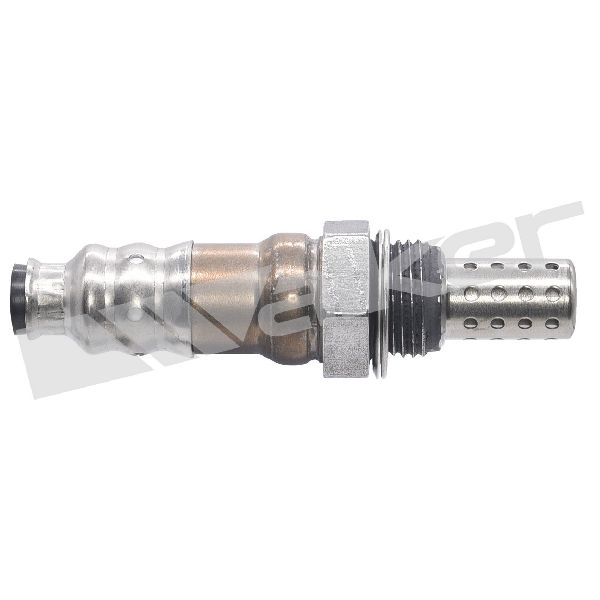
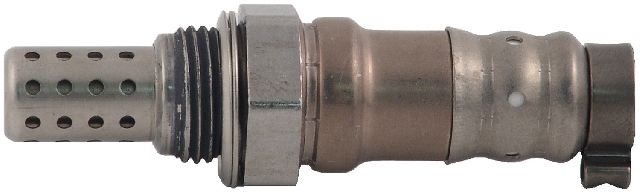
- Downstream Oxygen Sensor
(OEM #39210-2B220)— This is Bank 1, Sensor 2. The internal heater element is the most common failure point, causing the P0037 code.
Trusted brands: Denso (Aftermarket P/N: 234-4511 - Note: Fitment for this specific vehicle needs verification as some databases show it for other models), NGK/NTK (Aftermarket P/N: 24361 or 25739 - Note: Fitment for this specific vehicle needs verification as some databases show it for other models), Bosch
OEM price range: $140-$200
Aftermarket price range: $90-$130
Related Codes That Often Appear With This One
- P0137 — This code indicates 'O2 Sensor Circuit Low Voltage'. A failed heater (P0037) can prevent the sensor from warming up properly, leading it to produce a low voltage signal and triggering P0137 as well.
- P0036 — A related heater control circuit code for the same sensor. Both codes point to a failure in the downstream O2 sensor's heater or its circuit.
- P0038 — Indicates a 'Heater Control Circuit High' condition for the same sensor. While P0037 points to an open or short to ground, P0038 points to a short to power. Both are often diagnosed with the same steps.
Platform-Specific Known Issues
- Owner Experience: Wiring Harness Damage: A forum user with a 2013 Kia Rio reported a persistent P0037 code even after replacing the sensor twice. The actual cause was found to be a section of the O2 sensor wiring harness that had been rubbing against the transmission case, causing an intermittent short to ground. Repairing the chafed wires and securing the harness resolved the issue permanently.
Mechanic-Grade Diagnostic Values
- Downstream O2 Sensor Heater Resistance — expected: 8.0 - 14.0 Ohms at 68°F (20°C). Failure: Open circuit ('OL' on multimeter) or near-zero Ohms (short circuit).
- Voltage at Heater Power Pin (Harness Side, KOEO) — expected: ~12V (Battery Voltage). Failure: 0V indicates a blown fuse, relay issue, or open in the power wire.
- Heater Circuit Current Draw (when active) — expected: 0.5A - 2.0A. Failure: 0A indicates an open circuit; significantly higher amperage indicates a short.
- ECM Diagnostic Threshold for P0037 — expected: Voltage should remain above 2.34V when the heater is commanded on.. Failure: Voltage dropping below 2.34V will trigger the fault code in the ECM.
Hidden / Shadow Codes Worth Checking
- Mode $06, TID/CID for O2 Sensor Heater: Mode $06 is a diagnostic function that shows results from the ECM's self-tests. A 'Fail' status for the component ID (CID) corresponding to the Bank 1 Sensor 2 heater can confirm a fault, sometimes before the Check Engine Light becomes permanently illuminated. (see via A professional scan tool or an advanced OBD-II reader with Mode $06 capabilities.)
Scan Tool Commands That Help
- Kia GDS (Global Diagnostic System): Actuation Test / Component Activation — The dealer-level GDS tool can command the O2 sensor heater circuit on and off manually. This is used to verify if the ECM driver is working and if the circuit is complete by observing voltage or current changes, helping to isolate the fault between the ECM, wiring, and the sensor itself.
Wiring & Ground Locations
- Downstream O2 Sensor Connector — The connector is located in the engine bay, typically mounted on the firewall. It is gray in color, which distinguishes it from the black upstream sensor connector.. Correctly identifying the connector is the first step for electrical testing and ensures you don't mistakenly test or replace the wrong sensor.
- Heater Circuit Ground Control — The ground for the heater circuit is not a direct chassis ground. It is a pulse-width modulated (PWM) ground controlled directly by a driver within the Engine Control Module (ECM).. This means checking for ground requires a continuity test from the sensor connector pin back to the corresponding ECM pin, not just to the chassis. A break in this wire will cause P0037.
- ECM Pin (Reference) — On a similar 2013 1.4L DOHC engine, the heater control for Sensor 1 is Pin 7 at the ECM connector. The pin for Sensor 2 on the 1.6L GDI will be in a similar location on the main ECM connector.. Provides a starting point for technicians needing to perform a continuity test of the control wire directly from the source, bypassing the entire harness.
Real Owner Repair Stories
- Aggregated from Kia/Hyundai Forums (2012-2017 Kia Rio / Hyundai Accent 1.6L GDI) — Check Engine Light with P0037. Some owners also reported a rough idle that would get progressively worse as the car warmed up.
❌ Tried (didn't work) Clearing the code (it returned quickly), Replacing the fuse without checking the sensor (fuse blew again, indicating a shorted sensor)
✅ What actually fixed it In the vast majority of documented cases, replacing the downstream (Bank 1, Sensor 2) oxygen sensor with an OEM or quality aftermarket part (Denso/NTK) permanently resolved the code.
OEM Part Supersession History
39210-2B220→39210-2B220— No supersession found.
Heads up: This part number appears to be stable for the entire 2012-2017 model year range. No incompatible revisions were noted in searches.
Model Year Variations Within This Range
- 2012-2017: No significant variations related to the P0037 fault have been documented within this generation. The same 1.6L GDI engine, sensor part number, and diagnostic procedure apply to all years in this range.
Diagnostic Flowchart
Other Known Issues on This Vehicle
Issues unrelated to this code that are worth knowing about as an owner of this generation:
- Steering Coupler Wear / Clicking Noise 🟠 Medium — Very common. A clicking or clunking noise develops in the steering column when turning. The original rubber coupler disintegrates over time. (Ref: TSB CHA-074 / CS1604 describe the issue and replacement procedure for various Kia/Hyundai models.)
- Premature Starter Motor Failure 🟠 Medium — Frequently reported, often before 100,000 miles. Symptoms include a single click or no sound when trying to start, despite a good battery.
- Carbon Buildup on Intake Valves 🟡 Low — A common characteristic of all Gasoline Direct Injection (GDI) engines, including the Gamma 1.6L. Can lead to rough idle, hesitation, and reduced power over high mileage (typically 60k+ miles).
- Engine Oil Consumption 🟠 Medium — Some owners of earlier models in this generation report higher than normal oil consumption, which can lead to engine damage if not monitored regularly. (Ref: While class action lawsuits regarding Gamma GDI engine issues have been filed, they have faced challenges. No specific recall for oil consumption on the Rio exists.)
- HECU Electrical Short Risk 🔴 High — Part of a massive recall campaign. The Hydraulic Electronic Control Unit (HECU) can short circuit, potentially causing an engine compartment fire even when the vehicle is parked. (Ref: NHTSA Recall 23V594000)
Used vs. New Parts: Buying Guide for This Vehicle
When a used part is the smart pick: For an oxygen sensor, a used part is almost never a smart choice. The internal heater element is a wear item with a finite lifespan, similar to a light bulb filament. A used sensor may fail shortly after installation or be non-functional from the start.
What to inspect on the donor part:
- Not applicable, as buying a used oxygen sensor is strongly discouraged for this repair.
OEM-only on this vehicle (don't cheap out):
- While not strictly OEM-only, using a quality OEM (Kia/Hyundai) or reputable OE-supplier part is highly recommended for oxygen sensors to ensure correct heater resistance and longevity.
Aftermarket brands forum-validated for this vehicle:
- Denso
- NGK / NTK
- Bosch
Brands owners have reported issues with on this vehicle:
- Unnamed, generic, or 'white-box' brands from online marketplaces should be avoided. They have a high reported failure rate and may not meet the correct resistance specifications, causing the code to return immediately.
Real Owner Stories
Aggregated from forums and TSBs cited above. Mileages and costs reflect what owners reported in those sources.
2013 Kia Rio 1.6L GDI
Symptoms: Persistent P0037 code that remained even after the oxygen sensor was replaced twice.
What fixed it: Repairing a section of the O2 sensor wiring harness that was chafing against the transmission case and causing a short.
Source hint: Go-Parts Garage / Aggregated Forums
2014 Kia Rio LX Sedan 1.6L GDI
Symptoms: Check engine light on with codes P0031, P0036, and P0037. The car idles rough, which gets progressively worse as it runs, eventually shuddering at stop signs as if it wants to pull forward.
What fixed it: The context identifies the primary fix for these symptoms as replacing the downstream (Bank 1, Sensor 2) oxygen sensor or repairing the heater circuit wiring.
Source hint: Reddit r/MechanicAdvice
Related OBD-II Codes
Frequently Asked Questions
Where is the fuse for the O2 sensor heater on my 2012-2017 Kia Rio?
Is there a recall for my 2012-2017 Kia Rio that could be related to electrical shorts?
My 2014 Rio LX is idling rough and the shuddering gets worse as the engine warms up. Could this be P0037?
What is the specific OEM part number for the downstream oxygen sensor on the 1.6L GDI engine?
I've replaced the sensor but the P0037 code keeps coming back. What else should I check on my Rio?
Does the 2012-2017 Hyundai Accent share this same O2 sensor issue?
Helpful Videos
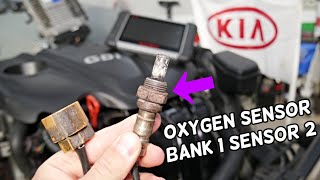
We Have This Part in Stock
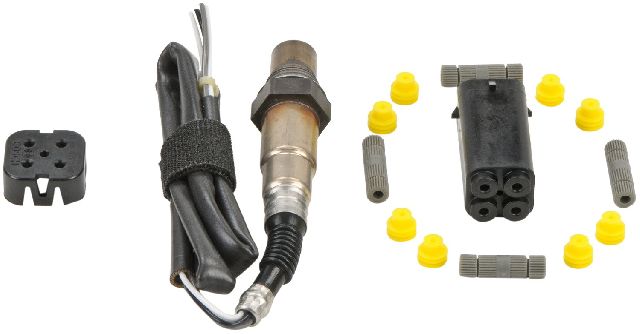
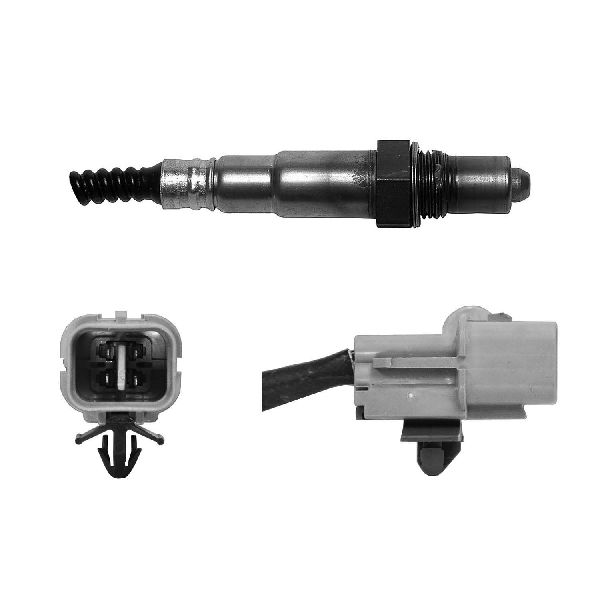
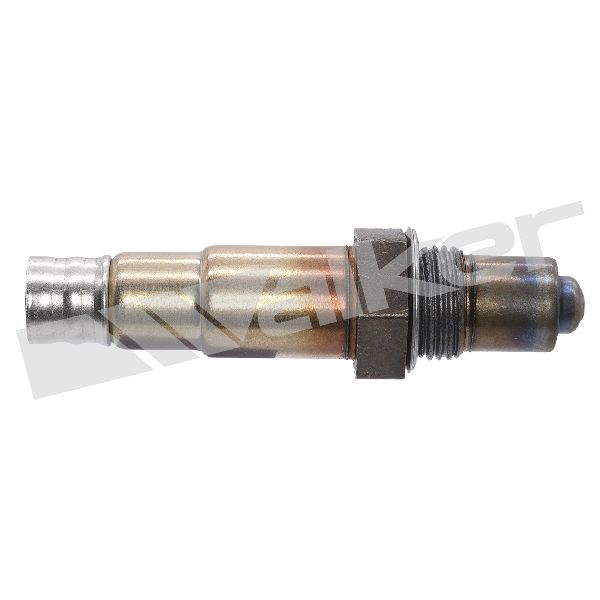


The information in this article is provided for general reference and educational purposes only. Vehicle specifications, procedures, and part compatibility can vary by production date, trim level, and region. Always consult your vehicle's factory service manual and verify part numbers before purchasing or performing repairs. Safety-critical components such as airbags, seat belts, and braking systems should be installed by a qualified professional.
- Kia Rio:
- 🎬 Helpful Videos
- 🛍️ Shop This Part
- What's Unique About the 2012-2017 Kia Rio
- Symptoms You May Notice
- Most Likely Causes
- Rare But Worth Checking
- Diagnosis Steps
- Parts You'll Likely Need
- Related Codes That Often Appear With This One
- Platform-Specific Known Issues
- Mechanic-Grade Diagnostic Values
- Hidden / Shadow Codes Worth Checking
- Scan Tool Commands That Help
- Wiring & Ground Locations
- Real Owner Repair Stories
- OEM Part Supersession History
- Model Year Variations Within This Range
- Diagnostic Flowchart
- Other Known Issues on This Vehicle
- Used vs. New Parts: Buying Guide for This Vehicle
- Real Owner Stories
- 2013 Kia Rio 1.6L GDI
- 2014 Kia Rio LX Sedan 1.6L GDI
- Related OBD-II Codes
- Frequently Asked Questions
- 🎟️ Get 5% Off