

P0037 on 2012-2020 Chevrolet Sonic 1.4L Turbo: Causes and Fixes for Heater Circuit Low
This code almost always means the downstream (post-catalytic converter) oxygen sensor has failed. The internal heater element burns out, triggering the 'low circuit' fault. It's a common DIY repair, but the sensor often seizes in the exhaust pipe, requiring penetrating oil, heat, and a special O2 sensor socket. Expect to pay $40-$90 for an aftermarket sensor (e.g., Bosch, Denso) or $100-$150 for an OEM ACDelco part (GM Part No. 55572216 or ACDelco 213-4764).
- P0037 points to a problem with the heater in your rear O2 sensor (Bank 1, Sensor 2).
- The most likely fix is to replace the sensor itself.
- Before buying a new sensor, check fuse F24 (10A) in the under-hood fuse box and inspect the sensor's wiring for any visible damage.
- Be prepared for the old sensor to be seized in the exhaust pipe; soaking it in penetrating oil beforehand and using a proper O2 sensor socket is highly recommended.
- This issue will cause an automatic failure on an emissions test, so it should be repaired before your next inspection.
What's Unique About the 2012-2020 Chevrolet Sonic
On the 1.4L Turbo platform used in the Sonic, Cruze, and Encore, the P0037 code is a very common and straightforward issue, almost always pointing to the sensor itself. However, a notable challenge on this specific vehicle is the tendency for the downstream O2 sensor to seize in the exhaust pipe due to rust and thousands of heat cycles. What should be a simple repair can sometimes become very difficult, requiring significant force, penetrating oil, heat from a torch, and specialized O2 sensor sockets to remove the old sensor.
Symptoms You May Notice
- Check Engine Light is on
- Vehicle will automatically fail an emissions test
- Slightly increased fuel consumption (uncommon)
- Rough idle or hesitation (rare for a Sensor 2 issue)
- Replacing the upstream (Sensor 1) oxygen sensor instead of the downstream (Sensor 2) sensor.
- Replacing the catalytic converter. P0037 is an electrical fault with the sensor's heater, not a fault with catalyst efficiency (which would be code P0420).
Most Likely Causes
- Failed Downstream Oxygen Sensor 🔴 High Probability The internal heater element within the sensor has a finite lifespan and eventually burns out, creating an open circuit that the ECM detects as low voltage. This is the most frequent cause for P0037.
How to confirm: After confirming the fuse and wiring are intact, test the resistance across the two heater circuit pins on the sensor itself (usually the two same-colored wires, often white). A healthy sensor should have a resistance between 3-15 Ohms when cool. An infinite resistance reading ('OL') means the heater is burned out and the sensor must be replaced.
Typical fix: Replace the Bank 1 Sensor 2 (downstream) oxygen sensor. Pre-soaking the old sensor with penetrating oil is highly recommended. Torque the new sensor to 31 ft-lbs.
Est. part cost: $40-$150 - Damaged Wiring or Connector 🟡 Medium Probability The sensor wiring runs under the vehicle close to the hot exhaust and spinning axles. Plastic wiring clamps can fail, allowing the harness to melt on the exhaust pipe or get damaged by road debris, causing a short to ground.
How to confirm: Visually inspect the entire harness from the sensor to its connection point. Look for melted insulation, chafed wires, or corrosion on the connector pins. Test for 12V power on the heater supply wire at the connector with the key on, engine off.
Typical fix: Repair the damaged section of the wiring harness or clean/replace the connector. Use dielectric grease on the connector pins during reassembly to prevent future corrosion.
Est. part cost: $5-$50 - Blown O2 Sensor Heater Fuse ⚪ Low Probability
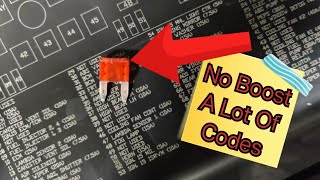
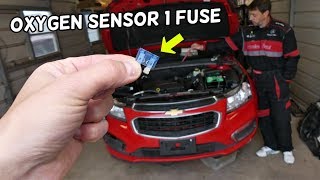
How to confirm: Check fuse F24 (10A) in the under-hood fuse box. This fuse location is confirmed for the 2012-2020 Sonic. If the fuse is blown, it likely indicates a short circuit in the wiring or the sensor itself that needs to be found before replacing the fuse.
Typical fix: Replace the 10A fuse. If it blows again, diagnose the short circuit.
Est. part cost: $1-$5
Rare But Worth Checking
- Faulty Engine Control Module (ECM): This is very rare. An ECM driver for the heater circuit can fail, but this should only be considered after all other possibilities (sensor, wiring, fuse) have been exhaustively ruled out. An NHTSA owner complaint on a Chevrolet Malibu (ODI #11221744) showed P0037 appearing with numerous other unrelated codes, suggesting a broader electrical or module failure.
Diagnosis Steps
- Read the code with an OBD-II scanner to confirm P0037 is present.
- Locate the under-hood fuse box and inspect fuse F24, a 10A fuse for the O2 sensors. Replace if blown.
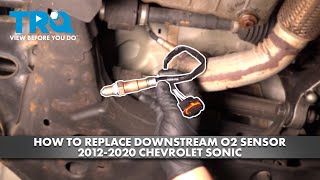
- Safely raise the vehicle and locate the downstream O2 sensor, which is screwed into the exhaust pipe after the catalytic converter.
- Carefully inspect the sensor's wiring harness for any signs of melting, chafing, or physical damage from the exhaust or road debris.
- Disconnect the sensor. Inspect the connector pins for corrosion, moisture, or damage.
- With the ignition on (engine off), use a multimeter to verify there is ~12V power at the heater circuit pin on the vehicle-side harness connector.
- Using a multimeter set to Ohms, measure the resistance between the two heater pins (typically same color) on the sensor itself. A good sensor will read between 3-15 Ohms. A reading of 'OL' or infinite resistance indicates the internal heater has failed.
- If the fuse, wiring, and power supply are good but the sensor has failed its resistance test, replace the Bank 1 Sensor 2 oxygen sensor. Apply anti-seize compound to the threads of the new sensor before installation.
Parts You'll Likely Need
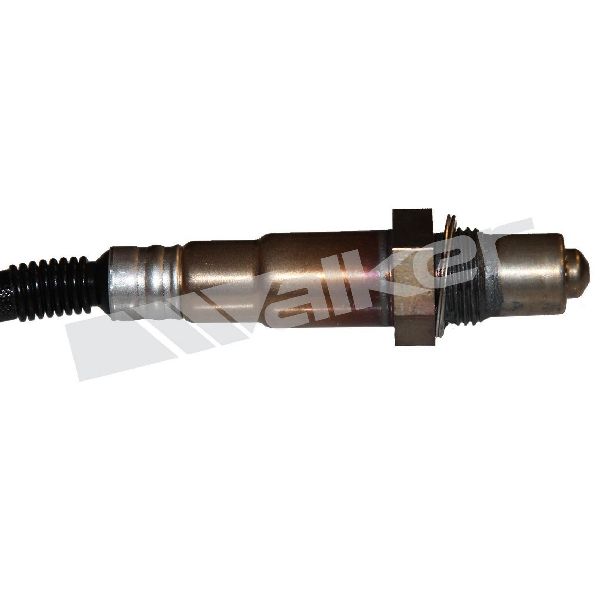
- Downstream Heated Oxygen Sensor (Bank 1, Sensor 2)
(OEM #GM 55572216 (supercedes 55568696), ACDelco 213-4764)— The internal heater element is the most common failure point for this code.
Trusted brands: ACDelco (OEM), Bosch (e.g., 17271), Denso (e.g., 234-4782), NGK/NTK
OEM price range: $100-$150
Aftermarket price range: $40-$90
Related Codes That Often Appear With This One
- P0036 — P0036 is 'HO2S Heater Control Circuit (Bank 1 Sensor 2)'. It is a nearly identical fault for the same sensor's heater circuit and can appear for similar reasons.
- P0141 — P0141 is 'O2 Sensor Heater Circuit Malfunction (Bank 1 Sensor 2)'. This is another generic code pointing to a failure in the same heater circuit.
- P0038 — P0038 is 'HO2S Heater Control Circuit High (Bank 1 Sensor 2)'. This indicates the opposite problem (high voltage), but can sometimes appear with P0037 if there are intermittent wiring issues.
Technical Service Bulletins (TSBs) & Recalls
- Bulletin #PIT5336: While for a different GM model, it acknowledges a wide range of O2 sensor codes, including P0037, related to a Service Engine Soon light, pointing to the possibility of common electrical issues.
Platform-Specific Known Issues
- A GM Technical Service Bulletin for other models (#PIT5336) lists P0037 among a large group of O2 sensor codes, suggesting that wiring harness and connector issues are a known potential problem area for GM vehicles of this era.
- Owners and mechanics report that the downstream oxygen sensor on the 1.4L engine can become extremely seized in the exhaust pipe, making removal very difficult and sometimes requiring extreme measures like heat from a torch or cutting the sensor out.
- A thread on SonicOwnersForum titled 'P0037 - O2 Sensor 2 Heater Circuit' details a user's experience confirming the fix was a new sensor, and another user confirms the ACDelco 213-4764 part number.
Mechanic-Grade Diagnostic Values
- Downstream O2 Sensor Heater Resistance — expected: 3 to 15 Ohms at ambient temperature.. Failure: A reading of infinite resistance (OL) indicates a burned-out heater element.
- Heater Circuit Power Supply Voltage — expected: 11-14 Volts (Battery Voltage) with ignition on, engine off.. Failure: 0 Volts or significantly low voltage indicates a wiring or fuse issue upstream of the sensor connector.
- New O2 Sensor Installation Torque — expected: 31 ft-lbs. Failure: Overtightening can damage the sensor or threads; undertightening can cause an exhaust leak.
Scan Tool Commands That Help
- GDS2 / Tech2 (or equivalent professional scan tool): HO2S Heater Resistance Learn Reset — After replacing a heated oxygen sensor, this function should be performed to clear the old learned resistance values from the ECM's memory. Failing to do so can lead to incorrect heater diagnostics and potential premature failure of the new sensor.
- GDS2 / Tech2 (or equivalent professional scan tool): Clear DTCs — Must be performed after replacing the HO2S to clear the P0037 code and extinguish the Check Engine Light. This is a required step before performing the heater resistance learn reset.
Wiring & Ground Locations
- Downstream HO2S Connector — Located behind the engine, above the oil pan area, where the sensor harness connects to the main vehicle harness.. This is the primary point for electrical testing (power, ground, and resistance). Corrosion or damage here is a common cause of failure.
- G303 — On the left side (driver's side) B-pillar, behind the trim panel.. This is a major body harness ground. While not directly for the O2 sensor, a poor connection here can cause a variety of strange electrical issues due to a floating ground, which could potentially affect sensor readings or heater circuit performance. A wiring diagram shows a breakout to G303 is located near the engine harness breakout.
- Engine-to-Chassis Ground — A primary ground cable runs from the engine block to a stud on the chassis frame rail, located beneath the battery tray.. The ECM and its sensors rely on a solid engine ground. Corrosion or looseness at this main grounding point can cause unpredictable electrical faults across the entire engine management system, including the O2 sensor circuits.
OEM Part Supersession History
55562206→55572216— Standard part evolution and potential design/material improvements by the manufacturer.
Heads up: The new part number (55572216) is the correct replacement for the old one. Some GM documentation notes that this part requires programming or a special setup procedure (Heater Resistance Learn Reset) to ensure proper operation.
Diagnostic Flowchart
Other Known Issues on This Vehicle
Issues unrelated to this code that are worth knowing about as an owner of this generation:
- PCV System Failure (Intake Manifold & Valve Cover) 🔴 High — Very common. The check valve in the intake manifold can fail and be ingested by the engine, and the diaphragm in the valve cover can rupture. Often occurs between 60,000-100,000 miles. (Ref: While no specific recall, this is a widely documented failure. TSB PIP5090F addresses related lean conditions (P0171). Aftermarket kits exist to bypass the flawed factory design.)
- Leaking Water Pump 🔴 High — Extremely common failure point, often leading to coolant loss and overheating. Can occur at any mileage, but frequently seen before 100,000 miles. (Ref: GM Special Coverage Adjustment #14371 extends the warranty for this specific part to 10 years or 150,000 miles for many early models.)
- Turbocharger Failure 🔴 High — Common, especially on 2017-2018 models. Symptoms include power loss, whistling noise, and oil consumption. (Ref: GM Special Coverage #N232395330 extends the warranty for turbo failure on certain 2017-2018 models to 10 years or 120,000 miles.)
- Cracked/Leaking Oil Cooler Housing 🟠 Medium — The seals for the oil cooler assembly are known to degrade and leak oil, a frequent source of oil leaks on this engine.
- Failing Purge Valve 🟡 Low — The evaporative emissions purge valve can stick open or closed, causing rough idle after refueling or setting EVAP codes. (Ref: Special Coverage #N232395330 was issued for some 2020 models for a purge valve that may not fully close.)
Used vs. New Parts: Buying Guide for This Vehicle
When a used part is the smart pick: For this repair, a used part is almost never a smart choice. The primary failure is the heater element, which is a wear item with a finite life. A used sensor has an unknown amount of life left and could fail shortly after installation. A used wiring harness pigtail from a junkyard could be a viable option if only the connector is damaged and the donor vehicle's wiring is in good condition.
Donor-vehicle mileage cap: roughly under 30000 miles for the part to have meaningful remaining life.
What to inspect on the donor part:
- For a connector/pigtail: Check for brittle plastic, corrosion on pins, or any signs of melting/heat damage.
- Ensure the locking tab on the connector is intact and functional.
- Cut the pigtail with as much wire as possible to allow for easier splicing.
OEM-only on this vehicle (don't cheap out):
- While not strictly 'OEM-only', using an OEM (ACDelco) or a reputable OE-equivalent brand for the oxygen sensor itself is highly recommended for proper performance and longevity.
Aftermarket brands forum-validated for this vehicle:
- ACDelco (OEM)
- Denso
- Bosch
- NGK/NTK
Brands owners have reported issues with on this vehicle:
- Unnamed, no-brand, or generic 'white box' sensors sold on marketplaces are frequently reported by mechanics to have high failure rates, incorrect resistance values, or short service lives.
Real Owner Stories
Aggregated from forums and TSBs cited above. Mileages and costs reflect what owners reported in those sources.
2012-2020 Chevrolet Sonic 1.4L Turbo
Symptoms: The user experienced a P0037 code specifically related to the O2 Sensor 2 Heater Circuit.
What fixed it: The fix was confirmed to be the installation of a new downstream oxygen sensor (ACDelco 213-4764).
Source hint: Sonic Owners Forum - 'P0037 - O2 Sensor 2 Heater Circuit'
2011-2016 Chevrolet Cruze 1.4L Turbo
Symptoms: The owner discussed diagnosing a P0037 code on the Sonic's platform-mate.
What fixed it: The diagnosis pointed to the sensor itself as the culprit for the heater circuit failure.
Source hint: CruzeTalk Forum - 'P0037 Code'
Related OBD-II Codes
Frequently Asked Questions
Which fuse should I check for a P0037 code on my 2012-2020 Chevrolet Sonic?
Is there a specific replacement part number recommended for the Sonic's downstream O2 sensor?
Does GM have any technical bulletins that mention P0037 for vehicles of this era?
I'm having trouble removing the sensor on my 1.4L Turbo; is this common?
What should the resistance be on a healthy Sonic downstream O2 sensor?
Are there any extended warranties that might cover related engine issues on my Sonic?
Helpful Videos
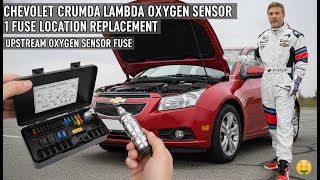
We Have This Part in Stock
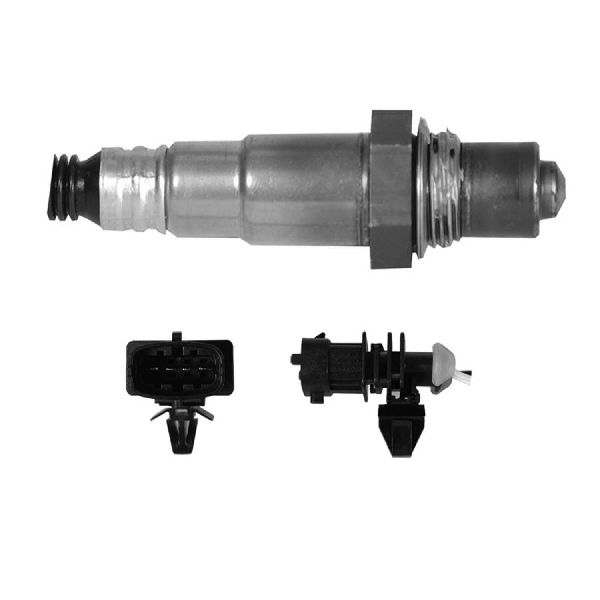

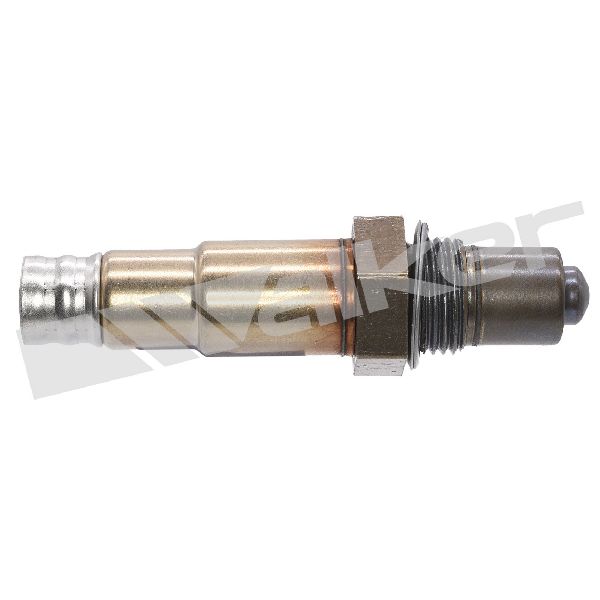
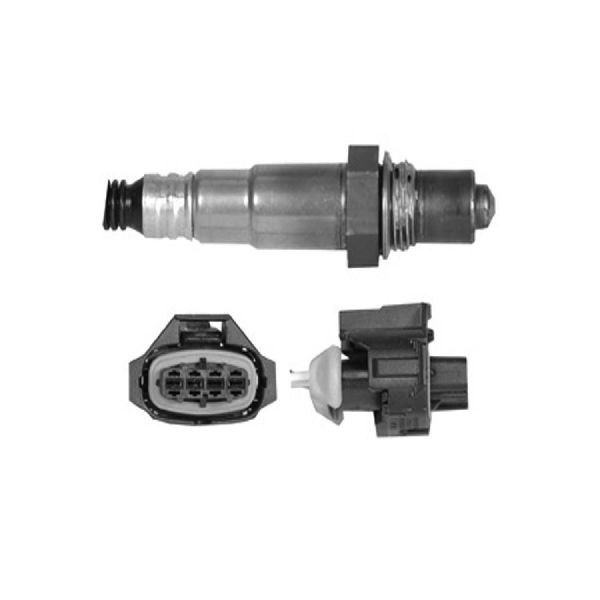


The information in this article is provided for general reference and educational purposes only. Vehicle specifications, procedures, and part compatibility can vary by production date, trim level, and region. Always consult your vehicle's factory service manual and verify part numbers before purchasing or performing repairs. Safety-critical components such as airbags, seat belts, and braking systems should be installed by a qualified professional.
- Chevrolet Sonic:
- 🎬 Helpful Videos
- 🛍️ Shop This Part
- What's Unique About the 2012-2020 Chevrolet Sonic
- Symptoms You May Notice
- Most Likely Causes
- Rare But Worth Checking
- Diagnosis Steps
- Parts You'll Likely Need
- Related Codes That Often Appear With This One
- Technical Service Bulletins (TSBs) & Recalls
- Platform-Specific Known Issues
- Mechanic-Grade Diagnostic Values
- Scan Tool Commands That Help
- Wiring & Ground Locations
- OEM Part Supersession History
- Diagnostic Flowchart
- Other Known Issues on This Vehicle
- Used vs. New Parts: Buying Guide for This Vehicle
- Real Owner Stories
- 2012-2020 Chevrolet Sonic 1.4L Turbo
- 2011-2016 Chevrolet Cruze 1.4L Turbo
- Related OBD-II Codes
- Frequently Asked Questions
- 🎟️ Get 5% Off