

P0032 on 2024 Jeep Wrangler: O2 Heater Circuit High Causes and Fixes
P0032 on a 2024 Jeep Wrangler indicates a high voltage problem in the heater circuit of the upstream oxygen sensor on Bank 1. The most common cause is a failed oxygen sensor itself. A less common but known issue is a wiring problem or a PCM software fault that requires a dealer update, especially if other O2 heater codes are present (P0038, P0052, P0058), as noted in multiple TSBs.
- P0032 points to an electrical fault in the heater for the upstream O2 sensor on Bank 1 (passenger side).
- The most likely fix is replacing the Bank 1, Sensor 1 O2 sensor.
- Before replacing the sensor, always inspect the wiring and connector for visible damage, as this is a common point of failure.
- If P0032 appears with other O2 heater codes, check for TSBs related to a PCM software update before replacing multiple sensors.
What's Unique About the 2024-2024 Jeep WRANGLER
For the 2024 Jeep Wrangler (JL generation), while a failed sensor is common, the platform is particularly susceptible to software-related issues. Jeep has issued several Technical Service Bulletins (TSBs), such as 18-003-26 and 18-050-24 REV. A, which state that P0032 appearing alongside other O2 heater codes (P0038, P0052, P0058) is a strong indicator of a PCM software issue. 🎬 Watch: Why these four codes often mean a software update. The fix is a dealer-installed reflash, not replacing all four sensors. Some owners on forums like JLWranglerForums have reported going through multiple sensor replacements before a PCM update finally solved the recurring code, suggesting the PCM was sending excess voltage and burning out new sensors. This makes checking for software updates a critical first step if multiple codes are present.
Diagnostic Flowchart
Tap your situation to follow the diagnostic path that matches what you're seeing on this vehicle.
Symptoms You May Notice
- Check Engine Light (Malfunction Indicator Lamp) is on
- Decreased fuel economy
- Rough or unstable idle
- Potential for failed emissions testing
- Strong fuel smell from the exhaust
- Replacing the catalytic converter. This code is related to the sensor's heater circuit, not the efficiency of the converter.
- Replacing the wrong oxygen sensor. P0032 is specifically for Bank 1, Sensor 1 (upstream, pre-catalyst, passenger side). Ensure you identify the correct sensor before replacement.
- Replacing all four O2 sensors when multiple heater codes are present. This pattern usually indicates the PCM software issue, and replacing the sensors will not fix the root cause.
Most Likely Causes
- Failed Bank 1, Sensor 1 Oxygen Sensor 🔴 High Probability The internal heater element is a common wear item subjected to extreme heat cycles and can short or burn out. Some owners report repeated failures until a PCM software update is performed.
How to confirm: Disconnect the sensor and measure the resistance between the two heater circuit pins (often same-colored wires). A healthy sensor typically reads between 2 and 30 ohms, with many new sensors reading between 4-7 Ohms. An infinite resistance reading (open circuit) or zero resistance (short circuit) confirms the heater has failed.
Typical fix: Replace the Bank 1, Sensor 1 (upstream, passenger side) oxygen sensor. Using an OEM Mopar part is strongly recommended 🎬 Watch this step-by-step guide to replacing your Wrangler's oxygen sensors. as some aftermarket sensors have different resistance values that can cause the code to return.
Est. part cost: $70-$180 - Damaged Wiring or Corroded Connector 🟡 Medium Probability The O2 sensor wiring is routed near hot exhaust components and is exposed under the vehicle. On the related Jeep Gladiator platform, the harness is known to rub against the passenger side fender liner, breaking wires. On Wranglers, broken ground wires for the O2 sensor harness 🎬 See how to diagnose the circuit when sensors aren't the problem. are also a known failure point.
How to confirm: Visually inspect the entire wiring harness from the O2 sensor to the main engine harness. Pay close attention to where it passes the fender liner and any grounds. Look for melted insulation, frayed wires, or green corrosion inside the connector. Test for battery voltage at the heater power pin on the harness-side connector with the key on.
Typical fix: Repair the damaged section of the wire using solder and heat-shrink tubing or replace the connector pigtail. Secure the harness away from sharp edges or hot surfaces.
Est. part cost: $10-$60 - Powertrain Control Module (PCM) Software Issue 🟡 Medium Probability Multiple TSBs (e.g., 18-050-24 REV. A, 18-003-26) have been issued for 2024 Wranglers where the PCM software is overly sensitive and can incorrectly set O2 heater circuit codes. This is the most likely cause if P0032 appears with P0038, P0052, and P0058 simultaneously.
How to confirm: This is difficult to confirm without a dealer-level scan tool. It is the primary suspect if multiple O2 heater codes are present at once and a physical inspection of sensors/wiring reveals no faults. A dealer can check your VIN against their database for open TSBs or Rapid Service Updates (RSU).
Typical fix: A Jeep dealership needs to reflash the PCM with the latest software update as specified in the relevant TSB. This is often covered under warranty.
Est. part cost: $0-$200
Rare But Worth Checking
- Faulty Powertrain Control Module (PCM): This is very rare. Before condemning the PCM, all other possibilities, including wiring, the sensor itself, and especially software updates, must be exhaustively ruled out by a qualified technician.
Diagnosis Steps
- Scan the vehicle for codes. If P0032 is present along with P0038, P0052, and P0058, the primary suspect is a PCM software issue. Contact a dealer to check for TSBs before proceeding.
- Perform a thorough visual inspection of the Bank 1, Sensor 1 oxygen sensor, its connector, and its wiring harness. Look for any signs of melting, chafing, or corrosion. On related platforms, the harness is known to rub through on the passenger fender liner.
- Turn the ignition off and disconnect the O2 sensor connector. Allow the sensor to cool.
- Using a multimeter, measure the resistance of the heater element across the two designated pins on the sensor side of the connector. A reading between 2-30 ohms is typical (many new sensors are 4-7 ohms); an open circuit (infinite resistance) or short (near-zero) indicates a failed sensor.
- If sensor resistance is good, turn the ignition to the 'On' position (engine off). Check for battery voltage on the heater power supply wire in the vehicle-side harness connector.
- Check for continuity to ground on the heater ground wire in the vehicle-side harness connector. A broken ground wire is a known failure point.
- If voltage or ground is missing, trace the wiring back towards the PCM/fuse box to find the open or shorted circuit.
- If the sensor and wiring all test good, the issue is almost certainly a PCM software problem requiring a dealer reflash per the applicable TSB.
Parts You'll Likely Need
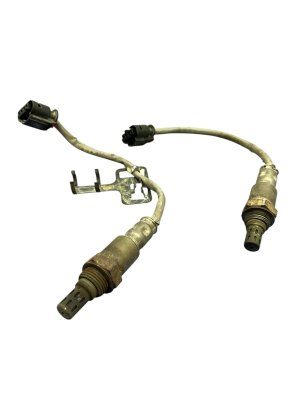
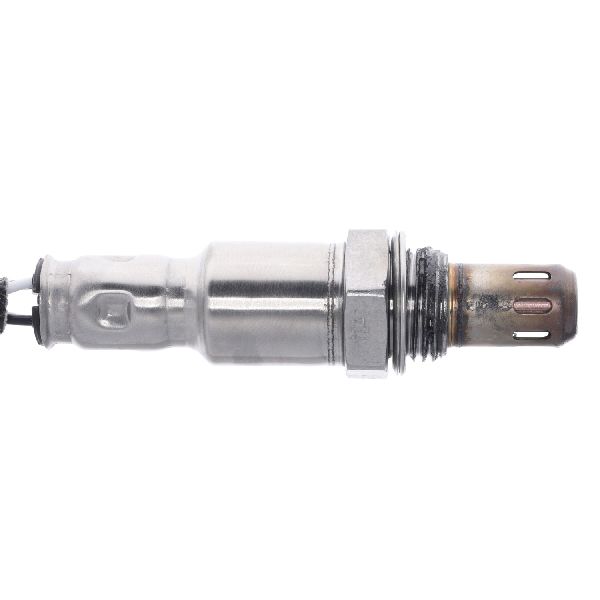
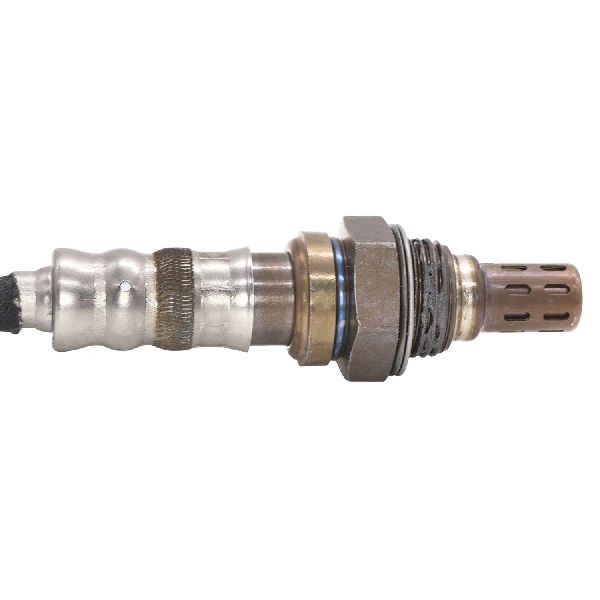
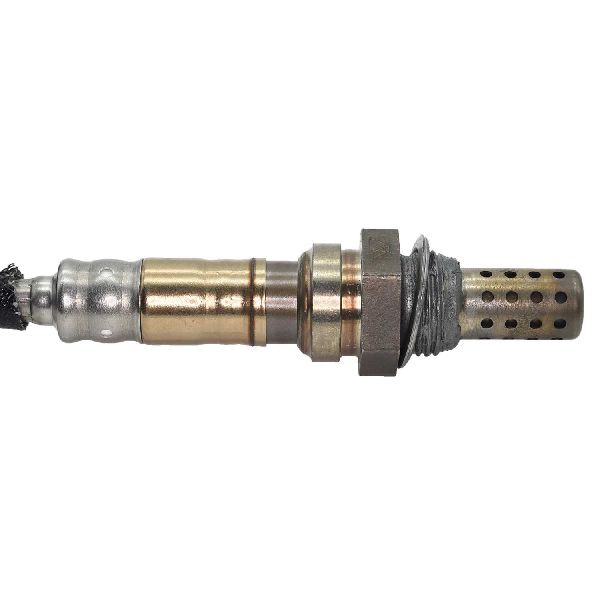
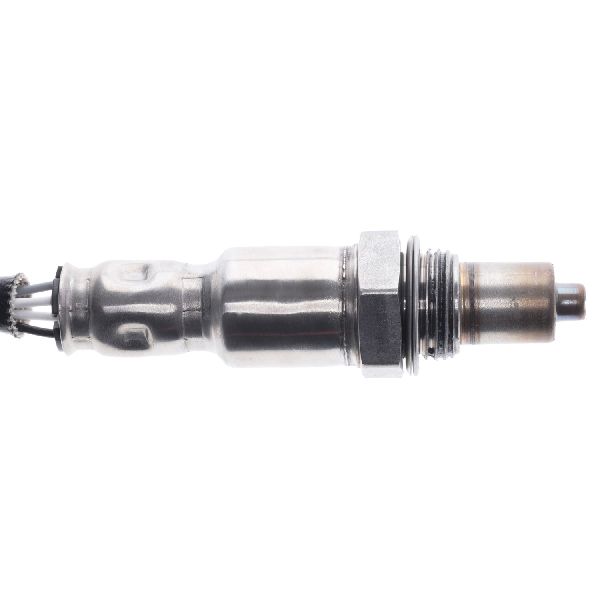
- Upstream Oxygen Sensor (Bank 1, Sensor 1)
(OEM #Mopar #68290528AA (for 3.6L V6) or #68617422AB (for 2.0L I4 Turbo).)— This is the most common failure point for a solitary P0032 code. The internal heater element shorts or burns out.
Trusted brands: Mopar, NTK, Denso
OEM price range: $110-$180
Aftermarket price range: $70-$130
Related Codes That Often Appear With This One
- P0038 — Heater Circuit High for Bank 1, Sensor 2. Often indicates a shared power/ground issue or a PCM software problem as noted in TSBs.
- P0052 — Heater Circuit High for Bank 2, Sensor 1. Often indicates a shared power/ground issue or a PCM software problem as noted in TSBs.
- P0058 — Heater Circuit High for Bank 2, Sensor 2. Often indicates a shared power/ground issue or a PCM software problem as noted in TSBs.
- P0152 — O2 Sensor Circuit High (Bank 2, Sensor 1). TSB 18-003-26 groups this code with the heater circuit codes, indicating the PCM software update addresses a range of O2 sensor faults.
Technical Service Bulletins (TSBs) & Recalls
- 18-003-26: Groups P0032 with other O2 heater codes (P0038, P0052, P0058) and points to a PCM software update for the 3.6L engine.
- 18-050-24 REV. A: Supersedes previous versions and also lists the group of four O2 heater high codes as being resolved by a PCM reflash.
- 18-013-24 REV. C: For the 2.0L PHEV engine, this TSB groups P0032 with other codes like P0300 (misfire) and indicates a software update is the fix.
Platform-Specific Known Issues
- TSB #18-050-24 REV. A & #18-003-26: These bulletins explicitly state that if P0032 is set along with other O2 heater circuit high codes (P0038, P0052, P0058), the cause is likely PCM software that needs reprogramming, not failed sensors.
- Recurring Sensor Failure: Some owners report replacing the B1S1 sensor multiple times only for the P0032 code to return, a condition that is often resolved by a PCM software update to correct an overvoltage condition.
- Wiring Harness Chafe Point: On the closely related Jeep Gladiator, the B1S1 O2 sensor harness is known to rub on the passenger-side fender liner, causing wires to break and trigger a P0032 code.
Mechanic-Grade Diagnostic Values
- O2 Sensor Heater Element Resistance — expected: 4 to 10 Ohms at ambient temperature for Pentastar engines. Some sources cite a wider acceptable range of 2-30 Ohms.. Failure: A reading of 0 Ohms (short circuit) or infinite/OL (open circuit) confirms a failed heater element.
- Heater Circuit Control Verification (Harness Side) — expected: With the sensor disconnected and a test light or 194 bulb connected to the two heater pins on the vehicle harness, the light should illuminate (steadily or pulsing) when the engine is started.. Failure: If the light does not illuminate, it indicates a problem with the power supply, PCM driver, or the wiring itself. If the light is on with the key on but engine off, it indicates a short to ground on the control wire.
- Heater Circuit Live Data (Scan Tool) — expected: On a scan tool, the current draw for the B1S1 heater circuit should show a value (e.g., 0.5-1.5A) when active. The PCM controls the heater via Pulse Width Modulation (PWM), so the duty cycle may also be viewable.. Failure: A current reading of 0A when the heater should be active indicates an open circuit (bad sensor, broken wire, or faulty PCM driver).
Scan Tool Commands That Help
- wiTECH or other professional scan tool: Live Data Monitoring (O2 Heater Current/Duty Cycle) — This is used to confirm if the PCM is attempting to control the heater circuit and if the circuit is drawing the expected amount of current. If the PCM is commanding the heater 'ON' but the current is 0A, it confirms an open in the circuit (wiring or the sensor itself). This avoids replacing a sensor when the wiring is at fault.
Wiring & Ground Locations
- O2 Sensor Heater Ground Path — A common failure point is a corroded or broken main ground wire located on the passenger side of the vehicle, often near the engine block or frame.. Multiple O2 heater circuits may share a common ground path. A single faulty ground can cause 'Circuit High' codes for multiple sensors simultaneously (e.g., P0032, P0038, P0052, P0058), mimicking the symptoms of a PCM software issue. This ground should be inspected for integrity before replacing sensors or the PCM.
- Bank 1 Sensor 1 Connector Pins — On the O2 sensor itself and the corresponding vehicle harness connector.. The two heater circuit wires are typically the same color (e.g., two white wires or two black wires). These are the pins to use when measuring the sensor's internal resistance.
Real Owner Repair Stories
- Reddit user in r/JeepWrangler (2024 Jeep Wrangler JLU) — Check engine light came on, then came back the next day after repair, and again an hour after the second repair. Finally, the CEL was flashing with severe vibration at idle.
❌ Tried (didn't work) Replacing the first O2 sensor that failed., Replacing the second O2 sensor that failed., Replacing the third O2 sensor that failed.
✅ What actually fixed it The issue was not the sensors themselves but a systemic problem. The dealer opened a STAR ticket (Stellantis Technical Assistance Resource) to troubleshoot. Another user in a similar situation had three O2 sensors replaced before the dealer identified an overcharge issue and replaced the PCM to resolve it. - Go-Parts.com repair summary (citing YouTube user 'Car Help') (Jeep Wrangler (mechanically similar to Gladiator) with 3.6L engine) — Check Engine Light with multiple O2 sensor heater codes active: P0032, P0038, P0052, and P0058.
❌ Tried (didn't work) Initial diagnosis suggested replacing all four O2 sensors, which was avoided.
✅ What actually fixed it The root cause was found to be a corroded and broken ground wire located on the passenger side of the vehicle. Repairing the ground wire resolved all four heater circuit codes.
"I Checked Everything" — The Actual Cause
- In the context of this electrical code, the equivalent is when all wiring continuity tests from the sensor to the PCM check out, but the code persists. This often points to two main culprits: 1) A PCM software glitch that incorrectly flags the fault, as addressed by multiple TSBs. 2) A faulty ground connection at the chassis or engine block, which provides the ground reference for the entire circuit; the wire itself is fine, but its termination point is compromised.
When the Usual Fixes Don't Work
- While the TSBs strongly suggest a PCM software update is the fix when multiple O2 heater codes are present, there are confirmed cases where the root cause was a single, simple failure point. One well-documented case showed that a corroded ground wire on the passenger side caused all four heater circuit high codes (P0032, P0038, P0052, P0058) to appear at once. Repairing this single ground wire fixed the issue without needing a PCM reflash or replacing any sensors. This highlights the importance of checking shared ground points before assuming a software fault.
OEM Part Supersession History
Varies→Varies— Standard part evolution
Heads up: On many Jeep Wrangler JL/JT models, the Bank 1 Sensor 1 (passenger side, upstream) O2 sensor has a different part number than the other three sensors. Ordering four identical sensors will result in an incorrect part for this specific location. Always verify the part number for the exact position being replaced.
Helpful Videos
Used OEM Parts in Stock

New Aftermarket Parts Available

The information in this article is provided for general reference and educational purposes only. Vehicle specifications, procedures, and part compatibility can vary by production date, trim level, and region. Always consult your vehicle's factory service manual and verify part numbers before purchasing or performing repairs. Safety-critical components such as airbags, seat belts, and braking systems should be installed by a qualified professional.
- Jeep WRANGLER:
- 🎬 Helpful Videos
- 🛍️ Shop This Part
- What's Unique About the 2024-2024 Jeep WRANGLER
- Diagnostic Flowchart
- Symptoms You May Notice
- Most Likely Causes
- Rare But Worth Checking
- Diagnosis Steps
- Parts You'll Likely Need
- Related Codes That Often Appear With This One
- Technical Service Bulletins (TSBs) & Recalls
- Platform-Specific Known Issues
- Mechanic-Grade Diagnostic Values
- Scan Tool Commands That Help
- Wiring & Ground Locations
- Real Owner Repair Stories
- "I Checked Everything" — The Actual Cause
- When the Usual Fixes Don't Work
- OEM Part Supersession History
- 🎟️ Get 5% Off