

P0031 on 2003-2008 Pontiac Vibe 1.8L: Causes and Fixes for A/F Sensor Heater
On a 2003-2008 Pontiac Vibe with the 1.8L engine, code P0031 almost always means the upstream Air/Fuel Ratio Sensor's internal heater has failed. The most common fix is to replace this sensor, which is a DIY-friendly job costing between $60 for an aftermarket part and $150 for an OEM Denso sensor. Before replacing, check the 15A 'A/F HTR' fuse in the engine bay fuse box.
- P0031 on a 2003-2008 Vibe almost always points to a failed upstream Air/Fuel Ratio sensor.
- Before replacing any parts, perform a quick check of the 15A 'A/F HTR' fuse in the engine bay.
- Use a high-quality replacement sensor from Denso (the OEM manufacturer, part #234-9041 for 2003-2004 FWD, #234-9052 for 2005-2008 FWD) to avoid compatibility issues and ensure a lasting fix.
- This is a DIY-friendly repair that can be done in under an hour with basic tools and a special oxygen sensor socket.
What's Unique About the 2003-2008 Pontiac Vibe
The 2003-2008 Pontiac Vibe is a mechanical clone of the Toyota Matrix, both built on the Toyota Corolla platform with the Toyota 1ZZ-FE engine. Therefore, issues and fixes for this code are identical to those for a 2003-2008 Toyota Corolla or Matrix. Owners and mechanics on forums like Genvibe.com consistently report that these Toyota-based systems are very sensitive to the brand of A/F sensor used. Using non-OEM brands like Bosch often fails to fix the code or causes it to return quickly. Sticking with the original equipment manufacturer, Denso, is highly recommended for a lasting repair.
Symptoms You May Notice
- Check Engine Light is on
- Slightly reduced fuel economy
- Failure to pass an emissions inspection
- Car may run rich until the sensor warms up naturally from the exhaust
- Replacing the downstream oxygen sensor (Bank 1, Sensor 2). P0031 specifically refers to the upstream sensor (Sensor 1).
- Using a cheap, non-OEM/Denso sensor which may be faulty out of the box or fail quickly, leading to the code returning. Many forum users report this exact experience with Bosch sensors on this platform.
- Replacing the sensor without first checking the 15A 'A/F HTR' fuse.
Most Likely Causes
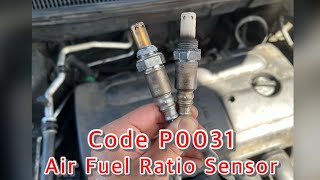
- Failed Upstream Air/Fuel Ratio Sensor (Bank 1, Sensor 1) 🔴 High Probability The internal heater element is a common wear-and-tear item that eventually burns out, similar to a light bulb filament. This is the most frequent cause 🎬 See this breakdown of P0031 causes and common fixes. of P0031 on this vehicle.
How to confirm: After confirming the fuse is good, test the resistance of the heater circuit on the sensor itself using a multimeter. Disconnect the sensor and measure resistance between the two same-colored heater pins. A healthy sensor for this vehicle will have a resistance between 1.8 and 3.4 ohms at room temperature (68°F/20°C). A failed sensor will typically show infinite resistance (an open circuit), which is the most common failure mode.
Typical fix: Replace the upstream Air/Fuel Ratio sensor located in the exhaust manifold.
Est. part cost: $60-$180 - Blown 'A/F HTR' Fuse ⚪ Low Probability
How to confirm: Inspect the fuse box in the engine bay. On the 2003-2008 Vibe/Matrix/Corolla, this is a 15A fuse labeled 'A/F HTR'. Visually check if the fuse is blown or use a multimeter to test for continuity.
Typical fix: Replace the blown fuse with a new 15A fuse. If the new fuse blows immediately, it indicates a short circuit in the wiring harness or a shorted heater element in the A/F sensor itself that needs to be diagnosed.
Est. part cost: $1-$5 - Damaged Wiring or Connector ⚪ Low Probability The wiring harness is located in a hot engine bay and can become brittle or damaged over time. Rodents can also chew on the wires. The wires can also break right at the sensor connector from vibration and heat cycles.
How to confirm: Visually inspect the wiring harness leading to the upstream A/F sensor for any signs of fraying, melting, corrosion, or breaks. Check that the connector is securely plugged in and that the pins are clean and not pushed back. With the key on, you should have 12V+ at the heater power pin on the harness side of the connector.
Typical fix: Repair the damaged section of the wire harness or clean/replace the connector.
Est. part cost: $10-$50
Rare But Worth Checking
- Faulty Engine Control Module (ECM): This is extremely rare. The sensor, fuse, and wiring should be thoroughly checked before considering the ECM as the cause. Some 2005-2008 models were subject to a recall for harsh shifting and stalling due to ECM issues, but this was generally unrelated to the P0031 code. However, a faulty ECM driver for the heater circuit is technically possible, though highly unlikely.
Diagnosis Steps
- Read the code with an OBD-II scanner to confirm P0031 is present.
- Check the 15A 'A/F HTR' fuse in the engine bay fuse box. If it's blown, replace it. If it blows again, suspect a short in the sensor or wiring.
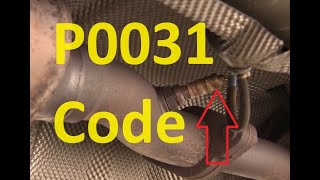
- If the fuse is good, locate the upstream A/F sensor (Bank 1, Sensor 1). On the 1.8L engine, it is screwed into the exhaust manifold, easily accessible from the top of the engine bay after removing a small metal heat shield held on by two 10mm bolts. 🎬 Watch: This 5-minute video shows the sensor replacement process.
- Inspect the sensor's wiring and connector for any visible damage, melting, or corrosion. Ensure the connector is securely fastened.
- Disconnect the sensor and test the heater circuit resistance with a multimeter across the two same-colored wires on the sensor side. A good sensor should read between 1.8 and 3.4 ohms. An infinite reading confirms the sensor's heater is broken.
- If the resistance is out of spec, replace the Air/Fuel Ratio sensor. It is highly recommended to use a Denso-branded part (Denso #234-9041 for FWD models 2003-2004, #234-9052 for FWD models 2005-2008).
- After replacement, clear the code with the OBD-II scanner and take the vehicle for a drive cycle to ensure the Check Engine Light does not return.
Parts You'll Likely Need
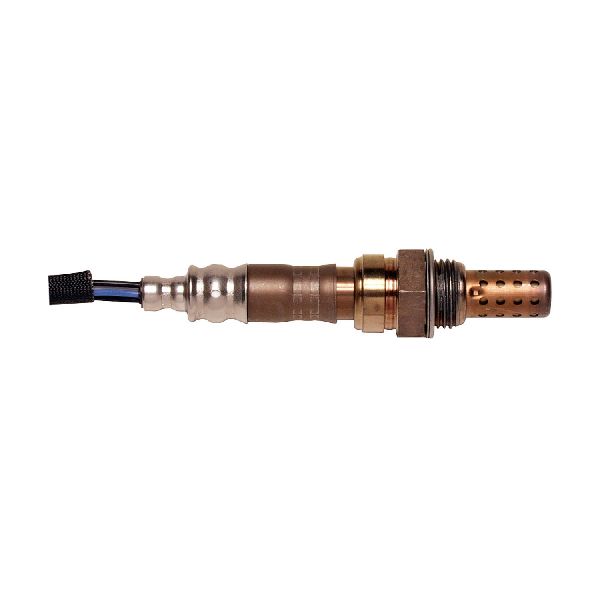
- Upstream Air/Fuel Ratio Sensor (Bank 1, Sensor 1)
(OEM #89467-12030)— The internal heater element fails with age, which is the direct cause of the P0031 code.
Trusted brands: Denso (OEM, Part #234-9041 for FWD 2003-2004, #234-9052 for FWD 2005-2008), NGK/NTK
OEM price range: $120-$180
Aftermarket price range: $60-$150
Platform-Specific Known Issues
- This platform is known to be very sensitive to the brand of oxygen sensor used. Many owners report that using brands other than the original equipment manufacturer (Denso) will not resolve the code or will cause it to return shortly.
- Be aware that Base (FWD), AWD, and GT models may use different oxygen sensors. Ensure you purchase the correct part for your specific Vibe model, as they are not interchangeable. The Denso 234-9052 is correct for 2005-2008 FWD models, while 2003-2004 FWD models use Denso 234-9041.
- Counterfeit Denso sensors are common on sites like eBay and Amazon. Purchase from a reputable auto parts supplier to ensure you are getting a genuine part.
Mechanic-Grade Diagnostic Values
- A/F Sensor Live Data Voltage (B1S1) — expected: 2.8V to 3.8V at idle on a fully warmed engine.. Failure: Voltage that is stuck, unresponsive, or significantly outside the expected range after the engine is warm. Note: This tests the sensor's reporting function, not the heater itself, but is a crucial related health check.
- A/F Sensor Heater Circuit Voltage (Harness Side) — expected: Battery voltage (approx. 12V) with Key On, Engine Off, between the power pin (often Black/Red) and ground.. Failure: No voltage indicates a problem upstream, such as a blown A/F HTR fuse, a bad EFI relay, or a wiring break.
- A/F Sensor Heater Control Duty Cycle (Scan Tool) — expected: Will show a percentage that varies. The ECM pulses the ground to control heater temperature. On cold start, it should be active.. Failure: A 0% duty cycle when the engine is cold (and the heater should be on) points to a command issue from the ECM or the ECM detecting an open/short and shutting down the circuit.
Scan Tool Commands That Help
- Toyota Techstream: Active Test: 'Control the Injection Volume for A/F Sensor' — This test manipulates fueling to be rich (-12.5%) or lean (+12.5%) and allows you to observe the A/F sensor's voltage/lambda response. While not a direct heater test, it's invaluable for confirming if the sensor is lazy or non-responsive, which often accompanies a heater failure or can be a separate issue causing confusion. A healthy sensor's output should change predictably during this test.
Wiring & Ground Locations
- EC (Ground) — On the cylinder head, often near the intake manifold on the 1ZZ-FE engine.. This is a primary engine ground. A poor connection here can cause a voltage drop across the entire engine management system, potentially affecting sensor readings and heater performance.
- Firewall Ground — A ground strap running from the engine/transmission to the firewall, often above the alternator.. This ground is sometimes overlooked during engine or transmission work. A missing or corroded strap can lead to all sorts of strange electrical issues, including sensor heater problems, as the circuit seeks a path to ground.
- A/F Sensor Connector Pins — On the sensor harness connector itself.. The two same-colored wires (typically both black on Denso sensors) are for the heater circuit. One will receive power from the A/F HTR fuse/relay, and the other is the control wire that the ECM pulses to ground. Testing for power and signal must be done at the correct pins.
Real Owner Repair Stories
- GenVibe.com user (2006 Pontiac Vibe Base) — Check Engine Light with code P0031 after replacing a damaged upstream sensor.
❌ Tried (didn't work) Replacing the upstream O2 sensor with a new part.
✅ What actually fixed it The user had mistakenly purchased and installed the A/F sensor intended for the AWD model. The parts are not interchangeable. Replacing the incorrect sensor with the correct one for the Base (FWD) model resolved the P0031 code. - 2CarPros.com user (2005 Pontiac Vibe, 52k miles) — Persistent P0031 code immediately returning after clearing.
❌ Tried (didn't work) Replacing the PCM and having it reflashed., Installing new oxygen sensors., Verifying all PCM powers and grounds.
✅ What actually fixed it After extensive troubleshooting, the cause was found to be a single electrical pin that had backed out of the A/F sensor's harness connector. Pushing the pin back into the connector until it clicked into place permanently solved the issue. - GenVibe.com user 'shawn' (2005 Pontiac Vibe Base) — Check Engine Light with P0031 after replacing O2 sensors.
❌ Tried (didn't work) Replacing the upstream sensor with a new Bosch brand sensor.
✅ What actually fixed it The aftermarket Bosch sensor, despite being listed as compatible, did not work. The code was only resolved after replacing the Bosch sensor with the OEM Denso direct-fit sensor.
Model Year Variations Within This Range
- 2003-2004 vs 2005-2008 (FWD Models): The upstream A/F Ratio sensor part number is different. 2003-2004 models with the cable-driven throttle use Denso #234-9041. 2005-2008 models with Drive-By-Wire use Denso #234-9052. The parts have different length harnesses and potentially different calibration; they are not interchangeable.
- 2003-2008: FWD (Base) and AWD models use different upstream A/F sensors. The FWD sensors are listed above. The AWD model uses a different part, often cited as Denso #234-8041, which is a narrow-band sensor, unlike the wide-band A/F sensors on FWD models. Installing the wrong type will guarantee a persistent check engine light.
Diagnostic Flowchart
Other Known Issues on This Vehicle
Issues unrelated to this code that are worth knowing about as an owner of this generation:
- Leaking Intake Manifold Gasket 🟠 Medium — Very common, especially in colder climates. Can occur at any mileage. The original black gasket shrinks and fails; an updated orange gasket (Toyota P/N 17171-22060) is the permanent fix. (Ref: Toyota TSB EG045-07 addresses this issue, which often causes P0171 (System Too Lean) and misfire codes.)
- Excessive Oil Consumption (Pre-2005 models) 🔴 High — Common on 2003-2004 models due to a piston ring design with insufficient oil return holes, leading to clogging and oil burning. Later models (2005+) have an improved piston design but can still consume oil with age or poor maintenance.
- Noisy Drive Belt Tensioner 🟡 Low — A common issue where the tensioner pulley bearing wears out, causing a rattling or grinding noise from the engine's accessory belt area.
Used vs. New Parts: Buying Guide for This Vehicle
When a used part is the smart pick: For this repair, it is almost never a good idea to use a 'used' A/F sensor from a junkyard. The sensor is a wear item with a finite lifespan, much like a spark plug or filter. However, obtaining related parts like a replacement wiring harness pigtail, the engine bay fuse box, or the EFI relay from a donor vehicle is a perfectly acceptable and cost-effective strategy.
Donor-vehicle mileage cap: roughly under 100000 miles for the part to have meaningful remaining life.
What to inspect on the donor part:
- For a wiring pigtail, ensure the wires are not brittle, cracked, or melted.
- Check the locking tab on the connector to ensure it's not broken.
- Look for clean, corrosion-free electrical pins inside the connector.
- For a fuse box or relay, check for signs of water intrusion, heavy corrosion, or melted plastic.
OEM-only on this vehicle (don't cheap out):
- Air/Fuel Ratio Sensor
Aftermarket brands forum-validated for this vehicle:
- Denso (Original Equipment Manufacturer)
- NTK/NGK
Brands owners have reported issues with on this vehicle:
- Bosch (Many forum reports of incompatibility with this specific Toyota-based platform).
- Unbranded 'universal' sensors that require splicing wires.
Real Owner Stories
Aggregated from forums and TSBs cited above. Mileages and costs reflect what owners reported in those sources.
2003 & 2005 Pontiac Vibe
Symptoms: Check Engine Light with P0031 code; code remained even after installing two new inexpensive Bosch sensors.
What fixed it: Replaced the upstream O2 sensor with an OEM Denso direct fit sensor.
Cost: $160
Source hint: genvibe.com - P0031 code fixed
2003-2008 Pontiac Vibe 1.8L — 63000 miles
Symptoms: Check Engine Light (P0031).
What fixed it: Installation of a new Denso upstream sensor.
Source hint: genvibe.com thread titled 'Code P0031'
Related OBD-II Codes
Frequently Asked Questions
Which specific Denso sensor part number do I need for my FWD Pontiac Vibe?
Can I use a Bosch or other aftermarket brand sensor to fix P0031 on my Vibe?
Where is the 'A/F HTR' fuse located on the 2003-2008 Vibe?
How do I test if the Air/Fuel Ratio sensor itself has failed?
Is the P0031 issue on my Vibe the same as on a Toyota Matrix or Corolla?
Does the intake manifold gasket issue on this engine cause P0031?
Helpful Videos
We Have This Part in Stock


The information in this article is provided for general reference and educational purposes only. Vehicle specifications, procedures, and part compatibility can vary by production date, trim level, and region. Always consult your vehicle's factory service manual and verify part numbers before purchasing or performing repairs. Safety-critical components such as airbags, seat belts, and braking systems should be installed by a qualified professional.
- Pontiac Vibe:
- 🎬 Helpful Videos
- 🛍️ Shop This Part
- What's Unique About the 2003-2008 Pontiac Vibe
- Symptoms You May Notice
- Most Likely Causes
- Rare But Worth Checking
- Diagnosis Steps
- Parts You'll Likely Need
- Platform-Specific Known Issues
- Mechanic-Grade Diagnostic Values
- Scan Tool Commands That Help
- Wiring & Ground Locations
- Real Owner Repair Stories
- Model Year Variations Within This Range
- Diagnostic Flowchart
- Other Known Issues on This Vehicle
- Used vs. New Parts: Buying Guide for This Vehicle
- Real Owner Stories
- 2003 & 2005 Pontiac Vibe
- 2003-2008 Pontiac Vibe 1.8L — 63000 miles
- Related OBD-II Codes
- Frequently Asked Questions
- 🎟️ Get 5% Off