

P0031 on 2008-2014 Mercedes-Benz C-Class: O2 Sensor Heater Circuit Causes and Fixes
P0031 on a W204 C-Class almost always means the upstream oxygen sensor on the passenger side (Bank 1) has a failed internal heater. Before replacing the sensor for $60-$150, check for damaged wiring near the exhaust and a blown fuse (often F59 in the engine bay fuse box), which are also common culprits.
- P0031 points to a fault in the heater circuit for the upstream oxygen sensor on the passenger side.
- The most likely cause is a failed oxygen sensor, but you must inspect the wiring and fuse before replacing any parts.
- Driving with this code is generally safe but will increase fuel consumption and cause you to fail an emissions test.
- This is a DIY-friendly repair for those comfortable working with basic tools and a multimeter. An oxygen sensor socket is recommended.
- Always use a quality replacement sensor from a brand like Bosch or Denso, as some aftermarket sensors can be unreliable.
What's Unique About the 2008-2014 Mercedes-Benz C-Class
For the W204 C-Class with the M272 engine, this code is fairly straightforward. However, owner experiences show it's critical to inspect the wiring harness leading to the sensor before replacing it. The wiring is routed near hot exhaust components and can become brittle and break, causing a short or open circuit that mimics a failed sensor. Simply replacing the sensor without checking the wiring can lead to the code returning immediately.
Symptoms You May Notice
- Check Engine Light (CEL) is illuminated
- Reduced fuel mileage
- Rough or unstable idle, especially during cold starts
- Vehicle may take longer than usual to enter 'closed-loop' fuel control
- Failure to pass an emissions test
- Replacing the oxygen sensor without first testing the wiring and fuse. Several owners have reported replacing the sensor only to have the P0031 code return because the actual fault was in the wiring harness.
Most Likely Causes
- Failed Bank 1, Sensor 1 Oxygen Sensor 🔴 High Probability The internal heater element within the oxygen sensor is a common failure point over time due to constant heat cycles.
How to confirm: Unplug the sensor and measure the resistance between the two heater circuit pins (often the two same-colored wires, e.g., white). A good sensor should have a resistance between 2 and 25 ohms when cold. An open circuit (infinite resistance) or a dead short (near zero ohms) indicates a failed heater element.
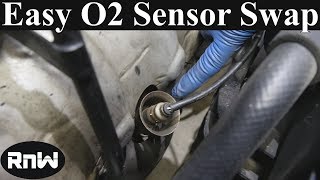
Typical fix: Replace the Bank 1, Sensor 1 (passenger side, upstream) oxygen sensor.
Est. part cost: $60-$150 - Damaged Wiring or Connector 🟡 Medium Probability The sensor wiring is located near the hot exhaust manifold, which can cause the insulation to become brittle, melt, or crack over time, leading to a short or open circuit.
How to confirm: Visually inspect the entire wiring harness from the sensor to the main engine harness. Look for melted sections, frayed wires, or corrosion in the connector. A forum member with a 2008 C300 found wires that were damaged and barely making contact right at the connector junction.
Typical fix: Repair the damaged section of the wiring harness or replace the connector pigtail.
Est. part cost: $10-$50 - Blown Fuse for Heater Circuit ⚪ Low Probability A short circuit in the sensor's heater element or its wiring can cause the corresponding fuse to blow as a protective measure.
How to confirm: Locate the front SAM (Signal Acquisition Module) in the engine bay. Check fuses related to the engine management and O2 sensors. Specific fuses to check include #4, #6, #25, and #27 in the front SAM, and fuse #42 in the rear (trunk) SAM. Visually 🎬 See this guide to locating O2 sensor fuses and relays inspect the fuse to see if it is blown.
Typical fix: Replace the blown fuse. If the new fuse blows immediately, it confirms a short circuit exists in the wiring or the sensor itself.
Est. part cost: $1-$5
Rare But Worth Checking
- Faulty Engine Control Module (ECM): This is very rare. The internal driver circuit in the ECM that supplies power to the O2 sensor heater can fail. This should only be considered after all other possibilities (sensor, wiring, fuses) have been definitively ruled out by a professional.
Diagnosis Steps
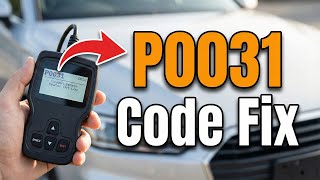
- Read the code with an OBD-II scanner to confirm P0031 is the only code present.
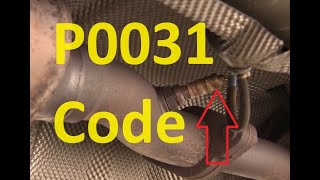
- Locate Bank 1, Sensor 1. On the M272 V6, this is the passenger-side (right-hand) engine bank, and the sensor is the one located on the exhaust manifold before the catalytic converter. 🎬 Watch: How to identify Bank 1 and Bank 2 sensor locations
- Perform a thorough visual inspection of the sensor's wiring harness and connector. Look for any signs of melting, chafing, or corrosion. Pay close attention to where the harness is secured near the engine and exhaust, especially near the connector itself.
- Check the fuses for the O2 sensor heater circuit. Inspect fuses #4, #6, #25, and #27 in the front SAM (engine bay fuse box) and fuse #42 in the rear SAM (trunk fuse box). Replace if blown.
- If the fuse and wiring appear intact, disconnect the sensor. With the ignition key on and the engine off, use a multimeter to test for 12-volt power at the heater power pin on the vehicle's harness connector. A reading below 11V can indicate a wiring issue upstream.
- Test the ground circuit on the harness connector for continuity to chassis ground.
- If power and ground are good, test the sensor itself. Measure the resistance across the two heater pins on the sensor (typically the two wires of the same color). A reading between 2-25 ohms is expected. A reading of infinite resistance (open) or near-zero resistance (short) confirms the sensor has failed.
- If the sensor tests good but power is missing at the harness, the problem lies upstream in the wiring or, rarely, the ECM.
Parts You'll Likely Need
- Oxygen Sensor (Bank 1, Sensor 1)
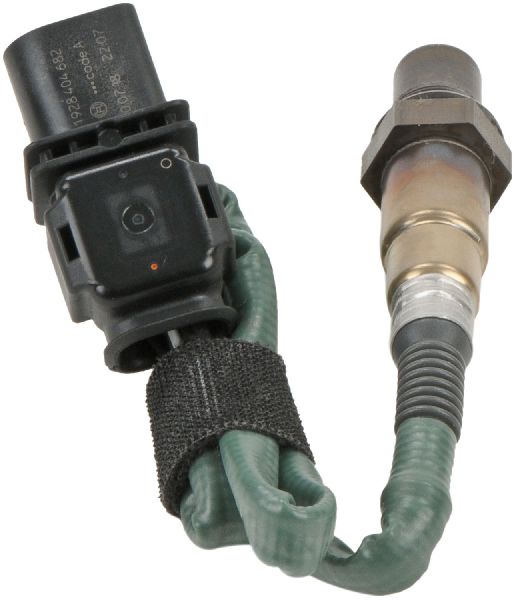
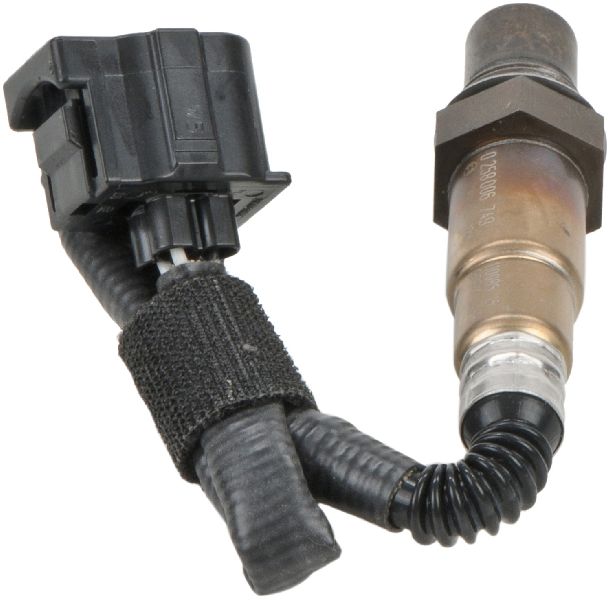
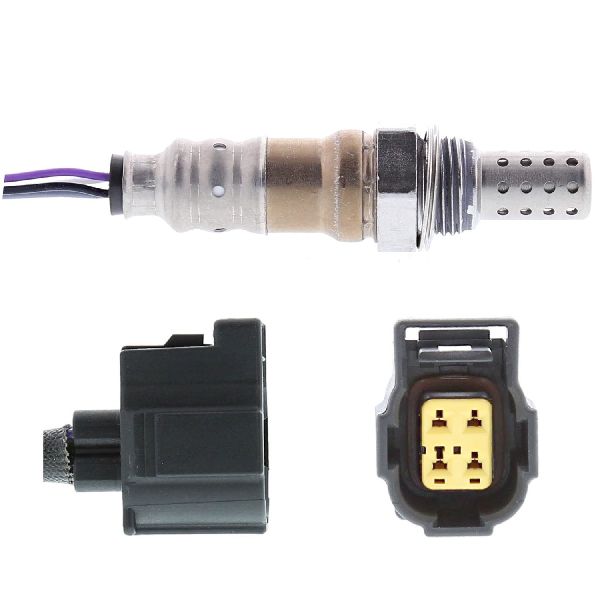
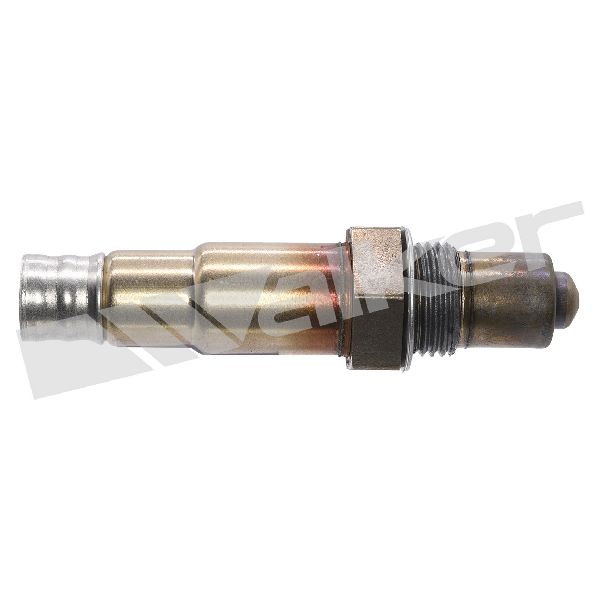
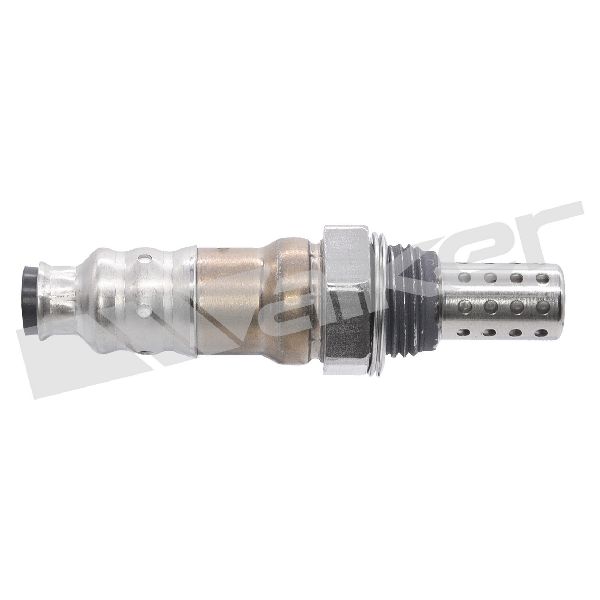
(OEM #A0045426918 (or A0035426918))— This is the most common failure for code P0031, as the internal heater element burns out. It is the upstream sensor on the passenger side.
Trusted brands: Bosch (OEM supplier), Denso
OEM price range: $120-$180
Aftermarket price range: $60-$110
Mechanic-Grade Diagnostic Values
- O2 Sensor Heater Element Resistance — expected: 2 to 25 Ohms (when cold). Failure: Near zero Ohms (short circuit) or infinite resistance / OL (open circuit).
- Heater Circuit Power Supply (KOEO) — expected: Approx. 12V (Battery Voltage) at the harness connector pin for the heater.. Failure: A reading significantly below 11V, or 0V, indicates a problem in the wiring, fuse, or ECM driver.
- Heater Circuit Voltage Drop — expected: Less than 0.5V difference between the ECM output pin and the sensor connector.. Failure: A voltage difference greater than 0.5V indicates excessive resistance in the wiring harness.
- Live Data O2 Sensor Heater Voltage — expected: Should be above 11V while the engine is warm.. Failure: A value below 11V on the scan tool confirms a low-circuit condition.
Scan Tool Commands That Help
- Mercedes-Benz Xentry/DAS: Actual Values Monitoring — While no direct bidirectional command exists to toggle the heater, a technician can use Xentry to monitor the 'Lambda control upstream/downstream of catalytic converter' values in real-time. After starting the engine, the tool should show the heater status as 'active' and the sensor voltage should respond accordingly. This confirms the ECM is attempting to control the heater and allows monitoring of the sensor's response, helping to differentiate between a sensor, wiring, or ECM issue.
Wiring & Ground Locations
- Main Engine Ground Strap — Typically a braided strap running from the lower bell housing bolt on the driver's side to a mounting point on the chassis, near the steering box.. While not specific to the O2 sensor circuit, a corroded or loose main engine ground can cause a variety of unstable voltages and phantom electrical codes. Ensuring this ground is clean and tight is a critical step in diagnosing any persistent electrical issue.
- O2 Sensor Heater Wires — Within the 4-wire or 6-wire connector for the Bank 1 Sensor 1 oxygen sensor.. On many Bosch sensors used by Mercedes, the two wires for the heater element are the same color (e.g., both white). This is the pair to use for resistance testing on the sensor side and voltage testing on the harness side.
Real Owner Repair Stories
- MBWorld.org user 'Gormagon' (2008 Mercedes-Benz C300 Sport) — Check Engine Light with P0031 code.
❌ Tried (didn't work) Initial replacement of the Bank 1 Sensor 1 oxygen sensor did not resolve the issue.
✅ What actually fixed it A combination of three separate faults were found and fixed: 1) The replacement Bosch sensor was also faulty and had to be replaced again. 2) A blown fuse for the circuit was discovered and replaced. 3) The wiring harness near the sensor connector was found to have damaged wires held together by only a few strands, causing unstable voltage; this was repaired.
OEM Part Supersession History
A0035426918→A0045426918— Standard part revision and supplier update.
Heads up: The parts are generally cross-compatible, but it is always best practice to use the latest revision (A0045426918) or a high-quality aftermarket equivalent like the Bosch 17016.
Model Year Variations Within This Range
- 2008-2014: While the M272 engine itself had internal revisions (e.g., balance shaft materials pre-2009, timing chain tensioners updated in late 2008), the fundamental design of the O2 sensor heater circuit, its control by the Bosch ME 9.7 ECU, and the associated wiring remained consistent. Therefore, the diagnosis and repair of code P0031 does not significantly vary across the W204 model years with this engine.
Diagnostic Flowchart
Other Known Issues on This Vehicle
Issues unrelated to this code that are worth knowing about as an owner of this generation:
- M272 Balance Shaft Gear Wear 🔴 High — Common on engines manufactured before ~mid-2008 (Engine No. lower than 2729..30 468993). Failure can occur between 60,000-100,000 miles, causing timing correlation codes (P0016/P0017) and requiring engine removal for repair. (Ref: No recall, but a known issue covered by Mercedes Service Bulletin S-B-03.30/08i.)
- M272 Intake Manifold Runner Flap Lever Failure 🟠 Medium — The plastic lever controlling the variable intake manifold flaps is prone to breaking, typically after 80,000 miles. This causes fault codes (P2004, P2005, P2006), rough idle, and power loss. (Ref: No recall. Aftermarket aluminum repair kits are a popular and durable solution over replacing the entire manifold.)
- W204 Electronic Steering Lock (ESL) Failure 🔴 High — A very common failure on the W204 platform. The ESL motor wears out, leading to an intermittent and eventually permanent no-start condition where the key is recognized but the engine will not crank. The vehicle is effectively immobilized. (Ref: No recall. Repair involves replacing the ESL or installing an emulator, which requires programming to the vehicle's ignition system.)
- W204 Rear Subframe Rust/Corrosion 🔴 High — The rear subframe is highly susceptible to severe rust, especially in regions that use road salt. This can lead to structural failure, affecting vehicle safety and handling. (Ref: Mercedes-Benz has extended the warranty to 20 years/unlimited miles for replacement of the subframe if it suffers from corrosion with perforation.)
Used vs. New Parts: Buying Guide for This Vehicle
When a used part is the smart pick: For this repair, a used part only makes sense for the wiring harness connector. If the connector or a small section of the harness is damaged, sourcing a 'pigtail' from a salvage yard vehicle is a cost-effective and reliable repair.
Donor-vehicle mileage cap: roughly under 100000 miles for the part to have meaningful remaining life.
What to inspect on the donor part:
- Check the plastic connector for brittleness or cracking.
- Inspect the connector pins for any green or white corrosion.
- Ensure the wiring insulation is still flexible and not melted or hardened.
- Verify the locking tab on the connector is intact and functional.
OEM-only on this vehicle (don't cheap out):
- Engine Control Module (ECM) - While not strictly 'OEM-only', replacing an ECM is complex, often requiring professional programming and VIN-locking. It should not be treated as a simple plug-and-play used part.
Aftermarket brands forum-validated for this vehicle:
- Bosch (OEM supplier for this part, highly recommended)
- Denso (Well-regarded alternative)
Brands owners have reported issues with on this vehicle:
- Unnamed or 'white-box' generic sensors. While cheaper, they have a higher rate of premature failure and can have incorrect resistance values, causing the code to return immediately.
Real Owner Stories
Aggregated from forums and TSBs cited above. Mileages and costs reflect what owners reported in those sources.
2008 Mercedes-Benz C300 Sport M272
Symptoms: Check engine light with P0031 code pointing to the upstream oxygen sensor (bank 1, sensor 1).
What fixed it: The owner found a blown fuse under the hood and a failed Bosch 17016 sensor. Additionally, the harness to the ECM was damaged near the sensor junction, with two wires held together by only two strands causing voltage spikes. Repairing the wires and replacing the sensor and fuse fixed the issue.
Source hint: MBWorld.org Forums owner report for 2008 Mercedes-Benz C300 Sport
2008 Mercedes-Benz C300 Sport M272
Symptoms: Low voltage code P0031; intermittent voltage spikes before final failure.
What fixed it: Diagnosis revealed a blown fuse and damaged harness wires that were barely making contact at the connector junction.
Source hint: MBWorld.org thread 'W204 2008 c300 Sport p0031 Low Voltage'
Related OBD-II Codes
Frequently Asked Questions
Where is the Bank 1, Sensor 1 oxygen sensor located on my M272 V6 engine?
Which fuses should I check for the O2 sensor heater circuit in my C300?
What resistance should a healthy Bosch oxygen sensor have for this Mercedes?
Can a damaged wiring harness cause P0031 even if I replace the sensor?
Is there a TSB for the timing issues I'm seeing alongside my O2 sensor codes?
Will a P0031 code prevent my C-Class from passing an emissions test?
Helpful Videos
Used OEM Parts in Stock

New Aftermarket Parts Available


The information in this article is provided for general reference and educational purposes only. Vehicle specifications, procedures, and part compatibility can vary by production date, trim level, and region. Always consult your vehicle's factory service manual and verify part numbers before purchasing or performing repairs. Safety-critical components such as airbags, seat belts, and braking systems should be installed by a qualified professional.
- Mercedes-Benz C-Class:
- 🎬 Helpful Videos
- 🛍️ Shop This Part
- What's Unique About the 2008-2014 Mercedes-Benz C-Class
- Symptoms You May Notice
- Most Likely Causes
- Rare But Worth Checking
- Diagnosis Steps
- Parts You'll Likely Need
- Mechanic-Grade Diagnostic Values
- Scan Tool Commands That Help
- Wiring & Ground Locations
- Real Owner Repair Stories
- OEM Part Supersession History
- Model Year Variations Within This Range
- Diagnostic Flowchart
- Other Known Issues on This Vehicle
- Used vs. New Parts: Buying Guide for This Vehicle
- Real Owner Stories
- 2008 Mercedes-Benz C300 Sport M272
- 2008 Mercedes-Benz C300 Sport M272
- Related OBD-II Codes
- Frequently Asked Questions
- 🎟️ Get 5% Off