

P0031 on 2010-2015 Hyundai Tucson 2.4L: Heater Circuit Low Causes and Fixes
For a 2010-2015 Tucson with the 2.4L engine, code P0031 is almost always caused by a failed upstream oxygen sensor (Bank 1, Sensor 1). Replacing the sensor is the most common fix. Before replacing, check the 15A 'SENSOR 1' fuse in the engine bay fuse box. Expect to pay $70-$120 for an aftermarket part or $150-$220 for an OEM sensor. It's a DIY-friendly job with the right O2 sensor socket.
- P0031 on your Tucson almost always points to the upstream oxygen sensor (Bank 1, Sensor 1) needing replacement.
- Before buying a new sensor, always perform a quick visual inspection of the wiring harness near the exhaust for any signs of melting.
- Also, check the 15A 'SENSOR 1' fuse in the engine bay fuse box, as a shorted sensor can cause it to blow.
- This 2.4L engine has known oil consumption and bearing failure issues; check your oil level regularly.
- Use a quality OEM or reputable aftermarket brand like Denso, NGK, or Bosch for the replacement sensor to avoid premature failure.
What's Unique About the 2010-2015 Hyundai Tucson
The 2.4L Theta II GDI engine in this Tucson is shared with many other Hyundai and Kia models, like the Sonata, Santa Fe, and Kia Sportage, so they share similar issues. While P0031 is a straightforward sensor code, it's critical for owners to know that this engine is subject to major recalls and class-action lawsuits for known issues with excessive oil consumption and catastrophic connecting rod bearing failure. Although these severe engine problems don't directly cause P0031, the resulting high oil consumption can foul and damage oxygen sensors over time, potentially shortening their lifespan.
Symptoms You May Notice
- Check Engine Light is on
- Decreased fuel economy
- Rough idle or hesitation, especially when the engine is cold
- Failing an emissions test
- Noticeable gasoline smell from the exhaust when cold, due to running rich
- Replacing the downstream (Bank 1, Sensor 2) oxygen sensor. P0031 specifically refers to Sensor 1, the upstream sensor before the catalytic converter.
- Replacing the oxygen sensor without first checking the 'SENSOR 1' fuse. If the fuse is blown, a new sensor may not fix the code, or the new sensor's heater could immediately cause the new fuse to blow if the sensor itself was the short.
Most Likely Causes
- Failed Upstream Oxygen Sensor (Bank 1, Sensor 1) 🔴 High Probability The internal heater element is a common failure point due to constant, rapid heat cycles and age. It's a wear-and-tear component.
How to confirm: Disconnect the sensor and test the resistance across the two heater circuit pins (usually the two wires of the same color). A very high (open/OL) or very low (shorted) resistance reading indicates a failed heater element. A good sensor for this vehicle should have a resistance between 2.4 and 4.0 ohms at room temperature (68°F/20°C).
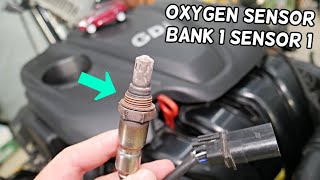
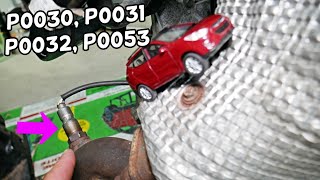
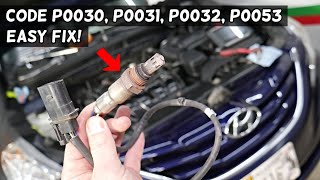
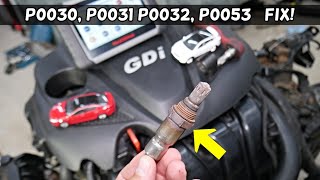
Typical fix: Replace the Bank 1, Sensor 1 oxygen sensor. It is located on the exhaust manifold, accessible from the back of the engine bay. 🎬 Watch: See the exact location and replacement steps for this sensor.
Est. part cost: $70-$220 - Blown Heater Circuit Fuse 🟡 Medium Probability A short circuit in the oxygen sensor's heater element or its wiring can cause the corresponding fuse to blow as a protective measure. This is a common secondary failure.
How to confirm: Locate and inspect the fuse for the oxygen sensor heaters. On the 2010-2015 Tucson and its platform mates, this is typically a 15A fuse labeled 'SENSOR 1' in the engine compartment fuse box. Check for continuity with a multimeter or visually inspect if it's blown.
Typical fix: Replace the blown fuse. If the new fuse blows immediately, it confirms a persistent short circuit in the wiring or the sensor itself that must be found and fixed before proceeding.
Est. part cost: $1-$5 - Damaged Wiring or Connector ⚪ Low Probability The sensor's wiring harness is routed very close to the hot exhaust manifold and can become brittle or melt if it comes loose from its retaining clips, causing a short circuit to ground.
How to confirm: Visually inspect the entire wiring harness from the sensor to the main engine harness. Look for any signs of melting, chafing, or corrosion on the wires and inside the connector plug. Pay close attention to the plastic clips that secure the harness away from the exhaust.
Typical fix: Repair the damaged section of wire. If the connector is damaged, it may need to be replaced with a new pigtail.
Est. part cost: $15-$50
Rare But Worth Checking
- Faulty Powertrain Control Module (PCM): This is very uncommon and should be the last resort. The PCM should only be considered after all other possibilities (sensor, wiring, fuses) have been thoroughly tested and ruled out.
Diagnosis Steps
- Read the code with an OBD-II scanner to confirm P0031 is present.
- Open the hood and locate the engine compartment fuse box. Find the fuse labeled 'SENSOR 1' (typically 15A) and inspect it. If it's blown, replace it. Clear the codes and start the engine. If the fuse blows again, there is a short circuit in the sensor or wiring.
- If the fuse is good, visually inspect the upstream oxygen sensor's wiring harness, which is located on the back of the engine on the exhaust manifold. Look carefully for any signs of melting, chafing, or loose connections where the harness may have contacted the exhaust.
- If the wiring and fuse are good, test the sensor's heater element. Disconnect the sensor's electrical connector.
- Using a multimeter set to Ohms (Ω), measure the resistance between the two heater pins on the sensor side of the connector (these are often the two wires of the same color). A good sensor should read between 2.4 and 4.0 ohms at room temperature. A reading of 'OL' (infinite) means the heater is open/burned out. 🎬 Watch: How to test the heater circuit with a multimeter. A reading near zero indicates a short.
- If the sensor tests bad, replace it. It is highly recommended to use an O2 sensor socket for removal and installation.
- If the sensor tests good, the problem is likely in the wiring or PCM. Check for 12V power at the harness connector. With the key on and engine off, use a multimeter to check for 12V power on one of the heater circuit pins and a good ground on the other.
- If power or ground is missing, trace the wiring harness back to the PCM to find the break or short. If all wiring is confirmed good, the issue could be a rare PCM driver failure.
Parts You'll Likely Need
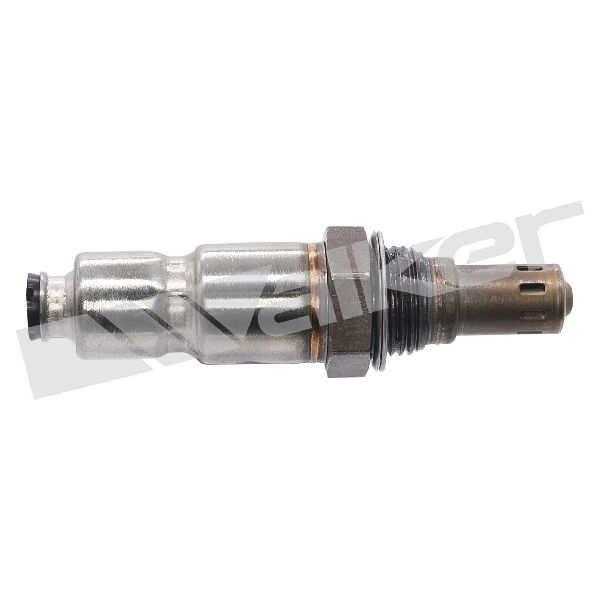
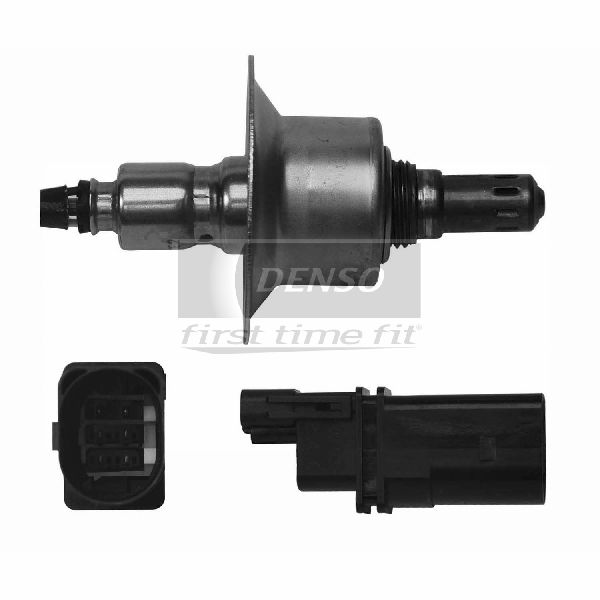
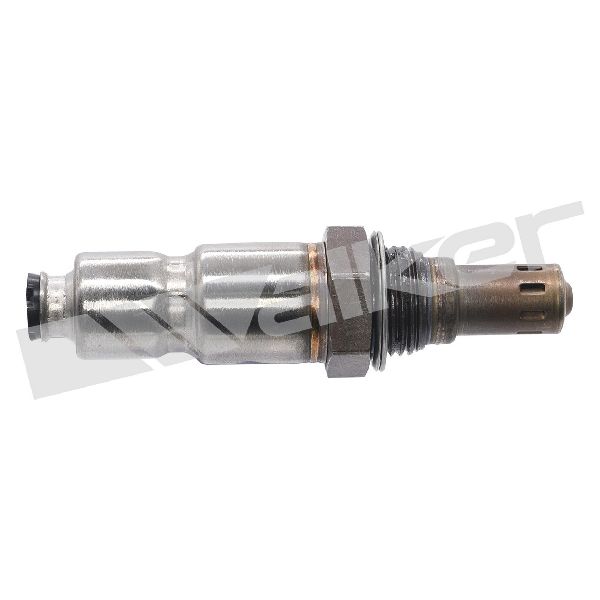
- Upstream Oxygen Sensor / Air-Fuel Ratio Sensor (Bank 1 Sensor 1)
(OEM #39210-2G650, 39210-2G150, 39210-2G100)— This is the most common failure for code P0031. The internal heater element burns out, requiring replacement of the entire sensor. NOTE: Multiple OEM part numbers exist and have been superseded; always verify the correct part number for your specific vehicle using its VIN. Part number 39210-2G650 is frequently cited for this application, while 39210-2G100 also fits some models within this generation.
Trusted brands: Hyundai (OEM), Denso, NGK / NTK, Bosch
OEM price range: $150-$220
Aftermarket price range: $70-$120
Related Codes That Often Appear With This One
- P0030 — This is a general fault code for the same heater circuit. P0031 specifies a 'low' voltage condition, but both point to the same component failure.
- P0032 — This is the opposite code for 'Heater Control Circuit High'. Seeing P0031 and P0032 intermittently could suggest a wiring problem that is shorting to both ground and power at different times.
- P0135 — This is another generic code for 'O2 Sensor Heater Circuit Malfunction (Bank 1 Sensor 1)' and points to the exact same problem.
- P1326 — This code is for the Knock Sensor Detection System and is unrelated to the O2 sensor, but it is extremely important for owners of this vehicle. It indicates the engine may be in the early stages of the infamous bearing failure. If you see this code, the vehicle may enter limp mode, and you should seek service immediately.
Technical Service Bulletins (TSBs) & Recalls
- Service Campaign 966 (related to TSB 21-01-023H): While not for P0031, this is a critical campaign for the 2.4L engine that updates the knock sensor software to detect abnormal bearing noise and prevent catastrophic engine failure. Completion is often a prerequisite for the extended engine warranty.
- TSB 23-EM-008H & 23-EM-007H: These bulletins outline the official dealer procedure for diagnosing and addressing excessive oil consumption complaints, which can involve an oil consumption test and a combustion chamber cleaning procedure.
Platform-Specific Known Issues
- The 2.4L Theta II GDI engine is widely known for significant issues including excessive oil consumption and connecting rod bearing failure, which led to recalls and a class-action lawsuit. While not a direct cause of P0031, owners should be vigilant about checking their oil levels, as oil burning can foul O2 sensors over time.
- Before performing any paid repairs, owners should contact a Hyundai dealer with their VIN to check for open recalls or warranty extensions, particularly the Knock Sensor Detection System (KSDS) software update (Campaign 966), which extends the warranty for engine bearing failure to 15 years/150,000 miles for eligible vehicles.
Mechanic-Grade Diagnostic Values
- Upstream O2 Sensor (B1S1) Heater Element Resistance — expected: 2.4 - 4.0 Ω at 20°C (68°F). Failure: A reading of OL (infinite resistance) or near-zero ohms indicates a failed heater element.
- Upstream O2 Sensor (B1S1) Heater Duty Cycle (via Scan Tool) — expected: After warm-up, the duty cycle for the heater coil should be actively controlled by the ECM within a range of 2% to 98%.. Failure: A value stuck at 0% or 100% after the initial warm-up period suggests a fault in the circuit or the PCM's control driver.
- Upstream O2 Sensor (B1S1) Target Operating Temperature — expected: The ECM actively heats the sensor to a target temperature of 780°C (1436°F) for optimal performance.. Failure: Failure to reach or maintain a stable operating temperature can indicate a weak heater element, even if resistance is within spec when cold.
Scan Tool Commands That Help
- Hyundai GDS (or equivalent professional scan tool): Component Change Routine — This procedure must be performed after replacing the lambda (O2) sensor. It allows the ECM to learn the characteristics of the new sensor. Failing to perform this routine can lead to incorrect fuel trim adjustments, performance issues, or other emission-related fault codes even with a new, functioning sensor.
Wiring & Ground Locations
- PCM (Powertrain Control Module) — Located in the left rear of the engine compartment.. The PCM is the source of the heater control signal. All wiring tests for the control circuit will trace back to this module. A wiring diagram for a 2012 Tucson indicates the 'SENS HTR UP STREAM' wire connects to the PCM.
- GHG05 (Ground Point) — Located on the chassis in the left rear of the engine compartment, near the PCM.. This is a primary ground point for components in this area of the engine bay. While not explicitly for the O2 sensor, a poor connection at this ground could cause various electrical issues, including problems with the PCM or its sensor circuits. A video on Theta II engines also highlights a key computer ground on the frame rail in this vicinity.
- Upstream O2 Sensor Connector (C325) — On the wiring harness near the back of the engine, connecting to the sensor pigtail that emerges from the exhaust manifold.. This is the main connection point for testing both the sensor-side resistance and the harness-side voltage/ground. The four pins are for the heater power, heater control (ground-side switched by PCM), sensor signal, and sensor ground.
OEM Part Supersession History
39210-2G100→39210-2G150, 39210-2G650— Part revision and consolidation over the vehicle's production run.
Heads up: While multiple part numbers are listed for this generation, using a VIN to verify the exact part number with a Hyundai dealer is critical. Although they may be physically interchangeable, internal sensor characteristics could differ slightly between revisions.
Model Year Variations Within This Range
- 2010-2013: These earlier models of the second generation were equipped with a 2.4L Theta II engine with Multi-Port Fuel Injection (MPI).
- 2014-2015: The 2014 refresh introduced a 2.4L Theta II with Gasoline Direct Injection (GDI), which increased power from 176 to 182 hp. While the P0031 fault is diagnosed the same way, GDI engines are known to be susceptible to carbon buildup on intake valves, which is a separate maintenance consideration for owners.
Diagnostic Flowchart
Other Known Issues on This Vehicle
Issues unrelated to this code that are worth knowing about as an owner of this generation:
- Catastrophic Connecting Rod Bearing Failure 🔴 High — Widespread enough to trigger multiple class-action lawsuits and recalls. Can occur at various mileages, often without warning. (Ref: Recalls 198, 209; Service Campaign 966 (KSDS Update); Lifetime Engine Warranty Extension)
- Excessive Oil Consumption 🟠 Medium — Very common, often starting between 60,000 and 100,000 miles. Can be over 1 quart per 1,000 miles. (Ref: TSB 23-EM-008H (Oil Consumption Test), TSB 23-EM-007H (Combustion Chamber Cleaning))
- Stretched Timing Chain 🟠 Medium — Can occur on higher mileage vehicles, often exacerbated by low oil levels due to oil consumption. Presents as a rattling noise on startup.
- Brake Light Switch Failure 🟡 Low — Common failure item leading to issues with brake lights, cruise control, and push-button start. (Ref: Recall 23V651000 (Affects ABS module, but switch is a known weak point))
- Paint Peeling/Delamination (Especially White Paint) 🟡 Low — Widespread cosmetic issue, particularly on vehicles with Pearl White paint. Paint peels off in large sheets. (Ref: Hyundai initiated a paint warranty extension for this issue on some models.)
Used vs. New Parts: Buying Guide for This Vehicle
When a used part is the smart pick: For this repair, a used part is almost never a smart choice. The oxygen sensor's heater element is a wear-and-tear component that fails after many heat cycles. A used sensor from a junkyard has an unknown history and could fail shortly after installation, wasting time and money.
Donor-vehicle mileage cap: roughly under 20000 miles for the part to have meaningful remaining life.
What to inspect on the donor part:
- If buying used is unavoidable, source from the lowest-mileage donor vehicle possible.
- Inspect the wiring pigtail for any signs of melting, brittleness, or previous repairs.
- Check the sensor tip for heavy carbon deposits or white, chalky contamination, which indicates a problem with the donor engine that could have stressed the sensor.
OEM-only on this vehicle (don't cheap out):
- While not strictly OEM-only, using a known-good brand is critical. Cheap, unbranded sensors are notorious for failing quickly or having incorrect resistance values, causing the P0031 code to return immediately.
Aftermarket brands forum-validated for this vehicle:
- Denso
- NGK / NTK
- Bosch
Brands owners have reported issues with on this vehicle:
- Unbranded, no-name sensors sold on online marketplaces at a very low cost.
Real Owner Stories
Aggregated from forums and TSBs cited above. Mileages and costs reflect what owners reported in those sources.
2011 Hyundai Tucson 2.4L
Symptoms: Check engine light was on with code P0031.
What fixed it: Replaced the upstream O2 sensor (Bank 1, Sensor 1) using OEM part number 39210-2G650. The job took about 30 minutes with an O2 sensor socket.
Source hint: Hyundai-Forums.com - Thread 'P0031 on 2011 Tucson'
2010-2015 Hyundai Tucson 2.4L
Symptoms: Check engine light for P0031 heater circuit.
What fixed it: Checked the 15A 'SENSOR 1' fuse in the engine compartment first. Swapped the blown fuse and the light stayed off, avoiding the cost of a new sensor.
Source hint: YouTube - 904 Garage
2010-2015 Hyundai Tucson 2.4L
Symptoms: P0031 code and visible damage to the sensor wiring.
What fixed it: Repaired melted wiring caused by the harness coming loose from its clips and making contact with the hot exhaust manifold.
Source hint: YouTube - Auto Repair Guys
Related OBD-II Codes
Frequently Asked Questions
Does Service Campaign 966 apply to my 2010-2015 Hyundai Tucson with the 2.4L engine?
What is the correct resistance for a new upstream oxygen sensor on my Tucson?
Which fuse should I check for a P0031 code on my 2010-2015 Tucson?
Can the excessive oil consumption issues on my 2.4L Theta II engine cause the P0031 code?
What is the OEM part number for the Bank 1 Sensor 1 oxygen sensor?
Is there a specific TSB for diagnosing oil consumption that might be affecting my sensors?
Helpful Videos
Used OEM Parts in Stock
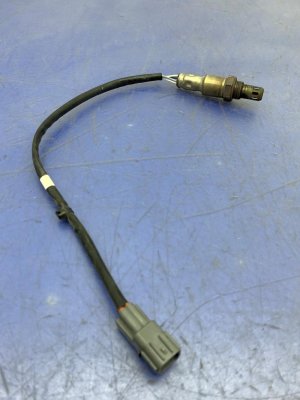
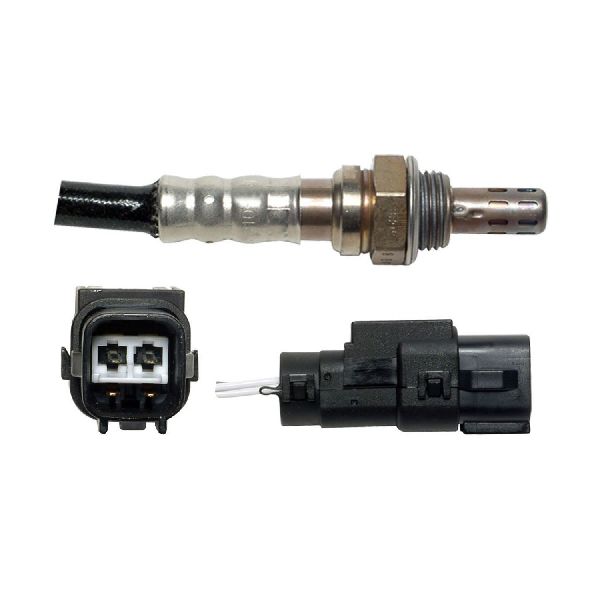
New Aftermarket Parts Available


The information in this article is provided for general reference and educational purposes only. Vehicle specifications, procedures, and part compatibility can vary by production date, trim level, and region. Always consult your vehicle's factory service manual and verify part numbers before purchasing or performing repairs. Safety-critical components such as airbags, seat belts, and braking systems should be installed by a qualified professional.
- Hyundai Tucson:
- 🎬 Helpful Videos
- 🛍️ Shop This Part
- What's Unique About the 2010-2015 Hyundai Tucson
- Symptoms You May Notice
- Most Likely Causes
- Rare But Worth Checking
- Diagnosis Steps
- Parts You'll Likely Need
- Related Codes That Often Appear With This One
- Technical Service Bulletins (TSBs) & Recalls
- Platform-Specific Known Issues
- Mechanic-Grade Diagnostic Values
- Scan Tool Commands That Help
- Wiring & Ground Locations
- OEM Part Supersession History
- Model Year Variations Within This Range
- Diagnostic Flowchart
- Other Known Issues on This Vehicle
- Used vs. New Parts: Buying Guide for This Vehicle
- Real Owner Stories
- 2011 Hyundai Tucson 2.4L
- 2010-2015 Hyundai Tucson 2.4L
- 2010-2015 Hyundai Tucson 2.4L
- Related OBD-II Codes
- Frequently Asked Questions
- 🎟️ Get 5% Off