

P0030 on 2009-2013 Volkswagen GTI: O2 Sensor Heater Circuit Causes and Fixes
On a 2009-2013 VW GTI, code P0030 almost always means the front (upstream) oxygen sensor's internal heater has failed. Replacing the Bank 1, Sensor 1 O2 sensor is the fix. Before replacing, check Fuse F13 in the engine bay fuse box. Expect to pay ~$70-$150 for a quality aftermarket part (like Bosch 17098) or ~$180-$250 for an OEM part (VW 06J906262AA). It's a DIY-friendly job for most home mechanics.
- P0030 on your GTI means the heater in your front oxygen sensor has almost certainly failed.
- Before buying any parts, check fuse F13 in the engine bay fuse box first. This is a quick and free check.
- The most likely solution is to replace the upstream (Bank 1, Sensor 1) oxygen sensor.
- This is a manageable DIY repair with basic tools and a special 22mm (7/8") slotted O2 sensor socket.
- Ignoring the code will lead to poor fuel mileage, increased pollution, and guaranteed failure of an emissions test.
What's Unique About the 2009-2013 Volkswagen GTI

For the Mk6 GTI with its 2.0L TSI engine, this code is straightforward. Since the engine is an inline-four cylinder, it only has one exhaust bank, so "Bank 1" is the only bank. The primary O2 sensor (Sensor 1) is easily accessible on the exhaust manifold, right off the turbocharger. The issue is rarely more complicated than the sensor itself failing due to age and extreme heat cycles, a common occurrence on these turbocharged engines.
Symptoms You May Notice
- Check Engine Light is illuminated.
- Decreased fuel economy.
- Rough idle or hesitation, particularly on cold starts.
- Failing an emissions test.
- Code may return immediately after being cleared, indicating a hard fault.
- Replacing the downstream (post-catalytic converter) O2 sensor. The P0030 code specifically refers to Sensor 1, which is upstream (pre-catalytic converter).
- Blaming an aftermarket downpipe or tune. While a tune can disable the rear O2 sensor check, P0030 is a heater *circuit* fault for the *front* sensor, indicating a hardware problem, not a software one. 🎬 See a breakdown of common P0030 causes and fixes.
Most Likely Causes

- Failed Upstream (Bank 1, Sensor 1) Oxygen Sensor 🔴 High Probability The internal heater element is a common failure point due to constant, extreme heat cycles from the turbocharger and age. It's the most frequent cause for P0030.
How to confirm: Disconnect the sensor and measure the resistance between the two heater circuit wires (often the same color, e.g., two white wires). A good sensor will have a specific resistance, typically between 2-15 ohms when cold. A failed one will show infinite resistance (open circuit) or zero resistance (short).
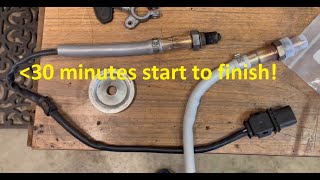
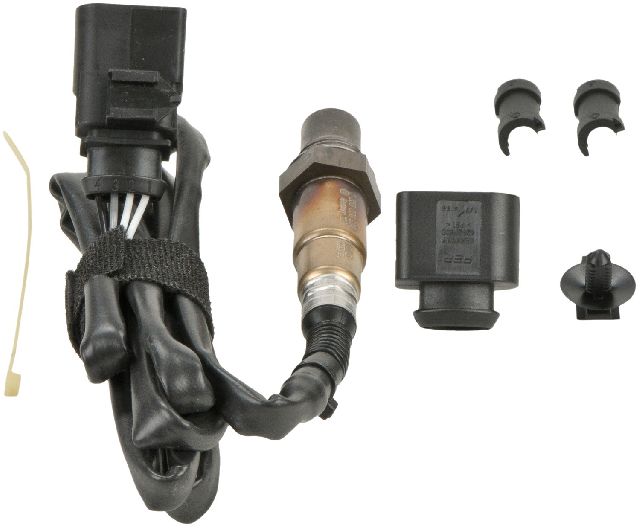
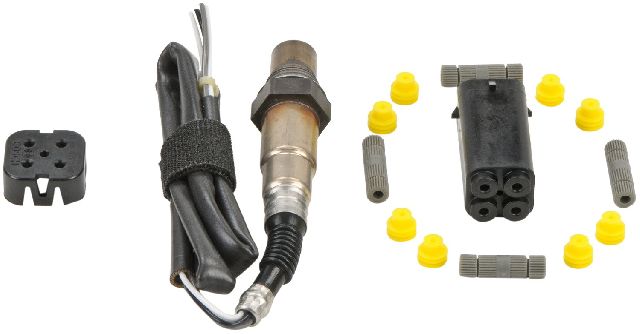
Typical fix: Replace the Bank 1, Sensor 1 oxygen sensor. The Bosch 17098 is a widely used, high-quality aftermarket replacement. 🎬 Watch this step-by-step guide to replacing the upstream sensor.
Est. part cost: $70-$250 - Blown Fuse for O2 Sensor Heater Circuit 🟡 Medium Probability A short in the sensor or its wiring can cause the protective fuse to blow. This should always be the first check.
How to confirm: Locate the fuse for the O2 sensor heater in the engine bay fuse box (E-box), which is typically fuse F13 (a 10A or 15A fuse) on the Mk6 GTI. Visually inspect it or test with a multimeter.
Typical fix: Replace the blown fuse. If it blows again immediately, there is a short circuit in the wiring or the sensor itself that must be found.
Est. part cost: $1-$5 - Damaged Wiring or Connectors ⚪ Low Probability The wiring harness is routed near very hot exhaust and turbo components. Over time, the plastic loom and wire insulation can become brittle, melt, or corrode, leading to a short or open circuit.
How to confirm: Visually inspect the entire wiring harness from the O2 sensor to the main engine harness. Check for melted or frayed wires, and ensure the connector is clean, secure, and free of corrosion or bent pins.
Typical fix: Repair the damaged section of the wiring harness or clean/replace the connector pigtail.
Est. part cost: $10-$50
Rare But Worth Checking
- Faulty Engine Control Module (ECM): This is extremely rare. The ECM should only be considered as the cause after all other possibilities (sensor, wiring, fuses) have been exhaustively tested and ruled out.
Diagnosis Steps

- Read the code with an OBD-II scanner to confirm P0030 is present. Clear the code and see if it returns immediately after a key cycle; if so, it's a hard fault.
- Check the fuse first. Open the engine compartment fuse box (E-Box) next to the battery. Locate and inspect fuse F13. If it's blown, replace it. If it blows again, you have a short circuit.
- Visually inspect the Bank 1, Sensor 1 (upstream) O2 sensor's wiring and connector. It's located on top of the exhaust manifold/turbo. Look for any signs of melting, fraying, or corrosion.
- If the fuse and wiring are okay, disconnect the O2 sensor. Use a multimeter set to Ohms to test the resistance of the heater circuit on the sensor side. The two heater wires are often the same color. 🎬 Watch how to test the sensor's heater circuit with a multimeter. A reading between 2-6 Ohms is generally good; infinite resistance (OL) or zero Ohms indicates a failed heater element, and the sensor must be replaced.
- If resistance is within spec, test for 12V power at the heater circuit pins on the harness side (with the ignition on, engine off). If power is missing, there is a wiring issue between the fuse box and the sensor.
- If all tests pass and the code returns, the issue may be an intermittent connection or, in very rare cases, a faulty ECM driver circuit.
Parts You'll Likely Need
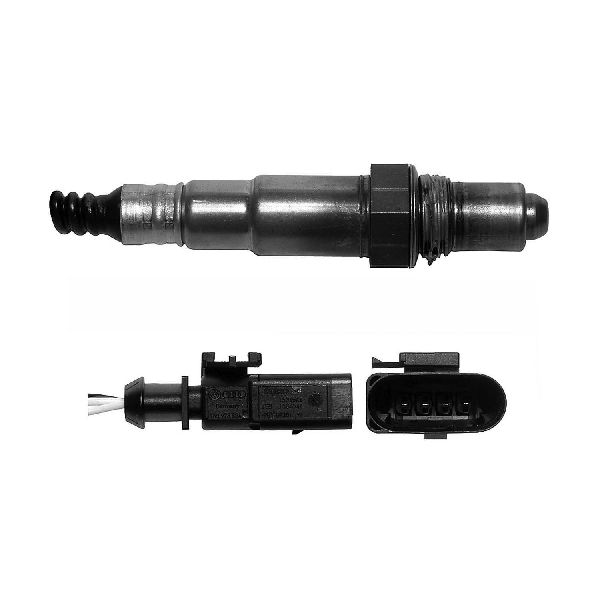
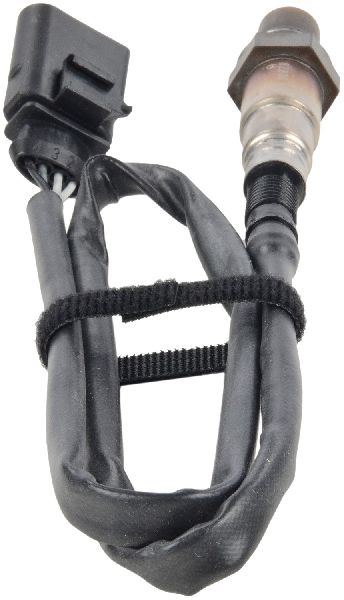
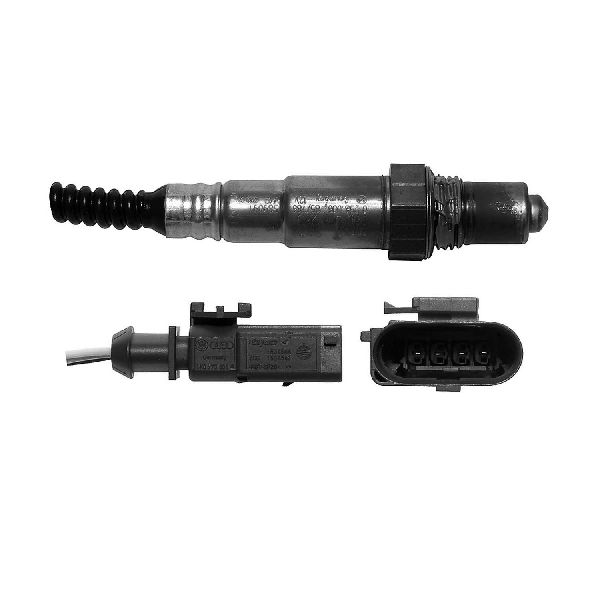
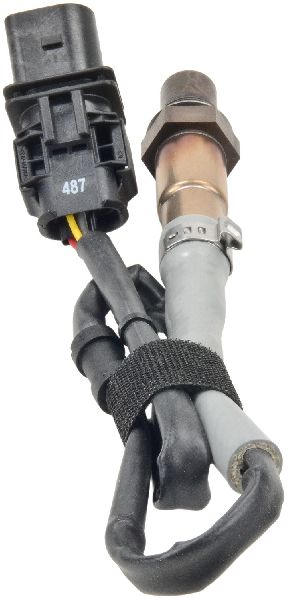
- Upstream Oxygen Sensor (Bank 1, Sensor 1)
(OEM #06J906262AA (supersedes 1K0998262N))— This is the most common failure point for a P0030 code, as the internal heater element burns out over time.
Trusted brands: Bosch (P/N: 17098 or 17270), NTK, Denso
OEM price range: $180-$250
Aftermarket price range: $70-$150
Related Codes That Often Appear With This One
- P0135 —
- 16414 —
Mechanic-Grade Diagnostic Values
- O2 Sensor Heater Element Resistance (cold) — expected: 2.0 - 6.0 Ohms. Failure: Infinite resistance (OL) indicates an open circuit, while near-zero resistance indicates a short. Readings can be as high as 15 Ohms on some sensors, but for the OEM Bosch sensor on this vehicle, 2-6 Ohms is the expected range.
- O2 Sensor Heater Circuit Power Supply — expected: ~12V (Battery Voltage). Failure: With the key on and engine off, one pin on the harness-side connector should have battery voltage. If voltage is significantly lower or absent, suspect the fuse (F13 in E-box) or wiring.
- O2 Sensor Heater Ground Control (VCDS) — expected: Duty cycle percentage fluctuates in Measuring Value Block 041.. Failure: A steady 0% or 100% duty cycle when the engine is cold indicates a command issue from the ECM or a break in the ground-side wire. The ground is pulse-width modulated (PWM), so a multimeter test may show fluctuating voltage.
- VCDS Resistance-Lambda Probe Heater (Hot) — expected: 48 Ohms (example value). Failure: VCDS may report a higher resistance value when the sensor is hot compared to a cold multimeter test. A value of 235 Ohms or higher is indicative of a failing sensor.
Hidden / Shadow Codes Worth Checking
- 000048: This is the 5-digit VAG fault code that corresponds to the generic P0030. It is often displayed alongside P0030 in a VCDS scan log. (see via Ross-Tech VCDS, OBDeleven, or other VAG-specific diagnostic tools.)
Scan Tool Commands That Help
- VCDS (Ross-Tech): Engine -> Measuring Value Blocks (MVB) -> Group 041 — Use this to observe the live operation of the oxygen sensor heater. Field 3 in this block typically shows the heater duty cycle, confirming if the ECM is attempting to activate the heater. This helps differentiate a wiring/sensor fault from an ECM command fault.
Wiring & Ground Locations

- Fuse F13 — In the engine compartment fuse box (E-Box), located next to the battery.. This fuse provides the 12V power supply to the O2 sensor heater circuit. It is the first and most common electrical check to perform after reading the code.
- Ground Connection 652 — Transmission/engine ground strap.. A poor engine-to-chassis ground can cause a variety of electrical issues, including erratic sensor behavior. While not a direct cause of P0030, ensuring this strap is clean and tight is good practice when diagnosing any engine electrical fault.
- Ground Connection 18 — On the engine block.. This is a primary ground point for engine components. Verifying its integrity is crucial for stable sensor readings and operation.
- T6ap Connector — The 6-pin electrical connector for the upstream O2 sensor, located near the top of the engine.. This is the connector where all diagnostic electrical tests for the sensor and harness are performed (resistance, voltage, ground). The heater circuit pins are typically the two wires of the same color.
Real Owner Repair Stories
- golfmk6.com user 'hippiesrock03' (2012 VW GTI with CCTA engine, 18,883 km) — Check Engine Light with fault code 000048 / P0030 - Malfunction / Open Circuit. Code returned immediately after clearing.
❌ Tried (didn't work) Clearing the code. The user had an aftermarket downpipe with a spacer, but this was unrelated to the P0030 heater circuit fault.
✅ What actually fixed it The community consensus confirmed this is a hardware failure of the upstream O2 sensor's heater element, requiring sensor replacement. The aftermarket exhaust modifications were a red herring.
OEM Part Supersession History
1K0998262N→06J906262AA— Part update/revision by Volkswagen.
Heads up: 06J906262AA is the correct and current part number for this application. Other previous revisions may include 06F906262AC and 06F906262R. Always use the latest revision for best results.
Model Year Variations Within This Range
- 2009-2013: The 2.0L TSI engine came in two main variants for the US market: CCTA and CBFA. The CCTA engine has two O2 sensors. The CBFA engine, designed for stricter emissions states, has three O2 sensors. However, for a P0030 code (Bank 1, Sensor 1), the diagnosis and failed part are the same for both engine types, as it refers to the primary upstream sensor on the turbo manifold.
Diagnostic Flowchart
Other Known Issues on This Vehicle
Issues unrelated to this code that are worth knowing about as an owner of this generation:
- Timing Chain Tensioner Failure 🔴 High — Common on earlier models (approx. 2009-2012) with the original tensioner design. Failure can occur without warning, often between 60k-100k miles, leading to catastrophic engine damage. (Ref: VW TSB 15-12-01 addresses this issue, and a class-action lawsuit was settled. An updated tensioner part is available.)
- Intake Manifold Runner Flap Failure (P2015 Code) 🟠 Medium — Widespread issue where the plastic actuator on the intake manifold fails, typically between 50k-100k miles. (Ref: VW issued a 10-year/120,000-mile extended warranty (VWP-20-03) for this part. An aftermarket metal bracket is a common DIY fix.)
- Water Pump & Thermostat Housing Failure 🟠 Medium — Very common failure. The plastic housing is prone to cracking and leaking coolant, often occurring between 40k-80k miles. (Ref: A class-action lawsuit resulted in an extended warranty (8 years/80,000 miles) for this component.)
- PCV Valve Failure 🟡 Low — The diaphragm in the PCV (Positive Crankcase Ventilation) valve tears, causing a large vacuum leak. Symptoms include a rough idle, whistling/honking noise, and lean codes (P0171). Failure is common around 50k-80k miles.
- Carbon Buildup on Intake Valves 🟠 Medium — As a direct-injection engine, fuel doesn't wash over the intake valves. This leads to significant carbon buildup over time (typically needing service by 60k-100k miles), causing misfires, hesitation, and reduced performance.
Used vs. New Parts: Buying Guide for This Vehicle
When a used part is the smart pick: For this repair, buying a used oxygen sensor is NOT recommended. O2 sensors are wear-and-tear items with a finite lifespan. The cost savings are minimal compared to the risk of premature failure and the labor to replace it again.
Aftermarket brands forum-validated for this vehicle:
- Bosch (OEM supplier, highly recommended).
- NTK / NGK.
- Denso.
Brands owners have reported issues with on this vehicle:
- Universal sensors that require wire splicing. These are prone to creating poor connections and incorrect readings.
- Unbranded, no-name parts from online marketplaces. While cheap, they often fail quickly or are not calibrated correctly for the vehicle.
Real Owner Stories
Aggregated from forums and TSBs cited above. Mileages and costs reflect what owners reported in those sources.
2010 GTI — 76000 miles
Symptoms: Engine management light came on.
What fixed it: The user identified the fault as P0030 using a torque app; diagnostic steps in the context point to replacing the Bank 1, Sensor 1 oxygen sensor.
Source hint: Golfmk6.com owner report in article context
2012-2013 GTI — ~45000 miles
Symptoms: The code occurred during a wide-open throttle pull.
What fixed it: The dealership replaced the sensor under the emissions warranty.
Source hint: golfmk6.com: 'Diagnosing P0030 - HO2S Heater Control Circuit (Bank 1 Sensor 1)'
2014-2015 Golf (Mk7 principle) — 74000 miles
Symptoms: The code immediately returns after clearing, confirming a hard fault.
What fixed it: Replacement of the upstream oxygen sensor.
Source hint: golfmk7.com: 'P0030 Fault Code - O2 Sensor?'
Related OBD-II Codes
Frequently Asked Questions
Will the Volkswagen emissions warranty cover the P0030 code on my GTI?
Which specific replacement oxygen sensor should I use for my 2009-2013 GTI 2.0T?
Where is the fuse for the O2 sensor heater circuit located on a Mk6 GTI?
What resistance should I see when testing the upstream O2 sensor on my TSI engine?
Can a performance downpipe or tune cause the P0030 code on my GTI?
Is the P0030 code related to the common intake manifold or water pump issues on the 2.0T TSI?
Helpful Videos



We Have This Part in Stock

The information in this article is provided for general reference and educational purposes only. Vehicle specifications, procedures, and part compatibility can vary by production date, trim level, and region. Always consult your vehicle's factory service manual and verify part numbers before purchasing or performing repairs. Safety-critical components such as airbags, seat belts, and braking systems should be installed by a qualified professional.
- Volkswagen GTI:
- 🎬 Helpful Videos
- 🛍️ Shop This Part
- What's Unique About the 2009-2013 Volkswagen GTI
- Symptoms You May Notice
- Most Likely Causes
- Rare But Worth Checking
- Diagnosis Steps
- Parts You'll Likely Need
- Related Codes That Often Appear With This One
- Mechanic-Grade Diagnostic Values
- Hidden / Shadow Codes Worth Checking
- Scan Tool Commands That Help
- Wiring & Ground Locations
- Real Owner Repair Stories
- OEM Part Supersession History
- Model Year Variations Within This Range
- Diagnostic Flowchart
- Other Known Issues on This Vehicle
- Used vs. New Parts: Buying Guide for This Vehicle
- Real Owner Stories
- 2010 GTI — 76000 miles
- 2012-2013 GTI — ~45000 miles
- 2014-2015 Golf (Mk7 principle) — 74000 miles
- Related OBD-II Codes
- Frequently Asked Questions
- 🎟️ Get 5% Off