

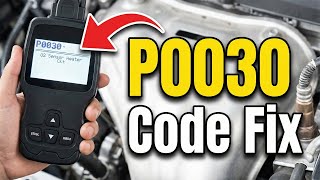
P0030 on 2001-2006 Mazda Tribute 3.0L V6: O2 Sensor Heater Circuit Causes and Fixes
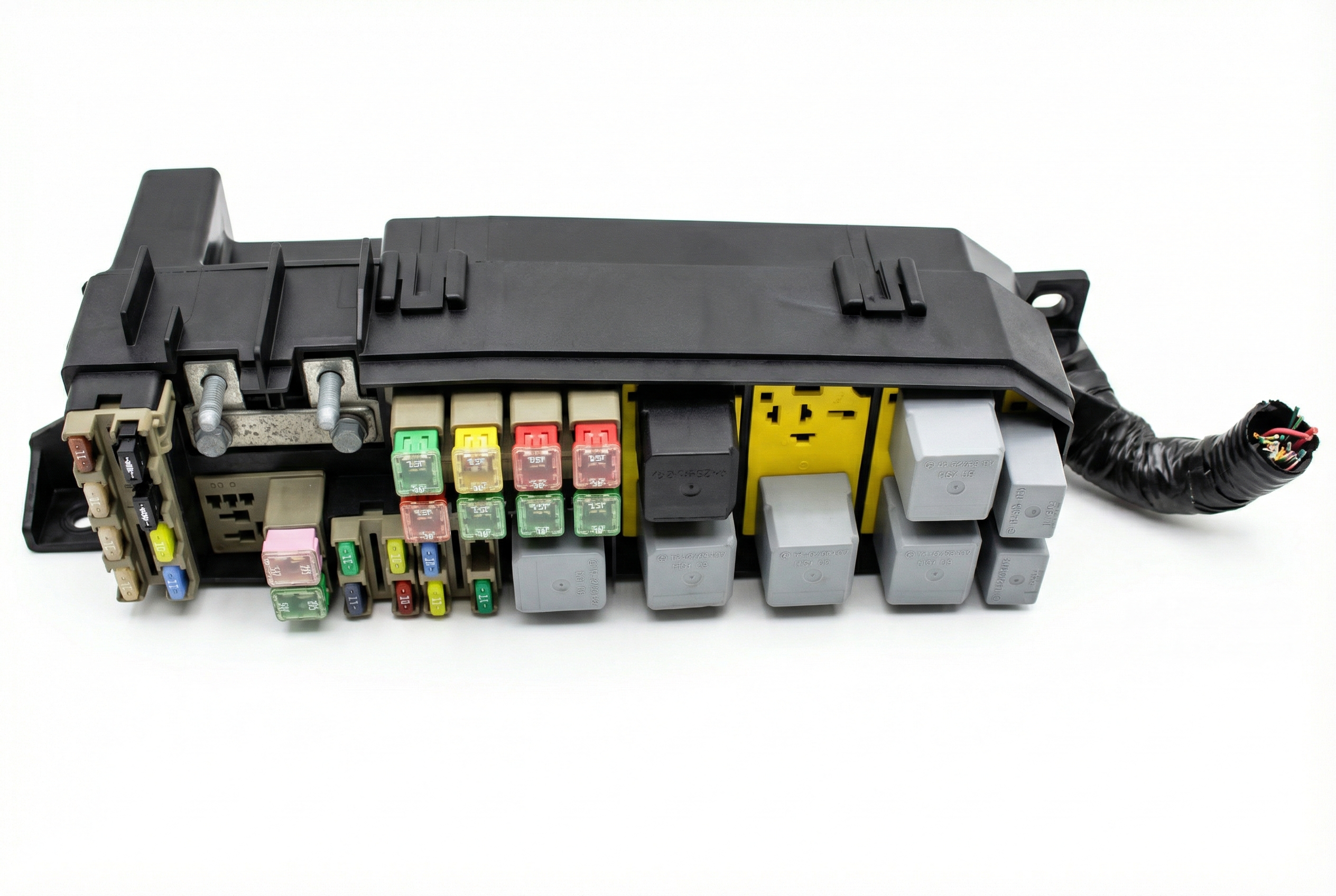
This code indicates a fault in the heater circuit of the upstream oxygen sensor on the firewall-side of the engine (Bank 1). Before replacing the sensor, check the 15A 'HEGO' fuse in the under-hood fuse box (position #5). If the fuse is good, the O2 sensor itself has likely failed and needs replacement, which is a difficult job due to poor access.
- P0030 refers to the heater circuit for the upstream O2 sensor on the firewall side of the engine.
- ALWAYS check the 15A 'HEGO' fuse in the under-hood fuse box first, especially if you have multiple O2 sensor heater codes. This is the most common and cheapest fix.
- If
What's Unique About the 2001-2006 Mazda Tribute
The 2001-2006 Mazda Tribute is a twin to the Ford Escape, sharing the same Ford Duratec 3.0L V6 engine and electronics. For this code, the most critical platform-specific detail is the location of 'Bank 1'. On this transverse V6, Bank 1 is the cylinder bank against the firewall, making the associated oxygen sensor (Bank 1, Sensor 1) notoriously difficult to access. Furthermore, a common point of failure is a single 15A fuse that powers the heaters for all four oxygen sensors; a short in any sensor's wiring can blow this fuse and trigger multiple heater codes, including P0030.
Symptoms You May Notice
- Check Engine Light is on
- Reduced fuel economy
- Vehicle will fail an emissions test
- Rough idle on cold starts (in some cases)
- Engine may run on a fixed (rich) fuel mixture until warmed up.
- Immediately replacing the oxygen sensor without first checking the 15A HEGO fuse. If the fuse is blown, a new sensor will not fix the problem and the code will return immediately.
Most Likely Causes
- Blown O2 Sensor Heater Fuse 🔴 High Probability A single 15A fuse powers the heaters for all four O2 sensors. The wiring, especially for the downstream sensors, is prone to damage from road debris or contact with the exhaust, which can cause a short that blows the fuse, disabling all heaters.
How to confirm: Check the 15A fuse in position #5 of the Power Distribution Box (under-hood fuse box). It is labeled 'HEGO'. If this fuse is blown, it is the cause of the P0030 code. This is especially likely if you have other O2 heater codes (P0141, P0155, P0161) present.
Typical fix: Replace the blown 15A fuse. If it blows again, you must find and repair the short circuit in the O2 sensor wiring harness before proceeding. The short is often found in the downstream sensor wiring near the exhaust.
Est. part cost: $1-$5 - Failed Bank 1, Sensor 1 Oxygen Sensor 🔴 High Probability The internal heater element of the oxygen sensor has a finite lifespan and eventually burns out from age and countless heat cycles, resulting in an open circuit.
How to confirm: If the 'HEGO' fuse is good, disconnect the Bank 1, Sensor 1 electrical connector. Use a multimeter set to Ohms to measure the resistance between the two heater circuit pins (usually the two wires of the same color) on the sensor itself. A good heater will have a resistance of approximately 3-30 Ohms. A reading of OL (open circuit) or near zero (short circuit) confirms the sensor has failed.
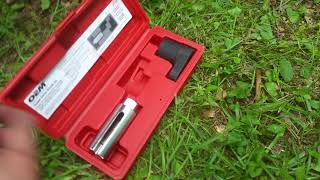
Typical fix: Replace the Bank 1, Sensor 1 oxygen sensor. This is the upstream sensor on the rear (firewall side) exhaust manifold. Access is very difficult and may require removing the cowl or accessing from below. An O2 sensor socket (22mm) is required.
Est. part cost: $40-$150 - Damaged Wiring or Connector 🟡 Medium Probability The wiring harness is routed in a high-heat engine bay, making it susceptible to melting, chafing against the engine block, or becoming brittle and cracking over time. The connector for the Bank 1 sensor is located on the firewall and can be difficult to inspect.
How to confirm: Visually inspect the wiring harness from the O2 sensor to its connection point on the firewall. Look for any signs of melting, frayed wires, or corrosion in the connector. With the key on and engine off, carefully check for 12V power and a good ground at the vehicle-side of the connector.
Typical fix: Repair the damaged section of wire or replace the connector pigtail.
Est. part cost: $10-$30
Rare But Worth Checking
- Faulty Powertrain Control Module (PCM): This is extremely rare. The PCM's internal driver for the heater circuit can fail, but this should only be considered after all other possibilities (fuse, sensor, wiring) have been definitively ruled out by thorough testing.
Diagnosis Steps
- Scan the vehicle for all OBD-II codes. Note if any other codes are present, especially P0141, P0155, or P0161.
- Open the hood and locate the Power Distribution Box (the main fuse box in the engine bay).
- Find and inspect the 15A fuse at position #5, labeled 'HEGO' (Heated Exhaust Gas Oxygen).
- If the fuse is blown, replace it and clear the codes. If the code does not return, the issue is resolved. If the fuse blows again, you have a short circuit in one of the O2 sensor wiring harnesses that must be located and repaired. Inspect the downstream sensor wiring first as it is most exposed.
- If the fuse is good, proceed to test the sensor itself.
- Locate the Bank 1, Sensor 1 oxygen sensor. It is the upstream sensor in the exhaust manifold on the rear (firewall) side of the engine. Trace its wire to the electrical connector, which is mounted on the firewall.
- Disconnect the sensor's electrical connector. Visually inspect for corrosion or damage.
- Set a multimeter to measure resistance (Ohms). On the sensor side of the connector, probe the two pins for the heater circuit (typically the two wires of the same color, e.g., white).
- A reading between 3 and 30 Ohms is good (specifications can vary, but this is a general range). A reading of OL (Over Limit/Open) or near 0 Ohms indicates the sensor's heater has failed and the sensor must be replaced.
- If the sensor resistance is good, check for power at the vehicle-side connector. With the key on and engine off, check for ~12V on one of the heater circuit pins and a good ground on the other. Absence of power points to a wiring issue between the fuse box and the connector.
Parts You'll Likely Need
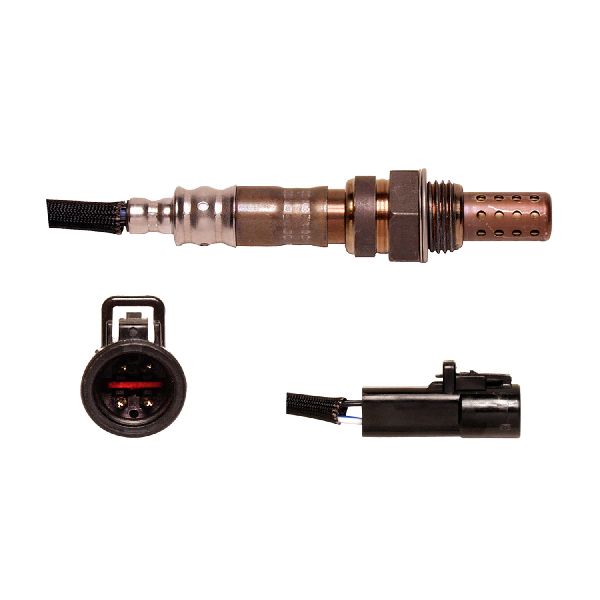
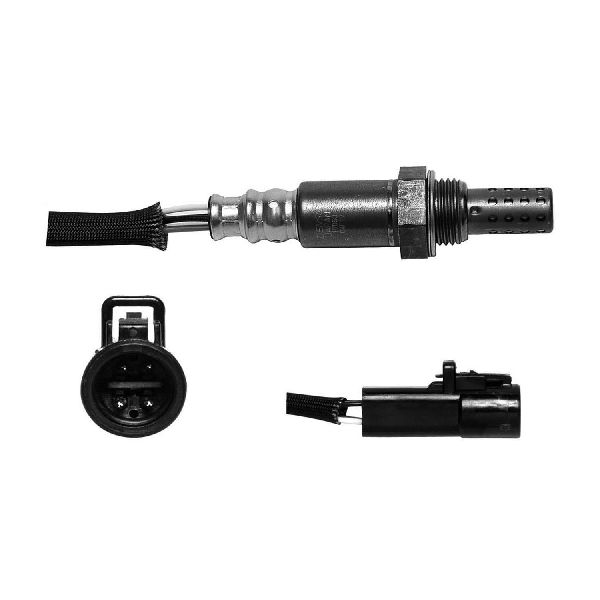
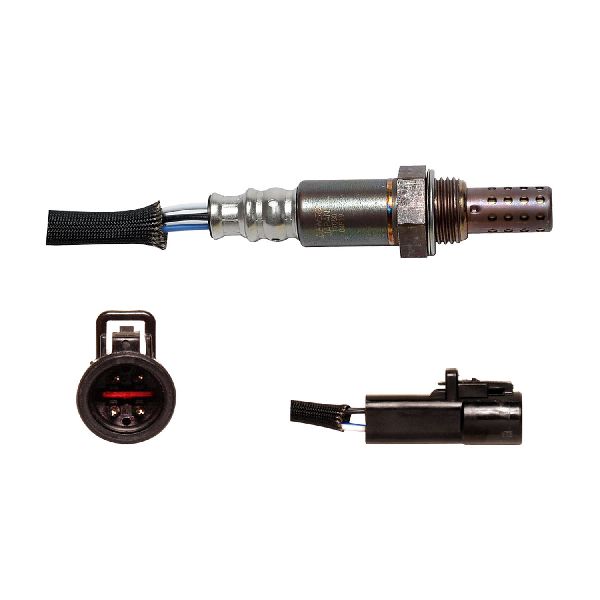
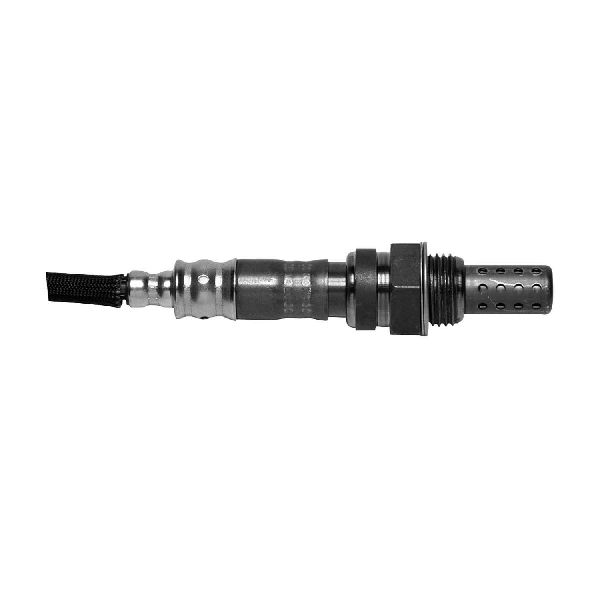
- Bank 1, Sensor 1 Oxygen Sensor
(OEM #YL8Z-9F472-AA)— This is the most common fix when the HEGO fuse is not blown. The internal heater element fails with age.
Trusted brands: Motorcraft (OEM), Bosch (e.g., 15717), Denso (e.g., 234-4045), NGK/NTK
OEM price range: $60-$100
Aftermarket price range: $40-$90 - 15A Mini Fuse — This fuse powers the heater circuits for all O2 sensors and is a very common failure point, often due to a wiring short.
Trusted brands: Bussmann, Littlefuse
OEM price range: $1-$5
Aftermarket price range: $1-$5
Related Codes That Often Appear With This One
- P0135 — This is the identical heater circuit code for Bank 1, Sensor 1. Some scan tools may display this code instead of P0030, but they mean the same thing.
- P0141, P0155, P0161 — These are the heater circuit codes for the other three oxygen sensors (Bank 1 Sensor 2, Bank 2 Sensor 1, Bank 2 Sensor 2). Seeing all four heater codes together almost guarantees the shared 15A HEGO fuse is blown.
Platform-Specific Known Issues
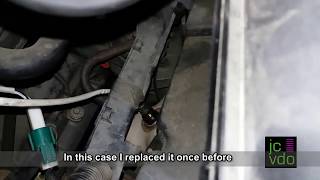
- The location of the Bank 1, Sensor 1 oxygen sensor on the rear exhaust manifold makes it extremely difficult to access and replace. Significant time can be spent just reaching the sensor. Many owners report needing to remove the cowl panel and wiper assembly for top-down access 🎬 Watch: This walkthrough shows how to access the difficult Bank 1 sensor. or using multiple extensions and a swivel socket from below.
- The wiring for the downstream O2 sensors is routed where it can be damaged by road debris or contact with hot exhaust components, leading to a short that blows the shared 'HEGO' fuse and triggers P0030, even though the Bank 1 sensor is fine.
Mechanic-Grade Diagnostic Values
- O2 Sensor Heater Element Resistance — expected: 3 to 30 Ohms, with a tighter specification of 4-6 Ohms being common for this platform.. Failure: A reading of OL (Open Loop/infinite resistance) or near zero Ohms (short circuit) on a multimeter indicates a failed heater element.
- Heater Circuit Power Supply Voltage (KOEO) — expected: Approximately 12V (battery voltage) at the vehicle-side connector on the specified power wire.. Failure: 0V indicates a blown fuse (HEGO #5) or an open in the power supply wire between the fuse box and the connector.
- Heater Circuit Ground Wire — expected: The PCM provides a ground to activate the heater. This can be tested by checking for continuity to ground or by using a scan tool to command the heater on and observing the ground signal.. Failure: No ground when commanded indicates a wiring issue back to the PCM or a failed PCM driver.
- O2 Sensor Signal Wire Voltage (KOEO, sensor unplugged) — expected: 0 Volts. This Ford platform does not use a bias voltage on the O2 signal line.. Failure: Any voltage present (e.g., ~0.5V) with the sensor unplugged suggests a short to another circuit or an internal PCM issue.
Scan Tool Commands That Help
- Ford IDS / FORScan: Heated Oxygen Sensor (HO2S) Heater Test — This bidirectional command allows a technician to manually activate the heater circuit for each O2 sensor individually. It can be used to confirm if the PCM driver is functioning and to check for current draw on the circuit, helping to isolate a faulty sensor or wiring without having to physically access the component first.
Wiring & Ground Locations
- Bank 1 Sensor 1 Heater Power Wire — At the 4-wire female connector for the upstream O2 sensor on the firewall side.. This wire, often RED, should have ~12V with the key on, engine off. No voltage here points directly to a blown HEGO fuse or a break in the power feed wire.
- Bank 1 Sensor 1 Heater Ground Wire — At the 4-wire female connector for the upstream O2 sensor on the firewall side.. This wire, often RED/WHITE on Ford Escapes of this era, is the ground path controlled by the PCM. A break in this wire will prevent the heater from working and set P0030, even if the sensor and fuse are good.
- G104 (or similar engine block ground) — There are multiple grounds on the engine block and firewall. One key ground point is on the firewall just below the PCM. Another is located at the left rear of the engine compartment (G1).. A poor engine or PCM ground can cause erratic behavior in multiple sensors, including the O2 sensors. While not a primary cause for a single heater code, it should be checked if multiple, unrelated electrical faults are present.
Real Owner Repair Stories
- Mazdas247.com forum user (Mazda Tribute V6 (year not specified, but within range)) — Check Engine Light with multiple O2 heater codes: P0030, P0050, P0141, P0161.
❌ Tried (didn't work) Initially, the user was going to replace the O2 sensors.
✅ What actually fixed it The user was advised to check the HEGO fuse first, which was blown. After replacing the fuse, it blew again. The final root cause was a damaged wire on one of the downstream O2 sensors that was shorting to the exhaust, which in turn blew the shared fuse for all four sensor heaters.
OEM Part Supersession History
YL8Z-9F472-AA→Motorcraft DY-835— Standard part number update and branding alignment.
Heads up: The original part number YL8Z-9F472-AA is a direct cross-reference to Motorcraft DY-835. They are interchangeable.
Model Year Variations Within This Range
- 2005-2006: The PCM on these later first-generation models is known to be more susceptible to damage from failing ignition coils. While a coil failure might present as a misfire code, it can cause latent damage to the PCM's internal circuits, including the O2 sensor heater drivers, leading to a P0030 code that is not fixable by replacing the sensor or wiring.
Diagnostic Flowchart
Other Known Issues on This Vehicle
Issues unrelated to this code that are worth knowing about as an owner of this generation:
- Leaking Intake Manifold Gaskets 🔴 High — Extremely common on higher mileage (70k+) engines. The gaskets become brittle, causing vacuum leaks that lead to lean codes (P0171/P0174) and misfires.
- Premature Alternator Failure 🟠 Medium — Alternators on the 3.0L V6 are known to fail, often between 100k-150k miles. Symptoms include dimming lights, battery warning light, and stalling. Replacement is labor-intensive due to its location.
- CD4E Automatic Transmission Failure 🔴 High — The CD4E transmission is a known weak point, with failures including slipping, harsh shifting, or complete loss of forward/reverse gears. Burnt fluid is a common symptom.
- Stuck Throttle / Accelerator Cable 🔴 High — Affects 2001-2006 models. Inadequate clearance between the engine cover and speed control cable can cause the throttle to stick. (Ref: NHTSA Recall #12V353000 / Mazda Recall #6812G)
- Leaking Valve Cover Gaskets 🟠 Medium — Very common after 80,000 miles. The rear (firewall side) is particularly prone to leaking oil into the spark plug wells, which causes ignition coil failure and misfires.
- Intake Manifold Runner Control (IMRC) Failure 🟠 Medium — The IMRC actuator or linkage can fail or get stuck, causing performance issues and codes like P2006.
- Cracked Fuel Delivery Module (FDM) Flange 🔴 High — Affects 2001-2004 models. The FDM flange on top of the fuel tank can crack, causing a fuel leak and strong fuel odor. (Ref: Mazda Recall #0416J)
Used vs. New Parts: Buying Guide for This Vehicle
When a used part is the smart pick: For this repair, a used part is only recommended for a replacement wiring harness pigtail if the original connector is damaged. O2 sensors are wear items and should not be purchased used.
Donor-vehicle mileage cap: roughly under 150000 miles for the part to have meaningful remaining life.
What to inspect on the donor part:
- For a pigtail, ensure the connector is not cracked or brittle.
- Check for at least 6 inches of clean, un-spliced wire attached to the connector.
- Verify the locking tab on the connector is intact and functional.
OEM-only on this vehicle (don't cheap out):
- While not strictly OEM-only, using a Motorcraft PCM is highly recommended if PCM replacement is necessary, as aftermarket units can have compatibility issues.
Aftermarket brands forum-validated for this vehicle:
- Motorcraft (OEM)
- Denso
- Bosch
- NGK/NTK
Brands owners have reported issues with on this vehicle:
- Unnamed or 'white-box' generic sensors from online marketplaces. These often have incorrect resistance values or poor longevity, causing the code to return quickly.
Real Owner Stories
Aggregated from forums and TSBs cited above. Mileages and costs reflect what owners reported in those sources.
2001-2006 Mazda Tribute 3.0L V6
Symptoms: Check Engine Light on with multiple O2 heater codes including P0030, P0050, P0141, and P0161.
What fixed it: The owner found the 15A HEGO fuse was blown. After it blew again, they discovered a damaged wire on a downstream O2 sensor that was shorting out.
Source hint: Mazdas247.com thread titled 'multiple o2 sensor codes p0030 p0050 p0141 p0161'
2001-2007 Ford Escape 3.0L V6
Symptoms: P0030 code triggered; owner struggled with the physical location of the sensor on the firewall side.
What fixed it: Replaced the Bank 1 (firewall side) O2 sensor by removing the cowl for top-down access.
Source hint: Escape-City.com forum threads regarding P0030 and Bank 1 sensor replacement
Related OBD-II Codes
Frequently Asked Questions
Is there a recall for the 2001-2006 Mazda Tribute that might cause engine issues related to the throttle?
Where is the fuse for the O2 sensor heater located on my Tribute V6?
Why is the Bank 1 Sensor 1 O2 sensor so much harder to change than the others?
If my HEGO fuse keeps blowing, does it mean the Bank 1 sensor is shorted?
Can leaking intake manifold gaskets cause issues on my high-mileage Tribute?
What resistance should I see when testing the heater circuit on the Bank 1, Sensor 1 O2 sensor?
Helpful Videos

Used OEM Parts in Stock
New Aftermarket Parts Available


The information in this article is provided for general reference and educational purposes only. Vehicle specifications, procedures, and part compatibility can vary by production date, trim level, and region. Always consult your vehicle's factory service manual and verify part numbers before purchasing or performing repairs. Safety-critical components such as airbags, seat belts, and braking systems should be installed by a qualified professional.
- Mazda Tribute:
- 🎬 Helpful Videos
- 🛍️ Shop This Part
- What's Unique About the 2001-2006 Mazda Tribute
- Symptoms You May Notice
- Most Likely Causes
- Rare But Worth Checking
- Diagnosis Steps
- Parts You'll Likely Need
- Related Codes That Often Appear With This One
- Platform-Specific Known Issues
- Mechanic-Grade Diagnostic Values
- Scan Tool Commands That Help
- Wiring & Ground Locations
- Real Owner Repair Stories
- OEM Part Supersession History
- Model Year Variations Within This Range
- Diagnostic Flowchart
- Other Known Issues on This Vehicle
- Used vs. New Parts: Buying Guide for This Vehicle
- Real Owner Stories
- 2001-2006 Mazda Tribute 3.0L V6
- 2001-2007 Ford Escape 3.0L V6
- Related OBD-II Codes
- Frequently Asked Questions
- 🎟️ Get 5% Off