

P0030 on 2016-2021 Hyundai Tucson 2.0L: Heater Circuit Causes and Fixes
This code almost always means the heater inside the upstream oxygen sensor (Bank 1, Sensor 1) has failed. The most common fix is to replace the sensor, which costs about $70-$150 for an aftermarket part or $180-$250 for an OEM part. It's a DIY-friendly job with a difficulty of 2/5.
- P0030 on your Tucson means there's a fault in the heater circuit of the upstream oxygen sensor (Bank 1, Sensor 1).
- The most likely solution is to replace the upstream oxygen sensor. This is a common point of failure and a straightforward DIY job.
- Before replacing the sensor, always check the 'SENSOR 1' 15A fuse and inspect the sensor's wiring for any melting or damage.
- Be aware that this engine has known issues with oil consumption and engine failure, which can sometimes contribute to sensor faults. Check your oil level regularly.
What's Unique About the 2016-2021 Hyundai Tucson
For the third-generation Hyundai Tucson with the Nu 2.0L engine, the P0030 code is a straightforward and common issue. The engine is an inline-four, so it only has one exhaust bank, making "Bank 1" the only bank. Sensor 1 is located on the exhaust manifold at the rear of the engine bay. The failure is almost always due to the sensor's internal heater burning out from age and heat cycles, a common occurrence on many modern vehicles, including Hyundais.
Symptoms You May Notice
- Check Engine Light is on
- Decreased fuel economy
- Rough idle, especially on cold starts
- Failing a vehicle emissions test
- Replacing the downstream (Bank 1, Sensor 2) oxygen sensor. The code P0030 specifically refers to Sensor 1, which is the upstream sensor before the catalytic converter.
Most Likely Causes
- Failed Upstream Oxygen Sensor (Bank 1, Sensor 1) 🔴 High Probability The internal heater element within the sensor is subjected to thousands of heat cycles and eventually burns out like a light bulb filament. This is a common wear-and-tear item. Additionally, the Nu 2.0L engine's propensity for oil consumption can lead to oil fouling, which contaminates the sensor and can cause premature failure.
How to confirm: Disconnect the sensor's electrical connector. Use a multimeter to measure the resistance across the two same-colored wires (the heater circuit). A reading of infinity or 'OL' indicates an open circuit and a failed heater. A normal reading is typically between 5 and 15 ohms when the sensor is cold. A Hyundai service manual for a similar engine specifies a resistance of approximately 9.0 Ω at 20°C (68°F).
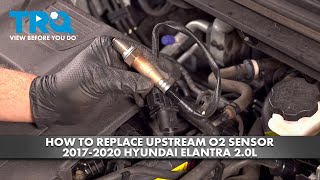
Typical fix: Replace the Bank 1, Sensor 1 oxygen sensor. It is located on the exhaust manifold, accessible from the top of the engine bay after removing a heat shield. 🎬 Watch: See the exact location and replacement steps for this sensor.
Est. part cost: $70-$250 - Damaged Wiring or Connector 🟡 Medium Probability The sensor's wiring harness is routed near the hot exhaust manifold. If it comes loose from its retaining clips, it can melt against the manifold or heat shield, causing a short or open circuit. In some cases, the connector pins can become spread or corroded, causing a poor connection.
How to confirm: Visually inspect the entire wiring harness from the oxygen sensor to its connection point. Look for any signs of melting, chafing, or broken wires. Check that the connector is securely plugged in and free of corrosion or spread pins.
Typical fix: Repair the damaged section of the wire or replace the connector pigtail. Secure the harness away from hot exhaust components.
Est. part cost: $10-$30 - Blown Fuse ⚪ Low Probability
How to confirm: Check the fuse box in the engine compartment. According to the owner's manual, there is a 15A fuse labeled 'SENSOR 1' that protects the oxygen sensor circuits. Pull the fuse and visually inspect if it is blown or test for continuity with a multimeter.
Typical fix: Replace the blown 15A fuse. If the new fuse blows immediately, it indicates a short circuit in the wiring that must be found and repaired.
Est. part cost: $1-$5
Rare But Worth Checking
- Faulty Engine Control Module (ECM): This is extremely rare. The ECM's internal driver for the heater circuit can fail. All other possibilities, especially the sensor and wiring, must be exhaustively ruled out before considering the ECM as the cause.
Diagnosis Steps
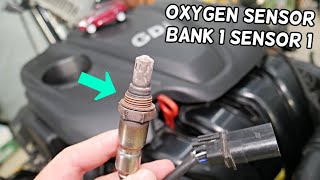
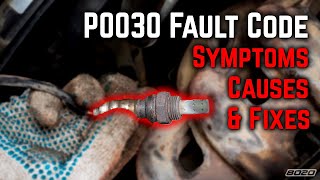
- Read the code with an OBD-II scanner to confirm P0030 is the primary code present. 🎬 Watch: Learn what the P0030 code means and how to fix it.
- Open the hood and locate the engine compartment fuse box. Find the 15A fuse labeled 'SENSOR 1' and check if it's blown. Replace if necessary.
- If the fuse is good, locate the upstream oxygen sensor (Bank 1, Sensor 1). It is on the exhaust manifold on the firewall side of the engine.
- Carefully inspect the sensor's wiring harness for any signs of melting, chafing, or damage. Ensure the connector is securely fastened and the pins are clean.
- If the wiring appears intact, disconnect the electrical connector. With the key in the 'ON' position (engine off), use a multimeter to check for battery voltage (around 12V) at the power supply pin on the vehicle's harness side.
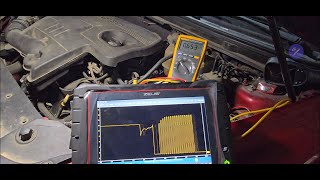
- Next, test the sensor itself. On the sensor's connector, identify the two wires for the heater circuit (they are typically the same color, often black or white). Set your multimeter to measure resistance (Ohms) and probe these two pins. 🎬 Watch: A mechanic shows you how to test oxygen sensor heater circuits.
- A reading of 'OL' or infinite resistance means the heater circuit is open and the sensor is bad. A normal reading is typically between 5-15 Ohms when cold; a Hyundai service document specifies a target of ~9.0 Ohms. If the reading is out of spec, the sensor has failed.
- If the sensor tests good and the wiring is intact, the problem may be in the ground circuit controlled by the ECM, which is a more complex diagnosis best left to a professional.
Parts You'll Likely Need
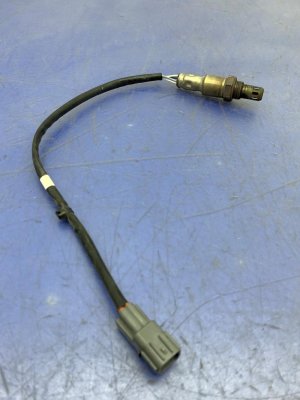
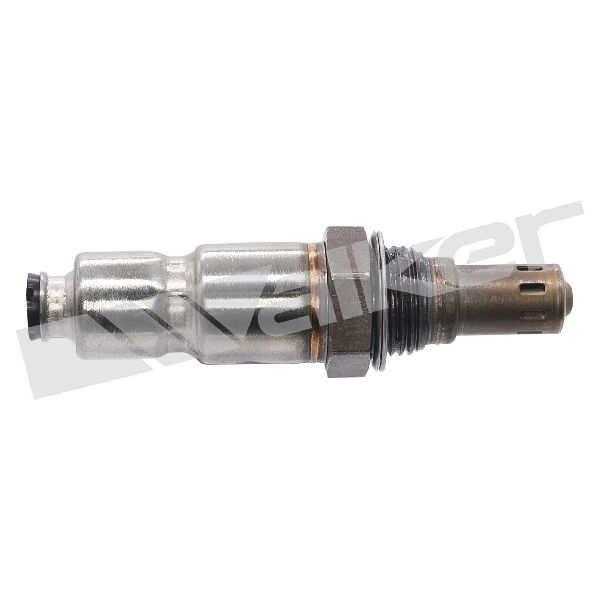
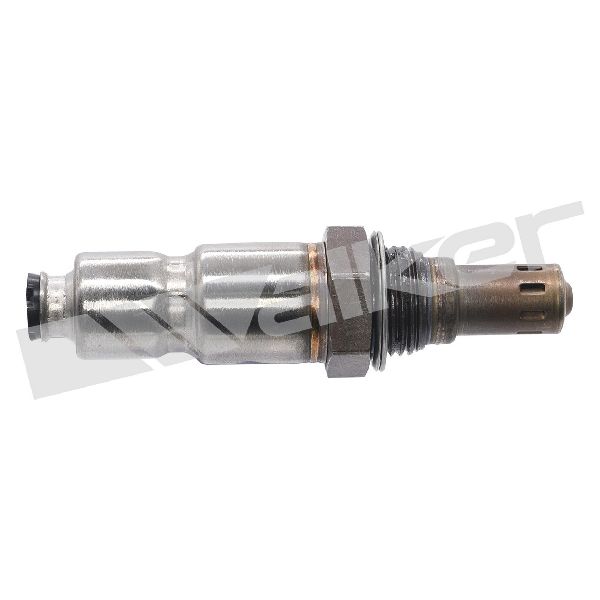
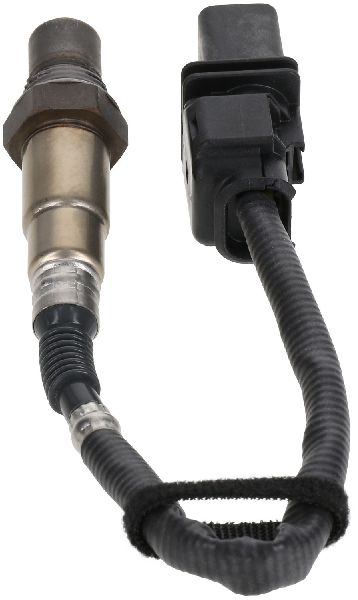
- Upstream Oxygen Sensor (Bank 1 Sensor 1)
(OEM #39210-2E101)— This is the most common failure point for code P0030, as the internal heater element burns out over time.
Trusted brands: Hyundai (OEM), Denso (Aftermarket P/N: 234-4573), NGK/NTK, Bosch
OEM price range: $180-$250
Aftermarket price range: $70-$150
Related Codes That Often Appear With This One
- P0031 — This code indicates the heater circuit has low voltage (short to ground), which can be caused by the same wiring or sensor faults that trigger P0030.
- P0032 — This code indicates the heater circuit has high voltage (short to power), which points to a short in the same circuit that triggers P0030.
- P0135 — This is another generic code for 'O2 Sensor Heater Circuit Malfunction (Bank 1 Sensor 1)'. It is functionally identical to P0030 and points to the same set of problems.
Technical Service Bulletins (TSBs) & Recalls
- TSB #19-01-004H: While this TSB is for a blank infotainment screen, it involves a software update for the head unit on 2018 models. In some cases, seemingly unrelated module updates can affect overall vehicle network communication and should be considered if strange electrical issues persist.
Platform-Specific Known Issues
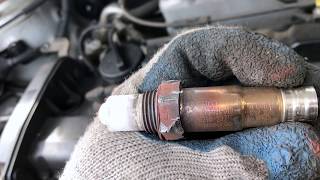
- Oil Fouling of Sensor: Due to the Nu 2.0L GDI engine's known issues with excessive oil consumption, the tip of the oxygen sensor can become contaminated with burnt oil deposits. This can insulate the sensing element or damage the internal heater, leading to premature failure and triggering a P0030 code. When replacing the sensor, the presence of heavy, black, oily soot on the old sensor is a strong indicator of this underlying problem.
Mechanic-Grade Diagnostic Values
- O2 Sensor Heater Element Resistance — expected: Approximately 9.0 Ω at 20°C (68°F). General acceptable range is 5-15 Ω.. Failure: A reading of 'OL' (Open Loop/infinite resistance) or a value significantly outside the 5-15 Ω range.
- Heater Circuit Power Supply Voltage (KOEO) — expected: Battery voltage (approximately 12V).. Failure: Voltage significantly below 12V or 0V indicates a problem with the fuse or power supply wire.
- Heater Control Circuit to Ground (KOEO) — expected: High resistance or 'OL' (Open Loop).. Failure: Low or zero resistance indicates a short to ground in the control wire between the sensor and the ECM.
Scan Tool Commands That Help
- Hyundai GDS (Global Diagnostic System): DTC Analysis & Live Data Monitoring (HO2S B1S1 Parameter) — Use to monitor the live data from the HO2S (Heated Oxygen Sensor) to see if it begins responding after startup. While GDS doesn't have a specific bidirectional test to activate just the heater, observing the sensor's switch from inactive to active confirms the heater is working. The GDS software also contains detailed troubleshooting guides based on the specific DTC found.
- Hyundai GDS (Global Diagnostic System): Vehicle S/W Management — This function is used for special functions and programming. While not typically required for an O2 sensor replacement, it should be used to check if any ECM software updates are available, as these can sometimes address emissions control logic.
Wiring & Ground Locations
- B1S1 Connector - Pin 4 (Harness Side) — On the vehicle-side of the upstream O2 sensor electrical connector.. This is the power supply pin. It should have battery voltage (~12V) with the key on, engine off. No voltage here points to a blown fuse or a break in the power wire.
- B1S1 Connector - Pin 3 (Harness Side) — On the vehicle-side of the upstream O2 sensor electrical connector.. This is the heater control pin, which is ground-side switched by the ECM. Testing this wire for a short to ground is a key diagnostic step if the sensor and power supply are good.
- Engine Ground Strap — A braided metal strap connecting the engine block to the vehicle's chassis/frame, often near a motor mount or on the strut tower.. While the O2 heater is grounded through the ECM, a poor main engine ground can cause widespread electrical issues and floating voltages, potentially confusing the ECM's diagnostic circuits. A visual inspection for corrosion or looseness is a wise step in any electrical diagnosis.
OEM Part Supersession History
39210-2E100→39210-2E101— Standard part revision for improved performance, reliability, or manufacturing process.
Heads up: The sensors are generally cross-compatible within the specified vehicle range, but it is always best to use the latest revision (39210-2E101) for repairs.
Model Year Variations Within This Range
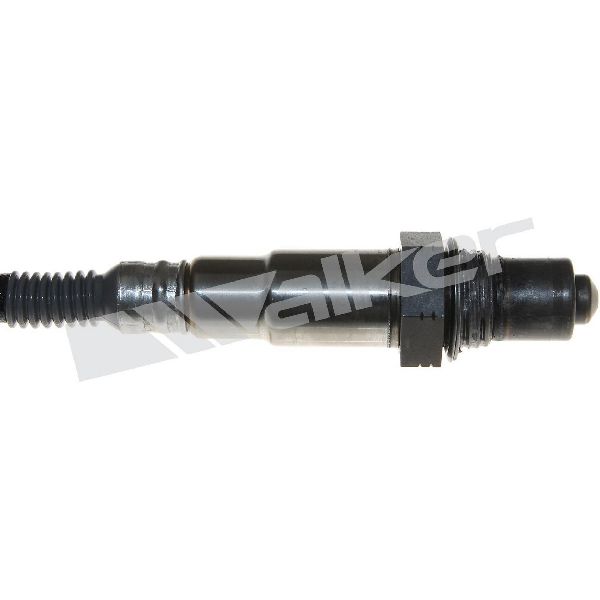
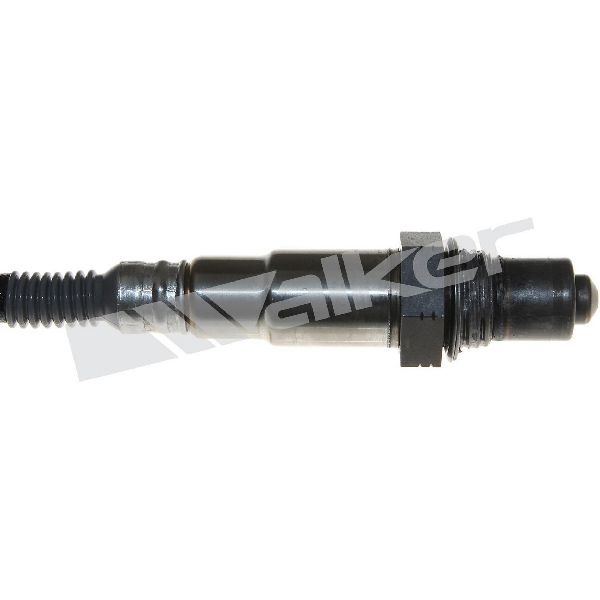
- 2018-2021: For models produced from 08/15/2018 onward, some parts catalogs list a different upstream sensor, a 5-wire wide-band Air/Fuel ratio sensor (Denso P/N 234-5082), instead of the conventional 4-wire sensor. It is critical to verify the production date and check if the existing sensor has 4 or 5 wires before ordering a replacement.
Diagnostic Flowchart
Other Known Issues on This Vehicle
Issues unrelated to this code that are worth knowing about as an owner of this generation:
- Catastrophic Engine Failure (Rod Bearing) 🔴 High — Widespread issue across the Nu GDI engine family, leading to recalls and class-action lawsuits. Can occur at various mileages. (Ref: Recall 209 (NHTSA ID: 21V727000) was issued for premature connecting rod bearing wear. Hyundai also extended the powertrain warranty to 15 years/150,000 miles for affected vehicles that have the Knock Sensor Detection System (KSDS) software update installed.)
- Excessive Oil Consumption 🔴 High — Very common complaint, with many owners reporting consumption rates exceeding one quart per 1,000 miles. Often a precursor to engine failure. (Ref: Subject of multiple class-action lawsuits (e.g., Cho, et al. v. Hyundai). While no specific recall for oil consumption on this model, it is a known defect related to piston rings and engine design.)
- Transmission Hesitation/Failure (DCT Models) 🟠 Medium — Primarily affects models equipped with the 1.6L Turbo engine and 7-speed Dual-Clutch Transmission (DCT), not the 2.0L's 6-speed automatic. However, it's a significant issue for the TL platform overall.
Used vs. New Parts: Buying Guide for This Vehicle
When a used part is the smart pick: For this repair, using a used part is NOT recommended. Oxygen sensors are wear items with a finite lifespan. The internal heater element that causes P0030 is the most common failure point due to age and heat cycles. A used sensor from a junkyard has unknown remaining life and could fail shortly after installation, wasting time and money.
What to inspect on the donor part:
- Not applicable as used sensors are not advised.
Aftermarket brands forum-validated for this vehicle:
- Denso: Often the Original Equipment Manufacturer (OEM) for Hyundai, considered a top-tier choice.
- NGK / NTK: NTK is the sensor division of NGK. They are another major OEM supplier with a reputation for excellent quality and reliability.
- Bosch: A high-quality, reliable option, though some mechanics prefer to stick with Denso or NTK for Asian vehicles.
Brands owners have reported issues with on this vehicle:
- Avoid unbranded, 'white-box' parts from online marketplaces. These often have high failure rates, incorrect resistance values, or use lower-quality materials that do not last, leading to the code returning.
Real Owner Stories
Aggregated from forums and TSBs cited above. Mileages and costs reflect what owners reported in those sources.
2017 Hyundai Elantra 2.0L
Symptoms: Check engine light on with code P003000.
What fixed it: Replacement of the upstream O2 sensor located on the exhaust manifold.
Source hint: youtube.com video titled '2017 Hyundai Elantra 2.0 engine P003000!! OXYGEN SENSOR REPLACEMENT FIX!!'
2012 Kia Soul 2.0L
Symptoms: P0030 code present; heater circuit malfunction.
What fixed it: Repairing spread pins in the sensor's electrical connector to restore good contact.
Source hint: youtube.com video on a 2012 Kia Soul with code P0030
2016-2021 Hyundai Tucson 2.0L GDI
Symptoms: Premature O2 sensor failure; heavy, black, oily soot found on the sensor tip during inspection.
What fixed it: Replacement of the fouled sensor; however, the root cause was identified as the engine's excessive oil consumption.
Source hint: vehicle_specific_issues: Oil Fouling of Sensor
Hyundai Engine and Sensor Malfunctions
Symptoms: An owner reported multiple diagnostic trouble codes including P0030 for the HO2S Heater Control Circuit (Bank 1, Sensor 1), alongside P0301, P0302 (cylinder misfires), and P0014 (exhaust camshaft timing over-advanced).
What fixed it: The vehicle was towed to a dealership for diagnosis after these multiple engine and heater circuit faults were detected.
Source hint: NHTSA ODI #11675752
Related OBD-II Codes
Frequently Asked Questions
Can the Nu 2.0L engine's known oil consumption issue cause the P0030 code on my Tucson?
Where is the 'SENSOR 1' fuse located for the oxygen sensor circuit?
What is the correct resistance for a new upstream O2 sensor on the 2.0L Tucson?
Does TSB #19-01-004H relate to my P0030 engine code?
Is the P0030 code common on other Hyundai or Kia models with the same engine?
Can I use a used oxygen sensor from a salvage yard to fix this?
Helpful Videos

Used OEM Parts in Stock
New Aftermarket Parts Available


The information in this article is provided for general reference and educational purposes only. Vehicle specifications, procedures, and part compatibility can vary by production date, trim level, and region. Always consult your vehicle's factory service manual and verify part numbers before purchasing or performing repairs. Safety-critical components such as airbags, seat belts, and braking systems should be installed by a qualified professional.
- Hyundai Tucson:
- 🎬 Helpful Videos
- 🛍️ Shop This Part
- What's Unique About the 2016-2021 Hyundai Tucson
- Symptoms You May Notice
- Most Likely Causes
- Rare But Worth Checking
- Diagnosis Steps
- Parts You'll Likely Need
- Related Codes That Often Appear With This One
- Technical Service Bulletins (TSBs) & Recalls
- Platform-Specific Known Issues
- Mechanic-Grade Diagnostic Values
- Scan Tool Commands That Help
- Wiring & Ground Locations
- OEM Part Supersession History
- Model Year Variations Within This Range
- Diagnostic Flowchart
- Other Known Issues on This Vehicle
- Used vs. New Parts: Buying Guide for This Vehicle
- Real Owner Stories
- 2017 Hyundai Elantra 2.0L
- 2012 Kia Soul 2.0L
- 2016-2021 Hyundai Tucson 2.0L GDI
- Hyundai Engine and Sensor Malfunctions
- Related OBD-II Codes
- Frequently Asked Questions
- 🎟️ Get 5% Off