

P0025 on 2015-2021 Lincoln Navigator: Exhaust Cam Timing Causes and Fixes
On a 2015-2021 Lincoln Navigator, code P0025 is most often caused by a faulty Bank 2 exhaust VCT solenoid or low/dirty engine oil. Bank 2 is the driver's side of the engine. Replacing the solenoid is a common fix, costing around $40-$100 for the part and is often done after an oil change fails to resolve the issue.
- P0025 on your Navigator points to the driver's side exhaust camshaft timing being incorrect.
- Before buying any parts, check your engine oil level and condition. Low or dirty oil is a very common cause.
- The most likely part to have failed is the Bank 2 (driver's side) exhaust VCT solenoid. This is a relatively inexpensive and accessible part to replace.
- If you hear a loud rattling noise when starting the engine, the problem could be more serious, such as a stretched timing chain or bad cam phasers, which requires professional diagnosis.
- Always use the specific engine oil viscosity recommended by Ford to prevent issues with the VCT system.
What's Unique About the 2015-2021 Lincoln NAVIGATOR
The 3.5L EcoBoost engine in the Lincoln Navigator is a sophisticated twin-turbocharged, direct-injection engine that relies heavily on clean, correct-viscosity engine oil to operate its VCT system. The turbos can increase oil breakdown, making regular oil changes with high-quality oil critical. Ford has issued multiple Technical Service Bulletins (TSBs), such as SSM 50067, acknowledging that VCT-related codes, including P0025, can be caused by small debris clogging the VCT solenoids. Additionally, these engines can be prone to timing chain wear (especially 2015-2017 models) and cam phaser issues (a known problem on 2018-2021 models), both of which can directly cause timing deviation codes.
Diagnostic Flowchart
Tap your situation to follow the diagnostic path that matches what you're seeing on this vehicle.
Generation note: This range covers two Navigator generations. The 2015-2017 (third generation) uses the first-gen 3.5L EcoBoost, known for potential timing chain stretch issues. The 2018-2021 (fourth generation) uses the second-gen 3.5L EcoBoost, which revised the timing chain design but is well-known for a cold start rattle caused by faulty cam phasers. The P0025 code and its primary causes (VCT solenoids, oil issues) are common to both generations.
Symptoms You May Notice
- Illuminated Check Engine Light
- Rough or unstable idle, sometimes feeling like rumble strips when stopping
- Reduced engine power and poor acceleration
- Engine hesitation or stumbling
- Rattling, ticking, or knocking noises from the engine, especially on cold startup
- Engine stalling, particularly when coming to a stop
- Decreased fuel economy
- In some cases, the truck may enter 'limp mode'
- Replacing the camshaft position sensor when the VCT solenoid is the actual problem.
- Replacing the cam phaser when the issue is simply a clogged VCT solenoid or low oil pressure.
- Mistaking a turbo wastegate rattle for a cam phaser or timing chain rattle, leading to unnecessary engine work.
Most Likely Causes
- Failing Variable Camshaft Timing (VCT) Solenoid (Bank 2 Exhaust) 🔴 High Probability TSBs like SSM 50067 directly state that these solenoids can stick due to small debris in the oil, a common issue for this engine platform. This is the most frequent cause cited by mechanics and is often the first part replaced after an oil change.
How to confirm: Use a scan tool (like FORScan) to command the solenoid on and off while monitoring the VCT_EXH_DIF_ERR2 PID (Parameter ID). A lack of change or a consistently high error value points to a faulty solenoid or oil flow issue. You can also swap the Bank 2 exhaust solenoid with the Bank 1 exhaust solenoid and see if the code changes to P0015 (Bank 1 Exhaust Over-Retarded). The Bank 2 solenoids are on the driver's side valve cover.
Typical fix: Replace the Bank 2 (driver's side) exhaust VCT solenoid. It is highly recommended to perform an oil and filter change at the same time using the specified Motorcraft oil and filter.
Est. part cost: $40-$100 - Low or Dirty Engine Oil 🔴 High Probability The VCT system is entirely dependent on hydraulic pressure. The twin-turbo EcoBoost engines run hot and can be hard on oil, leading to breakdown and sludge if intervals are extended. Sludge can clog the fine mesh screens on the VCT solenoids, starving the phasers of oil pressure.
How to confirm: Check the oil level on the dipstick and inspect its condition. If the level is low or the oil is dark, gritty, or past its change interval, this is a likely contributor. Oil pressure should also be checked at hot idle if possible.
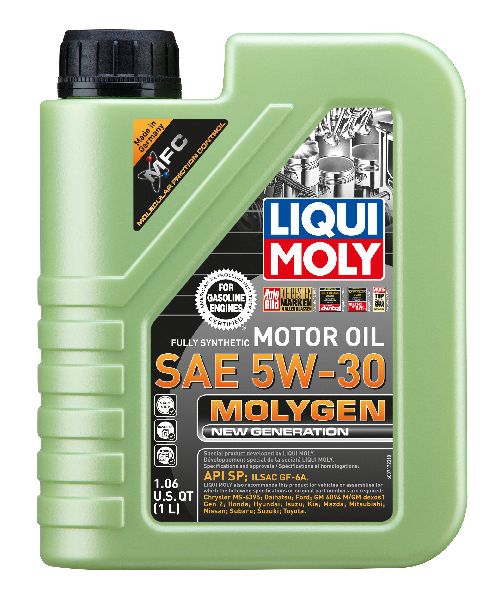
Typical fix: Perform an engine oil and filter change using the manufacturer-specified full synthetic oil (e.g., Motorcraft SAE 5W-30) and a Motorcraft filter. Clear the codes and drive to see if P0025 returns.
Est. part cost: $60-$120 - Worn Timing Chain or Guides 🟡 Medium Probability The first-generation 3.5L EcoBoost (2015-2017 models) is known for timing chain stretch. A stretched chain causes slack, which directly impacts camshaft timing relative to the crankshaft, leading to correlation codes. While less common on the second-gen engine (2018-2021), wear can still occur at higher mileage.
How to confirm: This is an involved diagnosis. A key symptom is a startup rattle that lasts for a few seconds. A mechanic can remove the driver's side valve cover and inspect the timing chain tensioner. If many teeth are extended, the chain has stretched. A scan tool may also show a persistent deviation between commanded and actual cam angles that doesn't resolve with a new solenoid.
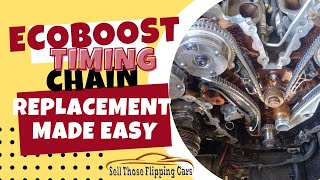
Typical fix: Replace the timing chain, tensioners, and guides. This is a labor-intensive job (8-12 hours) and it's highly recommended to replace the water pump and cam phasers 🎬 Watch: A step-by-step guide to making timing chain replacement easier. at the same time.
Est. part cost: $400-$800 - Failing Camshaft Phaser ⚪ Low Probability Cam phaser rattle on startup is a widely documented issue, especially on the second-generation 3.5L EcoBoost (2018-2021). Ford has a customer satisfaction program (21N03) for this issue. A phaser that is stuck, not holding oil pressure, or has a broken lock pin can cause a timing deviation and trigger P0025.
How to confirm: Diagnosis often involves listening for a distinct rattling noise on cold starts that goes away as oil pressure builds. A scan tool may show erratic cam angle readings or a large difference between commanded and actual angles that points to a specific phaser. In some cases, owners have had phasers replaced multiple times.
Typical fix: Replace the faulty camshaft phaser(s) on Bank 2. This is a major repair often done concurrently with a timing chain replacement. Updated phaser parts should be used.
Est. part cost: $200-$500 per phaser
Rare But Worth Checking
- Faulty Camshaft Position Sensor: While possible, it's less common for the sensor itself to fail than the VCT solenoid. A sensor failure would typically trigger other codes as well, or result in a no-start condition. It's often misdiagnosed when the solenoid is the real issue.
- Clogged Oil Passages: Severe oil sludge from neglected maintenance can block the small passages leading to the VCT solenoid and cam phaser, preventing proper operation. This usually indicates a history of severely extended oil change intervals and may require extensive engine cleaning or replacement.
- Crossed VCT Solenoid Connectors: After a repair like a timing job or valve cover gasket replacement, it is possible to accidentally swap the intake and exhaust VCT solenoid electrical connectors on the same bank. This will cause immediate VCT codes. One owner on a forum reported this exact mistake as the cause for P0021 and P0025 after a phaser job.
Diagnosis Steps
- Check Engine Oil: Verify the oil level is correct and the oil is clean and of the proper viscosity (SAE 5W-30 Full Synthetic is typical). If low or dirty, perform an oil and filter change with a quality Motorcraft filter, clear the code, and re-test.
- Scan for Codes: Use an OBD-II scanner to confirm P0025 and note any other codes. Codes like P0019 strongly point towards the VCT system.
- Inspect VCT Solenoid Wiring: Visually inspect the wiring harness and connector for the Bank 2 (driver's side) exhaust VCT solenoid for any damage, corrosion, or loose connections. The exhaust solenoid is typically the rearmost solenoid on the valve cover.
- Test the VCT Solenoid: Use a capable scan tool to monitor live data for commanded vs. actual camshaft position for Bank 2 Exhaust (VCT_EXH_CMD2 and VCT_EXH2). Command the solenoid on and off to see if the timing angle changes. TSB SSM 50067 suggests cycling the affected VCT solenoid 10 times with the scan tool to try and clear the debris before replacement.
- Swap Solenoids (Optional): The intake and exhaust solenoids on the 3.5L EcoBoost are identical. Swap the Bank 2 exhaust solenoid with the Bank 2 intake solenoid. Clear codes and drive. If the code changes to P0021 (Bank 2 Intake Over-Advanced), the solenoid is confirmed faulty.
- Check for Mechanical Issues: If the solenoid and oil are good, the problem is likely mechanical. Listen for a distinct 'typewriter' or rattling noise on cold starts which could indicate a bad cam phaser or stretched timing chain. This step often requires a professional mechanic for further diagnosis, which may involve removing the valve cover to inspect the timing chain tensioner.
Parts You'll Likely Need
- Variable Camshaft Timing (VCT) Solenoid (Bank 2 Exhaust)
(OEM #AT4Z-6M280-A)— This is the most common failure point for code P0025, as identified by repair data and manufacturer TSBs. It controls oil flow to the cam phaser and is prone to sticking from oil debris. It is used for both intake and exhaust positions.
Trusted brands: Motorcraft, Dorman (917-201)
OEM price range: $60-$100
Aftermarket price range: $40-$70 - Engine Oil and Filter
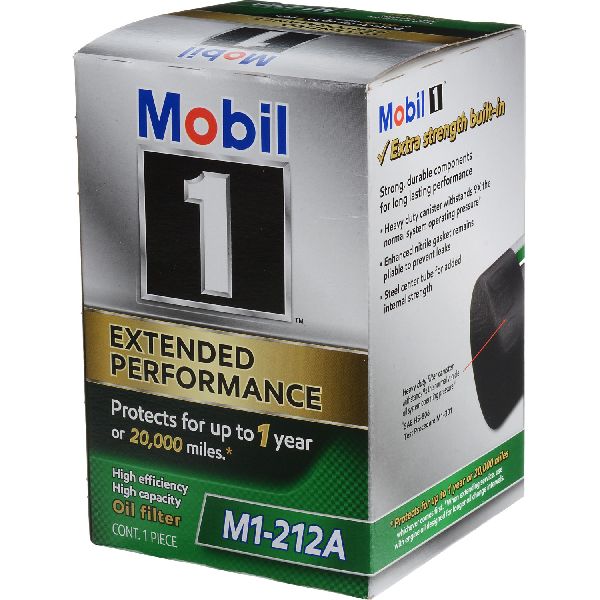
(OEM #XO-5W30-Q1SP (Oil), FL-500S (Filter))— Clean oil of the correct viscosity is essential for the VCT system to function. Dirty or low oil is a primary cause of this code and can cause new solenoids to fail prematurely.
Trusted brands: Motorcraft, Mobil 1, Pennzoil
OEM price range: $70-$120
Aftermarket price range: $60-$90
Related Codes That Often Appear With This One
- P0019 — This code indicates a Crankshaft-Camshaft Position Correlation error for the same camshaft (Bank 2, Sensor B). TSB 16-0038 specifically links P0019 and P0025, suggesting replacing the Bank 2 exhaust VCT solenoid when they appear together, especially on low-mileage vehicles. A Reddit user with a 2019 F-150 reported both codes appearing together with stalling symptoms.
- P0021 — This code is for 'A' Camshaft Position - Timing Over-Advanced (Bank 2). It's possible to see this with P0025 if there are significant timing issues on Bank 2 affecting both intake and exhaust cams, potentially after a botched timing job.
Technical Service Bulletins (TSBs) & Recalls
- SSM 50067: Covers 2015-2021 models. Acknowledges that various VCT codes including P0025 can be caused by debris in the VCT solenoid. Recommends attempting to clear debris by cycling the solenoid with a scan tool before replacement.
- TSB 16-0038: For 2016 models. Links P0019 and P0025 appearing together, especially at very low mileage, and points to a faulty VCT solenoid.
- SSM 54366: Mentions updates to the diagnostic pinpoint tests in the workshop manual for a range of VCT codes including P0025.
- TSB 16-0093: Another 2016 bulletin listing a group of VCT codes, including P0025, that may appear.
- Customer Satisfaction Program 21N03: Not a TSB, but a Ford program addressing the cam phaser rattle on 2018-2020 Navigators (and other 3.5L EcoBoost vehicles). It involves a PCM reprogram and potential prorated phaser replacement.
Platform-Specific Known Issues
- TSB SSM 50067: VCT Solenoid Sticking: For 2015-2021 models, this TSB notes that P0025 (and other VCT codes) may be due to small debris causing the VCT solenoid to stick. It advises using a scan tool to cycle the solenoid 10 times to attempt to clear the debris before replacement.
- TSB 16-0038: Low-Mileage Failures: Specifically for 2016 models with the 3.5L GTDI engine, this bulletin links codes P0019 and P0025 together, especially on vehicles under 2,000 miles, and points to the VCT solenoid as the likely cause.
- Owner Experience: Botched Phaser Job: On F150Forum.com, a user with a 2017 3.5L EcoBoost reported getting P0021 and P0025 immediately after a full timing chain and phaser replacement. The cause was determined to be the VCT solenoid electrical connectors being reversed (intake and exhaust swapped). This highlights the importance of careful reassembly.
- Owner Experience: Recurring Phaser Failure: On the Ford Expedition Forum, an owner of a 2018 Navigator reported their vehicle was on its 6th set of cam phasers at only 23,000 miles, indicating that for some vehicles, the phaser issue can be persistent and recurrent even after replacement.
Mechanic-Grade Diagnostic Values
- VCT Solenoid Resistance — expected: Between 5.0 and 25.0 ohms. Some sources cite a tighter range of 6.9 to 7.9 ohms.. Failure: A reading outside the specified range, or infinite resistance (open circuit), indicates a faulty solenoid.
- FORScan VCT Cam Error PID (e.g., VCT_EXH_ERR2 for Bank 2 Exhaust) — expected: Should hover around 0 degrees (+/- 5 degrees) during normal operation.. Failure: Large, persistent, or erratic error values indicate the camshaft is not tracking the PCM's commanded position, pointing to a solenoid, phaser, or oil pressure issue.
- VCT Solenoid Voltage (at connector) — expected: One pin should have battery voltage (VPWR) with the key on, engine off. The other pin is the control circuit from the PCM.. Failure: Absence of battery voltage suggests a wiring or fuse issue upstream of the solenoid.
Scan Tool Commands That Help
- Ford IDS (Integrated Diagnostic System): Pinpoint Test HK11 - Cycle VCT Solenoid — As per TSB SSM 50067, this function should be used before replacing a VCT solenoid. It cycles the solenoid 10 times to attempt to dislodge small debris that may be causing it to stick.
- FORScan: VCT Solenoid Duty Cycle Control (e.g., VCT2DC) — This allows a technician to manually command the solenoid's duty cycle while monitoring the corresponding cam error PID (e.g., VCT2ERR). If the error doesn't change predictably as the duty cycle is commanded, it points to a stuck solenoid or oil flow problem.
Wiring & Ground Locations
- VCT Solenoid Connector — On the top of the valve cover for each bank. Bank 2 is the driver's side. The exhaust solenoid is typically the rearmost of the two on the cover.. This is the primary connection point for testing voltage, ground, and resistance of the VCT solenoid circuit. It has two pins: Pin 1 is typically the control signal from the PCM, and Pin 2 is the power supply (VPWR).
- Engine Compartment Fuse Box — Located in the engine bay, typically on the driver's side.. This box contains the fuses and relays that supply power to the PCM and engine components, including the VCT solenoids. A blown fuse could cause a loss of power (VPWR) to the solenoid.
Real Owner Repair Stories
- Ford F150 Forum user (2019 F-150 Platinum 3.5L EcoBoost with 163k miles) — Hard shifts, flashing check engine light, and pending codes P0018 (Crank/Cam Correlation Bank 2) and P0021 (Cam Timing Over-Advanced Bank 2).
❌ Tried (didn't work) An oil change was performed but the issues persisted.
✅ What actually fixed it The user was diagnosing the issue using FORScan, suspecting either VCT solenoids or cam phasers. Another user noted that the FORScan data showing a slow reaction and overcorrection in the VCT error PID (VCT_INT_DIF2) was similar to what they saw with a bad solenoid. The final resolution was not posted in the thread, but the evidence strongly pointed toward a faulty VCT solenoid. - YouTube video by 'LETMELIVE' (2015 F-150 3.5L EcoBoost with 70,000 miles) — Rough idle, strong fuel smell, and codes P0015 and P0017 (Bank 1 exhaust over-retarded and correlation).
❌ Tried (didn't work) The owner took it to a dealer who suspected a major timing job was needed.
✅ What actually fixed it The owner decided to troubleshoot further. After swapping the Bank 1 exhaust VCT solenoid with the intake solenoid, the codes did not change. He then swapped the camshaft position sensors, and the problem was resolved. Although this story is for Bank 1 (P0015/P0017), the diagnostic logic is identical for a Bank 2 P0025 code, and it highlights that a camshaft position sensor can be the cause, even if it's less common.
OEM Part Supersession History
Varies by year→HL3Z-6M280-A (and -B for the other side)— Ford has updated the cam phasers multiple times to address the cold start rattle and durability issues. The latest design is intended to be more robust.
Heads up: The Customer Satisfaction Program 21N03, which covers phaser replacement, requires a prior PCM reflash (Program 21B10). Failure to perform the reflash by the specified date could affect warranty coverage for the updated parts.
Model Year Variations Within This Range
- 2018-2020: These model years with the 3.5L EcoBoost are specifically covered by Ford's Customer Satisfaction Program 21N03 for cam phaser rattle. This program extends the warranty for phaser replacement under specific mileage and time conditions, provided a prior software update (21B10) was performed.
- 2015-2017: These models use the first-generation 3.5L EcoBoost and are more commonly associated with timing chain stretch as a root cause for timing codes, whereas the 2018+ second-generation engine is more known for the cam phaser rattle issue.
Helpful Videos
![How to Fix P0025 Engine Code in 4 Minutes [2 DIY Methods / Only $6.99]](https://img.youtube.com/vi/7E-oYdoFAfM/mqdefault.jpg)
Used OEM Parts in Stock


New Aftermarket Parts Available


The information in this article is provided for general reference and educational purposes only. Vehicle specifications, procedures, and part compatibility can vary by production date, trim level, and region. Always consult your vehicle's factory service manual and verify part numbers before purchasing or performing repairs. Safety-critical components such as airbags, seat belts, and braking systems should be installed by a qualified professional.
- Lincoln NAVIGATOR:
- 🎬 Helpful Videos
- 🛍️ Shop This Part
- What's Unique About the 2015-2021 Lincoln NAVIGATOR
- Diagnostic Flowchart
- Symptoms You May Notice
- Most Likely Causes
- Rare But Worth Checking
- Diagnosis Steps
- Parts You'll Likely Need
- Related Codes That Often Appear With This One
- Technical Service Bulletins (TSBs) & Recalls
- Platform-Specific Known Issues
- Mechanic-Grade Diagnostic Values
- Scan Tool Commands That Help
- Wiring & Ground Locations
- Real Owner Repair Stories
- OEM Part Supersession History
- Model Year Variations Within This Range
- 🎟️ Get 5% Off