

P0025 on 2015-2019 Lincoln MKZ Hybrid: Exhaust Cam Timing Explained
This code is for a 'Bank 2' fault, but your vehicle's 2.0L I4 engine only has one bank. A P0025 is highly unlikely. The equivalent issue on your car would be code P0015. In either case, the cause is often dirty oil or a sticking VCT solenoid, a fix that can range from an oil change to a solenoid replacement for $250-$400.
- P0025 is a 'Bank 2' code, which should not appear on your 4-cylinder MKZ Hybrid. Double-check the code; it is likely P0015 or a scanner error.
- The most probable cause for this type of timing code is low or dirty engine oil. Always check your oil first.
- The next most likely culprit is a sticking VCT solenoid. However, your engine only has an INTAKE VCT solenoid, located under the valve cover.
- An actual exhaust timing fault code (P0015/P0025) is extremely unusual for this engine and may point to a more fundamental timing chain issue rather than a simple component failure.
What's Unique About the 2015-2019 Lincoln MKZ HYBRID
The key issue here is the conflict between the code's definition and the vehicle's hardware. While Ford/Lincoln Technical Service Bulletin (TSB) SSM 50067 lists P0025 and applies to the 2015 MKZ, it's a broad bulletin covering many vehicles, including V6 and V8 engines that do have a Bank 2. The problem described in the TSB—a sticking Variable Camshaft Timing (VCT) solenoid due to debris—is very relevant to the 2.0L engine, but it would manifest as a Bank 1 code (like P0011, P0012, P0014, or P0015). Interestingly, the 2.0L Hybrid engine only has variable timing on the intake camshaft; the exhaust side is fixed. This means a true exhaust timing code like P0015/P0025 is even more unlikely and points heavily toward a data error or a generic scanner misinterpreting a different underlying fault.
Diagnostic Flowchart
Tap your situation to follow the diagnostic path that matches what you're seeing on this vehicle.
Symptoms You May Notice
- Check Engine Light is on
- Rough or unstable idle
- Reduced engine power and poor acceleration
- Decreased fuel economy
- Engine may be hard to start
- Rattling noise from the engine 🎬 Watch: Common symptoms of a failing VCT solenoid
- Replacing the camshaft position sensor first. The sensor is usually just reporting the problem, not causing it. The issue is more often with the oil or the VCT solenoid that controls the timing.
- Searching for parts on 'Bank 2'. As this engine does not have a Bank 2, any attempt to locate or replace Bank 2 components will be futile.
- Searching for an 'Exhaust' VCT Solenoid. The 2.0L Atkinson-Cycle Hybrid engine in this vehicle only has a VCT system on the intake camshaft. There is no exhaust VCT solenoid to replace.
Most Likely Causes
- Low or Dirty Engine Oil 🔴 High Probability The VCT system is hydraulically operated by engine oil. Contaminated or low oil can cause the VCT solenoids to stick or respond slowly, which is the exact issue cited in TSB SSM 50067. This is the most common cause for all VVT-related fault codes.
How to confirm: Check the engine oil level on the dipstick and inspect its condition. If the oil is low, dark, or sludgy, it's the likely culprit. An oil change is the first and most important diagnostic step.
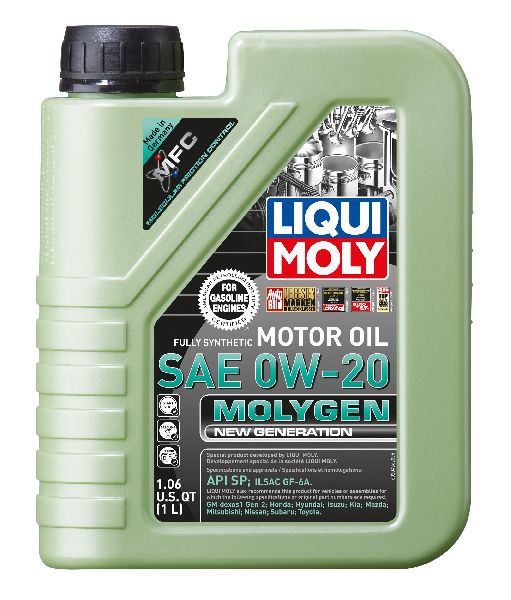
Typical fix: Perform an oil and filter change using the manufacturer-specified grade (SAE 5W-20 or 0W-20, check owner's manual) Synthetic Blend oil.
Est. part cost: $40-$80 - Sticking/Failing VCT Solenoid 🔴 High Probability TSB SSM 50067 specifically calls out that small debris can cause the VCT solenoid to stick, leading to this family of codes. Given that the 2.0L Hybrid only has one VCT solenoid (for the intake cam), this component is a primary suspect if an oil change doesn't resolve the issue.
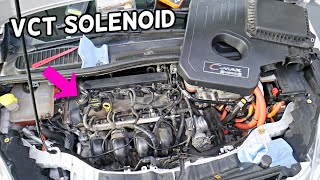
How to confirm: A technician can use a high-end scan tool to command the solenoid to cycle, as suggested by the TSB. If it doesn't respond, or if an oil change doesn't fix the code, the solenoid is likely faulty. Resistance can also be checked with a multimeter, typically reading between 6.9-7.9 ohms. The solenoid is located under the valve cover, requiring its removal for access. 🎬 Watch: How to locate and replace the VCT solenoid
Typical fix: Replace the intake VCT solenoid (since an exhaust VCT solenoid does not exist on this engine).
Est. part cost: $72-$81 - Worn Timing Components ⚪ Low Probability While less common, a stretched timing chain or failing tensioner can cause the actual camshaft timing to lag behind what the ECM expects, triggering this code. The 2.0L engine family has been mentioned in class-action lawsuits regarding engine issues, though not specifically for timing chain failure.
How to confirm: This is an involved diagnosis, often requiring removal of the valve cover to inspect for chain slack or damaged guides. It's typically diagnosed after ruling out oil and solenoid issues. A rattling noise on startup can be an indicator.
Typical fix: Replace the timing chain, tensioners, and guides. This is a labor-intensive job.
Est. part cost: $200-$400
Rare But Worth Checking
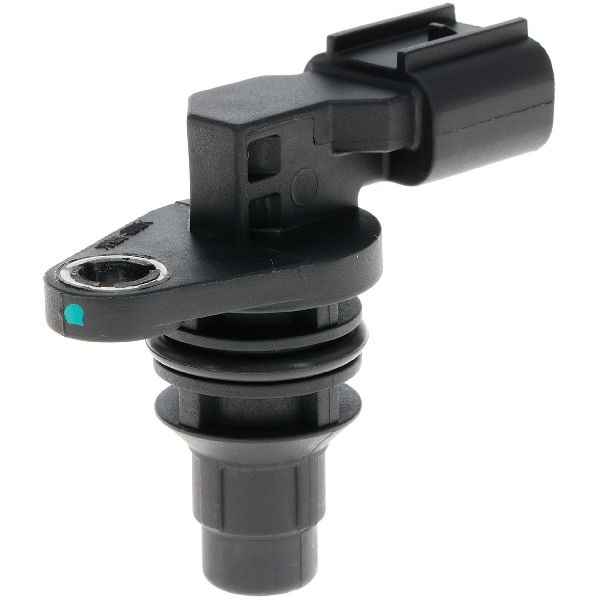
- Faulty Camshaft Position Sensor: While possible, it's less common for the sensor itself to fail than for the mechanical or hydraulic parts it monitors. A failing sensor often throws its own specific circuit codes.
- Failed Camshaft Phaser: The phaser is the gear on the end of the camshaft that actually adjusts the timing. It can become clogged with sludge or mechanically fail, but this is less frequent than solenoid failure.
- Coolant Intrusion: A known issue on some 2.0L EcoBoost engines (non-hybrid, but related) is coolant leaking into the cylinders, as detailed in TSB 19-2346. This can contaminate the oil, leading to VCT problems and a host of other engine codes and symptoms like white smoke or rough running. While the Hybrid's Atkinson-cycle engine is different, severe oil contamination from any source could be a root cause.
Diagnosis Steps
- Verify the code with a reliable OBD-II scanner. Confirm if the code is indeed P0025 or if it is P0015, which is more likely.
- Check the engine oil level and condition. If low, top it off. If dirty or past its service interval, perform a full oil and filter change with the correct oil type (e.g., SAE 0W-20 or 5W-20 Synthetic Blend, check manual).
- If the code returns, suspect the VCT solenoid. Per TSB SSM 50067, a technician can use a scan tool to cycle the solenoid to try and clear debris.
- If cycling the solenoid doesn't work, the next step is to replace the Bank 1 intake VCT solenoid (as there is no exhaust solenoid). This requires removing the valve cover.
- If the problem persists after replacing the solenoid, a more in-depth mechanical diagnosis is needed to check for a worn timing chain, faulty tensioner, or a bad camshaft phaser.
Parts You'll Likely Need
- Variable Camshaft Timing (VCT) Solenoid
(OEM #CM5Z-6M280-A (Superseded by CM5Z-6M280-C))— This is the most common point of failure for this code, often sticking due to oil contamination as noted in TSB SSM 50067. Note that this is the INTAKE solenoid, as the exhaust side is not variable on this engine. The part number CM5Z-6M280-A has been superseded by CM5Z-6M280-C.
Trusted brands: Motorcraft, Dorman, Standard Motor Products (SMP), NTK
OEM price range: $70-$90
Aftermarket price range: $40-$70 - Engine Oil and Filter — Low or contaminated oil is a primary cause of VCT system faults. An oil change is the first and most crucial diagnostic step.
Trusted brands: Motorcraft, Mobil 1, Valvoline
OEM price range: $60-$90
Aftermarket price range: $40-$70
Related Codes That Often Appear With This One
- P0015 — This is the correct code for the same 'Exhaust Camshaft Over-Retarded' condition on Bank 1, which is the bank your engine actually has. Seeing P0015 is much more likely than P0025.
- P0014 — This indicates an 'Over-Advanced' condition on the Bank 1 exhaust camshaft. It points to a similar problem within the VCT system, just in the opposite direction.
- P0011, P0012 — These are the corresponding codes for the intake camshaft on Bank 1. Problems with oil pressure or quality can affect all VCT components simultaneously, and since the intake is the only side with VCT on this engine, these codes are more plausible.
- P0017 — This code indicates a correlation problem between the crankshaft and the exhaust camshaft on Bank 1, pointing to a potential timing chain or reluctor wheel issue.
Technical Service Bulletins (TSBs) & Recalls
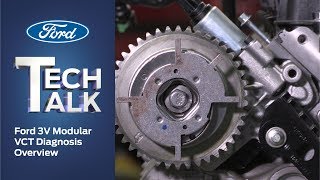
- SSM 50067: Illuminated MIL with various VCT DTCs due to sticking VCT solenoid from small debris. Recommends cycling the solenoid with a scan tool 🎬 See this professional VCT system diagnosis overview before replacement.
- TSB 19-2346: While for the related 2.0L EcoBoost (non-hybrid) engine, this TSB details a serious issue of coolant intrusion into the cylinders. This can cause oil contamination, which is a primary cause of VCT faults.
Platform-Specific Known Issues
- Technical Service Bulletin SSM 50067 directly addresses a range of VCT codes, including P0025, across various 2015-2021 Ford and Lincoln vehicles. It states the cause may be small debris causing the VCT solenoid to stick and recommends attempting to clear it via scan tool before replacement.
- The 2.0L Atkinson-Cycle Hybrid engine used in the MKZ Hybrid only features variable valve timing on the intake camshaft. The exhaust camshaft is fixed. This means a code for the exhaust cam (P0015 or P0025) is highly irregular and likely points to a scanner error or a deeper timing correlation fault rather than a failed exhaust VCT component.
Mechanic-Grade Diagnostic Values
- VCT Solenoid (Oil Control Valve) Internal Resistance — expected: 6.9 to 7.9 Ohms at 68°F (20°C). Failure: A reading of 'OL' (Open Loop/Infinite Resistance) or a reading significantly outside the expected range indicates a failed solenoid.
- Camshaft Position Sensor (CMP) Signal Wire Voltage — expected: Approx. 4.8V to 5.0V with Key On, Engine Off (KOEO).. Failure: When a piece of metal (like a socket) is passed in front of the sensor, the voltage should drop to 0V. If the voltage does not change, the sensor is faulty.
- Scan Tool VCT Advance Error PID (VCT_ADV_ERR) — expected: Should hover around 0° at idle in closed loop.. Failure: A consistent deviation greater than +/- 5° indicates the camshaft is not tracking the PCM's command, pointing to a hydraulic or mechanical issue (solenoid, phaser, oil pressure).
Hidden / Shadow Codes Worth Checking
- Mode $06, TID $51/$53: This is not a specific code, but a report from the onboard diagnostic monitor. For Ford vehicles, Test ID $51 or $53 shows cylinder-specific misfire counts, often before they are high enough to set a standard P030x trouble code. While not directly a timing code, it can reveal symptoms of poor timing like intermittent misfires. (see via A professional scan tool or advanced OBD-II reader capable of displaying Mode $06 data.)
Scan Tool Commands That Help
- Ford IDS (Integrated Diagnostic System): Pinpoint Test (PPT) HK — This is the manufacturer-specified first step for diagnosing VCT codes per TSB SSM 50067. The function actively commands the VCT solenoid to cycle on and off, which can help dislodge small debris and confirm if the solenoid is electrically responsive before recommending replacement.
- Ford IDS (Integrated Diagnostic System): Datalogger - VCT PIDs (VCT_ADV_ERR, VCT_DIF) — Used to monitor the real-time performance of the VCT system. By graphing the commanded versus actual cam position (and the resulting error), a technician can see if the solenoid is slow to respond, overshooting, or not responding at all, which helps differentiate between a sticky solenoid and other mechanical issues.
Wiring & Ground Locations
- VCT Solenoid Connector — Connected to the VCT solenoid, which is located under the engine's valve cover on the 2.0L Hybrid engine.. The VCT solenoid is a two-wire component. One wire is a 12V power feed from the battery junction box (fuse-protected), and the other is a ground-side control wire from the Powertrain Control Module (PCM). Checking for power and the control signal at this connector is a key electrical diagnostic step.
- Engine Ground Points (e.g., G101, G104) — Various points on the engine block, cylinder head, and chassis. Specific locations are detailed in the factory wiring diagrams.. A poor engine ground can cause erratic behavior in sensors and actuators, including the Camshaft Position Sensor and the PCM's ability to control the VCT solenoid, leading to incorrect timing data or performance.
Real Owner Repair Stories
- Ford F150 Forum (adapted principle) (Ford F-150 with 5.0L V8 (Note: Different engine, but identical VCT diagnostic principle)) — Occasional stalling, rough running when hot (after 2+ hours at highway speed).
❌ Tried (didn't work) Initial checks were inconclusive during normal temperature operation.
✅ What actually fixed it Diagnosis using a scan tool (Forscan) revealed the VCT position difference (error) for one bank was swinging wildly by over 40 degrees, while the good bank stayed near 0. This indicated a complete loss of control. The fix was replacing the VCT solenoids on the affected bank with OEM Motorcraft parts, which resolved the instability.
OEM Part Supersession History
CM5Z-6M280-A→CM5Z-6M280-C— Part was updated by the manufacturer. Supersessions typically address durability, performance, or manufacturing improvements, such as improved internal filtering to better resist debris.
Model Year Variations Within This Range
- 2015-2019: The Lincoln MKZ received a significant cosmetic facelift for the 2017 model year, including a new grille and headlight design. However, the 2.0L I4 Atkinson-Cycle Hybrid powertrain was carried over without significant changes affecting the VCT system. Therefore, the causes and fixes for VCT-related codes are consistent across this entire year range.
Helpful Videos
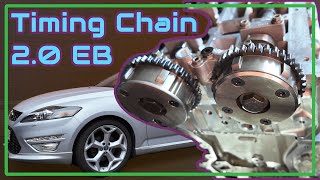
Used OEM Parts in Stock

New Aftermarket Parts Available


The information in this article is provided for general reference and educational purposes only. Vehicle specifications, procedures, and part compatibility can vary by production date, trim level, and region. Always consult your vehicle's factory service manual and verify part numbers before purchasing or performing repairs. Safety-critical components such as airbags, seat belts, and braking systems should be installed by a qualified professional.
- Lincoln MKZ HYBRID:
- 🎬 Helpful Videos
- 🛍️ Shop This Part
- What's Unique About the 2015-2019 Lincoln MKZ HYBRID
- Diagnostic Flowchart
- Symptoms You May Notice
- Most Likely Causes
- Rare But Worth Checking
- Diagnosis Steps
- Parts You'll Likely Need
- Related Codes That Often Appear With This One
- Technical Service Bulletins (TSBs) & Recalls
- Platform-Specific Known Issues
- Mechanic-Grade Diagnostic Values
- Hidden / Shadow Codes Worth Checking
- Scan Tool Commands That Help
- Wiring & Ground Locations
- Real Owner Repair Stories
- OEM Part Supersession History
- Model Year Variations Within This Range
- 🎟️ Get 5% Off