

P0024 on 2006-2012 Mitsubishi Eclipse 3.8L V6: Exhaust Cam Timing Causes and Fixes
On the 2006-2012 Eclipse 3.8L V6, code P0024 is most often caused by low or dirty engine oil, or a failed exhaust oil control valve (VVT solenoid) on the front cylinder bank (Bank 2). Start by checking your oil; if the oil is clean and full, the solenoid is the next likely culprit. An aftermarket solenoid costs about $40-$80 and is relatively easy to access on the front of the engine.
- First, check your engine oil. Low, dirty, or incorrect oil is the #1 cause of P0024 on this engine.
- The code refers to the exhaust camshaft on the front cylinder bank (near the radiator).
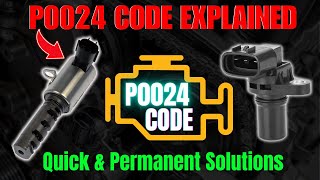
- The most likely failed part is the Oil Control Valve (VVT Solenoid). A simple test is to swap the front and rear exhaust solenoids to see if the code follows the part.
- This is an interference engine. Do not ignore this code, as it could be an early sign of a timing belt problem that can lead to catastrophic engine failure.
What's Unique About the 2006-2012 Mitsubishi Eclipse
The most critical factor for the 4th generation Eclipse with the 6G75 V6 is that it's an interference engine using a timing belt. While P0024 is frequently a simple oil or solenoid issue, it can also be an early warning of a stretched, failing, or incorrectly installed timing belt. A belt failure on this engine will cause the pistons to collide with the valves, leading to catastrophic and expensive engine damage. Therefore, this code should be addressed with more urgency than on a non-interference engine or one with a timing chain.
Symptoms You May Notice
- Check Engine Light illuminated
- Rough or uneven idle, sometimes with RPM fluctuations
- Engine hesitation or stalling, especially when warm or under load
- Reduced engine power and poor acceleration, especially at higher RPM
- Decreased fuel economy
- A ticking or clicking noise from the engine bay, particularly from the VVT solenoid area
- Hard starting
- Replacing the camshaft position sensor before checking the oil or testing the OCV/VVT solenoid. The solenoid is a more common failure point for this specific code.
- Assuming a major timing belt issue before ruling out the much simpler and cheaper oil and solenoid causes.
Most Likely Causes
- Low, Dirty, or Incorrect Viscosity Engine Oil 🔴 High Probability The MIVEC system uses oil pressure to actuate the camshaft phasers. Old, sludgy, or incorrect oil can clog the small passages in the oil control valves (solenoids) or phasers, preventing proper operation. This is the most common cause for MIVEC-related timing codes.
How to confirm: Check the engine oil dipstick. Note the level, color, and consistency. If the oil is below the 'add' mark, black and thick, or not the manufacturer-recommended viscosity (typically 5W-20), this is the likely cause.
Typical fix: Perform a complete oil and filter change using a quality synthetic oil that meets Mitsubishi's specifications. Clear the codes and perform a test drive.
Est. part cost: $40-$80 - Faulty Bank 2 Exhaust Oil Control Valve (OCV) / VVT Solenoid 🔴 High Probability The OCV is an electronic solenoid that is constantly working. Over time, it can fail electrically or become clogged with debris, causing it to stick in the advanced position.
How to confirm: The Bank 2 exhaust OCV is on the front cylinder head (near the radiator), making it accessible. A definitive test is to swap it with the identical OCV from Bank 1 (rear bank). Clear the codes and drive. If the code changes to P0014 (the Bank 1 equivalent), the solenoid you moved is faulty. You can also test the solenoid's resistance with a multimeter; it should be between 6.9 and 7.9 ohms. Applying 12V power should produce an audible click as the internal plunger moves.
Typical fix: Replace the faulty Bank 2 exhaust Oil Control Valve. Some owners have had success cleaning the solenoid and its filter screen with brake cleaner.
Est. part cost: $40-$120 - Stretched or Slipped Timing Belt 🟡 Medium Probability The 6G75 engine uses a timing belt with a recommended replacement interval of 60,000 to 105,000 miles. If the belt is old, it can stretch, or the hydraulic tensioner can weaken, causing the camshaft timing to deviate from the crankshaft timing, triggering the code.
How to confirm: This requires a physical inspection of the timing belt and its marks, which involves significant labor to remove the timing belt covers. If the vehicle's service history is unknown or it is past its service interval, this should be a strong consideration, especially if an oil change and solenoid swap do not fix the issue.
Typical fix: Replace the timing belt, water pump, and hydraulic tensioner. 🎬 See how to perform a timing belt replacement on the 6G75 V6 engine. This is a complex job and often best left to a professional.
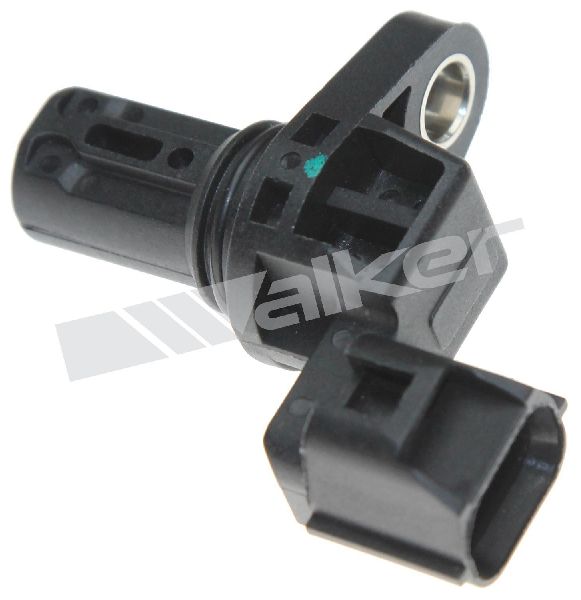
Est. part cost: $200-$400 - Faulty Bank 2 Camshaft Position Sensor ⚪ Low Probability While less common than an OCV failure, the sensor that reads the camshaft's position can fail, sending incorrect data to the ECM.
How to confirm: Like the OCV, the Bank 2 (front) and Bank 1 (rear) camshaft position sensors are identical parts. You can swap them. If the code changes from P0024 to P0014 after the swap, the sensor is confirmed to be bad. However, sensor failure is less common than OCV failure for this specific code.
Typical fix: Replace the faulty camshaft position sensor.
Est. part cost: $50-$100
Rare But Worth Checking
- Sticking Camshaft Phaser: The mechanical gear (phaser) on the end of the camshaft can get stuck due to internal debris or failure. This is a more complex and expensive repair, usually diagnosed after ruling out the oil and solenoids.
- Clogged OCV Filter Screen: Some Mitsubishi engines have small filter screens in the oil passages leading to the OCVs. These can become clogged with sludge, restricting oil flow. They can sometimes be removed and cleaned, but are often overlooked.
- ECM Software Issue: In some cases on related Mitsubishi engines, TSBs have been issued for timing codes that were resolved by a software update to the ECM. This should be considered a last resort after all mechanical and electrical checks are complete. TSBs for other timing codes on similar engines suggest that incorrect parameters in the ECM software could cause mis-detection of faults.
Diagnosis Steps
- Check Engine Oil: Verify the oil level is full and the oil is clean. The recommended viscosity is 5W-20. If low, top it off. If old or dirty, perform an oil and filter change, clear the code, and test drive.
- Inspect Wiring: Visually inspect the wiring and connector for the Bank 2 (front) exhaust OCV/VVT solenoid for any damage, corrosion, or loose connections.
- Scan Tool Data: Use a capable OBD-II scanner to monitor the desired vs. actual camshaft position for Bank 2. This can help confirm if the timing is actually over-advanced and not a sensor error.
- Swap the Oil Control Valves (OCVs): Swap the Bank 2 (front) exhaust OCV with the Bank 1 (rear) exhaust OCV. They are identical parts. Clear the codes and drive. If the code returns as P0014, the OCV is bad and must be replaced. If P0024 returns, the OCV is likely not the problem.
- Test the OCV: If not swapping, you can remove the OCV and test it. Measure its resistance with a multimeter (should be 6.9-7.9 ohms at 68°F/20°C). Briefly apply 12V power to its terminals; a healthy solenoid will make an audible 'click'. Inspect the small filter screen on the solenoid for sludge.
- Inspect Timing Belt: If the above steps do not resolve the issue and the belt's service history is unknown or overdue (over 60k-100k miles), the next step is to inspect the mechanical timing. This involves removing the timing covers and checking the alignment marks on the belt and sprockets. This is an advanced step and may require a professional.
- Check Camshaft Position Sensor: As a final check, you can swap the Bank 2 and Bank 1 camshaft position sensors to rule out a faulty sensor.
Parts You'll Likely Need
- Engine Oil Control Valve (VVT Solenoid)
(OEM #1028A022)— This solenoid is the most common hardware failure for P0024, as it can get clogged with debris or fail electrically.
Trusted brands: Mitsubishi (OEM), Denso, Dorman, DNJ
OEM price range: $100-$150
Aftermarket price range: $40-$80 - Camshaft Position Sensor
(OEM #MR985041)— Though less common than the OCV, a failing sensor can send incorrect data and trigger this code. It's a common diagnostic swap.
Trusted brands: Mitsubishi (OEM), Bosch, NGK/NTK, Standard Motor Products
OEM price range: $120-$180
Aftermarket price range: $50-$100 - Timing Belt Kit — If the timing belt is stretched, has jumped a tooth, or the tensioner has failed, a full kit replacement is necessary. This is a critical maintenance item on the 6G75 engine.
Trusted brands: Aisin, Gates, Continental
OEM price range: $300-$500
Aftermarket price range: $200-$400
Related Codes That Often Appear With This One
- P0014 — If both P0014 (Bank 1 Exhaust Cam Over-Advanced) and P0024 are present, it strongly suggests a systemic problem like low/dirty oil, low oil pressure, or an issue with the timing belt affecting both banks.
- P0021 — P0021 is for the intake camshaft on the same bank (Bank 2). If seen with P0024, it could point to a problem specific to Bank 2, such as a clogged oil galley feeding that cylinder head, or a timing issue on that bank's sprockets.
Technical Service Bulletins (TSBs) & Recalls
- TSB-13-13-001REVII: While for a different code (P0300) on other Mitsubishi models, it demonstrates that the ECM can misinterpret engine vibrations or have improper threshold values, leading to false codes that are correctable with a software update.
- TSB-13-13-005REV: Addresses a false P2100 code on Outlanders due to software logic, further supporting the possibility of software-related fixes for engine codes.
Mechanic-Grade Diagnostic Values
- Oil Control Valve (VVT Solenoid) Resistance — expected: 6.9 - 7.9 Ohms at 68°F (20°C). Failure: A reading of zero ohms (short circuit) or infinite ohms (open circuit) indicates a failed solenoid.
- MIVEC System Oil Pressure — expected: At least 60 PSI for MIVEC to engage properly.. Failure: A significant drop in oil pressure (more than 10 PSI) when MIVEC is commanded to engage can indicate a mechanical failure in the head, like worn camshaft caps.
- Camshaft Position Sensor Voltage — expected: 0.5 - 4.5 Volts (Varies with engine speed). Failure: A consistently high, low, or non-responsive voltage reading when monitoring live data can indicate a faulty sensor or wiring issue.
Scan Tool Commands That Help
- Mitsubishi M.U.T.-III: Actuator Test — This function allows a technician to directly command the MIVEC solenoid to operate. By selecting the appropriate item in the test menu, the tech can listen for the solenoid's audible 'click' to confirm it is mechanically responding to the ECM's command, helping to isolate a wiring or solenoid failure.
Real Owner Repair Stories
- Club4G.org forum user (2006 Mitsubishi Eclipse GT 3.8L V6) — Check Engine Light on with codes P0021 and P0024.
❌ Tried (didn't work) Not specified, owner went straight to part replacement.
✅ What actually fixed it Replacing the Bank 2 (front bank) Oil Control Valve (OCV) solenoid cleared both codes and they did not return. The owner noted the part was easy to access.
OEM Part Supersession History
1028A022→1028A022 (current)— This part number remains current for many Mitsubishi applications, including the 6G75 V6 and other 4-cylinder engines.
Heads up: While the part number is shared across engines (e.g., Lancer 2.0L/2.4L), always verify fitment with the vehicle's VIN. The physical part is identical for intake/exhaust and Bank 1/Bank 2 on the 6G75, allowing for diagnostic swapping.MR985041→MR985041 (current)— This part number is still the current OEM number for the camshaft position sensor.
Heads up: This sensor is used on a wide variety of Mitsubishi vehicles, from the Eclipse to the L200 truck and Mirage. It is identical for both banks on the 6G75 engine, making it swappable for diagnosis.
Model Year Variations Within This Range
- 2006-2008: Some reports suggest that earlier 6G75 engines (pre-2009) may have had a higher incidence of oiling system issues, potentially related to the oil pump or pressure regulation. While not a direct cause of P0024, it makes verifying oil pressure a more critical diagnostic step on these earlier models.
Diagnostic Flowchart
Other Known Issues on This Vehicle
Issues unrelated to this code that are worth knowing about as an owner of this generation:
- Timing Belt Replacement Interval 🔴 High — This is a critical maintenance item required every 60,000-100,000 miles. Failure is catastrophic for the interference 6G75 engine.
- Valve Cover Gasket Oil Leaks 🟠 Medium — Common on the 3.8L V6 as it ages. Gaskets degrade, causing oil to leak onto exhaust components or into spark plug tubes, which can cause misfires.
- Cracked Dashboard 🟡 Low — Widely reported by owners, especially in warmer climates. The dashboard material becomes brittle from sun exposure and develops cracks over time.
- Automatic Transmission Issues 🟠 Medium — Some owners report hard shifts, slipping gears, or solenoid failures in the automatic transmission, particularly if not well-maintained.
- Premature Brake Rotor Warping 🟡 Low — Some owners have reported vibrations during braking due to warped rotors, though this is not a universal issue.
Used vs. New Parts: Buying Guide for This Vehicle
When a used part is the smart pick: For this repair, using used parts is generally not recommended. The primary failure components are electronic solenoids and sensors which have a finite lifespan and are difficult to verify for quality from a junkyard. A used timing belt or its components should never be considered.
Donor-vehicle mileage cap: roughly under 80000 miles for the part to have meaningful remaining life.
What to inspect on the donor part:
- If considering a used OCV or Cam Sensor, source it from a vehicle with the lowest possible mileage.
- Check for any visible signs of sludge or contamination on the part.
- Ask for the VIN of the donor car to run a vehicle history report, avoiding parts from cars with poor maintenance records or high mileage.
OEM-only on this vehicle (don't cheap out):
- Hydraulic Timing Belt Tensioner: The tensioner is a critical component for this interference engine. Aftermarket tensioners have a higher reported failure rate, making an OEM or OEM-supplier part (like Aisin) a much safer investment.
Aftermarket brands forum-validated for this vehicle:
- Timing Belt Kit: Aisin is widely regarded as the OEM supplier for many Japanese manufacturers, including Mitsubishi. An Aisin timing belt kit is considered equivalent to or better than dealer parts and is a trusted choice.
- VVT Solenoid (OCV): Denso and DNJ are reputable aftermarket brands that manufacture VVT components meeting or exceeding OEM standards.
- Camshaft Position Sensor: NGK/NTK and Bosch are well-regarded for engine management sensors.
Brands owners have reported issues with on this vehicle:
- Unbranded/White-Box Parts: Avoid generic, no-name solenoids, sensors, or timing components from online marketplaces. These often have high failure rates and can cause more diagnostic headaches.
- Gates Timing Kits (with caution): While Gates is a major belt manufacturer, some users have reported that the water pumps and tensioners included in their kits can be sourced from lower-quality Chinese manufacturers, whereas Aisin kits typically use all Japanese components. If using Gates, some mechanics prefer to buy an Aisin water pump separately.
Real Owner Stories
Aggregated from forums and TSBs cited above. Mileages and costs reflect what owners reported in those sources.
2006-2012 Mitsubishi Eclipse 4G
Symptoms: The owner reported receiving a P0024 code and sought advice on initial troubleshooting steps.
What fixed it: Members suggested starting with an oil change and checking the VVT solenoid as the first steps.
Source hint: https://www.club4g.org/threads/p0024-code.23121/
2006-2012 Mitsubishi Eclipse 4G
Symptoms: The vehicle was throwing both P0014 and P0024 codes simultaneously.
What fixed it: The issue was resolved by replacing both the Bank 1 and Bank 2 exhaust VVT solenoids.
Source hint: https://www.club4g.org/threads/p0014-and-p0024.59314/
2006-2012 Mitsubishi Eclipse 4G
Symptoms: The owner experienced a P0024 code specifically on the Bank 2 side.
What fixed it: Replacing the Bank 2 VVT solenoid (Oil Control Valve) resolved the code.
Source hint: https://mitsubishiforum.com/forum/mitsubishi-eclipse-4g-2006-2012-48/p0024-code-49200/
Related OBD-II Codes
Frequently Asked Questions
Where is the Bank 2 exhaust Oil Control Valve located on my 3.8L V6 Eclipse?
Can I test the VVT solenoid on my 2006-2012 Eclipse before buying a new one?
Is there a TSB for the 6G75 engine regarding false codes and software updates?
What oil viscosity should I use in my 3.8L Eclipse to prevent MIVEC timing codes?
Could a ticking noise in my engine bay be related to the P0024 code?
How often should I replace the timing belt on my 6G75 engine to avoid timing deviations?
Helpful Videos


We Have This Part in Stock


The information in this article is provided for general reference and educational purposes only. Vehicle specifications, procedures, and part compatibility can vary by production date, trim level, and region. Always consult your vehicle's factory service manual and verify part numbers before purchasing or performing repairs. Safety-critical components such as airbags, seat belts, and braking systems should be installed by a qualified professional.
- Mitsubishi Eclipse:
- 🎬 Helpful Videos
- 🛍️ Shop This Part
- What's Unique About the 2006-2012 Mitsubishi Eclipse
- Symptoms You May Notice
- Most Likely Causes
- Rare But Worth Checking
- Diagnosis Steps
- Parts You'll Likely Need
- Related Codes That Often Appear With This One
- Technical Service Bulletins (TSBs) & Recalls
- Mechanic-Grade Diagnostic Values
- Scan Tool Commands That Help
- Real Owner Repair Stories
- OEM Part Supersession History
- Model Year Variations Within This Range
- Diagnostic Flowchart
- Other Known Issues on This Vehicle
- Used vs. New Parts: Buying Guide for This Vehicle
- Real Owner Stories
- 2006-2012 Mitsubishi Eclipse 4G
- 2006-2012 Mitsubishi Eclipse 4G
- 2006-2012 Mitsubishi Eclipse 4G
- Related OBD-II Codes
- Frequently Asked Questions
- 🎟️ Get 5% Off