

P0024 on 2018-2019 Buick Enclave: Exhaust Camshaft Timing Causes and Fixes
On a 2018-2019 Buick Enclave, code P0024 is most often caused by low/dirty engine oil, a faulty Bank 2 exhaust camshaft actuator solenoid, or a software issue requiring an ECM reprogram per GM Technical Service Bulletins. Always check your oil first, but be aware a dealer visit for a software update is a very common and official fix, especially if P0011, P0014, and P0021 are also present.
- For a 2018-2019 Enclave, P0024 is not just a simple parts failure; it could be a software issue.
- Before replacing any parts, check your engine oil level and condition.
- If other camshaft codes (P0011, P0014, P0021) are present, an ECM reprogram as described in GM TSBs is a very likely solution.
- If a part has failed, the camshaft actuator solenoid is a much more common culprit than the camshaft position sensor.
- An ECM reprogram must be done by a dealer or a shop with specialized GM tools; it is not a DIY repair.
What's Unique About the 2018-2019 Buick ENCLAVE
For this specific generation of the Buick Enclave and its platform-mates with the 3.6L LGX engine, General Motors issued several Technical Service Bulletins (TSBs) that are critical to diagnosing P0024. These bulletins reveal that P0024, often appearing with codes P0011, P0014, and P0021, can be triggered by a software anomaly, particularly after an engine auto stop/start event. In many cases, the official fix is not to replace a physical part, but to have a GM dealer reprogram the Engine Control Module (ECM). This makes it different from older platforms where this code almost always pointed to a mechanical or hydraulic fault like a stretched timing chain, an issue largely resolved in the LGX engine series.
Diagnostic Flowchart
Tap your situation to follow the diagnostic path that matches what you're seeing on this vehicle.
Symptoms You May Notice
- Check Engine Light is on
- Engine runs rough, especially when stopped or at idle.
- Reduced engine power.
- Engine may stall in rare cases, particularly after an auto-start event.
- Transmission shudder.
- Low or unstable idle.
- Hard starting condition.
- Replacing the camshaft position *sensor* when the actuator *solenoid* is the faulty component.
- Replacing hardware like solenoids or phasers before checking for the ECM software update specified in GM's TSBs.
- Assuming a timing chain issue, which was more common on older 3.6L engines (LLT), not the newer LGX.
Most Likely Causes
- Engine Control Module (ECM) Software Issue 🔴 High Probability Multiple GM Technical Service Bulletins (N192266190, PIP5568E) explicitly state that an ECM reprogram is the designated fix for this code when it appears, especially alongside P0011, P0014, and P0021. TSB N192266190 notes the issue can occur during an automatic stop/start event, causing rough running and setting these codes.
How to confirm: A GM dealership or a qualified shop with access to GM's programming tools (SPS) can check if your vehicle's ECM has the latest software version by checking the vehicle's history in the GM Global Warranty Management system. If the TSB is open for your VIN, the update is required.
Typical fix: Reprogramming the Engine Control Module with updated software. This is a dealer-level repair.
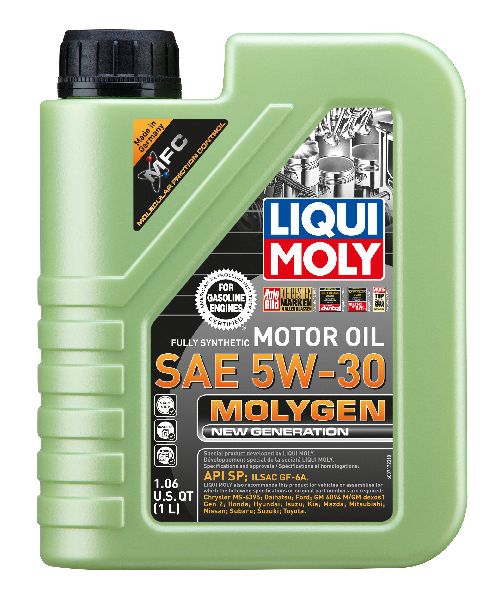
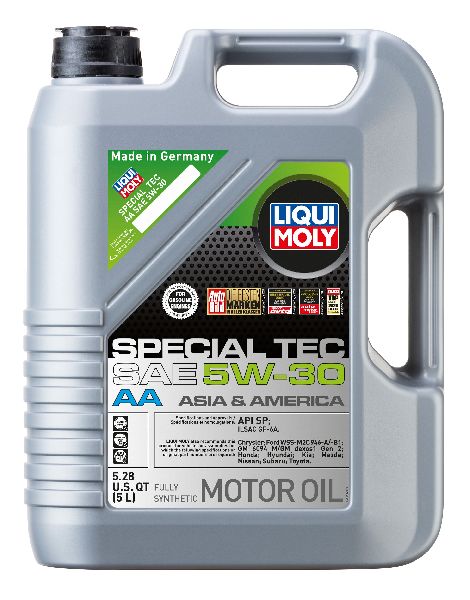
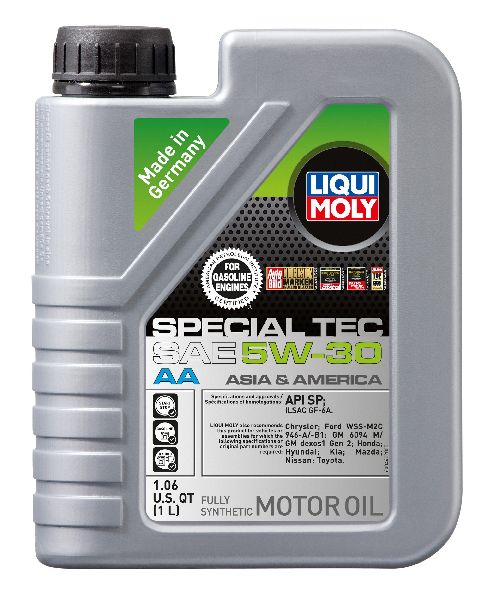
Est. part cost: $0 - Low or Dirty Engine Oil 🔴 High Probability The Variable Valve Timing (VVT) system uses pressurized engine oil to adjust camshaft timing. The LGX engine is direct-injected, which can lead to fuel dilution and soot, making timely oil changes with the correct oil critical. If the oil is low, dirty, or the wrong viscosity (GM specifies dexos1 Gen 2 5W-30), the actuator solenoids cannot function correctly.
How to confirm: Check the engine oil level on the dipstick and inspect its color and consistency. Ensure it meets the manufacturer's specifications (ACDelco dexos1 Gen 2 5W-30 Full Synthetic). Owners on forums like 'BobIsTheOilGuy' emphasize sticking to the 5,000-mile change interval on DI engines to prevent sludge.
Typical fix: Perform an oil and filter change using the correct type of oil (e.g., ACDelco dexos1 Gen 2 5W-30) and a quality filter (e.g., ACDelco PF63R).
Est. part cost: $40-$80 - Faulty Bank 2 Exhaust Camshaft Position Actuator Solenoid 🟡 Medium Probability These solenoids (also called oil control valves) can become clogged with sludge from old oil or fail electrically, preventing them from properly directing oil to the camshaft phaser. They are a common failure point across many GM vehicles.
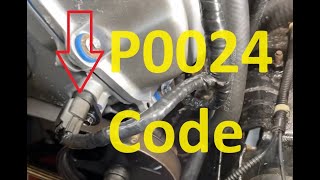
How to confirm: A mechanic can command the solenoid with a scan tool to check for a response. A common DIY method is to swap the suspect solenoid with an identical one (like the intake solenoid on the same bank, if part numbers match) and see if the trouble code follows the part to the new location (e.g., P0024 changes to P0021). Resistance can also be checked with a multimeter; a typical reading is between 6.9 and 7.9 ohms. 🎬 See this walkthrough on diagnosing and replacing VVT solenoids.
Typical fix: Replace the Bank 2 exhaust camshaft position actuator solenoid. The part number is often the same for intake and exhaust.
Est. part cost: $30-$70
Rare But Worth Checking
- Worn Timing Chain or Phaser: While less common on the newer LGX engines compared to their LLT/LFX predecessors, a stretched timing chain or a faulty camshaft phaser can cause a persistent timing code. This is usually a last resort after solenoids, oil, and software have been ruled out. A Reddit user on r/AskMechanics discussed this possibility, highlighting it as a major repair.
- Faulty Camshaft Position Sensor: This sensor reports the camshaft's position to the ECM. It's less likely to fail than the actuator solenoid, but if it sends inaccurate data, it can trigger the code. Often, a failing sensor will trigger its own specific circuit codes, but not always.
- Clogged Oil Passages: In cases of severe sludge or neglect, the small oil passages leading to the VVT solenoids and cam phasers in the cylinder head can become blocked. This would typically require significant engine disassembly to clean and repair.
Diagnosis Steps
- Check the engine oil level and condition. If it's low, dirty, or past its change interval, perform an oil and filter change with GM-specified dexos1 5W-30 synthetic oil and a new filter. Clear the codes and re-test.
- Scan for other trouble codes. Take special note if P0011, P0014, or P0021 are also present. This strongly points towards the TSB-related ECM software issue.
- Contact a GM dealer with your VIN. Ask them to check the 'Investigate Vehicle History' in the GM Global Warranty Management system for Service Update N192266190. If the update is open for your vehicle, this is the most likely fix.
- If the software is up-to-date, locate the Bank 2 exhaust camshaft actuator solenoid. On the 3.6L V6, Bank 2 is the cylinder bank closer to the radiator. The exhaust solenoid is typically the lower of the two solenoids on the front of the cylinder head.
- Inspect the solenoid's wiring and connector for any damage, oil contamination, or corrosion.
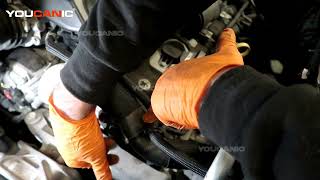
- A practical DIY test is to swap the Bank 2 exhaust solenoid with the Bank 2 intake solenoid (the upper one). They are often identical parts. Clear the codes and drive the vehicle. If the code changes to P0021 (Intake Camshaft Position Timing - Over-Advanced, Bank 2), the solenoid you moved is faulty. 🎬 Watch: Step-by-step guide to replacing the camshaft actuator solenoid valve.
- If you have a multimeter, you can test the solenoid's resistance. It should be between 6.9 and 7.9 ohms. If it's an open circuit or has very high resistance, it has failed.
- If all of the above steps fail to resolve the issue, a more in-depth mechanical diagnosis of the timing chain and camshaft phaser may be required by a professional technician.
Parts You'll Likely Need
- Camshaft Position Actuator Solenoid
(OEM #12681018)— This solenoid controls oil flow to the cam phaser and is a common failure point due to clogging or electrical faults. It is used for both intake and exhaust positions on many GM V6 and V8 engines.
Trusted brands: ACDelco (GM OE), Delphi, Dorman
OEM price range: $50-$90
Aftermarket price range: $30-$60 - Engine Oil and Filter Kit
(OEM #N/A)— Low or dirty oil is a primary cause of VVT faults. Using the correct full synthetic dexos1 5W-30 oil and a high-quality filter (ACDelco PF63R) is the first and most important step in diagnosis and prevention.
Trusted brands: ACDelco Oil & Filter, Mobil 1 Oil & Filter
OEM price range: $50
Aftermarket price range: $40
Related Codes That Often Appear With This One
- P0011 — Intake Camshaft Position Timing - Over-Advanced (Bank 1). The TSBs for the Enclave specifically mention these codes setting in groups due to the same software issue.
- P0014 — Exhaust Camshaft Position Timing - Over-Advanced (Bank 1). The TSBs for the Enclave specifically mention these codes setting in groups due to the same software issue.
- P0021 — Intake Camshaft Position Timing - Over-Advanced (Bank 2). The TSBs for the Enclave specifically mention these codes setting in groups due to the same software issue.
Technical Service Bulletins (TSBs) & Recalls
- N192266190 02: States that DTCs P0011, P0021, P0014, and P0024 may set, causing rough running, reduced power, or stalling, and the fix is to reprogram the ECM. Applies to 2018 Enclave, LaCrosse, Traverse and 2018 Cadillac XT5.
- N192266190: An earlier version of the above bulletin with the same core information.
- PIP5568E: Notes an ongoing investigation into this group of DTCs setting together, mentioning the possibility of them setting in pairs and ca
Platform-Specific Known Issues
- A series of Technical Service Bulletins (including #N192266190 and #PIP5568E) were issued by GM for 2018-2019 models. They state that DTCs P0011, P0014, P0021, and P0024 may set, causing rough running or reduced power, and the specified repair is to reprogram the Engine Control Module (ECM).
- TSB N192266190 specifically identifies an issue after an engine auto stop/start event that can cause the software anomaly, leading to the codes and drivability problems.
Mechanic-Grade Diagnostic Values
- Camshaft Position Actuator Solenoid Resistance — expected: 5-12 Ohms. Failure: A reading of 0 Ω (short), infinite/OL (open), or a value significantly outside the expected range.
- Scan Tool Live Data: Camshaft Position Variance — expected: Less than 3-4 degrees at steady speed.. Failure: A variance consistently exceeding 4-5 degrees can cause drivability issues like a shudder or surge and may set a fault code.
- Solenoid Power Supply Voltage — expected: Battery voltage at the supply pin of the solenoid connector with the ignition on.. Failure: No voltage or low voltage indicates a wiring or main relay issue upstream of the solenoid.
Scan Tool Commands That Help
- GDS2 / Professional Scan Tool: Camshaft Position Actuator Active Test — This bidirectional control allows the technician to command the Bank 2 exhaust solenoid ON and OFF while the engine is running. If the solenoid and oil passages are working, the engine should hesitate or stall. Observing the 'Actual Camshaft Position' data PID during this test confirms if the phaser is physically responding to the command, which helps isolate a faulty solenoid from a mechanical phaser or chain issue.
Wiring & Ground Locations
- Main Battery Terminals — Under the hood, at the battery.. A corroded or loose battery terminal, particularly the ground, can cause low system voltage and erratic behavior from various engine sensors and actuators, leading to false performance codes like P0024.
- Engine Ground Straps — On many GM 3.6L V6 engines, ground straps are attached to the front of the cylinder heads near the VVT solenoids.. A poor engine block ground can cause incorrect readings and faulty operation of the VVT solenoids and camshaft position sensors, which rely on a stable ground reference.
Real Owner Repair Stories
- Reddit user in r/MechanicAdvice (2018 Chevrolet Colorado 3.6L V6 (LGX engine family)) — Check Engine Light with code P0024.
❌ Tried (didn't work) Initial suspicion was a faulty camshaft position actuator solenoid.
✅ What actually fixed it The root cause was a corroded negative battery terminal causing low system voltage (11.8V). Cleaning the terminal and post restored normal voltage (14.5V running) and resolved the code without replacing any VVT parts. - CorvetteForum user (2018 Chevrolet Colorado with 3.6L LGX engine, 40k miles) — Check Engine Light came on while cruising, code P0014 (Bank 1 equivalent of P0024).
❌ Tried (didn't work) Owner checked wiring harness TSBs and found no issue.
✅ What actually fixed it The dealership scanned the vehicle, confirmed the exhaust solenoid was bad, and replaced it under warranty, which fixed the problem. - Reddit user in r/gmc (2010 GMC Terrain 3.0L V6 (related engine family)) — Intermittent P0024, sometimes with P0014.
❌ Tried (didn't work) Engine flush with LiquiMoly., Oil change with Pennzoil Platinum Full Synthetic and Mobil1 filter., Replacement of all four camshaft actuator solenoids with genuine GM parts.
✅ What actually fixed it The issue was not resolved. After replacing the timing chain (prior to purchase) and all four solenoids, the codes returned after two months, indicating a more elusive underlying problem, possibly software-related or an intermittent wiring fault.
"I Checked Everything" — The Actual Cause
- In one documented case on a related GM vehicle, a persistent P0024 was not caused by any component in the VVT system itself. The actual cause was a corroded negative battery terminal, which created low system voltage and caused the electronic control system to malfunction, triggering the timing code. Standard VVT diagnostics would not have found this electrical root cause.
When the Usual Fixes Don't Work
- While replacing the actuator solenoids is a common fix, it is not always successful. In one case involving a related GM V6, a vehicle owner had the timing chain replaced and personally replaced all four actuator solenoids with genuine OEM parts, yet the P0024 and P0014 codes returned intermittently after two months. This suggests the root cause can sometimes be more complex, such as a subtle wiring issue, a recurring software glitch that even dealers are unsure about, or a mechanical problem within the phaser that was not resolved by a solenoid swap.
OEM Part Supersession History
12633123, 12734067→12681018— Part has been updated by the manufacturer.
Model Year Variations Within This Range
- 2018-2019: No significant variations in parts or common causes for P0024 have been identified within the 2018-2019 model years for the Buick Enclave. The primary causes (ECM software, oil condition, solenoids) and the related TSBs apply to this entire range.
Helpful Videos

Used OEM Parts in Stock

New Aftermarket Parts Available


The information in this article is provided for general reference and educational purposes only. Vehicle specifications, procedures, and part compatibility can vary by production date, trim level, and region. Always consult your vehicle's factory service manual and verify part numbers before purchasing or performing repairs. Safety-critical components such as airbags, seat belts, and braking systems should be installed by a qualified professional.
- Buick ENCLAVE:
- 🎬 Helpful Videos
- 🛍️ Shop This Part
- What's Unique About the 2018-2019 Buick ENCLAVE
- Diagnostic Flowchart
- Symptoms You May Notice
- Most Likely Causes
- Rare But Worth Checking
- Diagnosis Steps
- Parts You'll Likely Need
- Related Codes That Often Appear With This One
- Technical Service Bulletins (TSBs) & Recalls
- Platform-Specific Known Issues
- Mechanic-Grade Diagnostic Values
- Scan Tool Commands That Help
- Wiring & Ground Locations
- Real Owner Repair Stories
- "I Checked Everything" — The Actual Cause
- When the Usual Fixes Don't Work
- OEM Part Supersession History
- Model Year Variations Within This Range
- 🎟️ Get 5% Off