

P0022 on 2007-2013 Acura MDX: Intake Cam Timing Over-Retarded Causes and Fixes
On the 2007-2013 Acura MDX, code P0022 is most often caused by low or dirty engine oil, or a faulty Bank 2 (front) VTC oil control solenoid. An oil change is the first step; if that doesn't work, replacing the solenoid costs around $50-$150 for the part and is a common DIY fix. The Bank 2 solenoid is located on the cylinder bank closer to the front of the vehicle.
- First, check your engine oil. Low or dirty oil is the most common and cheapest-to-fix cause for P0022 on this Acura.
- The next most likely culprit is the Bank 2 (front) VTC oil control solenoid, which is a relatively inexpensive part and accessible for DIY replacement.
- Due to this engine's tendency to consume oil, it is critical to check the oil level at every fuel fill-up to prevent this and other oil-related problems.
- Do not immediately assume you need a new camshaft position sensor or a major timing job; these are less likely causes.
What's Unique About the 2007-2013 Acura MDX
The Acura J37A1 engine is known for potential oil consumption issues, which can directly cause this code by lowering the oil level or degrading its quality. The Variable Valve Timing (VVT) system is highly dependent on clean oil at the correct pressure to function. Acura issued a warranty extension (TSB 19-006, later updated by 19-052) for some 3.7L engines due to oil consumption caused by carbon deposits clogging the oil control rings on the pistons. This underlying issue can starve the VVT system of oil, leading to the low/dirty oil condition that triggers P0022.
Symptoms You May Notice
- Check Engine Light is on
- Rough or unstable idle
- Reduced engine power and sluggish acceleration
- Poor fuel economy
- Engine may hesitate or stall, especially at low speeds
- Rattling or knocking noises from the engine
- Replacing the camshaft position sensor when the actual problem is the oil control solenoid or low/dirty oil.
- Replacing the VTC actuator (cam phaser) before thoroughly testing the much cheaper and easier to replace oil control solenoid.
- Assuming the VTC actuator is bad without first checking for the tell-tale cold start rattle.
Most Likely Causes
- Low or Dirty Engine Oil 🔴 High Probability The J37A1 engine can consume oil due to issues with piston rings, leading to low levels and accelerated oil degradation. The VVT system is hydraulic and requires clean oil at the proper pressure to function correctly.
How to confirm: Check the engine oil dipstick for level and inspect the oil's color and consistency. If it's low, black, or sludgy, it needs to be changed. This should always be the first step.
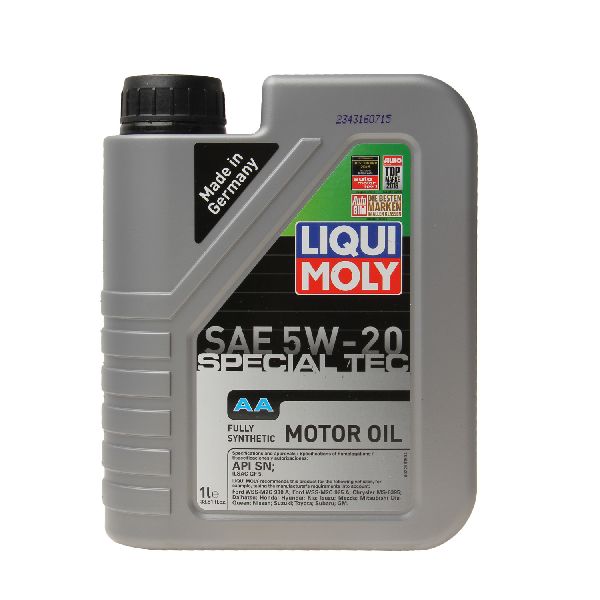
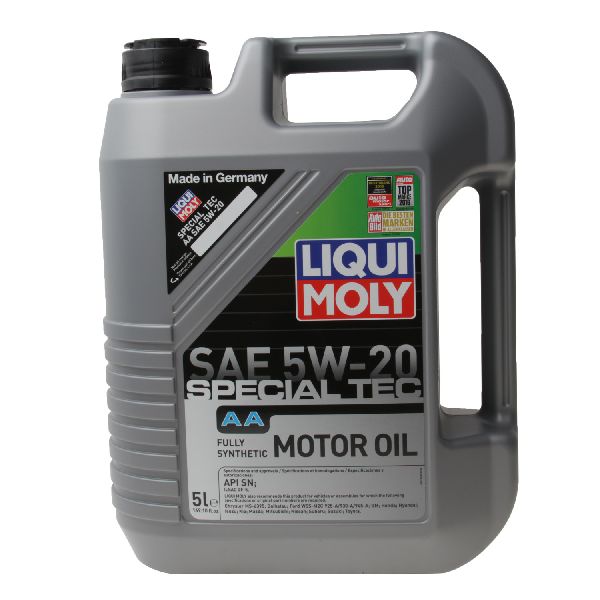
Typical fix: Perform an oil and filter change using the manufacturer-recommended oil viscosity (typically 5W-20).
Est. part cost: $40-$80 - Faulty VTC Oil Control Solenoid (Bank 2) 🔴 High Probability This solenoid controls oil flow to the VTC actuator. It can become clogged with sludge from dirty oil or fail electrically, which is a common failure point in many VVT systems. The small screen on the solenoid gasket can get blocked, restricting oil flow.
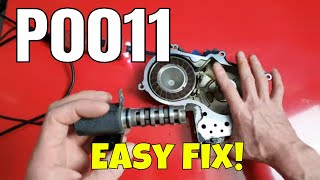
How to confirm: Inspect the solenoid's electrical connector. You can test the solenoid by applying 12V to see if it actuates (clicks). 🎬 Watch: How to test and clean a stuck VVT solenoid A more definitive test is to swap the Bank 2 (front) solenoid with the Bank 1 (rear) solenoid and see if the trouble code changes to P0011 (Bank 1 equivalent). If the code moves, the solenoid is bad.
Typical fix: Replace the Bank 2 VTC oil control solenoid and its gasket/screen. It is highly recommended to use an OEM part to avoid compatibility issues.
Est. part cost: $50-$150 - Failing VTC Actuator (Cam Phaser) ⚪ Low Probability The actuator is a mechanical gear that can get stuck due to internal wear or oil sludge, preventing it from adjusting cam timing correctly. While less common than a solenoid failure, it can happen, especially on higher-mileage engines or those with a history of poor oil maintenance. A common symptom of a failing VTC actuator on Honda/Acura V6 engines is a brief rattle on cold startup.
How to confirm: This is difficult to confirm without ruling out other causes first. Diagnosis typically involves checking oil pressure at the cylinder head and may require engine disassembly to inspect the actuator and timing components. A persistent cold-start rattle is a strong indicator.
Typical fix: Replace the VTC actuator. This is a labor-intensive job that also requires replacing the timing belt and related components.
Est. part cost: $200-$400
Rare But Worth Checking
- Stretched Timing Belt / Timing Misalignment: While the J37A1 has a timing belt, not a chain, significant stretching or an improper installation can cause timing to be off enough to trigger this code. This is usually only suspected after a recent timing belt service or on very high mileage original belts.
- Faulty Camshaft Position Sensor: It's possible for the sensor itself to fail and send incorrect data, but it's much less common than oil or solenoid issues. People often replace this part mistakenly.
- Clogged VTC Solenoid Gasket/Screen: Sometimes the solenoid itself is functional, but the integrated screen in the gasket becomes completely blocked with sludge, starving the VTC actuator of oil. Replacing just the gasket (Part No. 15825-P8A-A01 for the rear, front is similar) can sometimes resolve the issue, though it's often replaced with the solenoid.
Diagnosis Steps
- Check the engine oil level and condition. If low, top it off. If dirty or past its service interval, perform a complete oil and filter change with the correct viscosity oil (5W-20). Clear the code and drive to see if it returns. This is the most critical first step.
- If the code returns, locate the Bank 2 (front) VTC oil control solenoid. Inspect its electrical connector and wiring for damage or corrosion.
- Remove the Bank 2 solenoid and inspect its screen for sludge or debris. Clean if necessary, though replacement is recommended if it's heavily clogged.
- For a definitive test, swap the Bank 2 (front) solenoid with the Bank 1 (rear) solenoid. They are typically identical parts. Clear the codes and drive the vehicle. If the code changes to P0011 (Intake Camshaft Position Timing - Over-Retarded Bank 1), the solenoid you moved is faulty and needs to be replaced.
- If the code P0022 returns after the swap, the problem is not the solenoid. The next steps involve checking oil pressure and inspecting the VTC actuator and timing belt, which may require a professional mechanic. Listen carefully for a rattling noise from the engine on a cold start, which would point towards the VTC actuator.
Parts You'll Likely Need
- VTC Oil Control Solenoid (Bank 2)
(OEM #15810-R70-A04)— This solenoid is the most common part to fail or become clogged, directly causing the over-retarded timing condition.
Trusted brands: Acura (OEM), Dorman (e.g., 918-003), Standard Motor Products (SMP), NGK
OEM price range: $120-$180
Aftermarket price range: $50-$100 - Engine Oil and Filter — Low, dirty, or incorrect viscosity oil is a primary cause of VVT system faults.
Trusted brands: Mobil 1, Castrol, Valvoline
OEM price range: $60-$100
Aftermarket price range: $40-$80
Related Codes That Often Appear With This One
- P0011 — If both P0011 (Bank 1) and P0022 (Bank 2) appear together, it strongly points to a systemic issue like very low/dirty oil or low oil pressure affecting the entire engine.
- P0300, P0301-P0306 — Misfire codes can occur because incorrect camshaft timing disrupts the combustion process in one or more cylinders.
Technical Service Bulletins (TSBs) & Recalls
- Acura TSB 19-006 / 19-052: Warranty Extension for excessive engine oil consumption on 3.7L V6 engines. The TSB outlines a procedure for an oil consumption test and, if failed, replacement of pistons, piston pins, and rings due to clogged oil control rings.
- Acura TSB 12-029: Addresses a torque converter judder felt between 20-45 mph on 2007-2009 MDX models, which can sometimes be misdiagnosed as an engine performance issue. The fix involves a PCM software update and potentially a torque converter replacement under an extended warranty.
Platform-Specific Known Issues
- The J37A1 engine was subject to a warranty extension (TSB 19-006, later updated by 19-052) for excessive oil consumption due to carbon buildup on piston rings. This underlying issue can starve the VVT system of oil, leading to codes like P0022. Owners should be diligent about checking their oil level frequently, as consumption of up to a quart every 1,000-2,000 miles is not uncommon for affected vehicles.
Mechanic-Grade Diagnostic Values
- VTC Oil Control Solenoid Resistance — expected: 6.9 to 7.9 Ohms at 68°F (20°C). Failure: A reading of infinite resistance (open circuit) or zero resistance (short circuit) indicates a failed solenoid coil. A reading significantly outside the expected range also suggests a problem.
- VTC Solenoid Voltage (at connector) — expected: Approximately 12V (battery voltage) on one pin with key on, engine off. The other pin is the ground, controlled by the ECM.. Failure: No voltage at the power pin indicates a wiring or fuse issue upstream. Inability of the ECM to command ground suggests a wiring or ECM fault.
- Scan Tool Live Data: Bank 2 Commanded vs. Actual Cam Angle — expected: The 'Actual' angle should closely follow the 'Commanded' angle as engine RPM and load change.. Failure: A significant and persistent lag or a static 'Actual' value when the 'Commanded' value is changing indicates the phaser is not moving as instructed. An over-retarded code means the actual angle is less advanced than commanded.
Scan Tool Commands That Help
- Honda Diagnostic System (HDS): Data List (Live Data) — This is the primary diagnostic function for P0022. A technician should monitor the PIDs for 'VTC Command Angle Bank 2' and 'VTC Actual Angle Bank 2'. Watching these values in real-time while driving or varying engine RPM will show if the actuator is physically responding to the ECM's commands. A lack of response or a large deviation confirms a fault in the VTC system (solenoid, actuator, or oil pressure).
- Honda Diagnostic System (HDS): CKP Pattern Clear/Learn — This function does not diagnose P0022 but is critical to perform after any work involving the timing belt, crankshaft, or camshafts. Failure to perform the CKP relearn can cause other running issues or codes because the ECM has not learned the precise profile of the new or disturbed components.
Wiring & Ground Locations
- G101 — Typically located on or near the thermostat housing on the engine block/cylinder head.. G101 is a primary engine ground distribution point for many critical sensors, including the Camshaft Position (CMP) sensors and VTC solenoids. A corroded or loose G101 ground can cause erratic voltage signals from these sensors, potentially leading the ECM to misinterpret the camshaft's position and set a false timing code.
- Bank 2 VTC Solenoid Connector — A 2-pin electrical connector on the VTC oil control solenoid, located on the front cylinder head (closer to the radiator).. This is the direct connection to the component that controls cam phasing. Technicians must test for power and ground here. Pin 1 typically receives 12V power, and Pin 2 is the ground circuit that the ECM pulses to control the solenoid. A damaged connector or wiring here is a direct cause of failure.
Real Owner Repair Stories
- Acurazine & Reddit Forums (Synthesized) (2010 Acura MDX, J37A1) — Check Engine Light on, rough idle, and sluggish acceleration, especially when the engine is warm.
❌ Tried (didn't work) Initially topped off engine oil, which was slightly low, but the code returned within a day.
✅ What actually fixed it The owner performed the common Honda/Acura diagnostic swap. They removed the Bank 2 (front) and Bank 1 (rear) VTC solenoids. After swapping their positions and clearing the codes, the car was driven. The original P0022 code was gone, but a new P0011 (Bank 1 Over-Retarded) code appeared. This confirmed the solenoid originally from Bank 2 was faulty. A new OEM solenoid (part #15810-R70-A04) was installed in the Bank 2 position, and the problem was resolved permanently.
OEM Part Supersession History
15810-R70-A03→15810-R70-A04— Standard part revision, likely for improved reliability or manufacturing process changes. The parts are interchangeable.
Model Year Variations Within This Range
- 2007-2009 vs. 2010-2013: The J37A1 engine underwent a revision for the 2010 model year. While it retained the same engine code, the 2010-2013 'gen 2' version featured different camshaft profiles to broaden the torque curve, resulting in slightly different peak horsepower and torque RPMs compared to the 2007-2009 'gen 1' engine. While the P0022 diagnostic procedure and VTC solenoid part number remain the same, it is a key distinction when sourcing a complete used engine or other internal components.
Diagnostic Flowchart
Other Known Issues on This Vehicle
Issues unrelated to this code that are worth knowing about as an owner of this generation:
- Excessive Oil Consumption 🔴 High — Common, especially on 2010-2013 models. Can start around 70,000 miles. Caused by carbon buildup on piston oil control rings. (Ref: Acura TSB 19-006 / 19-052)
- Torque Converter Judder/Shudder 🟠 Medium — Common issue on 2007-2009 models, felt as a vibration at low speeds (20-45 mph). Caused by deteriorated transmission fluid. (Ref: Acura TSB 12-029)
- Parasitic Battery Drain from HFL Module 🟠 Medium — A very common problem where the HandsFreeLink (Bluetooth) module fails to shut down, draining the battery overnight.
- Worn Front Lower Control Arm Compliance Bushings 🟡 Low — Bushings can tear or wear out, typically after 80,000-100,000 miles, causing clunking noises over bumps or affecting alignment.
- Failing Active Damper System (ADS) 🟠 Medium — For models equipped with the optional active suspension, the electronic struts are a common failure point, leading to a harsh ride and a 'Check ADS' warning light. Replacement is expensive.
Used vs. New Parts: Buying Guide for This Vehicle
When a used part is the smart pick: A used OEM VTC oil control solenoid from a reputable salvage yard is a reasonable choice, especially if from a lower-mileage, documented donor vehicle. Given the high cost of a new OEM part, a used one can offer significant savings with good reliability.
Donor-vehicle mileage cap: roughly under 80000 miles for the part to have meaningful remaining life.
What to inspect on the donor part:
- Ask for the VIN of the donor vehicle to verify mileage if possible.
- Physically inspect the part before purchase.
- Check the solenoid's mesh screen. It should be perfectly clean and free of any metallic debris or thick sludge.
- Ensure the electrical connector is not cracked, and the pins are not corroded.
OEM-only on this vehicle (don't cheap out):
- VTC Actuator (Cam Phaser): This part is mechanically complex and its failure can cause catastrophic engine damage. The labor to replace it is extensive. Using a non-OEM actuator is a significant risk not worth the potential savings. Stick to genuine Acura parts.
- Timing Belt and Tensioner: As with the VTC actuator, the consequences of failure are severe. Use an OEM or a complete kit from a highly-trusted OEM supplier like Aisin.
Aftermarket brands forum-validated for this vehicle:
- Hitachi: Often an OEM supplier for Japanese manufacturers, Hitachi VVT solenoids are widely considered to be of high quality and a safe alternative to the dealer part.
- NGK/NTK: While primarily known for ignition components, their sensor and solenoid lines are generally well-regarded.
- Standard Motor Products (SMP): A long-standing aftermarket brand with a reputation for quality parts.
Brands owners have reported issues with on this vehicle:
- Unbranded 'Amazon' or 'eBay' special solenoids: These are frequently reported on forums to be dead-on-arrival or fail within a few months. The low price is tempting but often leads to doing the job twice.
- Dorman: While some products are fine, their VVT solenoids have a mixed reputation in enthusiast communities, with some reports of premature failure.
Real Owner Stories
Aggregated from forums and TSBs cited above. Mileages and costs reflect what owners reported in those sources.
2010-2013 Acura MDX 3.7L V6 — ~70000 miles
Symptoms: Excessive oil consumption and carbon buildup on piston oil control rings leading to VVT system issues.
What fixed it: Replacement of pistons, piston pins, and rings as part of a dealer-certified oil consumption test.
Source hint: Acura TSB 19-006 / 19-052
2009-2014 Acura MDX 3.7L V6
Symptoms: Excessive oil consumption issues and VVT-related trouble codes.
What fixed it: Performing a dealer-certified oil consumption test to qualify for TSB repairs.
Source hint: Reddit (r/Acura) thread titled 'If you own an MDX 2009-2014 and have excessive oil consumption issues watch this video...'
2007-2013 Acura MDX 3.7L V6
Symptoms: P0011/P0022 codes appearing; uncertainty if the solenoid or actuator is at fault.
What fixed it: Swapping the Bank 1 and Bank 2 VTC solenoids to see if the code moves, identifying a faulty solenoid.
Source hint: Acurazine.com forum threads regarding J37A1 oil consumption and VVT codes
Related OBD-II Codes
Frequently Asked Questions
Is there a warranty extension for the oil consumption issues on my 2010-2013 Acura MDX?
How can I tell if my P0022 code is caused by a bad solenoid or something else?
My MDX has a brief rattle on cold startup; is this related to the P0022 code?
Could the vibration I feel at 30 mph be related to the engine timing?
What oil viscosity should I use to prevent VTC system failures in my J37A1 engine?
How often should I check my oil if my MDX is prone to the P0022 code?
Helpful Videos
We Have This Part in Stock


The information in this article is provided for general reference and educational purposes only. Vehicle specifications, procedures, and part compatibility can vary by production date, trim level, and region. Always consult your vehicle's factory service manual and verify part numbers before purchasing or performing repairs. Safety-critical components such as airbags, seat belts, and braking systems should be installed by a qualified professional.
- Acura MDX:
- 🎬 Helpful Videos
- 🛍️ Shop This Part
- What's Unique About the 2007-2013 Acura MDX
- Symptoms You May Notice
- Most Likely Causes
- Rare But Worth Checking
- Diagnosis Steps
- Parts You'll Likely Need
- Related Codes That Often Appear With This One
- Technical Service Bulletins (TSBs) & Recalls
- Platform-Specific Known Issues
- Mechanic-Grade Diagnostic Values
- Scan Tool Commands That Help
- Wiring & Ground Locations
- Real Owner Repair Stories
- OEM Part Supersession History
- Model Year Variations Within This Range
- Diagnostic Flowchart
- Other Known Issues on This Vehicle
- Used vs. New Parts: Buying Guide for This Vehicle
- Real Owner Stories
- 2010-2013 Acura MDX 3.7L V6 — ~70000 miles
- 2009-2014 Acura MDX 3.7L V6
- 2007-2013 Acura MDX 3.7L V6
- Related OBD-II Codes
- Frequently Asked Questions
- 🎟️ Get 5% Off