

P0018 on 2015-2019 Lincoln MKZ Hybrid: Cam/Crank Correlation Causes and Fixes
Code P0018 on a Lincoln MKZ Hybrid is confusing because its 2.0L I4 engine doesn't have a 'Bank 2'. However, it points to a problem in the Variable Camshaft Timing (VCT) system. The most likely cause, according to a manufacturer TSB, is a sticking VCT solenoid due to oil debris. Cleaning or replacing the VCT solenoids is the most common fix.
- Don't be alarmed by the 'Bank 2' designation in the code's definition; your I4 engine only has one bank. The code points to a general VCT system issue.
- The most probable cause is a sticking VCT solenoid, as identified in a manufacturer TSB.
- Start your diagnosis with the simplest and most likely fixes: check your oil level and quality. An oil change may resolve the issue.
- If an oil change doesn't work, the next step is to inspect, clean, or replace the VCT solenoids.
- Only after ruling out oil and VCT solenoid issues should you investigate sensors or the timing chain itself.
What's Unique About the 2015-2019 Lincoln MKZ HYBRID
The key issue for the MKZ Hybrid is the code's definition itself. An inline-four engine physically cannot have a 'Bank 2,' which is the bank of cylinders that does not contain cylinder #1. This makes a P0018 code technically impossible by its standard definition. Its inclusion in TSB SSM 50067 for these vehicles strongly suggests that the underlying problem is not a specific bank issue, but a general fault in the VCT system, which is known to be sensitive to oil condition and quality on these Ford/Lincoln engines. This issue is also common on its platform mates, the Ford Fusion Hybrid and Ford C-Max Hybrid, which use the same powertrain.
Diagnostic Flowchart
Tap your situation to follow the diagnostic path that matches what you're seeing on this vehicle.
Symptoms You May Notice
- Check Engine Light is on
- Reduced engine power and poor acceleration
- Rough or erratic idle
- Engine may hesitate or stall
- Decreased fuel economy
- Rattling noise from the engine
- Replacing the camshaft or crankshaft position sensors without first checking the oil condition and VCT solenoid function. Given the TSB, the issue is more likely to be oil-flow related.
- Immediately assuming a stretched timing chain without diagnosing the much more common and cheaper VCT solenoid issue first.
Most Likely Causes
- Sticking or Failed Variable Camshaft Timing (VCT) Solenoid 🔴 High Probability A manufacturer TSB (SSM 50067) directly states that small debris in the engine oil can cause VCT solenoids to stick, triggering this code. This is a known and widespread issue on many Ford/Lincoln engines using this VCT system. The VCT system relies on oil pressure to adjust cam timing, and any sludge or debris can clog the small passages in the solenoids.
How to confirm: A technician can command the VCT solenoids on and off using a diagnostic scan tool to see if they respond correctly. Another common DIY method is to swap the intake and exhaust solenoids; if the code changes (e.g., to P0017), the solenoid is confirmed as the faulty part. Upon removal, the solenoid's screens can be inspected for sludge or metallic debris.
Typical fix: Following the TSB, the first step is often an oil change and commanding the solenoid to cycle 10 times with a scan tool to clear debris. If that doesn't work, the VCT solenoids should be removed, cleaned, and tested. If they fail testing or are heavily contaminated, they should be replaced. Some owners have success with just cleaning the solenoids.
Est. part cost: $40-$120 per solenoid - Low, Dirty, or Incorrect Viscosity Engine Oil 🟡 Medium Probability The VCT system is entirely hydraulic and relies on clean oil at the correct pressure to function. Extended oil change intervals can lead to sludge that clogs the small passages in the VCT solenoids and phasers, leading to correlation codes.
How to confirm: Check the oil level and condition on the dipstick. Review vehicle service records to see if the correct oil (5W-20 synthetic blend) was used and changed at appropriate intervals.
Typical fix: Perform an engine oil and filter change using the manufacturer-specified oil. Some owners recommend using an engine flush product (like Liqui Moly) before the oil change to help clear out sludge. Clear the codes and test drive to see if the code returns.
Est. part cost: $40-$80 - Faulty Camshaft Position Sensor ⚪ Low Probability
How to confirm: The sensor's signal can be tested with a multimeter or oscilloscope to ensure it's sending a correct signal to the ECM. A diagnostic scan tool can also monitor the sensor's live data. A YouTube video by 'Electrical Car Repair LIVE' shows the location on the shared Ford C-Max/Fusion/MKZ hybrid platform. 🎬 Watch: How to test and fix the P0018 correlation code.
Typical fix: Replace the faulty camshaft position sensor. There are two on the 2.0L engine, one for intake and one for exhaust.
Est. part cost: $25-$70 - Stretched Timing Chain or Failed Tensioner ⚪ Low Probability While less common on this specific engine than VCT issues, timing chain stretch can occur over high mileage (typically over 100,000-150,000 miles), causing a correlation fault. This is a more serious mechanical issue.
How to confirm: This is a complex diagnosis that requires removing the valve cover and/or timing cover to physically inspect the chain, guides, and tensioner for slack or damage. This is usually the last resort after all other potential causes are ruled out.
Typical fix: Replacement of the timing chain, guides, and tensioners. This is a labor-intensive job.
Est. part cost: $300-$600 for a kit
Rare But Worth Checking
- Faulty Crankshaft Position Sensor: While possible, the crankshaft sensor is generally very reliable. A failure here would likely cause more severe running issues or a no-start condition, but it can't be entirely ruled out.
- Damaged Wiring or Connectors: Check the wiring harnesses for the cam and crank sensors, as well as the VCT solenoids, for any signs of damage, corrosion, or loose connections.
- Failed VCT Phaser (Camshaft Sprocket): The VCT phaser itself, which is the gear on the end of the camshaft, can fail mechanically. This is much less common than a solenoid failure and is a more involved repair, often done at the same time as a timing chain replacement.
Diagnosis Steps
- Verify the code with a high-quality OBD-II scanner. Note if any other codes are present.
- Check the engine oil level and condition. If it is low, dirty, or overdue for a change, perform an oil and filter change with the correct 5W-20 viscosity oil. Consider an engine flush if sludge is suspected.
- Using a bidirectional scan tool, access the PCM and use the specific diagnostic test to cycle the affected VCT solenoid 10 times 🎬 Watch: A simple trick to fix the P0018 code fast. to attempt to clear debris, as recommended by TSB SSM 50067. Clear codes and retest.
- If the code returns, swap the suspect VCT solenoid with its counterpart (e.g., intake with exhaust). Clear codes and drive the vehicle. If the DTC changes to follow the solenoid (e.g., P0018 becomes P0017), the solenoid is faulty and must be replaced.
- Inspect the wiring and connectors for the camshaft sensors, crankshaft sensor, and VCT solenoids for any visible damage or corrosion.
- If solenoids and oil are good, test the camshaft position sensors. Monitor their voltage with a multimeter or view their waveform on an oscilloscope.
- If all sensors and solenoids are functioning correctly, the final step is a mechanical inspection of the timing chain and tensioners for stretch or damage. This is an advanced step and may require professional help.
Parts You'll Likely Need
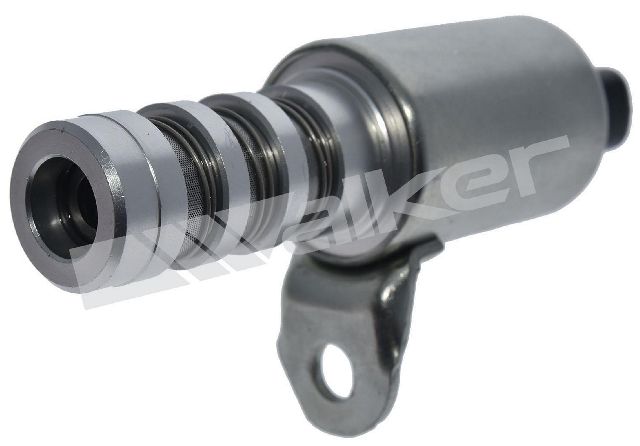
- Engine Variable Valve Timing (VVT) Solenoid
(OEM #CJ5Z-6M280-A)— This is the most likely cause of the fault according to manufacturer TSB SSM 50067, which points to debris causing the solenoid to stick. This part is confirmed to fit a wide range of Ford/Lincoln 2.0L and 2.5L engines.
Trusted brands: Motorcraft, Dorman, Standard Motor Products
OEM price range: $30-$50
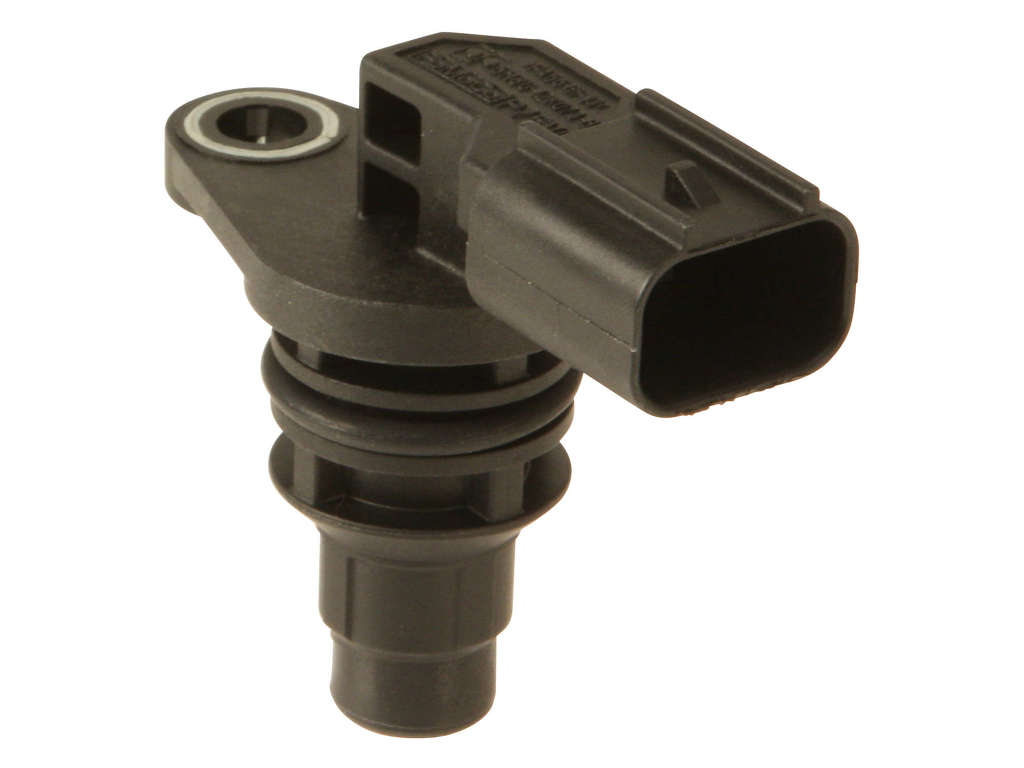
Aftermarket price range: $25-$80 - Camshaft Position Sensor
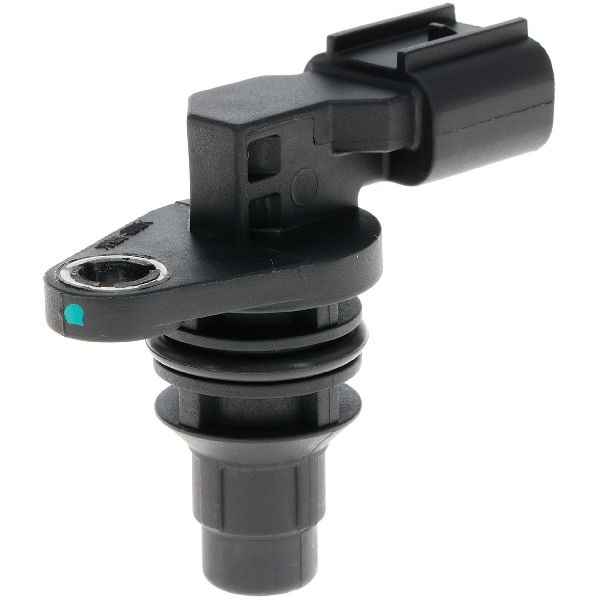
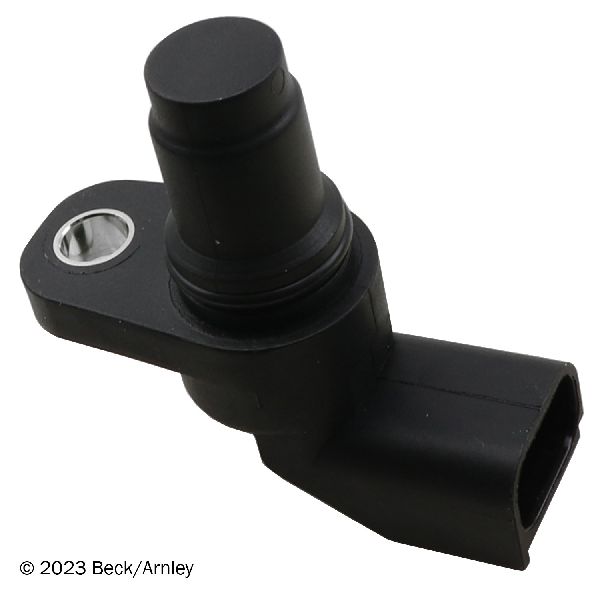
(OEM #P2GZ-6B288-C)— If a VCT solenoid or oil issue is ruled out, a faulty sensor could be sending incorrect data to the ECM. This part number supersedes previous versions.
Trusted brands: Motorcraft, Bosch, NGK, Standard Motor Products
OEM price range: $40-$70
Aftermarket price range: $25-$50
Related Codes That Often Appear With This One
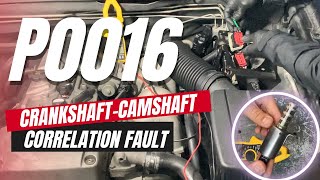
- P0016 — This is the correlation code for Bank 1, Sensor A. Since the engine only has a Bank 1, seeing P0016 alongside or instead of P0018 is very common and points to the same set of potential causes. 🎬 See this guide for diagnosing the related P0016 code.
- P0017 — This is the correlation code for Bank 1, Sensor B (Exhaust). It also points to a timing correlation issue on the single bank of cylinders.
- P0011 — This code indicates 'Intake Camshaft Position Timing - Over-Advanced (Bank 1)' and is often caused by the same sticking VCT solenoid issue mentioned in TSB SSM 50067.
- P0019 — This is the correlation code for Bank 2, Sensor B (Exhaust). Like P0018, its appearance on this I4 engine is confusing but points to the same VCT system faults.
Technical Service Bulletins (TSBs) & Recalls
- SSM 50067: Some 2015-2021 Ford and Lincoln vehicles may exhibit an illuminated MIL with diagnostic trouble codes (DTC) P0011, P0012, P0014, P0015, P0016, P0017, P0018, P0019, P0021, P0022, P0024 and/or P0025. This may be due to small debris causing the VCT solenoid to stick. Before attempting any component diagnosis or replacement of the VCT solenoid, refer to Powertrain Control and Emissions Diagnosis (PC/ED) pinpoint test HK12 to cycle the affected VCT solenoid 10 times to attempt to clear the debris.
Platform-Specific Known Issues
- The primary vehicle-specific issue is the appearance of a 'Bank 2' code on an engine with only one bank. This can cause significant confusion during diagnosis.
- TSB SSM 50067 was issued by Ford for a wide range of vehicles, including this one, specifically for VCT-related codes (P0011-P0025) caused by debris in the oil leading to sticking VCT solenoids. The TSB advises using a scan tool to cycle the solenoid 10 times to clear debris before replacement.
- The 2.0L Atkinson-Cycle Hybrid powertrain is shared with the Ford Fusion Hybrid and Ford C-Max Hybrid, so repair information for those vehicles is directly applicable.
Mechanic-Grade Diagnostic Values
- VCT Solenoid Internal Resistance — expected: 7-14 Ohms. Failure: A reading significantly outside this range indicates a faulty internal coil in the solenoid.
- VCT Solenoid Connector Voltage (KOEO) — expected: ~12V (Battery Voltage) on the power supply pin to a good ground.. Failure: No voltage indicates a problem in the power supply circuit, fuse, or PCM power relay.
- Camshaft Position Sensor (CMP) AC Voltage — expected: Voltage should vary more than 0.1V AC while running the engine at varying RPM.. Failure: If the AC voltage does not vary, the sensor is likely faulty.
- Camshaft Position Sensor (CMP) Resistance — expected: Approximately 200-1000 Ohms, with specific Ford examples showing readings around 450-485 Ohms.. Failure: A reading of zero suggests a short circuit, while an infinite reading (OL) indicates an open circuit.
- Engine Oil Pressure (Warm Engine) — expected: Greater than 10 PSI at idle and greater than 30 PSI at 3000 RPM.. Failure: Pressure below these thresholds indicates an oil delivery problem that will prevent the VCT system from functioning correctly.
Hidden / Shadow Codes Worth Checking
- VCT_INT_DIF2 / VCTADVERR: This is not a DTC, but a Parameter Identification (PID) available in advanced scan tools like FORScan or Ford IDS. It shows the difference in degrees between the desired and actual camshaft angle. It should be near 0° at idle. (see via Monitor live data with a Ford-capable scan tool (FORScan, IDS). A consistently high value indicates the phaser is not reaching its commanded position, pointing to a solenoid, phaser, or oil pressure issue.)
Scan Tool Commands That Help
- Ford IDS, FORScan: VCT Solenoid On/Off State Control / Output State Control (OSC) — This is a bidirectional command used to manually cycle the VCT solenoid. As recommended in TSB SSM 50067, cycling the solenoid 10 times can dislodge debris. It's also used to listen for an audible click from the solenoid and watch for a change in idle quality to confirm mechanical operation.
Wiring & Ground Locations
- G100 / G102 — Located on or near the left front (driver's side) strut tower in the engine compartment.. This is a primary ground point for the engine and PCM. A loose or corroded connection here can cause erratic signals from the camshaft and crankshaft sensors, leading to false correlation codes.
- G104 / G106 — Located on the right side (passenger side) of the engine compartment, often near the strut tower or inner fender.. Serves as another critical ground for engine electronics. Ensuring this ground is clean and tight is a key step in diagnosing electrical causes for timing codes.
- Under-Hood Fuse Box (2017+) — In the engine compartment.. Several fuses are critical for the PCM and ignition system. Check fuse #12 (PCM Power), #13 (PCM Vehicle Power 2), #15 (Ignition Coils), and #18 (PCM Keep Alive Power) for integrity.
Real Owner Repair Stories
- Reddit user in r/Crosstrek (2015 Subaru Crosstrek with ~118k miles (Note: Different vehicle, but illustrates a common diagnostic pitfall for P0016/P0018).) — Codes P0016 and P0018, issues accelerating, slight rumble when stopping.
❌ Tried (didn't work) Oil flush performed by the dealer., A local shop replaced the timing chains.
✅ What actually fixed it The issue persisted after the timing chain replacement. The shop then replaced the cam sprockets (VCT phasers), which ultimately resolved the codes.
OEM Part Supersession History
DU-107, JX6Z-6B288-B, P2GZ-6B288-A→P2GZ-6B288-C— Standard part revision and improvement by the manufacturer.
Model Year Variations Within This Range
- 2017-2019: The Lincoln MKZ received a major facelift for the 2017 model year, with a new front grille, headlights, and updated interior controls. However, the 2.0L I4 Atkinson-Cycle hybrid powertrain was carried over and remained fundamentally the same, meaning the causes and fixes for P0018 are consistent across the entire 2015-2019 range.
Helpful Videos

Used OEM Parts in Stock

New Aftermarket Parts Available


The information in this article is provided for general reference and educational purposes only. Vehicle specifications, procedures, and part compatibility can vary by production date, trim level, and region. Always consult your vehicle's factory service manual and verify part numbers before purchasing or performing repairs. Safety-critical components such as airbags, seat belts, and braking systems should be installed by a qualified professional.
- Lincoln MKZ HYBRID:
- 🎬 Helpful Videos
- 🛍️ Shop This Part
- What's Unique About the 2015-2019 Lincoln MKZ HYBRID
- Diagnostic Flowchart
- Symptoms You May Notice
- Most Likely Causes
- Rare But Worth Checking
- Diagnosis Steps
- Parts You'll Likely Need
- Related Codes That Often Appear With This One
- Technical Service Bulletins (TSBs) & Recalls
- Platform-Specific Known Issues
- Mechanic-Grade Diagnostic Values
- Hidden / Shadow Codes Worth Checking
- Scan Tool Commands That Help
- Wiring & Ground Locations
- Real Owner Repair Stories
- OEM Part Supersession History
- Model Year Variations Within This Range
- 🎟️ Get 5% Off