

P0018 on 2013-2019 Cadillac XTS 3.6L: Stretched Timing Chain Causes and Fixes
On a 2013-2019 Cadillac XTS with the 3.6L V6, code P0018 almost always means the timing chains have stretched. This is a well-documented pattern failure for this engine family. It is a serious and expensive repair, typically costing $2,200-$3,500. Ignoring this code can lead to catastrophic engine failure.
- P0018 on a 2013-2019 XTS 3.6L almost always means you need a timing chain replacement.
- This is a serious issue; do not continue to drive the vehicle as you risk catastrophic engine failure.
- Do not waste money replacing sensors. The problem is almost certainly mechanical.
- This is a very expensive repair ($2,200+) and is not suitable for a DIY mechanic due to its complexity.
- The presence of codes P0008 or P0009 alongside P0018 makes the diagnosis of a stretched timing chain virtually certain.
What's Unique About the 2013-2019 Cadillac XTS
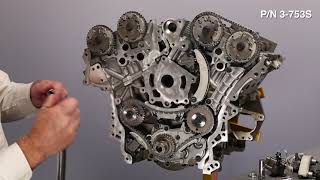
The GM High Feature 3.6L V6 (LFX) engine used in the Cadillac XTS has a well-documented history of premature timing chain stretching, even in this updated variant. While the LFX was an improvement over earlier LLT engines, the core issue persists. The problem is so common that GM issued technical service bulletins, like #PIP3423P, advising technicians to inspect for loose timing chains when codes like P0018 appear. 🎬 Watch: 4 DIY methods to fix the P0018 engine code. The root cause is often a combination of the original chain design and oil degradation. Following the factory Oil Life Monitor (OLM) could lead to extended oil change intervals, accelerating wear on the chains and their hydraulic tensioners. Many technicians now recommend 5,000-mile oil change intervals with full synthetic oil to prolong chain life.
Diagnostic Flowchart
Tap your situation to follow the diagnostic path that matches what you're seeing on this vehicle.
Symptoms You May Notice
- Check Engine Light is on
- Rattling, scraping, or chain-slap noise from the engine, especially on a cold startup.
- Rough or unstable idle.
- Reduced engine power and poor, sluggish acceleration.
- Engine may hesitate or stall.
- Decreased fuel economy.
- Engine is hard to start or fails to start in severe cases.
- Replacing only the camshaft position sensor
- Replacing only the crankshaft position sensor
- Replacing only the VVT solenoids without checking mechanical timing
Most Likely Causes
- Stretched Timing Chains 🔴 High Probability The 3.6L V6 engine family is notorious for premature timing chain wear, a pattern failure acknowledged in multiple TSBs. The 'stretch' is actually wear in the chain's pins and links. This is often accelerated by oil breakdown from extended change intervals suggested by the Oil Life Monitor.
How to confirm: A mechanic can use a scan tool to view live data PIDs for camshaft/crankshaft correlation; a deviation of more than a few degrees that is persistent confirms a mechanical timing issue. Physical inspection is the ultimate confirmation but requires 8+ hours of labor to access the chains.
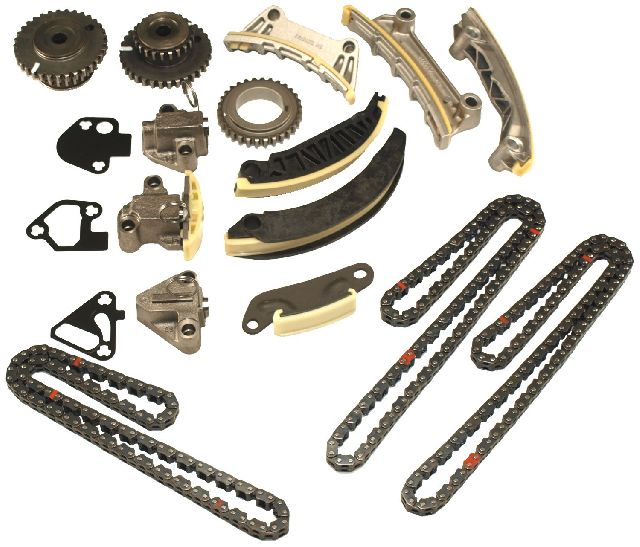
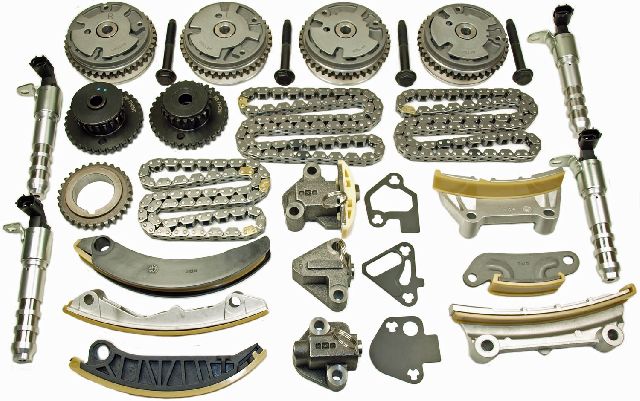
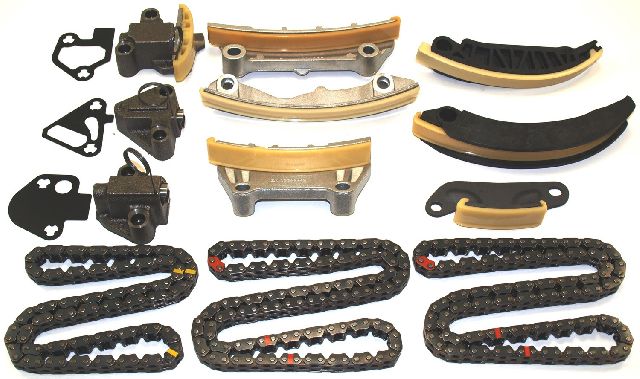
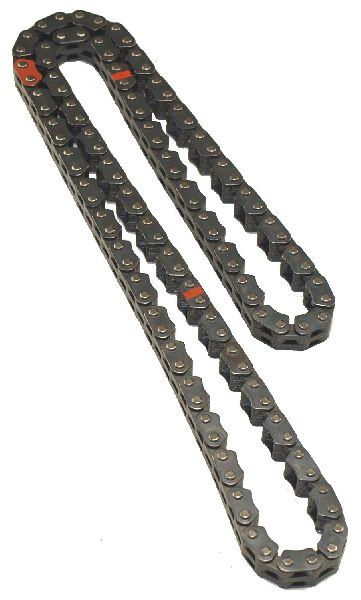
Typical fix: Replace all three timing chains (primary and both secondary), along with the tensioners, guides, and sprockets. This is sold as a complete timing chain kit. It is critical to use an updated, high-quality kit.
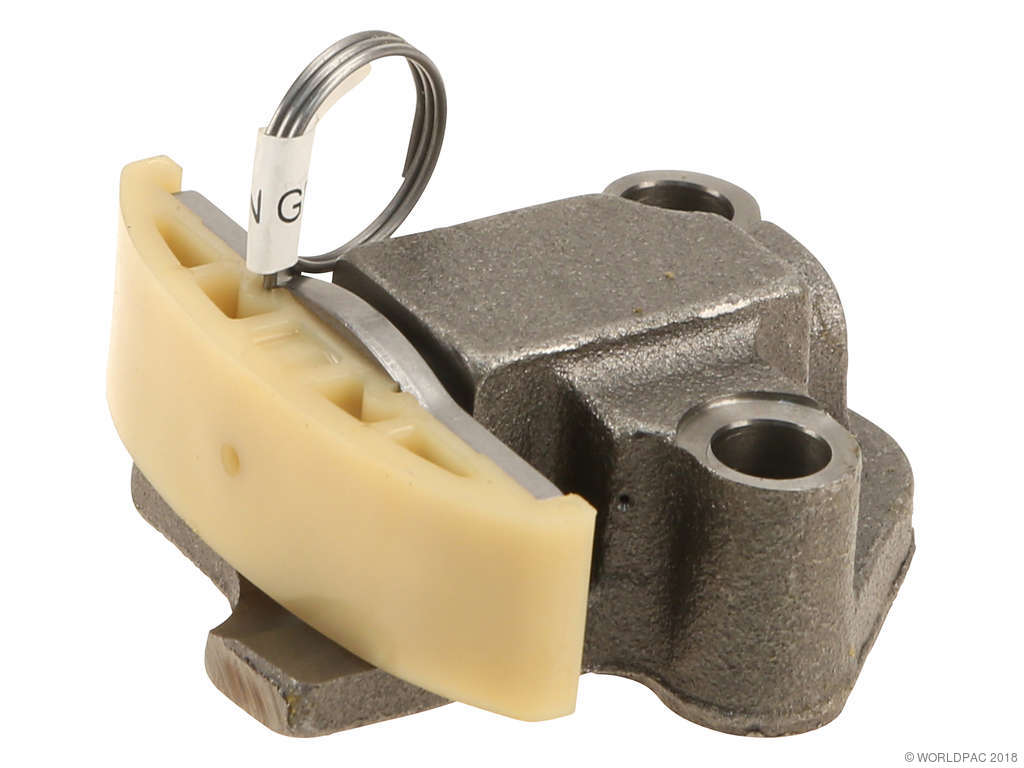
Est. part cost: $300-$700 - Failed Timing Chain Tensioners or Guides 🔴 High Probability The tensioners are operated by oil pressure and can fail, weaken, or get stuck due to oil sludge, allowing the chains to become slack. The plastic/nylon guides can also wear out, become brittle, and break apart, with pieces falling into the oil pan. These parts are considered wear items and typically fail along with the chains.
How to confirm: Usually diagnosed during a physical inspection when replacing the timing chains. A distinct rattling noise is a key symptom of a failing tensioner. Sometimes broken guide pieces can be found in the oil pan or oil pickup tube.
Typical fix: Always replace tensioners and guides as part of a complete timing chain kit replacement. Never replace just a tensioner on a high-mileage engine with this code.
Est. part cost: $0 (Included in timing kit) - Low or Dirty Engine Oil 🟡 Medium Probability The timing system's hydraulic tensioners and camshaft phasers rely on clean oil at the correct pressure to function. GM's own analysis and multiple TSBs point to extended oil change intervals (following the OLM) as a primary contributor to oil degradation, sludge, and accelerated wear on all timing components. Using oil that does not meet the GM Dexos specification can also contribute to premature wear.
How to confirm: Check the oil level and condition. If the P0018 code is already set, the damage to the chains is likely already done and an oil change alone will not fix it. However, in very borderline cases, an engine oil flush and fresh oil might temporarily quiet a sticky actuator.
Typical fix: An oil change with full synthetic 5W-30 Dexos-approved oil is critical maintenance but will not fix a physically stretched chain. Shortening the oil change interval to 5,000 miles is a key preventative measure for the new chains.
Est. part cost: $50-$100
Rare But Worth Checking
- Faulty Camshaft Actuator Solenoid (VVT Solenoid): A solenoid can get stuck or fail due to internal debris or electrical failure, causing timing correlation issues. It's a possible cause, but much less common than chain stretch. A common diagnostic step is to swap the Bank 2 intake and exhaust solenoids to see if the code changes to P0019, which would indicate a bad solenoid. Resistance should be between 8 and 13 Ohms.
- Faulty Camshaft or Crankshaft Position Sensor: It is very rare for the sensor itself to fail. More often, the sensor is correctly reporting a real mechanical timing problem. Replacing sensors without confirming the mechanical timing is a common and costly misdiagnosis.
- Slipped Crankshaft Reluctor Wheel: Extremely rare, but documented in TSB #PIP3423P. The toothed reluctor wheel that the crankshaft sensor reads is press-fit onto the crank and can slip, causing persistent timing codes even after a timing chain replacement. This can be inspected with a borescope through the crank sensor hole. The fix requires crankshaft replacement.
Diagnosis Steps
- Verify engine oil level and condition. If low, very dirty, or overdue, perform an oil change with 5W-30 full synthetic Dexos-approved oil, clear codes, and see if the code returns. This is unlikely to be a permanent fix but is a necessary first step.
- Use a professional scan tool to read live data for Camshaft Position Variance for Bank 2 Intake. A persistent deviation greater than +/- 4-5 degrees at idle strongly suggests a mechanical timing issue.
- Scan for other timing-related codes (P0008, P0009, P0016, P0017, P0019). Their presence makes a mechanical timing issue highly probable.
- Test the Bank 2 intake camshaft actuator solenoid. Command it on and off with a scan tool to ensure it operates. As a further test, swap the intake and exhaust solenoids on Bank 2 and see if the code changes from P0018 to P0019. If it does, the solenoid is faulty.
- If solenoids are functional and codes persist, a physical inspection of the timing chains is required. This involves removing the engine front cover.
- During inspection, check for slack in the chains, compare the old chains to new ones to confirm stretch, look for broken plastic guide pieces in the oil pan, and ensure tensioners are functioning.
- In the rare event that new chains are installed and the code returns, inspect the crankshaft reluctor wheel for slippage per TSB PIP3423P.
Parts You'll Likely Need
- Engine Timing Chain Kit
(OEM #12700437)— This is the definitive fix for the common stretched timing chain issue. A complete kit ensures all worn components (chains, guides, tensioners) are replaced at once. TSB 12-06-01-009 notes that sprockets/gears are not typically required for a stretch-related failure.
Trusted brands: ACDelco (OEM), Cloyes, Melling
OEM price range: $400-$600
Aftermarket price range: $270-$450
Related Codes That Often Appear With This One
- P0008 — Indicates a general timing correlation error on Bank 1. Its presence with P0018 strongly suggests a stretched primary timing chain affecting the whole engine.
- P0009 — This is the equivalent general timing error for Bank 2. Seeing P0009 and P0018 together confirms the timing issue is on Bank 2 and is almost certainly a stretched chain.
- P0016 — This is the same correlation error as P0018, but for Bank 1's intake camshaft. Seeing codes for both banks (P0016 and P0018) points to a stretched primary chain affecting both cylinder banks.
- P0017 — A correlation error for the exhaust camshaft on Bank 1. The TSB #PIP3423P groups P0016, P0017, P0018, and P0019 together as symptoms of the same timing chain problem.
- P0019 — A correlation error for the exhaust camshaft on Bank 2. Its presence with P0018 confirms a widespread timing issue on Bank 2, making a stretched secondary chain a near certainty.
Technical Service Bulletins (TSBs) & Recalls
- PIP3423P: Advises technicians that codes P0016, P0017, P0018, P0019, P0008, or P0009 may be set. Instructs to inspect for loose timing chains/tensioners, and if the cause is not found, to inspect the crankshaft reluctor wheel for movement.
- 12-06-01-009F: An earlier bulletin providing information on timing chain kits for these engines, noting that stretched chains are the primary issue and that components like sprockets and guides were being replaced unnecessarily.
Platform-Specific Known Issues
- The 3.6L LFX engine is widely known for premature timing chain stretch, which is the root cause of P0018 in the vast majority of cases. This is often exacerbated by extended oil change intervals.
Mechanic-Grade Diagnostic Values
- Camshaft Position (CMP) Actuator Solenoid Resistance — expected: 11-20 Ohms. Failure: A reading significantly outside this range, or an open circuit, indicates a failed solenoid.
- Camshaft Position Variance (Scan Tool PID) — expected: Close to 0 degrees at idle with VVT commanded off.. Failure: A persistent deviation of 6-9 degrees or more at idle indicates significant timing chain slack/stretch.
Scan Tool Commands That Help
- GDS2 (or equivalent professional scan tool): Camshaft Position Actuator Solenoid Test — This bidirectional command allows the technician to manually turn the solenoid on and off to verify its mechanical and electrical operation. This helps rule out a faulty solenoid before condemning the timing chains.
Wiring & Ground Locations
- G101 / G103 — G101 is at the middle of the left radiator support; G103 is on the left front of the engine compartment.. These are main grounds for the Engine Control Module (ECM). A poor connection can cause erratic ECM behavior and incorrect processing of cam/crank sensor signals, potentially leading to false codes.
- G120 — Located on the right front bottom side of the engine block.. This is a key engine block ground. Since the camshaft and crankshaft sensors reference the engine block, a poor ground here can introduce noise or voltage offsets into their signals, confusing the ECM's timing calculations.
- Bank 2 Camshaft Position Sensor Connector — On the Bank 2 (radiator side) cylinder head, connected to the camshaft position sensor.. Service bulletin PI0090D mentions that intermittent hesitation and codes can be caused by poor terminal connections in the sensor's harness connector. Inspecting for backed-out pins or corrosion is a critical step before replacing parts.
Real Owner Repair Stories
- YouTube channel 'Schrodingers Box' (GM 3.6L V6 (specific model not stated, but engine is the focus)) — Check engine light with camshaft position sensor performance codes (P0366, P0346).
❌ Tried (didn't work) Replacing the camshaft sensor with a new aftermarket (CarQuest) sensor., Replacing the sensor again with a new OEM (ACDelco) sensor that was also faulty out of the box.
✅ What actually fixed it The issue was ultimately a faulty camshaft position sensor. However, the diagnosis was complicated by receiving multiple bad replacement sensors, including one from the OEM dealer. The technician had to use an oscilloscope to verify the incorrect signal pattern from the new sensors before getting a third, functional sensor that resolved the codes. This highlights the importance of verifying the fix and not always trusting new parts.
OEM Part Supersession History
12659672, 12679118, 12691204, 12693217→12700437— Updates to the timing chain kit components to improve durability and address premature stretching issues.
Helpful Videos
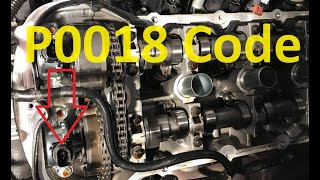
![How to Fix CADILLAC P0018 Engine Code in 6 Minutes [4 DIY Methods / Only $6.81]](https://img.youtube.com/vi/E7HaTjiJ3oI/mqdefault.jpg)
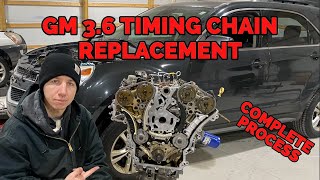

Used OEM Parts in Stock

New Aftermarket Parts Available


The information in this article is provided for general reference and educational purposes only. Vehicle specifications, procedures, and part compatibility can vary by production date, trim level, and region. Always consult your vehicle's factory service manual and verify part numbers before purchasing or performing repairs. Safety-critical components such as airbags, seat belts, and braking systems should be installed by a qualified professional.
- Cadillac XTS:
- 🎬 Helpful Videos
- 🛍️ Shop This Part
- What's Unique About the 2013-2019 Cadillac XTS
- Diagnostic Flowchart
- Symptoms You May Notice
- Most Likely Causes
- Rare But Worth Checking
- Diagnosis Steps
- Parts You'll Likely Need
- Related Codes That Often Appear With This One
- Technical Service Bulletins (TSBs) & Recalls
- Platform-Specific Known Issues
- Mechanic-Grade Diagnostic Values
- Scan Tool Commands That Help
- Wiring & Ground Locations
- Real Owner Repair Stories
- OEM Part Supersession History
- 🎟️ Get 5% Off