

P0018 on 2016-2018 Buick Enclave: Crank/Cam Correlation Causes and Fixes
On a 2016-2018 Buick Enclave with the 3.6L V6, code P0018 almost always indicates stretched timing chains. This is a serious mechanical issue and a well-documented problem for this engine family. The primary cause is often linked to premature chain wear, exacerbated by oil degradation from extended oil change intervals. The repair is labor-intensive and expensive, often costing between $2,700 and $3,700. Ignoring this code can lead to catastrophic engine failure.
- P0018 on a 2016-2018 Buick Enclave is a serious code that almost always points to stretched timing chains.
- Do not waste money replacing the camshaft or crankshaft sensors; they are almost certainly doing their job correctly by reporting a mechanical fault.
- This is not a DIY-friendly repair. It is expensive and labor-intensive, requiring professional service.
- Ignoring the code and continuing to drive can lead to the timing chain breaking, which will cause catastrophic and likely irreparable engine damage.
- Regular oil changes using the correct full-synthetic 5W-30 oil are critical for the longevity of the timing components on this engine.
What's Unique About the 2016-2018 Buick ENCLAVE
The GM 3.6L V6 engine (LLT and LFY variants) has a well-documented history of premature timing chain stretching. This issue was so prevalent in earlier models that it led to special coverage programs. The problem is often linked to the original 'silent-type' chain design and a factory Oil Life Monitor (OLM) calibration that could allow for excessively long oil change intervals. Degraded oil loses its ability to properly lubricate the chain pins and operate the hydraulic tensioners, accelerating wear and causing the chains to 'stretch' (elongate). Ignoring the oil life monitor and adhering to a strict 5,000-mile oil change interval with full synthetic oil is critical for prevention. Therefore, a P0018 code on this specific platform is a very strong indicator of a systemic timing system failure, not just a simple sensor malfunction.
Diagnostic Flowchart
Tap your situation to follow the diagnostic path that matches what you're seeing on this vehicle.
Generation note: The 2016-2018 year range covers two generations of the Enclave. The first generation ended in 2017, and the second generation began in 2018. Both generations use a 3.6L V6 engine (LLT for 2016-2017, LFY for 2018), and both are susceptible to timing chain issues that trigger P0018. The problem was generally more pronounced in the LLT and its predecessors.
Symptoms You May Notice
- Check Engine Light is on
- Rough or erratic idle
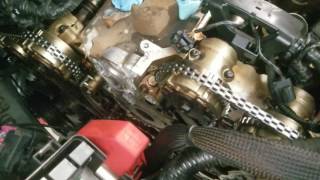
- Rattling or scraping noise from the engine, especially on cold startup for a few seconds. 🎬 Hear the clattering noise and learn how to fix it
- Reduced engine power and poor acceleration
- Engine may hesitate or stall
- Decreased fuel economy
- Metal shavings found in engine oil during an oil change
- Replacing the camshaft position sensor
- Replacing the crankshaft position sensor
- Replacing only the VVT solenoids without checking mechanical timing
Most Likely Causes
- Stretched Timing Chains 🔴 High Probability This is a widely documented issue on GM's 3.6L V6 engine family due to the original chain design's susceptibility to wear and sensitivity to oil quality/intervals. GM TSBs like PIP3423P directly link this code to stretched chains.
How to confirm: A technician can use a scan tool to view live data for 'Camshaft Position Variance'. A consistent deviation greater than 4-5 degrees at idle strongly suggests a mechanical timing issue. Definitive confirmation requires a physical inspection of chain slack, which involves significant labor.
Typical fix: Replace all three timing chains (primary and two secondary), all tensioners, and all guides with a complete, high-quality kit. It is also recommended to replace the water pump and VVT solenoids at the same time.
Est. part cost: $480-$1334 - Failed Timing Chain Tensioners or Guides 🔴 High Probability The hydraulic tensioners are operated by engine oil pressure and can fail or become weak due to dirty oil or wear, allowing the chain to become slack. Plastic guides can become brittle and break. This is cited as a potential cause in TSB #PIP3423P.
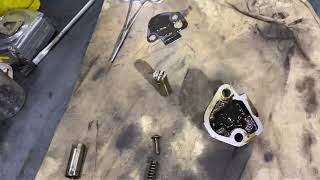
How to confirm: These are inspected and always replaced along with the timing chains as part of the same comprehensive repair. A weak tensioner is a key indicator of a stretched chain.
Typical fix: Replace tensioners and guides as part of a complete timing chain service. They should not be replaced in isolation.
Est. part cost: $75-$150 (as part of a kit) - Low, Dirty, or Incorrect Viscosity Engine Oil 🟡 Medium Probability The camshaft phasers and timing chain tensioners are hydraulically operated. Low oil level, degraded oil, or oil that is too thick or thin can impede their function and lead to timing correlation errors. This is a major contributing factor to the primary timing chain failure.
How to confirm: Check the oil level and condition on the dipstick. Review service records to ensure the correct oil (dexos1 approved 5W-30) and appropriate change intervals (typically 5,000 miles, not just relying on the OLM) were used.
Typical fix: Perform an oil and filter change with the manufacturer-specified full synthetic oil. If the code returns, permanent mechanical damage has likely already occurred.
Est. part cost: $50-$100 - Faulty Camshaft Position Actuator Solenoid (VVT Solenoid) ⚪ Low Probability While less common than chain failure, these solenoids can get clogged with sludge from degraded oil or fail electrically. TSB PIP5730B notes this as a possible cause for the LFY engine (2018 model).
How to confirm: A technician can command the solenoid with a scan tool to check for response. They can also be removed, cleaned, and tested for resistance. Swapping the intake and exhaust solenoids on Bank 2 can help diagnose; if the code changes to P0019, the solenoid is bad.
Typical fix: Replace the faulty solenoid. It is often recommended to use OEM parts, as some aftermarket solenoids have been reported to cause issues.
Est. part cost: $30-$80
Rare But Worth Checking
- Faulty Camshaft or Crankshaft Position Sensor: This is rarely the cause. The sensors are usually accurately reporting a mechanical timing problem. Do not replace sensors without confirming the mechanical timing is correct.
- Damaged or Slipped Crankshaft Reluctor Wheel: The reluctor wheel is what the crankshaft sensor reads. If it has shifted its position on the crankshaft, it can cause correlation codes even with perfect chains. This is an uncommon failure mentioned in GM TSB #PIP3423N.
- Failed Camshaft Phaser / Actuator: The gear at the end of the camshaft can fail internally. A locking pin can break, causing a rattle and preventing it from maintaining base timing. This is usually found during a timing chain job when the cam can be turned independently of the sprocket.
Diagnosis Steps
- Verify the engine oil level and condition. Ensure it is full, clean, and of the correct viscosity (full synthetic 5W-30 dexos1 approved). If in doubt, change the oil and filter.
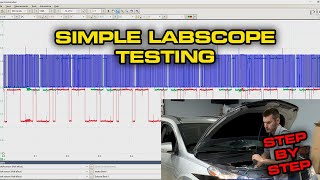
- Use a professional scan tool to check for other related DTCs and to view live data for camshaft angle deviation or 'Camshaft Position Variance'. A deviation of more than 4-5 degrees at idle is a strong sign of a mechanical fault. 🎬 Watch: How to test timing chain problems with a labscope
- Listen for a brief rattling or scraping noise from the front of the engine during a cold start. This is a classic symptom of a loose timing chain.
- Test the Bank 2 intake VVT solenoid. This can be done by commanding it with a scan tool or by swapping it with the adjacent exhaust solenoid to see if the code changes to P0019.
- Inspect the wiring and connectors for the Bank 2 camshaft position sensor and the VVT actuator solenoid for any damage or corrosion.
- If the above steps do not identify the issue, a mechanical inspection of the timing system is required. This is a labor-intensive process that involves removing the engine's front cover to physically inspect the chains for slack, check for broken or worn guides, and verify timing marks.
Parts You'll Likely Need
- Engine Timing Chain Kit
(OEM #ACDelco 12651450 (or kit equivalent for specific year))— This is the most probable cause of the P0018 code on this engine. A complete kit ensures all worn components (chains, tensioners, guides, sprockets) are replaced at once. Using an updated OEM kit is highly recommended.
Trusted brands: ACDelco, Cloyes
OEM price range: $500-$800
Aftermarket price range: $300-$500 - Camshaft Position Actuator Solenoid
(OEM #ACDelco 12679099 (Intake, Bank 2))— A much less common but possible cause. It's a relatively inexpensive part to replace as a diagnostic step before committing to the timing chain job.
Trusted brands: ACDelco, Delphi
OEM price range: $50-$100
Aftermarket price range: $30-$80
Related Codes That Often Appear With This One
- P0008 — This is a more general engine position performance code that often appears as the first sign of timing chain stretch before more specific bank-related codes like P0018 are set.
- P0016 — This is the same correlation error but for Bank 1 (Intake). If the primary timing chain is very loose, it can affect both banks, causing P0016 and P0018 to appear together.
- P0017 — This indicates a correlation error on the exhaust camshaft of Bank 1. Its presence with P0018 suggests a widespread timing chain issue affecting multiple chains.
- P0019 — This is a correlation error for the exhaust camshaft on the same bank (Bank 2). If both P0018 and P0019 are present, it strongly points to a timing issue on that entire bank, likely the secondary chain for Bank 2.
Technical Service Bulletins (TSBs) & Recalls
- PIP3423P/N: Mentions that DTCs including P0018 may be set and advises technicians to inspect for loose timing chains, tensioners, or a slipped crankshaft reluctor wheel.
- PIP5730B: For the later LGX engine (2018 Enclave), this TSB provides diagnostic help for codes like P0018, pointing to potentially sticking 'Intake Camshaft Position Actuator Park Lock Solenoid Valves' as a cause.
Platform-Specific Known Issues
- Premature timing chain stretch is a well-documented, widespread problem on the GM 3.6L V6 engine family.
- Manufacturer TSB #PIP3423P (and its successors like PIP3423N) directly mentions that codes P0016, P0017, P0018, and P0019 can be caused by loose timing chains or tensioners and instructs technicians to inspect these components.
- The factory Oil Life Monitor (OLM) system on earlier models was criticized for allowing oil change intervals that were too long, leading to oil breakdown that accelerated chain wear. Owners are often advised to change oil more frequently (e.g., every 5,000 miles) than the OLM might indicate.
Mechanic-Grade Diagnostic Values
- Camshaft Position Actuator (VVT) Solenoid Resistance — expected: 8 to 12 Ohms at 68°F (20°C).. Failure: A reading outside this range, or infinite (open circuit) or near zero (short circuit), indicates a failed solenoid.
- Camshaft Position Sensor Signal Voltage (while cranking) — expected: A fluctuating digital signal, typically a 0V to 5V square wave visible on an oscilloscope.. Failure: A missing, erratic, or distorted waveform suggests a bad sensor or wiring issue.
- Scan Tool Camshaft Position Variance (at idle) — expected: Less than +/- 4 degrees.. Failure: Consistent deviation greater than 6-9 degrees indicates a mechanical timing issue like a stretched chain.
- Crankshaft Reluctor Wheel Position (physical check) — expected: 25 to 26 mm from the end of the machined surface of the crankshaft throw to the edge of the open space in the reluctor.. Failure: A measurement different from the specification indicates the reluctor wheel has slipped on the crankshaft.
Scan Tool Commands That Help
- GDS2 (GM Global Diagnostic System 2): Camshaft Position Actuator Solenoid Control — This bidirectional control allows a technician to command the Bank 2 intake solenoid ON and OFF while monitoring engine RPM and cam angle data. A lack of change in RPM or angle when the solenoid is commanded indicates a faulty solenoid, clogged oil passage, or wiring issue.
- GDS2 (GM Global Diagnostic System 2): Live Data - Camshaft Position Variance — This data PID should be monitored at idle and during snap-throttle tests. It directly compares the desired camshaft angle to the actual angle. A consistent, large variance (e.g., over 6-9 degrees) on Bank 2 Intake is a primary indicator of a stretched timing chain, condemning the mechanical components before extensive disassembly.
Wiring & Ground Locations
- Bank 2 Camshaft Position Sensor Connector — On the 2016-2017 models (LLT engine), the Bank 2 (radiator side) sensors are on the front of the cylinder head. On the 2018 model (LFY engine), the sensors are on the back of the cylinder heads near the firewall, and access may require removing the engine torque strut (dogbone mount).. This is the primary sensor reporting the fault. The connector and its wiring are critical points for inspection for damage, corrosion, or looseness before replacing the sensor itself.
- Engine Wire Harness Chafe Points (2018+ models) — A known issue involves the engine harness chafing against the ECM/TCM bracket, the driver's side upper control arm, and a shock tower bolt. This requires removing the driver's side wheel and wheelhouse liner to inspect.. A chafed wire in the harness can cause a short or open in the camshaft position sensor circuit, creating erratic signals and triggering correlation codes even if all mechanical components and sensors are good. GM has issued service bulletins regarding this issue.
Real Owner Repair Stories
- Reddit user 'kappakingtut2' (Unknown vehicle, but symptoms and cause are highly relevant.) — Check Engine Light with P0018 and P0018pd codes. No audible noises or rough running initially. Dipstick was found to be completely empty of oil.
❌ Tried (didn't work) Performing an oil change. The light went out for a few days but returned.
✅ What actually fixed it The ultimate cause was a timing chain issue, which had become severe due to driving with low oil. The total repair cost was nearly $4,000. - Reddit user comment on a P0018 thread (Kia Borrego V6 (demonstrates a relevant principle)) — Recurring P0018 code immediately after getting oil changes from a non-dealer shop.
❌ Tried (didn't work) Multiple visits to the mechanic after aftermarket oil changes.
✅ What actually fixed it The issue was caused by an incorrect aftermarket cartridge oil filter. Installing the correct OEM Kia filter resolved the code, as the aftermarket filter was likely impeding oil pressure to the VVT system.
OEM Part Supersession History
ACDelco 12651450→12679117, and later by kit 12693218 or 12700436.— GM has updated the timing chain kits multiple times to improve the design and durability of the chains and tensioners to combat premature stretching.
Heads up: It is critical to use the latest available OEM kit for the specific VIN to ensure the most durable, updated components are installed. Some early phaser designs also required different thrust washers when replaced with newer parts.
Model Year Variations Within This Range
- 2016-2017: These models use the 3.6L LLT V6 engine. On this engine, the Bank 2 (radiator side) camshaft position sensors are located on the front of the cylinder head, making them relatively accessible.
- 2018: This model uses the updated 3.6L LFY V6 engine. The camshaft position sensors were moved to the rear of the cylinder heads, near the firewall. Additionally, the 2018+ models are subject to a known engine wiring harness chafe issue near the ECM/TCM bracket that can cause various electrical faults, including sensor correlation codes.
Helpful Videos
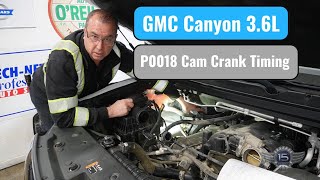
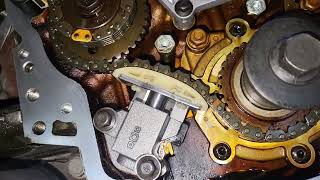
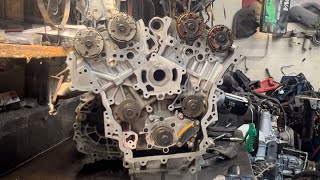
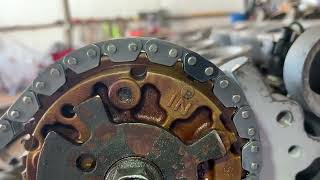
Used OEM Parts in Stock

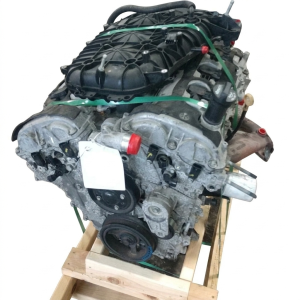
New Aftermarket Parts Available


The information in this article is provided for general reference and educational purposes only. Vehicle specifications, procedures, and part compatibility can vary by production date, trim level, and region. Always consult your vehicle's factory service manual and verify part numbers before purchasing or performing repairs. Safety-critical components such as airbags, seat belts, and braking systems should be installed by a qualified professional.
- Buick ENCLAVE:
- 🎬 Helpful Videos
- 🛍️ Shop This Part
- What's Unique About the 2016-2018 Buick ENCLAVE
- Diagnostic Flowchart
- Symptoms You May Notice
- Most Likely Causes
- Rare But Worth Checking
- Diagnosis Steps
- Parts You'll Likely Need
- Related Codes That Often Appear With This One
- Technical Service Bulletins (TSBs) & Recalls
- Platform-Specific Known Issues
- Mechanic-Grade Diagnostic Values
- Scan Tool Commands That Help
- Wiring & Ground Locations
- Real Owner Repair Stories
- OEM Part Supersession History
- Model Year Variations Within This Range
- 🎟️ Get 5% Off