

P0017 on 2015-2019 Lincoln MKZ Hybrid: Causes and Fixes for Exhaust Camshaft Correlation Error
This code means your engine's exhaust camshaft is out of sync with the crankshaft. The most likely cause on this vehicle is a sticking Variable Camshaft Timing (VCT) solenoid due to dirty oil or debris, a known issue cited in a manufacturer TSB. A solenoid replacement costs about $40-$80 for the part and is a straightforward DIY fix.
- P0017 indicates the exhaust camshaft timing is out of sync with the crankshaft.
- Before buying any parts, check your engine oil level and condition. Low or dirty oil is a very common cause.
- The most likely part to fail is the VCT solenoid, often due to oil debris, as noted in a manufacturer TSB.
- If you hear a rattling noise from the engine, a stretched timing chain becomes a much higher probability, which is a significantly more expensive repair.
- Do not drive the vehicle with this code, as you risk severe and costly engine damage.
What's Unique About the 2015-2019 Lincoln MKZ HYBRID
For this specific generation of Ford and Lincoln vehicles with the 2.0L engine, a known issue can trigger this code. A Technical Service Bulletin (TSB SSM 50067) suggests that small debris in the engine oil can cause the Variable Camshaft Timing (VCT) solenoids to stick. This makes a faulty VCT solenoid a more probable cause than on other vehicles, often stemming from oil condition rather than an electrical failure of the solenoid itself. The TSB even recommends a specific diagnostic procedure (pinpoint test HK12) to cycle the solenoid 10 times with a scan tool to attempt to clear the debris before replacing the part.
Diagnostic Flowchart
Tap your situation to follow the diagnostic path that matches what you're seeing on this vehicle.
Symptoms You May Notice
- Check Engine Light is on
- Rough or uneven idle, especially when cold.
- Hesitation or loss of power during acceleration.
- Engine stalling at low speeds or when coming to a stop.
- Rattling noise from the engine, suggesting a timing chain issue.
- Difficulty starting the engine or extended cranking.
- Noticeable decrease in fuel economy.
- Replacing the camshaft position sensor when the actual problem is a sticking VCT solenoid or a stretched timing chain. The sensor is often just accurately reporting a mechanical problem.
Most Likely Causes
- Sticking or Failed VCT Solenoid 🔴 High Probability A manufacturer TSB (SSM 50067) specifically notes that debris can cause the VCT solenoid to stick on this engine family, leading to correlation codes like P0017. This is the most common cause before a more serious mechanical issue.
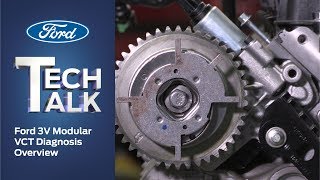
How to confirm: Use a capable scan tool to command the exhaust VCT solenoid on and off while monitoring cam angle (this is the procedure recommended by Ford in TSB SSM 50067). 🎬 Watch: Ford Tech Talk's professional guide to VCT diagnosis. If the angle doesn't change as commanded, the solenoid is likely stuck. You can also swap the intake and exhaust solenoids (if they are identical parts) to see if the trouble code follows to the other camshaft (e.g., P0016 appears).
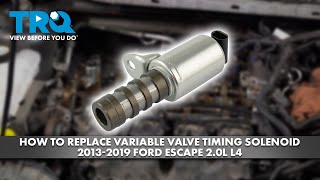
Typical fix: Replace the Bank 1 exhaust VCT solenoid. 🎬 See this walkthrough for replacing the solenoid on a 2.0L. It is highly recommended to perform an oil and filter change at the same time to remove the debris that likely caused the failure.
Est. part cost: $40-$80 - Low or Dirty Engine Oil 🔴 High Probability The VCT system is hydraulically operated and relies entirely on clean oil and correct pressure to function. Contaminated oil or a low oil level is a primary cause of VCT solenoids sticking and can lead to premature timing chain wear.
How to confirm: Check the oil level on the dipstick and inspect its color and consistency. If the oil is dark, gritty, or below the minimum level, this is a likely contributor. Check service records for the last oil change interval.
Typical fix: Perform an engine oil and filter change using the manufacturer-specified grade of oil (for the 2.0L Hybrid, this is typically SAE 5W-20 Synthetic Blend). Clear the codes and test drive to see if the code returns.
Est. part cost: $50-$90 - Stretched Timing Chain 🟡 Medium Probability Over time, especially at higher mileage (typically over 100,000 miles) or with poor oil change history, the timing chain can stretch. This creates slack and changes the mechanical timing between the crank and cams, which the sensors will detect.
How to confirm: This is a mechanical inspection. A startup rattle is a strong indicator. A mechanic will need to remove the valve cover and/or timing cover to physically check for chain slack and verify that the timing marks on the sprockets, phasers, and crankshaft align correctly at Top Dead Center. A scan tool can also show cam/crank deviation; a consistent error of more than +/- 5 degrees at idle often points to a stretched chain.
Typical fix: Replace the timing chain, tensioners, guides, and sprockets. This is a labor-intensive job. It is often recommended to replace the water pump at the same time if it is driven by the timing chain.
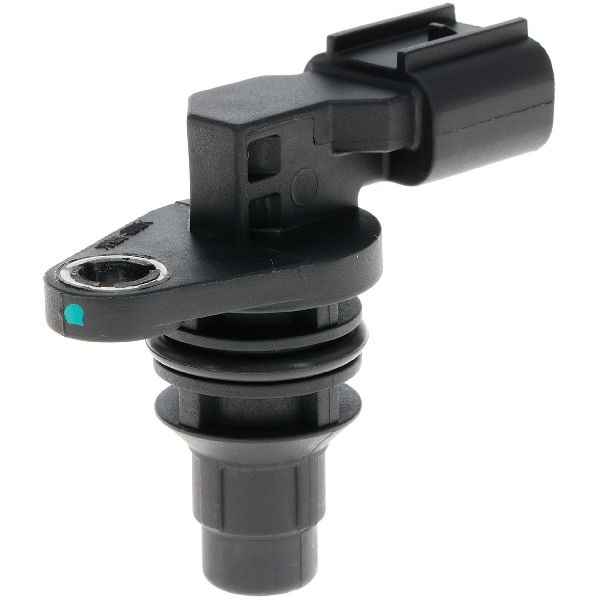
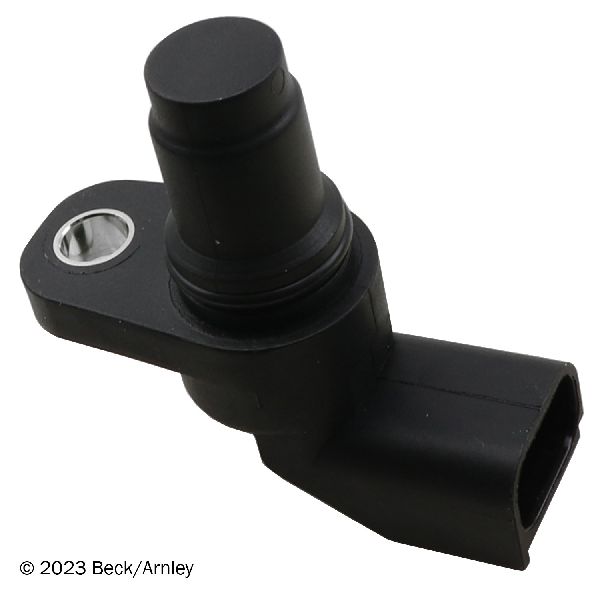
Est. part cost: $200-$400 - Failed Camshaft Position Sensor ⚪ Low Probability
How to confirm: If the engine runs smoothly but the code is present, the sensor is a more likely culprit. You can test the sensor's output with a multimeter or oscilloscope. Swapping it with the intake sensor (if they are the same part) can also help diagnose if the code changes.
Typical fix: Replace the exhaust camshaft position sensor for Bank 1.
Est. part cost: $65-$100
Rare But Worth Checking
- Failed Camshaft Phaser: The phaser is the gear on the end of the camshaft that actually adjusts the timing. It can fail mechanically or get clogged with debris, but this is less common than a solenoid failure.
- Damaged Wiring or Connectors: Check the wiring harness and connectors for the crankshaft sensor, camshaft sensor, and VCT solenoid for any signs of damage, corrosion, or oil contamination.
- Failed Crankshaft Position Sensor: While possible, it's less common for the crankshaft sensor to be the sole cause of a P0017 code without other codes present.
- Damaged Reluctor Wheel/Tone Ring: The reluctor wheel (or tone ring) on the camshaft or crankshaft has teeth that the sensors read. If a tooth is damaged or bent, it can cause an incorrect signal and trigger this code.
Diagnosis Steps
- Check Engine Oil: Verify the oil level is correct and the oil is clean. If low or dirty, perform an oil and filter change using the correct viscosity oil, clear the codes, and see if P0017 returns. This is the simplest and most important first step.
- Scan for Codes: Use an OBD-II scanner to confirm P0017 and check for any other related codes (like P0016, P0014, etc.). Note the freeze frame data to see engine conditions when the code was set.
- Analyze Live Data: Use a scan tool to monitor the desired vs. actual camshaft position angles for the Bank 1 exhaust cam. A large discrepancy or a value that doesn't change indicates a problem.
- Test the VCT Solenoid: Following TSB SSM 50067, use a scan tool to command the exhaust VCT solenoid on and off 10 times to try and clear debris. If the cam angle doesn't respond, the solenoid is a primary suspect. You can also remove it and test it by applying 12V to see if the internal plunger moves. 🎬 Watch: How to bench test a VVT solenoid for movement.
- Inspect Wiring: Visually inspect the wiring and connectors to the camshaft sensor, crankshaft sensor, and VCT solenoid for any damage, fraying, or oil contamination.
- Test the Camshaft Position Sensor: If the solenoid and wiring are good, test the camshaft position sensor itself, typically by checking for a proper signal with a multimeter while the engine is running.
- Inspect Mechanical Timing: If all electronic and hydraulic components test good, the final step is a mechanical inspection of the timing chain, guides, and phasers for stretch or damage. This is an advanced step and may require a professional.
Parts You'll Likely Need
- Engine Variable Valve Timing (VVT) Solenoid
(OEM #CJ5Z-6M280-A)— This is the most likely culprit according to manufacturer TSBs and common VVT system failure patterns. It controls oil flow to the cam phaser.
Trusted brands: Motorcraft, Dorman, Standard Motor Products, NGK
OEM price range: $50-$90
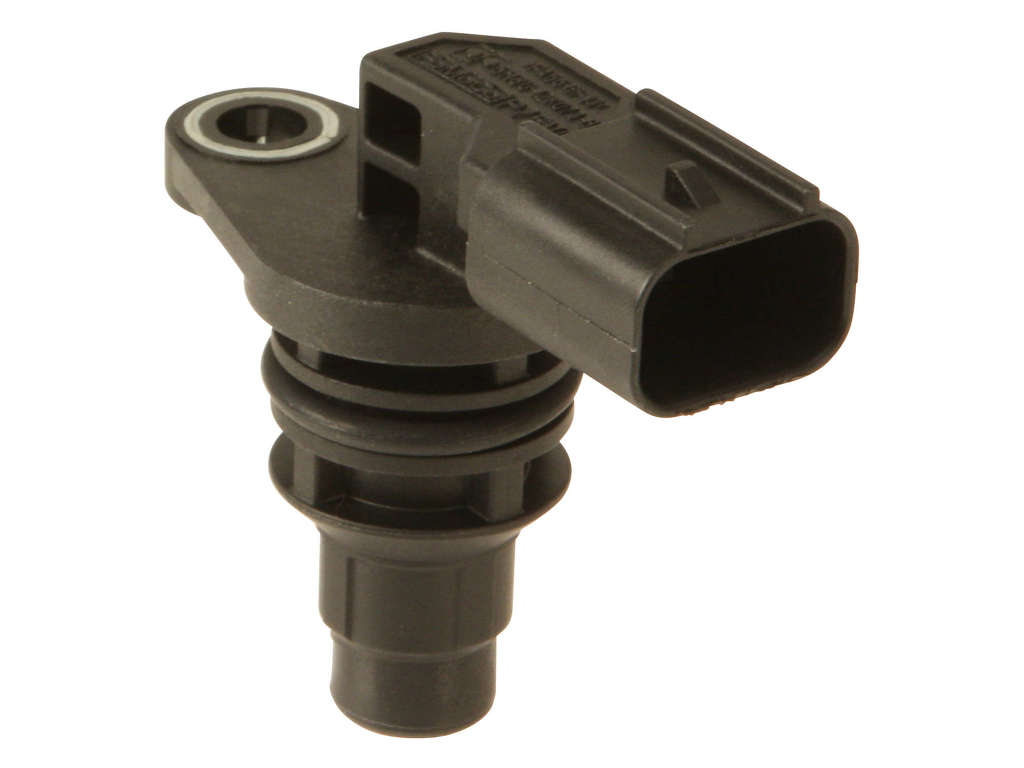
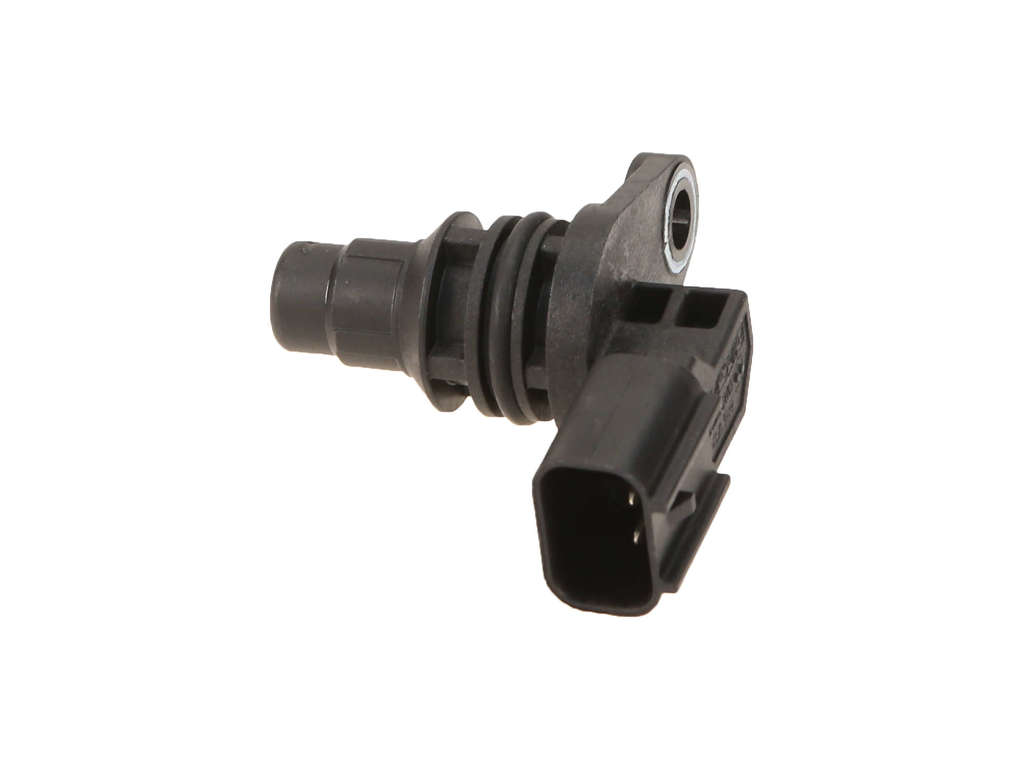
Aftermarket price range: $30-$60 - Camshaft Position Sensor
(OEM #DU-110)— This part can fail and cause the code, but it's often replaced unnecessarily. It's the sensor that reports the camshaft's position to the PCM.
Trusted brands: Motorcraft, Bosch, NGK
OEM price range: $65-$100
Aftermarket price range: $40-$70 - Timing Chain Kit — If the chain has stretched, a full kit including the chain, tensioner, and guides is required to restore correct mechanical timing.
Trusted brands: Cloyes, Melling
OEM price range: $300-$500
Aftermarket price range: $200-$400
Related Codes That Often Appear With This One
- P0016 — This code is for the intake camshaft correlation. If both P0016 and P0017 appear together, it strongly points towards a base timing issue like a stretched timing chain or a slipped timing belt that affects both camshafts.
- P0014 / P0015 — These codes relate to the exhaust camshaft timing being over-advanced or over-retarded, which can be caused by the same faulty VCT solenoid or oil flow issues that trigger P0017.
- P0340 / P0341 — These are general camshaft position sensor circuit codes. They may appear alongside P0017 if there is an electrical issue with the sensor or its wiring, not just a correlation problem.
Technical Service Bulletins (TSBs) & Recalls
- SSM 50067: Some 2015-2021 Ford and Lincoln vehicles may exhibit an illuminated MIL with diagnostic trouble codes (DTC) P0011, P0012, P0014, P0015, P0016, P0017, P0018, P0019, P0021, P0022, P0024 and/or P0025. This may be due to small debris causing the VCT solenoid to stick. Before attempting any component diagnosis or replacement of the VCT solenoid, refer to Powertrain Control and Emissions Diagnosis (PC/ED) pinpoint test HK12 to cycle the affected VCT solenoid 10 times to attempt to clear the debris.
Platform-Specific Known Issues
- A Technical Service Bulletin (SSM 50067) was issued for 2015-2021 Ford and Lincoln vehicles, indicating that DTCs including P0017 can be caused by small debris making the VCT solenoid stick. This highlights the importance of clean engine oil and points to the solenoid as a primary suspect.
Mechanic-Grade Diagnostic Values
- VCT Solenoid Resistance — expected: 5 to 15 Ohms between the two pins.. Failure: A reading outside this range, or an open circuit (infinite resistance), indicates a failed solenoid coil.
- VCT Solenoid Connector Voltage — expected: Battery voltage (~12V) at the power supply pin with key on, engine off.. Failure: No voltage suggests a wiring or fuse issue upstream from the solenoid.
- Camshaft Position Sensor Signal Voltage (3-wire Hall effect) — expected: With the key on and engine off, the signal wire should show ~5 volts DC. When the engine is cranked or running, the voltage should fluctuate rapidly, dropping to 0V as the reluctor passes the sensor.. Failure: A constant 0V or 5V that does not change while cranking indicates a failed sensor or wiring issue.
Scan Tool Commands That Help
- Ford IDS (Integrated Diagnostic System): Variable Camshaft Timing (VCT) Solenoid On/Off Test — This bidirectional control is used to manually cycle the VCT solenoid. Per TSB SSM 50067, cycling the solenoid 10 times can dislodge small debris causing it to stick, potentially fixing P0017 without part replacement. This is a primary diagnostic step before replacing the solenoid.
- Ford IDS (or equivalent advanced scan tool): Monitor PID: VCT_ADV_ERR (VCT Advance Error) — While the engine is in closed-loop operation at idle, this PID value for the exhaust cam should be close to 0 degrees. A consistent, large deviation (e.g., more than +/- 5 degrees) suggests a mechanical timing issue (stretched chain, bad phaser) rather than a solenoid or oil pressure problem.
Wiring & Ground Locations
- Exhaust Camshaft Position Sensor (CMP) — On top of the valve cover, on the right side of the engine (passenger side), toward the rear/firewall.. This is 'Sensor B' for the P0017 code. Its connector and wiring are exposed to heat and oil and should be inspected for damage or contamination.
- Crankshaft Position Sensor (CKP) — On the passenger side of the engine block, near the main crankshaft pulley. Access requires jacking up the vehicle, removing the passenger front tire, and removing the engine splash shield.. This sensor provides the primary timing reference. Its wiring is low on the engine and susceptible to road debris or oil leaks. Crucially, its position is adjustable and requires a special alignment tool upon replacement, a common point of installation error.
Helpful Videos


Used OEM Parts in Stock

New Aftermarket Parts Available


The information in this article is provided for general reference and educational purposes only. Vehicle specifications, procedures, and part compatibility can vary by production date, trim level, and region. Always consult your vehicle's factory service manual and verify part numbers before purchasing or performing repairs. Safety-critical components such as airbags, seat belts, and braking systems should be installed by a qualified professional.
- Lincoln MKZ HYBRID:
- 🎬 Helpful Videos
- 🛍️ Shop This Part
- What's Unique About the 2015-2019 Lincoln MKZ HYBRID
- Diagnostic Flowchart
- Symptoms You May Notice
- Most Likely Causes
- Rare But Worth Checking
- Diagnosis Steps
- Parts You'll Likely Need
- Related Codes That Often Appear With This One
- Technical Service Bulletins (TSBs) & Recalls
- Platform-Specific Known Issues
- Mechanic-Grade Diagnostic Values
- Scan Tool Commands That Help
- Wiring & Ground Locations
- 🎟️ Get 5% Off