

P0016 on 2008-2010 Saturn Vue 3.6L V6: Stretched Timing Chain Causes and Fixes
On a 2008-2010 Saturn Vue with the 3.6L V6, code P0016 almost always means the timing chains have stretched. This is a well-known, serious issue with this engine, and the only reliable fix is a complete timing chain kit replacement, which is a major repair costing $1,800-$3,200+.
- P0016 on a 2008-2010 Saturn Vue 3.6L is a serious code that almost certainly indicates stretched timing chains.
- Do not waste money replacing sensors first; the problem is mechanical. The only correct fix is a complete timing chain kit replacement.
- This is a very expensive and labor-intensive repair that should be performed by a professional mechanic.
- Continued driving is not recommended as a complete timing chain failure can destroy the engine.
- The root cause is a known design issue with the engine, exacerbated by long oil change intervals. Using full synthetic oil and adhering to a 5,000-mile change interval is critical for the longevity of the new chains.
What's Unique About the 2008-2010 Saturn Vue
The 2008-2010 Saturn Vue with the 3.6L LY7 V6 is notorious for premature timing chain stretching. This widespread issue was caused by a combination of the original timing chain design being susceptible to wear and an overly optimistic Oil Life Monitor (OLM) from the factory, which recommended oil change intervals that were too long. Degraded or low oil level prevents the hydraulic tensioners from maintaining proper chain tension, accelerating wear and leading to the timing correlation fault. GM acknowledged this problem by issuing multiple Technical Service Bulletins (TSBs) and a Special Coverage Adjustment (#11340C) that extended the warranty to 10 years or 120,000 miles, though this has now expired for all affected vehicles.
Symptoms You May Notice
- Check Engine Light illuminated
- Rattling or scraping noise from the engine, especially on a cold start, often from the passenger side. Manufacturer Bulletin #PIP4716F specifically describes this as a "short, sharp rattle noise" from the front of the engine at start-up.
- Rough or unstable idle
- Reduced engine power and sluggish acceleration
- Poor fuel economy
- Engine misfires
- Engine may crank but not start if the chain has jumped multiple teeth. Manufacturer Bulletin #PIP4548F notes that P0016 can be associated with a condition where the vehicle "cranks but will not start."
- Replacing only the camshaft position sensor or crankshaft position sensor. These sensors are usually just accurately reporting the mechanical timing fault. Replacing them will not fix the underlying issue and the code will return. 🎬 Watch: Understanding the symptoms and causes of the P0016 code.
Most Likely Causes
- Stretched Timing Chains 🔴 High Probability The original timing chains used in the LY7 engine were susceptible to premature wear and stretching. This was exacerbated by long oil change intervals recommended by the factory Oil Life Monitor, leading to oil degradation and poor lubrication of the chains and hydraulic tensioners. GM later released updated, more durable chain kits to address this. Manufacturer Bulletin #PIP3423P advises technicians that when P0016 is set, they must inspect for loose timing chains or tensioners.
How to confirm: A mechanic can use an advanced scan tool to monitor the 'Camshaft Position Variance' PID; a sustained variance greater than +/- 4 degrees at idle strongly suggests a mechanical timing issue. A physical inspection, which requires removing the engine's front cover to check chain slack and tensioner extension, is the definitive confirmation. A lab scope can also be used to compare cam and crank sensor waveforms against a known-good pattern to electronically verify the timing shift without major disassembly. 🎬 Watch: How to diagnose if you need a new timing chain.
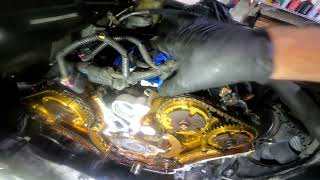
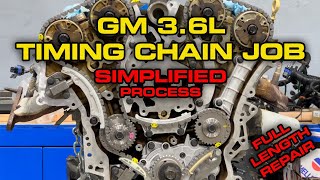
Typical fix: Replace all three timing chains, all tensioners, and all plastic guides with a new, updated kit. This is a very labor-intensive job, often requiring engine removal on this platform.
Est. part cost: $250-$600 - Low or Dirty Engine Oil 🟡 Medium Probability The timing chain tensioners and camshaft phasers are operated by oil pressure. Degraded or low oil can cause the tensioners to function improperly, accelerating chain wear and triggering timing codes. The original OLM calibration encouraged this condition.
How to confirm: Check the engine oil level on the dipstick and inspect its condition. If the oil is low, black, or sludgy, this is a primary contributing factor. Check oil pressure with a mechanical gauge; it should be at least 10 psi at idle and 20 psi at 2,000 RPM.
Typical fix: Perform an engine oil and filter change using a full synthetic oil that meets GM's Dexos specification. Clear the codes and see if they return. This is a critical first step before attempting major repairs, though it will not fix already-stretched chains.
Est. part cost: $50-$100
Rare But Worth Checking
- Spun Crankshaft Reluctor Wheel: Mentioned in GM TSB PIP3423, a spun reluctor wheel on the crankshaft provides an incorrect timing reference to the sensor. This can cause P0016 to persist even after a full timing chain replacement. Confirmation requires inspecting the wheel's position relative to the crankshaft counterweights, often through the crank sensor hole with a borescope. A key measurement is 25-26mm from the machined surface of the crank throw to the edge of the open space in the reluctor wheel. The fix is crankshaft replacement, though some specialists weld the wheel in place.
- Faulty Camshaft Position Actuator Solenoid (VVT Solenoid): While less common for causing P0016 specifically (compared to phaser-specific codes), a solenoid clogged with oil sludge can affect cam phasing and contribute to timing correlation issues. It's a relatively inexpensive part to replace as a diagnostic step and can be tested for resistance (typically 8-13 Ohms).
Diagnosis Steps
- Confirm the presence of P0016 and any other codes (like P0008, P0017, etc.) using an OBD-II scanner.
- Check the engine oil level and condition. If low or dirty, perform an oil change with the correct specification oil, clear the codes, and see if they return. This is a critical first step.
- Listen for a distinct rattling or scraping noise from the passenger side of the engine during a cold start. This sound is a classic indicator of a loose timing chain.
- Use an advanced scan tool to monitor live data for 'Camshaft Position Variance' for Bank 1. At idle, it should be near 0 degrees. A sustained deviation greater than +/- 4 degrees points to a mechanical timing problem.
- As a preliminary, lower-cost step, you can inspect and test the Bank 1 intake VVT solenoid. Check its resistance (should be 8-13 Ohms) and use the scan tool's bidirectional control to command it on; the engine should stumble or run rough if the solenoid and phaser are working.
- If the above steps point to a timing issue, the next step is a physical inspection of the timing chains, which requires significant engine disassembly and is best left to a professional. Manufacturer Bulletin #PIP4548F advises technicians on what to inspect if P0016 is setting on a "properly timed engine."
Parts You'll Likely Need
- Engine Timing Chain Kit
(OEM #12651450)— This is the primary and most definitive fix for P0016 on the 3.6L V6. The kit must include all three chains, all tensioners, and all guides to do the job correctly. This part number may be superseded by 12700436; always verify with VIN.
Trusted brands: ACDelco, Cloyes
OEM price range: $350-$500
Aftermarket price range: $200-$400 - Camshaft Position Actuator Solenoid
(OEM #12655420)— May be replaced as a diagnostic step or if clogged with sludge. It's a much cheaper and easier fix to attempt before committing to the full timing chain job. This part number may be superseded by 12679099.
Trusted brands: ACDelco, Dorman, Delphi
OEM price range: $40-$70
Aftermarket price range: $25-$50
Related Codes That Often Appear With This One
- P0008 — A general engine position system performance code for Bank 1. It is a hallmark of the same stretched timing chain issue and is often set alongside P0016.
- P0017 — This is the correlation code for the exhaust camshaft on the same bank (Bank 1). It is very common to see P0016 and P0017 together when the timing chain is stretched, indicating a timing issue affecting the entire bank.
- P0018 / P0019 — These are the corresponding intake and exhaust camshaft correlation codes for Bank 2 (front bank). Seeing codes for both banks (e.g., P0016 and P0018) strongly indicates a failure of the primary timing chain or a spun reluctor wheel, which affects all camshafts.
Technical Service Bulletins (TSBs) & Recalls
- 11340C: Special Coverage Adjustment for premature timing chain wear, extending the warranty to 10 years/120,000 miles. It covered timing chain replacement and, in some cases, an ECM reprogram for the Oil Life Monitor. This program is now expired for all vehicles.
- 12-06-01-009F: Announces the availability of updated, more durable timing chain kits for repair and lists the specific part numbers. It explicitly states that codes like P0016 are caused by stretched chains and that other components like guides and sprockets should not be replaced unnecessarily.
- PIP3423 (and revisions): A diagnostic guide for technicians that links codes P0016, P0008, etc., to loose timing chains. Crucially, it also identifies the rare case of a spun crankshaft reluctor wheel as a potential cause if the code persists after chain replacement.
- Bulletin #PIP3423P: Provides information to technicians that DTCs P0016, P0017, P0018, P0019, P0008, or P0009 may be set, requiring an inspection for loose timing chains or tensioners.
- Bulletin #PIP4716F: Notes that technicians may find P0016 or P0017 in vehicles experiencing a short, sharp rattle noise from the front of the engine at start-up.
- Bulletin #PIP4548F: Advises on inspection procedures for P0016 and/or P0017 when they occur on a properly timed engine or when the vehicle cranks but will not start.
Platform-Specific Known Issues
- Widespread premature timing chain stretching on the LY7 engine, acknowledged by GM through TSBs and a special warranty program (#11340C) which is now expired.
- The original factory Oil Life Monitor (OLM) calibration contributed to the problem by allowing excessively long oil change intervals, leading to oil degradation. TSBs recommended reprogramming the ECM with an updated OLM calibration.
- In rare cases, the code can be caused by a spun crankshaft reluctor wheel, which will cause the code to return even after a timing chain replacement.
Mechanic-Grade Diagnostic Values
- Scan Tool 'Camshaft Position Variance' PID at Idle — expected: Consistently less than +/- 4 degrees. Failure: A sustained deviation greater than +/- 4 degrees at idle strongly indicates a mechanical timing issue like a stretched chain.
- Camshaft Position Actuator Solenoid Resistance — expected: 8 to 13 Ohms (some sources specify 4.6-7.5 Ohms for LY7). Failure: A reading of OL (Open Loop/infinite resistance) or near 0 Ohms indicates a failed solenoid coil.
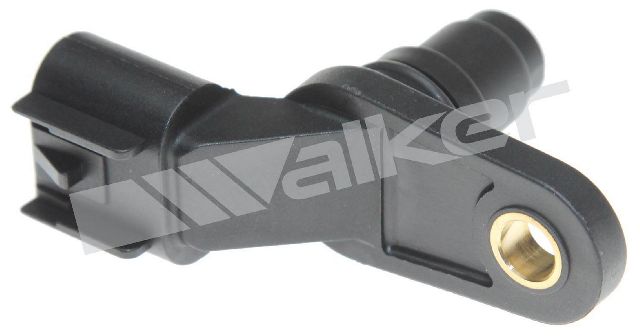
- Camshaft Position Sensor (3-wire Hall Effect) Signal Voltage — expected: Switches between ~5V and 0V as the engine rotates.. Failure: Voltage that is stuck high, stuck low, or does not produce a clean square wave pattern when viewed on a scope indicates a faulty sensor.
- Camshaft Position Sensor 5V Reference Circuit — expected: 4.8 - 5.2 Volts with Key On, Engine Off.. Failure: Voltage significantly higher or lower than 5V points to a wiring or ECM problem.
- Engine Oil Pressure (LY7 at operating temp) — expected: Minimum 10 psi (69 kPa) at idle; Minimum 20 psi (138 kPa) at 2,000 RPM.. Failure: Pressure below these minimums can starve the hydraulic chain tensioners and VVT system, accelerating wear.
Scan Tool Commands That Help
- GDS2 / Tech2: Camshaft Position Actuator Solenoid Test — This bidirectional control is used to command the VVT solenoid ON and OFF. If the engine stumbles or stalls, it confirms the solenoid, oil passages, and mechanical phaser are responding. If there is no change, it points to a fault in that hydraulic circuit, helping to diagnose a bad solenoid before condemning the timing chains.
- GDS2 / Tech2: Crankshaft Position Variation Learn (CASE Learn) — This is NOT a fix for P0016. It is a mandatory relearn procedure that must be performed AFTER replacing the timing chains, crankshaft, or crankshaft position sensor. It allows the ECM to learn the new component tolerances for accurate misfire detection.
Wiring & Ground Locations
- G106 — On the engine, at the left front top corner (for the 3.6L V6).. This is a primary engine and ECM ground. A loose or corroded connection here can cause erratic signals from the cam and crank sensors, leading to false or intermittent timing codes.
- G105 — At the left rear of the engine.. This is another critical engine ground point. A poor connection can disrupt the ground reference for various engine sensors, complicating diagnosis.
- ECM (Engine Control Module) — Located in the left front of the engine compartment.. This module receives all sensor inputs. While ECM failure is rare, checking for corrosion at the connectors is a valid step in a deep electrical diagnosis.
Real Owner Repair Stories
- YouTube user with a 2007 Cadillac CTS (3.6L LY7) (2007 Cadillac CTS 3.6L LY7) — Check Engine Light with codes P0008 and P0017.
❌ Tried (didn't work) The owner was preparing for a full timing chain replacement based on the common failure.
✅ What actually fixed it As a preliminary step, the owner replaced the Bank 1 camshaft position sensors and removed and cleaned the VVT solenoids, which were covered in sludge. After clearing the codes and a test drive, the light did not return, saving thousands on an unnecessary timing chain job. - GoTech YouTube Channel (GM 3.6L V6 (generic)) — Cam/Crank correlation codes (P0016, P0017, etc.)
❌ Tried (didn't work) Guessing or immediately disassembling the engine front cover.
✅ What actually fixed it Using a lab scope to compare the crankshaft sensor signal with the camshaft sensor signals. A known-good pattern shows the cam signal crossing at a specific point relative to the crank signal's missing tooth gap. On a vehicle with a stretched chain, the cam signal was visibly retarded (shifted to the right on the screen), providing electronic proof of a mechanical timing issue in under 30 minutes without major disassembly.
OEM Part Supersession History
12651450→12700436— Updated, more durable timing chain kit design to address premature stretching.
Heads up: Always verify the correct kit part number with the vehicle's VIN, as there are variations between LY7 and LLT engines.12655420 (Intake)→12679099— Updated VVT solenoid design.
Heads up: Intake (12655420) and Exhaust (12655421) solenoids are not interchangeable on some models. Ensure the correct part is used for the specific camshaft.
Model Year Variations Within This Range
- 2008-2009 vs 2010: The 2008-2009 Saturn Vue primarily used the port-injected 3.6L LY7 engine (VIN '7'). The 2010 model year may have used the direct-injected 3.6L LLT engine. While both suffer from timing chain issues, the LLT has a different high-pressure fuel system and some different sensor part numbers. The diagnostic approach is similar, but parts are not always interchangeable.
Diagnostic Flowchart
Real Owner Stories
Aggregated from forums and TSBs cited above. Mileages and costs reflect what owners reported in those sources.
2011 GMC Acadia 3.6L V6
Symptoms: Diagnosed with a P0016 code after experiencing timing issues.
What fixed it: Required a full timing chain job after confirming camshaft/crankshaft deviation using a scan tool.
Source hint: gmtruckforums.com
GMC Acadia 3.6L V6
Symptoms: Received the P0016 code due to stretched timing chains.
What fixed it: Timing chain replacement. Many owners noted this was covered under the 11340C special coverage when it was active.
Cost: $2500-$4000
Source hint: acadiaforum.net
Saturn Vue / Outlook 3.6L V6
Symptoms: Triggered P0016 and related OBD-II codes.
What fixed it: Timing chain replacement, which was confirmed by the community as the most common cause for these codes on this engine.
Source hint: saturnfans.com
Related OBD-II Codes
Frequently Asked Questions
Is the timing chain replacement for my 2008-2010 Saturn Vue 3.6L covered under GM's special warranty?
Why did the timing chains stretch so early on my 3.6L V6 Vue?
I have a P0016 code on my Vue. Should I replace the VVT solenoids first?
How can a mechanic confirm my Vue's timing chains are stretched without taking the engine apart?
I replaced the timing chains on my 3.6L LY7, but the P0016 code came back. What else could it be?
Does GM have updated parts to fix the P0016 timing chain issue permanently?
Helpful Videos
We Have This Part in Stock


The information in this article is provided for general reference and educational purposes only. Vehicle specifications, procedures, and part compatibility can vary by production date, trim level, and region. Always consult your vehicle's factory service manual and verify part numbers before purchasing or performing repairs. Safety-critical components such as airbags, seat belts, and braking systems should be installed by a qualified professional.
- Saturn Vue:
- 🎬 Helpful Videos
- 🛍️ Shop This Part
- What's Unique About the 2008-2010 Saturn Vue
- Symptoms You May Notice
- Most Likely Causes
- Rare But Worth Checking
- Diagnosis Steps
- Parts You'll Likely Need
- Related Codes That Often Appear With This One
- Technical Service Bulletins (TSBs) & Recalls
- Platform-Specific Known Issues
- Mechanic-Grade Diagnostic Values
- Scan Tool Commands That Help
- Wiring & Ground Locations
- Real Owner Repair Stories
- OEM Part Supersession History
- Model Year Variations Within This Range
- Diagnostic Flowchart
- Real Owner Stories
- 2011 GMC Acadia 3.6L V6
- GMC Acadia 3.6L V6
- Saturn Vue / Outlook 3.6L V6
- Related OBD-II Codes
- Frequently Asked Questions
- 🎟️ Get 5% Off