

P0016 on 2014-2019 Ford Fiesta 1.0L EcoBoost: Wet Belt Failure, Causes, and Fixes
On the 1.0L EcoBoost, P0016 is a critical warning that often points to a degrading 'wet' timing belt causing low oil pressure. Do not ignore it. The first diagnostic step is to check the oil pan for rubber debris. A full timing belt job can cost over $2,000, while a less common cause, a VCT solenoid, is around $200-$300 to replace.
- P0016 on a 1.0L EcoBoost Fiesta is a critical code that should be addressed immediately.
- The most likely cause is a failing 'wet' timing belt clogging the oil system, leading to low oil pressure.
- Do NOT start by replacing the cam/crank sensors; this is a common misdiagnosis.
- The first diagnostic step should be checking the oil pan for rubber debris.
- Always use the Ford-specified 5W-20 oil (WSS-M2C948-B) to prolong the life of the timing belt.
What's Unique About the 2014-2019 Ford Fiesta

For the 1.0L EcoBoost engine, this code is uniquely serious and rarely a simple sensor fault. This engine uses a 'wet belt' system where the timing belt runs inside the engine and is lubricated by oil. These belts are known to degrade over time, shedding rubber material that clogs the oil pump pickup tube. This leads to oil starvation, which prevents the Variable Camshaft Timing (VCT) system from working correctly, triggering the P0016 code. Therefore, P0016 is often the first and most critical symptom of impending catastrophic engine failure due to this design.
Symptoms You May Notice
- Check Engine Light is on
- Rattling or slapping noise from the engine, especially on a cold start
- Rough idle or stalling
- Reduced engine power and sluggish acceleration
- Noticeably worse fuel economy
- Engine is hard to start or fails to start
- Flashing oil pressure warning light on the dashboard
- Replacing the camshaft position sensor without checking for oil pressure issues or belt debris.
- Replacing the crankshaft position sensor.
- Assuming the code is a simple sensor fault and clearing it without further diagnosis, allowing the underlying mechanical issue to worsen.
- Replacing the VCT solenoids without dropping the oil pan to check for belt debris, leading to a recurring fault.
Most Likely Causes

- Degrading Wet Timing Belt System 🔴 High Probability The 1.0L EcoBoost uses a Belt-in-Oil (BIO) or 'wet belt' for both the main timing and the oil pump. Using incorrect oil (anything other than Ford-spec WSS-M2C948-B 5W-20) or extending oil change intervals causes the belt's rubber to break down and delaminate.
How to confirm: The definitive diagnostic step is to drain the engine oil and remove the oil pan (sump). Inspect the oil pump pickup strainer for black rubber particles. The presence of any debris confirms belt degradation.
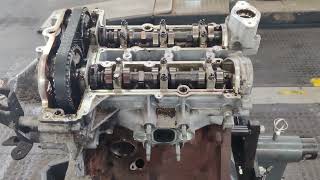
Typical fix: This is a major repair requiring replacement of both the main timing belt and the oil pump belt, along with the tensioners, and a thorough cleaning of the oil pan and pickup tube. Many technicians also replace the oil pump as a precaution. The labor time is significant, with mechanics reporting it can take two days for a first-timer. 🎬 See this walkthrough for replacing the wet timing belt
Est. part cost: $400-$700 - Sticking or Failed VCT Solenoid 🟡 Medium Probability The VCT (Variable Camshaft Timing) solenoids operate using oil pressure. Debris from a degrading belt can clog the fine mesh screens on the solenoids, causing them to stick. They can also fail electrically. Ford has acknowledged this issue across many models in TSBs SSM 48423 and SSM 50067.
How to confirm: Use a high-level scan tool to command the solenoid on and off while monitoring camshaft position data. TSBs suggest cycling the solenoid 10 times with a scan tool to try and clear debris before replacement. A common physical test is to swap the intake and exhaust VCT solenoids; if the code changes to P0017 (exhaust cam correlation), the solenoid is faulty.
Typical fix: Replace the faulty VCT solenoid. It is critical to also perform an engine oil and filter change with Ford-spec oil to remove contaminants that likely caused the failure.
Est. part cost: $40-$90 - Low, Dirty, or Incorrect Engine Oil ⚪ Low Probability This is often a contributing factor to the primary causes. The VCT system is entirely dependent on oil pressure and cleanliness to function. Incorrect oil viscosity directly accelerates the wet belt degradation. The only approved oil is a 5W-20 synthetic or synthetic-blend meeting Ford specification WSS-M2C948-B.
How to confirm: Check the oil level on the dipstick and review the vehicle's service history to ensure the correct oil (Ford specification WSS-M2C948-B 5W-20) and filter were used at proper intervals.
Typical fix: Perform an engine oil and filter change with the correct OEM-specified products. However, if this is the cause, damage may already be done to the timing belt or VCT solenoids.
Est. part cost: $50-$80
Rare But Worth Checking
- Failed Camshaft or Crankshaft Position Sensor: While these sensors are part of the system, they are an uncommon cause of this specific code on this engine. Forum users frequently report replacing these sensors does not fix the issue, as the root cause is mechanical or hydraulic. A replacement Camshaft Position Sensor costs between $82 and $101, while a Crankshaft Position Sensor costs between $87 and $118.
- Failed Camshaft Phaser (VCT Actuator): The phaser is the mechanical gear on the end of the camshaft that actually adjusts the timing. It can become clogged with debris from the belt or fail mechanically, but this is less common than a clogged VCT solenoid or low oil pressure from a blocked oil pickup.
Diagnosis Steps

- Check engine oil level and condition. Ensure it is full, clean, and of the correct viscosity (5W-20 meeting Ford WSS-M2C948-B spec).
- Scan for other DTCs. Note if P0017 is also present, as this points towards a base timing or oil pressure problem.
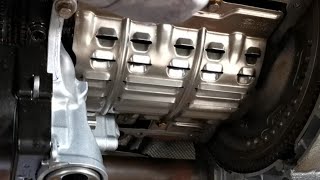
- CRITICAL: Remove the oil pan and inspect the oil pump pickup strainer for black rubber particles. If any debris is found, the wet belt system is failing and requires replacement. This is the most important step for this engine. 🎬 Watch: How to clean a clogged oil pump pickup
- If no debris is found, test the VCT solenoids per TSB SSM 50067. Use a scan tool to cycle the solenoid 10 times to attempt to clear debris. If the issue persists, swap the intake and exhaust solenoids and see if the code changes to P0017. If it does, the solenoid is bad.
- If solenoids test good, perform a manual engine oil pressure test with a mechanical gauge to verify pressure is within specification. Low pressure confirms an oil circulation problem (likely a clogged pickup that wasn't fully visible).
- As a last resort, inspect the camshaft and crankshaft position sensors and their wiring for damage. An oscilloscope can be used to compare sensor waveforms to a known-good pattern.
- If all else fails, a full inspection of the mechanical timing (belt, tensioner, phasers) is required, which is highly labor-intensive.
Parts You'll Likely Need
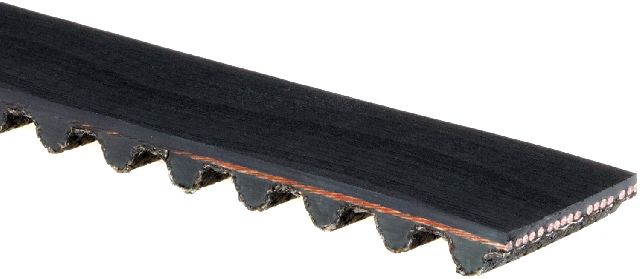
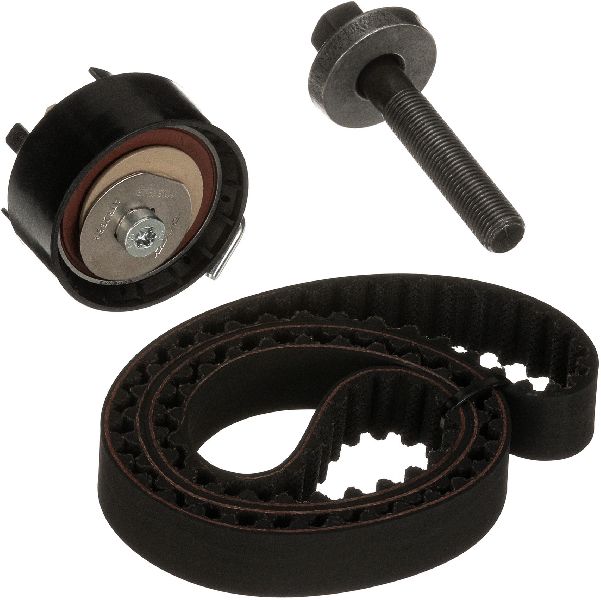
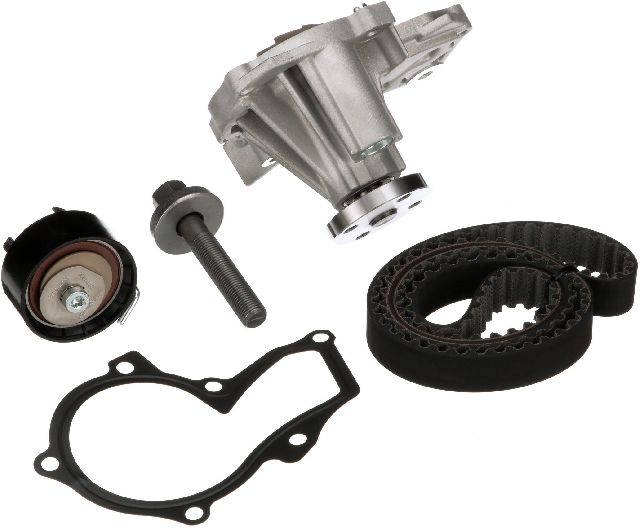
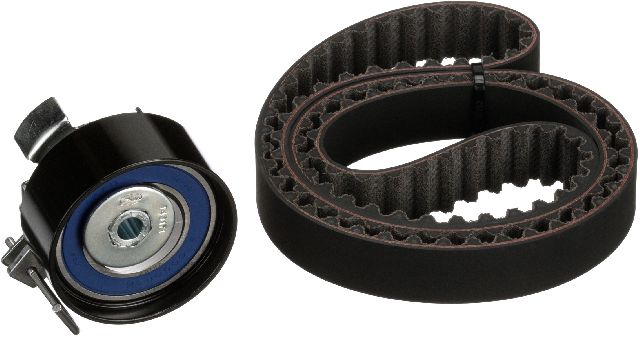
- Timing Belt and Oil Pump Belt Kit
(OEM #2122062)— This is the primary failure point on the 1.0L EcoBoost engine leading to code P0016. The original belts degrade, requiring replacement with updated parts. The full kit often includes the timing belt, water pump, and drive belt.
Trusted brands: Motorcraft, Dayco, Gates, Continental
OEM price range: $150-$250
Aftermarket price range: $100-$200 - Engine Variable Valve Timing (VVT) Solenoid
(OEM #CM5Z-6M280-G)— This solenoid can become clogged with debris from a failing belt or fail electrically, preventing proper cam timing adjustment. Ford's causal part number for this issue in TSBs is 6M280.
Trusted brands: Motorcraft, Dorman, NGK
OEM price range: $60-$90
Aftermarket price range: $30-$60 - Engine Oil Filter and 5W-20 Synthetic Blend Oil
(OEM #2468342 (Filter))— Clean, correct-specification oil (WSS-M2C948-B) is mandatory for the VCT system's health and to prevent premature failure of the wet belt. An oil change is required with any VCT or timing component replacement.
Trusted brands: Motorcraft, Castrol, Mobil
OEM price range: $50-$80
Aftermarket price range: $40-$60
Related Codes That Often Appear With This One
- P0017 — This is the same correlation error but for the exhaust camshaft. If P0016 and P0017 appear together, it strongly points to a systemic problem affecting both cams, such as low oil pressure from a clogged pickup or a jumped timing belt.
- P0340 — This code indicates a fault in the camshaft position sensor circuit. It can appear alongside P0016 if the timing has jumped significantly or if there's an electrical issue affecting the sensor's reading.
Technical Service Bulletins (TSBs) & Recalls

- SSM 50067: Supersedes SSM 48423. Affects various 2015-2021 Ford/Lincoln vehicles. For VCT codes including P0016, it advises against immediate solenoid replacement. Instead, it instructs technicians to use a scan tool to cycle the affected VCT solenoid 10 times to attempt to clear debris first.
- SSM 48423: An earlier version of the TSB with similar guidance, now superseded by SSM 50067.
Platform-Specific Known Issues
- The primary issue is the 'wet belt' (Belt-in-Oil) design for both the timing belt and oil pump belt. The material is prone to degradation, which contaminates the oil system, clogs the oil pump pickup, causes low oil pressure, and leads to timing correlation codes and eventual engine seizure.
Mechanic-Grade Diagnostic Values
- VCT Solenoid Internal Resistance — expected: 6.9 to 7.9 ohms at 68°F (20°C). Failure: A reading outside this range indicates an electrical failure within the solenoid.
- Engine Oil Pressure (at operating temperature) — expected: Minimum 14.5 psi (1 bar) at hot idle; Minimum 29 psi (2 bar) at 2,000 RPM.. Failure: Pressure below these minimums confirms oil starvation, strongly suggesting a clogged oil pump pickup screen from belt debris.
- Ford IDS Scan Tool PID: VCT_INT_DIF1 — expected: Should be close to 0 degrees at idle after the engine is warm.. Failure: A reading of +6 degrees or greater at idle can indicate a stretched timing belt or other base timing issue.
Hidden / Shadow Codes Worth Checking
- Mode 6, TID $83, CID $0B: This monitor tracks the maximum detected deviation between the camshaft and crankshaft. A high value here, even before the Check Engine Light is triggered, can indicate an emerging timing correlation problem. (see via A professional scan tool or an advanced OBD-II app (like FORScan) that can display Mode $06 data.)
Scan Tool Commands That Help
- Ford IDS / FORScan: VCT Solenoid Actuator Test / Bidirectional Control — Use this to manually cycle the VCT solenoid on and off. This is part of Ford's TSB-recommended procedure (SSM 50067) to attempt to dislodge debris from a sticking solenoid before replacing it. It helps differentiate a temporarily clogged solenoid from a completely failed one.
Wiring & Ground Locations
- G103 / G104 — Located on the left front of the engine compartment.. These are primary engine compartment grounds. A poor connection at these points can cause erratic voltage to the PCM and its sensors (CMP, CKP, VCT solenoids), potentially mimicking a component failure or causing intermittent codes.
- ECM Ground — On the frame rail below the air box.. This is the direct ground for the Powertrain Control Module. Corrosion or a loose connection here can cause a host of unpredictable engine management issues, including timing correlation faults.
Real Owner Repair Stories
- Ford Owners Club forum user 'shaun85' (2014 Ford Fiesta 1.0L EcoBoost) — Check Engine Light with codes P0016 and P0017 present.
❌ Tried (didn't work) Replacing both camshaft position sensors.
✅ What actually fixed it The confirmed underlying cause was low oil pressure due to a clogged oil pump pickup. The final recommended repair was to replace both wet belts (timing and oil pump), clean the oil strainer/replace the oil pump, and perform an oil change with Ford-spec oil.
OEM Part Supersession History
cm5z6m280d, cm5z6m280f→CM5Z-6M280-G— Part revision and improvement by the manufacturer.
Heads up: The newest part number (CM5Z-6M280-G) is the correct and recommended replacement for all applications.N/A→2122062 (Kit)— This is the current OEM part number for the complete timing belt kit for this engine.
Heads up: There are two different belt widths available (16mm and 18.1mm). It is critical to verify the correct width for the specific vehicle, often by VIN, before ordering.
Model Year Variations Within This Range
- 2014-2019: The 1.0L EcoBoost engine used in the North American Ford Fiesta throughout this period consistently used the 'wet belt' (Belt-in-Oil) timing system. Later revisions of the 1.0L EcoBoost engine used in other Ford models (like the post-2018 Focus in Europe) switched to a more conventional timing chain. This is a critical distinction, as advice for a chain-driven version does not apply to the Fiesta's belt-driven engine.
Diagnostic Flowchart
Other Known Issues on This Vehicle
Issues unrelated to this code that are worth knowing about as an owner of this generation:
- Coolant Leaks and Overheating 🔴 High — Common on earlier models (approx. 2012-2017). Can be caused by failing coolant hoses or cracks in the cylinder head. (Ref: Ford issued a recall for a coolant hose on some 2011-2013 models.)
- Turbocharger Failure 🟠 Medium — Often a secondary failure caused by oil starvation from a degrading wet belt, but can also fail independently. Typically occurs around 50,000-80,000 miles.
- Carbon Build-up on Intake Valves 🟡 Low — A common side effect of all Gasoline Direct Injection (GDI) engines, including the 1.0L EcoBoost. Over time, it can cause rough idle and reduced performance.
- Powershift Transmission Problems 🔴 High — While not an engine issue, Fiestas equipped with the DPS6 'Powershift' automatic transmission are notorious for shuddering, hesitation, and premature clutch/TCM failure. This was the subject of a major class-action lawsuit. This does not affect manual transmission models. (Ref: Multiple recalls and customer satisfaction programs were issued.)
Used vs. New Parts: Buying Guide for This Vehicle
When a used part is the smart pick: For this specific P0016 repair on the 1.0L EcoBoost, using used parts is NEVER recommended. The primary causes of failure are wear and degradation of rubber and electronic components.
What to inspect on the donor part:
- Not applicable. Do not use donor parts for this repair.
OEM-only on this vehicle (don't cheap out):
- Timing Belt and Oil Pump Belt Kit: The entire failure pattern is due to the degradation of this part. Only a new, latest-revision kit from a reputable manufacturer (OEM Motorcraft is safest) should be used.
- VCT Solenoid: This part fails from internal clogging and electrical wear. A used solenoid has an unknown history and is likely to fail again quickly. Given the relatively low cost of a new part, used is not a viable option.
Aftermarket brands forum-validated for this vehicle:
- Timing Belt Kits: Gates, Dayco, Continental (Ensure it is the 'Belt-in-Oil' specific kit)
- VCT Solenoids: Dorman, NGK
Brands owners have reported issues with on this vehicle:
- Unbranded, no-name timing belt kits from online marketplaces. The quality of the rubber compound is critical for a wet belt, and using a substandard part will lead to rapid repeat failure.
Real Owner Stories
Aggregated from forums and TSBs cited above. Mileages and costs reflect what owners reported in those sources.
2014 Ford Fiesta 1.0L EcoBoost
Symptoms: The vehicle triggered both P0016 and P0017 codes simultaneously.
What fixed it: The issue was identified as wet belt degradation causing low oil pressure; members advised against simply changing sensors or actuators.
Source hint: https://www.fordownersclub.com/forums/topic/142011-p0016-p0017-ford-fiesta-10-ecoboost-petrol/
6-year-old Ford Fiesta 1.0L EcoBoost — 40000 miles
Symptoms: The check engine light returned repeatedly even after expensive repairs.
What fixed it: The owner initially performed a sump replacement and later a full belt replacement, though the light returned, illustrating the difficulty of the repair.
Cost: $2500-$5000
Source hint: https://www.fordownersclub.com/forums/topic/149818-10-ecoboost-wet-belt-issue/
Ford Fiesta 1.0L EcoBoost
Symptoms: P0016 code appeared immediately after the external serpentine belt shredded.
What fixed it: The failure was linked to the internal timing components being affected by the external belt failure.
Source hint: https://www.fiestastforum.com/threads/p0016-p0340.24185/
Related OBD-II Codes
Frequently Asked Questions
Does Ford TSB SSM 50067 apply to my 2015-2019 Fiesta with a P0016 code?
What specific oil should I be using in my 1.0L EcoBoost to prevent timing belt failure?
Is there a recall for the 1.0L EcoBoost engine issues related to P0016?
Why is my oil pressure light flashing along with the P0016 code?
Can I just replace the VCT solenoid to fix the P0016 error?
How long does the wet belt replacement take on a 1.0L Fiesta?
Helpful Videos
We Have This Part in Stock


The information in this article is provided for general reference and educational purposes only. Vehicle specifications, procedures, and part compatibility can vary by production date, trim level, and region. Always consult your vehicle's factory service manual and verify part numbers before purchasing or performing repairs. Safety-critical components such as airbags, seat belts, and braking systems should be installed by a qualified professional.
- Ford Fiesta:
- 🎬 Helpful Videos
- 🛍️ Shop This Part
- What's Unique About the 2014-2019 Ford Fiesta
- Symptoms You May Notice
- Most Likely Causes
- Rare But Worth Checking
- Diagnosis Steps
- Parts You'll Likely Need
- Related Codes That Often Appear With This One
- Technical Service Bulletins (TSBs) & Recalls
- Platform-Specific Known Issues
- Mechanic-Grade Diagnostic Values
- Hidden / Shadow Codes Worth Checking
- Scan Tool Commands That Help
- Wiring & Ground Locations
- Real Owner Repair Stories
- OEM Part Supersession History
- Model Year Variations Within This Range
- Diagnostic Flowchart
- Other Known Issues on This Vehicle
- Used vs. New Parts: Buying Guide for This Vehicle
- Real Owner Stories
- 2014 Ford Fiesta 1.0L EcoBoost
- 6-year-old Ford Fiesta 1.0L EcoBoost — 40000 miles
- Ford Fiesta 1.0L EcoBoost
- Related OBD-II Codes
- Frequently Asked Questions
- 🎟️ Get 5% Off