

P0016 on 2016-2018 Buick Enclave: Timing Chain Causes and Fixes
On a 2016-2018 Enclave with the 3.6L V6, P0016 almost always indicates a stretched timing chain and/or failed tensioners. This is a serious, complex, and expensive repair, typically costing between $2,800 and $3,700. Do not replace the cam or crank sensors first, as this is a common misdiagnosis. The issue is well-documented in GM TSBs like PIP3423P and 12-06-01-009.
- P0016 on a 2016-2018 Enclave is a serious code that points directly to a stretched timing chain, a known issue with the 3.6L V6 engine.
- Do not waste money replacing the camshaft or crankshaft sensors first; they are rarely the cause.
- This is an expensive repair, often costing over $2,800, due to the high labor involved.
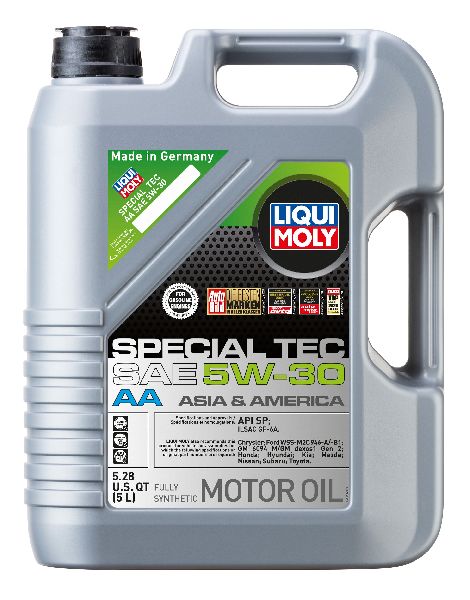
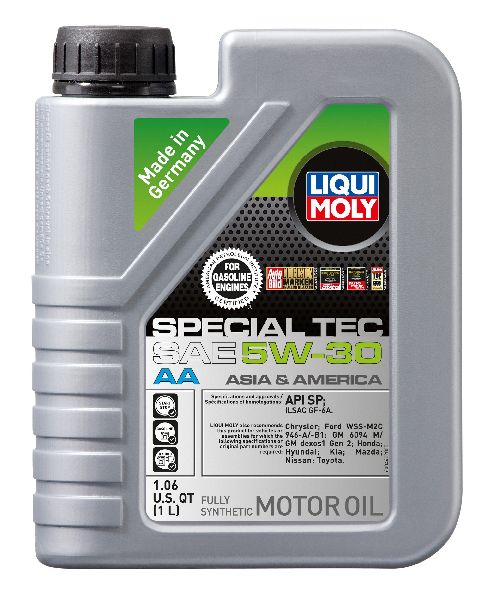
- Using high-quality, full synthetic oil (Dexos spec) and adhering to regular oil change intervals is the best preventative measure.
- Because of the risk of the chain breaking and causing catastrophic engine failure, the vehicle should be repaired as soon as possible.
What's Unique About the 2016-2018 Buick ENCLAVE
The GM 3.6L V6 engine family (including the LFX in 2016-2017 models and the updated LFY in the 2018 model) has a well-documented history of premature timing chain wear and stretching. This issue is so common that for this engine, code P0016 is considered a strong indicator of a mechanical timing problem rather than a sensor failure. The problem is often linked to extended oil change intervals recommended by the vehicle's Oil Life Monitor (OLM), which can exceed 8,000-12,000 miles. Degraded or low oil cannot provide adequate pressure to the hydraulic tensioners, accelerating chain wear. While the 2018 Enclave uses the newer LFY engine with start-stop technology, which had some timing chain improvements, it is fundamentally a minor development of the LFX and can still be susceptible to timing chain issues, especially with poor oil maintenance.
Diagnostic Flowchart
Tap your situation to follow the diagnostic path that matches what you're seeing on this vehicle.
Generation note: The 2016-2018 year range covers two different Enclave generations. The 2016-2017 models are the first generation, using the 3.6L LFX V6 engine. The 2018 model is the first year of the second generation, featuring an updated 3.6L LFY V6 with a 9-speed transmission instead of a 6-speed. The LFY is a derivative of the LFX, adding a start-stop system. The timing chain issue is prevalent across the entire GM 3.6L High Feature V6 family, affecting both generations covered here, though improvements were made over time.
Symptoms You May Notice
- Check Engine Light illuminated
- Engine rattling noise, especially on cold starts for a few seconds
- Rough or unstable idle
- Reduced engine power and sluggish acceleration
- Engine may crank but fail to start in severe cases
- Noticeably worse fuel economy
- Engine stalling
- Replacing the camshaft position sensor
- Replacing the crankshaft position sensor
Most Likely Causes
- Stretched Timing Chain(s) 🔴 High Probability This is a widely documented issue on the GM 3.6L V6 engine family due to chain design and sensitivity to oil quality. GM released updated timing chain kits to address the premature wear.
How to confirm: A mechanic can use a scan tool to observe cam/crank correlation data; a deviation of more than a few degrees at idle is a strong sign. Physical inspection for chain slack by removing the timing cover is the definitive confirmation, but it is labor-intensive.
Typical fix: Replace all three timing chains (one primary, two secondary), along with the tensioners, guides, and associated gaskets and seals. It is recommended to use an updated OEM kit.
Est. part cost: $300-$980 for a complete kit. - Failed Timing Chain Tensioner(s) 🔴 High Probability The tensioners, which use oil pressure to keep the chains tight, can fail, stick, or become weak due to sludge from old or low-quality oil, leading to chain slack.
How to confirm: Often diagnosed along with a stretched chain. A rattling noise on startup that goes away after a few seconds is a classic sign of a failing tensioner that is slow to build oil pressure.
Typical fix: Tensioners are always replaced as part of a complete timing chain service. See TSB #PIP3423P and #12-06-01-009.
Est. part cost: Included in the timing chain kit cost. - Low or Dirty Engine Oil 🟡 Medium Probability The GM Oil Life Monitor (OLM) can suggest intervals up to 12,000 miles, which can lead to oil breakdown and sludge. This starves the timing components and VVT system of proper lubrication and hydraulic pressure, accelerating wear.
How to confirm: Check the oil level on the dipstick and inspect its condition. If it is low, black, or sludgy, this is a likely contributor. Many owners recommend ignoring the OLM and changing full synthetic oil every 5,000 miles to prevent this issue.
Typical fix: Perform an oil and filter change using a full synthetic oil that meets the GM Dexos specification. If the code returns, permanent mechanical wear has already occurred.
Est. part cost: $50-$90
Rare But Worth Checking
- Faulty Camshaft Position Actuator Solenoid (VVT Solenoid): These can get clogged with sludge or fail electrically, but they are a much less common cause for P0016 on this engine than chain stretch. They would also typically set other VVT-specific codes like P0010.
- Slipped Crankshaft Reluctor Wheel: The toothed ring on the crankshaft that the sensor reads can physically move, causing a correlation error. This is rare, but mentioned in GM TSB #PIP3423P as a possibility to check before a complete engine teardown. A technician may be able to inspect it with a borescope through the crankshaft position sensor hole.
Diagnosis Steps
- Check Engine Oil: Verify the oil level is correct and the oil is clean and meets Dexos specification. If low or dirty, perform an oil and filter change, clear the code, and see if it returns. This is the cheapest and easiest first step.
- Scan for Other Codes: Check for other related codes (P0017, P0008, etc.) that can help confirm a timing system fault. VVT-specific electrical codes (like P0010) might point to a solenoid issue instead of a chain.
- Inspect VVT Solenoids: Check the wiring to the Bank 1 intake VVT solenoid. A scan tool can be used to command the solenoid on and off to test its function. Resistance should be between 8 and 13 Ohms.
- Analyze Cam/Crank Data: Use an advanced scan tool or oscilloscope to view the live data from the camshaft and crankshaft position sensors. A deviation between the desired and actual cam position that exceeds the manufacturer's threshold (e.g., >9 degrees retarded or >12 degrees advanced) indicates a timing problem.
- Check for Slipped Reluctor Wheel: As per TSB PIP3423P, a borescope can be inserted into the crankshaft position sensor hole to visually inspect if the reluctor wheel has shifted on the crankshaft, saving unnecessary engine teardown.
- Physical Inspection: If data suggests a timing issue, the final step is to remove the engine timing cover to physically inspect the timing chains for slack and check the condition of the guides and tensioners. This is a labor-intensive step that confirms the diagnosis.
Parts You'll Likely Need
- Engine Timing Chain Kit
(OEM #12651450 (ACDelco kit, one of several superseded numbers))— This is the most common fix. A complete kit ensures all worn components (chains, tensioners, guides, and sometimes sprockets) are replaced at once. TSB 12-06-01-009 recommends specific kits.
Trusted brands: ACDelco, Cloyes, INA
OEM price range: $500-$981
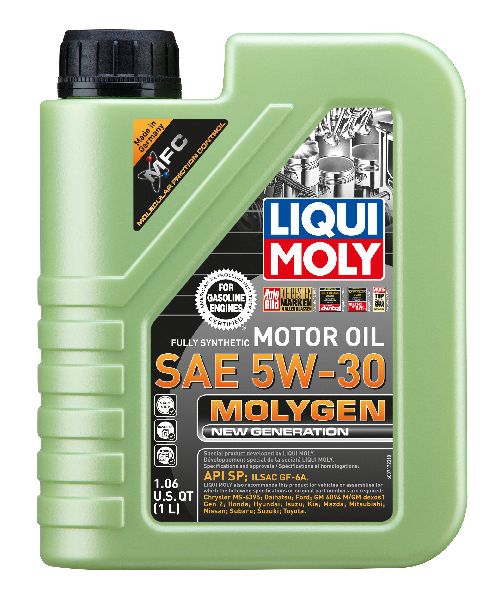
Aftermarket price range: $300-$600 - Engine Oil and Filter — Crucial for preventing recurrence. Must use a full synthetic oil meeting GM's Dexos specification. Change intervals should be shortened to ~5,000 miles.
Trusted brands: ACDelco, Mobil 1, Pennzoil
OEM price range: $60-$100
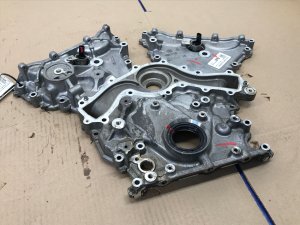
Aftermarket price range: $50-$90 - Timing Cover Gasket and Crankshaft Seal — These are 'one-time use' seals that must be replaced anytime the timing cover is removed for the chain service.
Trusted brands: ACDelco, Fel-Pro, Mahle
OEM price range: $50-$100
Aftermarket price range: $30-$60
Related Codes That Often Appear With This One
- P0017 — This is the correlation code for the Bank 1 exhaust camshaft. If both P0016 and P0017 are present, it strongly points to a timing chain issue affecting all of Bank 1.
- P0008 — This is a more general engine timing performance code for Bank 1. Its presence with P0016 reinforces a mechanical timing problem, often pointing to a stretched primary chain.
- P0018 / P0019 — These are the equivalent correlation codes for Bank 2. Seeing these along with P0016 indicates a severe timing issue affecting both banks, almost certainly a stretched primary chain or a slipped crankshaft reluctor wheel.
Technical Service Bulletins (TSBs) & Recalls
- PIP3423P (and its revisions like PIP3423M): Mentions that codes P0016, P0017, P0018, P0019, P0008, or P0009 may be set. Advises technicians to first inspect for loose timing chains or tensioners, and if the cause is not found, to inspect for a slipped crankshaft reluctor wheel before major disassembly.
- 12-06-01-009 (and its revisions): Provides comprehensive information on updated timing chain service kits for the 3.6L V6 engine family to address premature wear issues that cause codes like P0016.
Platform-Specific Known Issues
- The GM 3.6L V6 has a widely recognized issue with premature timing chain stretching, as noted in manufacturer TSBs like #PIP3423P and #12-06-01-009.
- Owners on forums like bobistheoilguy.com discuss the importance of frequent oil changes (e.g., 3,500-5,000 miles) with full synthetic oil to prolong chain life, rather than relying on the Oil Life Monitor.
Mechanic-Grade Diagnostic Values
- VVT Solenoid (Camshaft Position Actuator) Resistance — expected: 8 to 13 Ohms. Failure: A reading outside this range, or an open/short circuit, indicates a failed solenoid.
- Cam/Crank Correlation Data (Scan Tool) — expected: Less than +/- 4 degrees of deviation at idle.. Failure: A consistent deviation of 8-10 degrees or more strongly suggests a mechanical timing issue (stretched chain).
- ECM Fault-Setting Threshold — expected: Camshaft correlation within spec.. Failure: The ECM will set P0016/P0017 if it detects the camshaft is greater than 10° retarded or 13° advanced.
- Crankshaft Reluctor Wheel Position (Borescope Inspection) — expected: 25 to 26 mm from the machined surface of the crankshaft throw to the edge of the open space in the reluctor wheel.. Failure: Any measurement outside this range indicates the wheel has slipped, requiring crankshaft replacement.
Scan Tool Commands That Help
- GDS2 (GM Dealer Scan Tool): Camshaft Position Actuator Solenoid Test / Control — This bidirectional command allows a technician to manually command the VVT solenoid ON and OFF. An audible click and a change in engine RPM or cam variance data confirms the solenoid is mechanically working, helping to rule it out as the cause.
- GDS2 (GM Dealer Scan Tool): Crankshaft Position Variation Learn — This procedure is mandatory after replacing a crankshaft position sensor or performing major engine work like a timing chain replacement to allow the ECM to learn the new sensor's specific profile.
Wiring & Ground Locations
- Bank 1 Camshaft Position Sensors — On the 3.6L V6, Bank 1 is the cylinder head closer to the firewall. The two camshaft position sensors (intake and exhaust) are located on the passenger side of that head, often behind a bracket holding the ECM or other electrical connectors.. P0016 specifically refers to the Bank 1 Intake Camshaft sensor ('Sensor A'). Knowing its physical location is critical for inspection of the sensor and its wiring harness for damage, which could be a rare cause of the code.
Real Owner Repair Stories
- Tacoma World forum user 'craigs1' (2007 Toyota 4Runner 4.0L V6 (1GR-FE engine, similar timing chain issue)) — P0016 code, especially when the engine is not fully warmed up.
❌ Tried (didn't work) Replacing the Bank 1 oil control valve (VVT solenoid), Replacing the VVT actuator (cam phaser), Replacing the #1 chain tensioner
✅ What actually fixed it The user concluded that the only permanent fix would be to replace all timing chains, guides, and sprockets. Scan tool data showed the Bank 1 intake cam was retarded by approximately 8 degrees, and physical inspection of the removed tensioner showed it was over-extended due to chain elongation (stretch).
OEM Part Supersession History
Various older kits→12650230 (for 2007 models), other kits for later years— GM released multiple revisions of the timing chain kits to incorporate more durable chains designed to resist premature stretching.
Heads up: TSB 12-06-01-009F provides a detailed breakdown of which kit to use for specific model years and engine RPO codes. Using the wrong kit can lead to immediate failure.
Model Year Variations Within This Range
- 2018: The 2018 Enclave uses the updated 3.6L LFY V6. This engine, a derivative of the LGX, features an 'Intake Camshaft Position Actuator Park Lock Solenoid'. A failure of this solenoid can cause P0016, which is a diagnostic possibility not present on the 2016-2017 LFX engine.
Helpful Videos


Used OEM Parts in Stock


New Aftermarket Parts Available


The information in this article is provided for general reference and educational purposes only. Vehicle specifications, procedures, and part compatibility can vary by production date, trim level, and region. Always consult your vehicle's factory service manual and verify part numbers before purchasing or performing repairs. Safety-critical components such as airbags, seat belts, and braking systems should be installed by a qualified professional.
- Buick ENCLAVE:
- 🎬 Helpful Videos
- 🛍️ Shop This Part
- What's Unique About the 2016-2018 Buick ENCLAVE
- Diagnostic Flowchart
- Symptoms You May Notice
- Most Likely Causes
- Rare But Worth Checking
- Diagnosis Steps
- Parts You'll Likely Need
- Related Codes That Often Appear With This One
- Technical Service Bulletins (TSBs) & Recalls
- Platform-Specific Known Issues
- Mechanic-Grade Diagnostic Values
- Scan Tool Commands That Help
- Wiring & Ground Locations
- Real Owner Repair Stories
- OEM Part Supersession History
- Model Year Variations Within This Range
- 🎟️ Get 5% Off