

P0014 on 2017-2020 Lincoln Continental: Exhaust Cam Timing Causes and Fixes
On a 2017-2020 Lincoln Continental, code P0014 is most frequently caused by either low/dirty engine oil or a sticking exhaust Variable Camshaft Timing (VCT) solenoid on Bank 1. An oil change with the correct full synthetic oil is the first step. If that doesn't work, replacing the Bank 1 exhaust VCT solenoid (approx. $30-$90 for the part) is the next likely fix. Bank 1 is the cylinder bank against the firewall, making access more difficult.
- P0014 on your Lincoln Continental points to the exhaust camshaft on the rear cylinder bank (Bank 1) being timed too far advanced.
- The most common causes are simple: low/dirty engine oil or a sticking VCT solenoid. Always check your oil first.
- Manufacturer TSBs confirm that debris clogging the VCT solenoid is a known issue. Sometimes the solenoid can be cleaned by cycling it with a scan tool, but replacement is often the best long-term fix.
- This is a DIY-friendly repair for the solenoid itself, but accessing it on Bank 1 (firewall side) can be more challenging than Bank 2 (radiator side).
- Do not ignore this code. Continued driving can lead to poor performance, bad fuel economy, and potential for more expensive engine damage over time.
What's Unique About the 2017-2020 Lincoln CONTINENTAL
The 2017-2020 Lincoln Continental, along with many other Ford and Lincoln vehicles of this era using the 2.7L, 3.0L, and 3.7L engines, is subject to multiple Technical Service Bulletins (TSBs) regarding VCT codes, including P0014. These bulletins (SSM 48423, SSM 47170) specifically state that small debris in the engine oil can cause the VCT solenoids to stick, leading to this code. The TSBs even recommend a specific diagnostic procedure where a technician uses a scan tool to cycle the solenoid 10 times to attempt to dislodge debris before replacing the part. This makes regular, high-quality oil changes especially critical for these engines to prevent timing-related issues.
Diagnostic Flowchart
Tap your situation to follow the diagnostic path that matches what you're seeing on this vehicle.
Symptoms You May Notice
- Check Engine Light is on
- Rough idle
- Engine stalling, especially at low speeds
- Poor acceleration or engine hesitation
- Decreased fuel economy
- Rattling noise from the engine on startup.
- Replacing the camshaft position sensor when the actual problem is a sticking VCT solenoid or dirty oil.
- Replacing the cam phaser before thoroughly diagnosing the VCT solenoid and oil condition. A Ford service manager noted on a forum that phaser failure is rare compared to solenoid issues.
Most Likely Causes
- Low, Dirty, or Incorrect Viscosity Engine Oil 🔴 High Probability The VCT system is hydraulically operated by engine oil pressure. Contaminated or low oil can't operate the phasers correctly and can cause debris to stick in the VCT solenoids, a known issue on this platform confirmed by multiple TSBs. Some owners report the code appears specifically when an oil change is due.
How to confirm: Check the oil level on the dipstick and examine its color and consistency. If it is dark, gritty, or below the 'add' line, it needs to be changed. Ensure the correct oil viscosity is being used, which is typically SAE 5W-30 full synthetic for the 2.7L/3.0L EcoBoost engines.
Typical fix: Change the engine oil and filter using the manufacturer-recommended full synthetic oil and a high-quality filter (e.g., Motorcraft FL-500S). This is the universally recommended first step and may resolve the code on its own.
Est. part cost: $40-$100 - Sticking or Failed VCT Solenoid (Oil Control Valve) 🔴 High Probability Manufacturer TSBs SSM 48423 and SSM 47170 directly state that small debris can cause the VCT solenoid to stick, which is a very common root cause for P0014 on these vehicles. The solenoid contains fine mesh screens that can become clogged with sludge or debris, impeding oil flow.
How to confirm: Use a scan tool (like FORScan) to monitor desired vs. actual cam timing (VCT_EXH_DIF1). A significant, persistent deviation confirms the problem. A common diagnostic step is to swap the Bank 1 exhaust solenoid with the Bank 2 exhaust solenoid to see if the code changes to P0024. If it does, the solenoid is faulty. Before replacement, a technician may follow TSB advice and cycle the solenoid with a scan tool to try and clear it.
Typical fix: Replace the Bank 1 exhaust VCT solenoid. On the V6 engines, Bank 1 is against the firewall, making access more difficult than Bank 2 and may require removing the upper intake manifold.
Est. part cost: $30-$90 - Faulty Camshaft Position Sensor ⚪ Low Probability
How to confirm: Test the sensor's resistance with a multimeter or swap it with the sensor from another camshaft to see if the code follows. However, this is less common than a solenoid failure. Often, a failing sensor will set its own specific DTCs (like P0365/P0369) in addition to P0014.
Typical fix: Replace the Bank 1 exhaust camshaft position sensor.
Est. part cost: $25-$70
Rare But Worth Checking
- Stretched Timing Chain or Failed Cam Phaser: While less common than oil or solenoid issues, if you hear a distinct rattling noise from the engine, especially on cold startups, it could point to a more serious mechanical timing problem. This is a known, though less frequent, issue on the 3.5L EcoBoost engine family, which is related to the 2.7L/3.0L. This requires a more involved and expensive repair.
- Wiring or Connector Issues: Damage or corrosion on the wiring harness or connector for the VCT solenoid or camshaft position sensor can cause intermittent signals and trigger the code. A visual inspection is warranted. Some owners of related Ford platforms have found that old connectors no longer clip securely to new solenoids, requiring pigtail replacement.
Diagnosis Steps
- Check engine oil level and condition. If low, dirty, or overdue for a change, replace the oil and filter with the correct full synthetic oil (e.g., SAE 5W-30) and a quality filter. Clear the code and test drive.
- Use an OBD-II scanner to check for any other related trouble codes.
- With a capable scan tool, monitor the desired versus actual camshaft position for Bank 1 Exhaust (PIDs like VCT_EXH_ACT1 and VCT_EXH_ERR1). A significant, persistent deviation confirms the problem.
- Per TSB 48423, use the scan tool's command function to cycle the Bank 1 exhaust VCT solenoid 10 times to attempt to clear debris. Clear codes and see if the issue returns.
- Inspect the wiring and connector for the Bank 1 exhaust VCT solenoid and camshaft position sensor for any signs of damage, corrosion, or loose connections.
- As a definitive test for the solenoid, swap the Bank 1 exhaust VCT solenoid with the Bank 2 exhaust VCT solenoid. Clear the codes and drive the vehicle. If the code returns as P0024 (for Bank 2), the solenoid is confirmed to be faulty.
- If the code does not move, test the original solenoid for proper resistance using a multimeter (typically between 5-15 ohms).
- If solenoids and oil are good, the issue may be more complex, such as a failing cam phaser or stretched timing chain, which may require professional diagnosis.
Parts You'll Likely Need
- Engine Variable Valve Timing (VVT) Solenoid
(OEM #AT4Z-6M280-A)— This is the most common point of failure for code P0014 on this platform, often due to getting stuck with oil debris, as noted in Ford/Lincoln TSBs. Note: This part number fits multiple VCT positions on the 3.3L/3.5L/3.7L engines. The 2.7L/3.0L engines may use a different part number; always verify with VIN.
Trusted brands: Motorcraft, Dorman, Standard Motor Products (SMP)
OEM price range: $60-$90
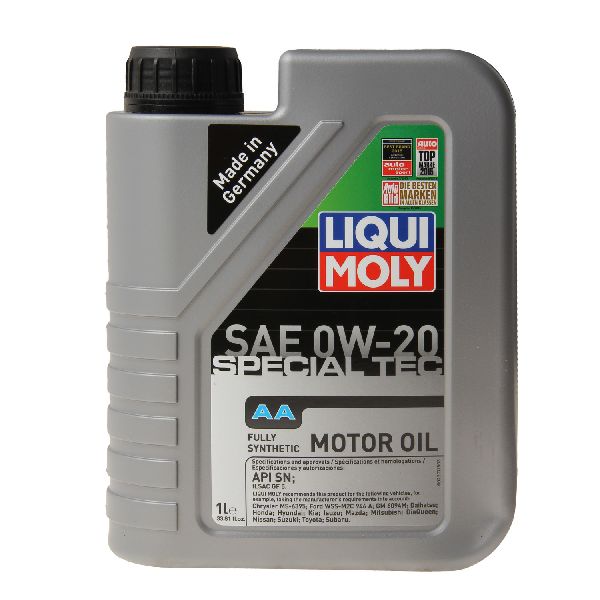
Aftermarket price range: $30-$60 - Engine Oil and Filter
(OEM #Motorcraft FL-500S (Filter for 2.7L/3.0L/3.7L))— Dirty, low, or incorrect viscosity oil is a primary cause of VCT system faults. An oil change is a critical first step in diagnosis and repair. Using a high-quality filter is important to prevent debris from causing future issues.
Trusted brands: Motorcraft, Mobil 1, Valvoline
OEM price range: $60-$100
Aftermarket price range: $40-$80 - Intake Manifold Gasket — If replacing the Bank 1 (firewall side) VCT solenoid on a V6 model, the upper intake manifold often needs to be removed for access. It is best practice to replace the gaskets during reassembly to prevent vacuum leaks.
Trusted brands: Motorcraft, Fel-Pro
OEM price range: $30-$50
Aftermarket price range: $15-$30
Related Codes That Often Appear With This One
- P0011 — Intake camshaft timing over-advanced on Bank 1. Often appears with P0014 if there is a systemic oil pressure or debris issue affecting the entire bank.
- P0024 — Exhaust camshaft timing over-advanced on Bank 2. If seen with P0014, it suggests a global problem like severe oil contamination or low oil pressure affecting both engine banks. It will also appear after swapping a faulty Bank 1 solenoid to Bank 2 for diagnostic purposes.
- P0016 — Crankshaft/Camshaft Position Correlation Error. This is a more serious code indicating a potential timing chain misalignment and may appear with P0014 if the chain has stretched or jumped a tooth.
Technical Service Bulletins (TSBs) & Recalls
- SSM 54366: Notes that various 2015-2021 Ford and Lincoln vehicles may exhibit P0014 among other VCT codes and refers to pinpoint test HK in the service manual.
- SSM 48423: States that P0014 on 2015-2020 Ford/Lincoln vehicles may be due to small debris causing the VCT solenoid to stick and advises cycling the solenoid 10 times before replacement.
- SSM 47170: An earlier bulletin with similar information to SSM 48423, identifying debris in the VCT solenoid as a likely cause for P0014.
- SSM 47922: A service tip for 2.7L/3.0L EcoBoost engines, highlighting the importance of inspecting the oil filter housing center stem during an oil change to ensure it is not separated, which could affect oil pressure.
Platform-Specific Known Issues
- TSB #SSM 48423 and #SSM 47170 specifically mention that for P0014 and other VCT codes, small debris may cause the solenoid to stick. The bulletins advise attempting to cycle the solenoid with a diagnostic tool to dislodge debris before proceeding with replacement.
Mechanic-Grade Diagnostic Values
- VCT Solenoid Internal Resistance — expected: 5-15 Ohms. Failure: A reading of 0 Ohms (short), OL/infinity (open circuit), or outside the specified range indicates a failed solenoid coil.
- VCT Solenoid Connector Voltage (Key On, Engine Off) — expected: Greater than 10.5 Volts (approx. battery voltage). Failure: Low or no voltage at the power supply pin points to a wiring issue, a blown fuse (e.g., F95 in the under-hood fuse box), or a problem with the PCM power relay.
- Scan Tool PID: VCT_EXH_ERR1 (Bank 1 Exhaust Cam Error) — expected: At or very close to 0 degrees at idle and steady-state driving.. Failure: A large, persistent positive value (indicating over-advanced) that does not return to zero confirms a control problem.
Scan Tool Commands That Help
- Ford IDS / FORScan: Output State Control (OSC) or VCT Solenoid On/Off State Control — This bidirectional command is used to manually cycle the VCT solenoid, as recommended by Ford TSBs SSM 47170 and SSM 48423. Cycling the solenoid 10 times can dislodge small debris and may resolve the fault without part replacement. It also serves as a functional test to see if the PCM can control the solenoid and if the solenoid responds.
Wiring & Ground Locations
- Bank 1 VCT Solenoid Connector — On the top of the rear valve cover (firewall side) for the V6 engines. Access often requires removing the upper intake manifold.. This is the primary point for electrical testing (voltage and resistance). The connector and wiring are susceptible to heat damage due to their location near the exhaust manifold and firewall, leading to brittle wires or a poor connection.
- Engine to Firewall Ground Strap — Typically a braided steel strap running from a bolt on the cylinder head or engine block to a stud on the vehicle's firewall.. A poor or corroded main engine ground can cause a host of electrical issues, including erratic sensor readings and incorrect solenoid operation. In rare cases, the PCM may misinterpret data from the camshaft position sensor due to an unstable ground reference, potentially triggering timing codes.
Real Owner Repair Stories
- Ford Edge Forum user (Ford Edge with 2.7L EcoBoost (mechanically similar to Continental)) — Check engine light with P0014 immediately after an oil change at a quick-lube shop.
❌ Tried (didn't work) Clearing the code (it returned immediately), Replacing the Bank 1 exhaust VCT solenoid
✅ What actually fixed it The owner discovered the quick-lube shop had used a low-quality, non-spec oil filter. Replacing the cheap filter with an OEM Motorcraft oil filter and performing another oil change with the correct oil permanently resolved the code. The theory is the incorrect filter had a faulty anti-drainback valve or restrictive flow, starving the VCT system on startup.
OEM Part Supersession History
AT4Z-6M280-B/C (and others)→HL3Z-6M280-A (Example for some 3.5L engines)— Ford frequently updates VCT solenoid designs to improve the screen material and coil windings, making them more resistant to debris and heat failure.
Heads up: While many solenoids look identical, using the wrong part number for a specific position (intake vs. exhaust) or bank can cause immediate running issues or codes. The part number AT4Z-6M280-A is listed for many 3.3L/3.5L/3.7L applications but may not be correct for the 2.7L/3.0L EcoBoost. Always verify the correct part number with the vehicle's VIN.
Helpful Videos
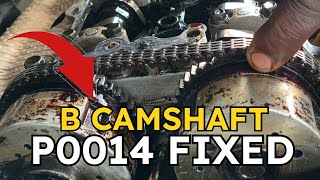
![How to Fix P0014 Engine Code in 4 Minutes [2 DIY Methods / Only $6.74]](https://img.youtube.com/vi/olrC8UYw9cQ/mqdefault.jpg)
Used OEM Parts in Stock


New Aftermarket Parts Available


The information in this article is provided for general reference and educational purposes only. Vehicle specifications, procedures, and part compatibility can vary by production date, trim level, and region. Always consult your vehicle's factory service manual and verify part numbers before purchasing or performing repairs. Safety-critical components such as airbags, seat belts, and braking systems should be installed by a qualified professional.
- Lincoln CONTINENTAL:
- 🎬 Helpful Videos
- 🛍️ Shop This Part
- What's Unique About the 2017-2020 Lincoln CONTINENTAL
- Diagnostic Flowchart
- Symptoms You May Notice
- Most Likely Causes
- Rare But Worth Checking
- Diagnosis Steps
- Parts You'll Likely Need
- Related Codes That Often Appear With This One
- Technical Service Bulletins (TSBs) & Recalls
- Platform-Specific Known Issues
- Mechanic-Grade Diagnostic Values
- Scan Tool Commands That Help
- Wiring & Ground Locations
- Real Owner Repair Stories
- OEM Part Supersession History
- 🎟️ Get 5% Off