

P0014 on 2018-2023 Kia Stinger 2.0T: Exhaust Cam Timing Fixes & Causes
Code P0014 on a Kia Stinger 2.0T most often points to a problem with the exhaust camshaft's variable valve timing (CVVT), frequently caused by low or dirty engine oil. The first step is always to check the oil. If the oil is fine, the next most likely culprit is a faulty exhaust oil control valve (OCV), Kia part number 24375-2G500, which is about a $50-$150 part.
- P0014 on your Stinger 2.0T means the exhaust camshaft timing is too far advanced.
- BEFORE buying any parts, check your engine oil. Low or dirty oil is the most common cause.
- If an oil change doesn't fix it, the next most likely part to fail is the exhaust Oil Control Valve (OCV), a relatively inexpensive and accessible part.
- Do not ignore this code. It can be an early warning of oil starvation that could lead to catastrophic engine damage, as seen in multiple NHTSA complaints. [ODI #11532992, ODI #11587371]
- This code is often paired with P0017, which reinforces that the engine's timing is out of sync. [ODI #11711598]
What's Unique About the 2018-2023 Kia Stinger
The Kia/Hyundai Theta II engine family has a known, widespread sensitivity to oil level and quality. Many owner complaints across different Kia/Hyundai models with this engine architecture, including the Stinger's platform-mate Genesis G70, link the P0014 code directly to low oil levels. This starves the CVVT system of the hydraulic pressure it needs, leading to timing correlation errors. Ignoring this code, especially if caused by oil starvation, can be a precursor to more severe issues. NHTSA complaints for other Kia models with Theta II engines show this code appearing before findings of metal shavings and catastrophic engine failure requiring full replacement. [ODI #11532992]
Symptoms You May Notice
- Check Engine Light is on
- Rough or unstable idle
- Engine stalling, especially at low speeds or when stopping
- Noticeable loss of engine power and sluggish acceleration
- Engine may be hard to start
- Reduced fuel economy
- Engine rattling noise, particularly if the issue is severe or related to low oil.
- In some cases, the engine may refuse to rev above 2000-3000 RPM as it enters a limited power mode.
- Replacing the camshaft position sensor first. While it's part of the system, it's more likely to be a 'reporter' of the problem rather than the cause itself. The OCV or an oil issue is a more probable and cheaper starting point.
- Replacing the cam phaser (a costly repair) before thoroughly testing or replacing the much cheaper and more accessible Oil Control Valve (OCV) solenoid.
Most Likely Causes
- Low or Dirty Engine Oil 🔴 High Probability The CVVT system is hydraulic and highly dependent on clean oil at the correct pressure and volume. Theta II engines are known for potential oil consumption, and owners may not realize the level is critically low. Forum users frequently report finding the dipstick completely dry when investigating this code.
How to confirm: Check the engine oil dipstick for level and inspect the oil's color and consistency. Oil that is very dark, thick, or below the 'low' mark is a major red flag.
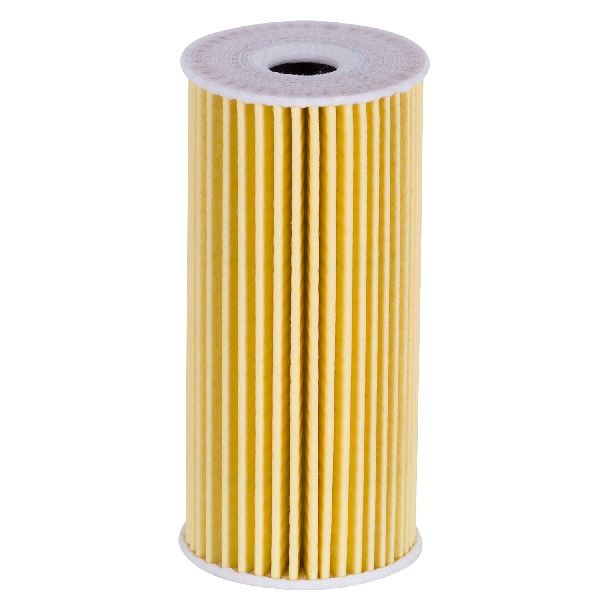
Typical fix: Change the engine oil and filter using the manufacturer-specified grade (full synthetic is recommended). Reset the code and drive to see if it returns.
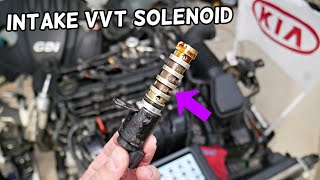
Est. part cost: $50-$100 - Faulty Exhaust Oil Control Valve (OCV) 🔴 High Probability The OCV (also called a VVT solenoid) is an electronic solenoid that can get clogged with sludge from dirty oil or fail electrically. When it fails, it can get stuck and send incorrect oil pressure to the cam phaser, causing the over-advanced condition.
How to confirm: You can test the solenoid's resistance with a multimeter; it should be between 6.9-7.9 ohms at room temperature. Applying 12V power should produce an audible click. A common diagnostic trick is to swap the exhaust OCV with the intake OCV (if they are identical parts) and see if the code changes to P0011 (Intake Cam Over-Advanced). If it does, the OCV is confirmed faulty.
Typical fix: Replace the exhaust Oil Control Valve for Bank 1. It is typically held in by a single 10mm bolt and is accessible on the valve cover.
Est. part cost: $50-$150 - Failing Camshaft Phaser (CVVT Assembly) 🟡 Medium Probability The phaser is the mechanical gear that actually rotates the camshaft. It can fail internally, getting stuck in an advanced position due to sludge, debris from long-term oil starvation, or simple mechanical wear.
How to confirm: This is more difficult to diagnose and is usually suspected after the oil and OCV have been ruled out. It requires an advanced scan tool to graph the desired vs. actual cam angle in real-time. If the actual angle is stuck or doesn't track with the commanded angle, the phaser is the likely culprit.
Typical fix: Replace the exhaust camshaft phaser (CVVT gear). This is a labor-intensive job that requires removing the valve cover and timing chain components.
Est. part cost: $150-$300 - Stretched Timing Chain or Failed Tensioner ⚪ Low Probability While less common than oil-related issues for this specific code, timing chains on the Theta II engine are not lifetime parts and can stretch over time, especially with aggressive driving or extended oil change intervals. A stretched chain or weak tensioner can cause the cam/crank correlation to be off, triggering timing codes.
How to confirm: This requires physical inspection by removing the timing chain cover, which is a significant labor cost. A distinct rattling noise from the front of the engine, especially on cold startups, is a key symptom.
Typical fix: Replace the timing chain, guides, and tensioner as a set.
Est. part cost: $400-$800
Rare But Worth Checking
- Faulty Camshaft Position Sensor: This is uncommon for P0014, as a bad sensor usually throws its own specific circuit codes (e.g., P0340). However, if it provides slow or erratic readings, it could theoretically contribute to a correlation code like P0014.
- Clogged Oil Passages: In cases of severe engine sludge from neglected oil changes, the small oil passages leading to the OCV and cam phaser can become blocked. This prevents proper operation even with new parts and may require extensive engine cleaning or replacement. This was noted as a possibility in NHTSA complaint ODI #11289713 for a related engine.
- Low Oil Pressure due to Failing Oil Pump/Worn Bearings: In high-mileage or poorly maintained engines, general low oil pressure from a worn oil pump or excessive bearing clearances can starve the entire CVVT system, leading to codes like P0014. A mechanic on a BobIsTheOilGuy forum thread reported this exact scenario on a Theta II 2.4L engine, where P0014 was the only code present despite dangerously low oil pressure (2-3 PSI at idle).
Diagnosis Steps
- Check the engine oil level and condition. Top off or perform a full oil and filter change if it's low, old, or dirty. This is the number one cause and the cheapest fix.
- Scan the vehicle for any other codes. Pay close attention if P0017 is also present, as this points to a more definite correlation error.
- Inspect the wiring and connector for the exhaust Oil Control Valve (OCV) on Bank 1 for any damage, corrosion, or loose connections.
- Test the OCV. You can swap the exhaust and intake OCVs (if they are the same part number, which they often are) to see if the code follows the solenoid (changing to P0011). If it does, the OCV is bad. Alternatively, test resistance with a multimeter (should be 6.9-7.9 ohms).
- If the OCV is faulty, replace it. It is usually held in by a single bolt on the valve cover and is easily accessible.
- If the code persists, use an advanced scan tool to monitor the desired vs. actual camshaft angle while the engine is running. Rev the engine slowly to 4000 RPM and back down; the actual angle should closely follow the commanded angle.
- For advanced issues or if a startup rattle is present, a mechanical timing check is necessary to inspect for a stretched timing chain or failed tensioner, though this is the least likely cause and most labor-intensive to verify.
Parts You'll Likely Need
- Engine Oil and Filter — Low or dirty oil is the leading cause of P0014 by preventing the hydraulic CVVT system from operating correctly.
Trusted brands: Kia OEM, Mobil 1, Castrol, Pennzoil
OEM price range: $60-$90
Aftermarket price range: $50-$80 - Exhaust Oil Control Valve (VVT Solenoid)
(OEM #24375-2G500)— This solenoid controls oil flow to the cam phaser. It's a common failure point, either by getting clogged with debris or failing electrically.
Trusted brands: Kia/Hyundai OEM, NTK, Delphi, Dorman
OEM price range: $100-$150
Aftermarket price range: $40-$90
Related Codes That Often Appear With This One
- P0017 — P0017 (Crankshaft Position - Camshaft Position Correlation Bank 1 Sensor B) is often seen with P0014. P0014 indicates the cam is over-advanced, and P0017 indicates the ECM has confirmed this misalignment relative to the crankshaft's position. Several NHTSA complaints show these codes appearing together, often preceding major engine issues. [ODI #11711598, ODI #11722774, ODI #11532992]
- P0011 — If you swap a faulty exhaust OCV with the intake OCV for diagnosis, the code will often change to P0011 (Intake Camshaft Position Timing Over-Advanced), confirming the OCV is the problem.
Technical Service Bulletins (TSBs) & Recalls
- While not Stinger-specific, TSB E17A for the 2017 Kia Forte with a Nu 2.0L engine describes a specific diagnostic and relearn procedure for P0014. It involves using a factory scan tool (KDS) to graph the 'Current Position' vs 'Control Camshaft Position Setpoint' while revving the engine, looking for a difference of less than 5 degrees. This indicates a standardized diagnostic approach that a Kia dealer would likely follow.
Platform-Specific Known Issues
- NHTSA complaints on other Kia models with similar Theta II engines show a pattern where P0014 is a precursor to more serious engine problems. One owner reported P0014 appeared before the oil light flickered and the car went 'haywire' on the interstate (ODI #11587371). Another found metal shavings in the engine after P0014 appeared (ODI #11532992).
Mechanic-Grade Diagnostic Values
- Exhaust Oil Control Valve (OCV) Solenoid Resistance — expected: 6.9 - 7.9 Ohms at 68°F (20°C). Failure: A reading outside this range, or an open circuit (infinite resistance), indicates a faulty solenoid.
- OCV Solenoid Activation Test — expected: An audible 'click' when 12V is applied directly to the solenoid's terminals.. Failure: No click indicates the solenoid is mechanically stuck or internally failed.
- Alternator 'B' Terminal Voltage (Key On, Engine Off) — expected: Should read the same as battery voltage.. Failure: A reading of 0V suggests an open circuit in the wiring between the alternator and battery or a poor ground, which can cause system-wide electrical issues.
Scan Tool Commands That Help
- Kia GDS (Global Diagnostic System): VVT Solenoid Actuation Test — To command the exhaust OCV on and off while the engine is running to see if it responds and affects engine timing. This confirms if the solenoid is capable of functioning when commanded by the ECM.
- Kia GDS (Global Diagnostic System): Resetting Adaptive Values (or 'Init Of TCU Learning') — After replacing a major engine component like an OCV, camshaft sensor, or performing timing work, this function should be used to clear the old learned values from the ECM/PCM. This forces the system to relearn the operational parameters of the new parts immediately.
Wiring & Ground Locations
- Engine Ground Strap — A primary ground strap connects the engine block to the chassis. A specific ground wiring assembly for the 2018-2023 Stinger is part number 91860-J5010 or 91860-J5020.. A poor engine ground can cause erratic sensor readings and incorrect solenoid operation, leading to various electrical and timing-related fault codes.
- Fuse Panel Ground Bolt — There is typically a main grounding bolt (10mm or 12mm) located near the interior fuse panel where multiple ground wires connect to the chassis.. This is a central grounding point for many interior and engine management circuits. Ensuring it is clean and tight is a crucial step in diagnosing any electrical fault.
- General Engine Bay Grounds — Key grounding points mentioned for Kia vehicles include the cylinder head, engine block, and intake manifold.. The camshaft position sensor and OCV rely on a stable ground reference. A compromised ground at the cylinder head or engine block can directly affect their performance.
Real Owner Repair Stories
- Reddit user on r/MechanicAdvice (2016 Kia Sportage 2.4L (related Theta II engine)) — P0014 code, engine would not rev above 2000 RPM.
❌ Tried (didn't work) Tested exhaust VVT solenoid (showed correct resistance and operated with 12V power), cleaned the solenoid, replaced the camshaft position sensor.
✅ What actually fixed it The root cause was an extremely low oil level. The owner added almost 4 quarts of oil to get the level back to the minimum mark on the dipstick. The implication is that oil starvation caused the CVVT system to malfunction, triggering the code and limp mode.
OEM Part Supersession History
22100-2G520, 416Z4-2GH00→24375-2G500— Part number consolidation and potential design revision for the Oil Control Valve (OCV).
Heads up: 24375-2G500 is the correct OEM part for the 2018-2021 Stinger 2.0T and is also used on a wide range of other Kia/Hyundai vehicles with Theta II engines.
Model Year Variations Within This Range
- 2022-2023: For the 2022 model year, the base 2.0T Theta II engine was replaced by a new 2.5L Smartstream (G2.5 T-GDi) four-cylinder engine, which produces 300 hp. While the P0014 code can still occur, some parts, like the OCV and sensors, may have different part numbers and specifications compared to the 2018-2021 2.0T models.
Diagnostic Flowchart
Other Known Issues on This Vehicle
Issues unrelated to this code that are worth knowing about as an owner of this generation:
- Connecting Rod Bearing Failure 🔴 High — More common on earlier (pre-2018) Theta II engines but the design remains sensitive. Failure can be sudden and catastrophic. (Ref: Multiple recalls (e.g., NHTSA 15V568000) and a class-action lawsuit settlement applied to millions of earlier Theta II engines for this issue, which was often preceded by oil flow problems.)
- Excessive Oil Consumption & Carbon Buildup 🟠 Medium — Can become apparent after 60,000-80,000 miles. The GDI (Gasoline Direct Injection) design leads to carbon on intake valves, and piston ring issues can cause oil consumption. (Ref: Kia issued a TSB in 2020 for excessive oil consumption on various 2011-2022 models with Theta engines.)
- High-Pressure Fuel Pump (HPFP) Failure 🟠 Medium — Can fail prematurely, sometimes between 40,000-60,000 km, leading to stalling or no-start conditions.
- Electronic Wastegate Actuator (EWGA) Failure/Adjustment 🟡 Low — The actuator rod can go out of adjustment or fail, causing underboost/overboost codes (like P2562) and limp mode. It often requires recalibration or replacement. (Ref: Kia has specific service procedures for checking and adjusting the EWGA voltage using a diagnostic tool.)
- Timing Chain Stretch 🟡 Low — Not a chronic early failure, but recommended for inspection around 75,000 miles (120,000 km), especially if driven aggressively.
Used vs. New Parts: Buying Guide for This Vehicle
When a used part is the smart pick: For this repair, buying used parts is generally not recommended. The primary failure components (OCV, sensors) are relatively inexpensive new, and their failure is often linked to oil contamination or internal wear, which is impossible to verify on a used part.
Donor-vehicle mileage cap: roughly under 40000 miles for the part to have meaningful remaining life.
What to inspect on the donor part:
- If considering a used OCV, insist on seeing the donor vehicle's maintenance history to check for regular oil changes.
- Inspect the mesh screens on the solenoid for any signs of sludge or metal particles. If it's not perfectly clean, do not buy it.
OEM-only on this vehicle (don't cheap out):
- Camshaft Phaser (CVVT Assembly)
- Timing Chain and Tensioners
Aftermarket brands forum-validated for this vehicle:
- Dorman (for OCV/VVT Solenoids)
- NTK (for Camshaft Position Sensors)
- A-Premium
Brands owners have reported issues with on this vehicle:
- No-name, unbranded solenoids from online marketplaces should be avoided, as their internal coil quality and mechanical tolerances can be inconsistent, leading to a quick return of the P0014 code.
Real Owner Stories
Aggregated from forums and TSBs cited above. Mileages and costs reflect what owners reported in those sources.
2016 Kia Sportage 2.4L (Theta II)
Symptoms: The vehicle was unable to rev past 2000 RPM. Upon inspection, the oil level did not even register on the dipstick.
What fixed it: Adding 4 quarts of oil to reach the proper level.
Source hint: Reddit r/kia thread titled 'Fault Code P0014 - Exhaust Camshaft Position Timing'
2015 Genesis Coupe 3.8L
Symptoms: Persistent P0014 code that remained even after the exhaust Oil Control Valve (OCV) was replaced.
What fixed it: Replacement of the timing chain and CVVT assembly.
Cost: $3,700-$3,800
Source hint: Reddit r/genesiscoupe thread titled 'Timing chain recommendations'
2011 Kia Sportage 2.4L (Theta II)
Symptoms: The car triggered a P0014 code accompanied by a low oil pressure light flickering at idle.
What fixed it: The code was a symptom of a larger oil starvation problem; a manual gauge confirmed only 2-3 PSI of oil pressure.
Source hint: BobIsTheOilGuy.com forum thread 'Hyundai/Kia Theta II oil pump?'
Kia Theta II Engine Model
Symptoms: The P0014 code appeared as a precursor, followed by the oil light flickering and the vehicle acting 'haywire' while driving on the interstate.
What fixed it: Not specified; reported as a precursor to serious engine failure.
Source hint: NHTSA ODI #11587371
Kia Theta II Engine Model
Symptoms: P0014 code appeared; subsequent inspection of the engine revealed metal shavings.
What fixed it: Not specified; indicated internal mechanical failure.
Source hint: NHTSA ODI #11532992
Related OBD-II Codes
Frequently Asked Questions
Does TSB E17A apply to my 2018-2023 Kia Stinger 2.0T?
Can I swap parts with a Genesis G70 to diagnose this code?
What is the specific resistance I should look for when testing the Stinger's exhaust OCV?
Is it true that P0014 can be caused by just having low oil in the Stinger?
My Stinger won't rev past 3000 RPM and has a P0014 code. Is this normal?
If I need to replace the exhaust camshaft phaser, how much will the parts cost?
Helpful Videos
![[How-To] Kia Stinger GT V6 PCV Valve Replacement](https://img.youtube.com/vi/gBYHbwBy0i4/mqdefault.jpg)
Used OEM Parts in Stock

New Aftermarket Parts Available


The information in this article is provided for general reference and educational purposes only. Vehicle specifications, procedures, and part compatibility can vary by production date, trim level, and region. Always consult your vehicle's factory service manual and verify part numbers before purchasing or performing repairs. Safety-critical components such as airbags, seat belts, and braking systems should be installed by a qualified professional.
- Kia Stinger:
- 🎬 Helpful Videos
- 🛍️ Shop This Part
- What's Unique About the 2018-2023 Kia Stinger
- Symptoms You May Notice
- Most Likely Causes
- Rare But Worth Checking
- Diagnosis Steps
- Parts You'll Likely Need
- Related Codes That Often Appear With This One
- Technical Service Bulletins (TSBs) & Recalls
- Platform-Specific Known Issues
- Mechanic-Grade Diagnostic Values
- Scan Tool Commands That Help
- Wiring & Ground Locations
- Real Owner Repair Stories
- OEM Part Supersession History
- Model Year Variations Within This Range
- Diagnostic Flowchart
- Other Known Issues on This Vehicle
- Used vs. New Parts: Buying Guide for This Vehicle
- Real Owner Stories
- 2016 Kia Sportage 2.4L (Theta II)
- 2015 Genesis Coupe 3.8L
- 2011 Kia Sportage 2.4L (Theta II)
- Kia Theta II Engine Model
- Kia Theta II Engine Model
- Related OBD-II Codes
- Frequently Asked Questions
- 🎟️ Get 5% Off