

P0012 on 2015-2021 Lincoln Navigator: 'A' Camshaft Position Timing Over-Retarded (Bank 1) Causes and Fixes
On a 2015-2021 Lincoln Navigator, code P0012 is most often caused by a faulty Variable Camshaft Timing (VCT) solenoid on Bank 1 or low/dirty engine oil. Replacing a VCT solenoid costs around $50-$100 for the part and is a manageable DIY job for many owners. If a startup rattle is present, the issue could be more severe, pointing to worn timing chain components.
- Always check your engine oil level and condition first. Low, old, or incorrect oil is a very common cause for P0012.
- The most likely faulty part is the Bank 1 (passenger side) intake VCT solenoid. It can often get stuck due to oil debris.
- Swapping the intake VCT solenoids between the passenger and driver side is a low-cost way to confirm if a solenoid is bad.
- Do not immediately replace the camshaft position sensor; it is rarely the cause of the problem.
- If you hear a rattling noise from the engine on cold starts, the issue may be a more serious timing chain problem that requires professional diagnosis.
What's Unique About the 2015-2021 Lincoln NAVIGATOR
The 3.5L EcoBoost engine in the Lincoln Navigator, whether it's the first generation (2015-2017) or the updated second generation (2018-2021), relies heavily on its Variable Camshaft Timing (VCT) system to deliver both power and efficiency. This system uses pressurized engine oil to adjust camshaft timing. As documented in multiple Ford/Lincoln Technical Service Bulletins (TSBs), this system is highly sensitive to oil quality, viscosity, and cleanliness. [SSM 47170, SSM 48423] Debris or sludge can clog the small passages in the VCT solenoids, causing them to stick and trigger a P0012 code. This makes checking oil level and condition the most critical first step for this code on these vehicles.
Diagnostic Flowchart
Tap your situation to follow the diagnostic path that matches what you're seeing on this vehicle.
Generation note: This range covers two generations of the Lincoln Navigator: the third generation (2015-2017) with a 380 hp 3.5L V6 and the fourth generation (2018-2021) with an updated, higher-output 450 hp 3.5L V6. Both engines use a similar VCT system design, and the common causes for P0012 (oil issues, VCT solenoids, timing components) are prevalent across both generations.
Symptoms You May Notice
- Check Engine Light is on
- Rough idle or stalling
- Reduced engine power and poor acceleration
- Hesitation during acceleration
- Decreased fuel economy
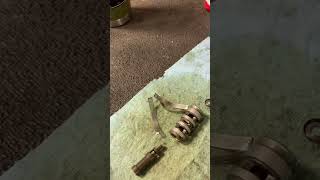
- Rattling noise from the front of the engine on cold starts, typically lasting 2-4 seconds 🎬 Watch: Hear what the 3.5L EcoBoost phaser rattle sounds like.
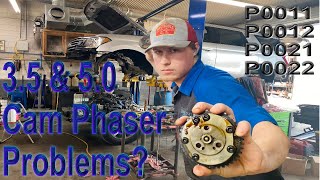
- Replacing the camshaft position sensor. The sensor is usually reporting the problem correctly; the issue is typically mechanical (timing chain/phaser) or hydraulic 🎬 Watch: A deep dive into how these phaser problems develop. (oil-related/VCT solenoid).
Most Likely Causes
- Low, Dirty, or Incorrect Viscosity Engine Oil 🔴 High Probability The VCT system is hydraulic and relies on clean oil at the correct pressure and viscosity to function. The 3.5L EcoBoost is known to be sensitive to oil condition, and neglecting oil changes can lead to sludge that clogs VCT solenoid screens.
How to confirm: Check the oil dipstick for proper level and examine the oil's color and consistency. Ensure the oil used meets Ford's specification WSS-M2C961-A1 for 5W-30.
Typical fix: Perform an oil and filter change using the manufacturer-specified grade of oil (e.g., Motorcraft 5W-30 Synthetic Blend) and a quality filter (e.g., Motorcraft FL-500S).
Est. part cost: $60-$120 - Faulty Intake VCT Solenoid (Bank 1) 🔴 High Probability Manufacturer TSBs for this vehicle range specifically mention that small debris can cause the VCT solenoid to stick, leading to this code. [SSM 47170, SSM 48423] They are a very common failure point on the 3.5L EcoBoost.
How to confirm: Use a scan tool to command the solenoid on and off. A more definitive test is to swap the Bank 1 and Bank 2 intake VCT solenoids. If the code changes to P0022 (Bank 2), the solenoid is confirmed faulty.
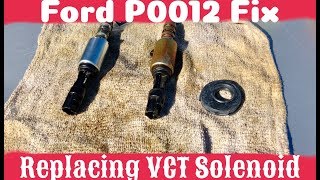
Typical fix: Replace the Bank 1 intake VCT solenoid. The OEM part number is often BL3Z-6M280-B or a superseding number. This is a relatively simple repair located on the top of the valve cover. 🎬 Watch: See how to replace the VCT solenoid yourself.
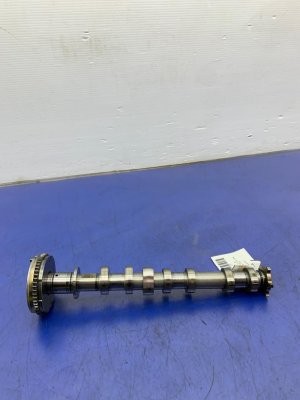
Est. part cost: $40-$120 - Worn Timing Chain or Phasers 🟡 Medium Probability On higher mileage engines (often over 80k-100k miles), the timing chain can stretch, and the cam phasers can fail. This is a well-documented issue on the 3.5L EcoBoost, often starting with a brief rattle on cold starts.
How to confirm: This is an involved diagnosis. The key symptom is a distinct metallic rattle from the front of the engine on cold starts that lasts for a few seconds. A mechanic will need to confirm by checking for timing chain slack, which requires removing the valve and timing covers.
Typical fix: Replace the timing chain, tensioners, guides, and camshaft phasers. This is a significant, labor-intensive repair often costing over $2,000.
Est. part cost: $500-$1500
Rare But Worth Checking
- Clogged Oil Passages: Severe engine sludge can block the small oil passages leading to the VCT solenoid or phaser, starving them of the oil pressure needed to operate. This is usually a result of severe maintenance neglect.
- Wiring Issue to the VCT Solenoid: A damaged wire or corroded connector can prevent the PCM from controlling the VCT solenoid correctly. Inspect the harness leading to the solenoid for any visible damage, especially if the valve cover has been recently removed.
Diagnosis Steps
- Verify the code with an OBD-II scanner.
- Check the engine oil level and condition. If it is low, dirty, or the wrong viscosity (should be 5W-30), perform an oil change with a Motorcraft filter, clear the code, and see if it returns.
- Inspect the wiring and connector at the Bank 1 (passenger side) intake VCT solenoid for any damage or corrosion.
- Using a capable scan tool, monitor the desired vs. actual cam timing for Bank 1 (CAM_ADV_ACT1 vs CAM_ADV_DSD1). Observe if the actual timing lags significantly behind the desired value.
- A common diagnostic step is to swap the intake VCT solenoids between Bank 1 and Bank 2. They are easily accessible on the top of the valve covers. Clear the codes and drive the vehicle. If the code returns as P0022 (for Bank 2), the solenoid you moved is faulty and needs replacement.
- If the solenoid is not the issue, listen carefully for a timing chain rattle on cold starts. If present, the problem is likely mechanical within the timing system.
- If the timing chain is suspected, further diagnosis will require checking oil pressure and inspecting the timing chain, guides, and phasers, which is a complex job that may require a professional mechanic.
Parts You'll Likely Need
- Variable Camshaft Timing (VCT) Solenoid
(OEM #BL3Z-6M280-B (Check with dealer for latest revision))— This is the most frequent point of failure for this code on the 3.5L EcoBoost, often due to sticking from oil debris, as noted in TSBs. [SSM 47170, SSM 48423]
Trusted brands: Motorcraft, Dorman
OEM price range: $70-$120
Aftermarket price range: $40-$80 - Engine Oil and Filter
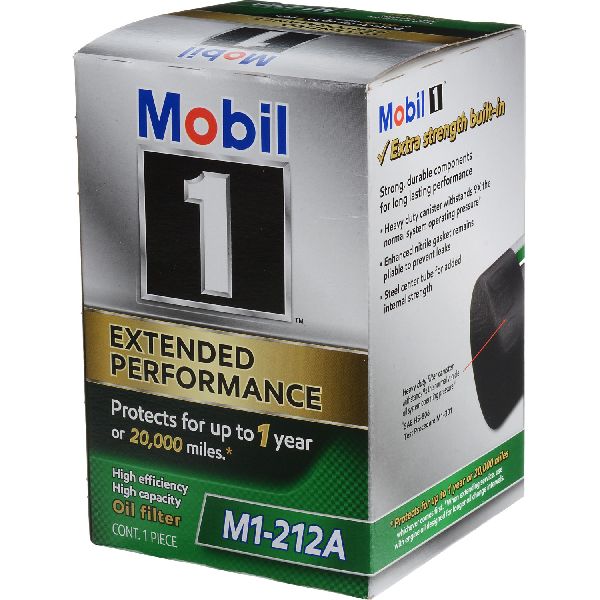
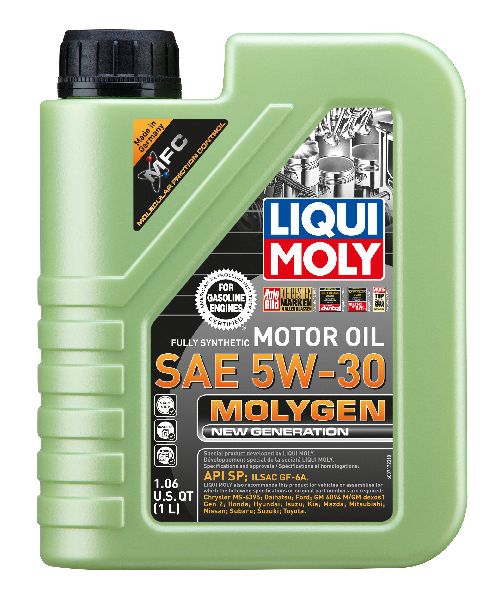
(OEM #Oil: XO-5W30-QSP, Filter: FL-500S)— Clean oil of the correct viscosity is essential for the VCT system to function. An oil change is a critical first step and may resolve the issue on its own. Ford specifies a 5W-30 synthetic blend oil meeting WSS-M2C961-A1.
Trusted brands: Motorcraft, Mobil 1, Pennzoil
OEM price range: $60-$100
Aftermarket price range: $50-$80 - Timing Chain Kit — If the timing chain is stretched or the phasers have failed, a complete timing job is required. This is a less common but more severe cause, often indicated by a cold start rattle.
Trusted brands: Motorcraft
OEM price range: $700-$1500
Aftermarket price range: $400-$900
Related Codes That Often Appear With This One
- P052B — This code for 'Cold Start 'A' Camshaft Position Timing Over-Retarded Bank 1' often appears with P0012, pointing specifically to an issue present during startup. This combination is a strong indicator of a failing phaser or a sticky VCT solenoid.
- P0022 — This is the equivalent timing code for Bank 2 (driver's side). Seeing codes for both banks (P0012 and P0022) may point to a systemic issue like low oil pressure, severe oil contamination, or a stretched primary timing chain affecting both banks.
- P0016 — Crankshaft/Camshaft Position Correlation (Bank 1 Sensor A). This code can appear alongside P0012 if the timing has become so retarded that it affects the correlation between the crank and cam sensors, often pointing towards a stretched timing chain.
Technical Service Bulletins (TSBs) & Recalls
- SSM 54366: Notes that 2015-2021 Ford and Lincoln vehicles may show P0012 and other VCT codes, referencing a specific pinpoint test for diagnosis.
- SSM 47170: States that P0012 and other VCT codes may be due to small debris causing the VCT solenoid to stick.
- SSM 48423: Repeats the guidance from SSM 47170, indicating that sticking VCT solenoids from debris is a known issue for 2015-2020 models.
- TSB 15-0151: Specifically for 2016 Ford Explorer with the 3.5L GTDI engine, this TSB addresses P0012 and/or P0022 with a PCM reprogram. While for a different model, it shows that software calibration can sometimes be a factor.
Platform-Specific Known Issues
- Real-World Repair Story: An owner of a 2017 F-150 with the 3.5L EcoBoost at 93,000 miles reported a startup rattle along with codes P0012 and P052B. Forum members immediately pointed to either the VCT solenoid or the cam phasers, with the P052B code being a strong clue towards a cold start-related mechanical issue. This highlights the common progression from a simple solenoid fault to a more serious phaser/timing chain problem.
- TSB Guidance: Multiple Technical Service Bulletins (TSBs) exist for the 2015-2021 Ford/Lincoln vehicle lineup, including the Navigator, that mention P0012 among a list of other VCT-related codes. The TSBs repeatedly suggest that small debris in the oil can cause the VCT solenoids to stick. [SSM 47170, SSM 48423] TSB SSM 54366 recommends a specific diagnostic pinpoint test (HK in the PC/ED manual) to address these codes, indicating a known pattern of issues that Ford has specific diagnostic pr
Mechanic-Grade Diagnostic Values
- VCT Solenoid Internal Resistance — expected: 5-16 Ohms. Failure: A reading outside this range, or infinite resistance (open circuit), indicates a faulty solenoid coil.
- VCT Solenoid Ground Test — expected: No continuity (Open Line / Infinite Ohms). Failure: Any resistance reading between a solenoid terminal and the solenoid's metal body indicates an internal short to ground.
- Scan Tool Live Data: Commanded vs. Actual Cam Advance — expected: Actual value should closely track the commanded value.. Failure: A significant lag, such as an actual advance of only 11 degrees when 30 degrees is commanded, points to a stuck solenoid, clogged oil passage, or failing cam phaser.
Scan Tool Commands That Help
- Ford IDS (or equivalent high-level scanner): Pinpoint Test HK12: VCT Solenoid Cycle Test — This is a Ford-recommended first step before replacing parts for VCT codes like P0012. The function commands the solenoid to cycle rapidly (e.g., 10 times) to dislodge small debris that may be causing it to stick. If the code clears and does not immediately return after this test, it can prevent an unnecessary solenoid replacement. [20, SSM 54366]
Wiring & Ground Locations
- Engine Compartment Power Distribution Box — Located in the engine compartment, this box contains the primary fuses and relays for most engine control systems.. While a specific fuse for only the VCT solenoids is not typically designated, they receive power through a circuit protected in this box, often shared with the PCM or other ignition components. A loss of power here would likely generate multiple codes, but it's a primary location to check for any engine control electrical issues.
- VCT Solenoid Connector — On top of the valve cover for Bank 1 (passenger side), connected to the intake VCT solenoid.. This is the primary point for electrical testing. With the key on and engine off, one pin should have battery voltage supplied by the PCM, and the other is the control ground. A mechanic can test for voltage here and also command the solenoid on with a scan tool to verify the PCM is attempting to control it.
Real Owner Repair Stories
- f150forum.com user (2017 Ford F-150 3.5L EcoBoost, 93,000 miles) — Check engine light with a rattling noise at startup.
❌ Tried (didn't work) Scanning codes was the first step.
✅ What actually fixed it The user was in the diagnostic phase, but the combination of codes P0012 ('A' Camshaft Position Timing Over-Retarded) and P052B (Cold Start 'A' Camshaft Position Timing Over-Retarded) was a strong indicator pointed out by other forum members that the issue was likely the cam phasers, not just a simple solenoid. This story is valuable as it highlights how a secondary code (P052B) can point to a more specific and severe mechanical cause (phasers) over a simple component failure. - Pine Hollow Auto Diagnostics YouTube Channel (Ford Transit with 3.5L EcoBoost (shared engine architecture)) — Persistent P0012 code and lack of power.
❌ Tried (didn't work) Cleaning the VCT solenoid. The mechanic removed the Bank 1 intake solenoid and found the end screen was visibly 'gunked up' with debris. After a thorough cleaning, the code and performance issue remained.
✅ What actually fixed it The diagnosis proved the solenoid itself was not the final fix. By using a scan tool to monitor desired versus actual cam timing, the mechanic confirmed a massive gap (e.g., 11 degrees actual vs. 30 degrees desired). This definitively proved the problem was a mechanical or hydraulic failure further in the system (likely the cam phaser), not just a dirty solenoid. The fix was a full timing job, and the key takeaway was that cleaning the solenoid is not always enough. - Reddit user in r/MechanicAdvice (2014 Ford F-150 3.5L EcoBoost) — Check engine light with P0012 and P0022, limp mode.
❌ Tried (didn't work) A complete timing job, including cam phasers, was performed by a Ford dealer at 90,000 miles to fix the initial codes.
✅ What actually fixed it The codes returned just 11,900 miles after the expensive repair. This story illustrates that even a full timing component replacement may not be a permanent solution if the underlying cause of oil contamination or degradation is not addressed, highlighting the engine's sensitivity. The ultimate resolution for the recurring problem was not posted, but the story serves as a caution.
OEM Part Supersession History
BL3Z-6M280-B (Commonly for 4.6L/5.4L V8)→AT4Z-6M280-A / AT4Z-6M280-C (For 3.5L/3.7L V6)— Different engine architecture. The VCT solenoids for the EcoBoost V6 are a different design than those for the older 3-Valve V8 engines found in previous generation Navigators.
Heads up: Installing a V8-specific solenoid (e.g., 8L3Z-6M280-B) in a 3.5L EcoBoost engine will not work and can cause running issues. It is critical to verify the part number is for the 3.5L V6 engine, not just for a 'Ford Truck' or 'Navigator'.
Model Year Variations Within This Range
- 2015-2017: These models use the first-generation 3.5L EcoBoost engine. It features a single, long primary timing chain and a direct-injection-only fuel system.
- 2018-2021: These models use the second-generation 3.5L EcoBoost. This engine was significantly redesigned with a dual fuel injection system (port and direct), which helps reduce carbon buildup on intake valves. More importantly for timing codes, it uses a new valvetrain with two shorter primary timing chains (one per bank) and different cam phasers. While the causes of P0012 are the same (oil, solenoids, phasers), the specific part numbers for the timing chain and phasers are different from the earlier generation.
Helpful Videos

Used OEM Parts in Stock


New Aftermarket Parts Available


The information in this article is provided for general reference and educational purposes only. Vehicle specifications, procedures, and part compatibility can vary by production date, trim level, and region. Always consult your vehicle's factory service manual and verify part numbers before purchasing or performing repairs. Safety-critical components such as airbags, seat belts, and braking systems should be installed by a qualified professional.
- Lincoln NAVIGATOR:
- 🎬 Helpful Videos
- 🛍️ Shop This Part
- What's Unique About the 2015-2021 Lincoln NAVIGATOR
- Diagnostic Flowchart
- Symptoms You May Notice
- Most Likely Causes
- Rare But Worth Checking
- Diagnosis Steps
- Parts You'll Likely Need
- Related Codes That Often Appear With This One
- Technical Service Bulletins (TSBs) & Recalls
- Platform-Specific Known Issues
- Mechanic-Grade Diagnostic Values
- Scan Tool Commands That Help
- Wiring & Ground Locations
- Real Owner Repair Stories
- OEM Part Supersession History
- Model Year Variations Within This Range
- 🎟️ Get 5% Off