

P0012 on 2020-2021 Lincoln Aviator: Intake Cam Timing Over-Retarded Causes and Fixes
On a 2020-2021 Lincoln Aviator, P0012 is most often caused by low or dirty engine oil, or a faulty passenger-side intake VCT solenoid. Start by checking the oil; if it's clean and full, the VCT solenoid is the next likely part to replace, costing around $50-$150 for the part. In some cases with a cold-start rattle, it can be a more serious cam phaser issue.
- Always check your engine oil level and condition first. An oil change with the correct full synthetic oil can often fix this code.
- The most likely failed part is the Bank 1 (passenger side) intake VCT solenoid, which is relatively accessible and affordable.
- Do not replace the camshaft position sensor; it is almost never the cause of this specific code.
- If you hear a rattling noise from the engine when starting it, the problem is likely a more serious mechanical issue (cam phaser or timing chain) that requires immediate professional attention.
What's Unique About the 2020-2021 Lincoln AVIATOR
The 3.0L Twin-Turbo V6 in the Aviator, part of the Ford EcoBoost family, relies heavily on precise oil pressure to operate its Variable Camshaft Timing (VCT) system. This engine family is known to be sensitive to oil quality and maintenance schedules. Lincoln has issued technical service bulletins (TSBs) that include P0012, acknowledging that issues in this system are common enough to warrant specific diagnostic procedures for dealers. One TSB for the 2021 model even points to a manufacturing defect with a camshaft journal, which can directly impact oil flow and timing control on Bank 1. While not as widespread as on the 3.5L EcoBoost, cam phaser issues causing a cold-start rattle can also occur on the 3.0L engine, leading to this code.
Diagnostic Flowchart
Tap your situation to follow the diagnostic path that matches what you're seeing on this vehicle.
Symptoms You May Notice
- Illuminated Check Engine Light
- Rough idle, especially when cold
- Engine stalling or hesitation
- Noticeable loss of engine power and acceleration
- Decreased fuel economy
- Rattling or tapping noise from the engine on startup (cold start rattle)
- Replacing the camshaft position sensor first. The sensor is typically doing its job by reporting the timing error; the problem is almost always with the oil, solenoid, or mechanical timing components.
Most Likely Causes
- Low, Dirty, or Incorrect Viscosity Engine Oil 🔴 High Probability The VCT system is hydraulic and extremely sensitive to oil pressure and cleanliness. The oil passages in the solenoids are very small and can be easily clogged by sludge or debris, which is the leading cause of this code.
How to confirm: Check the engine oil dipstick for level and examine the oil's color and consistency. If it's low, black, or sludgy, this is your likely cause.
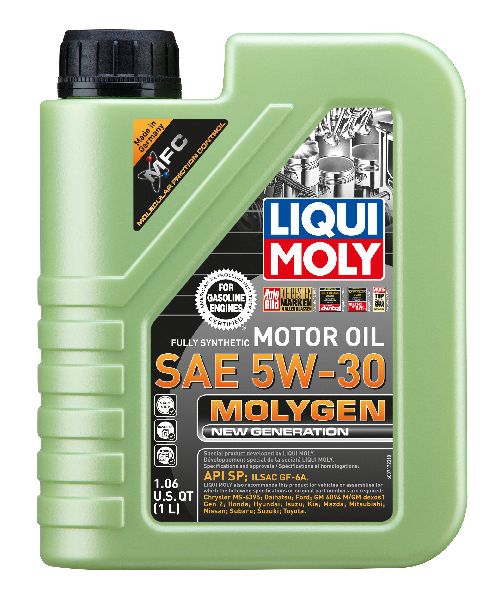
Typical fix: Perform an oil and filter change using the manufacturer-specified grade of full synthetic oil (e.g., Motorcraft 5W-30).
Est. part cost: $60-$120 - Faulty Bank 1 Intake VCT Solenoid 🟡 Medium Probability TSBs for Ford/Lincoln engines frequently cite that small debris in the oil can cause these solenoids to stick or fail. It's a common failure point in this system and often the next logical part to replace after an oil change.
How to confirm: A good diagnostic step is to swap the Bank 1 (passenger side) intake VCT solenoid with the Bank 2 (driver side) intake VCT solenoid. Clear the codes and drive the vehicle. If the code changes to P0022 (Bank 2 over-retarded), the solenoid is confirmed faulty.
Typical fix: Replace the Bank 1 intake VCT solenoid. It is located on the front of the valve cover on the passenger side.
Est. part cost: $50-$150 - Failing Camshaft Phaser ⚪ Low Probability The phasers are mechanical gears that can wear out, especially if oil changes are neglected. A cold-start rattle is a classic symptom of a failing phaser. While considered less common on the 3.0L than its 3.5L counterpart, it is a known, serious issue that requires extensive labor to fix.
How to confirm: This requires a more advanced diagnosis by a professional, often involving monitoring cam deviation with a high-level scan tool and potentially removing the valve cover for inspection. A persistent startup rattle is a strong indicator.
Typical fix: Replace the Bank 1 intake camshaft phaser. This is a labor-intensive job that also requires replacing the timing chain and related components. The labor can be 20+ hours as the engine may need to be pulled.
Est. part cost: $200-$500
Rare But Worth Checking
- Stretched Timing Chain or Failed Tensioner: While less common than a solenoid failure, if the vehicle has high mileage or a poor maintenance history, the base timing can be off enough to trigger this code. This is a major repair often done at the same time as a cam phaser replacement.
- Faulty Camshaft Position Sensor: It's rare for the sensor itself to be the cause of a timing *performance* code like P0012. The sensor is usually accurately reporting a mechanical or hydraulic problem, not failing itself.
Diagnosis Steps
- Check Engine Oil: Verify the oil level is correct and the oil is clean. If low or dirty, perform an oil and filter change with the correct OEM-spec oil, clear the code, and see if it returns. This is the most critical first step.
- Scan for Other Codes: Check if other codes are present that could provide more clues (e.g., P0016, P0022, P0301).
- Inspect VCT Solenoid Connector: Check the wiring and connector for the Bank 1 (passenger side) intake VCT solenoid for any damage, corrosion, or loose connections.
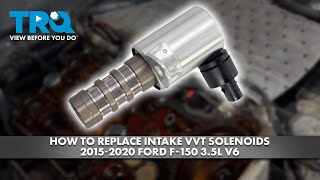
- Swap VCT Solenoids: Swap the intake VCT solenoids between Bank 1 (passenger) and Bank 2 (driver). Clear the codes and drive the vehicle. If the fault code changes to P0022, you have confirmed a bad solenoid. This is a highly effective, low-cost diagnostic step. 🎬 Watch: How to access and replace the VCT solenoids.
- Test the Solenoid Circuit: If the code does not move, use a multimeter to check for proper voltage and ground at the solenoid connector to rule out a wiring issue.
- Seek Professional Diagnosis: If the oil, solenoid, and wiring are all good, the problem is likely mechanical (cam phaser, timing chain). This requires specialized tools and expertise for diagnosis and repair.
Parts You'll Likely Need
- Variable Camshaft Timing (VCT) Solenoid
(OEM #JL3Z-6C535-A (Verify with VIN))— This is the most common component to fail after ruling out oil issues. It gets clogged with debris or fails electronically, preventing proper oil flow to the cam phaser.
Trusted brands: Motorcraft
OEM price range: $80-$150
Aftermarket price range: $40-$90 - Engine Oil and Filter
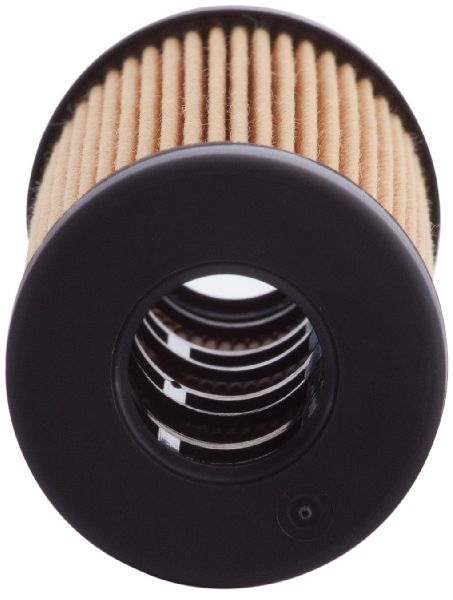
(OEM #Motorcraft 5W-30 Full Synthetic, Motorcraft FL-500S Filter (Verify with VIN))— Dirty, low, or incorrect oil is the leading cause of all VCT-related fault codes. An oil change is the cheapest and easiest first step.
Trusted brands: Motorcraft
OEM price range: $60-$120
Aftermarket price range: $50-$100 - Intake Camshaft Phaser — If the VCT solenoid is confirmed good and a startup rattle is present, the mechanical phaser itself may have failed. This is a more complex and expensive repair.
Trusted brands: Motorcraft
OEM price range: $200-$350
Aftermarket price range: $150-$250
Related Codes That Often Appear With This One
- P0011 — This is the code for 'Timing Over-Advanced' on the same camshaft. If the VCT solenoid is sticking intermittently, it can cause both over-retarded and over-advanced conditions at different times.
- P0022 — This is the identical 'Over-Retarded' code but for Bank 2 (driver's side). If you swap the VCT solenoids for diagnosis and this code appears, it confirms the original solenoid was faulty. If both P0012 and P0022 appear together, it strongly points to a systemic oil pressure or quality issue.
- P0016 — This code indicates a correlation problem between the crankshaft and the Bank 1 intake camshaft. It often points to a more serious mechanical issue like a stretched timing chain or a phaser that has failed completely.
- P0300, P0301, P0306 — Misfire codes (P0300 for random, P0301 for cylinder 1, etc.). Incorrect cam timing disrupts the air/fuel mixture and can cause misfires on the affected bank.
Technical Service Bulletins (TSBs) & Recalls
- SSM 54366: Some 2015-2021 Ford and Lincoln vehicles may exhibit an illuminated MIL with diagnostic trouble codes (DTCs) P0011, P0012, P0014, P0015, P0016, P0017, P0018, P0019, P0021, P0022, P0024 and/or P0025. This TSB points technicians to updated diagnostic procedures in the workshop manual.
- 21B18: Mentions that on certain 2021 Aviators with the 3.0L engine, an oversized right-hand exhaust camshaft journal was installed, which could affect engine timing and oil pressure on Bank 1.
- SSM 48423: While not specific to the Aviator, this TSB is relevant to the engine family and notes that codes like P0012 can be caused by small debris sticking in the VCT solenoid. It recommends a scan tool be used to cycle the solenoid 10 times to try and clear it before replacement.
Platform-Specific Known Issues
- TSB #SSM 54366: Lincoln acknowledged that 2015-2021 vehicles, including the Aviator, may exhibit a range of camshaft timing codes including P0012. The bulletin advises technicians that the standard diagnostic pinpoint tests in the workshop manual have been updated to better address these concerns.
- TSB #21B18: For some 2021 Aviators with the 3.0L engine, a recall was issued concerning an 'oversized right-hand exhaust camshaft journal'. The right-hand side corresponds to Bank 1, and an issue with a camshaft journal can disrupt oil pressure and cause timing faults like P0012.
- Cold-Start Rattle: Owners of vehicles with the 3.0L EcoBoost and related engines have reported a distinct rattling or diesel-like sound for a few seconds on a cold start. This is a classic symptom of failing cam phasers, which can be the root cause of P0012 if oil and solenoid issues are ruled out.
Mechanic-Grade Diagnostic Values
- VCT Solenoid Internal Resistance — expected: 5 to 14 Ohms (Ω). Failure: A reading of 0 Ohms (short circuit) or OL/infinity (open circuit) indicates a faulty solenoid coil.
- VCT Solenoid Connector Voltage (KOEO) — expected: ~12V (Battery Voltage) on the power supply pin.. Failure: No voltage or significantly low voltage points to a wiring harness, fuse, or PCM power supply issue.
- Scan Tool PID: VCT_ADV_ERR (VCT Advance Error) — expected: Should hover around 0 degrees (+/- 5 degrees) at idle and during closed-loop operation.. Failure: A consistent reading greater than +/- 5 degrees for an extended period confirms the camshaft is not reaching its commanded position.
Hidden / Shadow Codes Worth Checking
- Mode 6, TID $81 or $51: Mode 6 provides raw data from the PCM's non-continuous self-tests. For Ford VCT systems, specific Test IDs (TIDs) like $81 or $51 monitor the camshaft's response time and position error. A failing value here can indicate a lazy phaser or sticky solenoid even before the deviation is severe enough to consistently trigger a P0012 code. (see via A professional scan tool or advanced DIY software (like FORScan) that can display Mode 6 test results.)
Scan Tool Commands That Help
- Ford IDS, FORScan, or equivalent professional scanner: VCT Solenoid On/Off Test or Solenoid Cycle Command (Pinpoint Test HK) — This bidirectional command manually cycles the VCT solenoid rapidly (e.g., 10 times) while the engine is running. It is used to dislodge small debris that may be causing the solenoid to stick. If the code clears and engine performance improves after running the test, it confirms the issue was contamination, not a hard electrical or mechanical failure of the solenoid.
Wiring & Ground Locations
- AWD Module Ground — Under the driver's seat, beneath the carpet.. A widely reported issue on 2020-2021 Explorer/Aviator platforms is a poor ground connection for the All-Wheel Drive (AWD) module due to paint on the grounding studs. While not directly tied to the engine, a faulty ground on a major vehicle module can cause unpredictable electrical issues and codes across the vehicle's network. Verifying all major module grounds is a valid step in a difficult electrical diagnosis.
- PCM and Engine Grounds (e.g., G104, G108) — Various locations in the engine bay, typically on the engine block, firewall, and near the fenders.. The PCM relies on solid ground connections to accurately read sensor data and control actuators like the VCT solenoids. A poor engine-to-chassis ground can cause voltage drops and signal noise, potentially leading to incorrect timing calculations and codes like P0012. A vehicle-specific wiring diagram is required to locate and test these exact points.
Real Owner Repair Stories
- Explorer ST Forum (2020 Ford Explorer ST (same 3.0L Twin-Turbo V6 engine and platform)) — A distinct rattle from the top of the motor for 2-5 seconds on a cold start, which then goes away. The noise was described as the 'classic Ford Ecoboost VCT position actuator rattle.'
❌ Tried (didn't work) Ruling out exhaust noise., Considering it 'normal' for DOHC engines.
✅ What actually fixed it A dealer diagnosis confirmed failing cam phasers. The repair involved replacing the cam phasers, a 20+ hour job. One owner noted the dealer service advisor mentioned they had just performed the same cam phaser replacement on a Lincoln Aviator for the same issue.
When the Usual Fixes Don't Work
- While an oil change or VCT solenoid replacement are the most common fixes for P0012, if a distinct 'cold-start rattle' is present, the root cause may be more severe. As documented by owners of vehicles with the 3.0L EcoBoost engine, this rattle is a classic symptom of failing cam phasers. In these cases, replacing the solenoids will not resolve the code, and the noise will persist. The ultimate fix is a much more labor-intensive replacement of the cam phasers and timing components, a job that can take a professional technician over 20 hours to complete.
OEM Part Supersession History
JL3Z-6C535-A (and others in the 6C535 family)→Varies (VIN Specific)— Part evolution and engine-specific calibration.
Heads up: The VCT solenoid part number is extremely specific to the engine (e.g., 2.7L vs 3.0L vs 3.5L vs 5.0L). Using the wrong part, even if it physically fits, can cause improper oil flow and control, leading to persistent or new VCT codes. Always verify the correct part number with the vehicle's VIN before ordering.
Helpful Videos

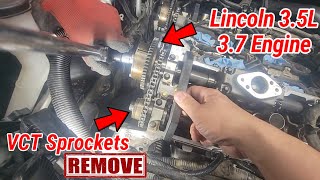
Used OEM Parts in Stock

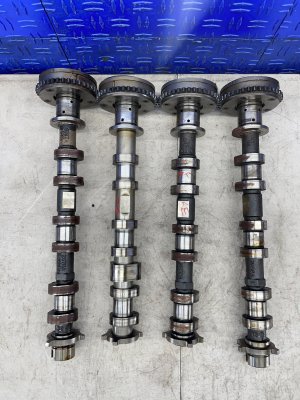
New Aftermarket Parts Available


The information in this article is provided for general reference and educational purposes only. Vehicle specifications, procedures, and part compatibility can vary by production date, trim level, and region. Always consult your vehicle's factory service manual and verify part numbers before purchasing or performing repairs. Safety-critical components such as airbags, seat belts, and braking systems should be installed by a qualified professional.
- Lincoln AVIATOR:
- 🎬 Helpful Videos
- 🛍️ Shop This Part
- What's Unique About the 2020-2021 Lincoln AVIATOR
- Diagnostic Flowchart
- Symptoms You May Notice
- Most Likely Causes
- Rare But Worth Checking
- Diagnosis Steps
- Parts You'll Likely Need
- Related Codes That Often Appear With This One
- Technical Service Bulletins (TSBs) & Recalls
- Platform-Specific Known Issues
- Mechanic-Grade Diagnostic Values
- Hidden / Shadow Codes Worth Checking
- Scan Tool Commands That Help
- Wiring & Ground Locations
- Real Owner Repair Stories
- When the Usual Fixes Don't Work
- OEM Part Supersession History
- 🎟️ Get 5% Off